PRINCIPLES OF
COMPOSITION:
STRUCTURED VS.
UNSTRUCTURED WRITING
Presenter: Swapnali Saikia
About this session
This session gives a brief introduction about how to
develop modular technical content. After completing this
session, you should be able to:
Compare and contrast structured and unstructured
writing
List the benefits of structured writing
Explain the principles of composition of structured
writing
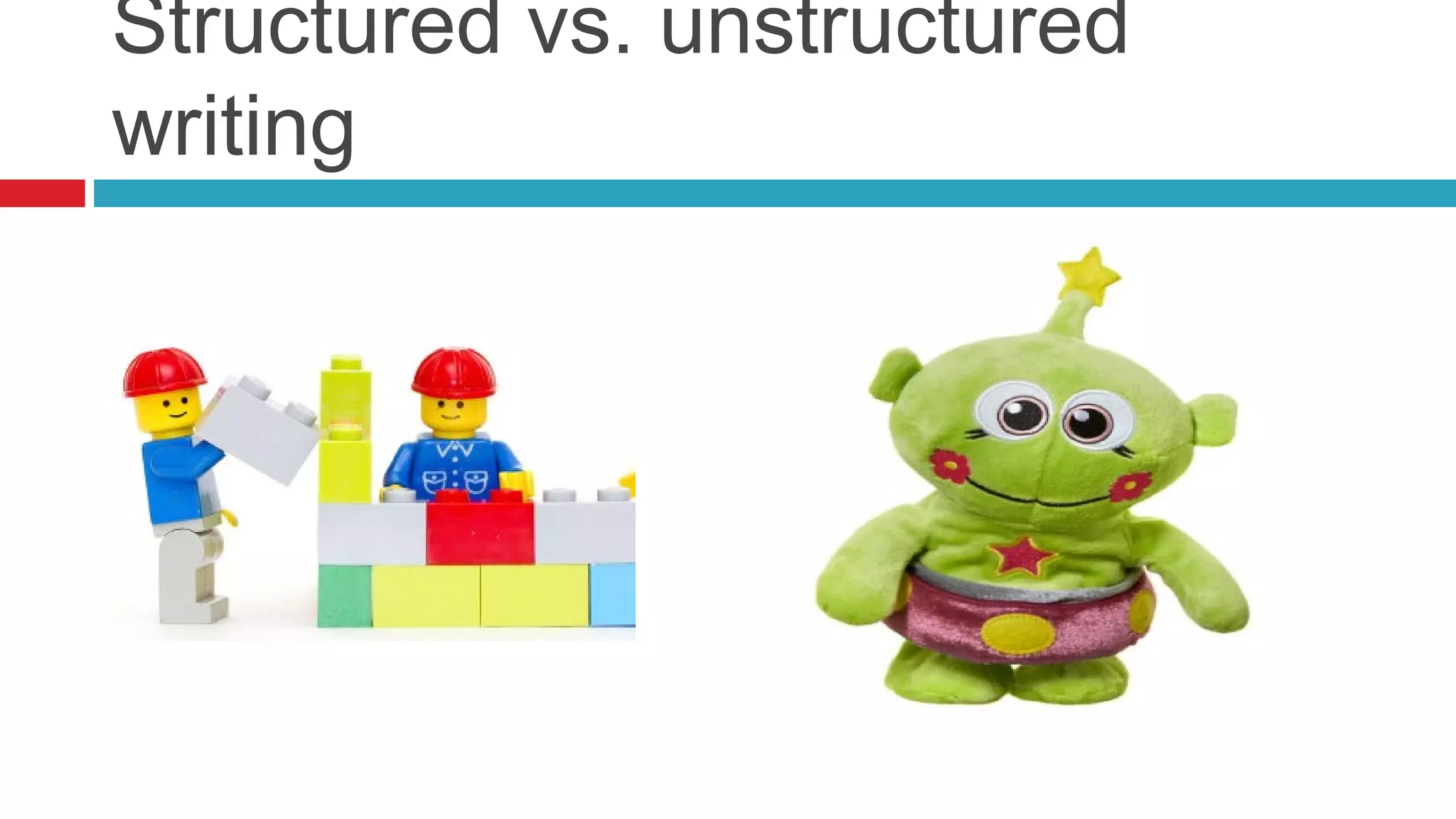
Structured vs. unstructured
writing
What is structured writing?
 “Structured writing is the process of creating
and systematically organizing independent
units of information so they are easily
accessible, manageable and reusable.”
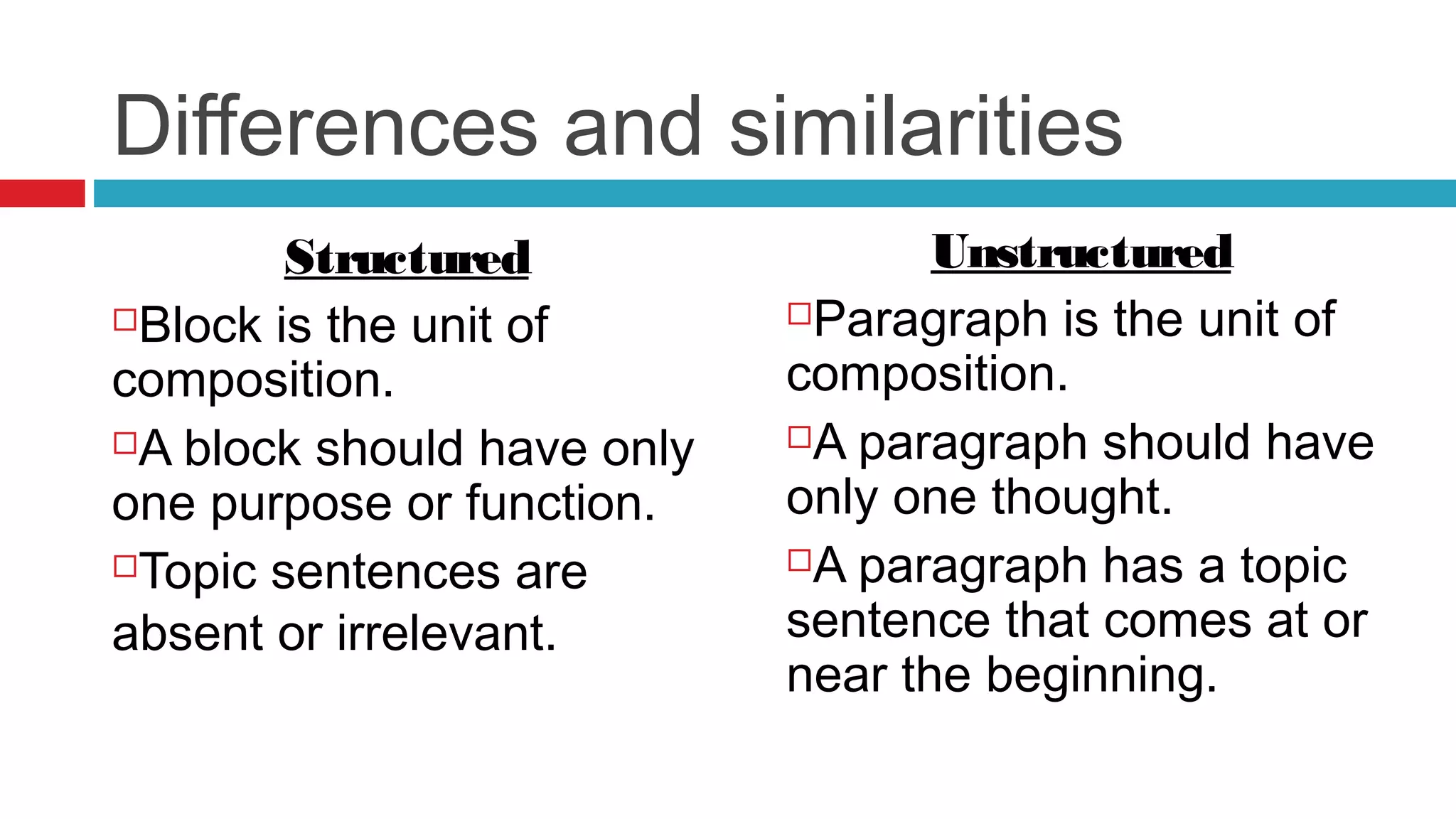
Differences and similarities
Structured
Block is the unit of
composition.
A block should have only
one purpose or function.
Topic sentences are
absent or irrelevant.
Unstructured
Paragraph is the unit of
composition.
A paragraph should have
only one thought.
A paragraph has a topic
sentence that comes at or
near the beginning.
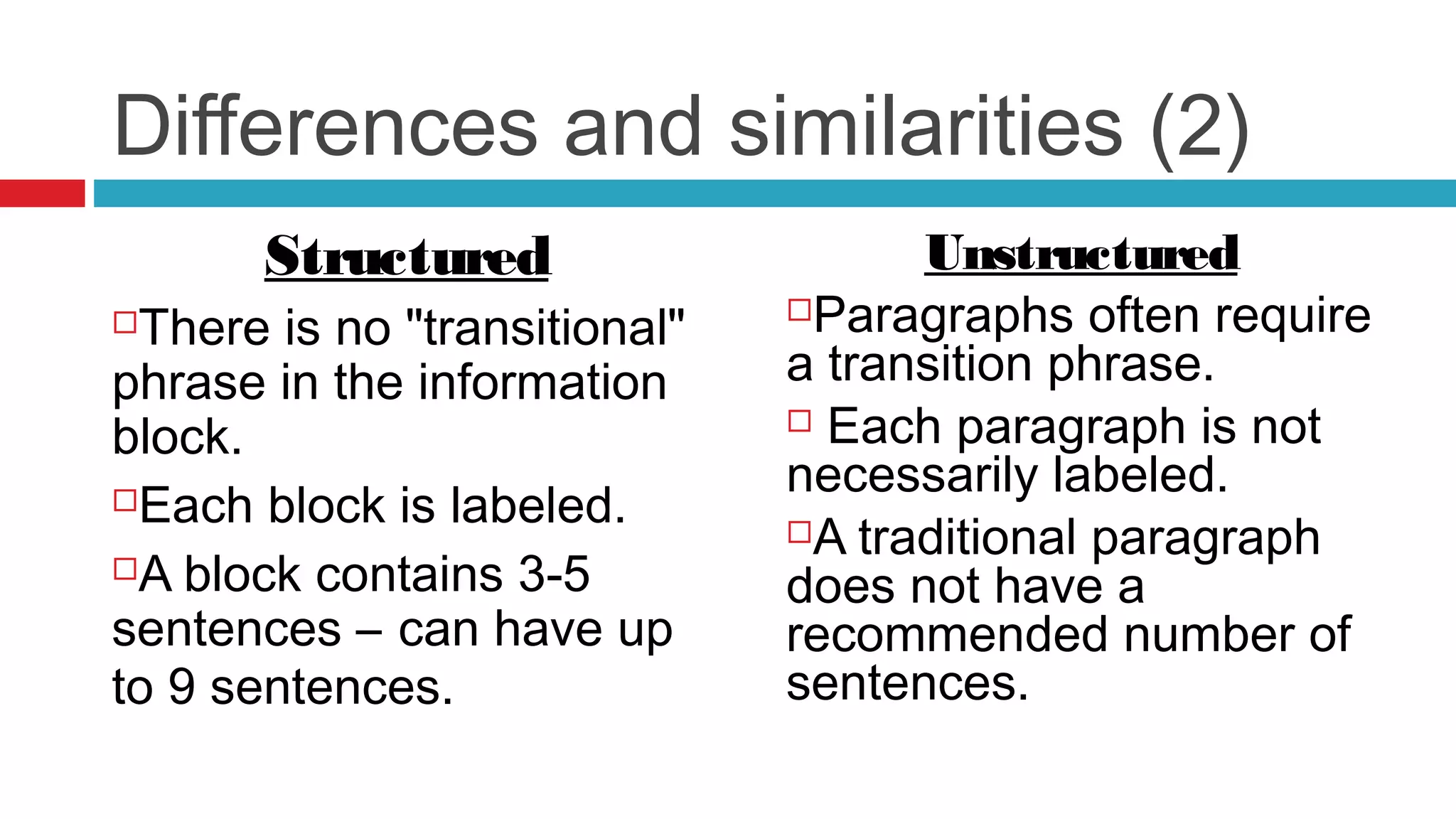
Differences and similarities (2)
Structured
There is no "transitional"
phrase in the information
block.
Each block is labeled.
A block contains 3-5
sentences – can have up
to 9 sentences.
Unstructured
Paragraphs often require
a transition phrase.
 Each paragraph is not
necessarily labeled.
A traditional paragraph
does not have a
recommended number of
sentences.
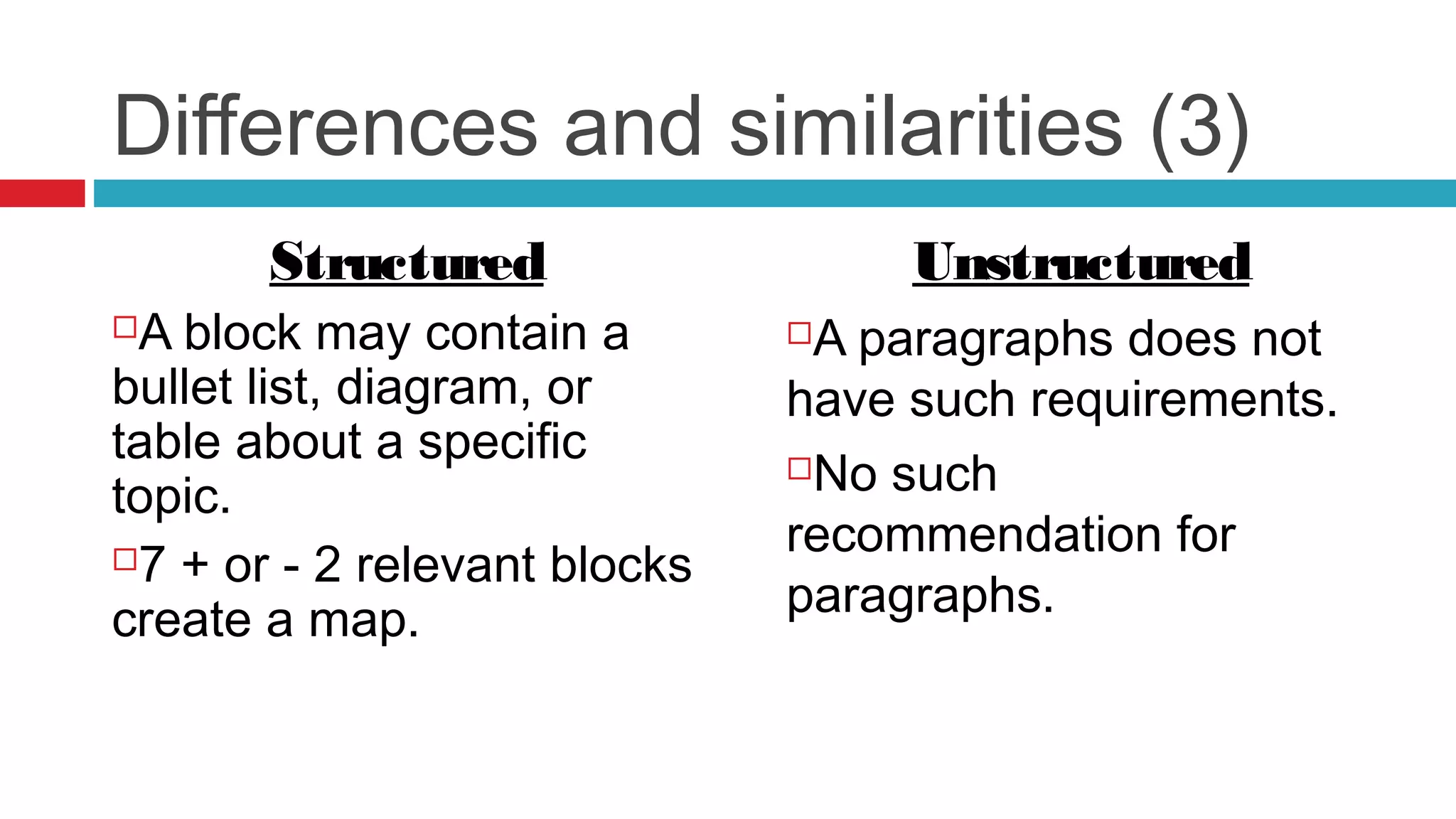
Differences and similarities (3)
Structured
A block may contain a
bullet list, diagram, or
table about a specific
topic.
7 + or - 2 relevant blocks
create a map.
Unstructured
A paragraphs does not
have such requirements.
No such
recommendation for
paragraphs.
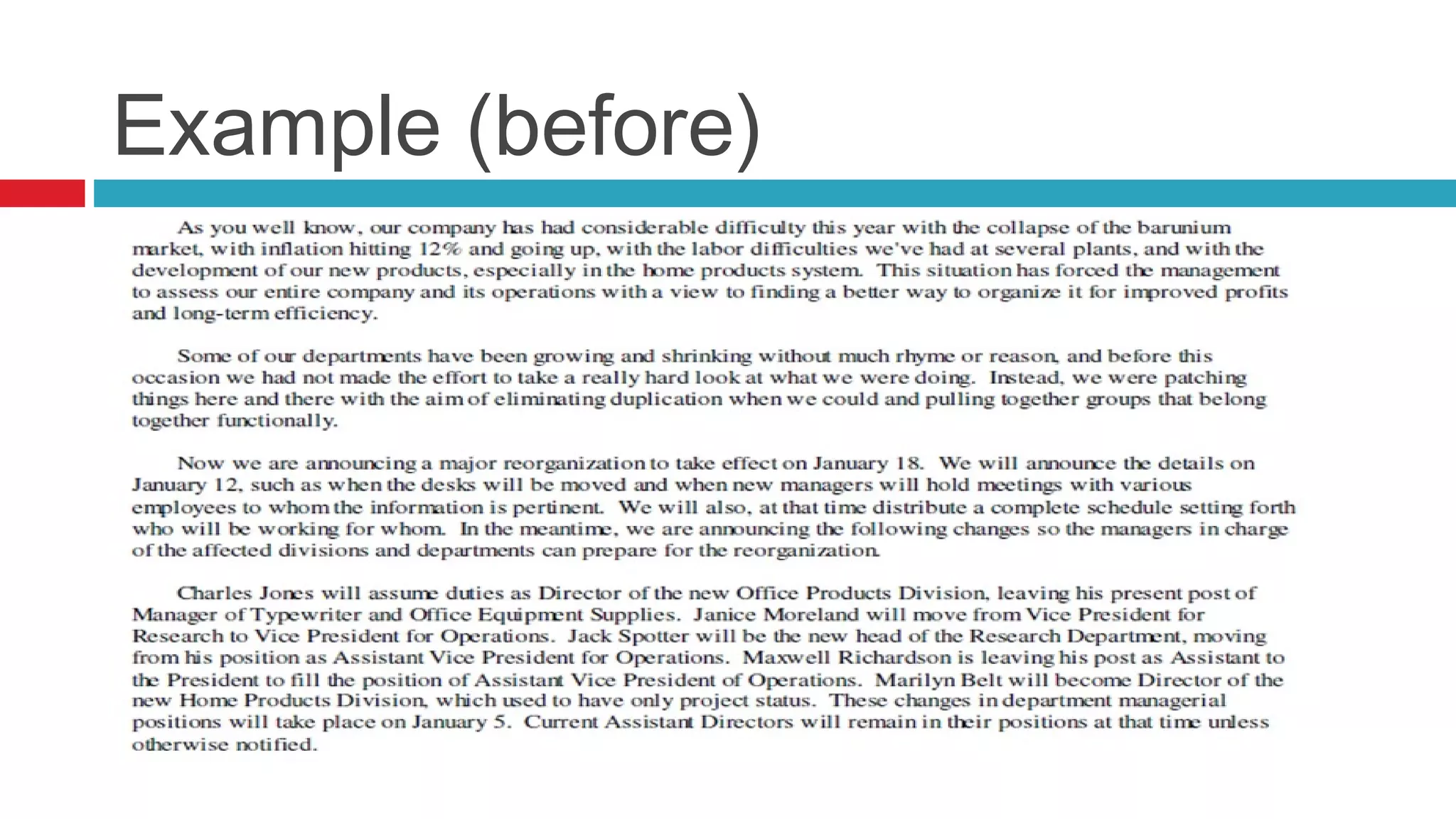
Example (before)
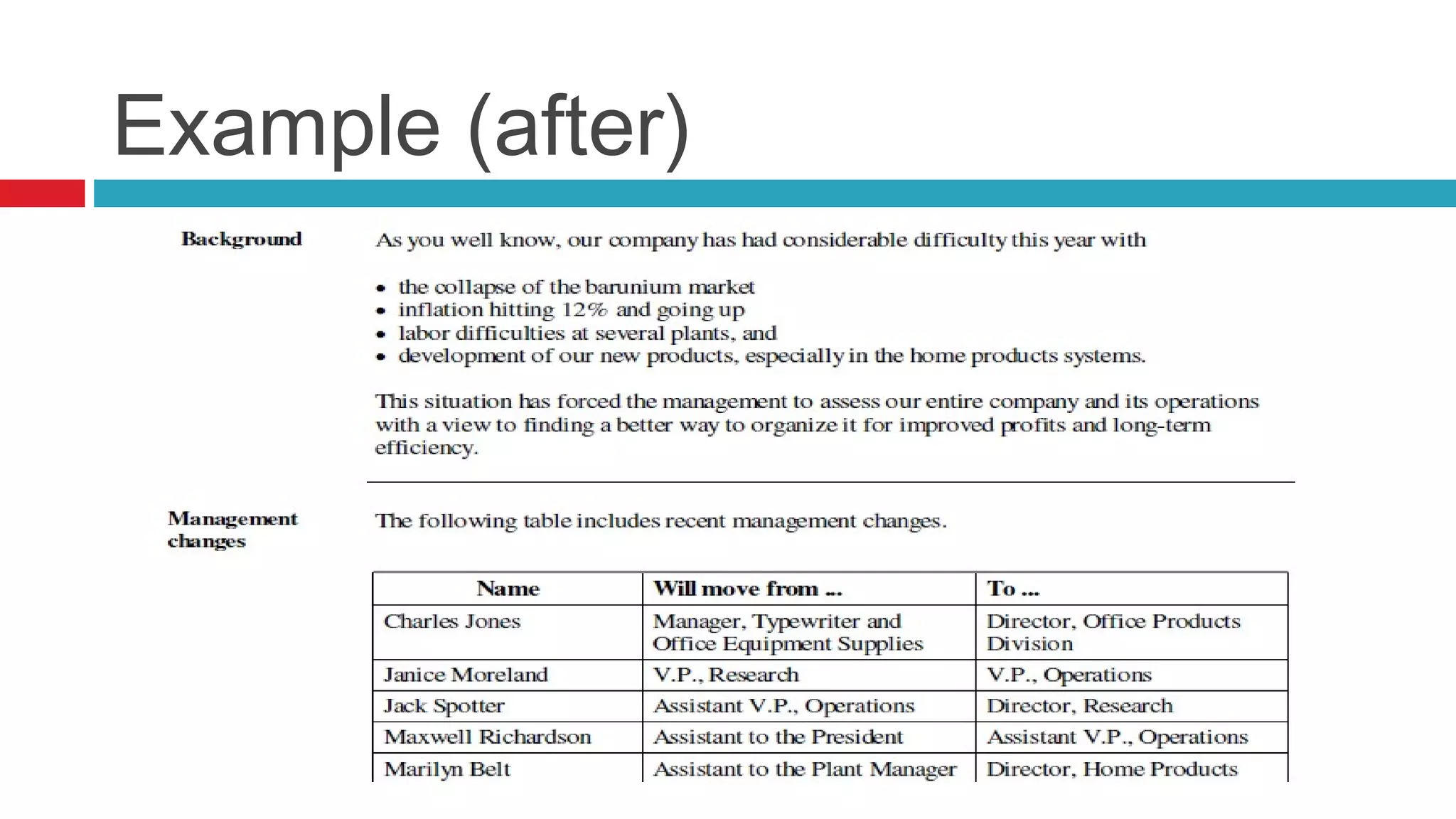
Example (after)
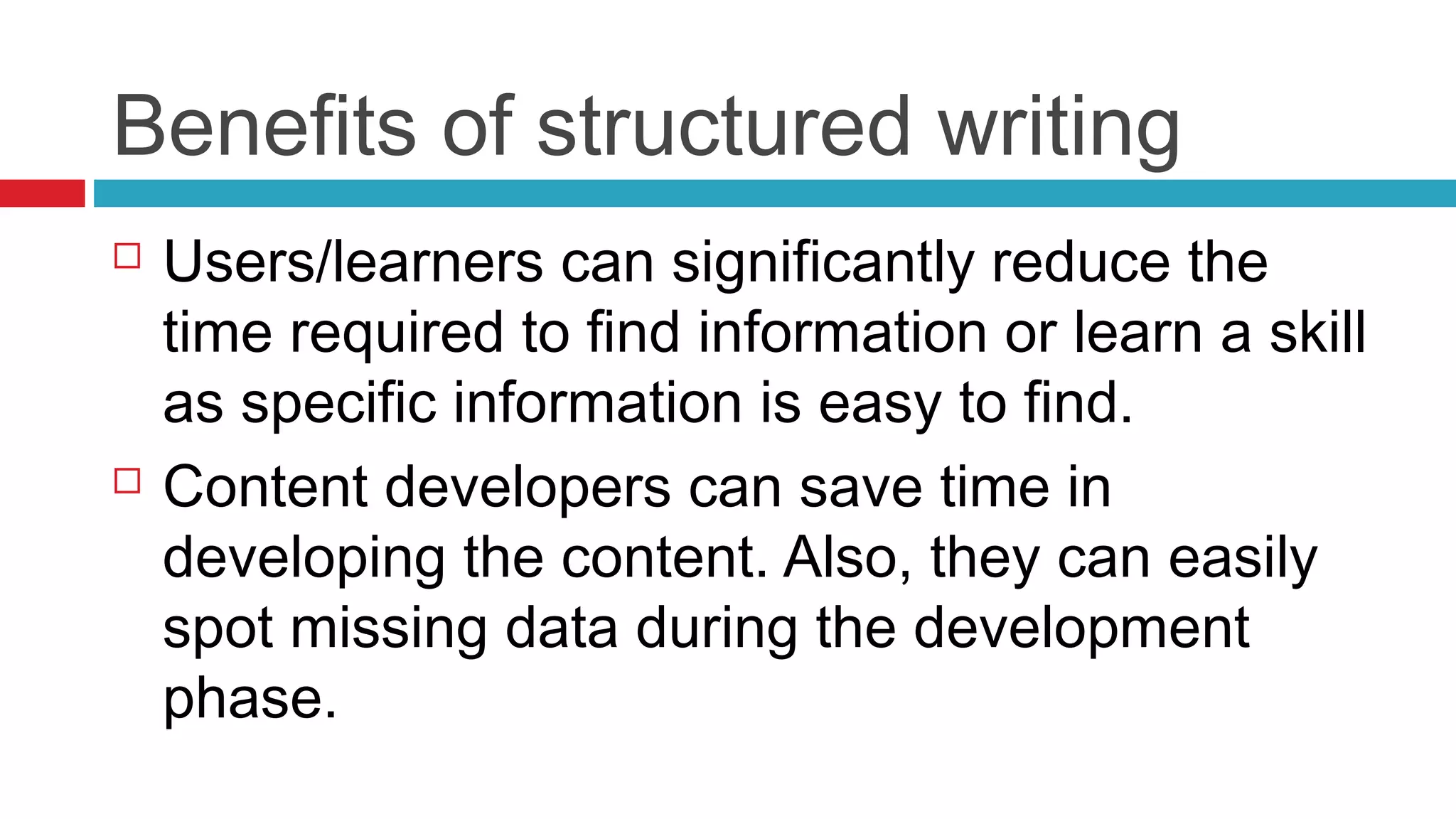
Benefits of structured writing
 Users/learners can significantly reduce the
time required to find information or learn a skill
as specific information is easy to find.
 Content developers can save time in
developing the content. Also, they can easily
spot missing data during the development
phase.
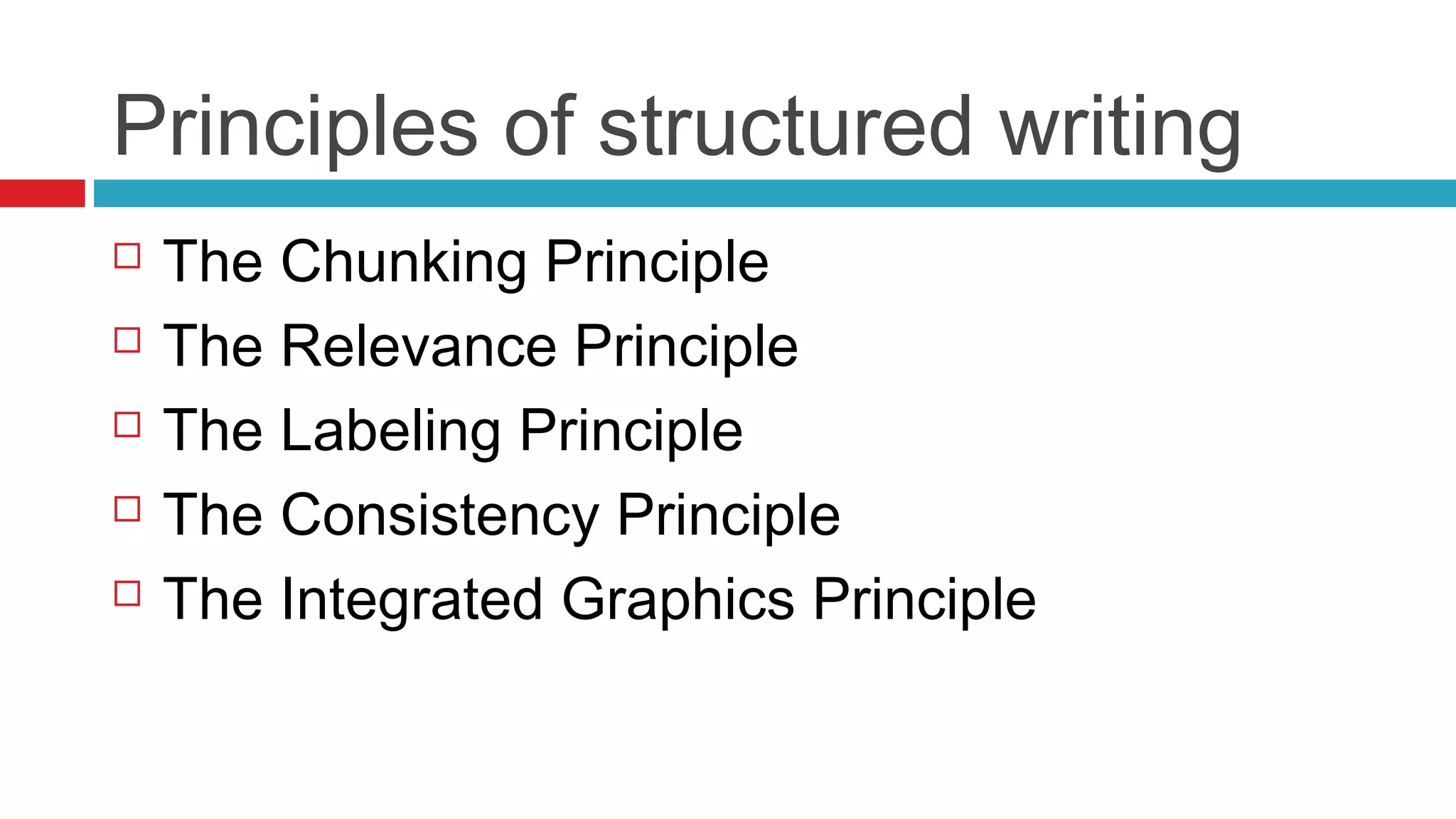
Principles of structured writing
 The Chunking Principle
 The Relevance Principle
 The Labeling Principle
 The Consistency Principle
 The Integrated Graphics Principle
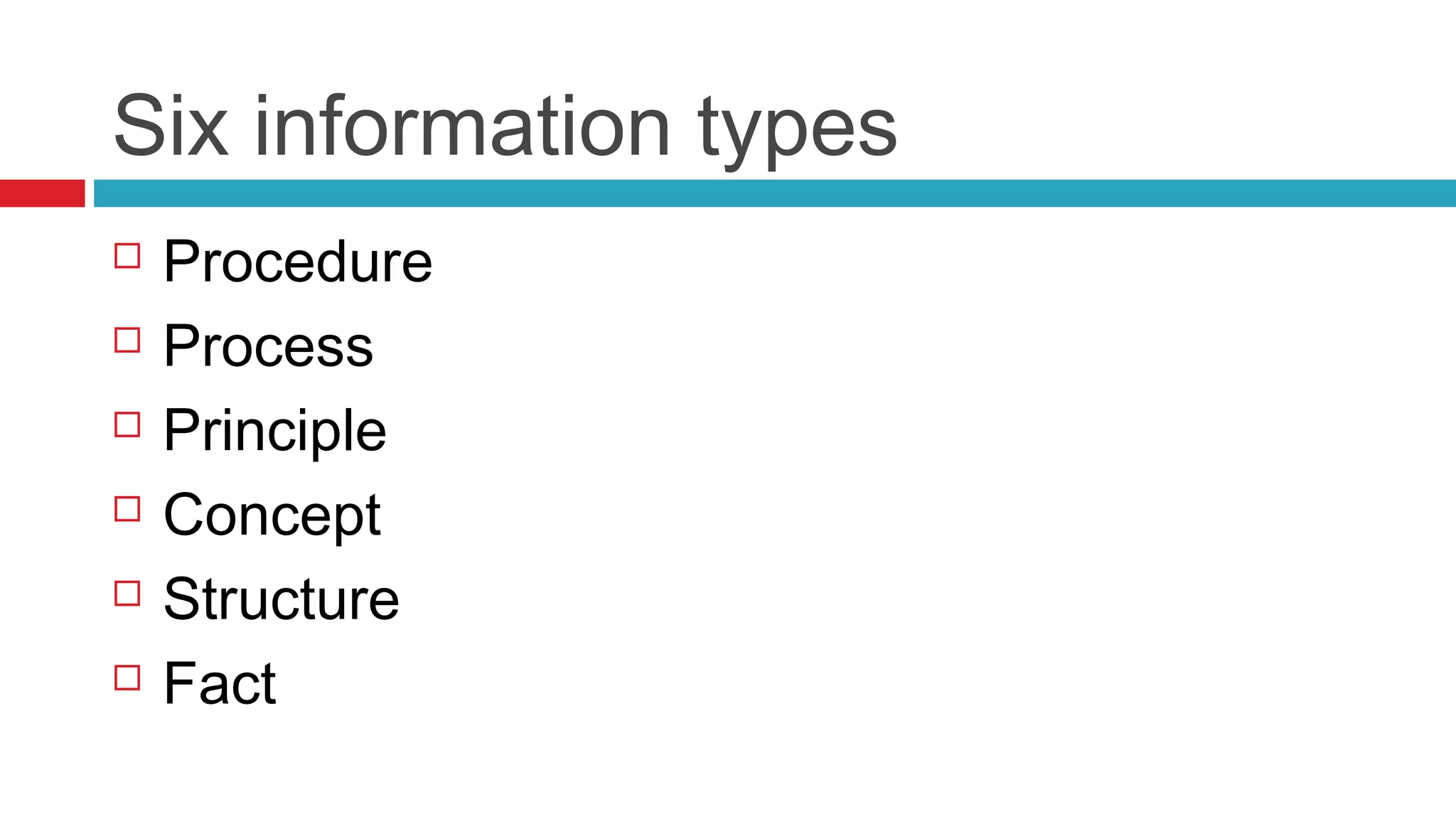
Six information types
 Procedure
 Process
 Principle
 Concept
 Structure
 Fact
References
 Principles of structured writing
http://www.informationmapping.com/demo/?page=did_u_know
 Before and after example
http://www.informationmapping.com/en/information-mapping/information-
mapping/examples
 Elementary principles of composition (Elements of
Style, William Strunk)
http://www.bartleby.com/141/strunk5.html

Principles of composition: structured vs. unstructured writing

  • 1.
  • 2.
    About this session Thissession gives a brief introduction about how to develop modular technical content. After completing this session, you should be able to: Compare and contrast structured and unstructured writing List the benefits of structured writing Explain the principles of composition of structured writing
  • 3.
  • 4.
    What is structuredwriting?  “Structured writing is the process of creating and systematically organizing independent units of information so they are easily accessible, manageable and reusable.”
  • 5.
    Differences and similarities Structured Blockis the unit of composition. A block should have only one purpose or function. Topic sentences are absent or irrelevant. Unstructured Paragraph is the unit of composition. A paragraph should have only one thought. A paragraph has a topic sentence that comes at or near the beginning.
  • 6.
    Differences and similarities(2) Structured There is no "transitional" phrase in the information block. Each block is labeled. A block contains 3-5 sentences – can have up to 9 sentences. Unstructured Paragraphs often require a transition phrase.  Each paragraph is not necessarily labeled. A traditional paragraph does not have a recommended number of sentences.
  • 7.
    Differences and similarities(3) Structured A block may contain a bullet list, diagram, or table about a specific topic. 7 + or - 2 relevant blocks create a map. Unstructured A paragraphs does not have such requirements. No such recommendation for paragraphs.
  • 8.
  • 9.
  • 10.
    Benefits of structuredwriting  Users/learners can significantly reduce the time required to find information or learn a skill as specific information is easy to find.  Content developers can save time in developing the content. Also, they can easily spot missing data during the development phase.
  • 11.
    Principles of structuredwriting  The Chunking Principle  The Relevance Principle  The Labeling Principle  The Consistency Principle  The Integrated Graphics Principle
  • 12.
    Six information types Procedure  Process  Principle  Concept  Structure  Fact
  • 13.
    References  Principles ofstructured writing http://www.informationmapping.com/demo/?page=did_u_know  Before and after example http://www.informationmapping.com/en/information-mapping/information- mapping/examples  Elementary principles of composition (Elements of Style, William Strunk) http://www.bartleby.com/141/strunk5.html

Editor's Notes

  • #8 According to Purdue Online Writing Lab, “A good practice is to include on each page about two handwritten or three typed paragraphs. “