THE PRESENTATION MADE BY
2.Saymun Hossain Shawon-137
3.Md Estiak Ahmed-
139
4.Rakibul Islam-147
1.Shahin Alam-122
5.Musfiqur Rohan-141
TOPIC :
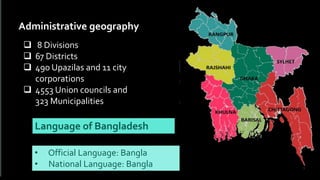
 8 Divisions
 67 Districts
 490 Upazilas and 11 city
corporations
 4553 Union councils and
323 Municipalities
Administrative geography
• Official Language: Bangla
• National Language: Bangla
Language of Bangladesh
Education Structure of Bangladesh
Secondary education is imparted by junior secondary
and higher secondary level institutions.
Primary education is imparted basically by primary level
institutions
Higher education is imparted by degree pass (3 years), degree
honors (4 years), masters (1 & 2 years) and other higher level
institutions of equivalent section of other related institutions.
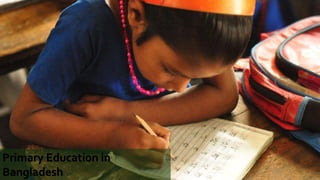
Primary Education in
Bangladesh
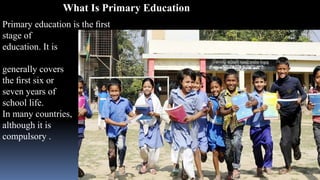
What Is Primary Education
Primary education is the first
stage of
education. It is
generally covers
the first six or
seven years of
school life.
In many countries,
although it is
compulsory .
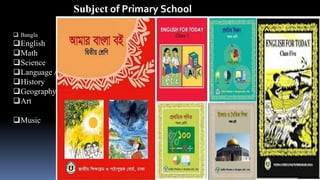
 Bangla
English
Math
Science
Language Arts
History
Geography
Art
Music
Subject of Primary School
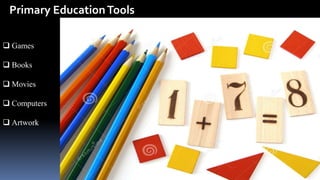
Primary EducationTools
 Games
 Books
 Movies
 Computers
 Artwork
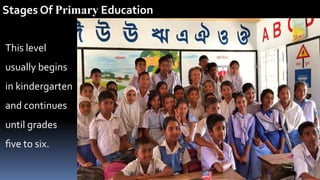
Stages Of Primary Education
This level
usually begins
in kindergarten
and continues
until grades
five to six.
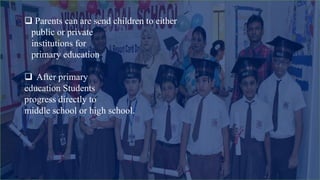
 Parents can are send children to either
public or private
institutions for
primary education
 After primary
education Students
progress directly to
middle school or high school.
Importance Of Primary Education
 Primary education prepares students for
their success in higher grades.
 It is the foundation on which educational
success is based.
 If we do not get that foundation, success
in higher grades may not be possible.
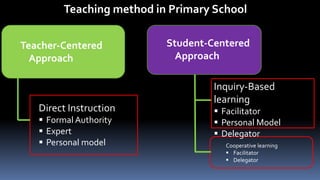
Teacher-Centered
Approach
Direct Instruction
 Formal Authority
 Expert
 Personal model
Student-Centered
Approach
Inquiry-Based
learning
 Facilitator
 Personal Model
 Delegator
Cooperative learning
 Facilitator
 Delegator
Teaching method in Primary School
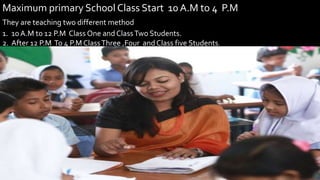
Maximum primary School Class Start 10 A.M to 4 P.M
They are teaching two different method
1. 10 A.M to 12 P.M Class One and ClassTwo Students.
2. After 12 P.M To 4 P.M ClassThree ,Four and Class five Students.
Some teaching sample
Class test Music class
Computing learning How to build up art
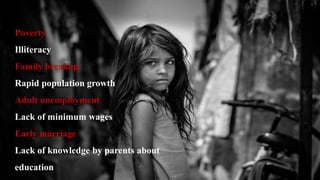
Causes
Poverty
Illiteracy
Family breakup
Rapid population growth
Adult unemployment
Lack of minimum wages
Early marriage
Lack of knowledge by parents about
education
 Current Status
Current government projects to promote
the education of
children in
Bangladesh
include
compulsory
primary
education
for all
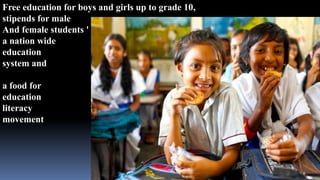
Free education for boys and girls up to grade 10,
stipends for male
And female students '
a nation wide
education
system and
a food for
education
literacy
movement
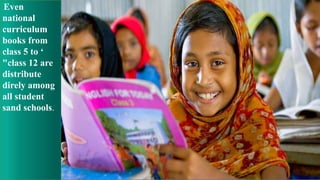
Even
national
curriculum
books from
class 5 to ‘
"class 12 are
distribute
direly among
all student
sand schools.
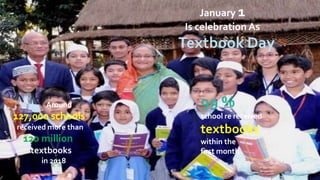
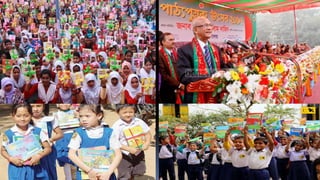
January 1
Is celebration As
Textbook Day
99 %
school re received
textbooks
within the
first month
Around
127,000 schools
received more than
120 million
textbooks
in 2018
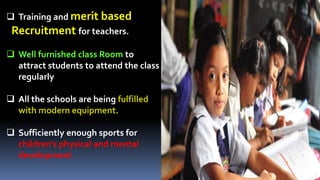
 Training and merit based
Recruitment for teachers.
 Well furnished class Room to
attract students to attend the class
regularly
 All the schools are being fulfilled
with modern equipment.
 Sufficiently enough sports for
children's physical and mental
development
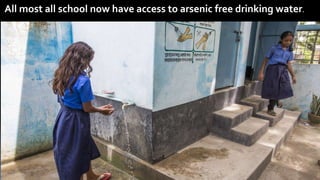
All most all school now have access to arsenic free drinking water.
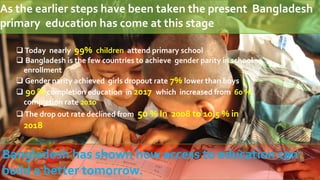
As the earlier steps have been taken the present Bangladesh
primary education has come at this stage
 Today nearly 99% children attend primary school
 Bangladesh is the few countries to achieve gender parity in school
enrollment
 Gender parity achieved girls dropout rate 7% lower than boys
 90 % completion education in 2017 which increased from 60 %
completion rate 2010
 The drop out rate declined from 50 % In 2008 to 10.5 % in
2018
Bangladesh has shown how access to education can
build a better tomorrow.
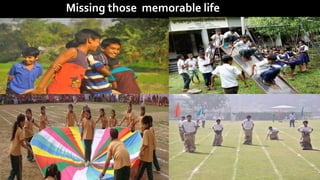
Missing those memorable life
To end the learning crisis, all
countries, rich and poor, have to
ensure that every child has access to
a well-trained and motivated
teacher.
 Every countries receive the good
quality education they need to
realize their potential and lead
fulfilling lives.
Summary
Thank you

Primary eduction system

  • 2.
    THE PRESENTATION MADEBY 2.Saymun Hossain Shawon-137 3.Md Estiak Ahmed- 139 4.Rakibul Islam-147 1.Shahin Alam-122 5.Musfiqur Rohan-141
  • 3.
  • 5.
     8 Divisions 67 Districts  490 Upazilas and 11 city corporations  4553 Union councils and 323 Municipalities Administrative geography • Official Language: Bangla • National Language: Bangla Language of Bangladesh
  • 6.
    Education Structure ofBangladesh Secondary education is imparted by junior secondary and higher secondary level institutions. Primary education is imparted basically by primary level institutions Higher education is imparted by degree pass (3 years), degree honors (4 years), masters (1 & 2 years) and other higher level institutions of equivalent section of other related institutions.
  • 7.
  • 8.
    What Is PrimaryEducation Primary education is the first stage of education. It is generally covers the first six or seven years of school life. In many countries, although it is compulsory .
  • 9.
  • 10.
    Primary EducationTools  Games Books  Movies  Computers  Artwork
  • 11.
    Stages Of PrimaryEducation This level usually begins in kindergarten and continues until grades five to six.
  • 12.
     Parents canare send children to either public or private institutions for primary education  After primary education Students progress directly to middle school or high school.
  • 13.
    Importance Of PrimaryEducation  Primary education prepares students for their success in higher grades.  It is the foundation on which educational success is based.  If we do not get that foundation, success in higher grades may not be possible.
  • 14.
    Teacher-Centered Approach Direct Instruction  FormalAuthority  Expert  Personal model Student-Centered Approach Inquiry-Based learning  Facilitator  Personal Model  Delegator Cooperative learning  Facilitator  Delegator Teaching method in Primary School
  • 15.
    Maximum primary SchoolClass Start 10 A.M to 4 P.M They are teaching two different method 1. 10 A.M to 12 P.M Class One and ClassTwo Students. 2. After 12 P.M To 4 P.M ClassThree ,Four and Class five Students.
  • 16.
    Some teaching sample Classtest Music class Computing learning How to build up art
  • 18.
    Causes Poverty Illiteracy Family breakup Rapid populationgrowth Adult unemployment Lack of minimum wages Early marriage Lack of knowledge by parents about education
  • 19.
     Current Status Currentgovernment projects to promote the education of children in Bangladesh include compulsory primary education for all
  • 20.
    Free education forboys and girls up to grade 10, stipends for male And female students ' a nation wide education system and a food for education literacy movement
  • 21.
    Even national curriculum books from class 5to ‘ "class 12 are distribute direly among all student sand schools.
  • 22.
    January 1 Is celebrationAs Textbook Day 99 % school re received textbooks within the first month Around 127,000 schools received more than 120 million textbooks in 2018
  • 24.
     Training andmerit based Recruitment for teachers.  Well furnished class Room to attract students to attend the class regularly  All the schools are being fulfilled with modern equipment.  Sufficiently enough sports for children's physical and mental development
  • 25.
    All most allschool now have access to arsenic free drinking water.
  • 26.
    As the earliersteps have been taken the present Bangladesh primary education has come at this stage  Today nearly 99% children attend primary school  Bangladesh is the few countries to achieve gender parity in school enrollment  Gender parity achieved girls dropout rate 7% lower than boys  90 % completion education in 2017 which increased from 60 % completion rate 2010  The drop out rate declined from 50 % In 2008 to 10.5 % in 2018 Bangladesh has shown how access to education can build a better tomorrow.
  • 27.
  • 28.
    To end thelearning crisis, all countries, rich and poor, have to ensure that every child has access to a well-trained and motivated teacher.  Every countries receive the good quality education they need to realize their potential and lead fulfilling lives. Summary
  • 29.