Shirley Gutkowski, RDH,
BSDH
Practice focusing on orofacial myofunctional therapy and
Buteyko breathing retraining.
Orofacial Myofunctional Therapy is the practice of teaching
clients neuromuscular techniques to alleviate orofacial
disorders.
These disorders include things like:
Tongue thrusts
Lip and tongue sucking
Snoring
Pacifier, thumb uses or nail biting
Orofacial disorders can show up as crazy things like
Restless legs
Silent acid reflux
Sinus infections
Temporomandibular pain
Neck and shoulder pain
Fibromyalgia
Orthodontic failures
Shirley’s Therapy
My teacher and mentor, Joy Moeller, has been on the
forefront of this science for over 30 years. I use her
treatment sequence which she’s developed over her
time practicing in the Los Angeles area.
Using simple movements and using simple implements
in usual and unusual ways the muscles of the face
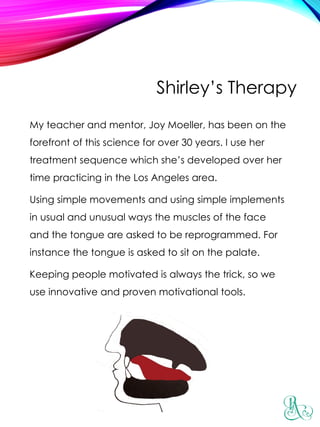
and the tongue are asked to be reprogrammed. For
instance the tongue is asked to sit on the palate.
Keeping people motivated is always the trick, so we
use innovative and proven motivational tools.
Scope of practice of a
dental hygienist working as
a orofacial myofunctional
therapist
In the United States, the Scope of Practice of a Dental
Hygienist working as a myofunctional therapist ADHA
Policy Statement:
The American Dental Hygienists’ Association (ADHA)
policy has been in place regarding the practice of
Orofacial Myology by Dental Hygienists since 1992. The
ADHA policy statement is listed under the section
PRACTICE, Patient Care Services, policy #9-92: “The
American Dental Hygienists’ Association acknowledges
that the scope of dental hygiene practice includes the
assessment and evaluation of orofacial myofunctional
disorders; and further advocates that dental hygienists
complete advanced clinical and didactic continuing
education prior to providing treatment”.
To study, evaluate, prevent and
treat orofacial muscle dysfunctions.
-Abnormal sucking habits
-Other orofacial habits
-Abnormal orofacial rest posture
-Abnormal chewing and
swallowing patterns
-Dysfunctional breathing patterns
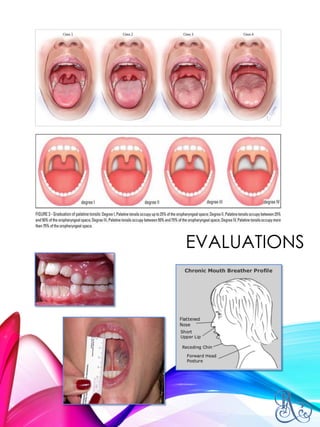
EVALUATIONS
SCREENING TOOLS
Epworth Sleepiness Scale
Reflux Symptoms
Lip strength
Blood pressure
Neck circumference
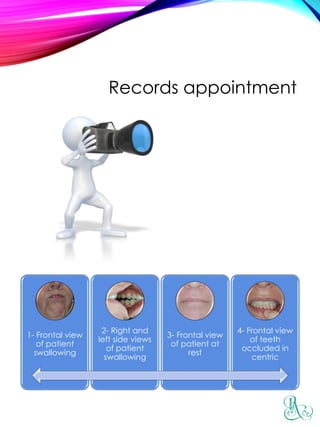
Records appointment
1- Frontal view
of patient
swallowing
2- Right and
left side views
of patient
swallowing
3- Frontal view
of patient at
rest
4- Frontal view
of teeth
occluded in
centric
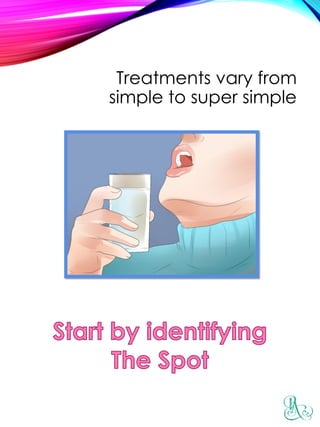
Treatments vary from
simple to super simple
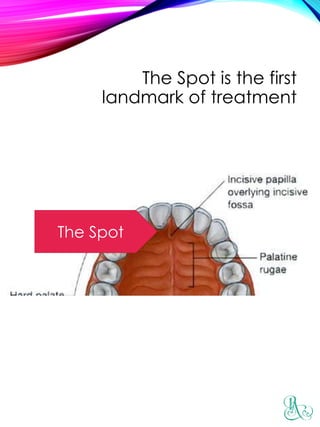
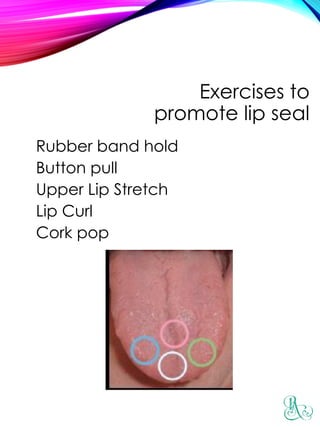
The Spot is the first
landmark of treatment
The Spot
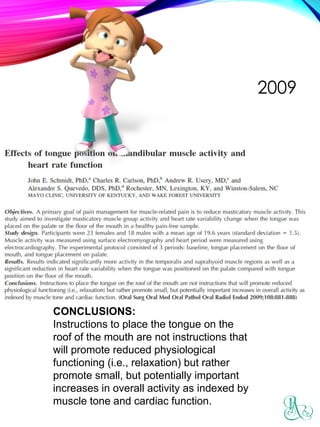
2009
CONCLUSIONS:
Instructions to place the tongue on the
roof of the mouth are not instructions that
will promote reduced physiological
functioning (i.e., relaxation) but rather
promote small, but potentially important
increases in overall activity as indexed by
muscle tone and cardiac function.
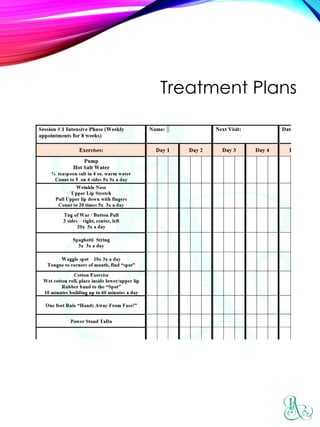
Treatment Plans
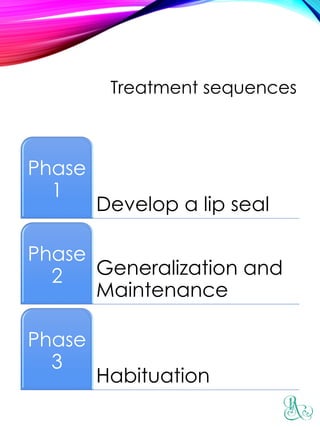
Treatment sequences
Develop a lip seal
Phase
1
Generalization and
Maintenance
Phase
2
Habituation
Phase
3
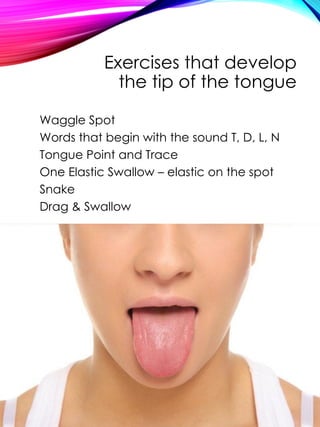
Exercises that develop
the tip of the tongue
Waggle Spot
Words that begin with the sound T, D, L, N
Tongue Point and Trace
One Elastic Swallow – elastic on the spot
Snake
Drag & Swallow
Exercises to
promote lip seal
Rubber band hold
Button pull
Upper Lip Stretch
Lip Curl
Cork pop
Techniques to get the
facial muscles and the
tongue to move right
NSF's 2004 Sleep in America poll found
that two-thirds of children experience
frequent sleep problems and that
children's poor sleep habits take a toll on
parents/caregivers, some of whom lose an
estimated 200 hours of sleep a year due
to their child's nighttime awakenings.
NSF's 2007 Sleep in America poll found
that 20% of women are awakened to give
care to a child during the night.
https://sleepfoundation.org/sleep-topics/adhd-
and-sleep/poll-data
National Sleep
Foundation Poll
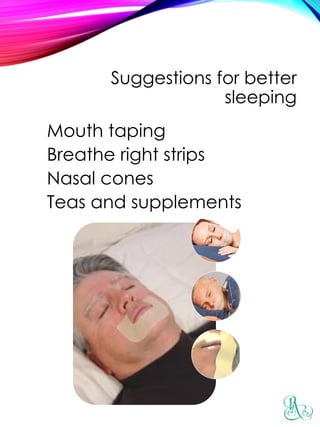
Suggestions for better
sleeping
Mouth taping
Breathe right strips
Nasal cones
Teas and supplements
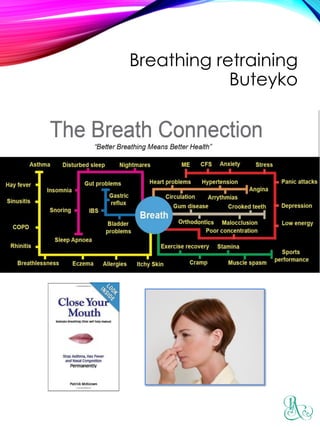
Breathing retraining
Buteyko
Breathing Retraining
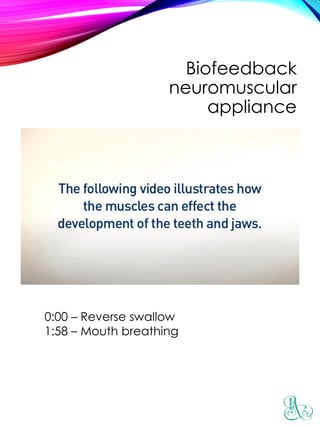
Biofeedback
neuromuscular
appliance
0:00 – Reverse swallow
1:58 – Mouth breathing
Cross Link Radio
Host Shirley Gutkowski

Primal Air, LLC Shirley Gutkowski

  • 2.
    Shirley Gutkowski, RDH, BSDH Practicefocusing on orofacial myofunctional therapy and Buteyko breathing retraining. Orofacial Myofunctional Therapy is the practice of teaching clients neuromuscular techniques to alleviate orofacial disorders. These disorders include things like: Tongue thrusts Lip and tongue sucking Snoring Pacifier, thumb uses or nail biting Orofacial disorders can show up as crazy things like Restless legs Silent acid reflux Sinus infections Temporomandibular pain Neck and shoulder pain Fibromyalgia Orthodontic failures
  • 3.
    Shirley’s Therapy My teacherand mentor, Joy Moeller, has been on the forefront of this science for over 30 years. I use her treatment sequence which she’s developed over her time practicing in the Los Angeles area. Using simple movements and using simple implements in usual and unusual ways the muscles of the face and the tongue are asked to be reprogrammed. For instance the tongue is asked to sit on the palate. Keeping people motivated is always the trick, so we use innovative and proven motivational tools.
  • 4.
    Scope of practiceof a dental hygienist working as a orofacial myofunctional therapist In the United States, the Scope of Practice of a Dental Hygienist working as a myofunctional therapist ADHA Policy Statement: The American Dental Hygienists’ Association (ADHA) policy has been in place regarding the practice of Orofacial Myology by Dental Hygienists since 1992. The ADHA policy statement is listed under the section PRACTICE, Patient Care Services, policy #9-92: “The American Dental Hygienists’ Association acknowledges that the scope of dental hygiene practice includes the assessment and evaluation of orofacial myofunctional disorders; and further advocates that dental hygienists complete advanced clinical and didactic continuing education prior to providing treatment”.
  • 5.
    To study, evaluate,prevent and treat orofacial muscle dysfunctions. -Abnormal sucking habits -Other orofacial habits -Abnormal orofacial rest posture -Abnormal chewing and swallowing patterns -Dysfunctional breathing patterns
  • 6.
  • 7.
    SCREENING TOOLS Epworth SleepinessScale Reflux Symptoms Lip strength Blood pressure Neck circumference
  • 8.
    Records appointment 1- Frontalview of patient swallowing 2- Right and left side views of patient swallowing 3- Frontal view of patient at rest 4- Frontal view of teeth occluded in centric
  • 9.
  • 10.
    The Spot isthe first landmark of treatment The Spot
  • 11.
    2009 CONCLUSIONS: Instructions to placethe tongue on the roof of the mouth are not instructions that will promote reduced physiological functioning (i.e., relaxation) but rather promote small, but potentially important increases in overall activity as indexed by muscle tone and cardiac function.
  • 12.
  • 13.
    Treatment sequences Develop alip seal Phase 1 Generalization and Maintenance Phase 2 Habituation Phase 3
  • 14.
    Exercises that develop thetip of the tongue Waggle Spot Words that begin with the sound T, D, L, N Tongue Point and Trace One Elastic Swallow – elastic on the spot Snake Drag & Swallow
  • 15.
    Exercises to promote lipseal Rubber band hold Button pull Upper Lip Stretch Lip Curl Cork pop
  • 16.
    Techniques to getthe facial muscles and the tongue to move right
  • 17.
    NSF's 2004 Sleepin America poll found that two-thirds of children experience frequent sleep problems and that children's poor sleep habits take a toll on parents/caregivers, some of whom lose an estimated 200 hours of sleep a year due to their child's nighttime awakenings. NSF's 2007 Sleep in America poll found that 20% of women are awakened to give care to a child during the night. https://sleepfoundation.org/sleep-topics/adhd- and-sleep/poll-data National Sleep Foundation Poll
  • 18.
    Suggestions for better sleeping Mouthtaping Breathe right strips Nasal cones Teas and supplements
  • 19.
  • 20.
  • 21.
  • 22.
    Cross Link Radio HostShirley Gutkowski