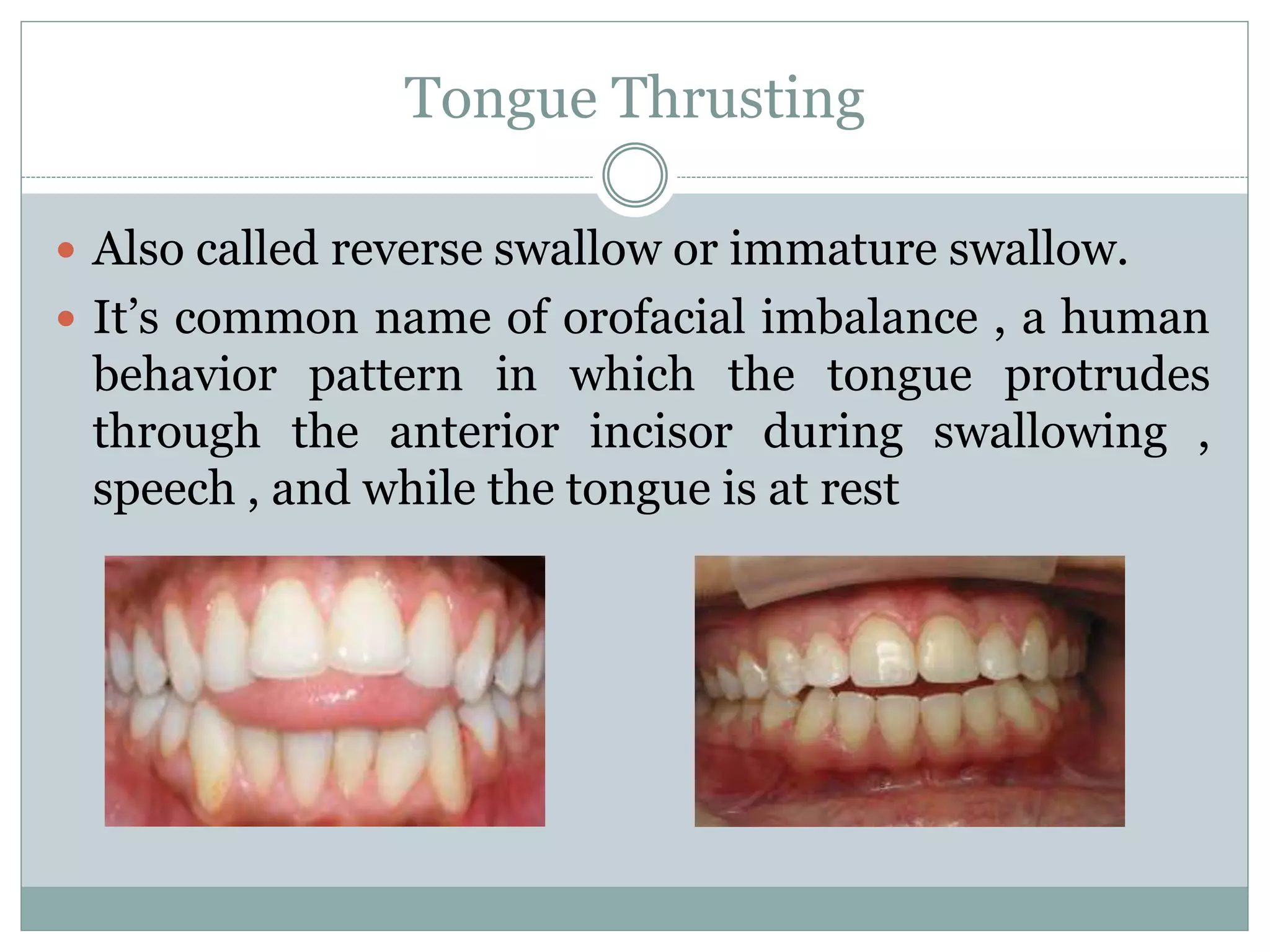

Tongue Thrusting
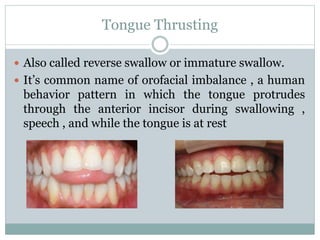
 Also called reverse swallow or immature swallow.
 It’s common name of orofacial imbalance , a human
behavior pattern in which the tongue protrudes
through the anterior incisor during swallowing ,
speech , and while the tongue is at rest
Clinical Features
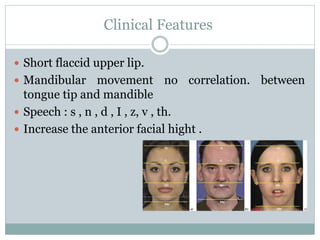
 Short flaccid upper lip.
 Mandibular movement no correlation. between
tongue tip and mandible
 Speech : s , n , d , I , z, v , th.
 Increase the anterior facial hight .
Intraoral Finding
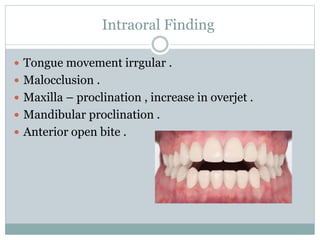
 Tongue movement irrgular .
 Malocclusion .
 Maxilla – proclination , increase in overjet .
 Mandibular proclination .
 Anterior open bite .
Etiology OF tongue thrust
 Retained infantile swallow .
 Upper respirotary tract infection .
 Neurological distrubances .
 Feeding practice.
 hereditary or tongue size.
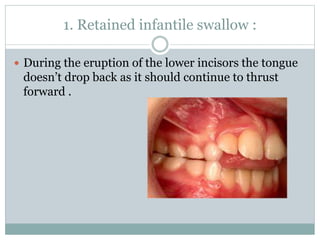
1. Retained infantile swallow :
 During the eruption of the lower incisors the tongue
doesn’t drop back as it should continue to thrust
forward .
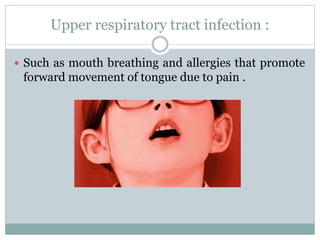
Upper respiratory tract infection :
 Such as mouth breathing and allergies that promote
forward movement of tongue due to pain .
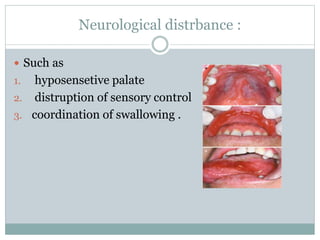
Neurological distrbance :
 Such as
1. hyposensetive palate
2. distruption of sensory control
3. coordination of swallowing .
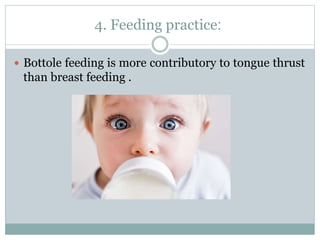
:4. Feeding practice
 Bottole feeding is more contributory to tongue thrust
than breast feeding .
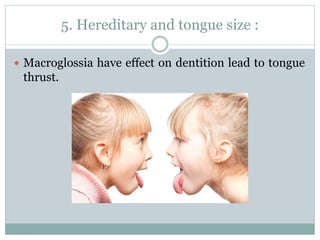
5. Hereditary and tongue size :
 Macroglossia have effect on dentition lead to tongue
thrust.
Classifition of tongue thrusting :
A. Back lund :
 Anterior tongue thrust
 Posterior tongue thrust
B.Moyer :
 Simple tongue thrust
 Complex tongue thrust
 Retained tongue thrust
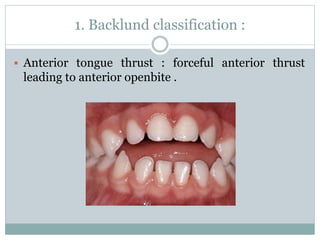
1. Backlund classification :
 Anterior tongue thrust : forceful anterior thrust
leading to anterior openbite .
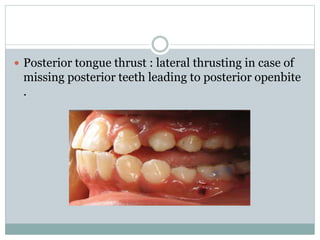
 Posterior tongue thrust : lateral thrusting in case of
missing posterior teeth leading to posterior openbite
.
2. Moyer classification :
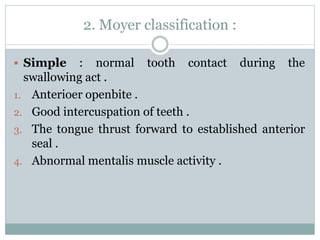
 Simple : normal tooth contact during the
swallowing act .
1. Anterioer openbite .
2. Good intercuspation of teeth .
3. The tongue thrust forward to established anterior
seal .
4. Abnormal mentalis muscle activity .
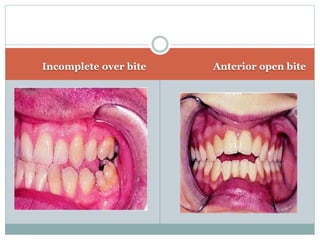
Incomplete over bite Anterior open bite
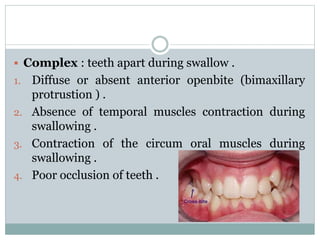
 Complex : teeth apart during swallow .
1. Diffuse or absent anterior openbite (bimaxillary
protrustion ) .
2. Absence of temporal muscles contraction during
swallowing .
3. Contraction of the circum oral muscles during
swallowing .
4. Poor occlusion of teeth .
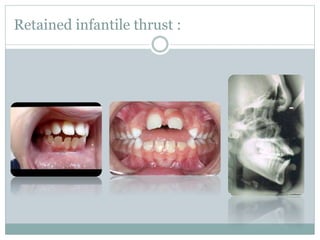
 Retained infantile thrust (endogenous tongue
thrust ) :
 The persistence of infantile swallowing reflex even
after the permanent teeth appear
 The swallowing activity is accompanied by an
anterior thrust of tongue which appear to be
neuromuscular mechanism
 Endogenous tongue thrust associated with
1. Anterior lisp during speech.
2. Affecting to the teeth to extend of preventing the
full vertical development of dento-alveolar segment
3. Incomplete openbite.
4. Proclination of upper and lower incisor
Retained infantile thrust :
Treatement :
Treatment consideration :
 Self correcting by age 8 – 9 yrs
Treatment modalities :
 1. training of correct swallow and posture of tongue .
 2. speech therapy .
 3. Mechanotherapy .
 Correction of malocclusion .
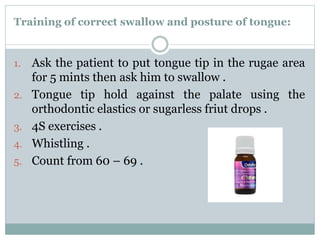
Training of correct swallow and posture of tongue:
1. Ask the patient to put tongue tip in the rugae area
for 5 mints then ask him to swallow .
2. Tongue tip hold against the palate using the
orthodontic elastics or sugarless friut drops .
3. 4S exercises .
4. Whistling .
5. Count from 60 – 69 .
Using appliance as guide in the correct
postioning of tongue preorthodontic trainer :
 It’s aids in correct the positioning of the tongue with
help on tongue tags .
 The tongue guards prevent tongue thrusting when in
place .
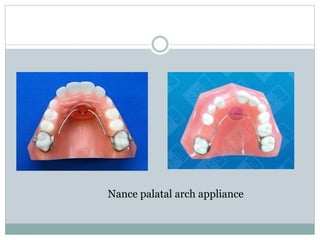
Nance palatal arch appliance
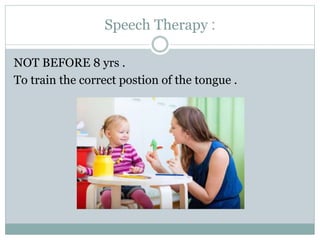
:Speech Therapy
NOT BEFORE 8 yrs .
To train the correct postion of the tongue .
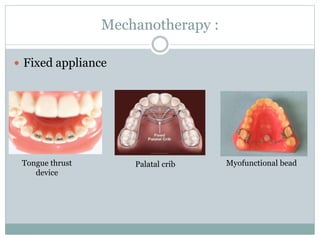
Mechanotherapy :
 Fixed appliance
Tongue thrust
device
Palatal crib Myofunctional bead
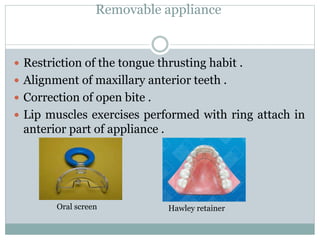
Removable appliance
 Restriction of the tongue thrusting habit .
 Alignment of maxillary anterior teeth .
 Correction of open bite .
 Lip muscles exercises performed with ring attach in
anterior part of appliance .
Oral screen Hawley retainer
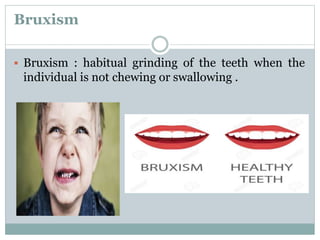
Bruxism
 Bruxism : habitual grinding of the teeth when the
individual is not chewing or swallowing .
Prevleance :
 Commence in infancy with eruption of the first
primary tooth .
 Common occurance is during sleep .
 Incidence of bruxism in chlidren varies widely from 7
% to 88% .
Clinical features :
 1. occlusal trauma .
 2. tooth structure loss .
 3. muscular tenderness .
 4. T.M.J disorder .
 5. headache .
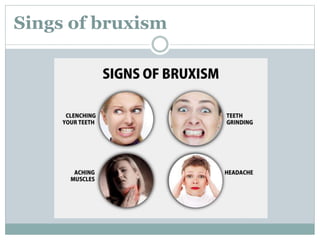
Sings of bruxism
Classification of bruxism :
 1. day time bruxism : it may conscious or
suboconscious and may along with other habit such
as nail biting , chewing pencil …..ect .
 2. night time bruxism : its subconscious grinding
of the teeth at night .
Mangement :
1. Determine the underlying cause and eleminate it .
2. Occlusal adjustment including restoratio and
occlusal splint – biteguard
3. Psychotherapy: like relaxtion exercises.
4. drugs like local anesthetic injection into T.M.J for
muscle , sedative , and muscle relaxant .
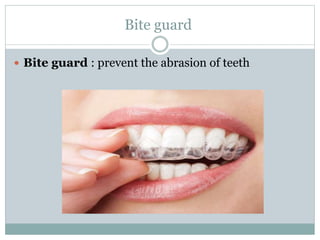
Bite guard
 Bite guard : prevent the abrasion of teeth
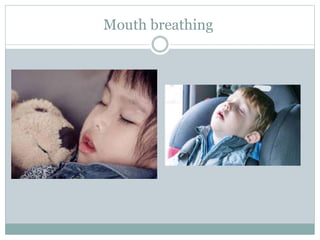
Mouth breathing
Mouth breathing :
 It’s habitual respiration through the month instead
of the nose .
 The main causes of the mouth breathing habit are
realted to nasal obtruction which may due to
hypertrophy of pharyngeal lymphoid tissues
adenoid) , defect in nasal septum , allergic rhinitis .
Classification
1.anatomical : mouth breather whose upperlip
is short that does’nt communicate the lower lip .
2. habitual : perisitence of habit after
elimination of obstructive cause .
3. obstrctive : increase resistance to compelte
obstruction of normal air flow to nasal passage .
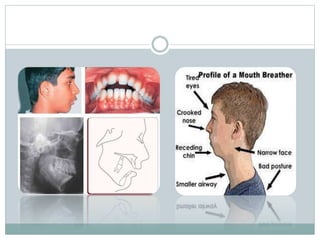
Effect of mouth breathing habit :
1. Increase facial hieght .
2. Posterior teeth will supra-erupt .
3. Mandible will rotate down and back .
4. Openbite develop anteriorly , increase oj.
5. Narrowing of the maxillary arch --- increase
pressure from the stretch cheeks .
6. adenoid fade apperance.
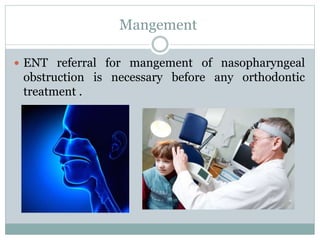
Mangement
 ENT referral for mangement of nasopharyngeal
obstruction is necessary before any orthodontic
treatment .
Thank you

Tongue thrust

  • 1.
    Tongue Thrusting  Alsocalled reverse swallow or immature swallow.  It’s common name of orofacial imbalance , a human behavior pattern in which the tongue protrudes through the anterior incisor during swallowing , speech , and while the tongue is at rest
  • 2.
    Clinical Features  Shortflaccid upper lip.  Mandibular movement no correlation. between tongue tip and mandible  Speech : s , n , d , I , z, v , th.  Increase the anterior facial hight .
  • 3.
    Intraoral Finding  Tonguemovement irrgular .  Malocclusion .  Maxilla – proclination , increase in overjet .  Mandibular proclination .  Anterior open bite .
  • 4.
    Etiology OF tonguethrust  Retained infantile swallow .  Upper respirotary tract infection .  Neurological distrubances .  Feeding practice.  hereditary or tongue size.
  • 5.
    1. Retained infantileswallow :  During the eruption of the lower incisors the tongue doesn’t drop back as it should continue to thrust forward .
  • 6.
    Upper respiratory tractinfection :  Such as mouth breathing and allergies that promote forward movement of tongue due to pain .
  • 7.
    Neurological distrbance : Such as 1. hyposensetive palate 2. distruption of sensory control 3. coordination of swallowing .
  • 8.
    :4. Feeding practice Bottole feeding is more contributory to tongue thrust than breast feeding .
  • 9.
    5. Hereditary andtongue size :  Macroglossia have effect on dentition lead to tongue thrust.
  • 10.
    Classifition of tonguethrusting : A. Back lund :  Anterior tongue thrust  Posterior tongue thrust B.Moyer :  Simple tongue thrust  Complex tongue thrust  Retained tongue thrust
  • 11.
    1. Backlund classification:  Anterior tongue thrust : forceful anterior thrust leading to anterior openbite .
  • 12.
     Posterior tonguethrust : lateral thrusting in case of missing posterior teeth leading to posterior openbite .
  • 13.
    2. Moyer classification:  Simple : normal tooth contact during the swallowing act . 1. Anterioer openbite . 2. Good intercuspation of teeth . 3. The tongue thrust forward to established anterior seal . 4. Abnormal mentalis muscle activity .
  • 14.
    Incomplete over biteAnterior open bite
  • 15.
     Complex :teeth apart during swallow . 1. Diffuse or absent anterior openbite (bimaxillary protrustion ) . 2. Absence of temporal muscles contraction during swallowing . 3. Contraction of the circum oral muscles during swallowing . 4. Poor occlusion of teeth .
  • 16.
     Retained infantilethrust (endogenous tongue thrust ) :  The persistence of infantile swallowing reflex even after the permanent teeth appear  The swallowing activity is accompanied by an anterior thrust of tongue which appear to be neuromuscular mechanism
  • 17.
     Endogenous tonguethrust associated with 1. Anterior lisp during speech. 2. Affecting to the teeth to extend of preventing the full vertical development of dento-alveolar segment 3. Incomplete openbite. 4. Proclination of upper and lower incisor
  • 18.
  • 19.
    Treatement : Treatment consideration:  Self correcting by age 8 – 9 yrs Treatment modalities :  1. training of correct swallow and posture of tongue .  2. speech therapy .  3. Mechanotherapy .  Correction of malocclusion .
  • 20.
    Training of correctswallow and posture of tongue: 1. Ask the patient to put tongue tip in the rugae area for 5 mints then ask him to swallow . 2. Tongue tip hold against the palate using the orthodontic elastics or sugarless friut drops . 3. 4S exercises . 4. Whistling . 5. Count from 60 – 69 .
  • 21.
    Using appliance asguide in the correct postioning of tongue preorthodontic trainer :  It’s aids in correct the positioning of the tongue with help on tongue tags .  The tongue guards prevent tongue thrusting when in place .
  • 22.
  • 23.
    :Speech Therapy NOT BEFORE8 yrs . To train the correct postion of the tongue .
  • 24.
    Mechanotherapy :  Fixedappliance Tongue thrust device Palatal crib Myofunctional bead
  • 25.
    Removable appliance  Restrictionof the tongue thrusting habit .  Alignment of maxillary anterior teeth .  Correction of open bite .  Lip muscles exercises performed with ring attach in anterior part of appliance . Oral screen Hawley retainer
  • 26.
    Bruxism  Bruxism :habitual grinding of the teeth when the individual is not chewing or swallowing .
  • 27.
    Prevleance :  Commencein infancy with eruption of the first primary tooth .  Common occurance is during sleep .  Incidence of bruxism in chlidren varies widely from 7 % to 88% .
  • 28.
    Clinical features : 1. occlusal trauma .  2. tooth structure loss .  3. muscular tenderness .  4. T.M.J disorder .  5. headache .
  • 29.
  • 30.
    Classification of bruxism:  1. day time bruxism : it may conscious or suboconscious and may along with other habit such as nail biting , chewing pencil …..ect .  2. night time bruxism : its subconscious grinding of the teeth at night .
  • 31.
    Mangement : 1. Determinethe underlying cause and eleminate it . 2. Occlusal adjustment including restoratio and occlusal splint – biteguard 3. Psychotherapy: like relaxtion exercises. 4. drugs like local anesthetic injection into T.M.J for muscle , sedative , and muscle relaxant .
  • 32.
    Bite guard  Biteguard : prevent the abrasion of teeth
  • 33.
  • 34.
    Mouth breathing : It’s habitual respiration through the month instead of the nose .  The main causes of the mouth breathing habit are realted to nasal obtruction which may due to hypertrophy of pharyngeal lymphoid tissues adenoid) , defect in nasal septum , allergic rhinitis .
  • 35.
    Classification 1.anatomical : mouthbreather whose upperlip is short that does’nt communicate the lower lip . 2. habitual : perisitence of habit after elimination of obstructive cause . 3. obstrctive : increase resistance to compelte obstruction of normal air flow to nasal passage .
  • 36.
    Effect of mouthbreathing habit : 1. Increase facial hieght . 2. Posterior teeth will supra-erupt . 3. Mandible will rotate down and back . 4. Openbite develop anteriorly , increase oj. 5. Narrowing of the maxillary arch --- increase pressure from the stretch cheeks . 6. adenoid fade apperance.
  • 38.
    Mangement  ENT referralfor mangement of nasopharyngeal obstruction is necessary before any orthodontic treatment .
  • 39.