PRE-STRESSED
  CONCRETE
 MUHAMMAD SHAHRON NIZAM
    MUHAMMAD SHABERY
        ZULHELMI
        ROSZITA
        KARTINA
      NURUL NAZIRA
       NUR ZANAH
Introduction
   A prestressed concrete structure is
different from a conventional reinforced
concrete structure due to the application
of an initial load on the structure prior to
its use. The initial load or ‘prestress’ is
applied to enable the structure to
counteract the stresses arising during its
service period. The prestressing of a
structure is not the only instance of
prestressing. The concept of prestressing
existed before the applications in
concrete.
Pre stressed concrete is a method
for overcoming concrete's natural
weakness in tension
  It can be used to produce beams,
floors or bridges with a longer span
than is practical with ordinary
reinforced concrete
Pre stressing tendons (generally of high
tensile steel cable or rods) are used to provide
a clamping load which produces a
compressive stress that balances the tensile
stress that the concrete compression member
would otherwise experience due to a bending
load
 Traditional reinforced concrete is based on
the use of steel reinforcement bars, re bars,
inside poured concrete.
Pre – tensioned concrete
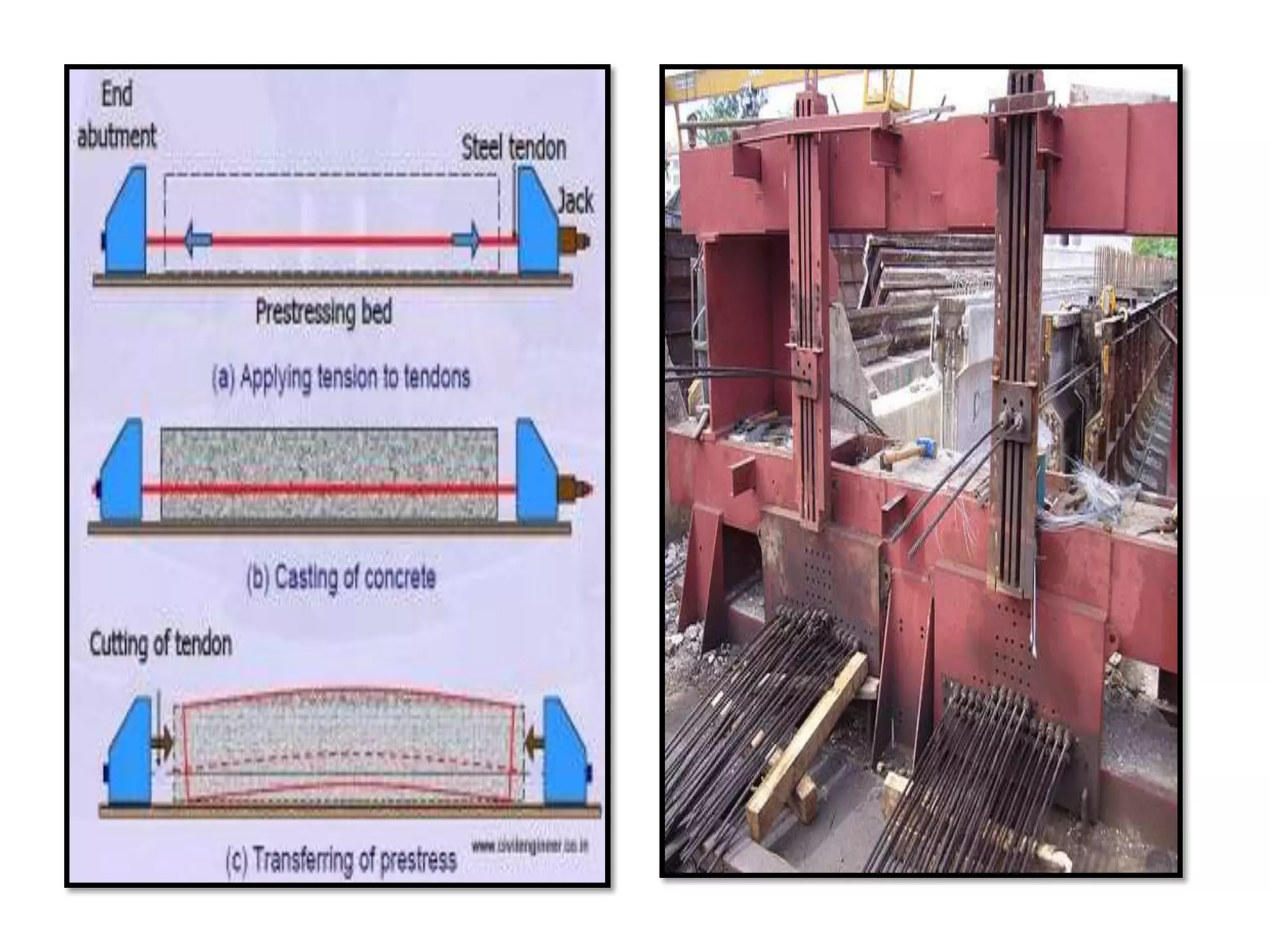
   In pre – tensioning system, the high- strength
steel tendons are pulled between two end abutments
(also called bulkheads) prior to the casting of
concrete. The abutments are fixed at the end pre
stressing bed
   Once the concrete attains the desires strength for
pre stressing, the tendon are cut loose from the
abutments. The pre stress is transferred to the
concrete from the tendons, due the bond between
them
   During the transfer of pre stress, the member
undergoes elastic shortening. If the tendons are
located eccentrically, the member is likely to bend
and deflect (camber)
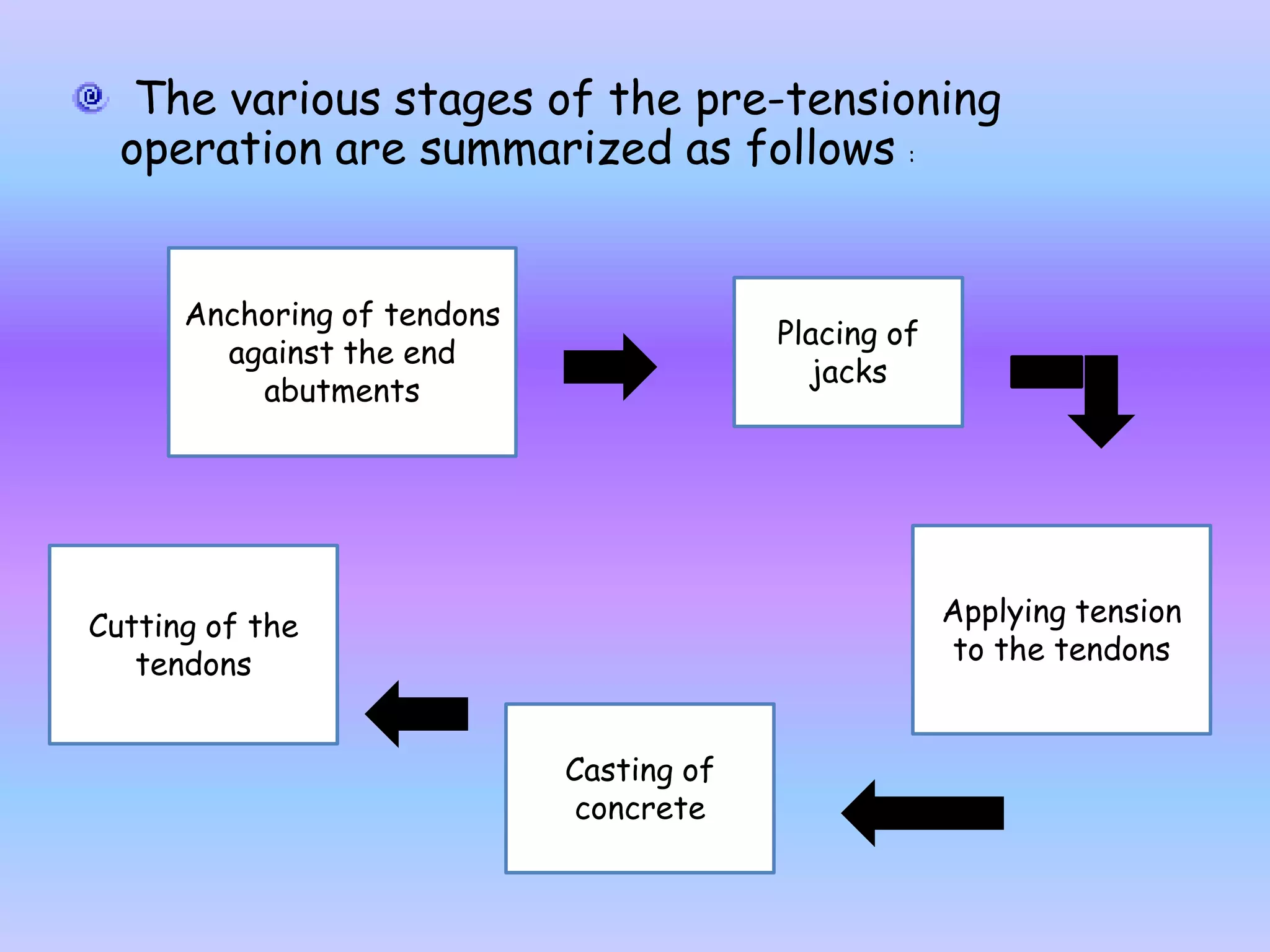
The various stages of the pre-tensioning
  operation are summarized as follows :


      Anchoring of tendons
                                          Placing of
        against the end
                                            jacks
          abutments


Cutting of the                                         Applying tension
   tendons                                             to the tendons


                             Casting of
                             concrete
Post – tensioned concrete
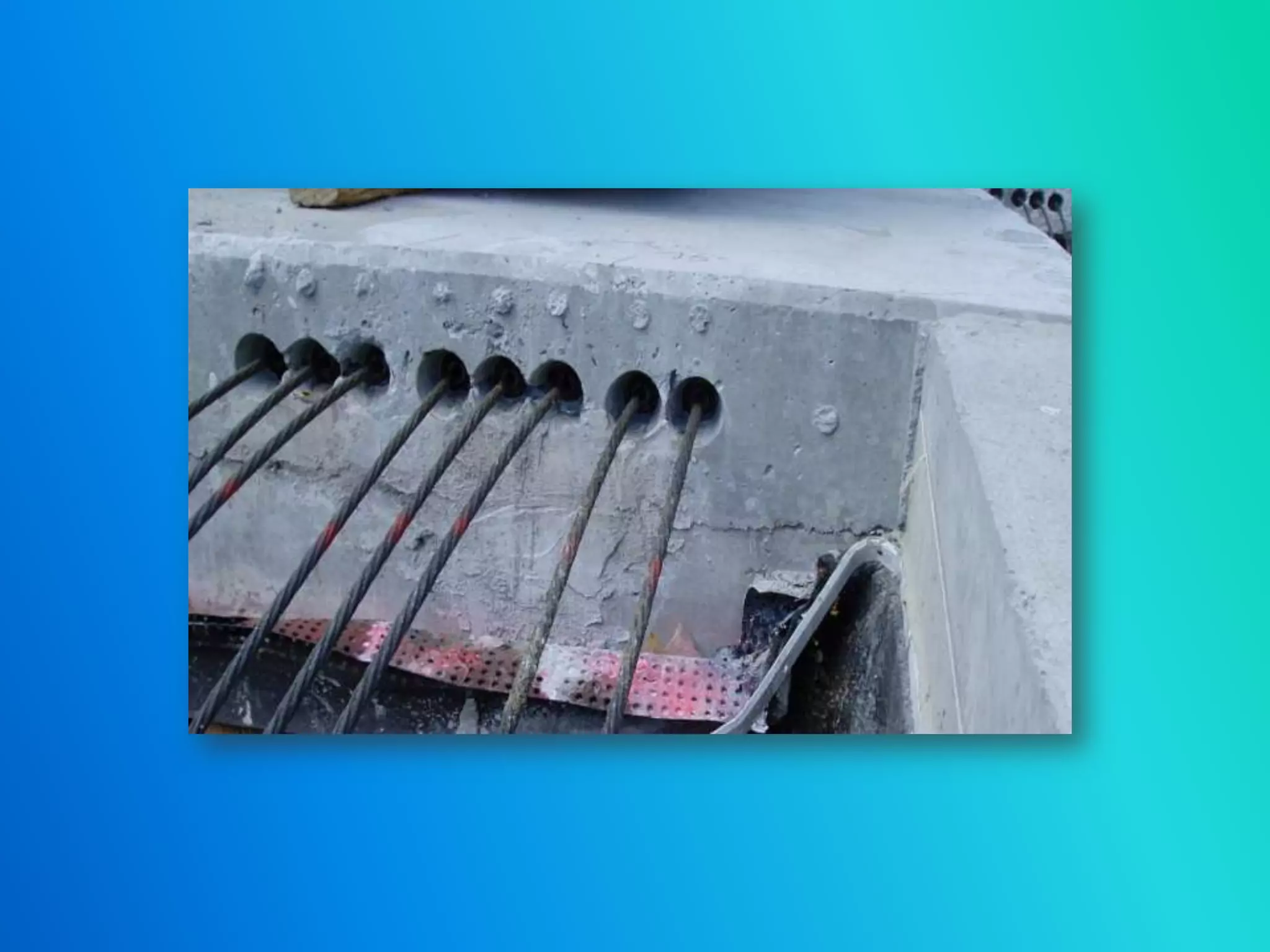
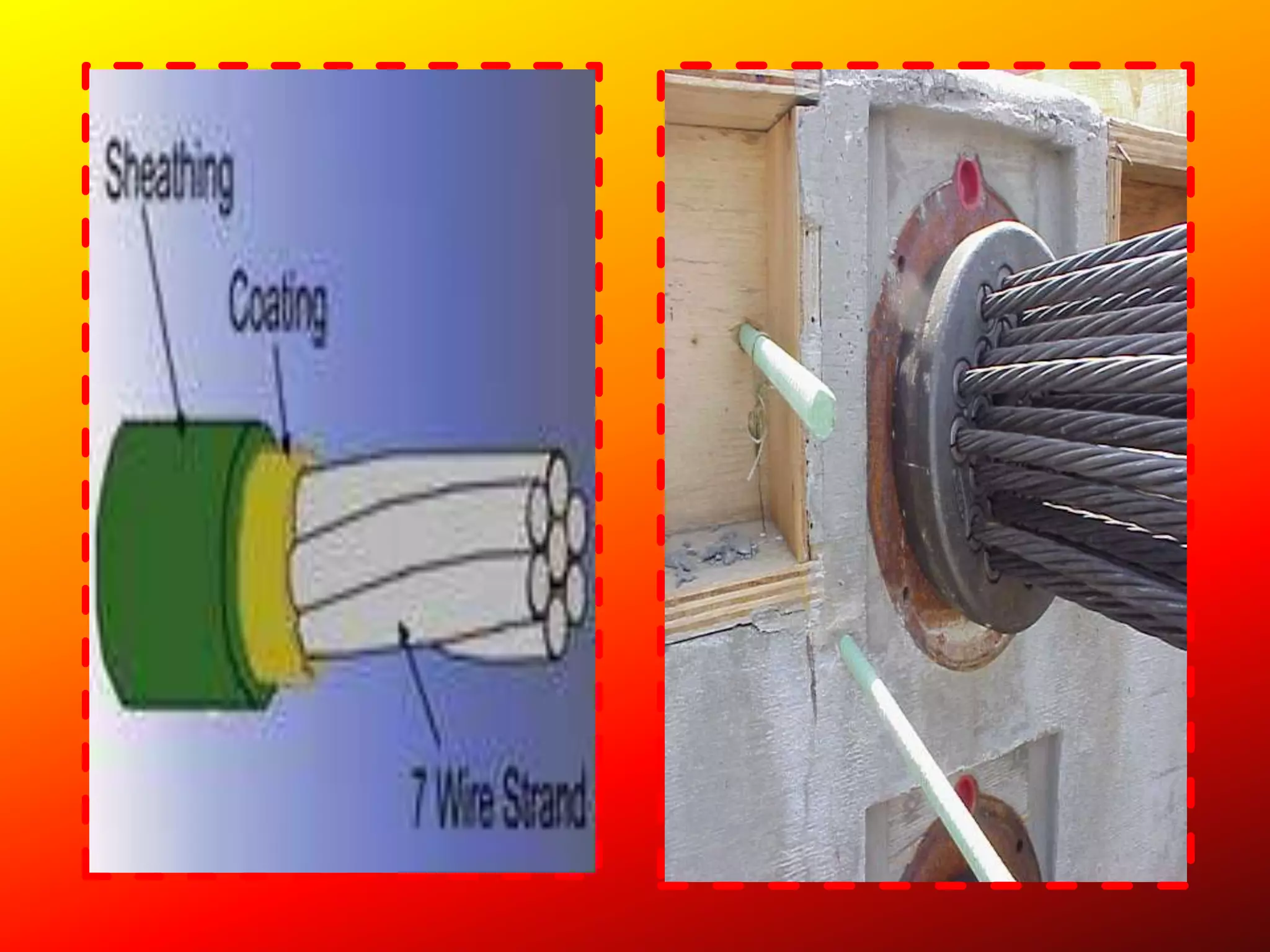
  Post-tensioning is a method of
 reinforcing (strengthening) concrete or
 other materials with high-strength
 steel strands or bars, typically referred
 to as tendons
  Post-tensioning applications include
 office and apartment buildings, parking
 structures, slabs-on-ground, bridges,
 sports stadiums, rock and soil anchors,
 and water-tanks
Pre-tensioned Concrete
 Improving the performance of the
 building   under     various    service
 condition.
 Allow to carry a greater load or span a
 greater    distance    then    ordinary
 reinforce concrete.
   It permits steel to be used at
 stresses several times larger than
 those permitted for reinforcing bars
Post-tensioned Concrete
  Large      reduction      in   traditional
  reinforcement requirements as tendons
  cannot distress in accidents
  Tendons can be easily "woven" allowing a
  more efficient design approach
  Higher ultimate strength due to bond
  generated between the strand and
  concrete
  Strong against compression
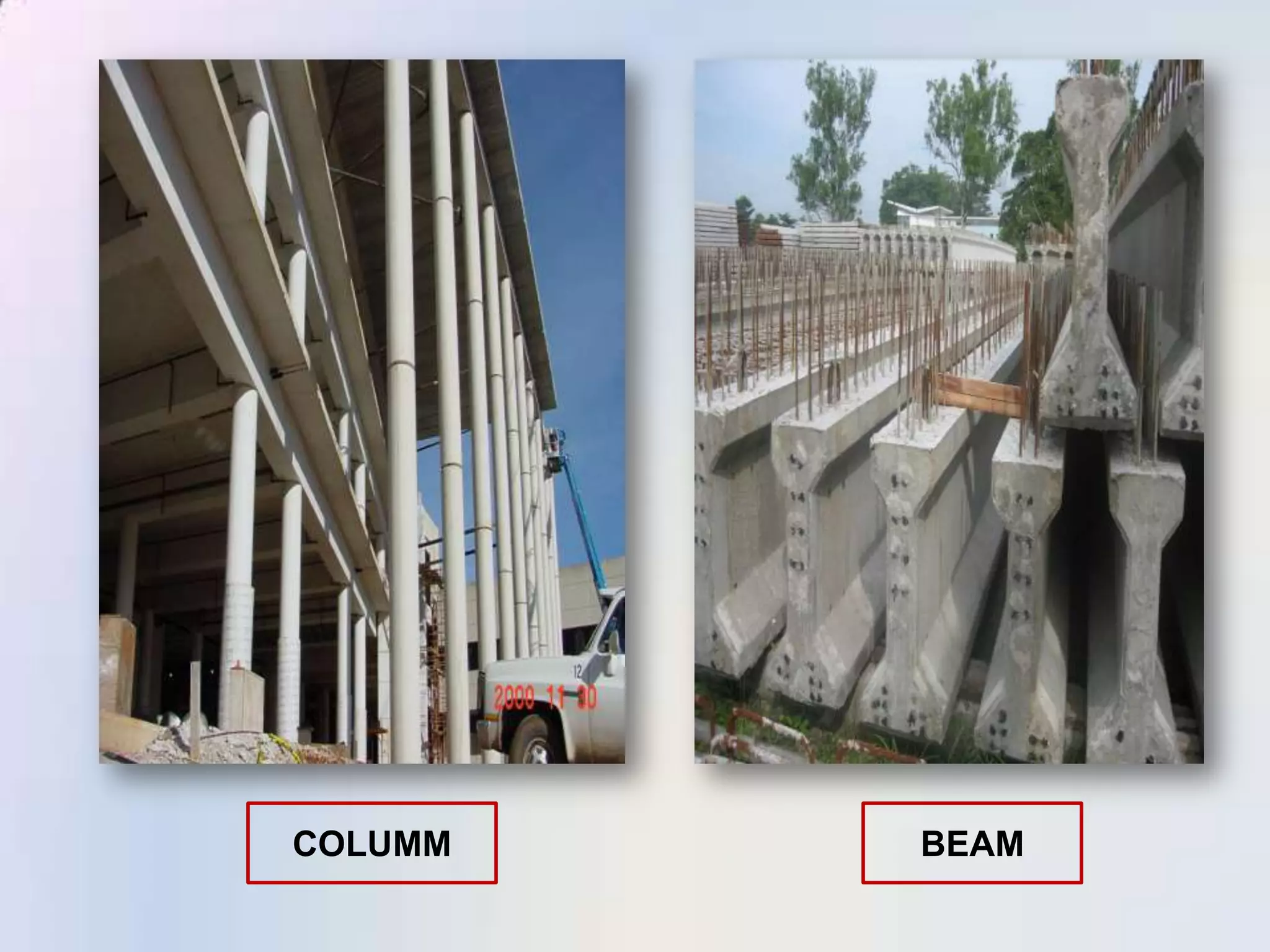
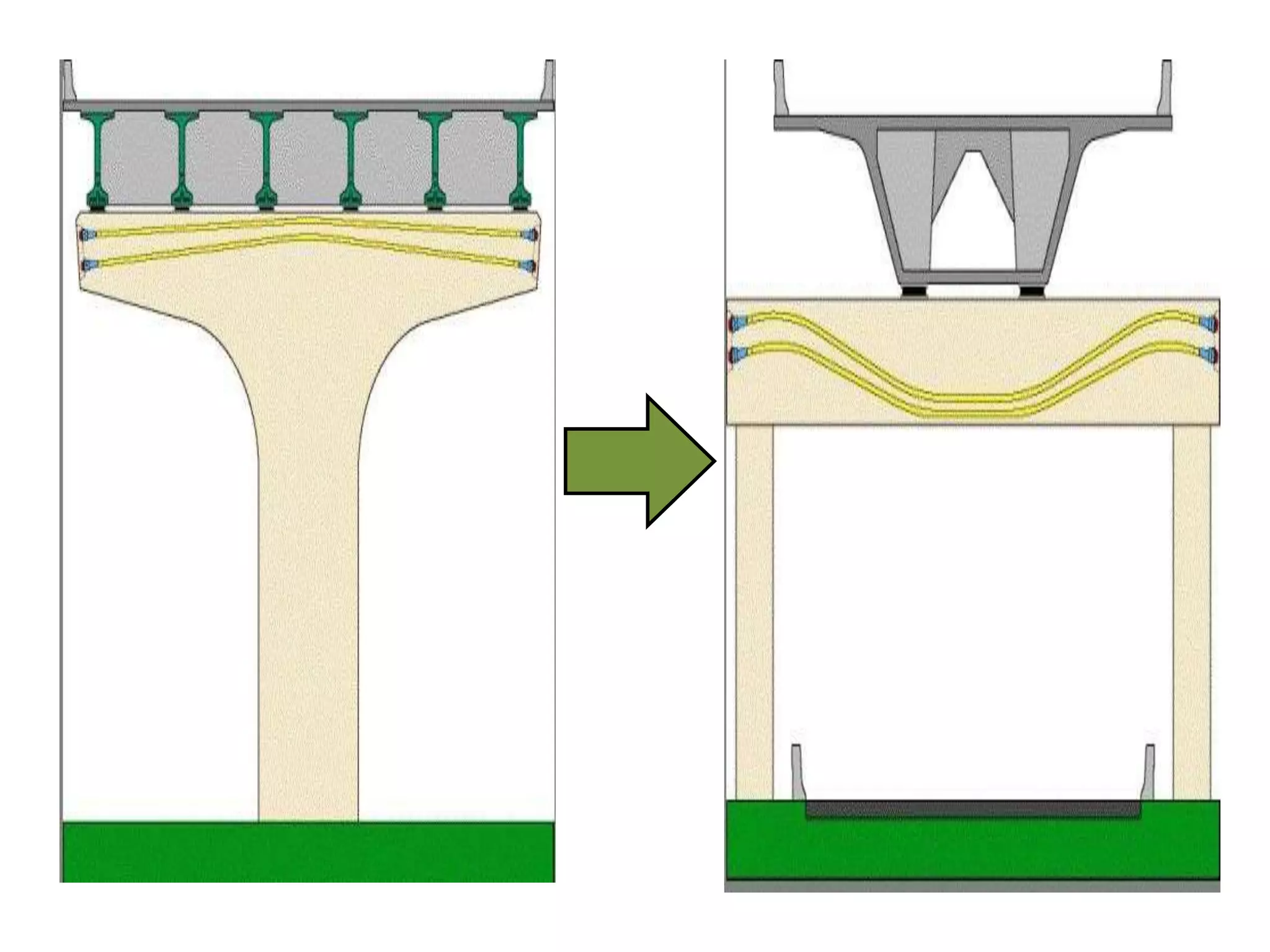
COLUMM   BEAM
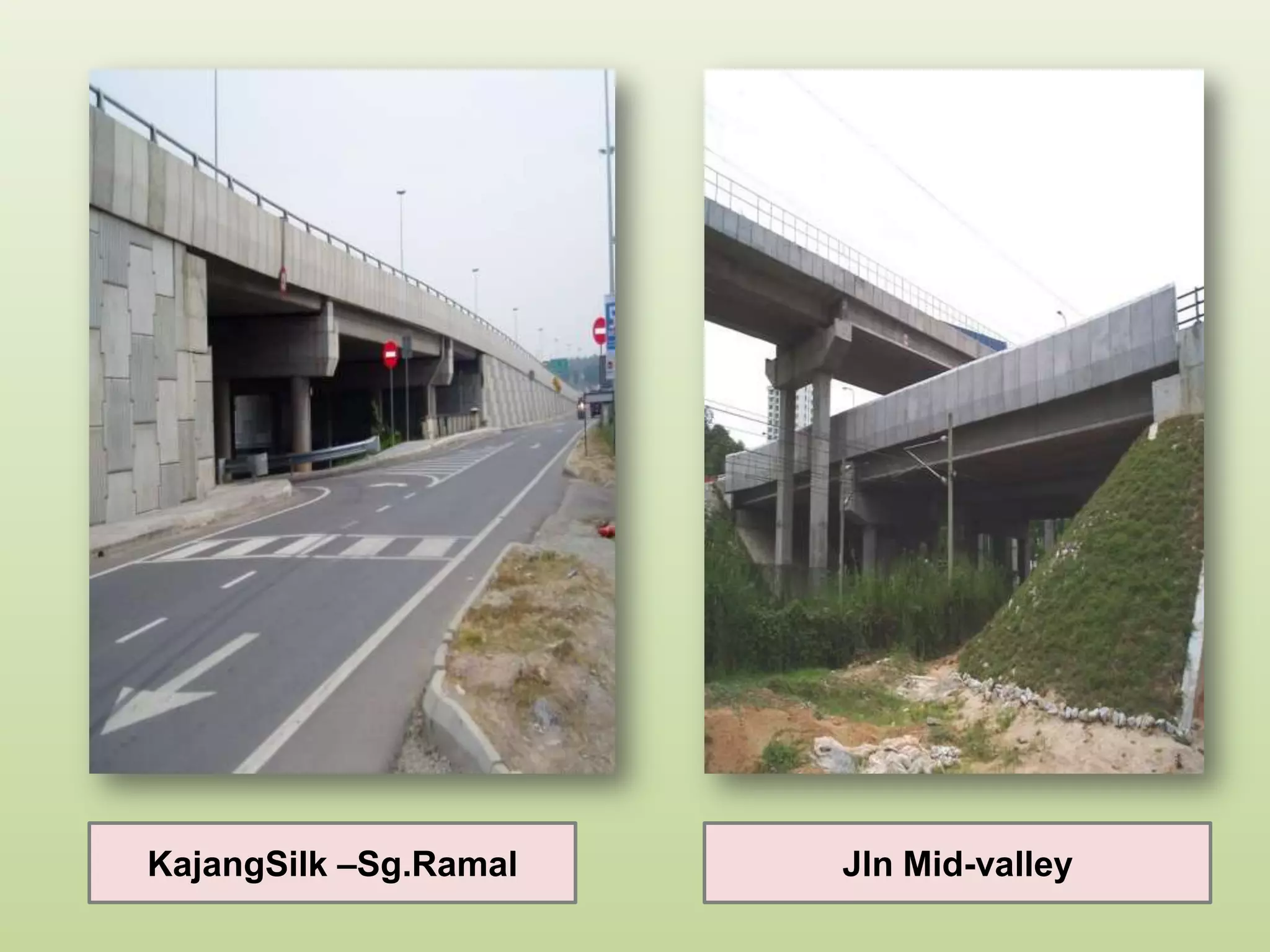
KajangSilk –Sg.Ramal   Jln Mid-valley
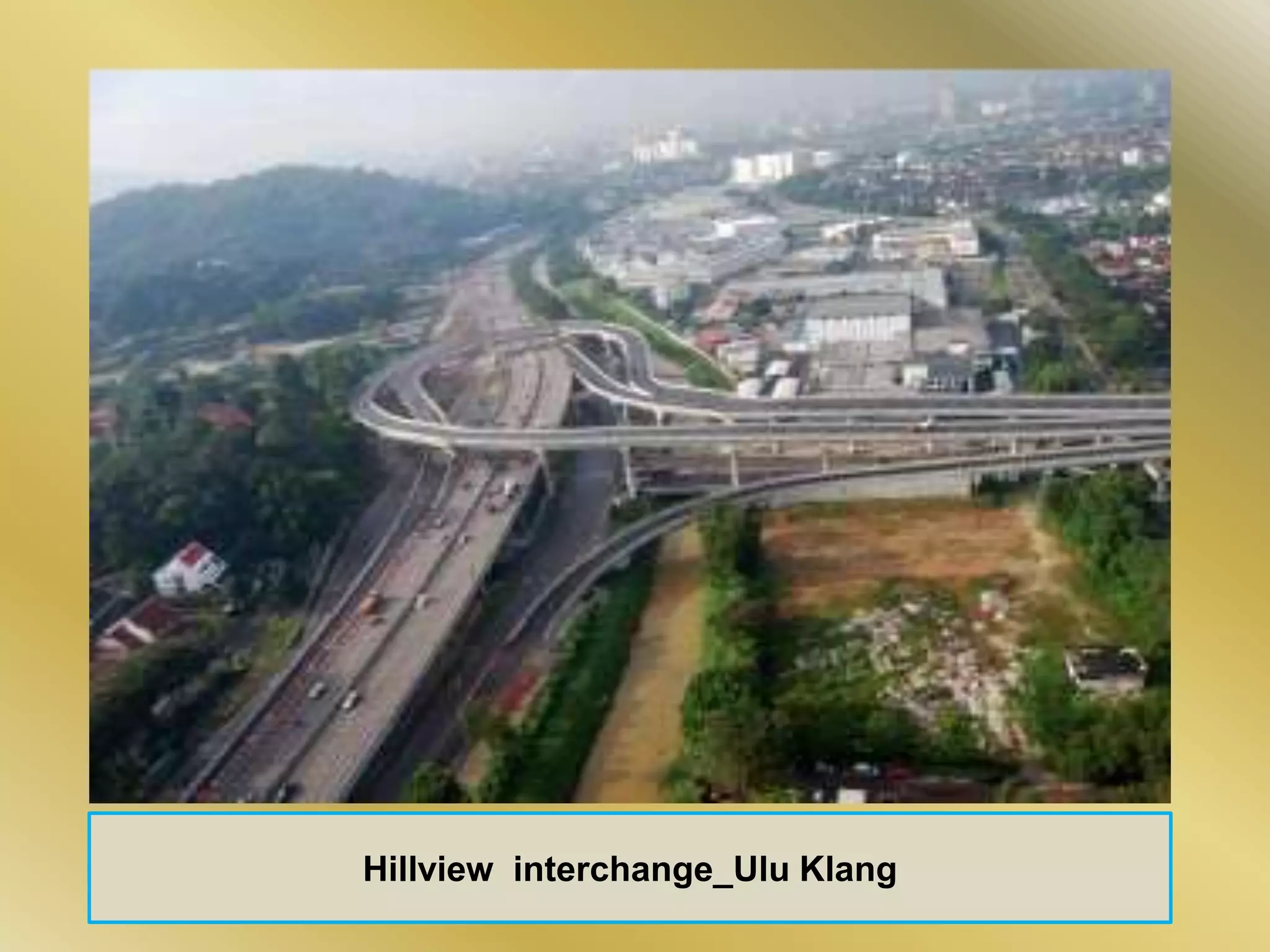
Hillview interchange_Ulu Klang
References
http://en.wikipedia.org/wiki/Prestressed_concrete
http://www.concretenetwork.com/post-
tension/what-is.html
http://nptel.iitm.ac.in/courses/IIT-
MADRAS/PreStressed_Concrete_Structures/pdf/
1_Introduction/1.2_Advantages_Types%20of%20P
restressing.pdf
http://www.scribd.com/doc/22420304/1-3-Pre-
Tensioning-Systems
http://nptel.iitm.ac.in/courses/IIT-
MADRAS/PreStressed_Concrete_Structures/pdf/
1_Introduction/1.1_Introduction.pdf
The end…

Prestressed concrete baru

  • 1.
    PRE-STRESSED CONCRETE MUHAMMAD SHAHRON NIZAM MUHAMMAD SHABERY ZULHELMI ROSZITA KARTINA NURUL NAZIRA NUR ZANAH
  • 2.
    Introduction A prestressed concrete structure is different from a conventional reinforced concrete structure due to the application of an initial load on the structure prior to its use. The initial load or ‘prestress’ is applied to enable the structure to counteract the stresses arising during its service period. The prestressing of a structure is not the only instance of prestressing. The concept of prestressing existed before the applications in concrete.
  • 4.
    Pre stressed concreteis a method for overcoming concrete's natural weakness in tension It can be used to produce beams, floors or bridges with a longer span than is practical with ordinary reinforced concrete
  • 5.
    Pre stressing tendons(generally of high tensile steel cable or rods) are used to provide a clamping load which produces a compressive stress that balances the tensile stress that the concrete compression member would otherwise experience due to a bending load Traditional reinforced concrete is based on the use of steel reinforcement bars, re bars, inside poured concrete.
  • 7.
    Pre – tensionedconcrete In pre – tensioning system, the high- strength steel tendons are pulled between two end abutments (also called bulkheads) prior to the casting of concrete. The abutments are fixed at the end pre stressing bed Once the concrete attains the desires strength for pre stressing, the tendon are cut loose from the abutments. The pre stress is transferred to the concrete from the tendons, due the bond between them During the transfer of pre stress, the member undergoes elastic shortening. If the tendons are located eccentrically, the member is likely to bend and deflect (camber)
  • 8.
    The various stagesof the pre-tensioning operation are summarized as follows : Anchoring of tendons Placing of against the end jacks abutments Cutting of the Applying tension tendons to the tendons Casting of concrete
  • 11.
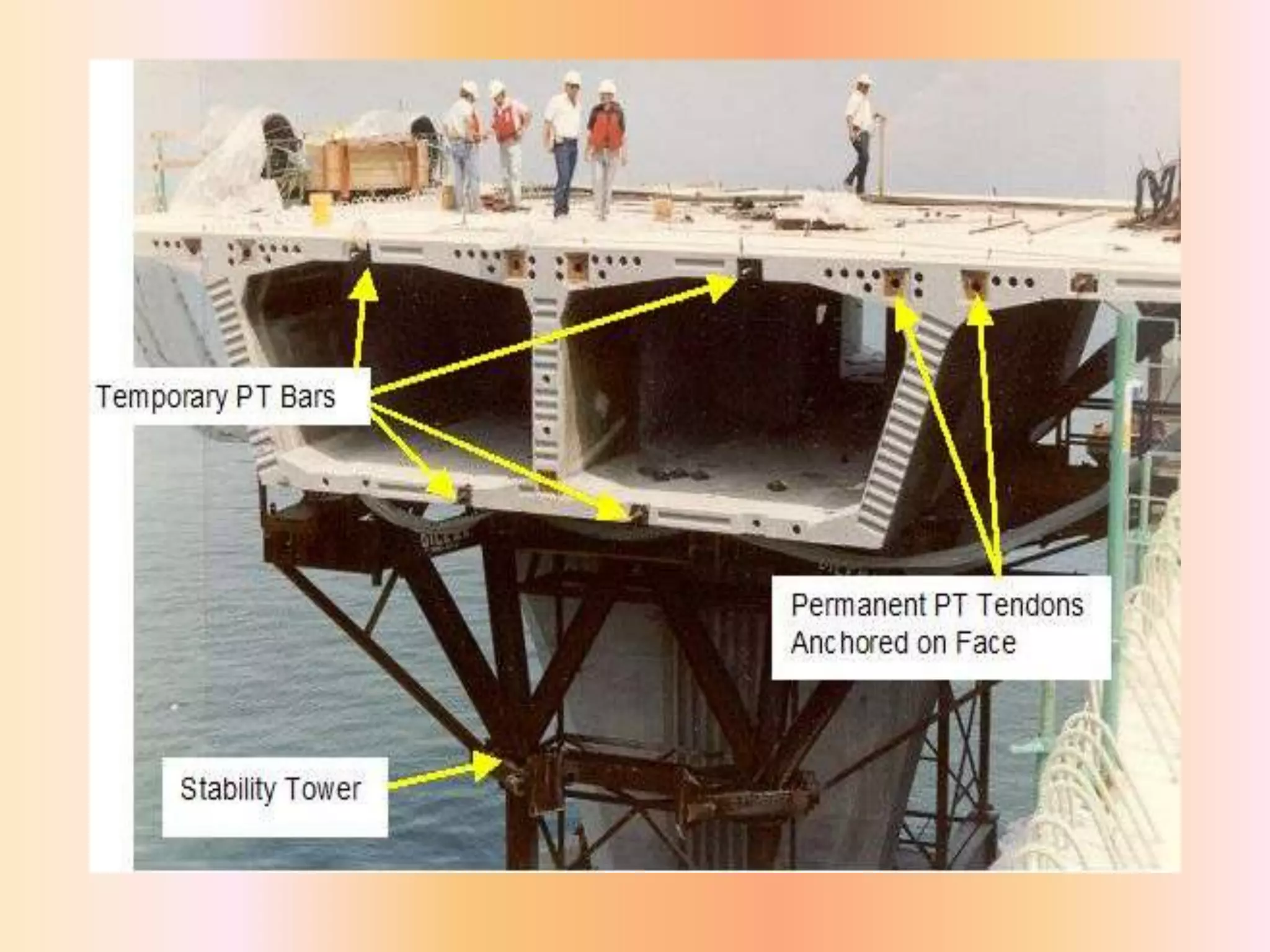
    Post – tensionedconcrete Post-tensioning is a method of reinforcing (strengthening) concrete or other materials with high-strength steel strands or bars, typically referred to as tendons Post-tensioning applications include office and apartment buildings, parking structures, slabs-on-ground, bridges, sports stadiums, rock and soil anchors, and water-tanks
  • 14.
    Pre-tensioned Concrete Improvingthe performance of the building under various service condition. Allow to carry a greater load or span a greater distance then ordinary reinforce concrete. It permits steel to be used at stresses several times larger than those permitted for reinforcing bars
  • 15.
    Post-tensioned Concrete Large reduction in traditional reinforcement requirements as tendons cannot distress in accidents Tendons can be easily "woven" allowing a more efficient design approach Higher ultimate strength due to bond generated between the strand and concrete Strong against compression
  • 17.
    COLUMM BEAM
  • 18.
  • 20.
  • 22.
  • 23.