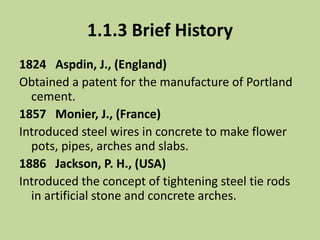
1.1.3 Brief History
1824 Aspdin, J., (England)
Obtained a patent for the manufacture of Portland
cement.
1857 Monier, J., (France)
Introduced steel wires in concrete to make flower
pots, pipes, arches and slabs.
1886 Jackson, P. H., (USA)
Introduced the concept of tightening steel tie rods
in artificial stone and concrete arches.
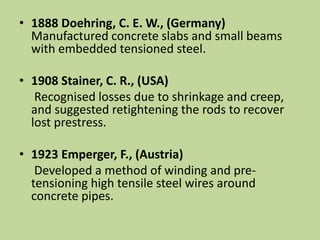
• 1888 Doehring, C. E. W., (Germany)
Manufactured concrete slabs and small beams
with embedded tensioned steel.
• 1908 Stainer, C. R., (USA)
Recognised losses due to shrinkage and creep,
and suggested retightening the rods to recover
lost prestress.
• 1923 Emperger, F., (Austria)
Developed a method of winding and pre-
tensioning high tensile steel wires around
concrete pipes.
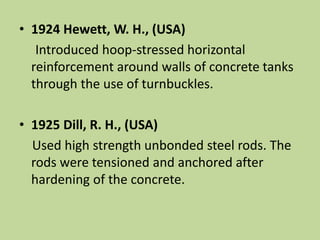
• 1924 Hewett, W. H., (USA)
Introduced hoop-stressed horizontal
reinforcement around walls of concrete tanks
through the use of turnbuckles.
• 1925 Dill, R. H., (USA)
Used high strength unbonded steel rods. The
rods were tensioned and anchored after
hardening of the concrete.
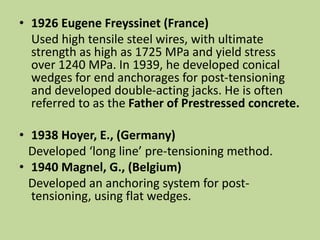
• 1926 Eugene Freyssinet (France)
Used high tensile steel wires, with ultimate
strength as high as 1725 MPa and yield stress
over 1240 MPa. In 1939, he developed conical
wedges for end anchorages for post-tensioning
and developed double-acting jacks. He is often
referred to as the Father of Prestressed concrete.
• 1938 Hoyer, E., (Germany)
Developed ‘long line’ pre-tensioning method.
• 1940 Magnel, G., (Belgium)
Developed an anchoring system for post-
tensioning, using flat wedges.
• During the Second World War, applications of
prestressed and precast concrete increased
rapidly
• Guyon, Y., (France) built numerous prestressed
concrete bridges in western and central
Europe. Abeles, P. W., (England) introduced
the concept of partial prestressing. Leonhardt,
F., (Germany), Mikhailor, V., (Russia) and Lin, T.
Y., (USA) are famous in the field of prestressed
concrete.
• The International Federation for Prestressing
(FIP), a professional organisation in Europe was
established in 1952. The Precast/Prestressed
Concrete Institute (PCI) was established in USA in
1954.
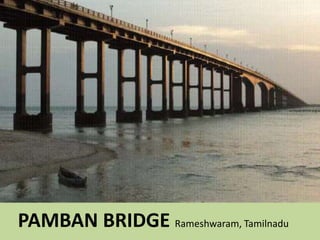
• In India, the applications of prestressed concrete
diversified over the years. The first prestressed
concrete bridge was built in 1948 under the
Assam Rail Link Project. Among bridges, the
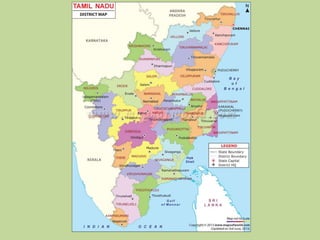
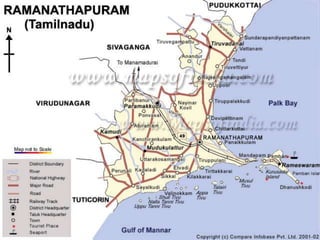
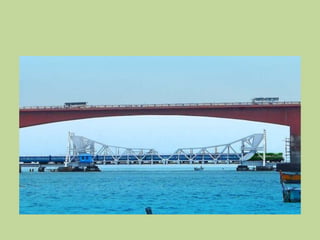
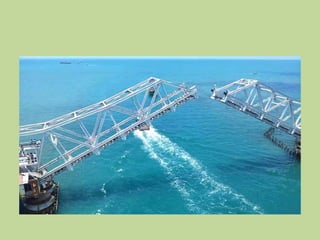
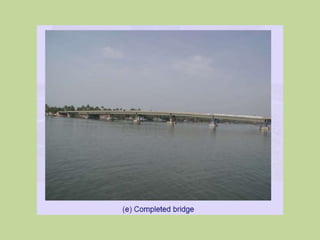
Pamban Road Bridge at Rameshwaram,
Tamilnadu, remains a classic example of the use
of prestressed concrete girders.
PAMBAN BRIDGE Rameshwaram, Tamilnadu
1.1.4 Development of Building Materials
Definitions
The terms commonly used in prestressed concrete are
explained. The terms are placed in groups as per usage.
Forms of Prestressing Steel
• Wires : Prestressing wire is a single unit made of steel.
• Strands: Two, three or seven wires are wound to form a
prestressing strand.
• Tendon: A group of strands or wires are wound to form
a prestressing tendon.
• Cable : A group of tendons form a prestressing cable.
• Bars : A cable can be made up of a single steel bar. The
diameter of a bar is much larger than that of a wire.
Nature of Concrete-Steel Interface
Bonded tendon
When there is adequate bond between the
prestressing tendon and concrete, it is called a
bonded tendon. Pre-tensioned and grouted post-
tensioned tendons are bonded tendons.
Unbonded tendon
When there is no bond between the prestressing
tendon and concrete, it is called unbonded
tendon. When grout is not applied after post-
tensioning, the tendon is an unbonded tendon.
Stages of Loading
The analysis of prestressed members can be different for
the different stages of loading. The stages of loading
are as follows.
1) Initial : It can be subdivided into two stages.
a) During tensioning of steel
b) At transfer of prestress to concrete.
2) Intermediate : This includes the loads during
transportation of the prestressed members.
3) Final : It can be subdivided into two stages.
a) At service, during operation.
b) At ultimate, during extreme events.
Advantages of Prestressing
The prestressing of concrete has several
advantages as compared to traditional
reinforced concrete (RC) without prestressing.
A fully prestressed concrete member is usually
subjected to compression during service life.
This rectifies several deficiencies of concrete.
Advantages of Prestressing
1) Section remains uncracked under service loads
• Reduction of steel corrosion
– Increase in durability.
• Full section is utilised
– Higher moment of inertia (higher stiffness)
– Less deformations (improved serviceability).
• Suitable for use in pressure vessels, liquid retaining
structures.
• Increases the shear capacity.
• Improved performance (resilience) under dynamic and
fatigue loading.
2) High span-to-depth ratios
• Larger spans possible with prestressing (bridges,
buildings with large column-free spaces)
• Typical values of span-to-depth ratios in slabs are given
below.
Non-prestressed slab 28:1
Prestressed slab 45:1
For the same span, less depth compared to RC member.
• Reduction in self weight
• More aesthetic appeal due to slender sections
• More economical sections.
3) Suitable for precast construction The advantages of
precast construction are as follows.
• Rapid construction
• Better quality control
• Reduced maintenance
• Suitable for repetitive construction
• Multiple use of formwork
⇒ Reduction of formwork
• Availability of standard shapes.
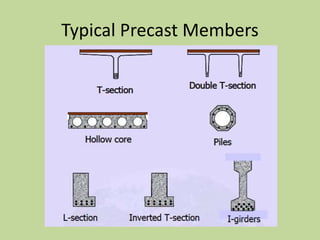
Typical Precast Members
Limitations of Prestressing
• Prestressing needs skilled technology. Hence,
it is not as common as reinforced concrete.
• The use of high strength materials is costly.
• There is additional cost in auxiliary
equipments.
• There is need for quality control and
inspection.
Types of Prestressing
Source of prestressing force
This classification is based on the method
by which the prestressing force is generated.
There are four sources of prestressing force:
Mechanical, hydraulic, electrical & Chemical.
External or internal prestressing
This classification is based on the location
of the prestressing tendon with respect to the
concrete section.
Pre-tensioning or post-tensioning
This is the most important classification
and is based on the sequence of casting the
concrete and applying tension to the tendons.
Linear or circular prestressing
This classification is based on the shape of
the member prestressed.
Full, limited or partial prestressing
Based on the amount of prestressing force,
three types of prestressing are defined.
Uniaxial, biaxial or multi-axial prestressing
As the names suggest, the classification is
based on the directions of prestressing a
member.
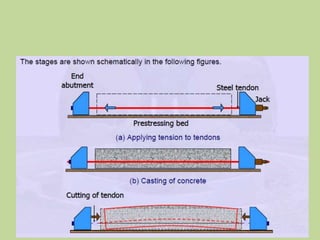
Stages of Pre-tensioning
• In pre-tensioning system, the high-strength
steel tendons are pulled between two end
abutments (also called bulkheads) prior to the
casting of concrete. The abutments are fixed
at the ends of a prestressing bed.
• Once the concrete attains the desired strength
for prestressing, the tendons are cut loose
from the abutments.
The prestress is transferred to the concrete from the tendons,
due to the bond between them. During the transfer of prestress,
the member undergoes elastic shortening. If the tendons are
located eccentrically, the member is likely to bend and deflect
(camber).
The various stages of the pre-tensioning operation are
summarised as follows.
1) Anchoring of tendons against the end abutments
2) Placing of jacks
3) Applying tension to the tendons
4) Casting of concrete
5) Cutting of the tendons.
Advantages of Pre-tensioning
The relative advantages of pre-tensioning as
compared to post-tensioning are as follows.
• Pre-tensioning is suitable for precast members
produced in bulk.
• In pre-tensioning large anchorage device is not
present.
Disadvantages of Pre-tensioning
The relative disadvantages are as follows.
• A prestressing bed is required for the pre-
tensioning operation.
• There is a waiting period in the prestressing
bed, before the concrete attains sufficient
strength.
• There should be good bond between concrete
and steel over the transmission length.
Devices
The essential devices for pre-tensioning are as
follows.
• Prestressing bed
• End abutments
• Shuttering / mould
• Jack
• Anchoring device
• Harping device (optional)
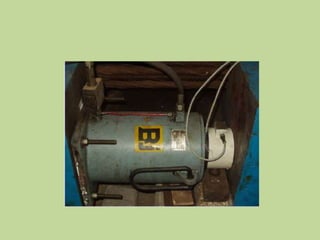
Jacks
The jacks are used to apply tension to the
tendons. Hydraulic jacks are commonly used.
These jacks work on oil pressure generated by
a pump. The principle behind the design of
jacks is Pascal’s law. The load applied by a jack
is measured by the pressure reading from a
gauge attached to the oil inflow or by a
separate load cell.
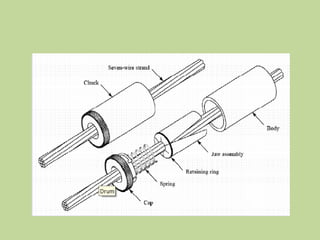
Anchoring Devices
Anchoring devices are often made on the
wedge and friction principle. In pre-tensioned
members, the tendons are to be held in
tension during the casting and hardening of
concrete. Here simple and cheap quick-release
grips are generally adopted
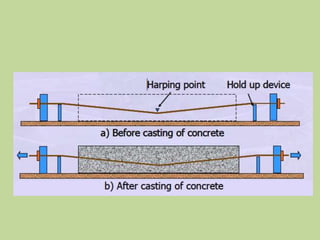
Harping Devices
The tendons are frequently bent, except in
cases of slabs-on-grade, poles, piles etc. The
tendons are bent (harped) in between the
supports with a shallow sag as shown below.
Stages of Post-tensioning
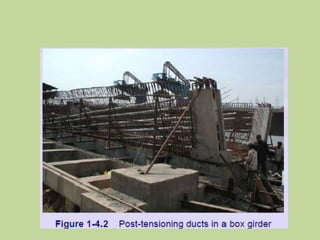
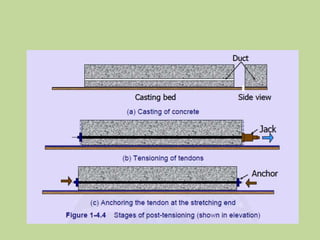
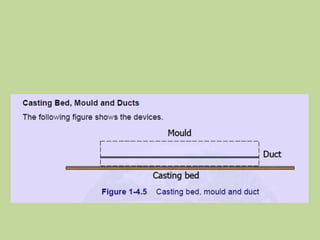
In post-tensioning systems, the ducts for the
tendons (or strands) are placed along with the
reinforcement before the casting of concrete. The
tendons are placed in the ducts after the casting
of concrete. The duct prevents contact between
concrete and the tendons during the tensioning
operation.
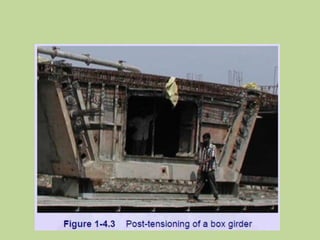
Unlike pre-tensioning, the tendons are pulled
with the reaction acting against the hardened
concrete.
The various stages of the post-tensioning
operation are summarised as follows :
1) Casting of concrete.
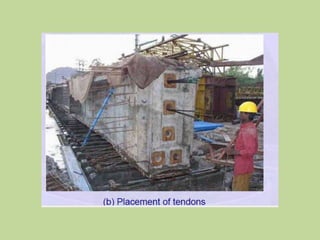
2) Placement of the tendons.
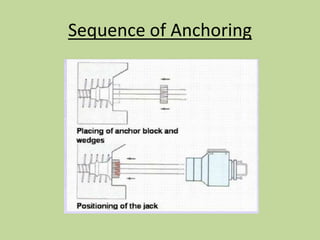
3) Placement of the anchorage block and jack.
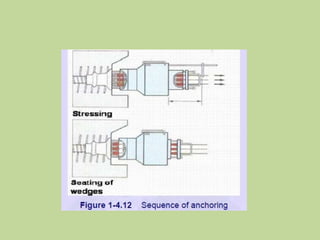
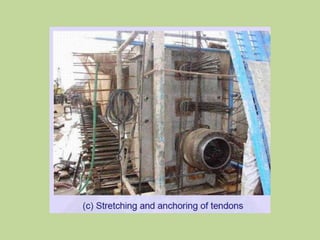
4) Applying tension to the tendons.
5) Seating of the wedges.
6) Cutting of the tendons.
Advantages of Post-tensioning
The relative advantages of post-tensioning as
compared to pre-tensioning are as follows:
• Post-tensioning is suitable for heavy cast-in-
place members.
• The waiting period in the casting bed is less.
• The transfer of prestress is independent of
transmission length.
Disadvantage of Post-tensioning
The relative disadvantage of post-
tensioning as compared to pre-tensioning is
the requirement of anchorage device and
grouting equipment.
Devices
The essential devices for post-tensioning are as
follows.
1) Casting bed
2) Mould/Shuttering
3) Ducts
4) Anchoring devices
5) Jacks
6) Couplers (optional)
7) Grouting equipment (optional).
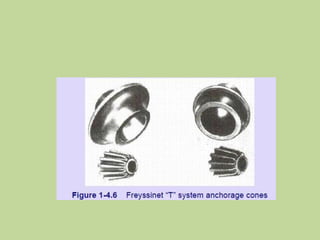
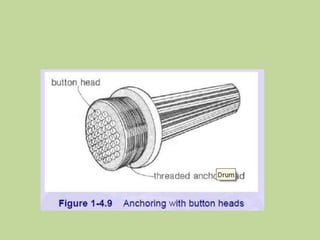
Anchoring Devices
In post-tensioned members the anchoring
devices transfer the prestress to the concrete.
The devices are based on the following
principles of anchoring the tendons.
1) Wedge action
2) Direct bearing
3) Looping the wires
Sequence of Anchoring
Couplers
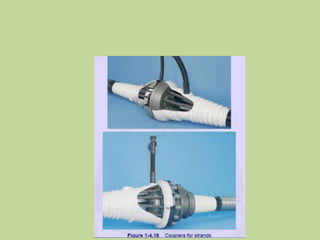
The couplers are used to connect strands
or bars. They are located at the junction of the
members, for example at or near columns in
post-tensioned slabs, on piers in post-
tensioned bridge decks
Grouting
Grouting can be defined as the filling of duct,
with a material that provides an anti-corrosive
alkaline environment to the prestressing steel
and also a strong bond between the tendon and
the surrounding grout.
The major part of grout comprises of water
and cement, with a water-to-cement ratio of
about 0.5, together with some water-reducing
admixtures, expansion agent and pozzolans.
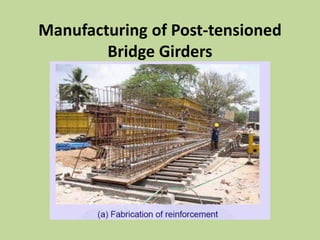
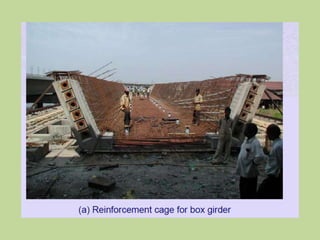
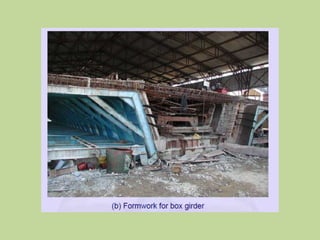
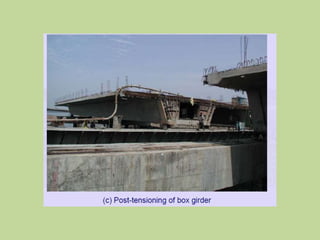
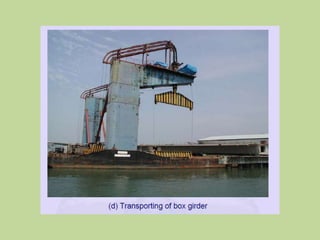
Manufacturing of Post-tensioned
Bridge Girders
Concrete
Constituents of Concrete:
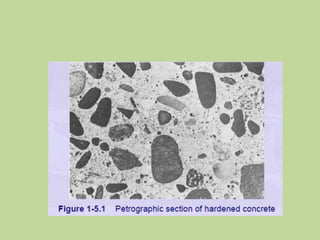
Concrete is a composite material composed of
gravels or crushed stones (coarse aggregate),
sand (fine aggregate) and hydrated cement
(binder).
Aggregate
The coarse aggregate are granular materials
obtained from rocks and crushed stones. They
may be also obtained from synthetic material
like slag, shale, fly ash and clay for use in light-
weight concrete.
The sand obtained from river beds or quarries
is used as fine aggregate. The fine aggregate
along with the hydrated cement paste fill the
space between the coarse aggregate.
The important properties of aggregate are as
follows:
1) Shape and texture
2) Size gradation
3) Moisture content
4) Specific gravity
5) Unit weight
6) Durability and absence of deleterious materials
The requirements of aggregate is covered in Section
4.2 of IS:1343 - 1980.
The nominal maximum coarse aggregate size is
limited by the lowest of the following quantities.
1) 1/4 times the minimum thickness of the member
2) Spacing between the tendons/strands minus 5
mm
3) 40 mm.
The deleterious substances that should be
limited in aggregate are clay lumps, wood,
coal, chert, silt, rock dust (material finer than
75 microns), organic material, unsound and
friable particles.
Cement
In present day concrete, cement is a mixture of lime stone and
clay heated in a kiln to 1400 - 1600ºC. The types of cement
permitted by IS:1343 - 1980 (Clause 4.1) for prestressed
applications are the following.
The information is revised as per IS:456 - 2000, Plain and
Reinforced – Concrete Code of Practice.
1) Ordinary Portland cement confirming to IS:269 - 1989,
Ordinary Portland Cement, 33 Grade – Specification.
2) Portland slag cement confirming to IS:455 - 1989, Portland
Slag Cement – Specification, but with not more than 50%
slag content.
3) Rapid-hardening Portland cement confirming to IS:8041 -
1990, Rapid Hardening Portland Cement – Specification.
Water
The water should satisfy the requirements of
Section 5.4 of IS:456 - 2000.
“Water used for mixing and curing shall be clean
and free from injurious amounts of oils, acids,
alkalis, salts, sugar, organic materials or other
substances that may be deleterious to
concrete and steel”.
Admixtures
IS:1343 - 1980 allows to use admixtures that conform
to IS:9103 - 1999, Concrete Admixtures – Specification. The
admixtures can be broadly divided into two types:
chemical admixtures and mineral admixtures. The
common chemical admixtures are as follows.
1) Air-entraining admixtures
2) Water reducing admixtures
3) Set retarding admixtures
4) Set accelerating admixtures
5) Water reducing and set retarding admixtures
6) Water reducing and set accelerating admixtures.
The common mineral admixtures are as follows.
1) Fly ash
2) Ground granulated blast-furnace slag
3) Silica fumes
4) Rice husk ash
5) Metakoline
These are cementitious and pozzolanic materials.
Properties of Hardened Concrete
The concrete in prestressed applications has to be
of good quality. It requires the following
attributes.
1) High strength with low water-to-cement ratio
2) Durability with low permeability, minimum
cement content and proper mixing, compaction
and curing
3) Minimum shrinkage and creep by limiting the
cement content.
1) Strength of concrete
2) Stiffness of concrete
3) Durability of concrete
4) High performance concrete
5) Allowable stresses in concrete
Strength of Concrete
Compressive Strength
The compressive strength of concrete is
given in terms of the characteristic
compressive strength of 150 mm size cubes
tested at 28 days (fck). The characteristic
strength is defined as the strength of the
concrete below which not more than 5% of
the test results are expected to fall.
The following sections describe the properties with
reference to IS:1343 - 1980. The strength of concrete
is required to calculate the strength of the members.
For prestressed concrete applications, high strength
concrete is required for the following reasons.
1) To sustain the high stresses at anchorage regions.
2) To have higher resistance in compression, tension,
shear and bond.
3) To have higher stiffness for reduced deflection.
4) To have reduced shrinkage cracks.
The sampling and strength test of concrete
are as per Section 15 of IS:1343 - 1980. The
grades of concrete are explained in Table 1 of
the Code.
The minimum grades of concrete for prestressed
applications are as follows.
• 30 MPa for post-tensioned members
• 40 MPa for pre-tensioned members.
The maximum grade of concrete is 60 MPa.
Since at the time of publication of IS:1343
in 1980, the properties of higher strength
concrete were not adequately documented, a
limit was imposed on the maximum strength.
It is expected that higher strength concrete
may be used after proper testing.
The increase in strength with age as given
in IS:1343 - 1980, is not observed in present
day concrete that gains substantial strength
in 28 days. Hence, the age factor given in
Clause 5.2.1 should not be used. It has been
removed from IS:456 - 2000.
Tensile Strength
The tensile strength of concrete can be expressed
as follows.
1) Flexural tensile strength: It is measured by
testing beams under 2 point loading (also called 4
point loading including the reactions).
2) Splitting tensile strength: It is measured by
testing cylinders under diametral compression.
3) Direct tensile strength: It is measured by testing
rectangular specimens under direct tension.
Stiffness of Concrete
The stiffness of concrete is required to estimate
the deflection of members. The stiffness is given by the
modulus of elasticity. For a non-linear stress (fc) versus
strain (εc) behaviour of concrete the modulus can be
initial, tangential or secant modulus.
IS:1343 - 1980 recommends a secant modulus at a
stress level of about 0.3fck. The modulus is expressed
in terms of the characteristic compressive strength
and not the design compressive strength. The
following figure shows the secant modulus in the
compressive stress-strain curve for concrete.
Durability of Concrete

Ppt

  • 7.
    1.1.3 Brief History 1824Aspdin, J., (England) Obtained a patent for the manufacture of Portland cement. 1857 Monier, J., (France) Introduced steel wires in concrete to make flower pots, pipes, arches and slabs. 1886 Jackson, P. H., (USA) Introduced the concept of tightening steel tie rods in artificial stone and concrete arches.
  • 8.
    • 1888 Doehring,C. E. W., (Germany) Manufactured concrete slabs and small beams with embedded tensioned steel. • 1908 Stainer, C. R., (USA) Recognised losses due to shrinkage and creep, and suggested retightening the rods to recover lost prestress. • 1923 Emperger, F., (Austria) Developed a method of winding and pre- tensioning high tensile steel wires around concrete pipes.
  • 9.
    • 1924 Hewett,W. H., (USA) Introduced hoop-stressed horizontal reinforcement around walls of concrete tanks through the use of turnbuckles. • 1925 Dill, R. H., (USA) Used high strength unbonded steel rods. The rods were tensioned and anchored after hardening of the concrete.
  • 10.
    • 1926 EugeneFreyssinet (France) Used high tensile steel wires, with ultimate strength as high as 1725 MPa and yield stress over 1240 MPa. In 1939, he developed conical wedges for end anchorages for post-tensioning and developed double-acting jacks. He is often referred to as the Father of Prestressed concrete. • 1938 Hoyer, E., (Germany) Developed ‘long line’ pre-tensioning method. • 1940 Magnel, G., (Belgium) Developed an anchoring system for post- tensioning, using flat wedges.
  • 11.
    • During theSecond World War, applications of prestressed and precast concrete increased rapidly • Guyon, Y., (France) built numerous prestressed concrete bridges in western and central Europe. Abeles, P. W., (England) introduced the concept of partial prestressing. Leonhardt, F., (Germany), Mikhailor, V., (Russia) and Lin, T. Y., (USA) are famous in the field of prestressed concrete.
  • 12.
    • The InternationalFederation for Prestressing (FIP), a professional organisation in Europe was established in 1952. The Precast/Prestressed Concrete Institute (PCI) was established in USA in 1954. • In India, the applications of prestressed concrete diversified over the years. The first prestressed concrete bridge was built in 1948 under the Assam Rail Link Project. Among bridges, the Pamban Road Bridge at Rameshwaram, Tamilnadu, remains a classic example of the use of prestressed concrete girders.
  • 13.
  • 18.
    1.1.4 Development ofBuilding Materials
  • 19.
    Definitions The terms commonlyused in prestressed concrete are explained. The terms are placed in groups as per usage. Forms of Prestressing Steel • Wires : Prestressing wire is a single unit made of steel. • Strands: Two, three or seven wires are wound to form a prestressing strand. • Tendon: A group of strands or wires are wound to form a prestressing tendon. • Cable : A group of tendons form a prestressing cable. • Bars : A cable can be made up of a single steel bar. The diameter of a bar is much larger than that of a wire.
  • 20.
    Nature of Concrete-SteelInterface Bonded tendon When there is adequate bond between the prestressing tendon and concrete, it is called a bonded tendon. Pre-tensioned and grouted post- tensioned tendons are bonded tendons. Unbonded tendon When there is no bond between the prestressing tendon and concrete, it is called unbonded tendon. When grout is not applied after post- tensioning, the tendon is an unbonded tendon.
  • 21.
    Stages of Loading Theanalysis of prestressed members can be different for the different stages of loading. The stages of loading are as follows. 1) Initial : It can be subdivided into two stages. a) During tensioning of steel b) At transfer of prestress to concrete. 2) Intermediate : This includes the loads during transportation of the prestressed members. 3) Final : It can be subdivided into two stages. a) At service, during operation. b) At ultimate, during extreme events.
  • 22.
    Advantages of Prestressing Theprestressing of concrete has several advantages as compared to traditional reinforced concrete (RC) without prestressing. A fully prestressed concrete member is usually subjected to compression during service life. This rectifies several deficiencies of concrete.
  • 23.
    Advantages of Prestressing 1)Section remains uncracked under service loads • Reduction of steel corrosion – Increase in durability. • Full section is utilised – Higher moment of inertia (higher stiffness) – Less deformations (improved serviceability). • Suitable for use in pressure vessels, liquid retaining structures. • Increases the shear capacity. • Improved performance (resilience) under dynamic and fatigue loading.
  • 24.
    2) High span-to-depthratios • Larger spans possible with prestressing (bridges, buildings with large column-free spaces) • Typical values of span-to-depth ratios in slabs are given below. Non-prestressed slab 28:1 Prestressed slab 45:1 For the same span, less depth compared to RC member. • Reduction in self weight • More aesthetic appeal due to slender sections • More economical sections.
  • 25.
    3) Suitable forprecast construction The advantages of precast construction are as follows. • Rapid construction • Better quality control • Reduced maintenance • Suitable for repetitive construction • Multiple use of formwork ⇒ Reduction of formwork • Availability of standard shapes.
  • 26.
  • 27.
    Limitations of Prestressing •Prestressing needs skilled technology. Hence, it is not as common as reinforced concrete. • The use of high strength materials is costly. • There is additional cost in auxiliary equipments. • There is need for quality control and inspection.
  • 28.
    Types of Prestressing Sourceof prestressing force This classification is based on the method by which the prestressing force is generated. There are four sources of prestressing force: Mechanical, hydraulic, electrical & Chemical.
  • 29.
    External or internalprestressing This classification is based on the location of the prestressing tendon with respect to the concrete section.
  • 30.
    Pre-tensioning or post-tensioning Thisis the most important classification and is based on the sequence of casting the concrete and applying tension to the tendons.
  • 31.
    Linear or circularprestressing This classification is based on the shape of the member prestressed. Full, limited or partial prestressing Based on the amount of prestressing force, three types of prestressing are defined.
  • 32.
    Uniaxial, biaxial ormulti-axial prestressing As the names suggest, the classification is based on the directions of prestressing a member.
  • 33.
    Stages of Pre-tensioning •In pre-tensioning system, the high-strength steel tendons are pulled between two end abutments (also called bulkheads) prior to the casting of concrete. The abutments are fixed at the ends of a prestressing bed. • Once the concrete attains the desired strength for prestressing, the tendons are cut loose from the abutments.
  • 34.
    The prestress istransferred to the concrete from the tendons, due to the bond between them. During the transfer of prestress, the member undergoes elastic shortening. If the tendons are located eccentrically, the member is likely to bend and deflect (camber). The various stages of the pre-tensioning operation are summarised as follows. 1) Anchoring of tendons against the end abutments 2) Placing of jacks 3) Applying tension to the tendons 4) Casting of concrete 5) Cutting of the tendons.
  • 36.
    Advantages of Pre-tensioning Therelative advantages of pre-tensioning as compared to post-tensioning are as follows. • Pre-tensioning is suitable for precast members produced in bulk. • In pre-tensioning large anchorage device is not present.
  • 37.
    Disadvantages of Pre-tensioning Therelative disadvantages are as follows. • A prestressing bed is required for the pre- tensioning operation. • There is a waiting period in the prestressing bed, before the concrete attains sufficient strength. • There should be good bond between concrete and steel over the transmission length.
  • 38.
    Devices The essential devicesfor pre-tensioning are as follows. • Prestressing bed • End abutments • Shuttering / mould • Jack • Anchoring device • Harping device (optional)
  • 39.
    Jacks The jacks areused to apply tension to the tendons. Hydraulic jacks are commonly used. These jacks work on oil pressure generated by a pump. The principle behind the design of jacks is Pascal’s law. The load applied by a jack is measured by the pressure reading from a gauge attached to the oil inflow or by a separate load cell.
  • 41.
    Anchoring Devices Anchoring devicesare often made on the wedge and friction principle. In pre-tensioned members, the tendons are to be held in tension during the casting and hardening of concrete. Here simple and cheap quick-release grips are generally adopted
  • 43.
    Harping Devices The tendonsare frequently bent, except in cases of slabs-on-grade, poles, piles etc. The tendons are bent (harped) in between the supports with a shallow sag as shown below.
  • 45.
    Stages of Post-tensioning Inpost-tensioning systems, the ducts for the tendons (or strands) are placed along with the reinforcement before the casting of concrete. The tendons are placed in the ducts after the casting of concrete. The duct prevents contact between concrete and the tendons during the tensioning operation. Unlike pre-tensioning, the tendons are pulled with the reaction acting against the hardened concrete.
  • 48.
    The various stagesof the post-tensioning operation are summarised as follows : 1) Casting of concrete. 2) Placement of the tendons. 3) Placement of the anchorage block and jack. 4) Applying tension to the tendons. 5) Seating of the wedges. 6) Cutting of the tendons.
  • 50.
    Advantages of Post-tensioning Therelative advantages of post-tensioning as compared to pre-tensioning are as follows: • Post-tensioning is suitable for heavy cast-in- place members. • The waiting period in the casting bed is less. • The transfer of prestress is independent of transmission length.
  • 51.
    Disadvantage of Post-tensioning Therelative disadvantage of post- tensioning as compared to pre-tensioning is the requirement of anchorage device and grouting equipment.
  • 52.
    Devices The essential devicesfor post-tensioning are as follows. 1) Casting bed 2) Mould/Shuttering 3) Ducts 4) Anchoring devices 5) Jacks 6) Couplers (optional) 7) Grouting equipment (optional).
  • 54.
    Anchoring Devices In post-tensionedmembers the anchoring devices transfer the prestress to the concrete. The devices are based on the following principles of anchoring the tendons. 1) Wedge action 2) Direct bearing 3) Looping the wires
  • 57.
  • 59.
    Couplers The couplers areused to connect strands or bars. They are located at the junction of the members, for example at or near columns in post-tensioned slabs, on piers in post- tensioned bridge decks
  • 61.
    Grouting Grouting can bedefined as the filling of duct, with a material that provides an anti-corrosive alkaline environment to the prestressing steel and also a strong bond between the tendon and the surrounding grout. The major part of grout comprises of water and cement, with a water-to-cement ratio of about 0.5, together with some water-reducing admixtures, expansion agent and pozzolans.
  • 62.
  • 70.
    Concrete Constituents of Concrete: Concreteis a composite material composed of gravels or crushed stones (coarse aggregate), sand (fine aggregate) and hydrated cement (binder).
  • 72.
    Aggregate The coarse aggregateare granular materials obtained from rocks and crushed stones. They may be also obtained from synthetic material like slag, shale, fly ash and clay for use in light- weight concrete. The sand obtained from river beds or quarries is used as fine aggregate. The fine aggregate along with the hydrated cement paste fill the space between the coarse aggregate.
  • 73.
    The important propertiesof aggregate are as follows: 1) Shape and texture 2) Size gradation 3) Moisture content 4) Specific gravity 5) Unit weight 6) Durability and absence of deleterious materials
  • 74.
    The requirements ofaggregate is covered in Section 4.2 of IS:1343 - 1980. The nominal maximum coarse aggregate size is limited by the lowest of the following quantities. 1) 1/4 times the minimum thickness of the member 2) Spacing between the tendons/strands minus 5 mm 3) 40 mm.
  • 75.
    The deleterious substancesthat should be limited in aggregate are clay lumps, wood, coal, chert, silt, rock dust (material finer than 75 microns), organic material, unsound and friable particles.
  • 76.
    Cement In present dayconcrete, cement is a mixture of lime stone and clay heated in a kiln to 1400 - 1600ºC. The types of cement permitted by IS:1343 - 1980 (Clause 4.1) for prestressed applications are the following. The information is revised as per IS:456 - 2000, Plain and Reinforced – Concrete Code of Practice. 1) Ordinary Portland cement confirming to IS:269 - 1989, Ordinary Portland Cement, 33 Grade – Specification. 2) Portland slag cement confirming to IS:455 - 1989, Portland Slag Cement – Specification, but with not more than 50% slag content. 3) Rapid-hardening Portland cement confirming to IS:8041 - 1990, Rapid Hardening Portland Cement – Specification.
  • 77.
    Water The water shouldsatisfy the requirements of Section 5.4 of IS:456 - 2000. “Water used for mixing and curing shall be clean and free from injurious amounts of oils, acids, alkalis, salts, sugar, organic materials or other substances that may be deleterious to concrete and steel”.
  • 78.
    Admixtures IS:1343 - 1980allows to use admixtures that conform to IS:9103 - 1999, Concrete Admixtures – Specification. The admixtures can be broadly divided into two types: chemical admixtures and mineral admixtures. The common chemical admixtures are as follows. 1) Air-entraining admixtures 2) Water reducing admixtures 3) Set retarding admixtures 4) Set accelerating admixtures 5) Water reducing and set retarding admixtures 6) Water reducing and set accelerating admixtures.
  • 79.
    The common mineraladmixtures are as follows. 1) Fly ash 2) Ground granulated blast-furnace slag 3) Silica fumes 4) Rice husk ash 5) Metakoline These are cementitious and pozzolanic materials.
  • 80.
    Properties of HardenedConcrete The concrete in prestressed applications has to be of good quality. It requires the following attributes. 1) High strength with low water-to-cement ratio 2) Durability with low permeability, minimum cement content and proper mixing, compaction and curing 3) Minimum shrinkage and creep by limiting the cement content.
  • 81.
    1) Strength ofconcrete 2) Stiffness of concrete 3) Durability of concrete 4) High performance concrete 5) Allowable stresses in concrete
  • 82.
    Strength of Concrete CompressiveStrength The compressive strength of concrete is given in terms of the characteristic compressive strength of 150 mm size cubes tested at 28 days (fck). The characteristic strength is defined as the strength of the concrete below which not more than 5% of the test results are expected to fall.
  • 83.
    The following sectionsdescribe the properties with reference to IS:1343 - 1980. The strength of concrete is required to calculate the strength of the members. For prestressed concrete applications, high strength concrete is required for the following reasons. 1) To sustain the high stresses at anchorage regions. 2) To have higher resistance in compression, tension, shear and bond. 3) To have higher stiffness for reduced deflection. 4) To have reduced shrinkage cracks.
  • 84.
    The sampling andstrength test of concrete are as per Section 15 of IS:1343 - 1980. The grades of concrete are explained in Table 1 of the Code. The minimum grades of concrete for prestressed applications are as follows. • 30 MPa for post-tensioned members • 40 MPa for pre-tensioned members. The maximum grade of concrete is 60 MPa.
  • 85.
    Since at thetime of publication of IS:1343 in 1980, the properties of higher strength concrete were not adequately documented, a limit was imposed on the maximum strength. It is expected that higher strength concrete may be used after proper testing.
  • 86.
    The increase instrength with age as given in IS:1343 - 1980, is not observed in present day concrete that gains substantial strength in 28 days. Hence, the age factor given in Clause 5.2.1 should not be used. It has been removed from IS:456 - 2000.
  • 87.
    Tensile Strength The tensilestrength of concrete can be expressed as follows. 1) Flexural tensile strength: It is measured by testing beams under 2 point loading (also called 4 point loading including the reactions). 2) Splitting tensile strength: It is measured by testing cylinders under diametral compression. 3) Direct tensile strength: It is measured by testing rectangular specimens under direct tension.
  • 88.
    Stiffness of Concrete Thestiffness of concrete is required to estimate the deflection of members. The stiffness is given by the modulus of elasticity. For a non-linear stress (fc) versus strain (εc) behaviour of concrete the modulus can be initial, tangential or secant modulus. IS:1343 - 1980 recommends a secant modulus at a stress level of about 0.3fck. The modulus is expressed in terms of the characteristic compressive strength and not the design compressive strength. The following figure shows the secant modulus in the compressive stress-strain curve for concrete.
  • 89.