PRESSURE ULCERS
PRESENTED BY:- SHIVANI KOLEE
INTRODUCTION
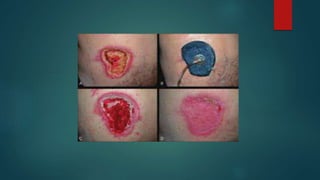
 Pressure ulcers, also known as pressure sores, bed sores or pressure
injuries, are localised damage to the skin and/or underlying tissue that
usually occur over a bony prominence as a result of usually long-term
pressure, or pressure in combination with shear or friction.
 The most common sites are the skin overlying the sacrum, coccyx, heels,
and hips, though other sites can be affected, such as
the elbows, knees, ankles, back of shoulders, or the back of the cranium.
CAUSES OF PRESSURE ULCERS
 Old age
 Immobile
 Poor skin hygiene
 Excess massage
 Bedsheets
 Skin moisture
 Poor nutrition
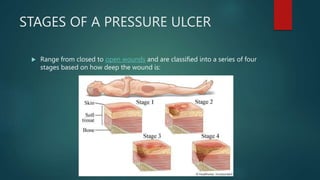
STAGES OF A PRESSURE ULCER
 Range from closed to open wounds and are classified into a series of four
stages based on how deep the wound is:
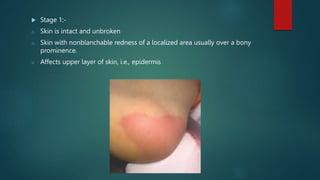
 Stage 1:-
o Skin is intact and unbroken
o Skin with nonblanchable redness of a localized area usually over a bony
prominence.
o Affects upper layer of skin, i.e., epidermis
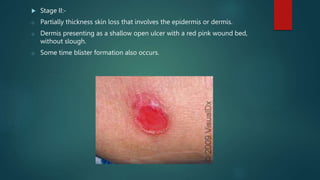
 Stage II:-
o Partially thickness skin loss that involves the epidermis or dermis.
o Dermis presenting as a shallow open ulcer with a red pink wound bed,
without slough.
o Some time blister formation also occurs.
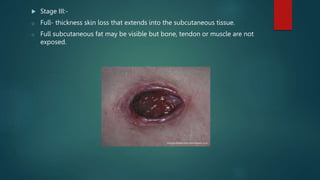
 Stage III:-
o Full- thickness skin loss that extends into the subcutaneous tissue.
o Full subcutaneous fat may be visible but bone, tendon or muscle are not
exposed.
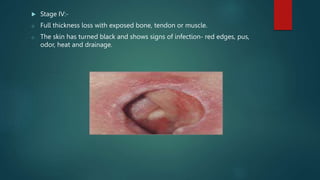
 Stage IV:-
o Full thickness loss with exposed bone, tendon or muscle.
o The skin has turned black and shows signs of infection- red edges, pus,
odor, heat and drainage.
CARE AND PREVENTION OF PRESSURE
ULCERS
 Prevention of pressure ulcers is the key treatment. These interventions
are:-
o Skin assessment
o Repositioning techniques
o Skin hygiene & moisture control
o Pressure point care
o Use of proper pressure- relieving devices/comfort devices
o Range of motion exercises
o Nutritional balance
Skin Assessment
 Inspect all of the skin while reposting the patient.
 Clean the skin promptly after the patient pass urine or stool.
 Avoid positioning an individual in an area of redness.
 Avoid rubbing or massaging skin too hard especially over the bony area of
the body part.
 Pat the skin dry with a soft towel.
 Keep the skin dry & clean.
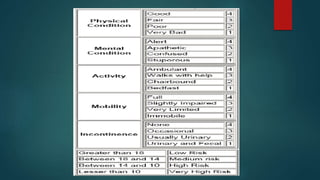
ASSESSMENT OF PRESSURE ULCER
USING NORTON SCALE
 This is the first scale reported in 1962. it scores five risk factors-
 Physical condition
 Mental condition
 Activity mobility
 Incontinence
 Range of score total is 5 to 20 ; lower the score indicates a higher risk for
pressure ulcer development.
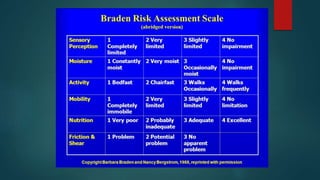
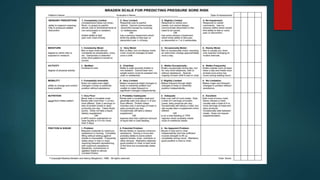
BRADEN SCALE
 The Braden scale was developed in 1987.
 It consist of six component-
- Sensory perception
- Moisture
- Activity
- Mobility
- Nutrition
- Friction & shear
 Total score range from 6 to 23 , a lower score indicates the higher chance
of developing pressure ulcers.
REPOSITIONING TECHNIQUES
DO
 Encourage the patient to change their
position by their own self.
 Keep 2-3 pillow, towel & protective
device nearby & use it appropriately.
 Make sure the patient is comfortably
after any chances.
DON’T
 Accidentally touch the existing sore or
high- risk area during movement.
 Leave the patient in an upright sitting
position.
 Let a patient feet rest directly against
an unpadded footboard.
SKIN HYGIENE & MOISTURE CONTROL
 Inspection
 Absorb moisture
 Skin cleaning
 Minimize irritation and dryness
 Skin hygiene
 Avoid dry skin
 Minimize exposure to moisture
 Health teaching
 Use diaper
 Bedsheet
CORRECT USE OF PRESSURE
RELIEVING DEVICES/ COMFORT
DEVICES
 Pillow
 Cotton rings
 Air mattress
Range of Motion Exercises
 Neck & head exercise
 Knee raised exercise
 Elbow erercise
Nutritional balance
 Assess the patient need to eat independently.
 Take high protein diet such as egg, milk & milk products.
 Take vitamin & other supplements to maintain skin integrity.
 Provide & encourage adequate daily fluid intake for hydration
maintenance.

PRESSURE ULCERS.pptx

  • 1.
  • 2.
    INTRODUCTION  Pressure ulcers,also known as pressure sores, bed sores or pressure injuries, are localised damage to the skin and/or underlying tissue that usually occur over a bony prominence as a result of usually long-term pressure, or pressure in combination with shear or friction.  The most common sites are the skin overlying the sacrum, coccyx, heels, and hips, though other sites can be affected, such as the elbows, knees, ankles, back of shoulders, or the back of the cranium.
  • 4.
    CAUSES OF PRESSUREULCERS  Old age  Immobile  Poor skin hygiene  Excess massage  Bedsheets  Skin moisture  Poor nutrition
  • 5.
    STAGES OF APRESSURE ULCER  Range from closed to open wounds and are classified into a series of four stages based on how deep the wound is:
  • 6.
     Stage 1:- oSkin is intact and unbroken o Skin with nonblanchable redness of a localized area usually over a bony prominence. o Affects upper layer of skin, i.e., epidermis
  • 7.
     Stage II:- oPartially thickness skin loss that involves the epidermis or dermis. o Dermis presenting as a shallow open ulcer with a red pink wound bed, without slough. o Some time blister formation also occurs.
  • 8.
     Stage III:- oFull- thickness skin loss that extends into the subcutaneous tissue. o Full subcutaneous fat may be visible but bone, tendon or muscle are not exposed.
  • 9.
     Stage IV:- oFull thickness loss with exposed bone, tendon or muscle. o The skin has turned black and shows signs of infection- red edges, pus, odor, heat and drainage.
  • 10.
    CARE AND PREVENTIONOF PRESSURE ULCERS  Prevention of pressure ulcers is the key treatment. These interventions are:- o Skin assessment o Repositioning techniques o Skin hygiene & moisture control o Pressure point care o Use of proper pressure- relieving devices/comfort devices o Range of motion exercises o Nutritional balance
  • 11.
    Skin Assessment  Inspectall of the skin while reposting the patient.  Clean the skin promptly after the patient pass urine or stool.  Avoid positioning an individual in an area of redness.  Avoid rubbing or massaging skin too hard especially over the bony area of the body part.  Pat the skin dry with a soft towel.  Keep the skin dry & clean.
  • 12.
    ASSESSMENT OF PRESSUREULCER USING NORTON SCALE  This is the first scale reported in 1962. it scores five risk factors-  Physical condition  Mental condition  Activity mobility  Incontinence  Range of score total is 5 to 20 ; lower the score indicates a higher risk for pressure ulcer development.
  • 14.
    BRADEN SCALE  TheBraden scale was developed in 1987.  It consist of six component- - Sensory perception - Moisture - Activity - Mobility - Nutrition - Friction & shear  Total score range from 6 to 23 , a lower score indicates the higher chance of developing pressure ulcers.
  • 17.
    REPOSITIONING TECHNIQUES DO  Encouragethe patient to change their position by their own self.  Keep 2-3 pillow, towel & protective device nearby & use it appropriately.  Make sure the patient is comfortably after any chances. DON’T  Accidentally touch the existing sore or high- risk area during movement.  Leave the patient in an upright sitting position.  Let a patient feet rest directly against an unpadded footboard.
  • 18.
    SKIN HYGIENE &MOISTURE CONTROL  Inspection  Absorb moisture  Skin cleaning  Minimize irritation and dryness  Skin hygiene  Avoid dry skin  Minimize exposure to moisture  Health teaching  Use diaper  Bedsheet
  • 19.
    CORRECT USE OFPRESSURE RELIEVING DEVICES/ COMFORT DEVICES  Pillow  Cotton rings  Air mattress
  • 20.
    Range of MotionExercises  Neck & head exercise  Knee raised exercise  Elbow erercise
  • 21.
    Nutritional balance  Assessthe patient need to eat independently.  Take high protein diet such as egg, milk & milk products.  Take vitamin & other supplements to maintain skin integrity.  Provide & encourage adequate daily fluid intake for hydration maintenance.