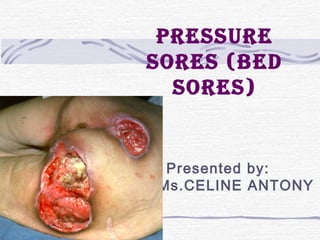
PRESSURE
SORES (BEd
SORES)
Presented by:
Ms.CELINE ANTONY
What are Pressure Ulcers?
An area of localised damage to the
skin and underlying tissue caused
by pressure, shear, friction and/or a
combination of these
European Pressure Ulcer Advisory
Panel EPUAP (2003)
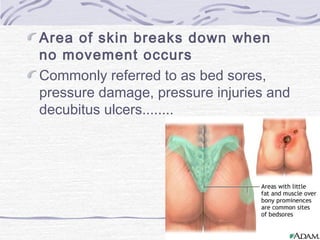
Area of skin breaks down when
no movement occurs
Commonly referred to as bed sores,
pressure damage, pressure injuries and
decubitus ulcers........
Pressure Ulcer Risk Factors
• Internal/patient-related
factors:
• Systemic disease: metabolic,
neurological, vascular, terminal
illness
• Reduced mobility or immobility
• Sensory impairment
• Psychological e.g. depression
• Anaemia
• Malnutrition
• Level of consciousness
• Extremes of age
• Previous history of pressure
damage or poor skin condition
• Acute or chronic oedema
• Dehydration/fluid status- sweat,
incontinence
External factors:
Pressure - support surfaces,
change of position
Shear - positioning, mobility
Friction - moving and handling
techniques, patient education,
splinting, casts, positioning
Other factors
- Moisture - incontinence,
sweating, pyrexia, wound
exudates

- Medication
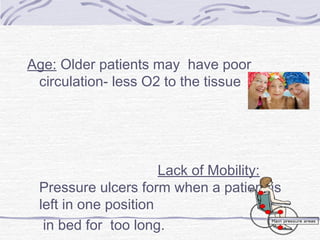
Age: Older patients may have poor

circulation- less O2 to the tissue
Lack of Mobility:
Pressure ulcers form when a patient is
left in one position
in bed for too long.
Poor Appetite: Pts who are dehydrated
or have a poor appetite are at risk for
pressure ulcers.
Unwanted Moisture: Patients that are
incontinent of urine or stool or those
who sweat are at risk for a pressure
ulcer
Pressure Ulcers in the Past
Patients who have had a pressure
ulcer in the past are at greater
RISK of getting another one.
Who’s at Risk?
Bedridden/wheelchair bound
Fragile skin/Older age
Chronic disease that prevents blood
flow
Spinal Cord Injury/Brain Injury
Alzheimer’s Disease
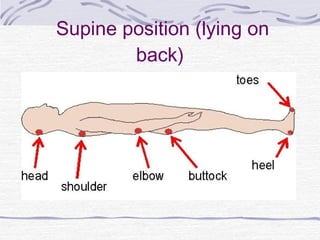
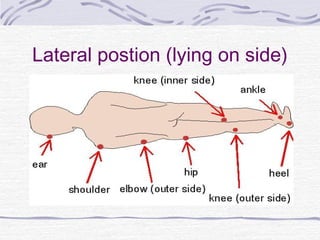
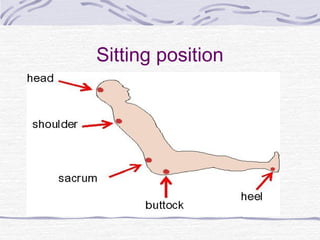
Pressure Points on
the human body:
Supine position (lying on
back)
Prone position (lying on
stomach)
Lateral postion (lying on side)
Sitting position
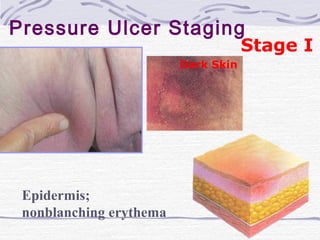
Pressure Ulcer Staging
Stage I
Epidermis;
nonblanching erythema
Dark Skin
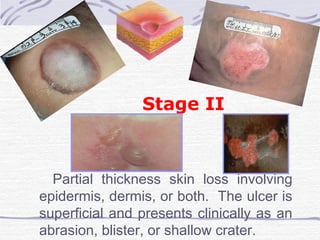
Partial thickness skin loss involving
epidermis, dermis, or both. The ulcer is
superficial and presents clinically as an
abrasion, blister, or shallow crater.
Stage II
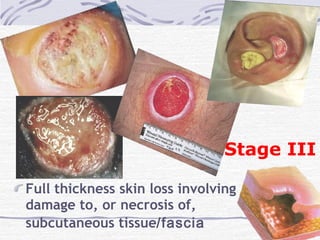
Full thickness skin loss involving
damage to, or necrosis of,
subcutaneous tissue/fascia
Stage III
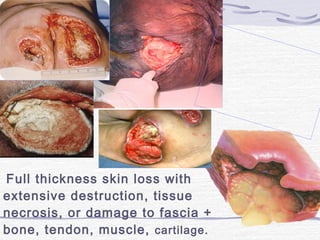
Full thickness skin loss with
extensive destruction, tissue
necrosis, or damage to fascia +
bone, tendon, muscle, cartilage.
• The National Pressure Ulcer Advisory Panel
has redefined the definition of a pressure ulcer
and the stages of pressure ulcers
• Suspected DTI
• Stage I
• Stage II
• Stage III
• Stage IV
• Unstageable
Suspected deep tissue injury
Purple or maroon localized area of
discolored intact skin or blood-filled
blister due to damage of underlying soft
from pressure and/or shear.
Unstageable
• Full thickness tissue loss in which the
base of the ulcer is covered by slough
(yellow, tan, gray, green or brown)
and/or eschar (tan, brown or black) in
the ulcer bed. from pressure and/or
shear*.
EffEctivE managEmEnt
of a prEssurE ulcEr
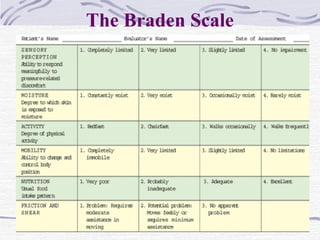
The Braden Scale
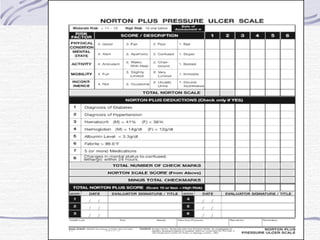
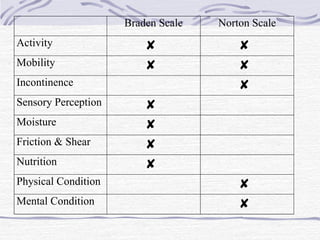
Braden Scale Norton Scale
Activity  
Mobility  
Incontinence 
Sensory Perception 
Moisture 
Friction & Shear 
Nutrition 
Physical Condition 
Mental Condition 
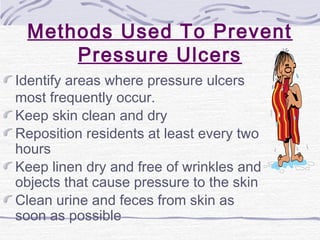
Methods Used To Prevent
Pressure Ulcers
Identify areas where pressure ulcers
most frequently occur.
Keep skin clean and dry
Reposition residents at least every two
hours
Keep linen dry and free of wrinkles and
objects that cause pressure to the skin
Clean urine and feces from skin as
soon as possible
Make sure clothing and
shoes do not bind or
constrict
Pat skin dry when
bathing; never scrub
Encourage adequate
nutrition and fluids
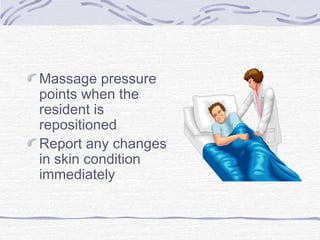
Massage pressure
points when the
resident is
repositioned
Report any changes
in skin condition
immediately
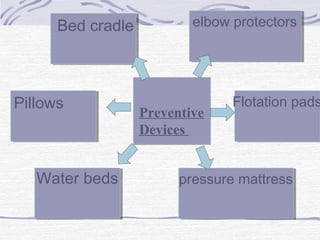
PillowsPillows
Water bedsWater beds
Bed cradleBed cradle elbow protectorselbow protectors
Flotation padsFlotation pads
pressure mattresspressure mattress
Preventive
Devices
Treatment
Relieve pressure in area (pillows,
cushions)
Physician can treat depending on stage
Avoid further trauma
Prevent infection by properly cleaning
open ulcers
Medication to promote skin healing
Calcium alginates or other fiber gelling
dressings: Absorbs drainage and turns to a
gel to maintain a moist wound bed
Impregnated gauze: Used for packing, can
deliver antimicrobial, medications and
moisture, for partial or full-thickness wounds.
Hydrocolloid: Contains gel-forming agents
Antimicrobials: Controls or decreases
bioburden (e.g., silver dressings,
hydrofera blue, cadezomer iodine,
honey)
Debridement is the removal of necrotic
tissue or contaminated foreign matter.
DO NOT…
Massage the area
Damage tissue under the skin
Use donut-shaped or ring-shaped
cushions
Interfere with blood flow
Documentation of assessment, plan
of action and re-assessment is your
only proof of good care.
If it is not written down
,
it never happened!
European Pressure Ulcer Advisory
Panel
Thank you for your
Time & aTTenTion!
Pressure sore 23426

Pressure sore 23426

  • 1.
  • 2.
    What are PressureUlcers? An area of localised damage to the skin and underlying tissue caused by pressure, shear, friction and/or a combination of these European Pressure Ulcer Advisory Panel EPUAP (2003)
  • 3.
    Area of skinbreaks down when no movement occurs Commonly referred to as bed sores, pressure damage, pressure injuries and decubitus ulcers........
  • 4.
    Pressure Ulcer RiskFactors • Internal/patient-related factors: • Systemic disease: metabolic, neurological, vascular, terminal illness • Reduced mobility or immobility • Sensory impairment • Psychological e.g. depression
  • 5.
    • Anaemia • Malnutrition •Level of consciousness • Extremes of age • Previous history of pressure damage or poor skin condition • Acute or chronic oedema • Dehydration/fluid status- sweat, incontinence
  • 6.
    External factors: Pressure -support surfaces, change of position Shear - positioning, mobility Friction - moving and handling techniques, patient education, splinting, casts, positioning
  • 7.
    Other factors - Moisture- incontinence, sweating, pyrexia, wound exudates - Medication
  • 8.
    Age: Older patientsmay have poor circulation- less O2 to the tissue Lack of Mobility: Pressure ulcers form when a patient is left in one position in bed for too long.
  • 9.
    Poor Appetite: Ptswho are dehydrated or have a poor appetite are at risk for pressure ulcers. Unwanted Moisture: Patients that are incontinent of urine or stool or those who sweat are at risk for a pressure ulcer
  • 10.
    Pressure Ulcers inthe Past Patients who have had a pressure ulcer in the past are at greater RISK of getting another one.
  • 11.
    Who’s at Risk? Bedridden/wheelchairbound Fragile skin/Older age Chronic disease that prevents blood flow Spinal Cord Injury/Brain Injury Alzheimer’s Disease
  • 12.
  • 13.
  • 14.
  • 15.
  • 16.
  • 17.
    Pressure Ulcer Staging StageI Epidermis; nonblanching erythema Dark Skin
  • 18.
    Partial thickness skinloss involving epidermis, dermis, or both. The ulcer is superficial and presents clinically as an abrasion, blister, or shallow crater. Stage II
  • 19.
    Full thickness skinloss involving damage to, or necrosis of, subcutaneous tissue/fascia Stage III
  • 20.
    Full thickness skinloss with extensive destruction, tissue necrosis, or damage to fascia + bone, tendon, muscle, cartilage.
  • 21.
    • The NationalPressure Ulcer Advisory Panel has redefined the definition of a pressure ulcer and the stages of pressure ulcers • Suspected DTI • Stage I • Stage II • Stage III • Stage IV • Unstageable
  • 22.
    Suspected deep tissueinjury Purple or maroon localized area of discolored intact skin or blood-filled blister due to damage of underlying soft from pressure and/or shear. Unstageable • Full thickness tissue loss in which the base of the ulcer is covered by slough (yellow, tan, gray, green or brown) and/or eschar (tan, brown or black) in the ulcer bed. from pressure and/or shear*.
  • 23.
  • 26.
  • 28.
    Braden Scale NortonScale Activity   Mobility   Incontinence  Sensory Perception  Moisture  Friction & Shear  Nutrition  Physical Condition  Mental Condition 
  • 29.
    Methods Used ToPrevent Pressure Ulcers Identify areas where pressure ulcers most frequently occur. Keep skin clean and dry Reposition residents at least every two hours Keep linen dry and free of wrinkles and objects that cause pressure to the skin Clean urine and feces from skin as soon as possible
  • 30.
    Make sure clothingand shoes do not bind or constrict Pat skin dry when bathing; never scrub Encourage adequate nutrition and fluids
  • 31.
    Massage pressure points whenthe resident is repositioned Report any changes in skin condition immediately
  • 32.
    PillowsPillows Water bedsWater beds BedcradleBed cradle elbow protectorselbow protectors Flotation padsFlotation pads pressure mattresspressure mattress Preventive Devices
  • 33.
    Treatment Relieve pressure inarea (pillows, cushions) Physician can treat depending on stage Avoid further trauma Prevent infection by properly cleaning open ulcers Medication to promote skin healing
  • 34.
    Calcium alginates orother fiber gelling dressings: Absorbs drainage and turns to a gel to maintain a moist wound bed Impregnated gauze: Used for packing, can deliver antimicrobial, medications and moisture, for partial or full-thickness wounds. Hydrocolloid: Contains gel-forming agents
  • 35.
    Antimicrobials: Controls ordecreases bioburden (e.g., silver dressings, hydrofera blue, cadezomer iodine, honey) Debridement is the removal of necrotic tissue or contaminated foreign matter.
  • 36.
    DO NOT… Massage thearea Damage tissue under the skin Use donut-shaped or ring-shaped cushions Interfere with blood flow
  • 37.
    Documentation of assessment,plan of action and re-assessment is your only proof of good care. If it is not written down , it never happened!
  • 38.
  • 39.
    Thank you foryour Time & aTTenTion!

Editor's Notes

  • #12 Chronic disease that prevents blood flow SUCH AS DIABETES OR VASCULAR DISEASE Inability to move certain parts of your body without assistance, such as after spinal or brain injury or if you have a neuromuscular disease (like multiple sclerosis)
  • #34 Specific supplies made to prevent fricition in bed (like lighter sheets and stuff) Generally, pressure ulcers are rinsed with a salt-water rinse to remove loose, dead tissue. The sore should be covered with special gauze dressing made for pressure ulcers.
  • #37 Uneven blood flow?