Growth of
Presidential
Power
Executive
Powers
Diplomatic &
Military
Powers
Legislative &
Judicial
Powers
THE
PRESIDENCY
IN ACTION
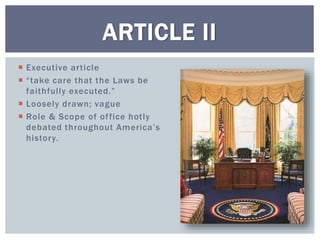
 Executive article
 “take care that the Laws be
faithfully executed.”
 Loosely drawn; vague
 Role & Scope of office hotly
debated throughout America’s
history.
ARTICLE II
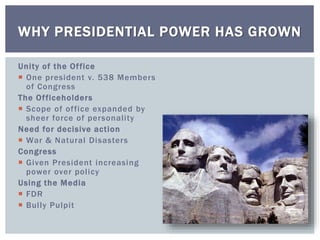
Unity of the Office
 One president v. 538 Members
of Congress
The Officeholders
 Scope of office expanded by
sheer force of personality
Need for decisive action
 War & Natural Disasters
Congress
 Given President increasing
power over policy
Using the Media
 FDR
 Bully Pulpit
WHY PRESIDENTIAL POWER HAS GROWN
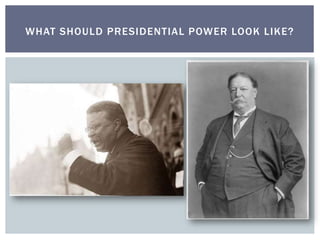
WHAT SHOULD PRESIDENTIAL POWER LOOK LIKE?
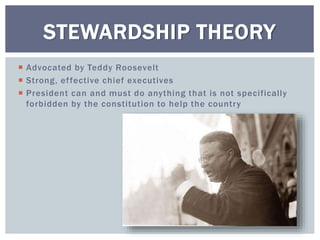
 Advocated by Teddy Roosevelt
 Strong, effective chief executives
 President can and must do anything that is not specifically
forbidden by the constitution to help the country
STEWARDSHIP THEORY
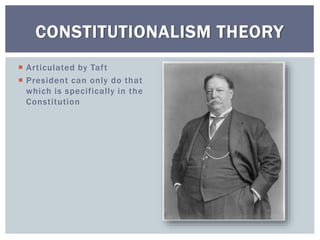
 Articulated by Taft
 President can only do that
which is specifically in the
Constitution
CONSTITUTIONALISM THEORY
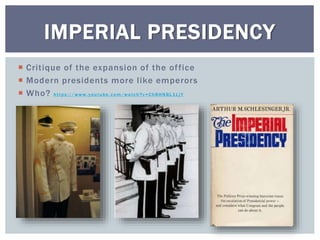
 Critique of the expansion of the office
 Modern presidents more like emperors
 Who? https://www.youtube.com/watch?v=Ch8HNBL1LjY
IMPERIAL PRESIDENCY
 Oath of Office
 Congress deals with broad ideas
 Details left up to Executive Branch
EXECUTING THE LAW
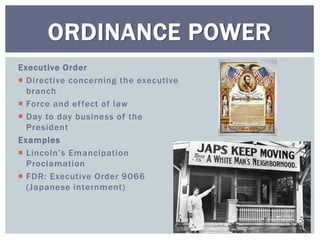
Executive Order
 Directive concerning the executive
branch
 Force and effect of law
 Day to day business of the
President
Examples
 Lincoln’s Emancipation
Proclamation
 FDR: Executive Order 9066
(Japanese internment)
ORDINANCE POWER
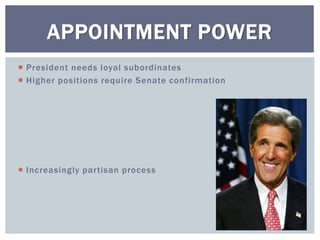
 President needs loyal subordinates
 Higher positions require Senate confirmation
 Increasingly partisan process
APPOINTMENT POWER
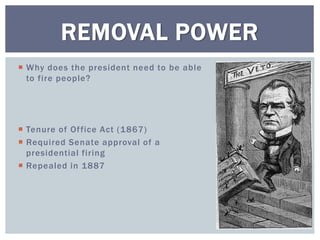
 Why does the president need to be able
to fire people?
 Tenure of Office Act (1867)
 Required Senate approval of a
presidential firing
 Repealed in 1887
REMOVAL POWER
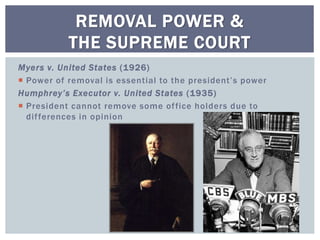
Myers v. United States (1926)
 Power of removal is essential to the president’s power
Humphrey’s Executor v. United States (1935)
 President cannot remove some office holders due to
differences in opinion
REMOVAL POWER &
THE SUPREME COURT
 President has tremendous power in this field
 Why?
DIPLOMATIC & MILITARY POWERS
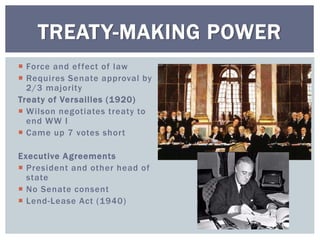
 Force and effect of law
 Requires Senate approval by
2/3 majority
Treaty of Versailles (1920)
 Wilson negotiates treaty to
end WW I
 Came up 7 votes short
Executive Agreements
 President and other head of
state
 No Senate consent
 Lend-Lease Act (1940)
TREATY-MAKING POWER
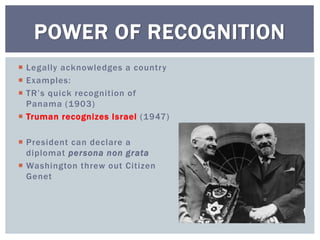
 Legally acknowledges a country
 Examples:
 TR’s quick recognition of
Panama (1903)
 Truman recognizes Israel (1947)
 President can declare a
diplomat persona non grata
 Washington threw out Citizen
Genet
POWER OF RECOGNITION
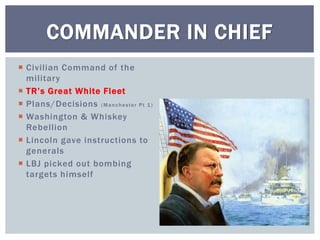
 Civilian Command of the
military
 TR’s Great White Fleet
 Plans/Decisions (Manchester Pt 1)
 Washington & Whiskey
Rebellion
 Lincoln gave instructions to
generals
 LBJ picked out bombing
targets himself
COMMANDER IN CHIEF
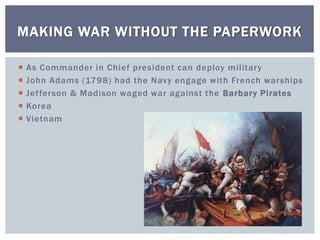
 As Commander in Chief president can deploy military
 John Adams (1798) had the Navy engage with French warships
 Jefferson & Madison waged war against the Barbary Pirates
 Korea
 Vietnam
MAKING WAR WITHOUT THE PAPERWORK
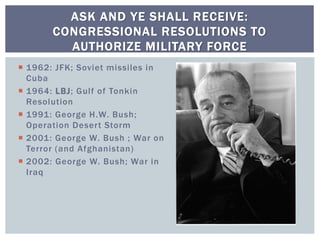
 1962: JFK; Soviet missiles in
Cuba
 1964: LBJ; Gulf of Tonkin
Resolution
 1991: George H.W. Bush;
Operation Desert Storm
 2001: George W. Bush ; War on
Terror (and Afghanistan)
 2002: George W. Bush; War in
Iraq
ASK AND YE SHALL RECEIVE:
CONGRESSIONAL RESOLUTIONS TO
AUTHORIZE MILITARY FORCE
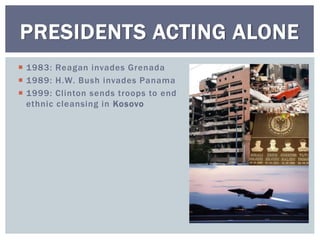
 1983: Reagan invades Grenada
 1989: H.W. Bush invades Panama
 1999: Clinton sends troops to end
ethnic cleansing in Kosovo
PRESIDENTS ACTING ALONE
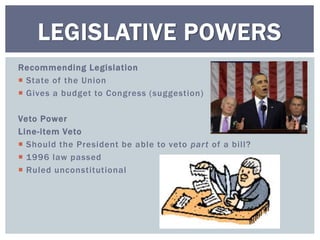
Recommending Legislation
 State of the Union
 Gives a budget to Congress (suggestion)
Veto Power
Line-item Veto
 Should the President be able to veto part of a bill?
 1996 law passed
 Ruled unconstitutional
LEGISLATIVE POWERS
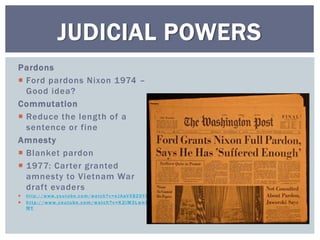
Pardons
 Ford pardons Nixon 1974 –
Good idea?
Commutation
 Reduce the length of a
sentence or fine
Amnesty
 Blanket pardon
 1977: Carter granted
amnesty to Vietnam War
draft evaders
 http:// www.you tu be.c o m/ wa tch? v =e JAq VX B Z0 YI
 http://www.youtube.com/watch?v=K2i M3Lwk6
MY
JUDICIAL POWERS

Presidency in Action -- Ch 14

  • 1.
  • 2.
     Executive article “take care that the Laws be faithfully executed.”  Loosely drawn; vague  Role & Scope of office hotly debated throughout America’s history. ARTICLE II
  • 3.
    Unity of theOffice  One president v. 538 Members of Congress The Officeholders  Scope of office expanded by sheer force of personality Need for decisive action  War & Natural Disasters Congress  Given President increasing power over policy Using the Media  FDR  Bully Pulpit WHY PRESIDENTIAL POWER HAS GROWN
  • 4.
    WHAT SHOULD PRESIDENTIALPOWER LOOK LIKE?
  • 5.
     Advocated byTeddy Roosevelt  Strong, effective chief executives  President can and must do anything that is not specifically forbidden by the constitution to help the country STEWARDSHIP THEORY
  • 6.
     Articulated byTaft  President can only do that which is specifically in the Constitution CONSTITUTIONALISM THEORY
  • 7.
     Critique ofthe expansion of the office  Modern presidents more like emperors  Who? https://www.youtube.com/watch?v=Ch8HNBL1LjY IMPERIAL PRESIDENCY
  • 8.
     Oath ofOffice  Congress deals with broad ideas  Details left up to Executive Branch EXECUTING THE LAW
  • 9.
    Executive Order  Directiveconcerning the executive branch  Force and effect of law  Day to day business of the President Examples  Lincoln’s Emancipation Proclamation  FDR: Executive Order 9066 (Japanese internment) ORDINANCE POWER
  • 10.
     President needsloyal subordinates  Higher positions require Senate confirmation  Increasingly partisan process APPOINTMENT POWER
  • 11.
     Why doesthe president need to be able to fire people?  Tenure of Office Act (1867)  Required Senate approval of a presidential firing  Repealed in 1887 REMOVAL POWER
  • 12.
    Myers v. UnitedStates (1926)  Power of removal is essential to the president’s power Humphrey’s Executor v. United States (1935)  President cannot remove some office holders due to differences in opinion REMOVAL POWER & THE SUPREME COURT
  • 13.
     President hastremendous power in this field  Why? DIPLOMATIC & MILITARY POWERS
  • 14.
     Force andeffect of law  Requires Senate approval by 2/3 majority Treaty of Versailles (1920)  Wilson negotiates treaty to end WW I  Came up 7 votes short Executive Agreements  President and other head of state  No Senate consent  Lend-Lease Act (1940) TREATY-MAKING POWER
  • 15.
     Legally acknowledgesa country  Examples:  TR’s quick recognition of Panama (1903)  Truman recognizes Israel (1947)  President can declare a diplomat persona non grata  Washington threw out Citizen Genet POWER OF RECOGNITION
  • 16.
     Civilian Commandof the military  TR’s Great White Fleet  Plans/Decisions (Manchester Pt 1)  Washington & Whiskey Rebellion  Lincoln gave instructions to generals  LBJ picked out bombing targets himself COMMANDER IN CHIEF
  • 17.
     As Commanderin Chief president can deploy military  John Adams (1798) had the Navy engage with French warships  Jefferson & Madison waged war against the Barbary Pirates  Korea  Vietnam MAKING WAR WITHOUT THE PAPERWORK
  • 18.
     1962: JFK;Soviet missiles in Cuba  1964: LBJ; Gulf of Tonkin Resolution  1991: George H.W. Bush; Operation Desert Storm  2001: George W. Bush ; War on Terror (and Afghanistan)  2002: George W. Bush; War in Iraq ASK AND YE SHALL RECEIVE: CONGRESSIONAL RESOLUTIONS TO AUTHORIZE MILITARY FORCE
  • 19.
     1983: Reaganinvades Grenada  1989: H.W. Bush invades Panama  1999: Clinton sends troops to end ethnic cleansing in Kosovo PRESIDENTS ACTING ALONE
  • 20.
    Recommending Legislation  Stateof the Union  Gives a budget to Congress (suggestion) Veto Power Line-item Veto  Should the President be able to veto part of a bill?  1996 law passed  Ruled unconstitutional LEGISLATIVE POWERS
  • 21.
    Pardons  Ford pardonsNixon 1974 – Good idea? Commutation  Reduce the length of a sentence or fine Amnesty  Blanket pardon  1977: Carter granted amnesty to Vietnam War draft evaders  http:// www.you tu be.c o m/ wa tch? v =e JAq VX B Z0 YI  http://www.youtube.com/watch?v=K2i M3Lwk6 MY JUDICIAL POWERS