Assessment Techniques
By: Saba Munir
Objectives
 State the meaning of assessment
 Explain the need of assessment
 Discuss Assessment techniques
Assessment
Assessment is the systematic basis for making inferences about the learning and
development of students. It is the process of defining, selecting, designing,
collecting, analyzing, interpreting, and using information to increase students' learning
and development.
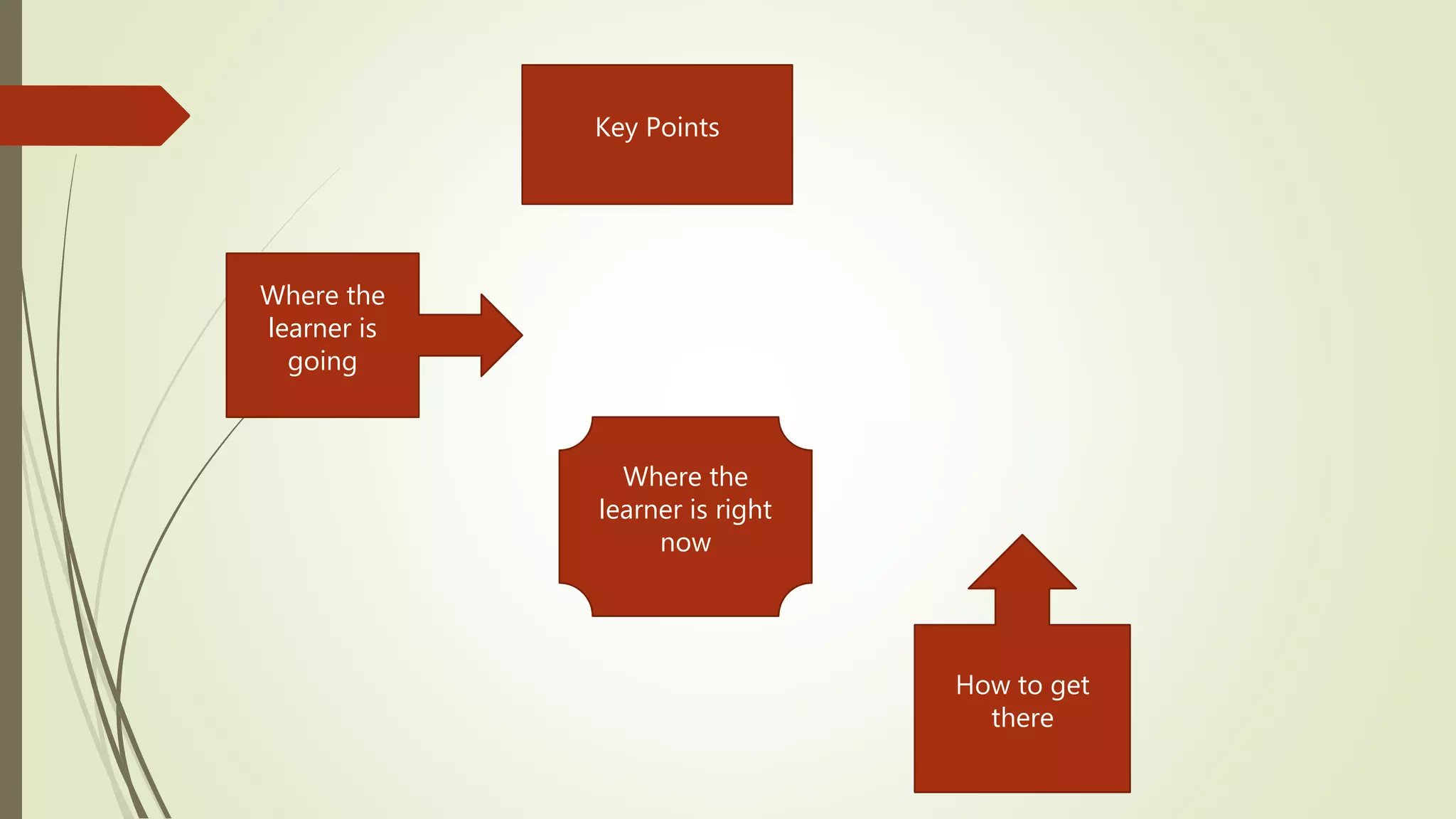
Key Points
Where the
learner is right
now
Where the
learner is
going
How to get
there
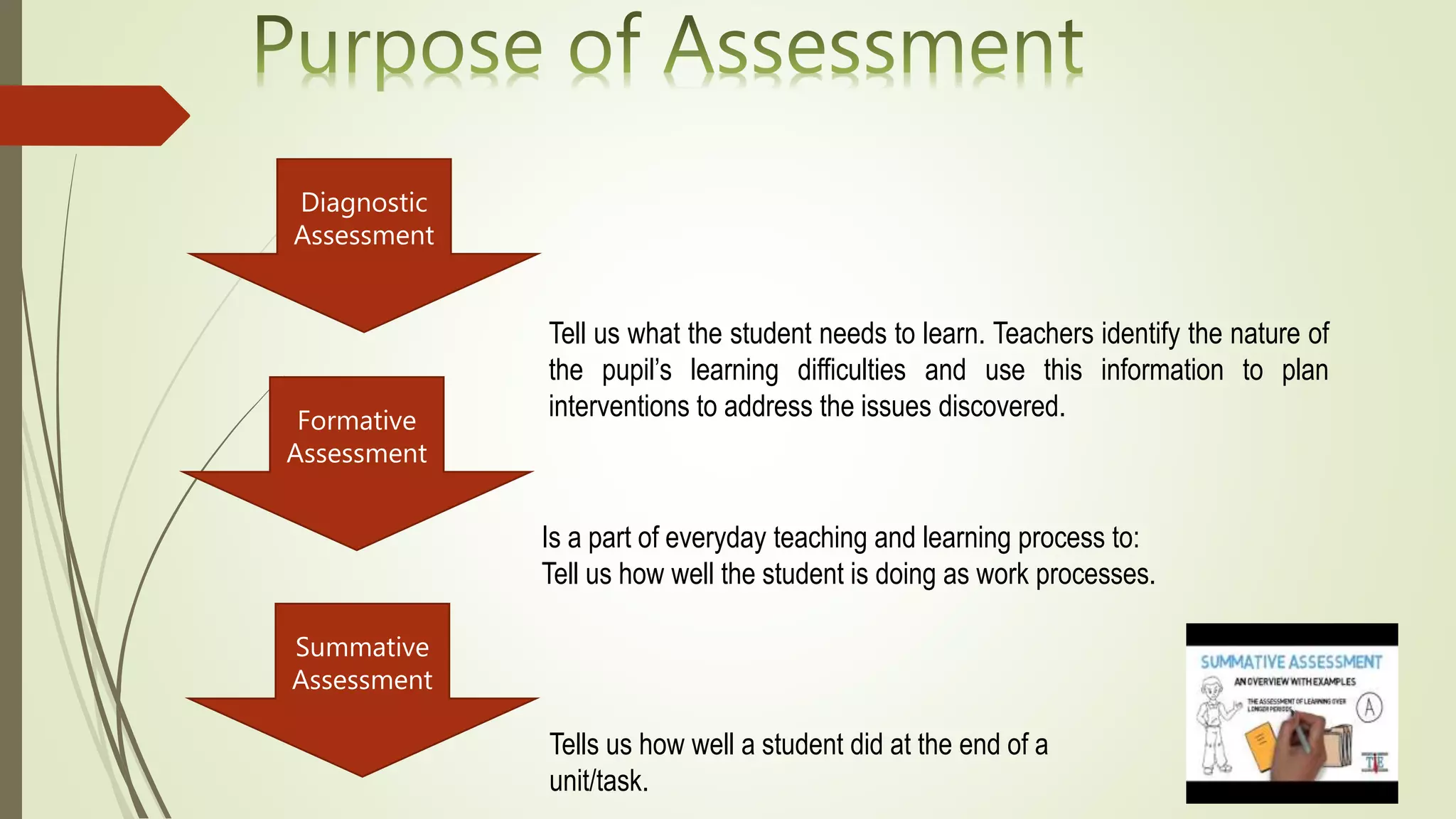
Tell us what the student needs to learn. Teachers identify the nature of
the pupil’s learning difficulties and use this information to plan
interventions to address the issues discovered.
Diagnostic
Assessment
Formative
Assessment
Is a part of everyday teaching and learning process to:
Tell us how well the student is doing as work processes.
Summative
Assessment
Tells us how well a student did at the end of a
unit/task.
Why is it important to assess?
 To find out what the students know (knowledge)
 To find out what the students can do, and how well they can do it (skill,
Performance).
 To find out how students go about the task of doing their work (process).
 To find out how students feel about their work (motivation ,effort)
What are assessment techniques?
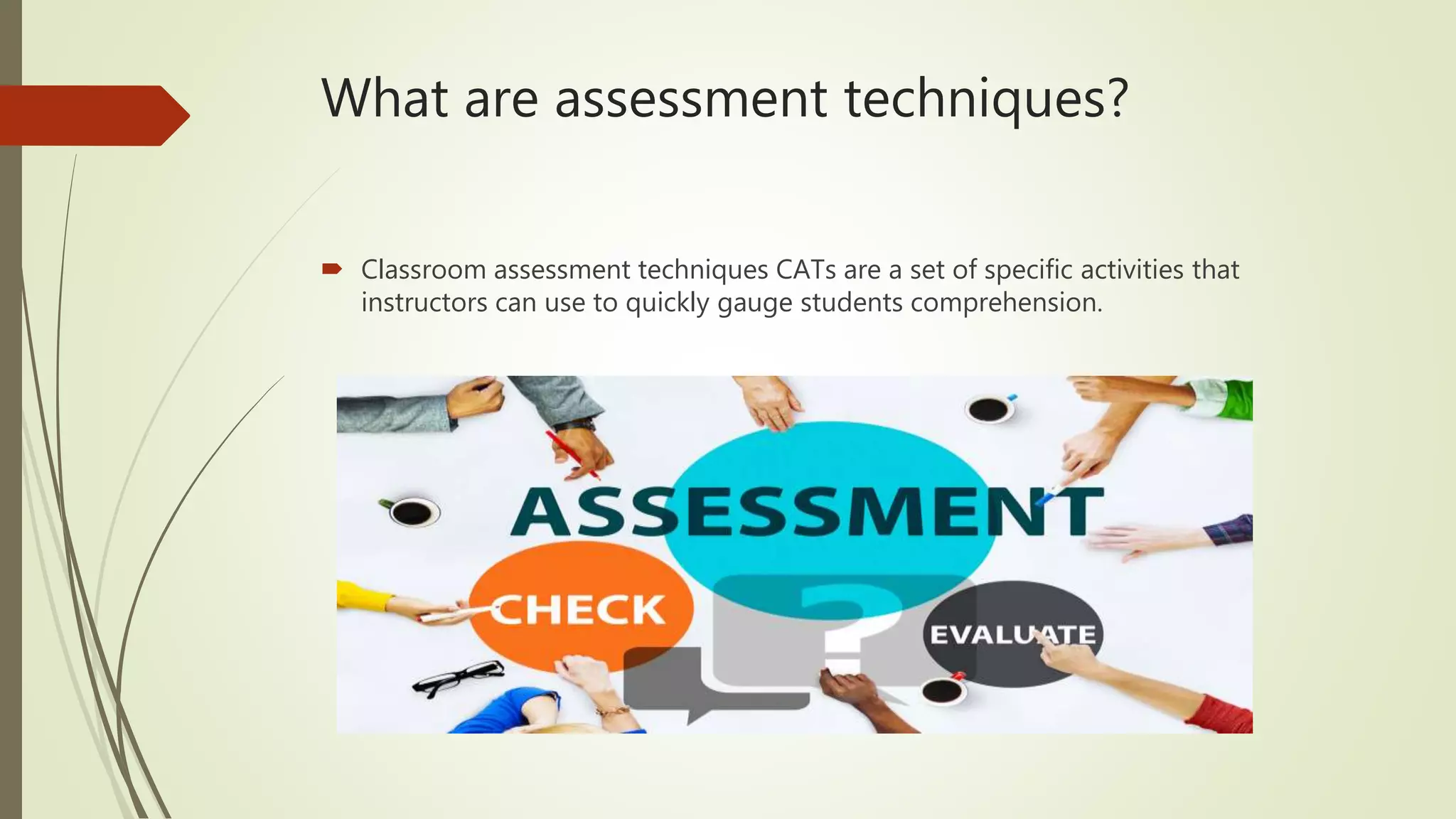
 Classroom assessment techniques CATs are a set of specific activities that
instructors can use to quickly gauge students comprehension.
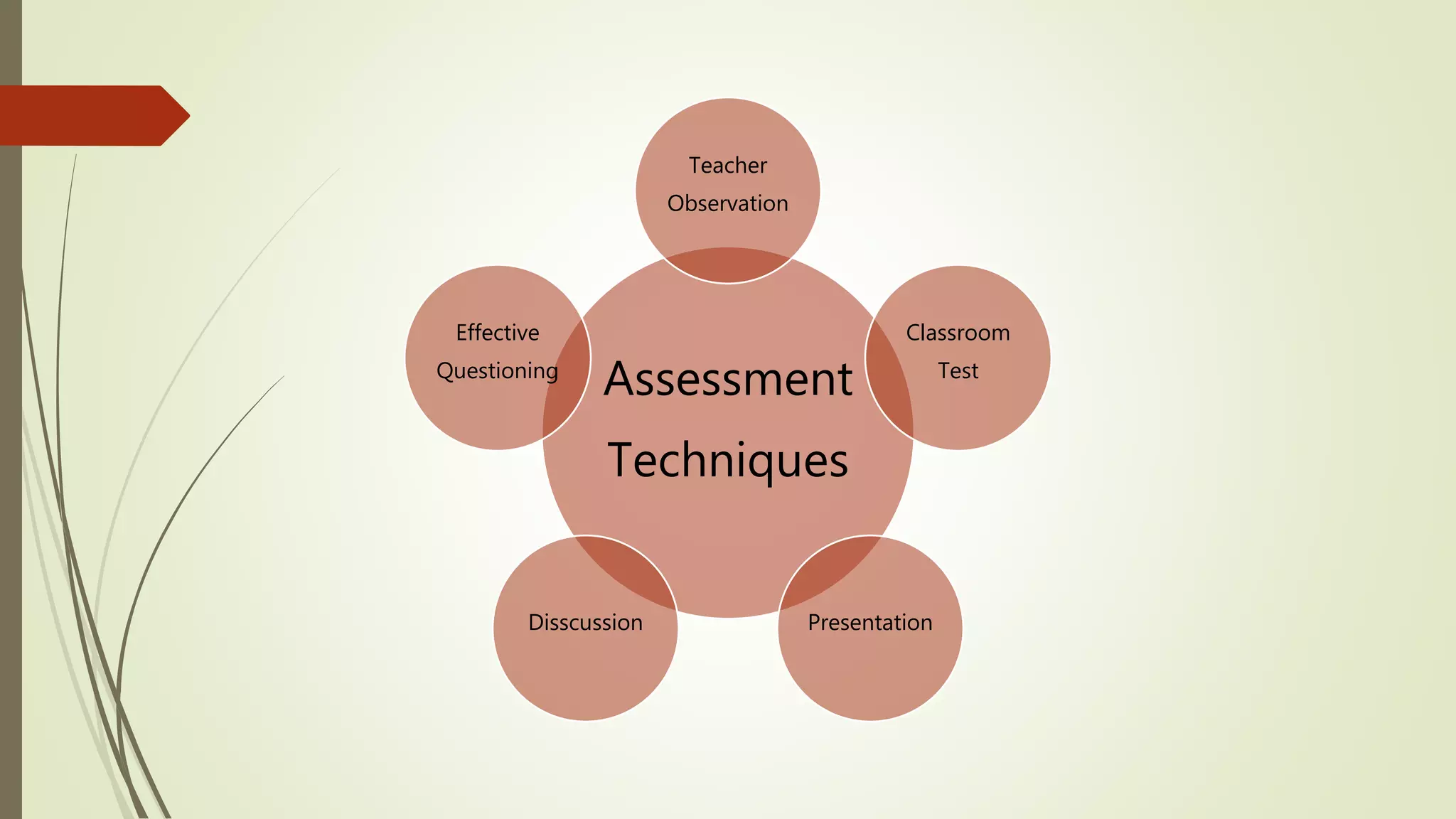
Assessment
Techniques
Teacher
Observation
Classroom
Test
Presentation
Disscussion
Effective
Questioning
Self Assessment
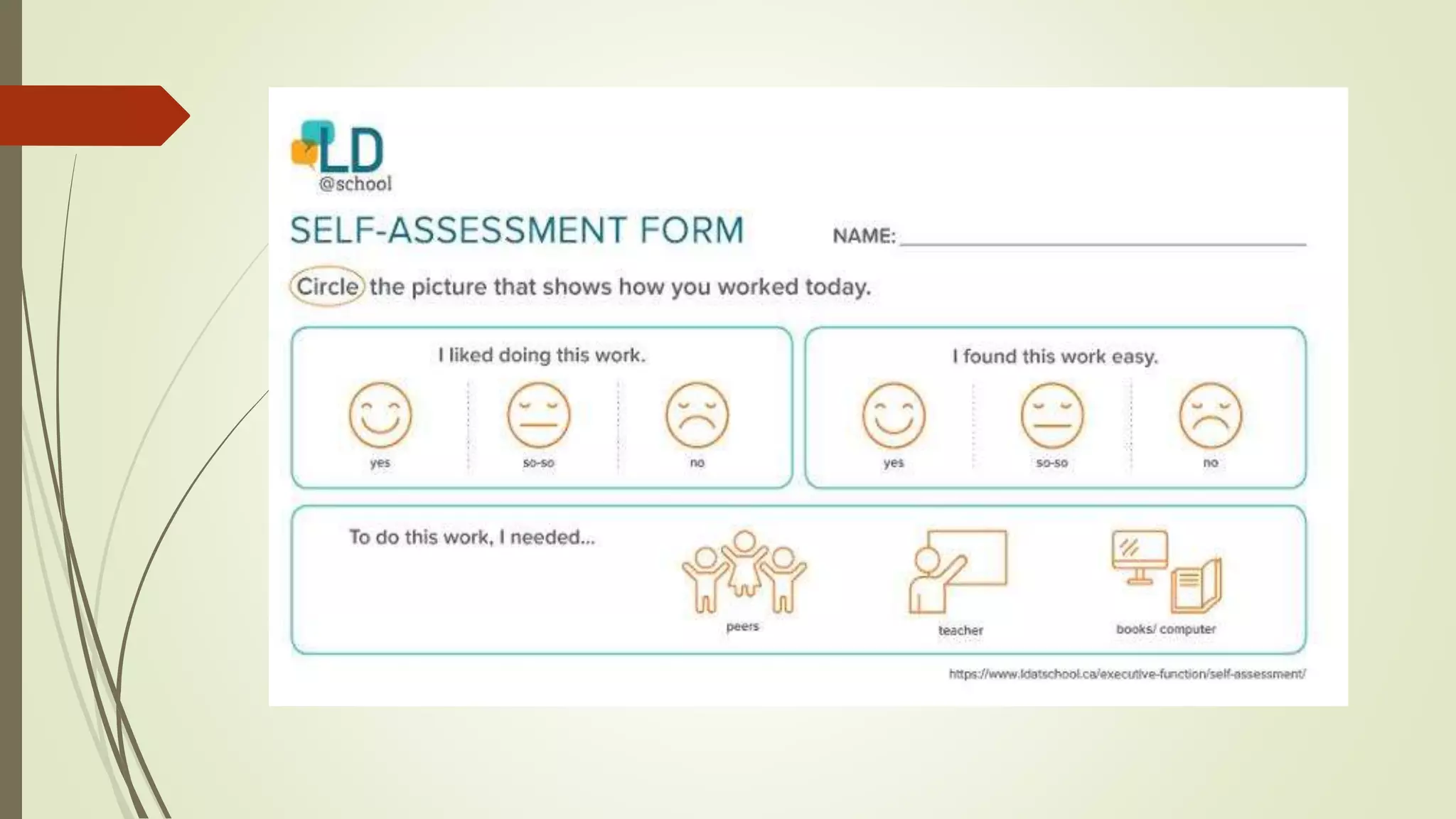
 Self-assessment provides students with an opportunity to self-evaluate, or make judgments about
their learning process and products of learning, based on criteria that they have agreed on with their
instructor.
Presentation1.pptx
Presentation1.pptx
Presentation1.pptx

Presentation1.pptx

  • 2.
  • 3.
    Objectives  State themeaning of assessment  Explain the need of assessment  Discuss Assessment techniques
  • 4.
    Assessment Assessment is thesystematic basis for making inferences about the learning and development of students. It is the process of defining, selecting, designing, collecting, analyzing, interpreting, and using information to increase students' learning and development.
  • 5.
    Key Points Where the learneris right now Where the learner is going How to get there
  • 6.
    Tell us whatthe student needs to learn. Teachers identify the nature of the pupil’s learning difficulties and use this information to plan interventions to address the issues discovered. Diagnostic Assessment Formative Assessment Is a part of everyday teaching and learning process to: Tell us how well the student is doing as work processes. Summative Assessment Tells us how well a student did at the end of a unit/task.
  • 7.
    Why is itimportant to assess?  To find out what the students know (knowledge)  To find out what the students can do, and how well they can do it (skill, Performance).  To find out how students go about the task of doing their work (process).  To find out how students feel about their work (motivation ,effort)
  • 8.
    What are assessmenttechniques?  Classroom assessment techniques CATs are a set of specific activities that instructors can use to quickly gauge students comprehension.
  • 9.
  • 10.
    Self Assessment  Self-assessmentprovides students with an opportunity to self-evaluate, or make judgments about their learning process and products of learning, based on criteria that they have agreed on with their instructor.