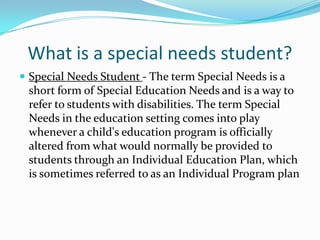
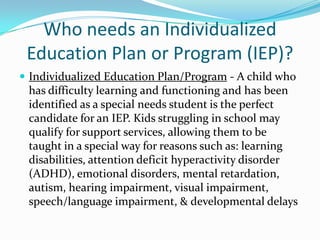
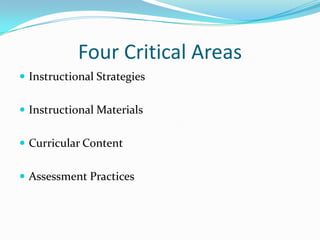
Differentiated instruction, special needs students, IEPs, inclusion, and assistive technology are critical areas to address when educating students with special needs. An IEP outlines the modifications and assistive technologies needed to help each special needs student succeed, while inclusion places the student in regular classrooms to the maximum extent. A variety of assistive technologies from low-tech organizers to screen readers can help address mild disabilities by aiding note taking, writing, and participation in class activities. Educators should continuously assess students and technologies to ensure IEP goals are met and each student's needs are addressed.

















![Technology & Education[1][1]](https://cdn.slidesharecdn.com/ss_thumbnails/technologyeducation11-091104181132-phpapp02-thumbnail.jpg?width=640&height=640&fit=bounds)


