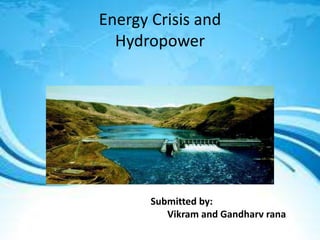
Energy Crisis and
Hydropower
Submitted by:
Vikram and Gandharv rana
Energy Crisis
in India
• At the end of 2007, the
gap between the demand
and supply of coal was 35
million tonnes.
•Hydro power continues to
flounder because of
concerns over
rehabilitation and
resettlement.
•Central Electricity
Authority (CEA) has
estimated the growth of
demand to increase to
100,000 mw additionally .
Energy Status
The pie chart above depicts the energy usage in India.
Coal being the largest source of energy in Non renewable resource and
wind energy in renewable resource.
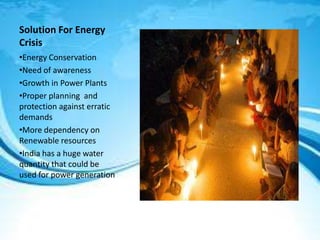
Solution For Energy
Crisis
•Energy Conservation
•Need of awareness
•Growth in Power Plants
•Proper planning and
protection against erratic
demands
•More dependency on
Renewable resources
•India has a huge water
quantity that could be
used for power generation
Hydropower
Major renewable source today
Hydropower
• Flowing water creates energy that can be
captured and turned into electricity. This is
called hydroelectric power or hydropower.
• The most common type of hydroelectric
power plant uses a dam on a river to store
water in a reservoir.
• Another type of hydroelectric power plant -
called a pumped storage plant - can even store
power.
Hydrological Cycle :Water
as a source of energy
The stages of the cycle are:
•Evaporation
•Transport
•Condensation
•Precipitation
•Groundwater
•Run-off
Applications:
•Water treatment
•Supply
•Hydropower
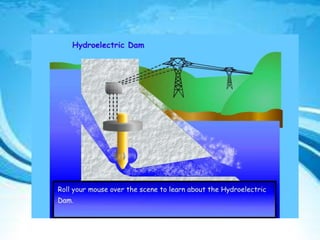
Hydropower Plant Basic Layout
Shown above is the basic layout of hydropower plant., depicting the
power generation.
Dam
• Dams are structures built over rivers to stop
the water flow and form a reservoir.
• This water is diverted to turbines in power
stations.
• Dams are also used for controlling floods and
irrigation. The dams should be water-tight and
should be able to withstand the pressure
exerted by the water on it.
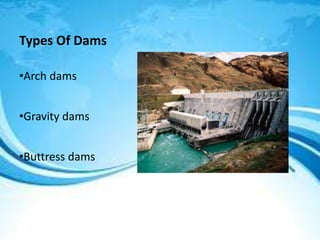
Types Of Dams
•Arch dams
•Gravity dams
•Buttress dams
Spillway
• A spillway as the name suggests could be called
as a way for spilling of water from dams.
• It is used to provide for the release of flood
water from a dam. It is used to prevent over
toping of the dams which could result in damage
or failure of dams.
• Spillways are of two types
controlled and uncontrolled
• The uncontrolled types start releasing water
upon water rising above a particular level. But
in case of the controlled type, regulation of
flow is possible.
Penstock and Tunnel
• Penstocks are pipes which carry water from
the reservoir to the turbines inside power
station.
• Water under high pressure flows through the
penstock.
• A tunnel serves the same purpose as a
penstock used when an obstruction is present
between the dam and power station such as a
mountain.
Surge Tank
• Surge tanks are tanks connected to the water
conductor system.
• The sudden surges of water in penstock is
taken by the surge tank.
• It regulates the water flow by increasing and
reducing the supply as per the storage.
Power Station
•Power station contains a
turbine coupled to a
generator.
•The water brought to the
power station rotates the
vanes of the turbine
producing torque and
rotation of turbine shaft.
This rotational torque is
transferred to the
generator and is converted
into electricity.
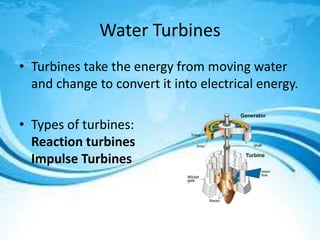
Water Turbines
• Turbines take the energy from moving water
and change to convert it into electrical energy.
• Types of turbines:
Reaction turbines
Impulse Turbines
Kaplan Turbine
• Propeller-type water turbine which has
adjustable blades.
• Principle:
The Kaplan turbine is an inward
flow reaction turbine, which means that the
working fluid changes pressure as it moves
through the turbine and gives up its energy.
Francis Turbine
• Francis turbines are the most common
water turbine in use today.
• It is an inward-flow reaction turbine that
combines radial and axial flow
concepts. The turbine powered generator
power output generally ranges from 10 to
750 megawatts.
• Principle :
The Francis turbine is a type of reaction
turbine, a category of turbine in which the
working fluid comes to the turbine under
immense pressure and the energy is
extracted by the turbine blades from the
working fluid.
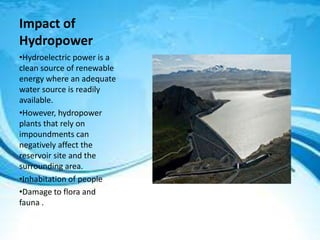
Impact of
Hydropower
•Hydroelectric power is a
clean source of renewable
energy where an adequate
water source is readily
available.
•However, hydropower
plants that rely on
impoundments can
negatively affect the
reservoir site and the
surrounding area.
•Inhabitation of people
•Damage to flora and
fauna .
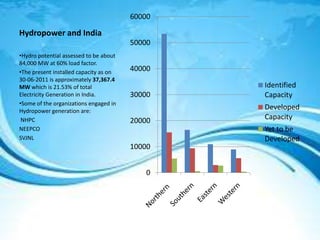
Hydropower and India
0
10000
20000
30000
40000
50000
60000
Identified
Capacity
Developed
Capacity
Yet to be
Developed
•Hydro potential assessed to be about
84,000 MW at 60% load factor.
•The present installed capacity as on
30-06-2011 is approximately 37,367.4
MW which is 21.53% of total
Electricity Generation in India.
•Some of the organizations engaged in
Hydropower generation are:
NHPC
NEEPCO
SVJNL
Thank You

Energy Crisis and Hydropower

  • 1.
    Energy Crisis and Hydropower Submittedby: Vikram and Gandharv rana
  • 2.
    Energy Crisis in India •At the end of 2007, the gap between the demand and supply of coal was 35 million tonnes. •Hydro power continues to flounder because of concerns over rehabilitation and resettlement. •Central Electricity Authority (CEA) has estimated the growth of demand to increase to 100,000 mw additionally .
  • 3.
    Energy Status The piechart above depicts the energy usage in India. Coal being the largest source of energy in Non renewable resource and wind energy in renewable resource.
  • 4.
    Solution For Energy Crisis •EnergyConservation •Need of awareness •Growth in Power Plants •Proper planning and protection against erratic demands •More dependency on Renewable resources •India has a huge water quantity that could be used for power generation
  • 5.
  • 6.
    Hydropower • Flowing watercreates energy that can be captured and turned into electricity. This is called hydroelectric power or hydropower. • The most common type of hydroelectric power plant uses a dam on a river to store water in a reservoir. • Another type of hydroelectric power plant - called a pumped storage plant - can even store power.
  • 7.
    Hydrological Cycle :Water asa source of energy The stages of the cycle are: •Evaporation •Transport •Condensation •Precipitation •Groundwater •Run-off Applications: •Water treatment •Supply •Hydropower
  • 8.
    Hydropower Plant BasicLayout Shown above is the basic layout of hydropower plant., depicting the power generation.
  • 9.
    Dam • Dams arestructures built over rivers to stop the water flow and form a reservoir. • This water is diverted to turbines in power stations. • Dams are also used for controlling floods and irrigation. The dams should be water-tight and should be able to withstand the pressure exerted by the water on it.
  • 10.
    Types Of Dams •Archdams •Gravity dams •Buttress dams
  • 11.
    Spillway • A spillwayas the name suggests could be called as a way for spilling of water from dams. • It is used to provide for the release of flood water from a dam. It is used to prevent over toping of the dams which could result in damage or failure of dams. • Spillways are of two types controlled and uncontrolled
  • 12.
    • The uncontrolledtypes start releasing water upon water rising above a particular level. But in case of the controlled type, regulation of flow is possible.
  • 13.
    Penstock and Tunnel •Penstocks are pipes which carry water from the reservoir to the turbines inside power station. • Water under high pressure flows through the penstock. • A tunnel serves the same purpose as a penstock used when an obstruction is present between the dam and power station such as a mountain.
  • 14.
    Surge Tank • Surgetanks are tanks connected to the water conductor system. • The sudden surges of water in penstock is taken by the surge tank. • It regulates the water flow by increasing and reducing the supply as per the storage.
  • 15.
    Power Station •Power stationcontains a turbine coupled to a generator. •The water brought to the power station rotates the vanes of the turbine producing torque and rotation of turbine shaft. This rotational torque is transferred to the generator and is converted into electricity.
  • 16.
    Water Turbines • Turbinestake the energy from moving water and change to convert it into electrical energy. • Types of turbines: Reaction turbines Impulse Turbines
  • 17.
    Kaplan Turbine • Propeller-typewater turbine which has adjustable blades. • Principle: The Kaplan turbine is an inward flow reaction turbine, which means that the working fluid changes pressure as it moves through the turbine and gives up its energy.
  • 18.
    Francis Turbine • Francisturbines are the most common water turbine in use today. • It is an inward-flow reaction turbine that combines radial and axial flow concepts. The turbine powered generator power output generally ranges from 10 to 750 megawatts. • Principle : The Francis turbine is a type of reaction turbine, a category of turbine in which the working fluid comes to the turbine under immense pressure and the energy is extracted by the turbine blades from the working fluid.
  • 20.
    Impact of Hydropower •Hydroelectric poweris a clean source of renewable energy where an adequate water source is readily available. •However, hydropower plants that rely on impoundments can negatively affect the reservoir site and the surrounding area. •Inhabitation of people •Damage to flora and fauna .
  • 21.
    Hydropower and India 0 10000 20000 30000 40000 50000 60000 Identified Capacity Developed Capacity Yetto be Developed •Hydro potential assessed to be about 84,000 MW at 60% load factor. •The present installed capacity as on 30-06-2011 is approximately 37,367.4 MW which is 21.53% of total Electricity Generation in India. •Some of the organizations engaged in Hydropower generation are: NHPC NEEPCO SVJNL
  • 22.