FORUM SHAH 5001   RONAK  NANDWANA     5016   KOMAL PATEL    5024  YASH THACKER  5035   SEJAL SHAH  5050   KEVAL SANGHVI  5051   AADIT SHAH  5059
Introduction to transport. Importance of transport.
Introduction to Indian railways. History of indian railways.
Indian Railways Type Public Founded April 16, 1853, nationalized in 1951 Headquarters New Delhi Key people Union Railway Minister: Mamta Bannergy Minister of State for Railways (V): R. Velu Minister of State for Railways (R): Naranbhai J Rathwa Chairman Railway Board: J. P. Batra Area served India Industry Railways and Locomotives Parent Government of India.
Intangibility  Perishability Inseparability Heterogeneity Ownership Simultaneously Quality measurement Nature of demand
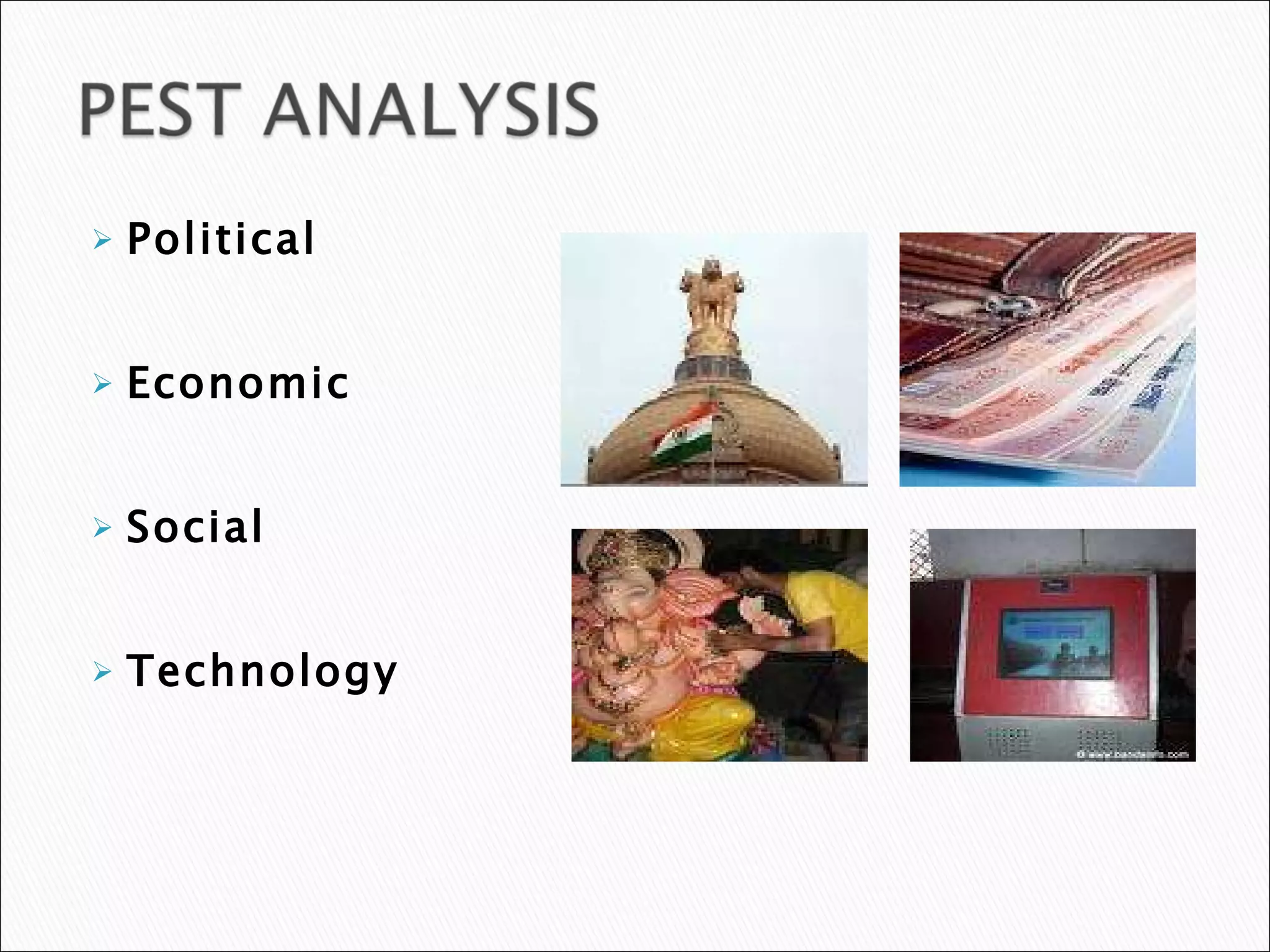
Political Economic Social Technology
Railways are owned and managed by the Government of India. Decentralized certain powers such as the General Managers of Zonal Railways are given to finalize tenders and contracts up to a value of 15 crores at their own level. Adopted proactive strategies for railways aimed at income generation and cutting costs. Privatization
Cannot balance demand and supply Growing Economic Burden Investment in unremunerative projects A series of developments in the 1990s Contribution to GNP
Serve all sections of the society Social Revolution During the times of war and natural calamities Environment friendly Social status
Double/Multiple Lines Computerised Passenger Reservation Facility Improved Signaling and other systems Construction of bridges Anti – collision devices Modern Technology
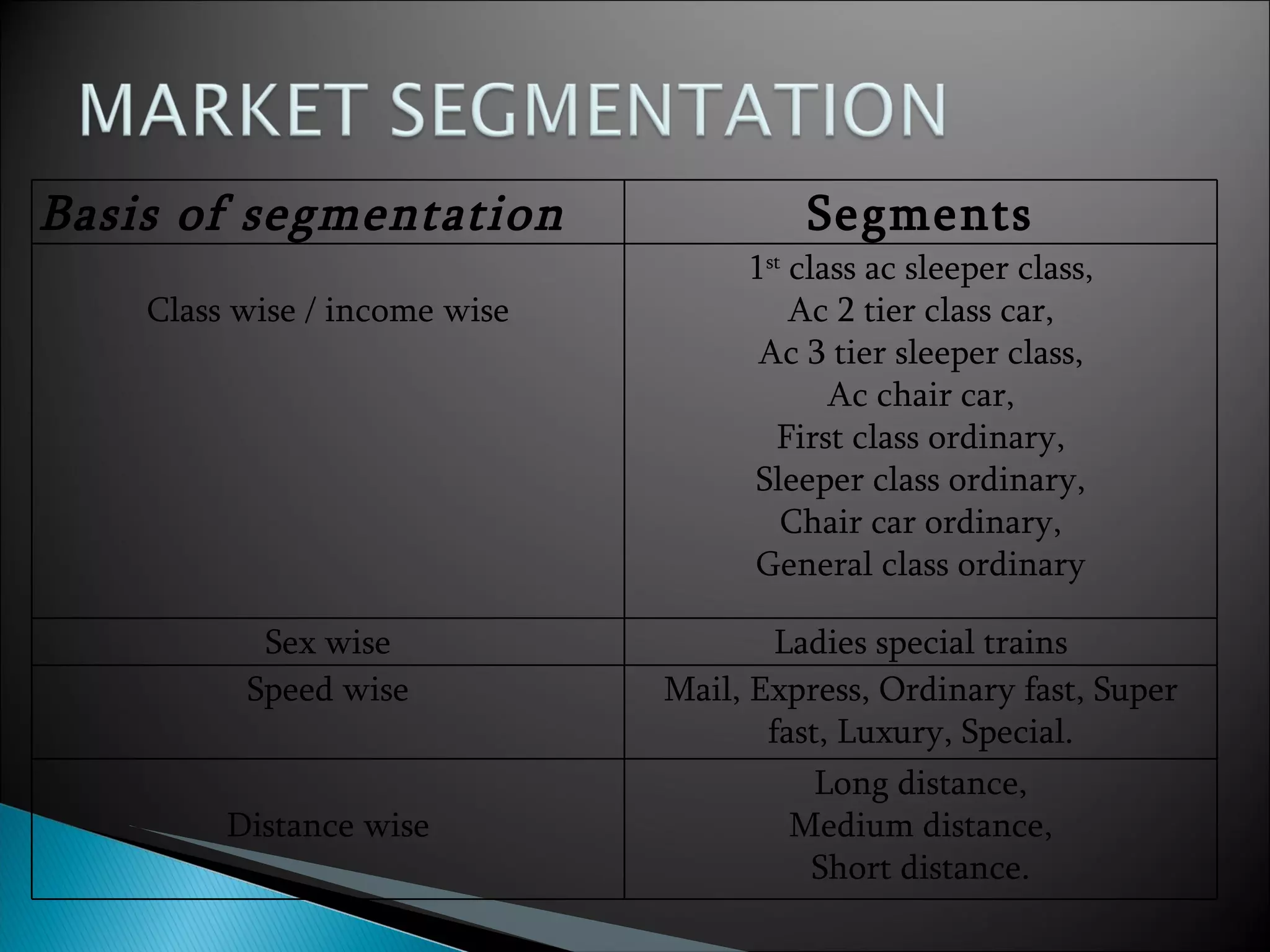
Basis of segmentation Segments Class wise / income wise 1 st  class ac sleeper class, Ac 2 tier class car, Ac 3 tier sleeper class, Ac chair car, First class ordinary, Sleeper class ordinary, Chair car ordinary, General class ordinary Sex wise Ladies special trains Speed wise Mail, Express, Ordinary fast, Super fast, Luxury, Special. Distance wise Long distance, Medium distance, Short distance.
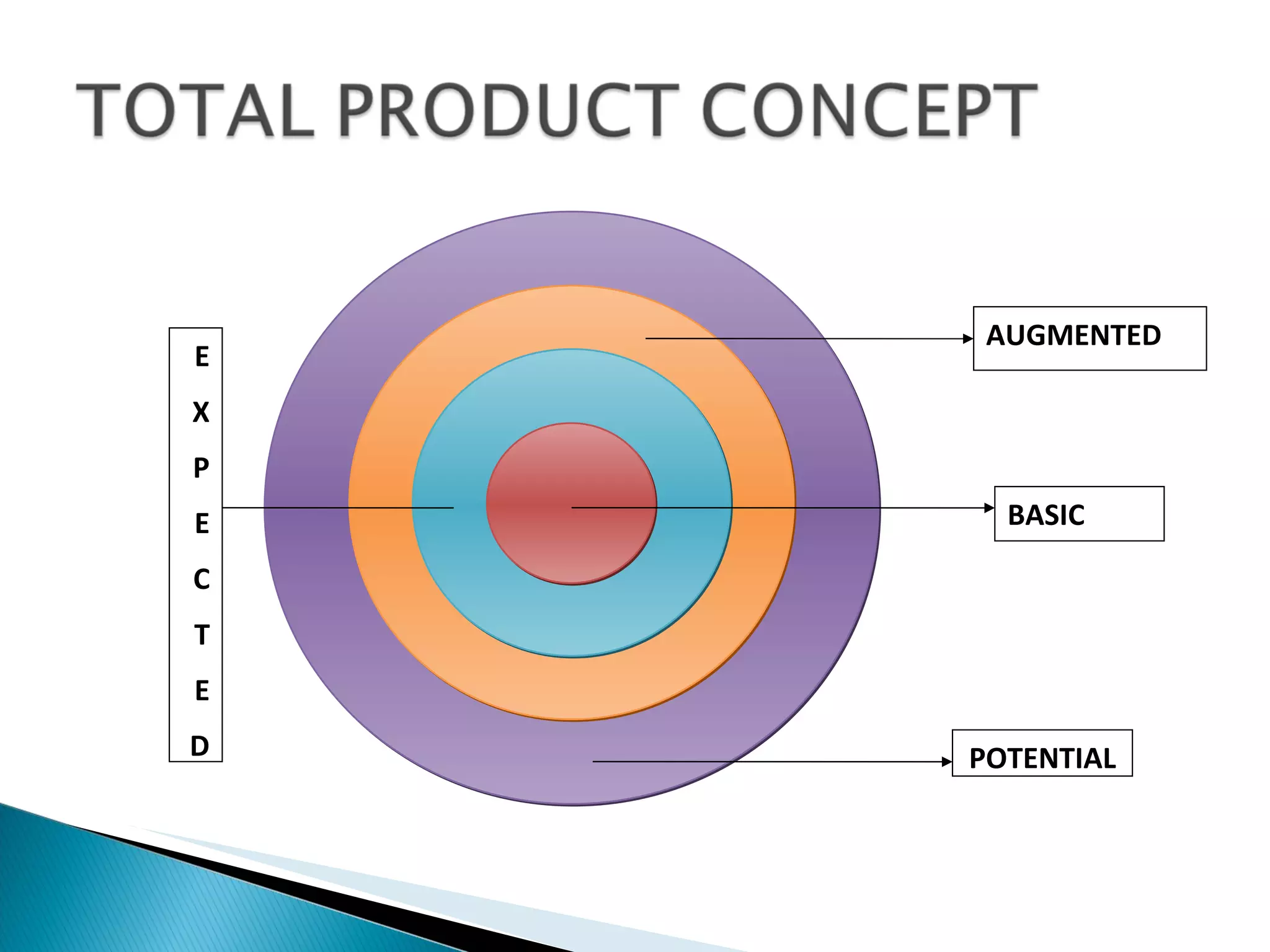
AUGMENTED BASIC POTENTIAL E X P E C T E D
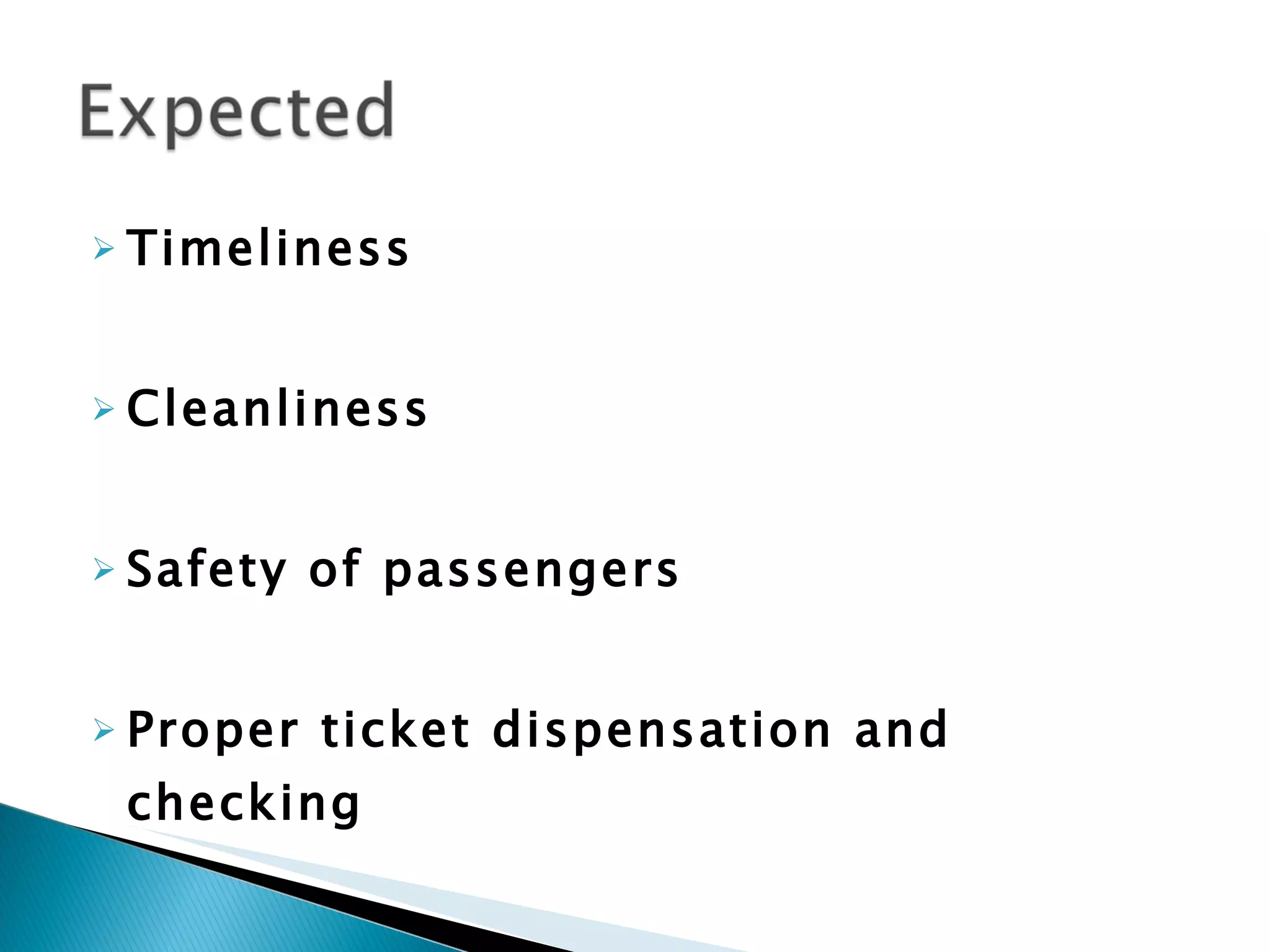
Timeliness Cleanliness Safety of passengers Proper ticket dispensation and checking
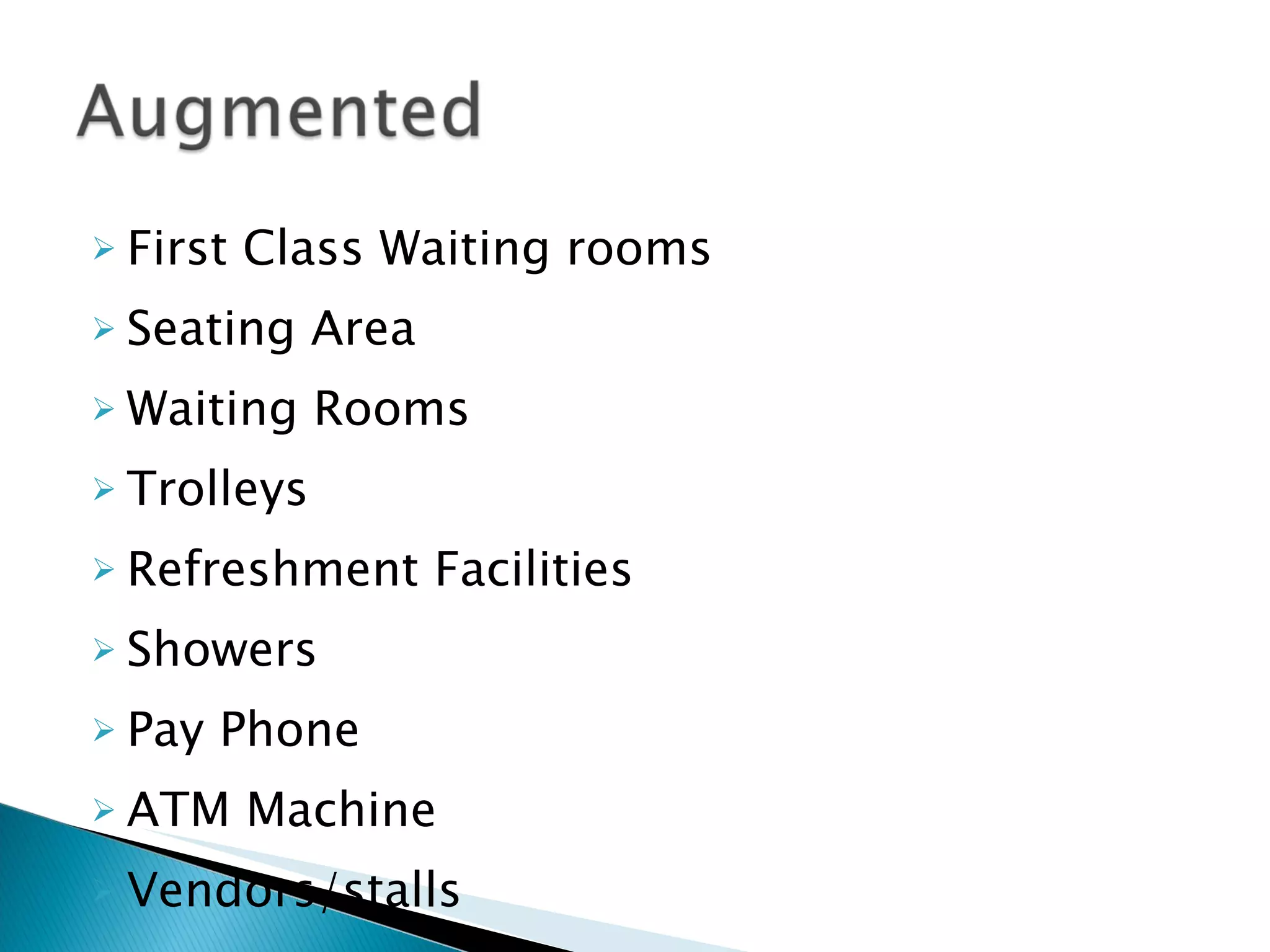
First Class Waiting rooms Seating Area Waiting Rooms Trolleys Refreshment Facilities Showers Pay Phone ATM Machine Vendors/stalls
The railways have designed coaches with new layouts, having significantly higher capacity than the previous coaches. Some of the innovative measure such as on-board entertainment and fast food facilities. All trains on IR are identified by primarily through their numbers (either the 4-digit nationwide numbers or the zonal numbers for local passenger trains). The most common way to name a train is by providing the endpoints of the train and the train class designation, e.g., Bangalore-Chennai Mail
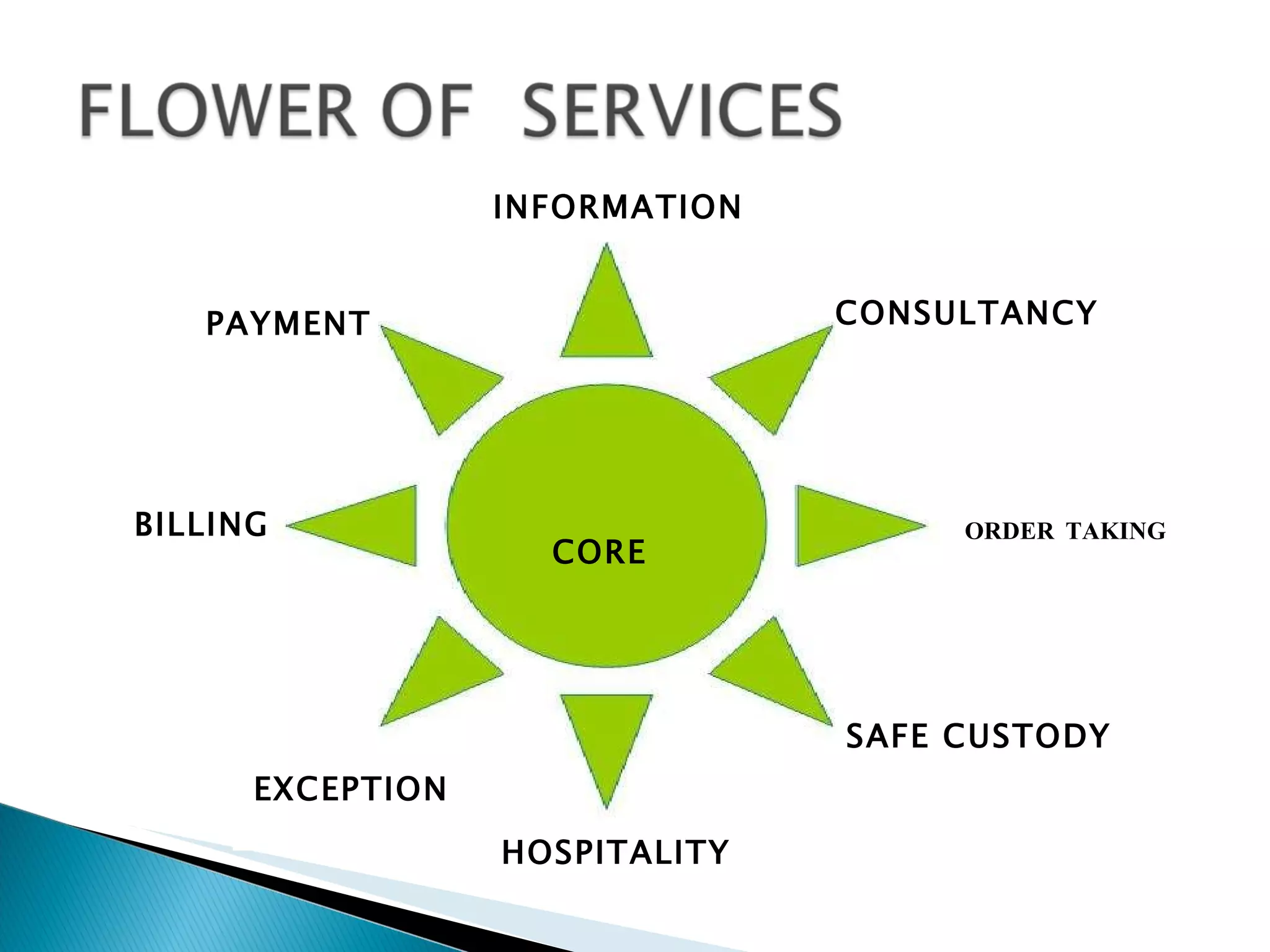
INFORMATION CONSULTANCY ORDER   TAKING SAFE CUSTODY HOSPITALITY EXCEPTION BILLING PAYMENT CORE
Timetables Announcements Improved interiors Internet accessibility NTES — ('National Train Enquiry System') various enquiry numbers such as 131 ,132 & 137
No special consultancy provided Travel agents  Ticket counter
Reservation counters Working hour are displayed at ticket windows Website  www.indianrail.gov.in Railway Tourist Agents
Various aspects such as the surrounding, infrastructure, appearance, speaking tone etc. centralized Training Institutes (CTIs)  foreign training every ten years
Interlocking and signaling system CCTV and smart video cameras Railway Protection Force Loss of tickets  lost property in trains Install doorframes and hand-held metal detectors,
Jain food  Senior citizens
Train number Seat number Coach number PNR number Ticket number Age of the passenger Birth number Train name  Passengers name
Cash local post office, petrol pumps ,ATMs credit cards
PRODUCT MIX PRICING Place Promotion People Process Physical evidence
Passenger Ordinary Express Fast Passenger Special Trains
Public grievances redressal Procedure for theft of passengers  luggage Vigilance organisation
Dynamic Pricing Policy Passenger services   Fully Air-conditioned Garib Rath
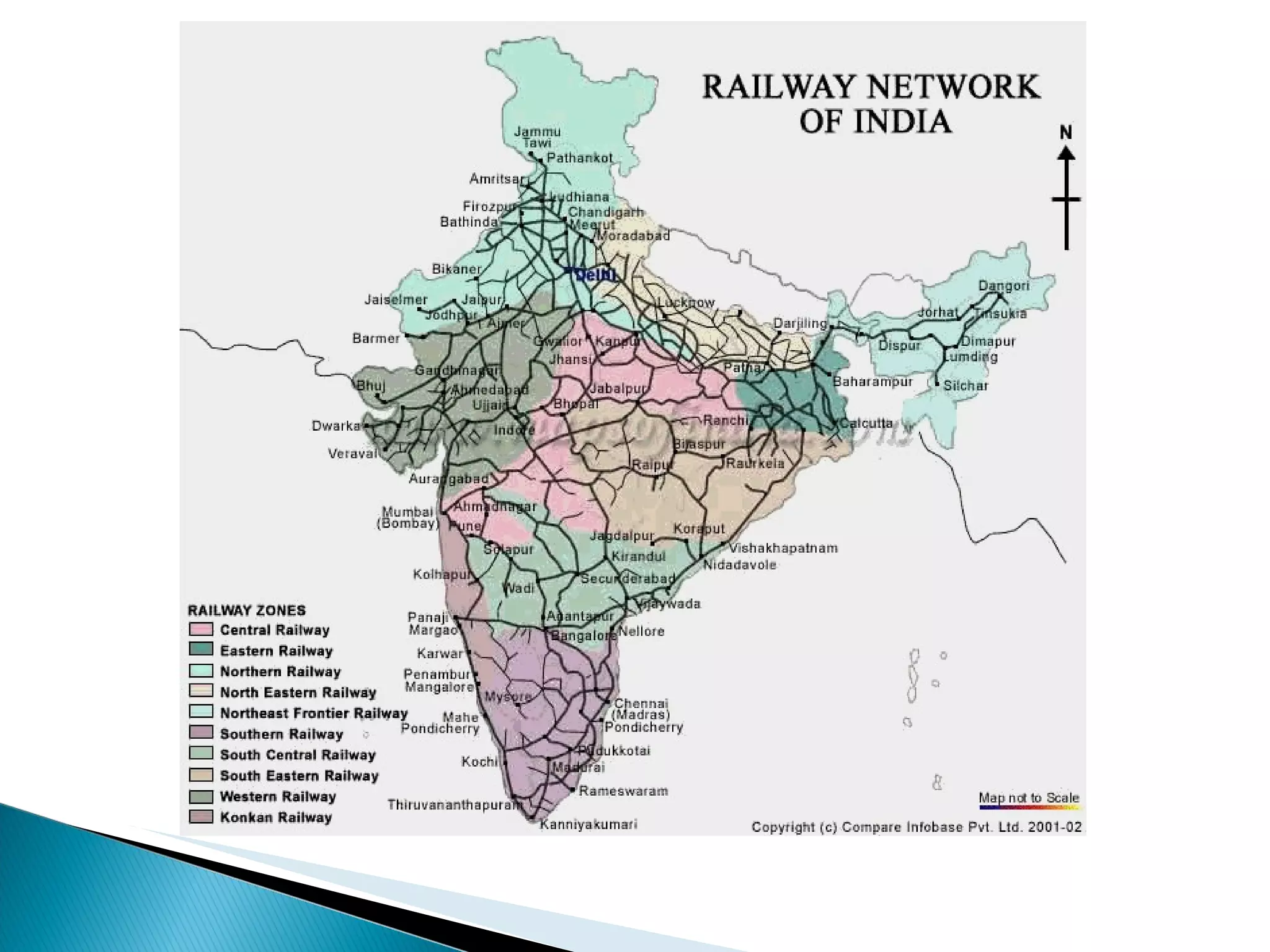
Largest rail network in Asia and the world’s second largest. Routes cover a total length of 63,140  km  (39,233 miles). 6,856 numbers of stations  Headquarters
 
Reduction in Fares Proliferation Of Ticketing Facility Upgradation Scheme Frequent Travellers Scheme  Tourists Tickets
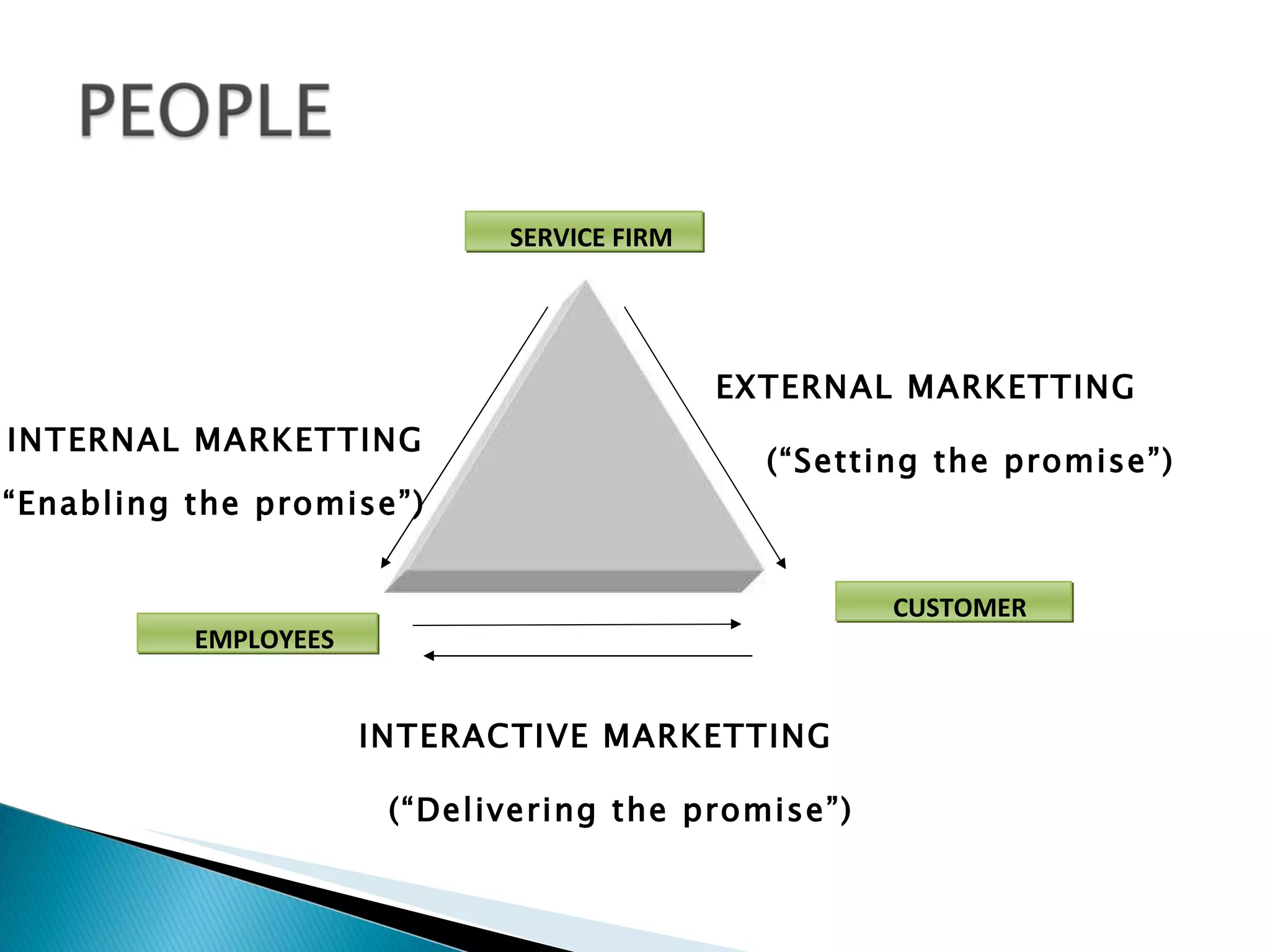
(“Enabling the promise”) INTERNAL MARKETTING EXTERNAL MARKETTING (“Setting the promise”) SERVICE FIRM EMPLOYEES CUSTOMER INTERACTIVE MARKETTING (“Delivering the promise”)
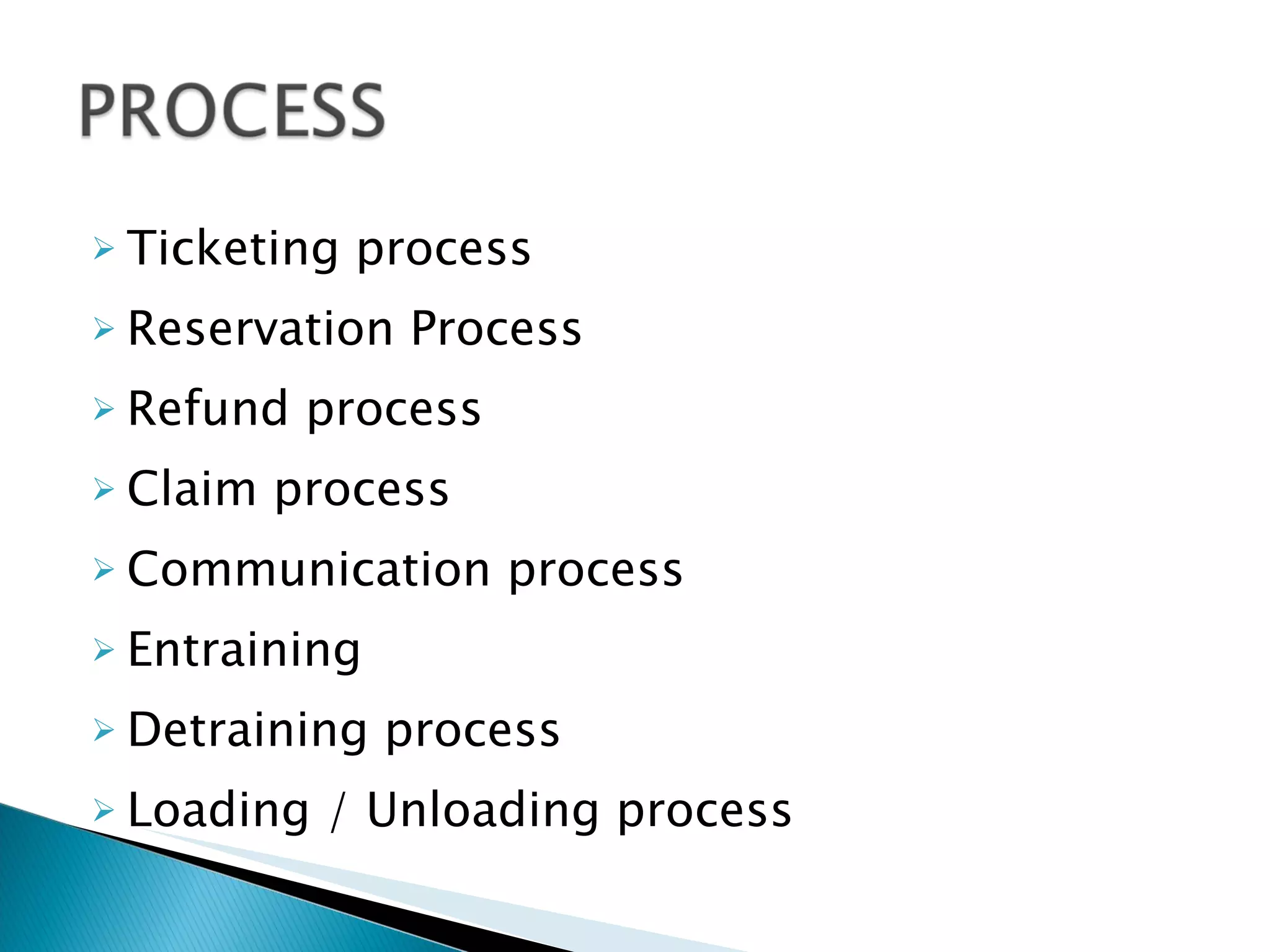
Ticketing process  Reservation Process  Refund process  Claim process Communication process Entraining  Detraining process  Loading / Unloading process
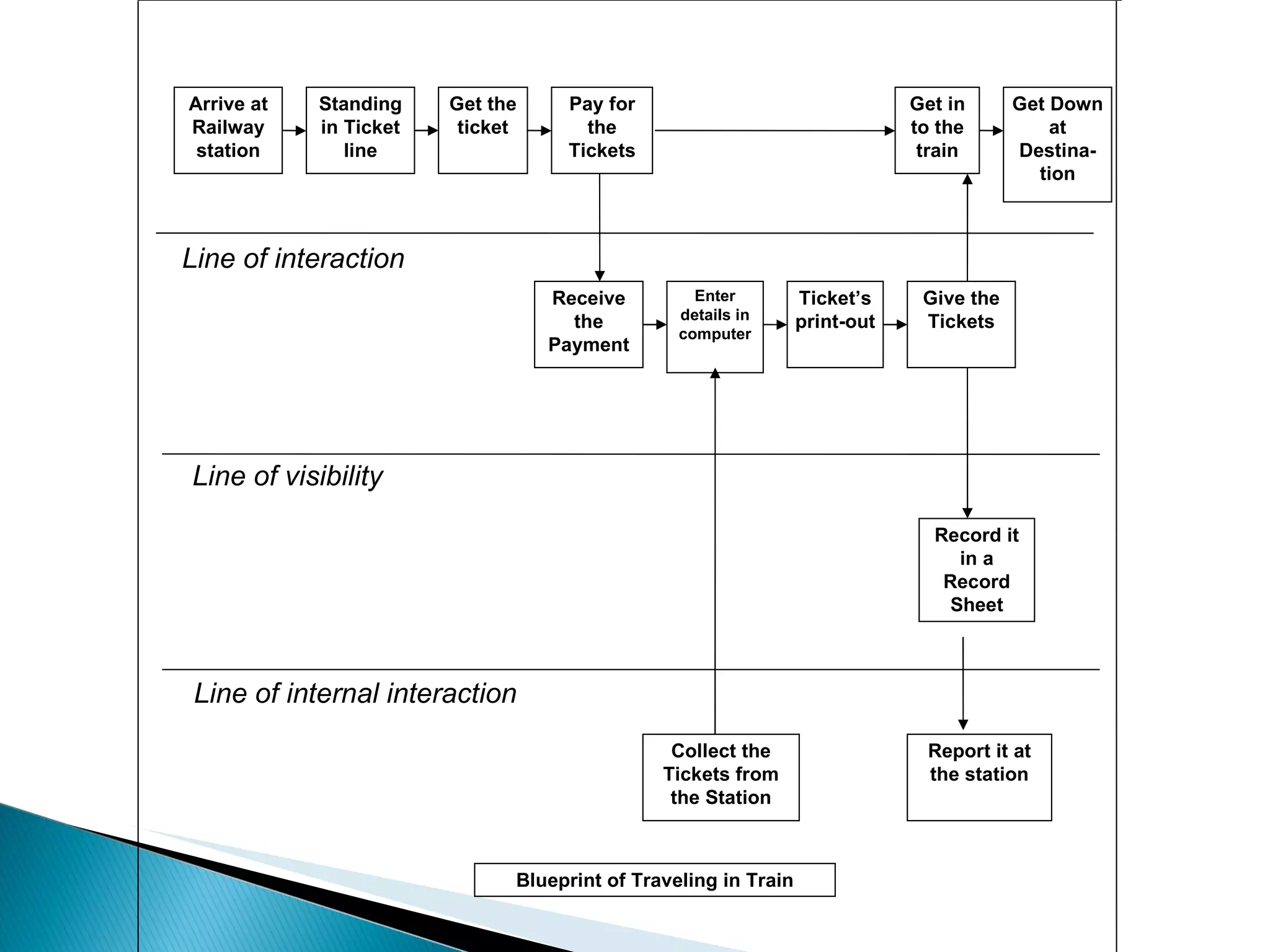
Arrive at Railway station Standing in Ticket line Get the ticket Pay for the Tickets Enter details in computer Ticket’s print-out Get in to the train Record it in a Record Sheet Give the Tickets Collect the Tickets from the Station Receive the Payment Get Down at Destina-tion Blueprint of Traveling in Train Report it at the station Line of interaction Line of visibility Line of internal interaction
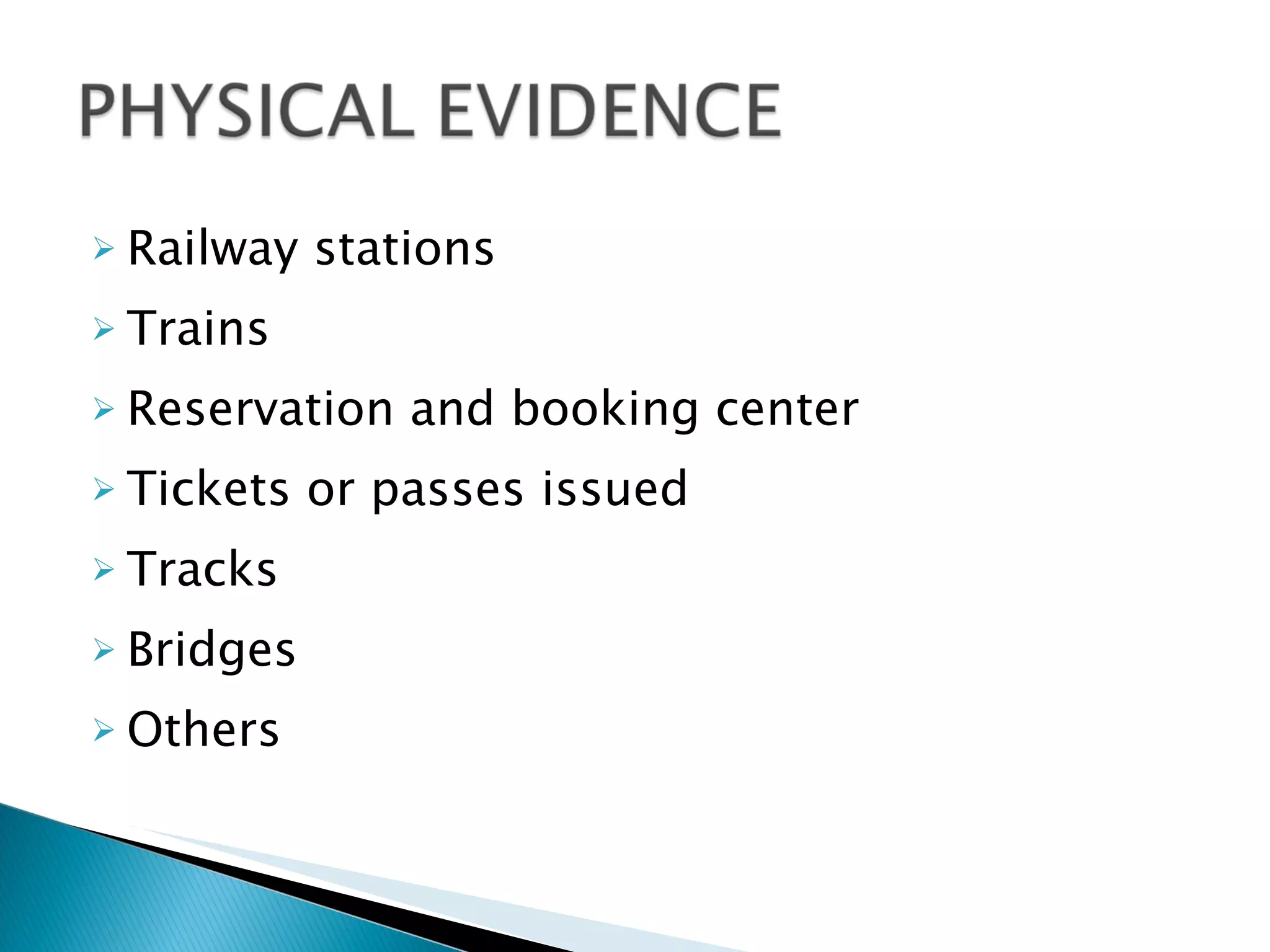
Railway stations Trains Reservation and booking center Tickets or passes issued  Tracks Bridges Others
Strengths Weakness Opportunities Threats
Economic fares suiting needs of all classes Improved performance of the Indian Railways since past few years Additional services provided
Limited concern for consumer satisfaction Second largest consumer of energy
Decentralisation Transport sector in GDP Rail Development in India
Other modes of transport


Presentation1

  • 1.
  • 2.
    FORUM SHAH 5001  RONAK NANDWANA 5016   KOMAL PATEL 5024 YASH THACKER 5035   SEJAL SHAH 5050   KEVAL SANGHVI 5051   AADIT SHAH 5059
  • 3.
    Introduction to transport.Importance of transport.
  • 4.
    Introduction to Indianrailways. History of indian railways.
  • 5.
    Indian Railways TypePublic Founded April 16, 1853, nationalized in 1951 Headquarters New Delhi Key people Union Railway Minister: Mamta Bannergy Minister of State for Railways (V): R. Velu Minister of State for Railways (R): Naranbhai J Rathwa Chairman Railway Board: J. P. Batra Area served India Industry Railways and Locomotives Parent Government of India.
  • 6.
    Intangibility PerishabilityInseparability Heterogeneity Ownership Simultaneously Quality measurement Nature of demand
  • 7.
  • 8.
    Railways are ownedand managed by the Government of India. Decentralized certain powers such as the General Managers of Zonal Railways are given to finalize tenders and contracts up to a value of 15 crores at their own level. Adopted proactive strategies for railways aimed at income generation and cutting costs. Privatization
  • 9.
    Cannot balance demandand supply Growing Economic Burden Investment in unremunerative projects A series of developments in the 1990s Contribution to GNP
  • 10.
    Serve all sectionsof the society Social Revolution During the times of war and natural calamities Environment friendly Social status
  • 11.
    Double/Multiple Lines ComputerisedPassenger Reservation Facility Improved Signaling and other systems Construction of bridges Anti – collision devices Modern Technology
  • 12.
    Basis of segmentationSegments Class wise / income wise 1 st class ac sleeper class, Ac 2 tier class car, Ac 3 tier sleeper class, Ac chair car, First class ordinary, Sleeper class ordinary, Chair car ordinary, General class ordinary Sex wise Ladies special trains Speed wise Mail, Express, Ordinary fast, Super fast, Luxury, Special. Distance wise Long distance, Medium distance, Short distance.
  • 13.
  • 14.
    Timeliness Cleanliness Safetyof passengers Proper ticket dispensation and checking
  • 15.
    First Class Waitingrooms Seating Area Waiting Rooms Trolleys Refreshment Facilities Showers Pay Phone ATM Machine Vendors/stalls
  • 16.
    The railways havedesigned coaches with new layouts, having significantly higher capacity than the previous coaches. Some of the innovative measure such as on-board entertainment and fast food facilities. All trains on IR are identified by primarily through their numbers (either the 4-digit nationwide numbers or the zonal numbers for local passenger trains). The most common way to name a train is by providing the endpoints of the train and the train class designation, e.g., Bangalore-Chennai Mail
  • 17.
    INFORMATION CONSULTANCY ORDER TAKING SAFE CUSTODY HOSPITALITY EXCEPTION BILLING PAYMENT CORE
  • 18.
    Timetables Announcements Improvedinteriors Internet accessibility NTES — ('National Train Enquiry System') various enquiry numbers such as 131 ,132 & 137
  • 19.
    No special consultancyprovided Travel agents Ticket counter
  • 20.
    Reservation counters Workinghour are displayed at ticket windows Website www.indianrail.gov.in Railway Tourist Agents
  • 21.
    Various aspects suchas the surrounding, infrastructure, appearance, speaking tone etc. centralized Training Institutes (CTIs) foreign training every ten years
  • 22.
    Interlocking and signalingsystem CCTV and smart video cameras Railway Protection Force Loss of tickets lost property in trains Install doorframes and hand-held metal detectors,
  • 23.
    Jain food Senior citizens
  • 24.
    Train number Seatnumber Coach number PNR number Ticket number Age of the passenger Birth number Train name Passengers name
  • 25.
    Cash local postoffice, petrol pumps ,ATMs credit cards
  • 26.
    PRODUCT MIX PRICINGPlace Promotion People Process Physical evidence
  • 27.
    Passenger Ordinary ExpressFast Passenger Special Trains
  • 28.
    Public grievances redressalProcedure for theft of passengers luggage Vigilance organisation
  • 29.
    Dynamic Pricing PolicyPassenger services   Fully Air-conditioned Garib Rath
  • 30.
    Largest rail networkin Asia and the world’s second largest. Routes cover a total length of 63,140  km (39,233 miles). 6,856 numbers of stations Headquarters
  • 31.
  • 32.
    Reduction in FaresProliferation Of Ticketing Facility Upgradation Scheme Frequent Travellers Scheme Tourists Tickets
  • 33.
    (“Enabling the promise”)INTERNAL MARKETTING EXTERNAL MARKETTING (“Setting the promise”) SERVICE FIRM EMPLOYEES CUSTOMER INTERACTIVE MARKETTING (“Delivering the promise”)
  • 34.
    Ticketing process Reservation Process Refund process Claim process Communication process Entraining Detraining process Loading / Unloading process
  • 35.
    Arrive at Railwaystation Standing in Ticket line Get the ticket Pay for the Tickets Enter details in computer Ticket’s print-out Get in to the train Record it in a Record Sheet Give the Tickets Collect the Tickets from the Station Receive the Payment Get Down at Destina-tion Blueprint of Traveling in Train Report it at the station Line of interaction Line of visibility Line of internal interaction
  • 36.
    Railway stations TrainsReservation and booking center Tickets or passes issued Tracks Bridges Others
  • 37.
  • 38.
    Economic fares suitingneeds of all classes Improved performance of the Indian Railways since past few years Additional services provided
  • 39.
    Limited concern forconsumer satisfaction Second largest consumer of energy
  • 40.
    Decentralisation Transport sectorin GDP Rail Development in India
  • 41.
    Other modes oftransport
  • 42.
  • 43.
  • 44.
  • 45.
  • 46.
  • 47.
  • 48.
  • 49.
  • 50.
  • 51.
  • 52.
  • 53.