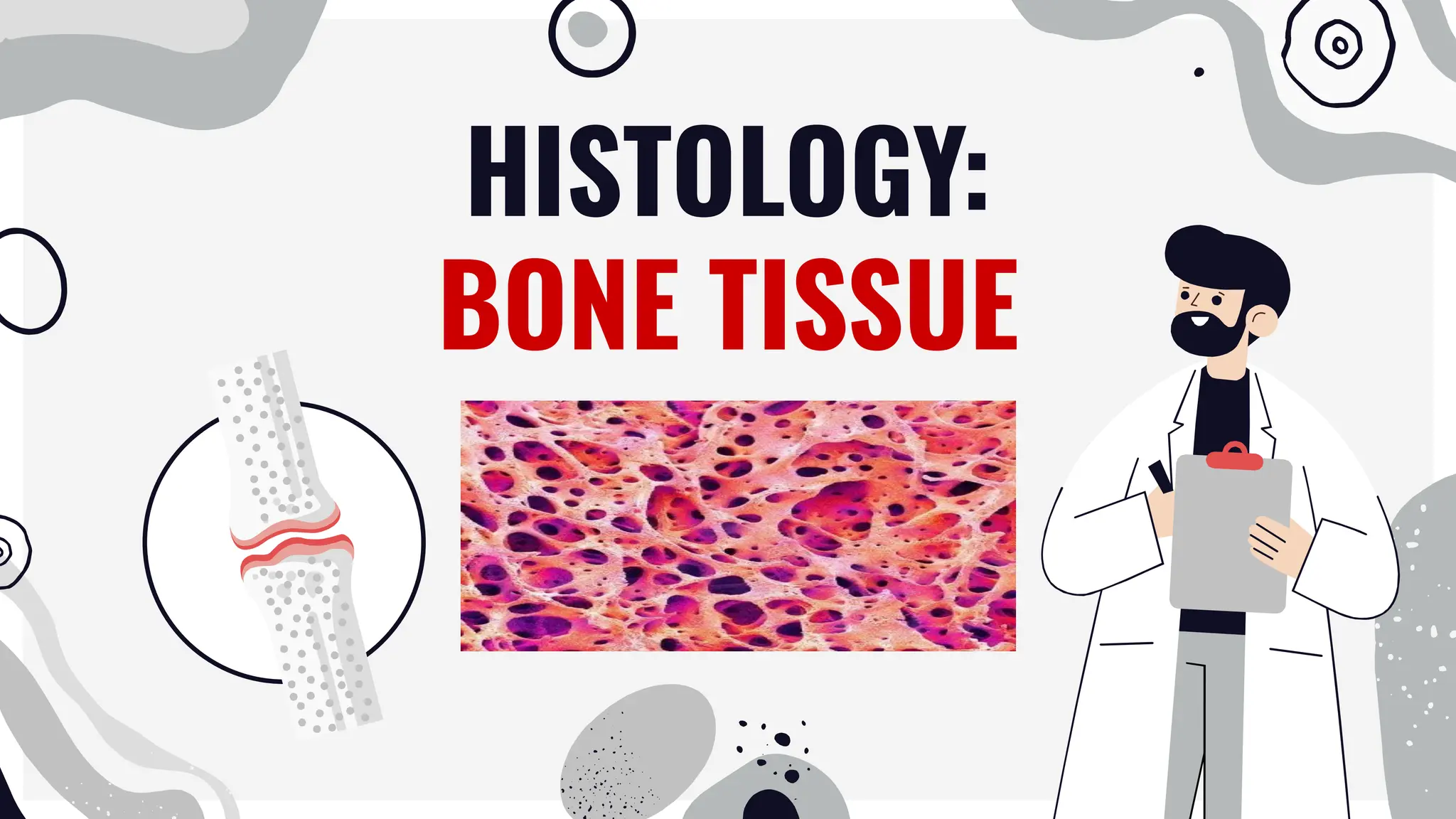
HISTOLOGY:
BONE TISSUE
INTRODUCTION TO BONE TISSUE
WHAT IS BONE TISSUE?
Bone tissue is the specialized material that makes up the
skeleton in animals, including humans. It consists of cells
like osteoblasts, osteocytes, and osteoclasts, along with a
mix of collagen fibers and minerals. This tissue is alive and
constantly changing, with processes like bone formation
and resorption. Besides providing structural support, bones
also store minerals and host bone marrow, where blood
cells are produced. In simple terms, bone tissue is the
dynamic framework that gives our bodies shape, supports
movement, and plays a crucial role in overall health.
TYPES OF BONE TISSUE
BONE TISSUE
SPONGY BONE COMPACT BONE
01 03
04
STRUCTURE OF BONE TISSUE
CELLS
•Osteoblasts: Responsible for synthesizing and
secreting the organic matrix during bone
formation.
•Osteocytes: Mature bone cells embedded in
the bone matrix, involved in maintaining bone
health.
•Osteoclasts: Specialized cells responsible for
bone resorption, breaking down bone tissue
during remodeling.
MICROSCOPIC
ANATOMY
•Compact Bone: Forms the dense outer layer,
composed of osteons (Haversian systems). Osteons
consist of concentric lamellae around central
canals containing blood vessels and nerves.
•Spongy Bone: Located in the interior, characterized
by trabeculae (small, interconnected bony plates)
with spaces between them filled with red bone
marrow.
BODY VESSELS &
NERVE
•Blood vessels and nerves are integrated into
the bone tissue, providing nutrients, oxygen,
and communication.
EXTRACELLULAR
MATRIX
•Organic Matrix: Mainly composed of
collagen fibers, providing flexibility and
tensile strength.
•Inorganic Matrix: Predominantly
hydroxyapatite crystals (calcium
phosphate), contributing to the hardness
of bone tissue.
02
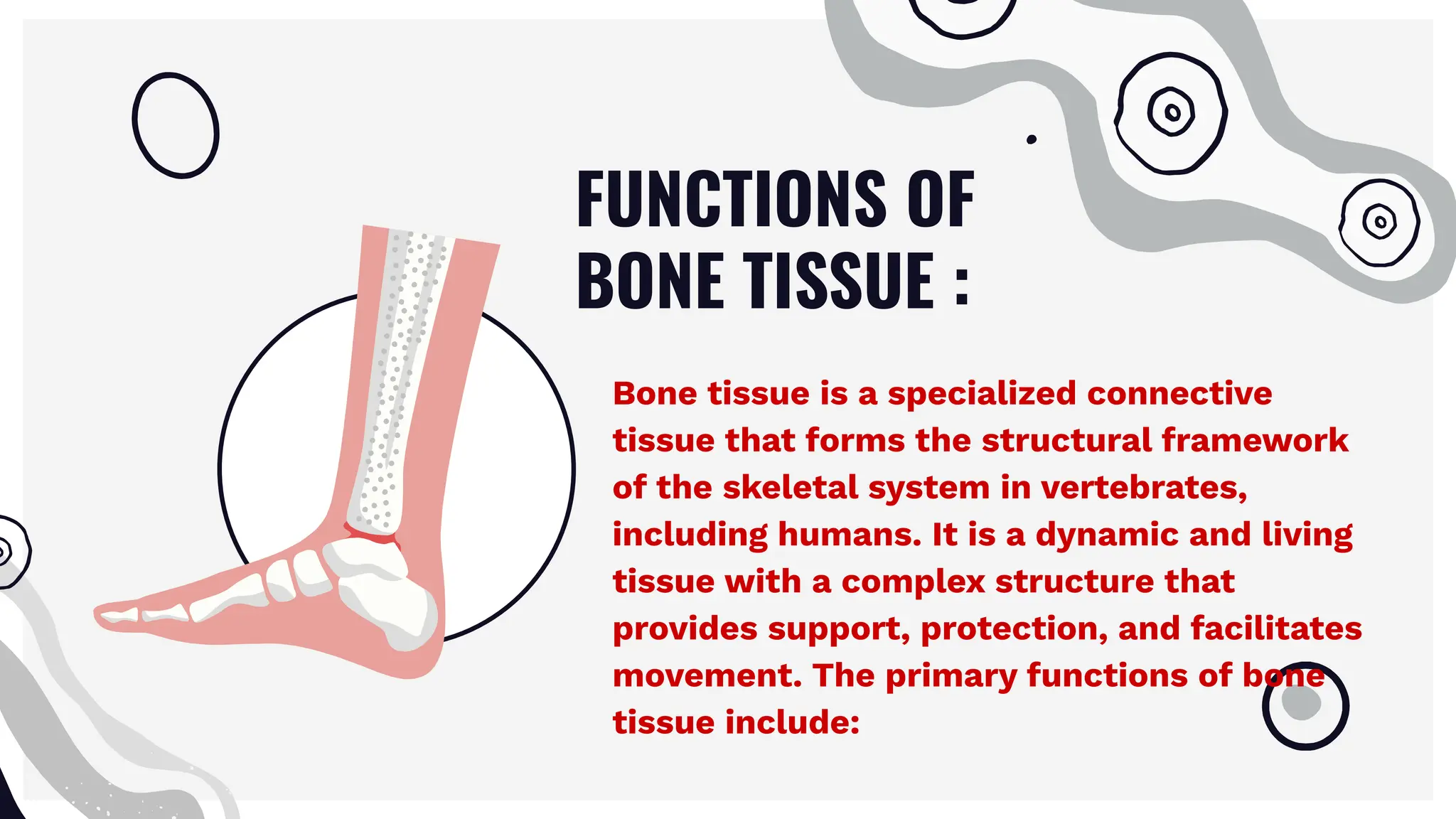
FUNCTIONS OF
BONE TISSUE :
Bone tissue is a specialized connective
tissue that forms the structural framework
of the skeletal system in vertebrates,
including humans. It is a dynamic and living
tissue with a complex structure that
provides support, protection, and facilitates
movement. The primary functions of bone
tissue include:
FUNCTIONS IN DETAIL:
1. Support and Framework: Bones form the structural framework of the body,
giving it shape and support.
2.Protection: Bones protect vital organs, such as the skull protecting the
brain and the ribcage safeguarding the heart and lungs.
3.Movement: Bones, in conjunction with muscles, allow for movement and
locomotion.
4.Mineral Storage: Bones store essential minerals, particularly calcium and
phosphorus, contributing to the body’s mineral homeostasis.
5.Blood Cell Formation: Bone marrow, located within certain bones, is a site
for the production of blood cells, including red blood cells, white blood cells,
and platelets.
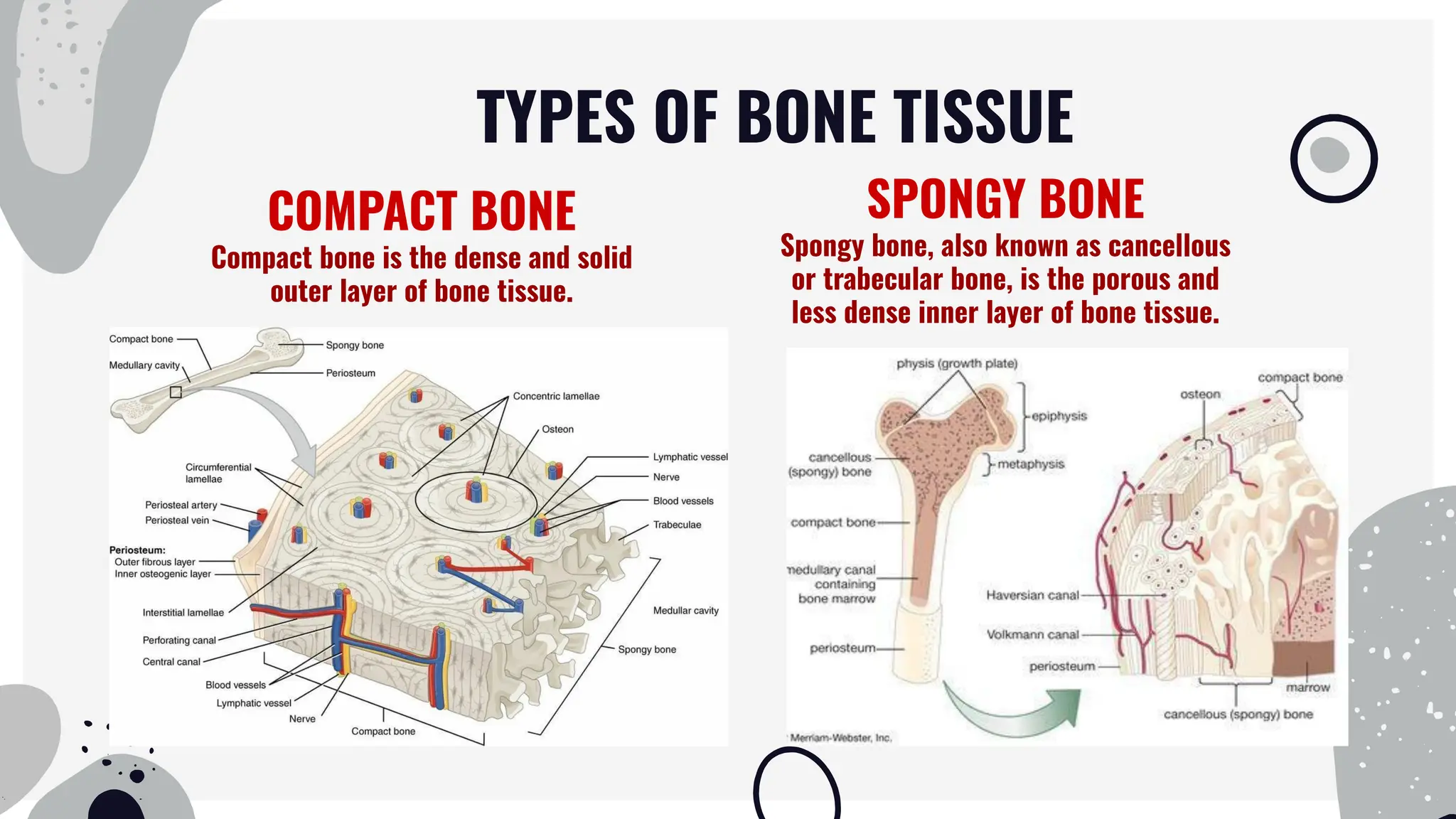
TYPES OF BONE TISSUE
COMPACT BONE
Compact bone is the dense and solid
outer layer of bone tissue.
SPONGY BONE
Spongy bone, also known as cancellous
or trabecular bone, is the porous and
less dense inner layer of bone tissue.
COMPACT BONE
1.Location:
•Forms the outer layer of bones.
•Predominantly found in the shafts of long bones and the external layer of all bones.
2.Structure:
•Composed of cylindrical structures called osteons (or Haversian systems).
•Each osteon consists of concentric layers of bone matrix called lamellae,
surrounding a central canal (Haversian canal).
•Central canals house blood vessels and nerves, ensuring nutrient supply and
communication.
3.Function:
•Provides strength and resilience to bones.
•Resists bending and fracturing, especially in weight-bearing bones.
•Facilitates the passage of blood vessels and nerves through the Haversian canals.
SPONGY BONE
1.Location:
•Found in the interior of bones, especially at the ends (epiphyses) and in the
middle of short, flat bones.
2.Structure:
•Comprises a network of small, interconnected bony plates called trabeculae.
•Trabeculae create a mesh-like structure with spaces between them.
•Spaces are filled with red bone marrow, a site for blood cell formation
(hematopoiesis).
3.Function:
•Adds strength to bones with less weight compared to compact bone.
•Facilitates nutrient exchange within the bone due to its porous nature.
•Houses red bone marrow involved in the production of blood cells.
HISTOGENESIS OF
BONE TISSUE
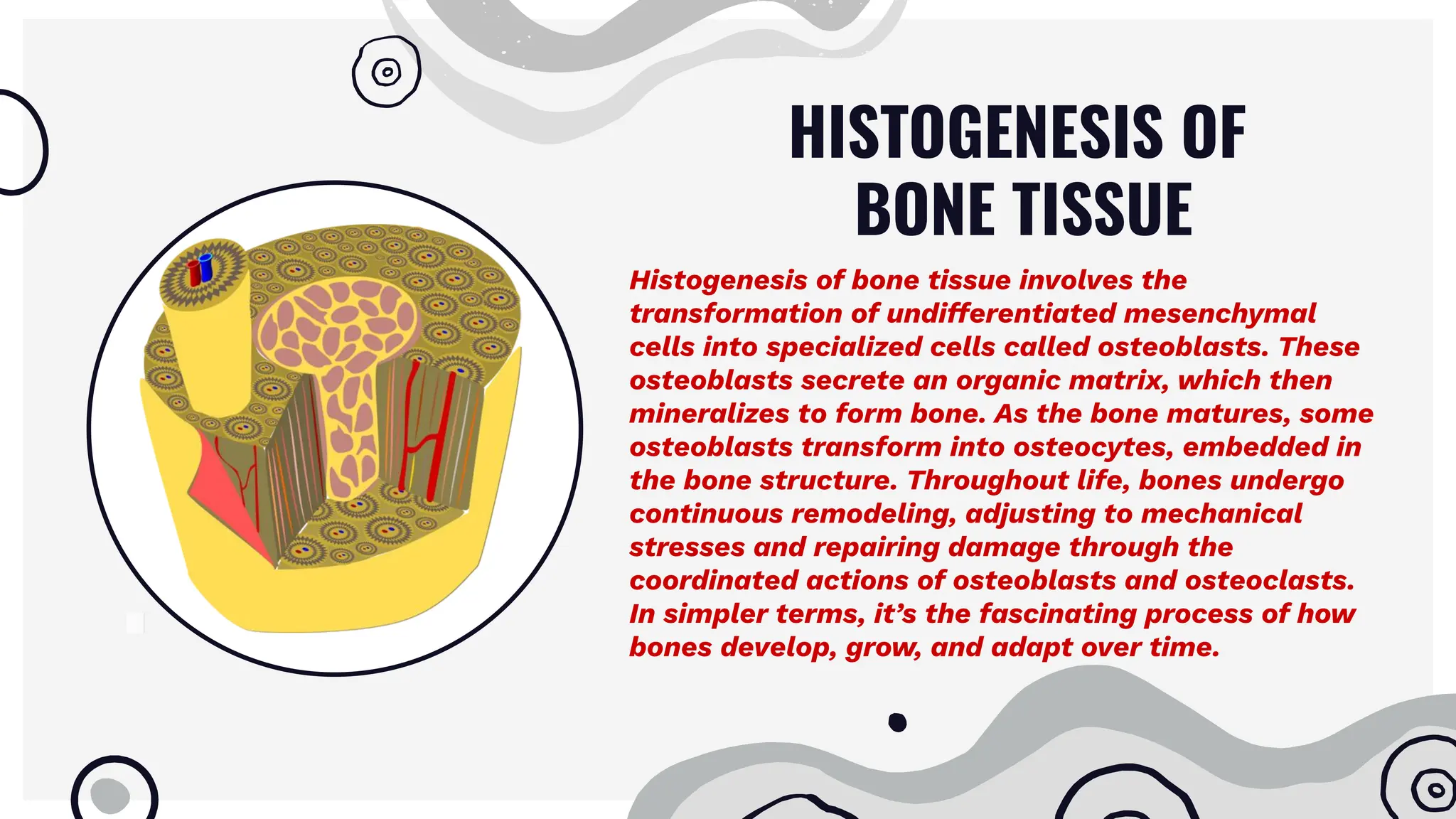
Histogenesis of bone tissue involves the
transformation of undifferentiated mesenchymal
cells into specialized cells called osteoblasts. These
osteoblasts secrete an organic matrix, which then
mineralizes to form bone. As the bone matures, some
osteoblasts transform into osteocytes, embedded in
the bone structure. Throughout life, bones undergo
continuous remodeling, adjusting to mechanical
stresses and repairing damage through the
coordinated actions of osteoblasts and osteoclasts.
In simpler terms, it’s the fascinating process of how
bones develop, grow, and adapt over time.
HISTOGENESIS OF BONE TISSUE
1. Mesenchymal Condensation:
•Some mesenchymal cells differentiate into
osteogenic cells, the precursors to osteoblasts.
2. Differentiation of Osteogenic Cells:
•The process begins with mesenchymal cells,
which are undifferentiated cells derived from
the mesoderm.
•Mesenchymal cells condense to form a soft,
gel-like structure.
HISTOGENESIS OF BONE TISSUE
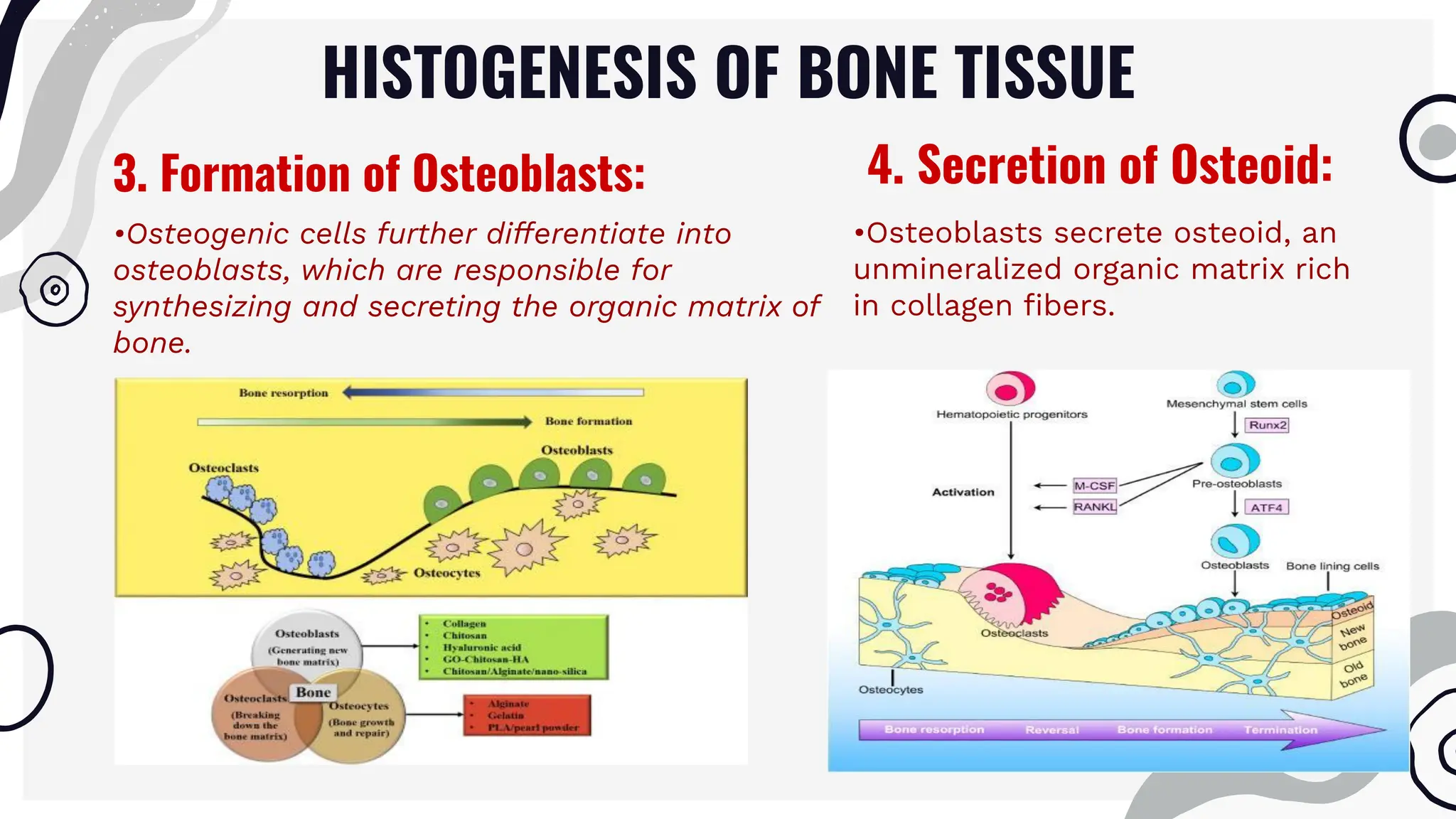
3. Formation of Osteoblasts:
•Osteogenic cells further differentiate into
osteoblasts, which are responsible for
synthesizing and secreting the organic matrix of
bone.
4. Secretion of Osteoid:
•Osteoblasts secrete osteoid, an
unmineralized organic matrix rich
in collagen fibers.
HISTOGENESIS OF BONE TISSUE
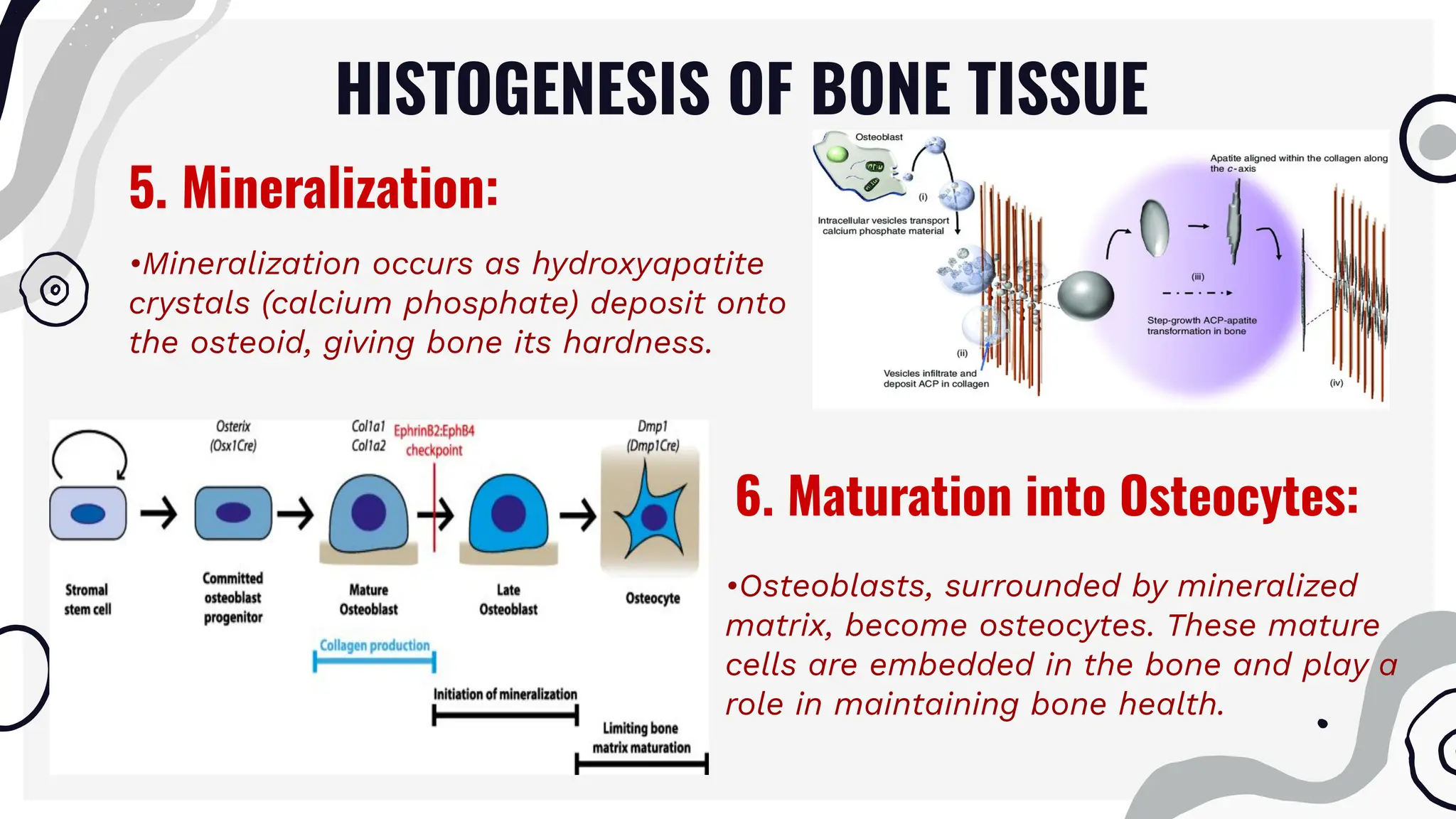
5. Mineralization:
•Osteoblasts, surrounded by mineralized
matrix, become osteocytes. These mature
cells are embedded in the bone and play a
role in maintaining bone health.
6. Maturation into Osteocytes:
•Mineralization occurs as hydroxyapatite
crystals (calcium phosphate) deposit onto
the osteoid, giving bone its hardness.
HISTOGENESIS OF BONE TISSUE
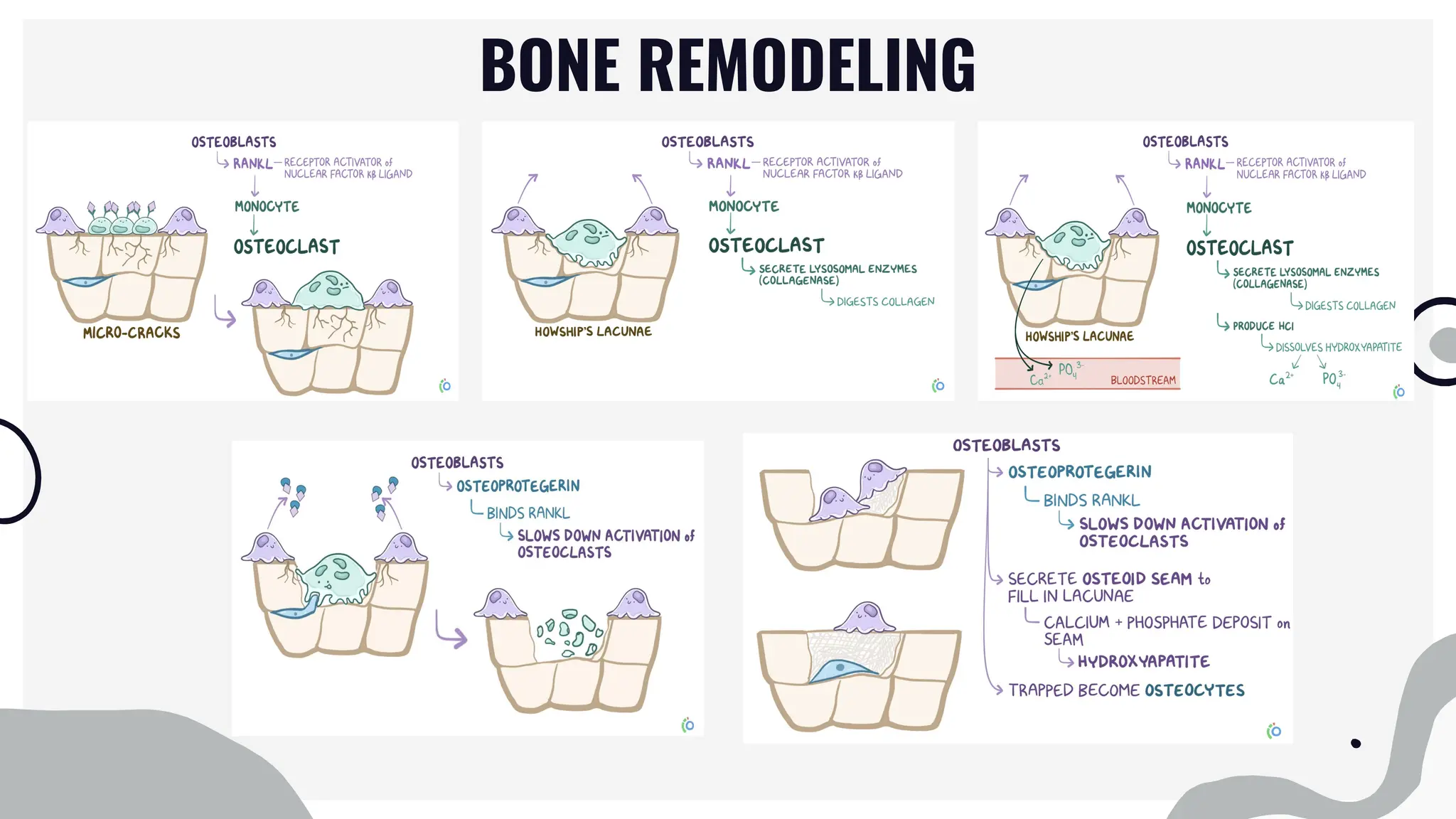
7. Bone Remodeling:
Bone remodeling is a continuous and
dynamic process involving the
removal of old or damaged bone
tissue and the subsequent formation
of new bone. This process is
essential for maintaining bone
strength, adapting to mechanical
stresses, and repairing
micro-damage.
BONE REMODELING
•Some builders decide to stay, becoming resident maintenance workers (osteocytes)
embedded in the bone, ensuring its ongoing health.
2. Construction Team (Osteoblasts):
•Skilled builders move in, filling the gaps with new bone material.
•They carefully lay down the structure, including collagen and minerals.
1. Demolition Crew (Osteoclasts):
•Specialized workers break down old or damaged bone, creating small openings.
4. Resident Maintenance Crew (Osteocytes):
3. Finishing Touch (Mineralization):
•The construction site gets fortified as minerals harden the new bone matrix.
5. Adapting to Needs:
•This whole process adapts to the demands on your bones. More stress leads to more
construction, reinforcing the structure.
BONE REMODELING
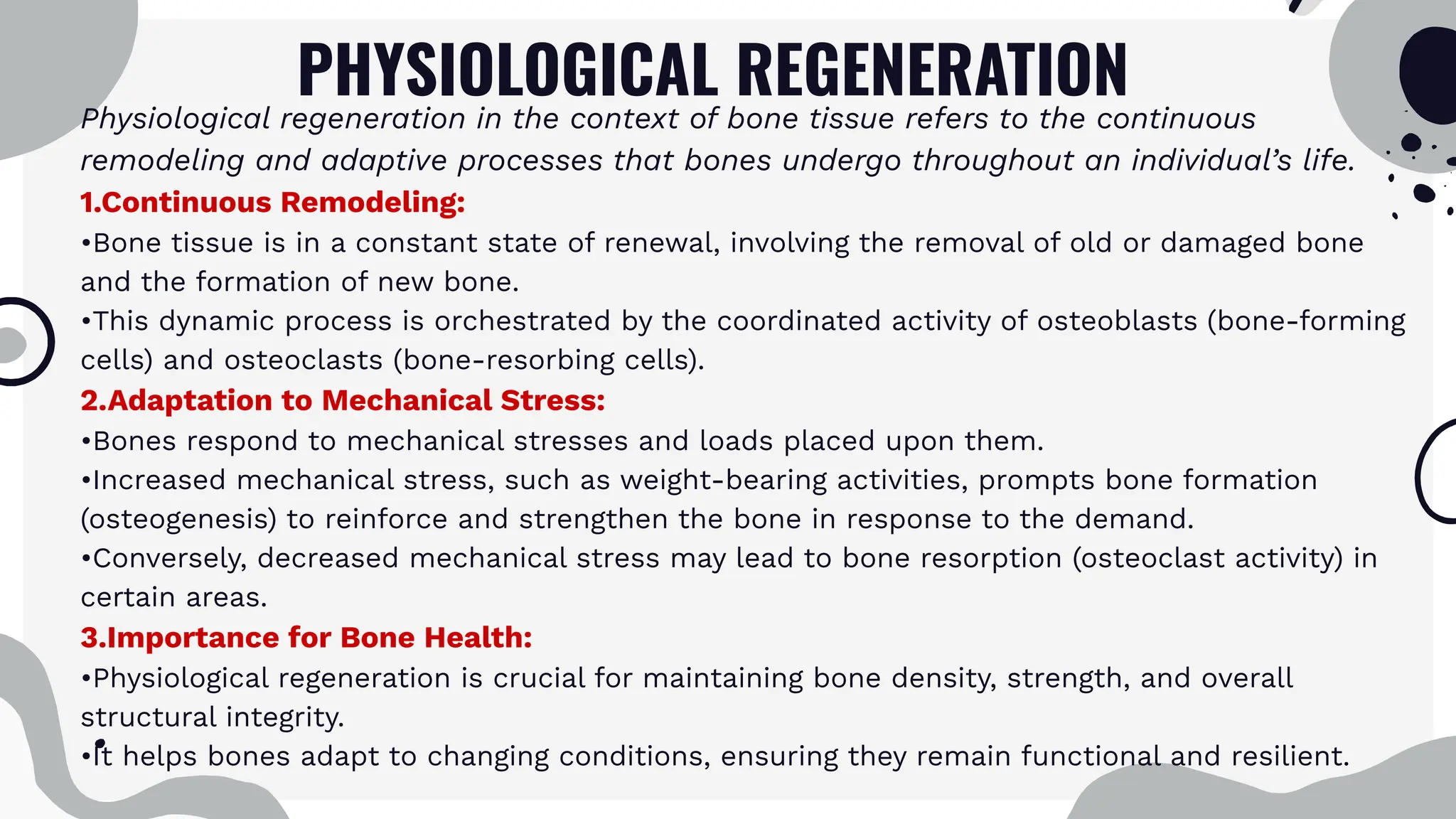
PHYSIOLOGICAL REGENERATION
Physiological regeneration in the context of bone tissue refers to the continuous
remodeling and adaptive processes that bones undergo throughout an individual’s life.
1.Continuous Remodeling:
•Bone tissue is in a constant state of renewal, involving the removal of old or damaged bone
and the formation of new bone.
•This dynamic process is orchestrated by the coordinated activity of osteoblasts (bone-forming
cells) and osteoclasts (bone-resorbing cells).
2.Adaptation to Mechanical Stress:
•Bones respond to mechanical stresses and loads placed upon them.
•Increased mechanical stress, such as weight-bearing activities, prompts bone formation
(osteogenesis) to reinforce and strengthen the bone in response to the demand.
•Conversely, decreased mechanical stress may lead to bone resorption (osteoclast activity) in
certain areas.
3.Importance for Bone Health:
•Physiological regeneration is crucial for maintaining bone density, strength, and overall
structural integrity.
•It helps bones adapt to changing conditions, ensuring they remain functional and resilient.
PHYSIOLOGICAL REGENERATION
REPARATIVE REGENERATION
Reparative regeneration in the context of bone tissue refers to the process of healing and
repairing bone after injury, damage, or fractures. Here’s an overview of reparative regeneration:
1.Inflammatory Response:
•When a bone is injured or fractured, an immediate inflammatory response is triggered.
•Inflammatory cells, along with signaling molecules, create a temporary framework at the injury site.
2.Callus Formation:
•Osteogenic cells, including some undifferentiated mesenchymal cells, move to the site and start
producing a soft callus.
•The callus stabilizes the fractured area, providing initial support.
3.Hard Callus Formation:
•Osteoblasts begin to produce a hard callus, composed of woven bone, at the site of the fracture.
•This callus further stabilizes the fracture and bridges the gap between broken bone segments.
4.Remodeling:
•Over time, the hard callus is remodeled by the coordinated activity of osteoclasts and osteoblasts.
•The bone gradually regains its original shape and structure.
5.Functional Recovery:
•The healing process results in functional recovery, restoring the strength and integrity of the bone.
REPARATIVE REGENERATION
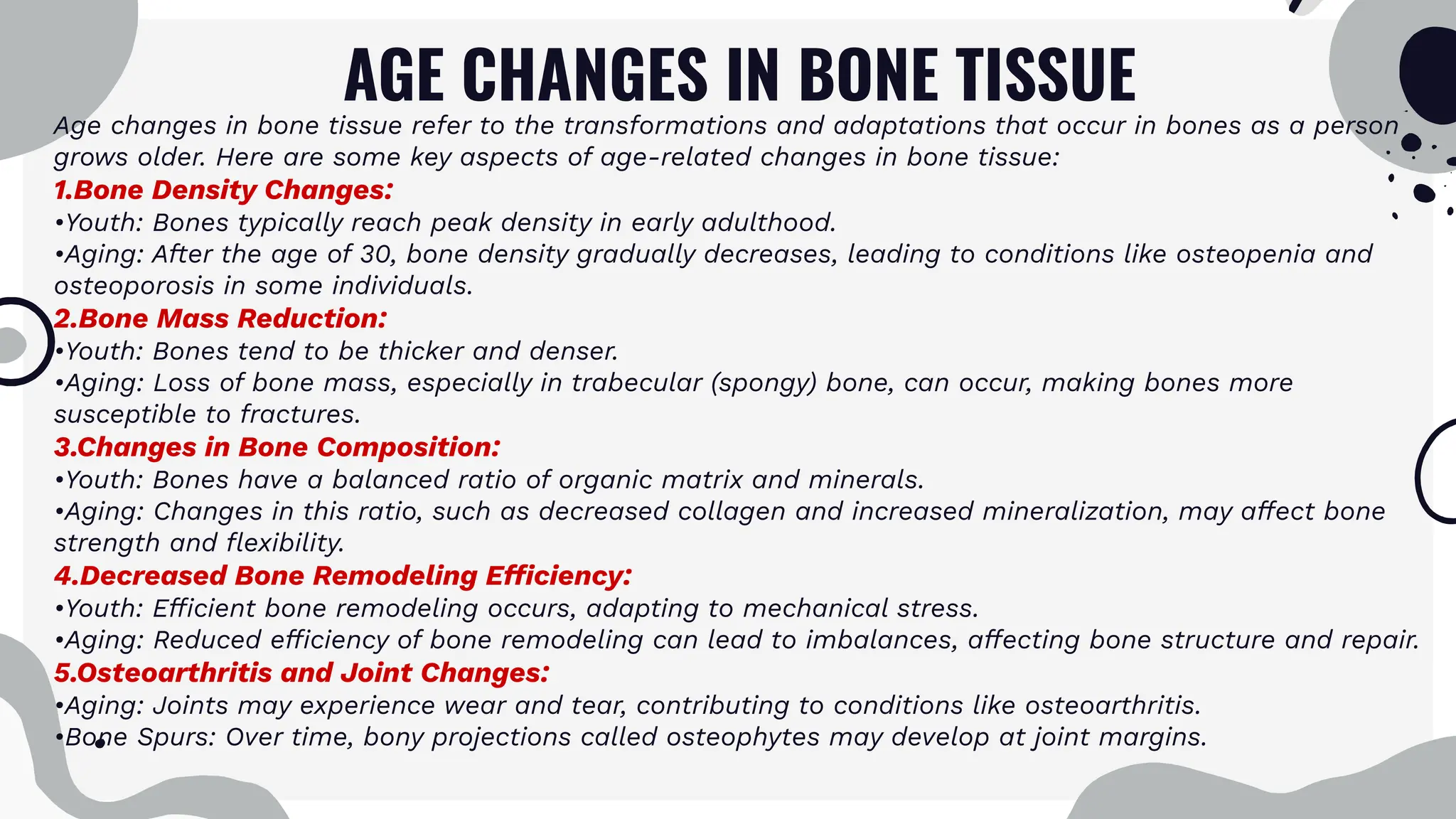
AGE CHANGES IN BONE TISSUE
Age changes in bone tissue refer to the transformations and adaptations that occur in bones as a person
grows older. Here are some key aspects of age-related changes in bone tissue:
1.Bone Density Changes:
•Youth: Bones typically reach peak density in early adulthood.
•Aging: After the age of 30, bone density gradually decreases, leading to conditions like osteopenia and
osteoporosis in some individuals.
2.Bone Mass Reduction:
•Youth: Bones tend to be thicker and denser.
•Aging: Loss of bone mass, especially in trabecular (spongy) bone, can occur, making bones more
susceptible to fractures.
3.Changes in Bone Composition:
•Youth: Bones have a balanced ratio of organic matrix and minerals.
•Aging: Changes in this ratio, such as decreased collagen and increased mineralization, may affect bone
strength and flexibility.
4.Decreased Bone Remodeling Efficiency:
•Youth: Efficient bone remodeling occurs, adapting to mechanical stress.
•Aging: Reduced efficiency of bone remodeling can lead to imbalances, affecting bone structure and repair.
5.Osteoarthritis and Joint Changes:
•Aging: Joints may experience wear and tear, contributing to conditions like osteoarthritis.
•Bone Spurs: Over time, bony projections called osteophytes may develop at joint margins.
AGE CHANGES IN BONE TISSUE
CONCLUSION
The study of bone tissue reveals a dynamic and intricate system crucial to the
structural integrity and functionality of the human body. From the microscopic level
of osteocytes to the macroscopic organization of compact and spongy bone, each
component plays a vital role. Histogenesis highlights the embryonic development of
bone, while physiological regeneration ensures continuous adaptation to mechanical
stress.
Moreover, the reparative regeneration process showcases the remarkable ability of
bone tissue to heal and recover from injuries. As individuals age, changes in bone
density, mass, and composition underscore the importance of addressing bone
health across the lifespan.
In essence, bone tissue is a marvel of adaptation, continuously renewing itself,
responding to stress, and providing a resilient framework for the body. Understanding
these aspects enriches our comprehension of bone health, contributing to practices
that promote overall well-being and functionality.
THANKYOU..!!
PRESENTED BY:
RIZA ZAFAR

Presentation on the topic- Histology: BONE TISSUE

  • 1.
  • 2.
    INTRODUCTION TO BONETISSUE WHAT IS BONE TISSUE? Bone tissue is the specialized material that makes up the skeleton in animals, including humans. It consists of cells like osteoblasts, osteocytes, and osteoclasts, along with a mix of collagen fibers and minerals. This tissue is alive and constantly changing, with processes like bone formation and resorption. Besides providing structural support, bones also store minerals and host bone marrow, where blood cells are produced. In simple terms, bone tissue is the dynamic framework that gives our bodies shape, supports movement, and plays a crucial role in overall health.
  • 3.
    TYPES OF BONETISSUE BONE TISSUE SPONGY BONE COMPACT BONE
  • 4.
    01 03 04 STRUCTURE OFBONE TISSUE CELLS •Osteoblasts: Responsible for synthesizing and secreting the organic matrix during bone formation. •Osteocytes: Mature bone cells embedded in the bone matrix, involved in maintaining bone health. •Osteoclasts: Specialized cells responsible for bone resorption, breaking down bone tissue during remodeling. MICROSCOPIC ANATOMY •Compact Bone: Forms the dense outer layer, composed of osteons (Haversian systems). Osteons consist of concentric lamellae around central canals containing blood vessels and nerves. •Spongy Bone: Located in the interior, characterized by trabeculae (small, interconnected bony plates) with spaces between them filled with red bone marrow. BODY VESSELS & NERVE •Blood vessels and nerves are integrated into the bone tissue, providing nutrients, oxygen, and communication. EXTRACELLULAR MATRIX •Organic Matrix: Mainly composed of collagen fibers, providing flexibility and tensile strength. •Inorganic Matrix: Predominantly hydroxyapatite crystals (calcium phosphate), contributing to the hardness of bone tissue. 02
  • 5.
    FUNCTIONS OF BONE TISSUE: Bone tissue is a specialized connective tissue that forms the structural framework of the skeletal system in vertebrates, including humans. It is a dynamic and living tissue with a complex structure that provides support, protection, and facilitates movement. The primary functions of bone tissue include:
  • 6.
    FUNCTIONS IN DETAIL: 1.Support and Framework: Bones form the structural framework of the body, giving it shape and support. 2.Protection: Bones protect vital organs, such as the skull protecting the brain and the ribcage safeguarding the heart and lungs. 3.Movement: Bones, in conjunction with muscles, allow for movement and locomotion. 4.Mineral Storage: Bones store essential minerals, particularly calcium and phosphorus, contributing to the body’s mineral homeostasis. 5.Blood Cell Formation: Bone marrow, located within certain bones, is a site for the production of blood cells, including red blood cells, white blood cells, and platelets.
  • 7.
    TYPES OF BONETISSUE COMPACT BONE Compact bone is the dense and solid outer layer of bone tissue. SPONGY BONE Spongy bone, also known as cancellous or trabecular bone, is the porous and less dense inner layer of bone tissue.
  • 8.
    COMPACT BONE 1.Location: •Forms theouter layer of bones. •Predominantly found in the shafts of long bones and the external layer of all bones. 2.Structure: •Composed of cylindrical structures called osteons (or Haversian systems). •Each osteon consists of concentric layers of bone matrix called lamellae, surrounding a central canal (Haversian canal). •Central canals house blood vessels and nerves, ensuring nutrient supply and communication. 3.Function: •Provides strength and resilience to bones. •Resists bending and fracturing, especially in weight-bearing bones. •Facilitates the passage of blood vessels and nerves through the Haversian canals.
  • 9.
    SPONGY BONE 1.Location: •Found inthe interior of bones, especially at the ends (epiphyses) and in the middle of short, flat bones. 2.Structure: •Comprises a network of small, interconnected bony plates called trabeculae. •Trabeculae create a mesh-like structure with spaces between them. •Spaces are filled with red bone marrow, a site for blood cell formation (hematopoiesis). 3.Function: •Adds strength to bones with less weight compared to compact bone. •Facilitates nutrient exchange within the bone due to its porous nature. •Houses red bone marrow involved in the production of blood cells.
  • 10.
    HISTOGENESIS OF BONE TISSUE Histogenesisof bone tissue involves the transformation of undifferentiated mesenchymal cells into specialized cells called osteoblasts. These osteoblasts secrete an organic matrix, which then mineralizes to form bone. As the bone matures, some osteoblasts transform into osteocytes, embedded in the bone structure. Throughout life, bones undergo continuous remodeling, adjusting to mechanical stresses and repairing damage through the coordinated actions of osteoblasts and osteoclasts. In simpler terms, it’s the fascinating process of how bones develop, grow, and adapt over time.
  • 11.
    HISTOGENESIS OF BONETISSUE 1. Mesenchymal Condensation: •Some mesenchymal cells differentiate into osteogenic cells, the precursors to osteoblasts. 2. Differentiation of Osteogenic Cells: •The process begins with mesenchymal cells, which are undifferentiated cells derived from the mesoderm. •Mesenchymal cells condense to form a soft, gel-like structure.
  • 12.
    HISTOGENESIS OF BONETISSUE 3. Formation of Osteoblasts: •Osteogenic cells further differentiate into osteoblasts, which are responsible for synthesizing and secreting the organic matrix of bone. 4. Secretion of Osteoid: •Osteoblasts secrete osteoid, an unmineralized organic matrix rich in collagen fibers.
  • 13.
    HISTOGENESIS OF BONETISSUE 5. Mineralization: •Osteoblasts, surrounded by mineralized matrix, become osteocytes. These mature cells are embedded in the bone and play a role in maintaining bone health. 6. Maturation into Osteocytes: •Mineralization occurs as hydroxyapatite crystals (calcium phosphate) deposit onto the osteoid, giving bone its hardness.
  • 14.
    HISTOGENESIS OF BONETISSUE 7. Bone Remodeling: Bone remodeling is a continuous and dynamic process involving the removal of old or damaged bone tissue and the subsequent formation of new bone. This process is essential for maintaining bone strength, adapting to mechanical stresses, and repairing micro-damage.
  • 15.
    BONE REMODELING •Some buildersdecide to stay, becoming resident maintenance workers (osteocytes) embedded in the bone, ensuring its ongoing health. 2. Construction Team (Osteoblasts): •Skilled builders move in, filling the gaps with new bone material. •They carefully lay down the structure, including collagen and minerals. 1. Demolition Crew (Osteoclasts): •Specialized workers break down old or damaged bone, creating small openings. 4. Resident Maintenance Crew (Osteocytes): 3. Finishing Touch (Mineralization): •The construction site gets fortified as minerals harden the new bone matrix. 5. Adapting to Needs: •This whole process adapts to the demands on your bones. More stress leads to more construction, reinforcing the structure.
  • 16.
  • 17.
    PHYSIOLOGICAL REGENERATION Physiological regenerationin the context of bone tissue refers to the continuous remodeling and adaptive processes that bones undergo throughout an individual’s life. 1.Continuous Remodeling: •Bone tissue is in a constant state of renewal, involving the removal of old or damaged bone and the formation of new bone. •This dynamic process is orchestrated by the coordinated activity of osteoblasts (bone-forming cells) and osteoclasts (bone-resorbing cells). 2.Adaptation to Mechanical Stress: •Bones respond to mechanical stresses and loads placed upon them. •Increased mechanical stress, such as weight-bearing activities, prompts bone formation (osteogenesis) to reinforce and strengthen the bone in response to the demand. •Conversely, decreased mechanical stress may lead to bone resorption (osteoclast activity) in certain areas. 3.Importance for Bone Health: •Physiological regeneration is crucial for maintaining bone density, strength, and overall structural integrity. •It helps bones adapt to changing conditions, ensuring they remain functional and resilient.
  • 18.
  • 19.
    REPARATIVE REGENERATION Reparative regenerationin the context of bone tissue refers to the process of healing and repairing bone after injury, damage, or fractures. Here’s an overview of reparative regeneration: 1.Inflammatory Response: •When a bone is injured or fractured, an immediate inflammatory response is triggered. •Inflammatory cells, along with signaling molecules, create a temporary framework at the injury site. 2.Callus Formation: •Osteogenic cells, including some undifferentiated mesenchymal cells, move to the site and start producing a soft callus. •The callus stabilizes the fractured area, providing initial support. 3.Hard Callus Formation: •Osteoblasts begin to produce a hard callus, composed of woven bone, at the site of the fracture. •This callus further stabilizes the fracture and bridges the gap between broken bone segments. 4.Remodeling: •Over time, the hard callus is remodeled by the coordinated activity of osteoclasts and osteoblasts. •The bone gradually regains its original shape and structure. 5.Functional Recovery: •The healing process results in functional recovery, restoring the strength and integrity of the bone.
  • 20.
  • 21.
    AGE CHANGES INBONE TISSUE Age changes in bone tissue refer to the transformations and adaptations that occur in bones as a person grows older. Here are some key aspects of age-related changes in bone tissue: 1.Bone Density Changes: •Youth: Bones typically reach peak density in early adulthood. •Aging: After the age of 30, bone density gradually decreases, leading to conditions like osteopenia and osteoporosis in some individuals. 2.Bone Mass Reduction: •Youth: Bones tend to be thicker and denser. •Aging: Loss of bone mass, especially in trabecular (spongy) bone, can occur, making bones more susceptible to fractures. 3.Changes in Bone Composition: •Youth: Bones have a balanced ratio of organic matrix and minerals. •Aging: Changes in this ratio, such as decreased collagen and increased mineralization, may affect bone strength and flexibility. 4.Decreased Bone Remodeling Efficiency: •Youth: Efficient bone remodeling occurs, adapting to mechanical stress. •Aging: Reduced efficiency of bone remodeling can lead to imbalances, affecting bone structure and repair. 5.Osteoarthritis and Joint Changes: •Aging: Joints may experience wear and tear, contributing to conditions like osteoarthritis. •Bone Spurs: Over time, bony projections called osteophytes may develop at joint margins.
  • 22.
    AGE CHANGES INBONE TISSUE
  • 23.
    CONCLUSION The study ofbone tissue reveals a dynamic and intricate system crucial to the structural integrity and functionality of the human body. From the microscopic level of osteocytes to the macroscopic organization of compact and spongy bone, each component plays a vital role. Histogenesis highlights the embryonic development of bone, while physiological regeneration ensures continuous adaptation to mechanical stress. Moreover, the reparative regeneration process showcases the remarkable ability of bone tissue to heal and recover from injuries. As individuals age, changes in bone density, mass, and composition underscore the importance of addressing bone health across the lifespan. In essence, bone tissue is a marvel of adaptation, continuously renewing itself, responding to stress, and providing a resilient framework for the body. Understanding these aspects enriches our comprehension of bone health, contributing to practices that promote overall well-being and functionality.
  • 24.