Respiratory system
Presentator Muhammad Hussain
3/25/2024
Muhammad Hussain 1
OBJECTIVES
• Define respiration
• Know the organs of respiration and their functions
• Learn the mechanism of respiration
• List common respiratory problem.
3/25/2024 2
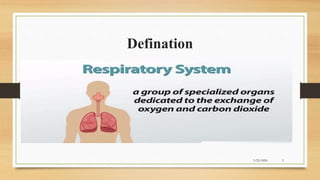
Defination
3/25/2024 3
ORGANS OF RESPIRATORY
SYSTEM
 Nose
 Mouth Pharynx (throat)
Trachea (Wind Pipe)
 Larynx (voice box)
 Two bronchi
 Bronchioles/Alveoli
 Alveolar duct
 Lungs
 Diaphragm
3/25/2024 4
Nose
• It is the first organ of the respiratory system it is also know as organ of
smell. It has got hair and mucous membrane, which make the air warm,
moist and do not allow foreign matter to go down to the respiratory tract
(filtered)
3/25/2024 5
Pharynx
• it helps in Both respiration as well as in digestive system Air passes through
the nasal Oral part and food through the oral part By the same methods as in
nose the air is further moistened Pharynx joins nose to larynx.
3/25/2024 6
Larynx (Voice Box)
Larynx is a hollow tube in the middle of your neck, just above your trachea
(windpipe) and behind your esophagus. It makes it possible for you to make
sounds, which is why it’s also called your voice box. It also lets air pass from
your throat to your trachea and on to your lungs.
3/25/2024 7
Trachea (Windpipe)
Trachea is often called the windpipe. It's a key part of your respiratory system.
When you breathe in, air travels from your nose or mouth through your larynx.
3/25/2024 8
Bronchiole And Alveoli
The bronchi carry air into your lungs. At the end of the bronchi, the
bronchioles carry air to small sacs in your lungs called alveoli. The alveoli
perform your body's gas exchange.
3/25/2024 9
Lungs
3/25/2024 10
The lungs are a pair of breathing organs located with the chest which remove
carbon dioxide from and bring oxygen to the blood.
MECHANISM RESPIRATION
This is the process by which the lungs expand to take in air then contract to
expel it. The cycle of respiration, which occurs about 16 to 20 times per
minute in adult and 20 to 30 times per minute in child.
branch of pulmonary
Inspiration (breath in oxygen) Expiration breath out carbondioxide.
3/25/2024 11
References
• HandBook for Nurse Aid by Mehmooda Khowaja.
3/25/2024 12
3/25/2024 13

Presentation on Respiratory System .pptx

  • 1.
    Respiratory system Presentator MuhammadHussain 3/25/2024 Muhammad Hussain 1
  • 2.
    OBJECTIVES • Define respiration •Know the organs of respiration and their functions • Learn the mechanism of respiration • List common respiratory problem. 3/25/2024 2
  • 3.
  • 4.
    ORGANS OF RESPIRATORY SYSTEM Nose  Mouth Pharynx (throat) Trachea (Wind Pipe)  Larynx (voice box)  Two bronchi  Bronchioles/Alveoli  Alveolar duct  Lungs  Diaphragm 3/25/2024 4
  • 5.
    Nose • It isthe first organ of the respiratory system it is also know as organ of smell. It has got hair and mucous membrane, which make the air warm, moist and do not allow foreign matter to go down to the respiratory tract (filtered) 3/25/2024 5
  • 6.
    Pharynx • it helpsin Both respiration as well as in digestive system Air passes through the nasal Oral part and food through the oral part By the same methods as in nose the air is further moistened Pharynx joins nose to larynx. 3/25/2024 6
  • 7.
    Larynx (Voice Box) Larynxis a hollow tube in the middle of your neck, just above your trachea (windpipe) and behind your esophagus. It makes it possible for you to make sounds, which is why it’s also called your voice box. It also lets air pass from your throat to your trachea and on to your lungs. 3/25/2024 7
  • 8.
    Trachea (Windpipe) Trachea isoften called the windpipe. It's a key part of your respiratory system. When you breathe in, air travels from your nose or mouth through your larynx. 3/25/2024 8
  • 9.
    Bronchiole And Alveoli Thebronchi carry air into your lungs. At the end of the bronchi, the bronchioles carry air to small sacs in your lungs called alveoli. The alveoli perform your body's gas exchange. 3/25/2024 9
  • 10.
    Lungs 3/25/2024 10 The lungsare a pair of breathing organs located with the chest which remove carbon dioxide from and bring oxygen to the blood.
  • 11.
    MECHANISM RESPIRATION This isthe process by which the lungs expand to take in air then contract to expel it. The cycle of respiration, which occurs about 16 to 20 times per minute in adult and 20 to 30 times per minute in child. branch of pulmonary Inspiration (breath in oxygen) Expiration breath out carbondioxide. 3/25/2024 11
  • 12.
    References • HandBook forNurse Aid by Mehmooda Khowaja. 3/25/2024 12
  • 13.