Presentation on OSI Model
Green University of Bangladesh
Presented By:
Ananna Biswas
ID: 193015051
Program: B.Sc. in CSE (Weekend)
Semester: 3rd
31 August 2020
Subject: Data Communication (CSE-307)
1
2
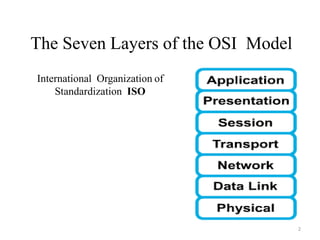
The Seven Layers of the OSI Model
International Organization of
Standardization ISO
3
Layer7
 The application layer is the OSI
layer that is closest to the user;
it provides network services to
the user’s applications. It differs
from the other layers in that it
does not provide services to any
other OSI layer, but rather, only
to applications outside the OSI
model. Examples of such
applications are spreadsheet
programs, word processing
programs, and bank terminal
programs. If you want to
remember Layer 7 in as few
words as possible, think of
browsers.
4
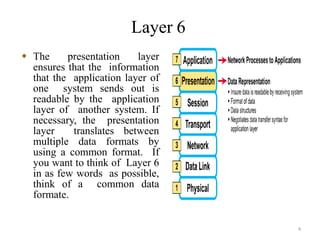
Layer 6
 The presentation layer
ensures that the information
that the application layer of
one system sends out is
readable by the application
layer of another system. If
necessary, the presentation
layer translates between
multiple data formats by
using a common format. If
you want to think of Layer 6
in as few words as possible,
think of a common data
formate.
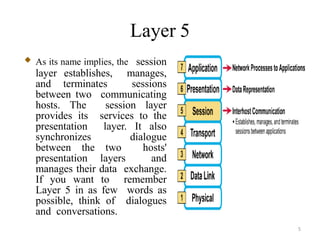
Layer 5
5
 As its name implies, the session
layer establishes, manages,
and terminates sessions
between two communicating
hosts. The session layer
provides its services to the
presentation layer. It also
synchronizes dialogue
between the two hosts'
presentation layers and
manages their data exchange.
If you want to remember
Layer 5 in as few words as
possible, think of dialogues
and conversations.
6
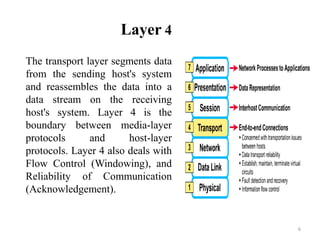
Layer 4
The transport layer segments data
from the sending host's system
and reassembles the data into a
data stream on the receiving
host's system. Layer 4 is the
boundary between media-layer
protocols and host-layer
protocols. Layer 4 also deals with
Flow Control (Windowing), and
Reliability of Communication
(Acknowledgement).
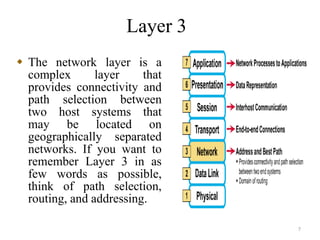
Layer 3
7
 The network layer is a
complex layer that
provides connectivity and
path selection between
two host systems that
may be located on
geographically separated
networks. If you want to
remember Layer 3 in as
few words as possible,
think of path selection,
routing, and addressing.
8
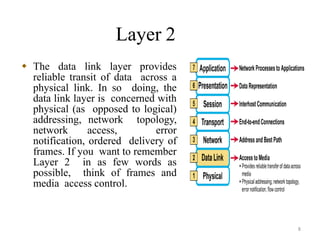
Layer 2
 The data link layer provides
reliable transit of data across a
physical link. In so doing, the
data link layer is concerned with
physical (as opposed to logical)
addressing, network topology,
network access, error
notification, ordered delivery of
frames. If you want to remember
Layer 2 in as few words as
possible, think of frames and
media access control.
9
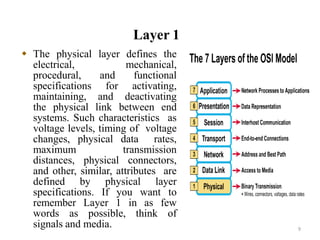
Layer 1
 The physical layer defines the
electrical, mechanical,
procedural, and functional
specifications for activating,
maintaining, and deactivating
the physical link between end
systems. Such characteristics as
voltage levels, timing of voltage
changes, physical data rates,
maximum transmission
distances, physical connectors,
and other, similar, attributes are
defined by physical layer
specifications. If you want to
remember Layer 1 in as few
words as possible, think of
signals and media.
10
Conclusion
 Overall, this presentation I had tried to
describe the OSI model, what it is all about
and how communication occurs through the
layers of the model from one user to
another.
11
Thanks to All
12

Presentation on OSI Model

  • 1.
    Presentation on OSIModel Green University of Bangladesh Presented By: Ananna Biswas ID: 193015051 Program: B.Sc. in CSE (Weekend) Semester: 3rd 31 August 2020 Subject: Data Communication (CSE-307) 1
  • 2.
    2 The Seven Layersof the OSI Model International Organization of Standardization ISO
  • 3.
    3 Layer7  The applicationlayer is the OSI layer that is closest to the user; it provides network services to the user’s applications. It differs from the other layers in that it does not provide services to any other OSI layer, but rather, only to applications outside the OSI model. Examples of such applications are spreadsheet programs, word processing programs, and bank terminal programs. If you want to remember Layer 7 in as few words as possible, think of browsers.
  • 4.
    4 Layer 6  Thepresentation layer ensures that the information that the application layer of one system sends out is readable by the application layer of another system. If necessary, the presentation layer translates between multiple data formats by using a common format. If you want to think of Layer 6 in as few words as possible, think of a common data formate.
  • 5.
    Layer 5 5  Asits name implies, the session layer establishes, manages, and terminates sessions between two communicating hosts. The session layer provides its services to the presentation layer. It also synchronizes dialogue between the two hosts' presentation layers and manages their data exchange. If you want to remember Layer 5 in as few words as possible, think of dialogues and conversations.
  • 6.
    6 Layer 4 The transportlayer segments data from the sending host's system and reassembles the data into a data stream on the receiving host's system. Layer 4 is the boundary between media-layer protocols and host-layer protocols. Layer 4 also deals with Flow Control (Windowing), and Reliability of Communication (Acknowledgement).
  • 7.
    Layer 3 7  Thenetwork layer is a complex layer that provides connectivity and path selection between two host systems that may be located on geographically separated networks. If you want to remember Layer 3 in as few words as possible, think of path selection, routing, and addressing.
  • 8.
    8 Layer 2  Thedata link layer provides reliable transit of data across a physical link. In so doing, the data link layer is concerned with physical (as opposed to logical) addressing, network topology, network access, error notification, ordered delivery of frames. If you want to remember Layer 2 in as few words as possible, think of frames and media access control.
  • 9.
    9 Layer 1  Thephysical layer defines the electrical, mechanical, procedural, and functional specifications for activating, maintaining, and deactivating the physical link between end systems. Such characteristics as voltage levels, timing of voltage changes, physical data rates, maximum transmission distances, physical connectors, and other, similar, attributes are defined by physical layer specifications. If you want to remember Layer 1 in as few words as possible, think of signals and media.
  • 10.
    10 Conclusion  Overall, thispresentation I had tried to describe the OSI model, what it is all about and how communication occurs through the layers of the model from one user to another.
  • 11.
  • 12.