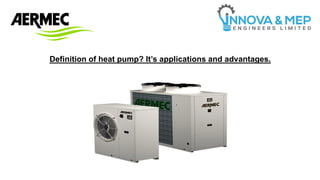
Definition of heat pump? It’s applications and advantages.
What is heat pump: Heat pump is a device that move (or pump) heat from one place to another by using a
compressor and circulating a structure of liquid or gas refrigerant. Through this, the heat is extracted from
outside sources and then heat the water or surface.
The energy efficiency of heat pumps can be higher than 3-4 times than electrical heater, boiler or a furnace.
Heat pumps are actually the most efficient alternative to fuel, oil, and electrical systems, when it comes to
the process of heating and cooling and it help in the reduction of greenhouse emissions in various
application.
Types of heat pump:
1. Air to Air heat pump
2. Air to water heat pump
3. Water to Water heat pump
4. Water to Air heat pump
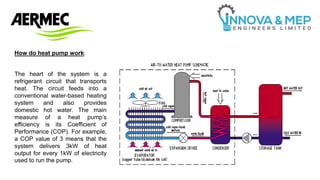
How do heat pump work:
The heart of the system is a
refrigerant circuit that transports
heat. The circuit feeds into a
conventional water-based heating
system and also provides
domestic hot water. The main
measure of a heat pump’s
efficiency is its Coefficient of
Performance (COP). For example,
a COP value of 3 means that the
system delivers 3kW of heat
output for every 1kW of electricity
used to run the pump.
Applications of heat pump: Heat pumps find their application in various segments of market and industry.
Some of its applications are clearly mentioned below.
Hospital & Hotel: Pharmaceuticals, Food Industry:
Miscellaneous:
1. Comfort air conditioning system, space heating.
2. Hot water generation system.
3. Surgical tools cleaning.
4. Particular uses of hot water in hospital.
1. Salt manufacturing.
2. Heat Recovery, cold store operation
3. Pharmaceuticals process water heating
4. Alcohol, Wet corn milling/corn syrup.
1. Drying of clothes, washing machines
2. Solvent recovery, district heating and steam-stripping
3. Nuclear power stations, it can be used in concentrating radioactive waste and cooling tower blow down.
Some of Advantages of heat pump:
1. Heat pumps is 3-4 more efficient than geyser, electrical heater, boiler or a furnace. Which can reduce a
big amount of electricity bill.
2. Heat pump have a planned life span of up to 20 years with almost no loss of efficiency, especially when
compared to boilers which have 2% loss of efficiency every year with a usable life span of 10 years.
3. Safety and low risk of accidents, considering the danger of conventional heating systems.
4. Heat pumps are free from contaminants which may cause harm to the environment. It'll help to load off
the work of boiler which produces carbon monoxide when faulty, which is harmful to health.
5. Installation is quite easy, low maintenance, clean, quiet and odorless.

Presentation on Heat pump.pdf

  • 1.
    Definition of heatpump? It’s applications and advantages.
  • 2.
    What is heatpump: Heat pump is a device that move (or pump) heat from one place to another by using a compressor and circulating a structure of liquid or gas refrigerant. Through this, the heat is extracted from outside sources and then heat the water or surface. The energy efficiency of heat pumps can be higher than 3-4 times than electrical heater, boiler or a furnace. Heat pumps are actually the most efficient alternative to fuel, oil, and electrical systems, when it comes to the process of heating and cooling and it help in the reduction of greenhouse emissions in various application. Types of heat pump: 1. Air to Air heat pump 2. Air to water heat pump 3. Water to Water heat pump 4. Water to Air heat pump
  • 3.
    How do heatpump work: The heart of the system is a refrigerant circuit that transports heat. The circuit feeds into a conventional water-based heating system and also provides domestic hot water. The main measure of a heat pump’s efficiency is its Coefficient of Performance (COP). For example, a COP value of 3 means that the system delivers 3kW of heat output for every 1kW of electricity used to run the pump.
  • 4.
    Applications of heatpump: Heat pumps find their application in various segments of market and industry. Some of its applications are clearly mentioned below. Hospital & Hotel: Pharmaceuticals, Food Industry: Miscellaneous: 1. Comfort air conditioning system, space heating. 2. Hot water generation system. 3. Surgical tools cleaning. 4. Particular uses of hot water in hospital. 1. Salt manufacturing. 2. Heat Recovery, cold store operation 3. Pharmaceuticals process water heating 4. Alcohol, Wet corn milling/corn syrup. 1. Drying of clothes, washing machines 2. Solvent recovery, district heating and steam-stripping 3. Nuclear power stations, it can be used in concentrating radioactive waste and cooling tower blow down.
  • 5.
    Some of Advantagesof heat pump: 1. Heat pumps is 3-4 more efficient than geyser, electrical heater, boiler or a furnace. Which can reduce a big amount of electricity bill. 2. Heat pump have a planned life span of up to 20 years with almost no loss of efficiency, especially when compared to boilers which have 2% loss of efficiency every year with a usable life span of 10 years. 3. Safety and low risk of accidents, considering the danger of conventional heating systems. 4. Heat pumps are free from contaminants which may cause harm to the environment. It'll help to load off the work of boiler which produces carbon monoxide when faulty, which is harmful to health. 5. Installation is quite easy, low maintenance, clean, quiet and odorless.