OVERVIEW
What isethnography
Ethnographic concern
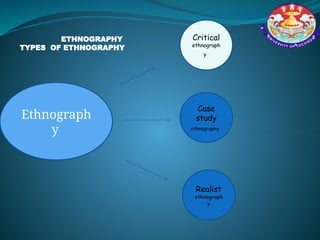
Types of ethnography
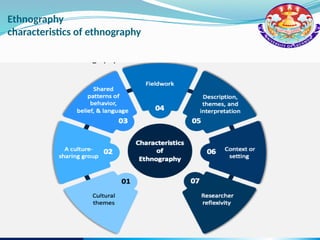
characteristics of ethnography
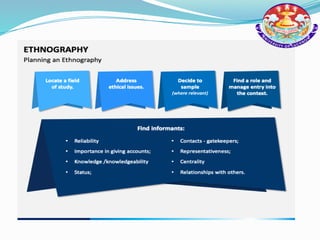
Planing of ethnography
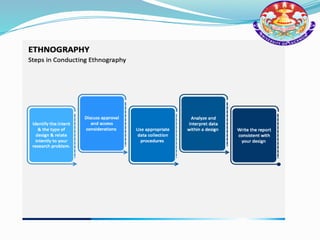
Step in conducting ethnography
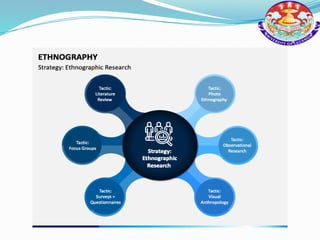
Stategy : ethnographic research
3.
Ethnography
What is ethnography?
ETHNOGRAPHY
• A method of observing human interactions in social
setting and activities .(burke and kirk 2001)
• As the observation of people in their ‘culture context’.
• The study of systematic recording of human cultures;
also: a descriptive work produced from such research.
Rather than studying people from the outside,
you learn from people from the inside.
4.
Ethnographic concern.....
Theproduction of descriptive cultural knowledge of
a group.
.The description of activities in relations to
particular cultural context from the point of view of
the member of that group themselves.
The production of a list of features constitutive of
membership in a group on cultural.
The provision as for as possible of insider account
the development of theory.
Critical ethnography
Researchand thinking are medicated power
relations
The power relations are socially and historically
located
Facts and values are inseparable ideological
domination in strongest.
When oppressed group see their situation as
inevitable natural or necessary.
7.
Case study ethnography
Report should focus on case.
Researcher can choose to be objective or
subjective.