Presented By :
Samra Rani (MP/E-2023-F-21)
Hafiza Mariyam Bashir (MP/E-2023-F-27)
Amina Munawar (MP/E-2023-F-19)
MPHIL Education (Evening – Self-supporting)
Semester :2023-25
Section : A
Presented To : Dr. Muhammad Aslam
INSTITUTE OF EDUCATION AND RESEARCH
UNIVERSITY OF PUNJAB
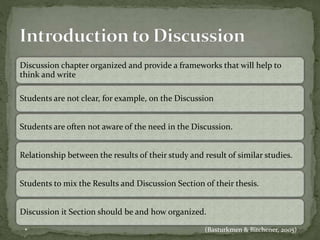
Discussion chapter organized and provide a frameworks that will help to
think and write
Students are not clear, for example, on the Discussion
Students are often not aware of the need in the Discussion.
Relationship between the results of their study and result of similar studies.
Students to mix the Results and Discussion Section of their thesis.
Discussion it Section should be and how organized.
• (Basturkmen & Bitchener, 2005)
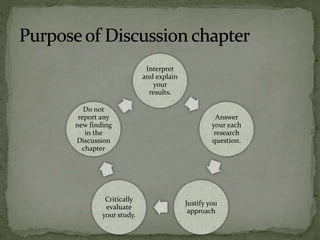
Interpret
and explain
your
results.
Answer
your each
research
question.
Justify you
approach
Critically
evaluate
your study.
Do not
report any
new finding
in the
Discussion
chapter
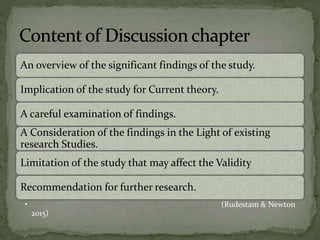
An overview of the significant findings of the study.
Implication of the study for Current theory.
A careful examination of findings.
A Consideration of the findings in the Light of existing
research Studies.
Limitation of the study that may affect the Validity
Recommendation for further research.
• (Rudestam & Newton
2015)
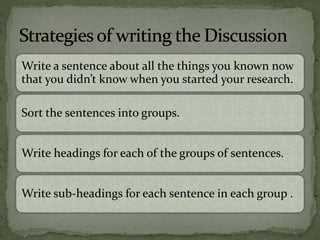
Write a sentence about all the things you known now
that you didn’t know when you started your research.
Sort the sentences into groups.
Write headings for each of the groups of sentences.
Write sub-headings for each sentence in each group .
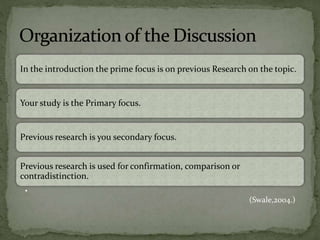
In the introduction the prime focus is on previous Research on the topic.
Your study is the Primary focus.
Previous research is you secondary focus.
Previous research is used for confirmation, comparison or
contradistinction.
•
(Swale,2004.)
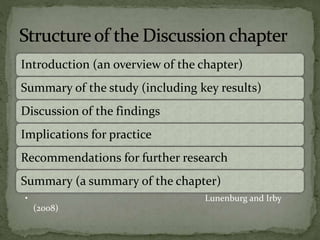
Introduction (an overview of the chapter)
Summary of the study (including key results)
Discussion of the findings
Implications for practice
Recommendations for further research
Summary (a summary of the chapter)
• Lunenburg and Irby
(2008)
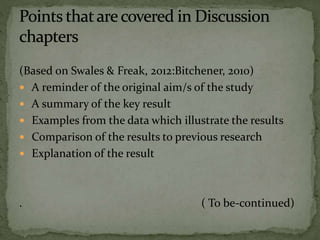
(Based on Swales & Freak, 2012:Bitchener, 2010)
 A reminder of the original aim/s of the study
 A summary of the key result
 Examples from the data which illustrate the results
 Comparison of the results to previous research
 Explanation of the result
. ( To be-continued)
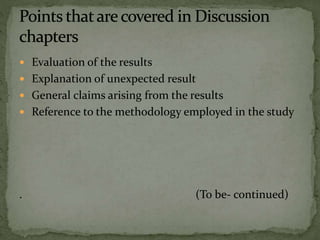
 Evaluation of the results
 Explanation of unexpected result
 General claims arising from the results
 Reference to the methodology employed in the study
. (To be- continued)
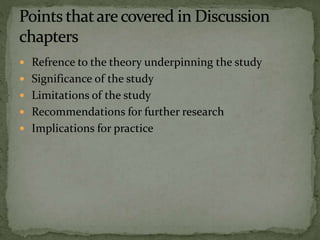
 Refrence to the theory underpinning the study
 Significance of the study
 Limitations of the study
 Recommendations for further research
 Implications for practice
Stance
Engagement
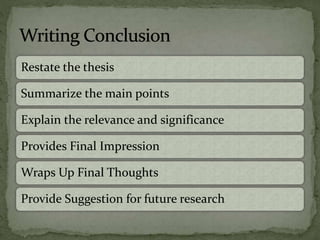
Restate the thesis
Summarize the main points
Explain the relevance and significance
Provides Final Impression
Wraps Up Final Thoughts
Provide Suggestion for future research
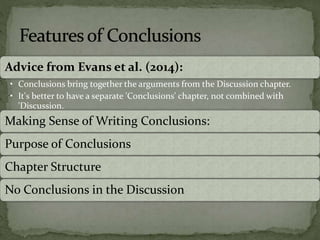
Advice from Evans et al. (2014):
• Conclusions bring together the arguments from the Discussion chapter.
• It's better to have a separate 'Conclusions' chapter, not combined with
'Discussion.
Making Sense of Writing Conclusions:
Purpose of Conclusions
Chapter Structure
No Conclusions in the Discussion
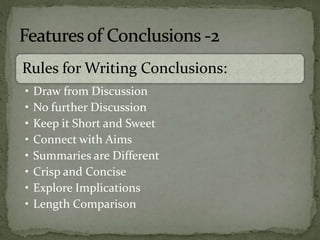
Rules for Writing Conclusions:
• Draw from Discussion
• No further Discussion
• Keep it Short and Sweet
• Connect with Aims
• Summaries are Different
• Crisp and Concise
• Explore Implications
• Length Comparison
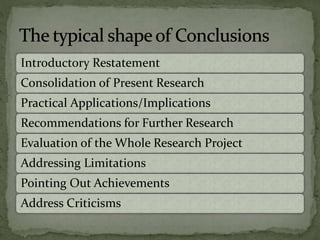
Introductory Restatement
Consolidation of Present Research
Practical Applications/Implications
Recommendations for Further Research
Evaluation of the Whole Research Project
Addressing Limitations
Pointing Out Achievements
Address Criticisms
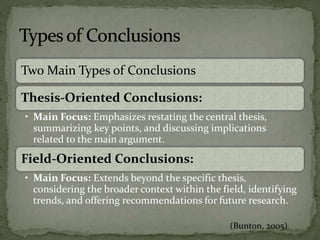
Two Main Types of Conclusions
Thesis-Oriented Conclusions:
• Main Focus: Emphasizes restating the central thesis,
summarizing key points, and discussing implications
related to the main argument.
Field-Oriented Conclusions:
• Main Focus: Extends beyond the specific thesis,
considering the broader context within the field, identifying
trends, and offering recommendations for future research.
(Bunton, 2005)
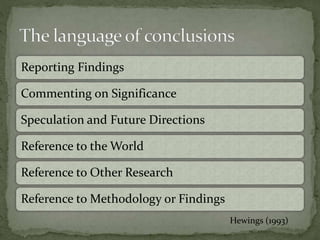
Reporting Findings
Commenting on Significance
Speculation and Future Directions
Reference to the World
Reference to Other Research
Reference to Methodology or Findings
Hewings (1993)
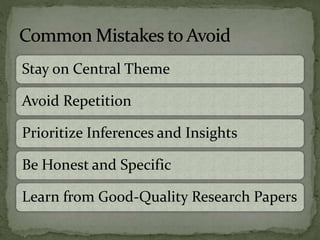
Stay on Central Theme
Avoid Repetition
Prioritize Inferences and Insights
Be Honest and Specific
Learn from Good-Quality Research Papers
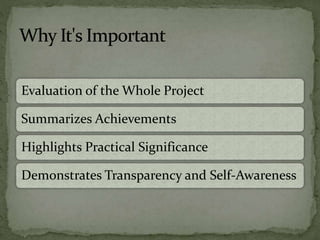
Evaluation of the Whole Project
Summarizes Achievements
Highlights Practical Significance
Demonstrates Transparency and Self-Awareness
The Discussion and Conclusions sections of a thesis or dissertation are not always
easy to provide guidelines for as there is a lot of disciplinary variation in
these sections. It is, thus, especially important for you to look at examples of
previous theses and dissertations to see what writers typically do in your area
of study. One thing writers do, however, in this part of the text, no matter
what the conventions, is step back and take a broad look at their findings and
their study as a whole, saying not just what the study has done but also ‘what
it means’. ‘This ‘want it means’ is the key point that a good Discussion and,
in turn, Conclusions section needs to address. A good thesis or dissertation
should tell the reader, not just what you have done, but why what you have
done matters.

Presentation on Discussion And Conclusion.pptx

  • 1.
    Presented By : SamraRani (MP/E-2023-F-21) Hafiza Mariyam Bashir (MP/E-2023-F-27) Amina Munawar (MP/E-2023-F-19) MPHIL Education (Evening – Self-supporting) Semester :2023-25 Section : A Presented To : Dr. Muhammad Aslam INSTITUTE OF EDUCATION AND RESEARCH UNIVERSITY OF PUNJAB
  • 2.
    Discussion chapter organizedand provide a frameworks that will help to think and write Students are not clear, for example, on the Discussion Students are often not aware of the need in the Discussion. Relationship between the results of their study and result of similar studies. Students to mix the Results and Discussion Section of their thesis. Discussion it Section should be and how organized. • (Basturkmen & Bitchener, 2005)
  • 3.
    Interpret and explain your results. Answer your each research question. Justifyyou approach Critically evaluate your study. Do not report any new finding in the Discussion chapter
  • 4.
    An overview ofthe significant findings of the study. Implication of the study for Current theory. A careful examination of findings. A Consideration of the findings in the Light of existing research Studies. Limitation of the study that may affect the Validity Recommendation for further research. • (Rudestam & Newton 2015)
  • 5.
    Write a sentenceabout all the things you known now that you didn’t know when you started your research. Sort the sentences into groups. Write headings for each of the groups of sentences. Write sub-headings for each sentence in each group .
  • 6.
    In the introductionthe prime focus is on previous Research on the topic. Your study is the Primary focus. Previous research is you secondary focus. Previous research is used for confirmation, comparison or contradistinction. • (Swale,2004.)
  • 7.
    Introduction (an overviewof the chapter) Summary of the study (including key results) Discussion of the findings Implications for practice Recommendations for further research Summary (a summary of the chapter) • Lunenburg and Irby (2008)
  • 8.
    (Based on Swales& Freak, 2012:Bitchener, 2010)  A reminder of the original aim/s of the study  A summary of the key result  Examples from the data which illustrate the results  Comparison of the results to previous research  Explanation of the result . ( To be-continued)
  • 9.
     Evaluation ofthe results  Explanation of unexpected result  General claims arising from the results  Reference to the methodology employed in the study . (To be- continued)
  • 10.
     Refrence tothe theory underpinning the study  Significance of the study  Limitations of the study  Recommendations for further research  Implications for practice
  • 11.
  • 12.
    Restate the thesis Summarizethe main points Explain the relevance and significance Provides Final Impression Wraps Up Final Thoughts Provide Suggestion for future research
  • 13.
    Advice from Evanset al. (2014): • Conclusions bring together the arguments from the Discussion chapter. • It's better to have a separate 'Conclusions' chapter, not combined with 'Discussion. Making Sense of Writing Conclusions: Purpose of Conclusions Chapter Structure No Conclusions in the Discussion
  • 14.
    Rules for WritingConclusions: • Draw from Discussion • No further Discussion • Keep it Short and Sweet • Connect with Aims • Summaries are Different • Crisp and Concise • Explore Implications • Length Comparison
  • 15.
    Introductory Restatement Consolidation ofPresent Research Practical Applications/Implications Recommendations for Further Research Evaluation of the Whole Research Project Addressing Limitations Pointing Out Achievements Address Criticisms
  • 16.
    Two Main Typesof Conclusions Thesis-Oriented Conclusions: • Main Focus: Emphasizes restating the central thesis, summarizing key points, and discussing implications related to the main argument. Field-Oriented Conclusions: • Main Focus: Extends beyond the specific thesis, considering the broader context within the field, identifying trends, and offering recommendations for future research. (Bunton, 2005)
  • 17.
    Reporting Findings Commenting onSignificance Speculation and Future Directions Reference to the World Reference to Other Research Reference to Methodology or Findings Hewings (1993)
  • 18.
    Stay on CentralTheme Avoid Repetition Prioritize Inferences and Insights Be Honest and Specific Learn from Good-Quality Research Papers
  • 19.
    Evaluation of theWhole Project Summarizes Achievements Highlights Practical Significance Demonstrates Transparency and Self-Awareness
  • 20.
    The Discussion andConclusions sections of a thesis or dissertation are not always easy to provide guidelines for as there is a lot of disciplinary variation in these sections. It is, thus, especially important for you to look at examples of previous theses and dissertations to see what writers typically do in your area of study. One thing writers do, however, in this part of the text, no matter what the conventions, is step back and take a broad look at their findings and their study as a whole, saying not just what the study has done but also ‘what it means’. ‘This ‘want it means’ is the key point that a good Discussion and, in turn, Conclusions section needs to address. A good thesis or dissertation should tell the reader, not just what you have done, but why what you have done matters.