Bonding Of Resin Based
Materials
Acid etch systems for bonding to enamel
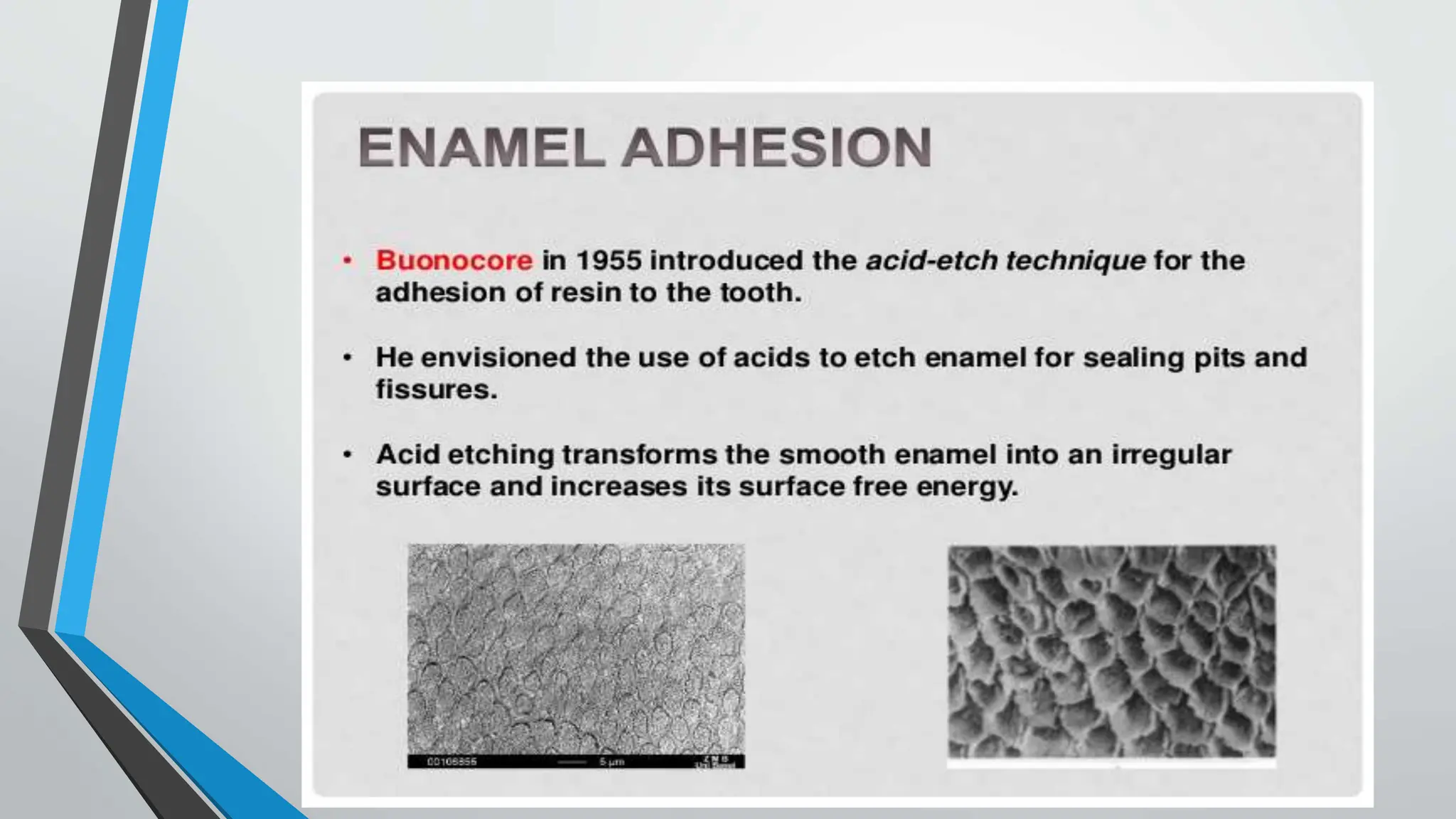
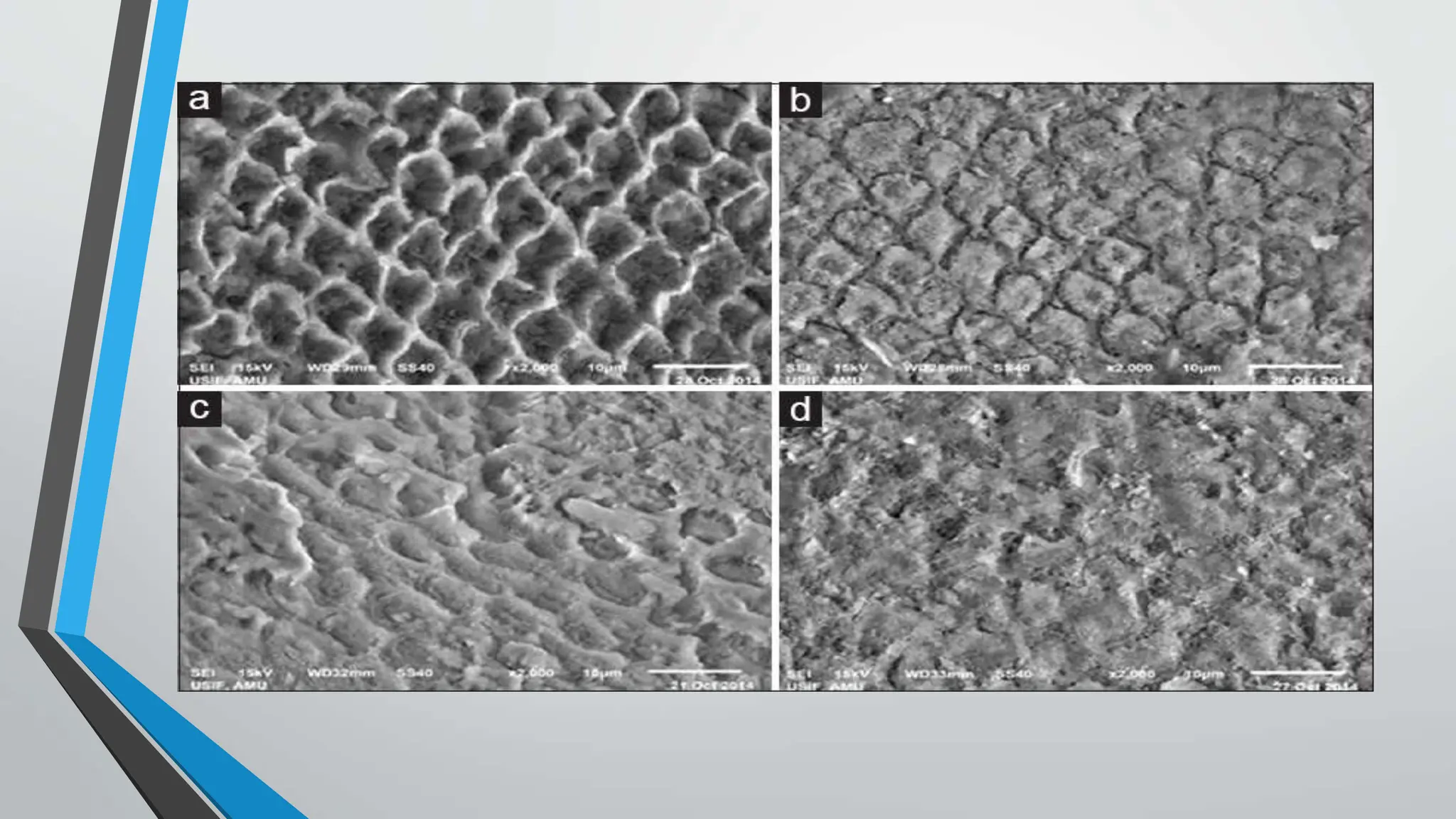
The acid-etching of a tooth surface allows for the micro-
mechanical adhesion of resin to the tooth.
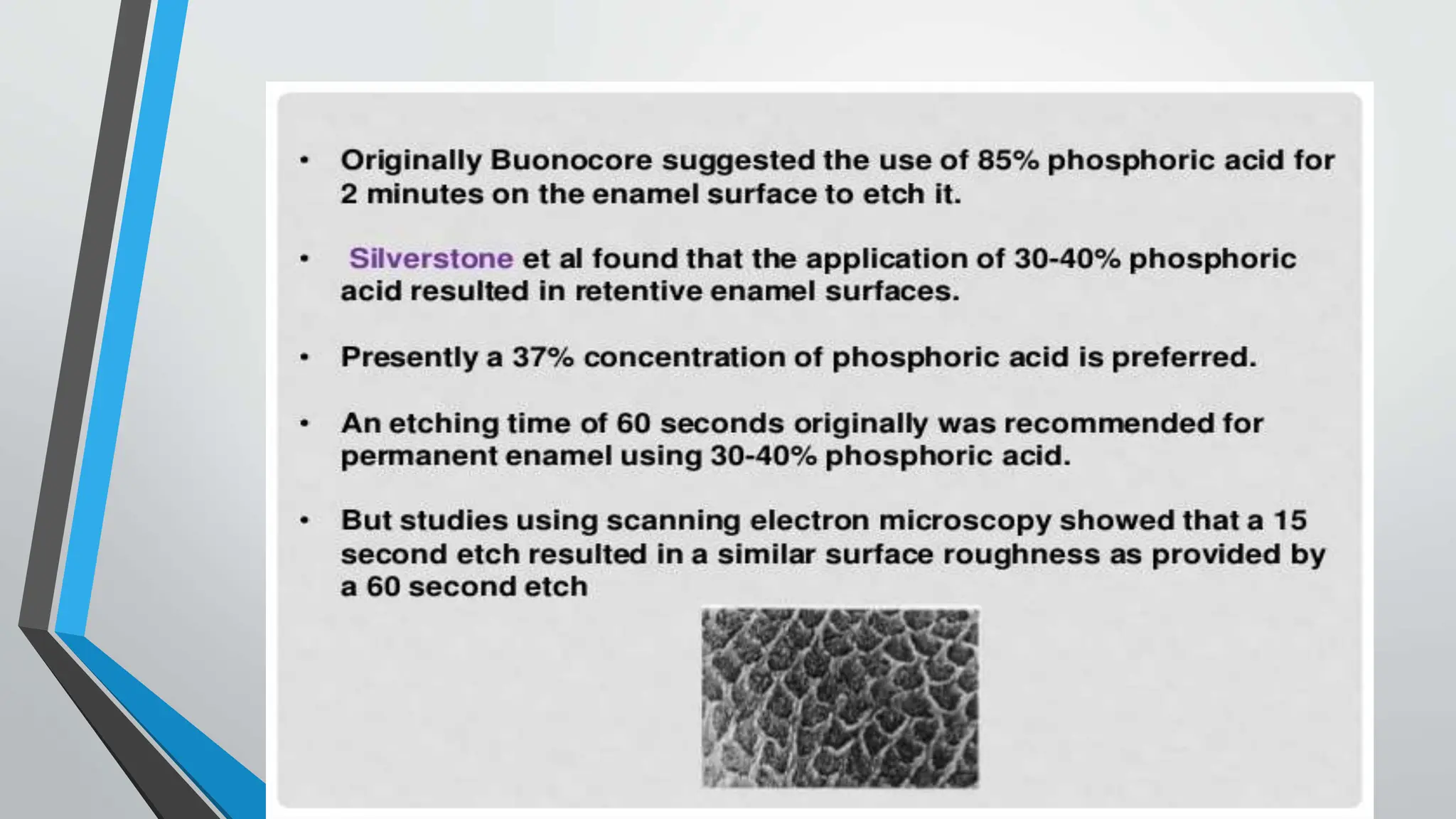
Etching with acid remove a portion of the superficial mineral
component of enamel and dentine.
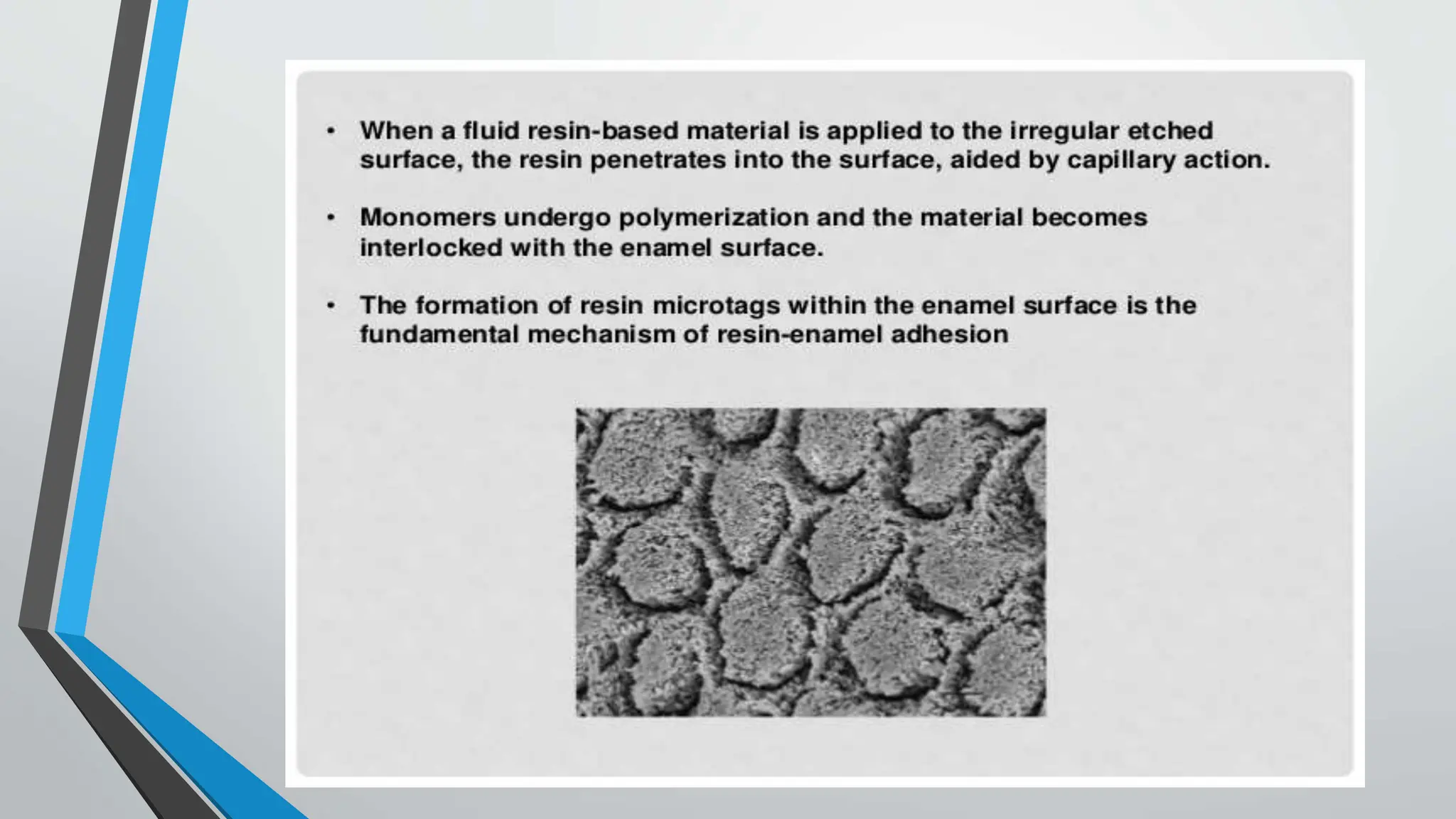
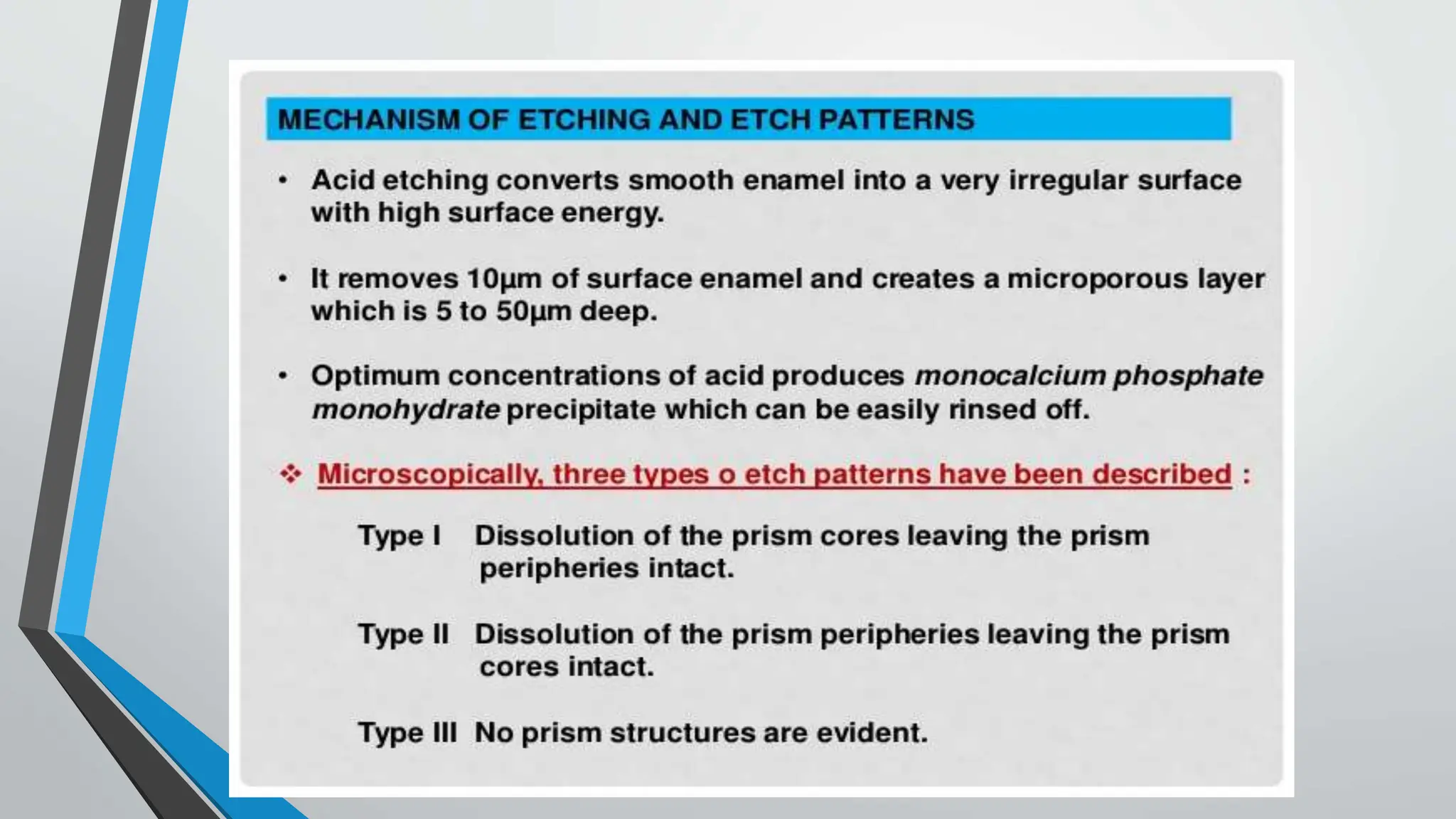
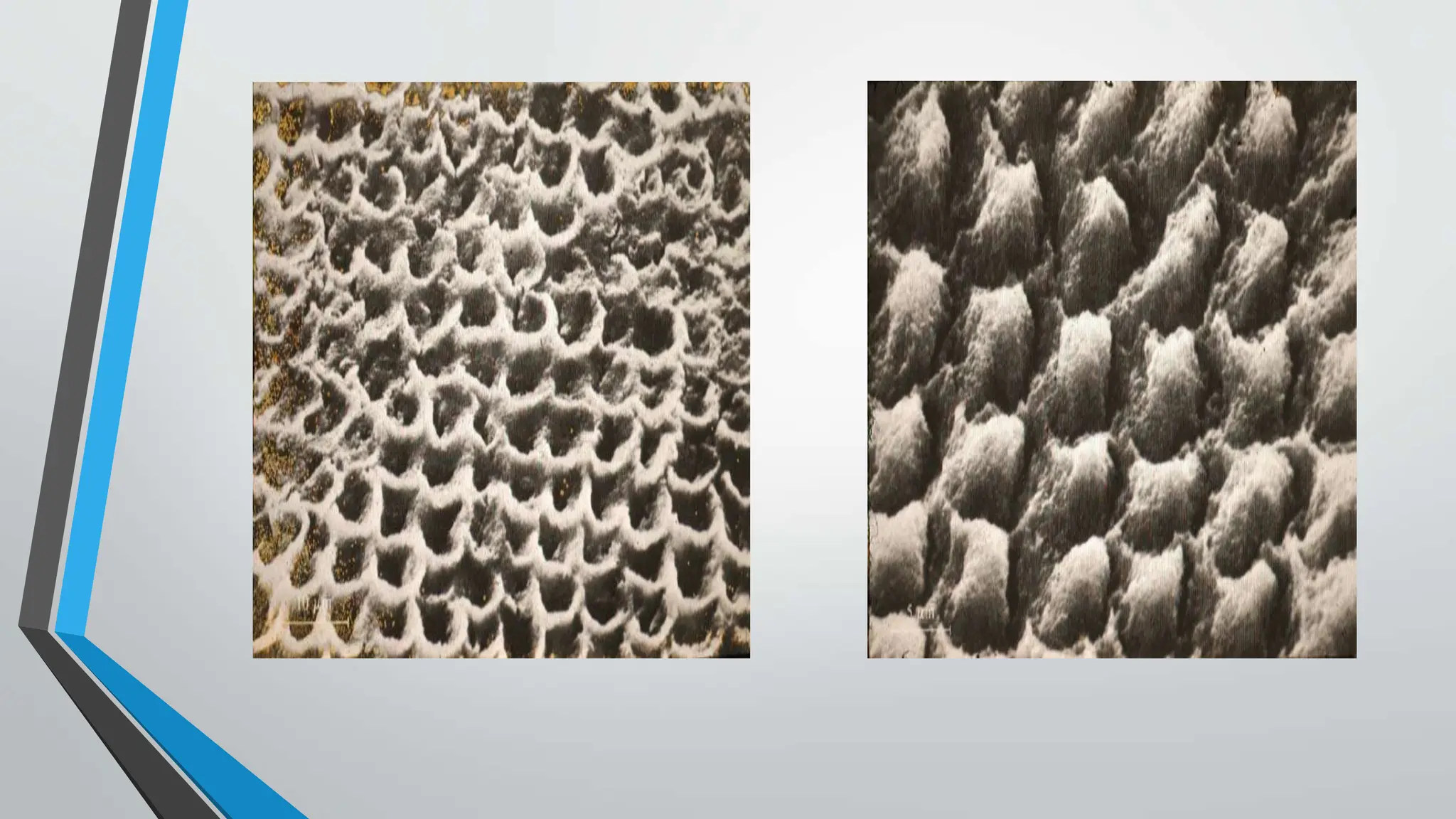
Micro porosities or open dentinal tubules produced in which resin
will penetrate and mechanically grip the tooth providing retention
for an overlying restoration.
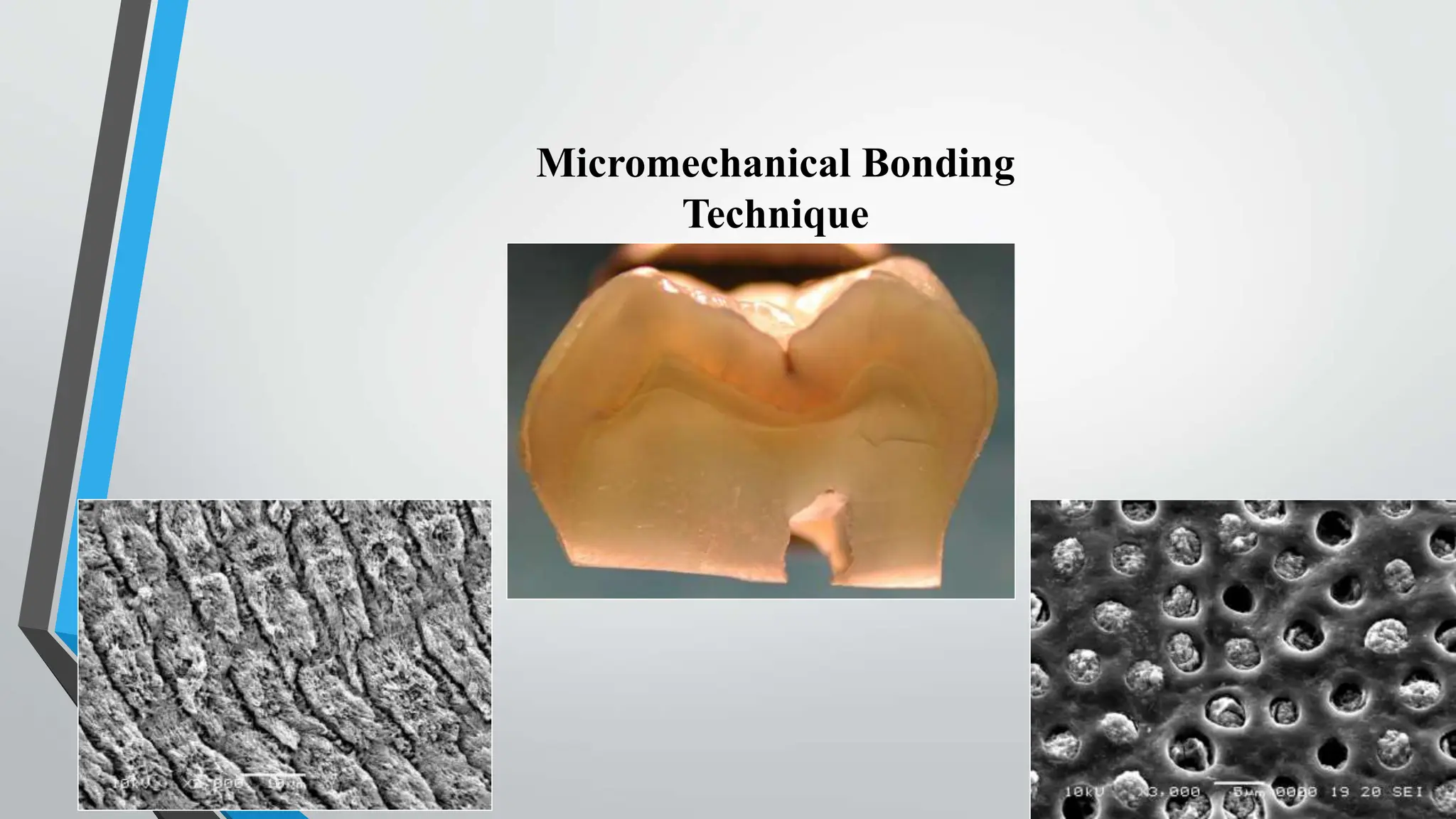
Micromechanical Bonding
Technique
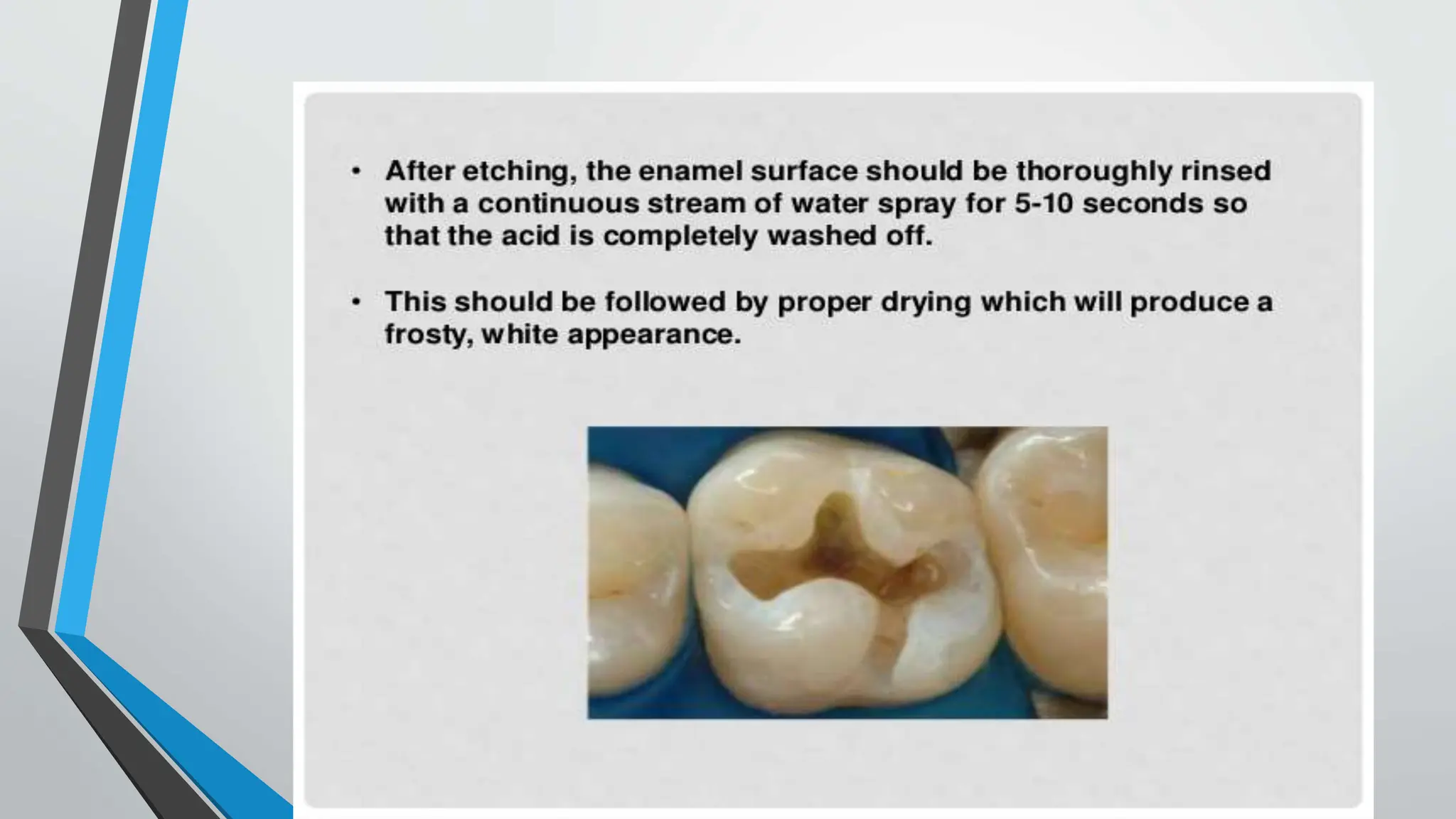
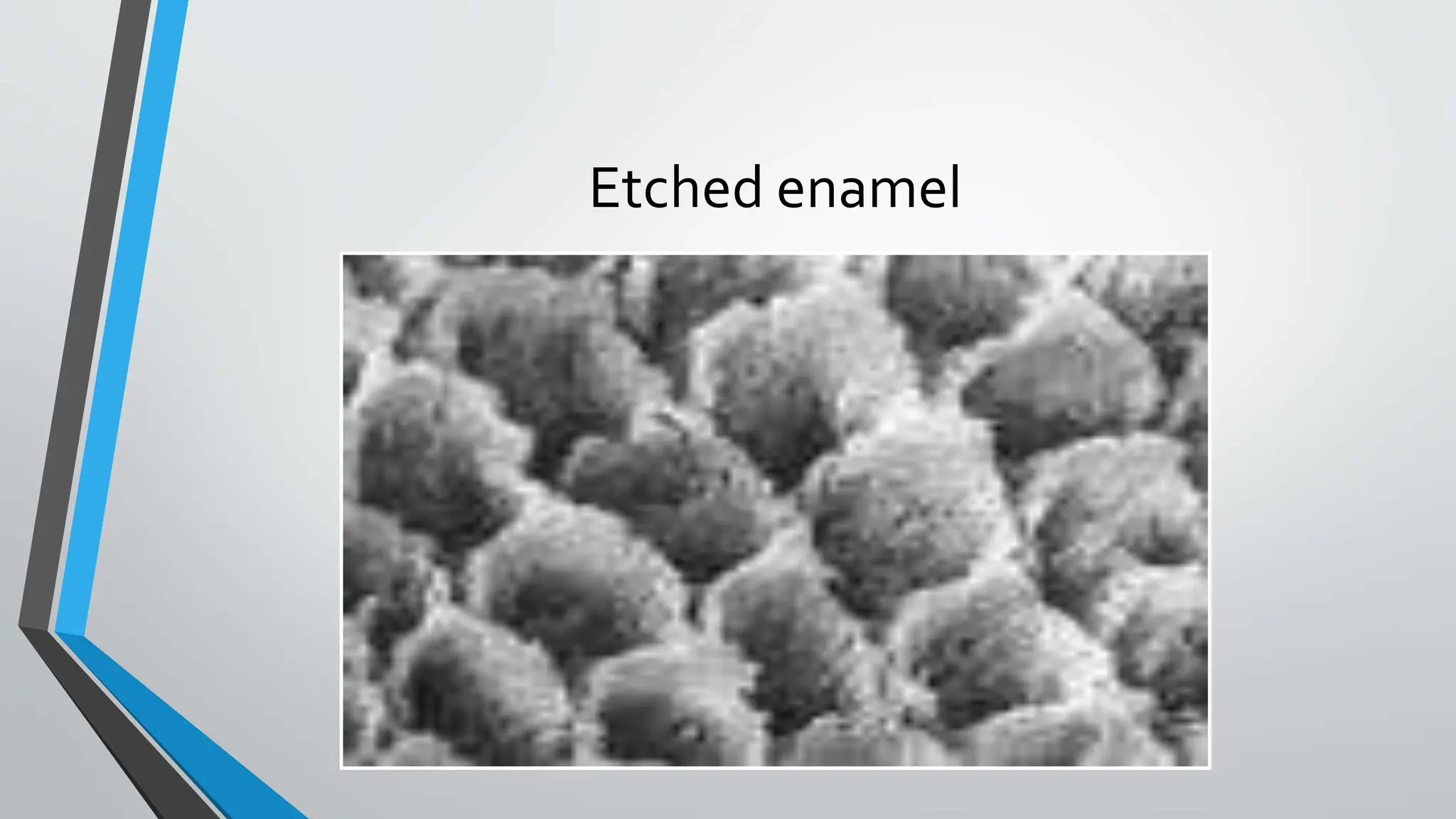
Etched enamel
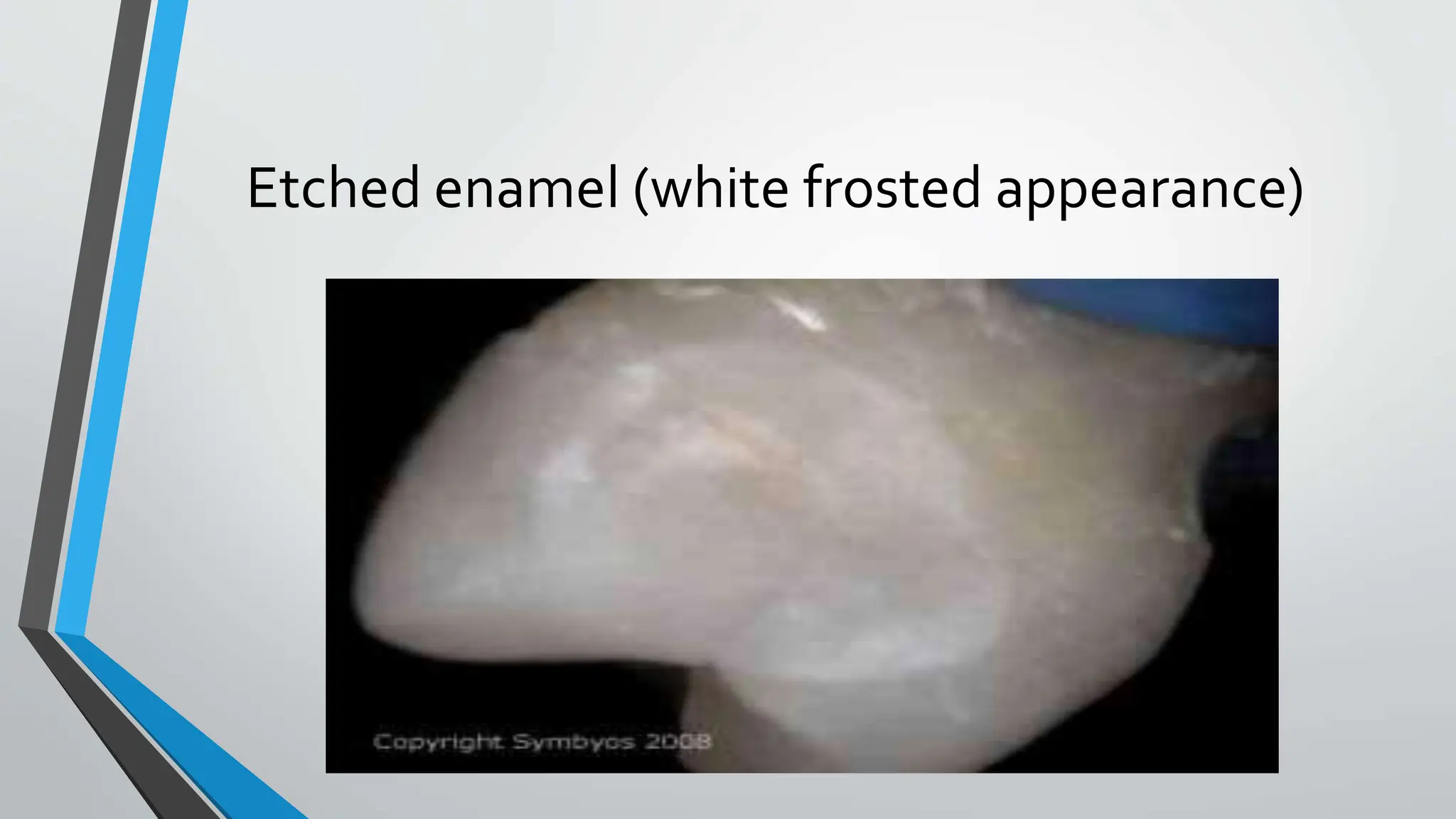
Etched enamel (white frosted appearance)
Major factors for success or failure of acid etch
bonding systems.
• 1. Etching time
• 2.Washing stage
• 3. Drying stage
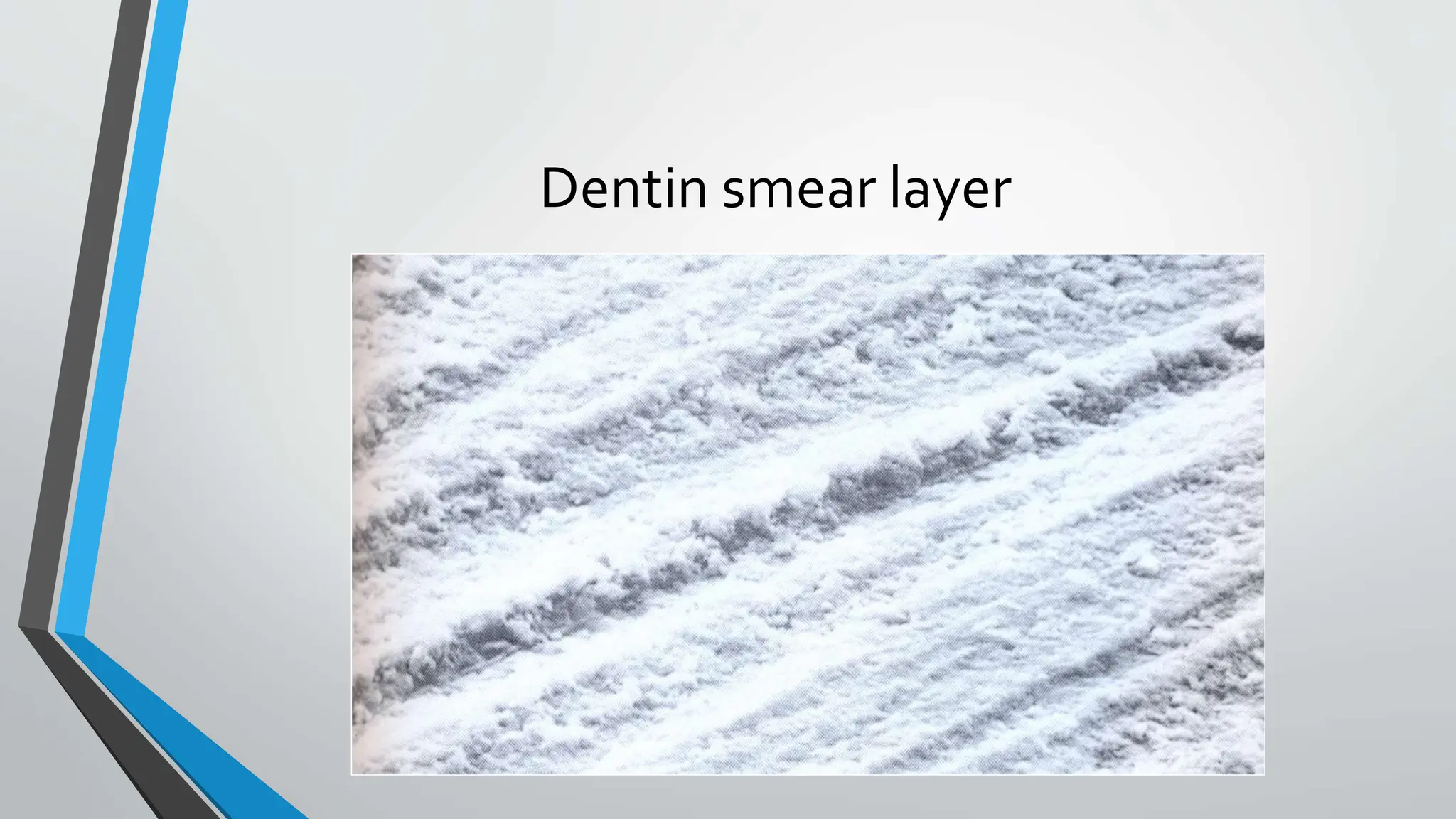
Dentin smear layer
Smear layer
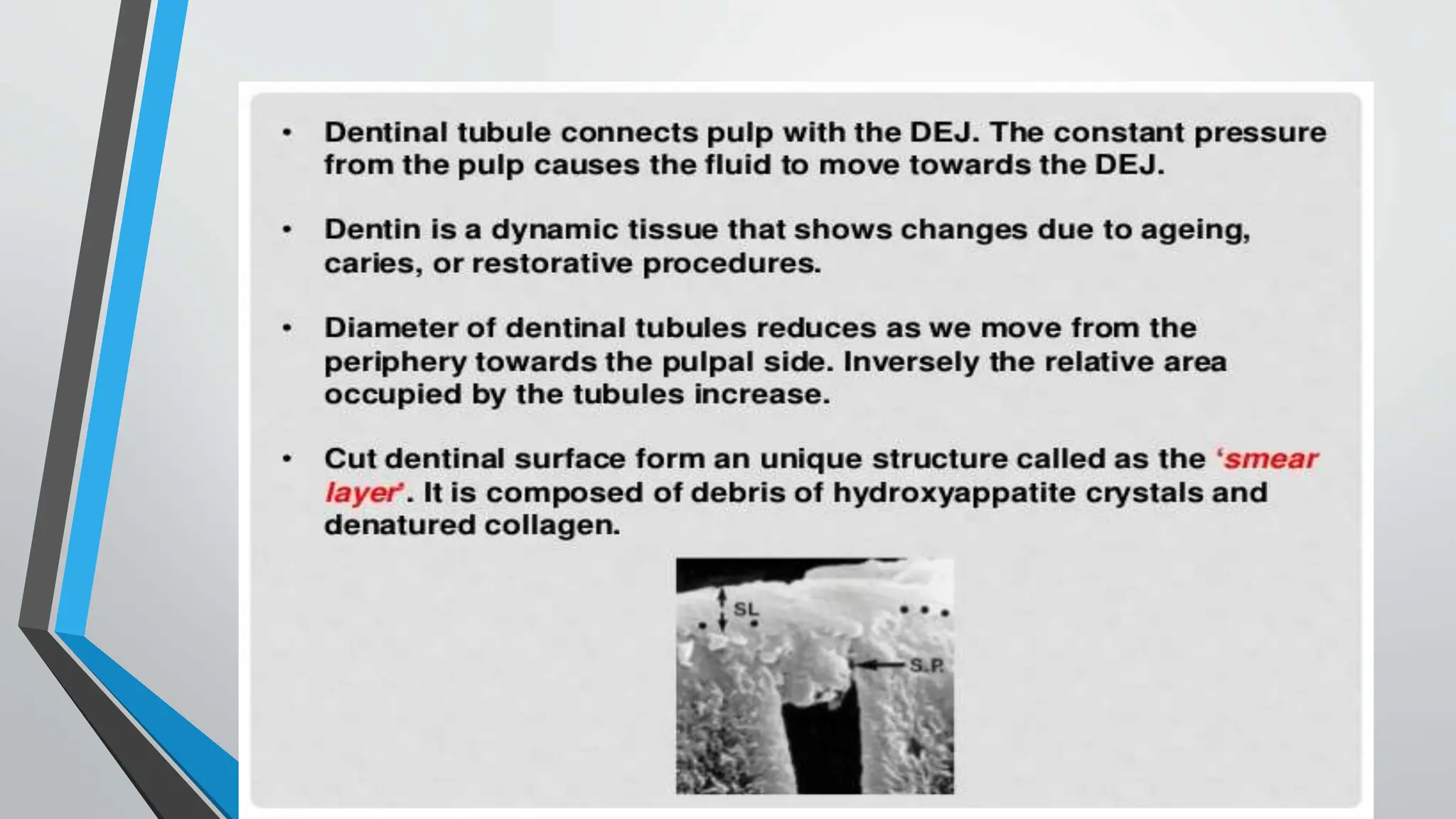
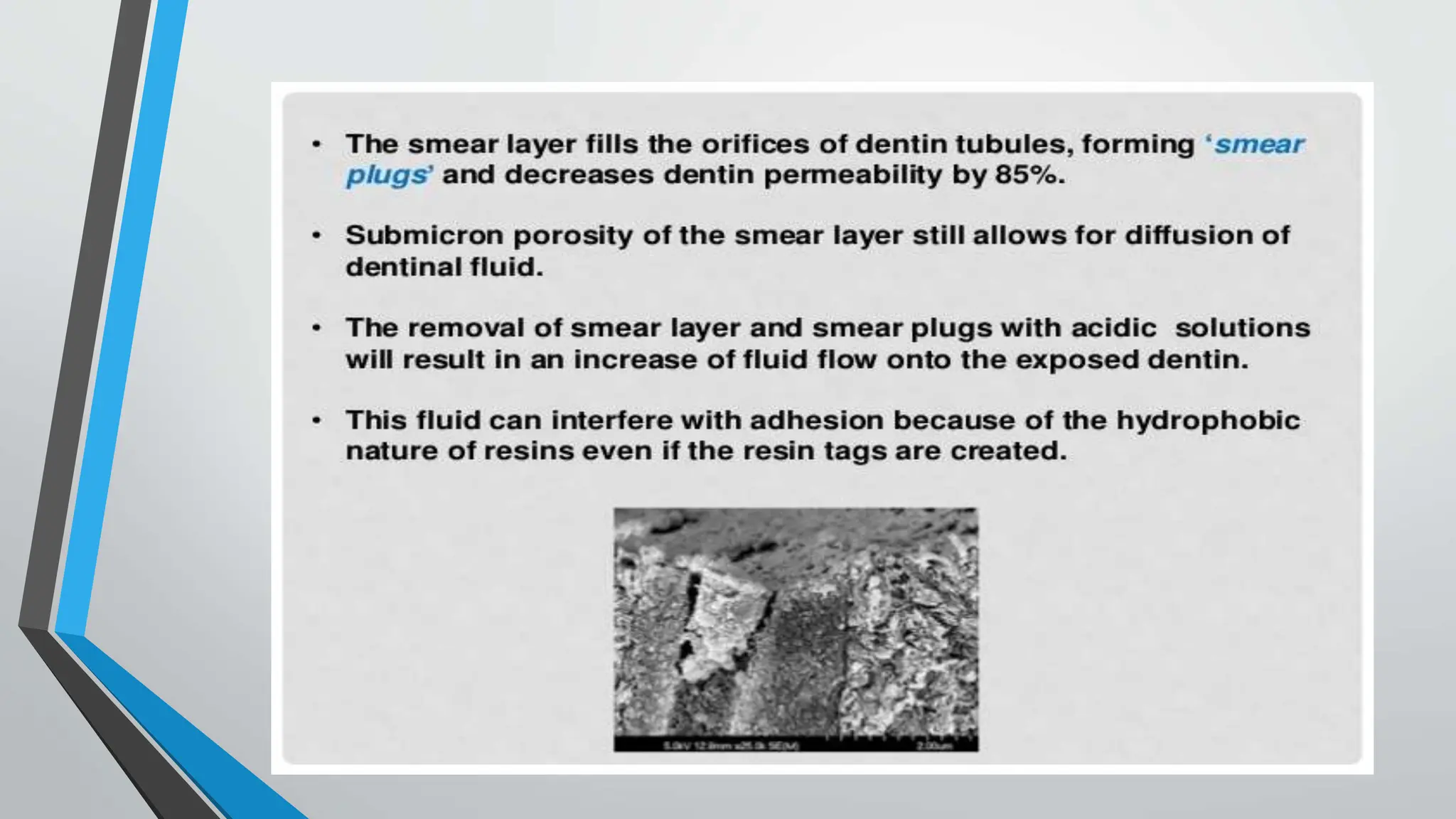
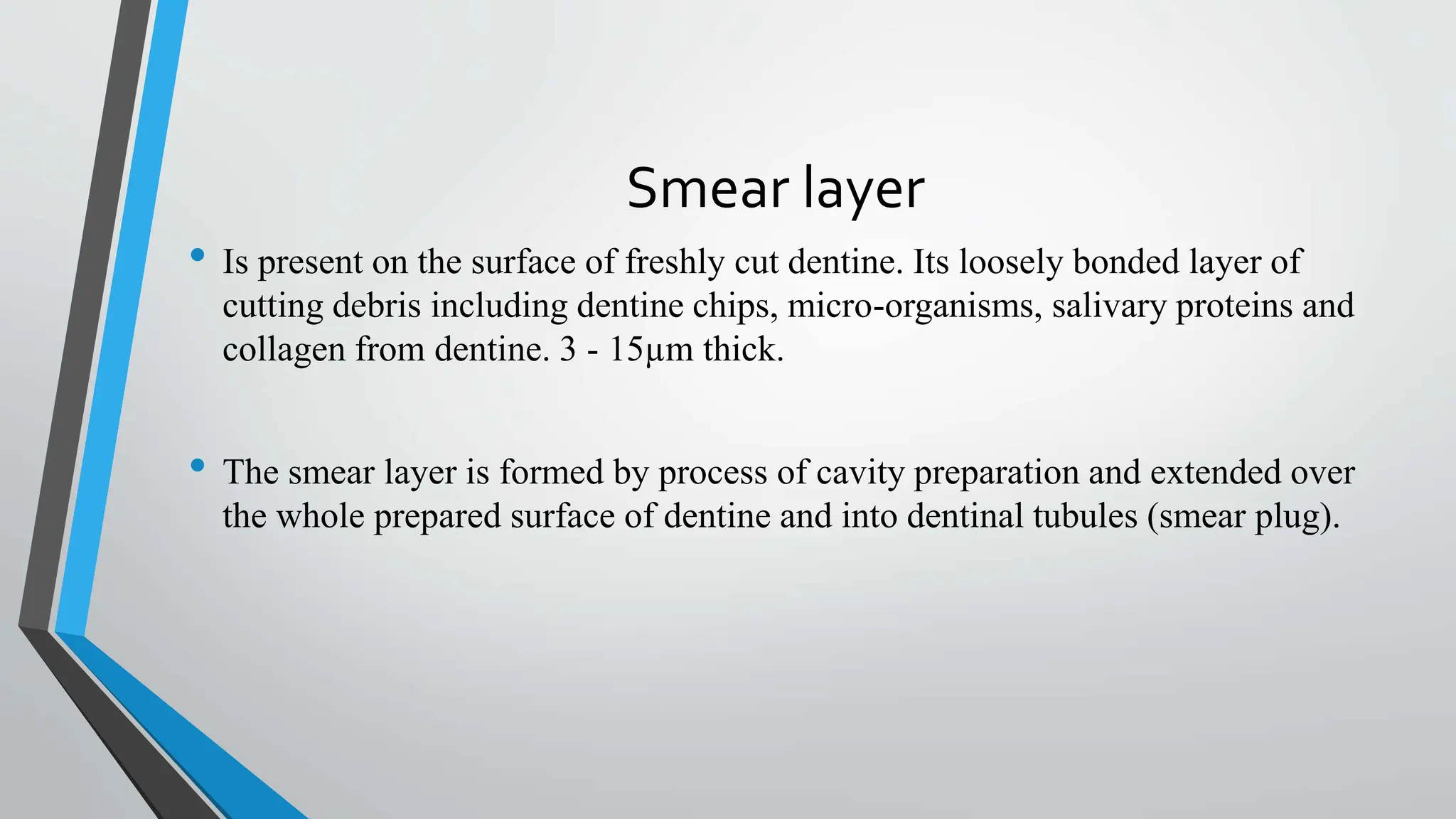
• Is present on the surface of freshly cut dentine. Its loosely bonded layer of
cutting debris including dentine chips, micro-organisms, salivary proteins and
collagen from dentine. 3 - 15µm thick.
• The smear layer is formed by process of cavity preparation and extended over
the whole prepared surface of dentine and into dentinal tubules (smear plug).
Dentine conditioning
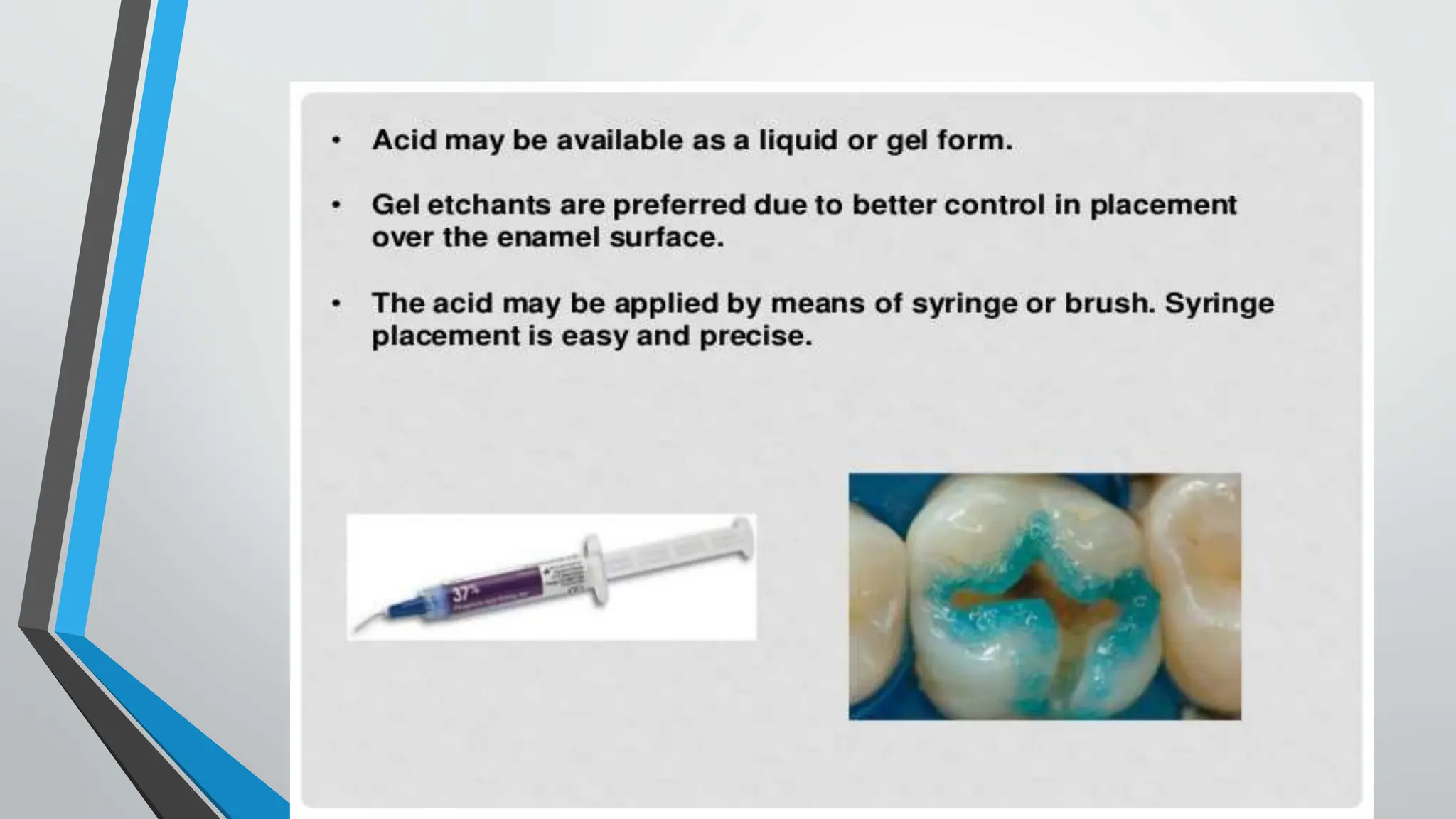
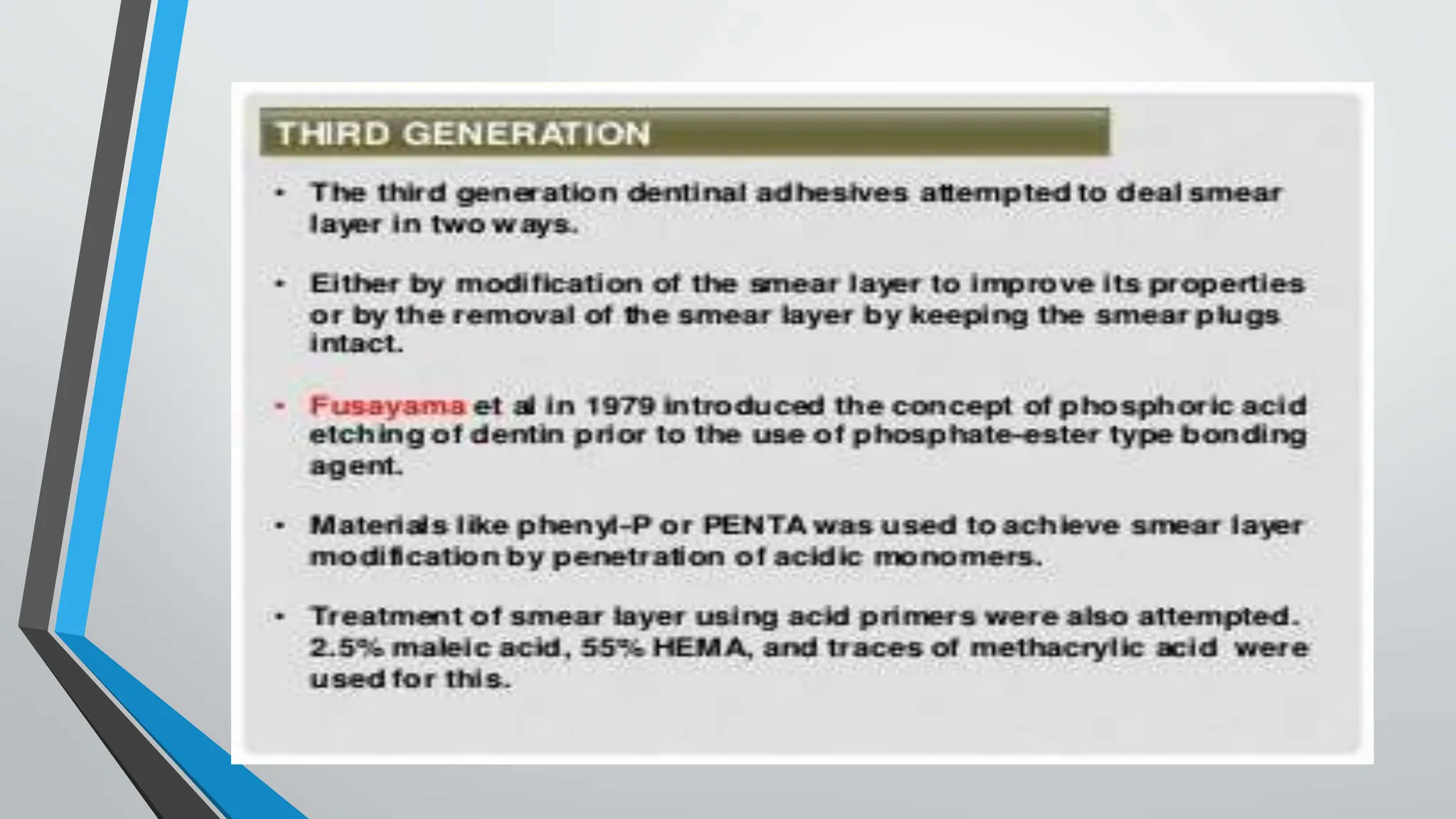
• Conditioners (37% phosphoric acid)
• Dissolve not only smear layer and smear plug but also decalcify inter-tubular
dentine to a depth of few microns.
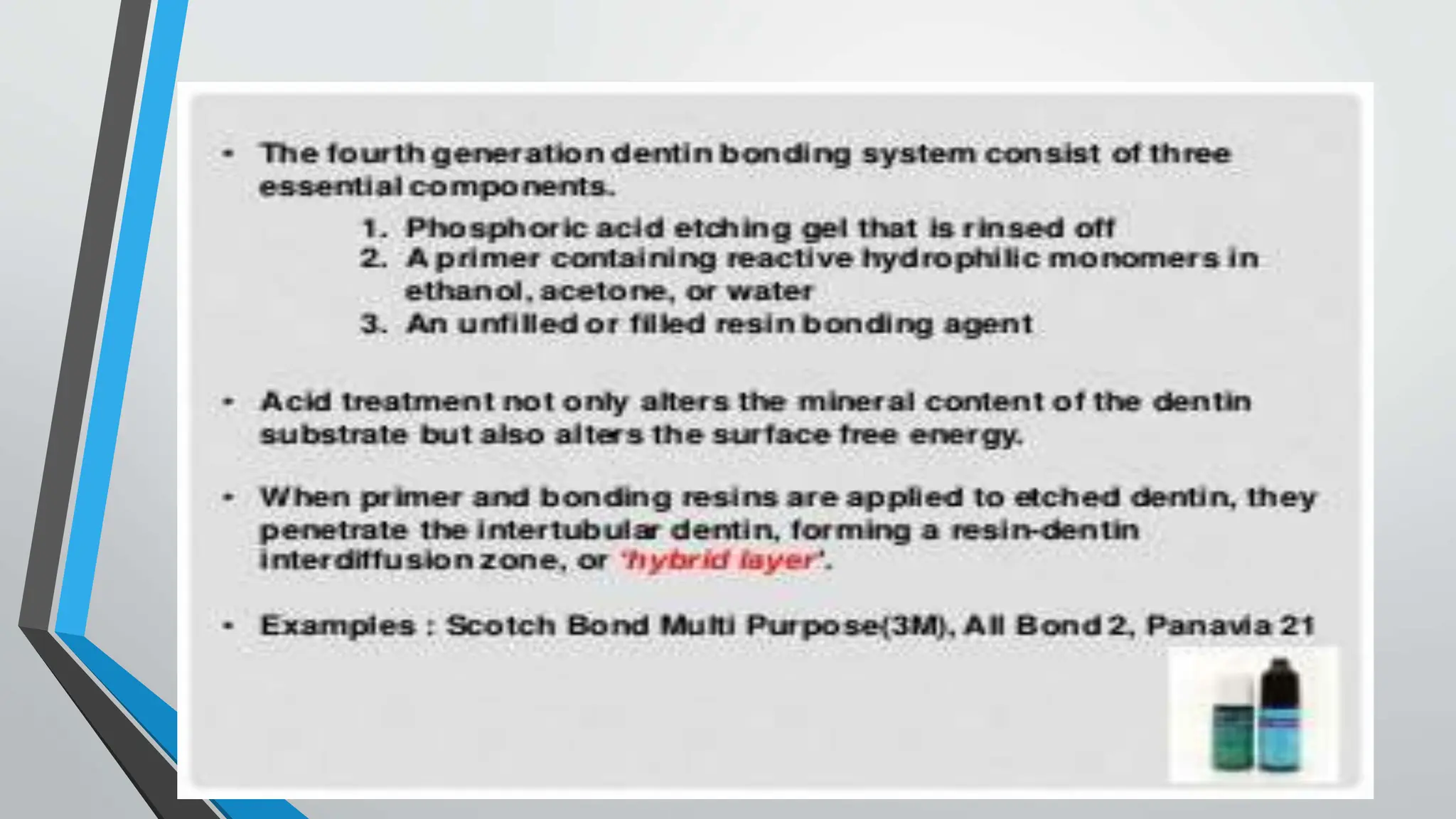
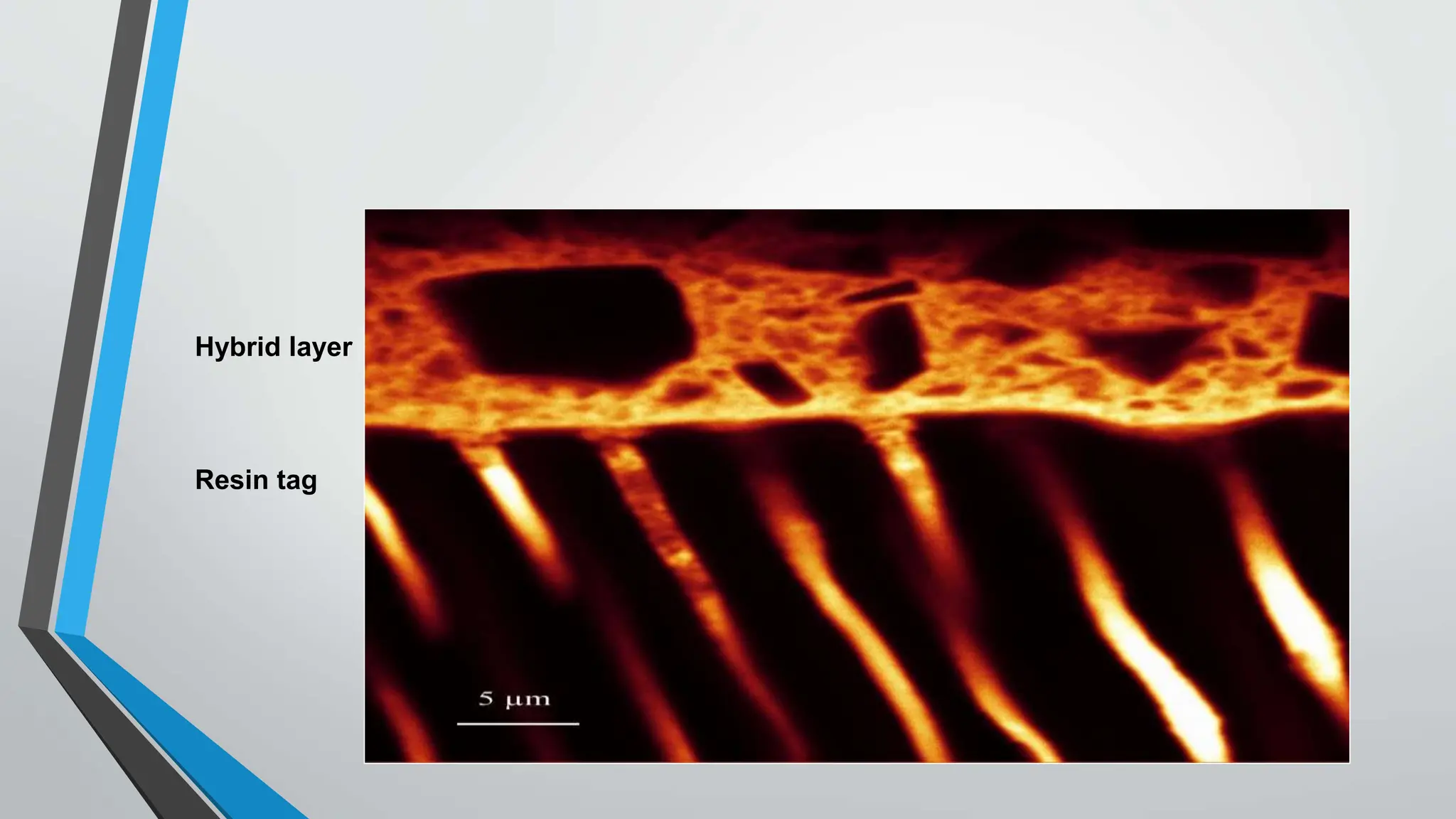
• A three dimensional collagenous network formed which is infiltrated by
primer and resin to form resin infiltrated/reinforced layer or hybrid layer
PRIMING
• Done to overcome the normal repulsion between the hydrophilic dentine
and hydrophobic resin.
• Most commonly used primer is HEMA (hydroxylethylmethacrylate)
• Hydroxyl group of HEMA being hydrophyllic in nature is responsible for its
effective priming nature
DENTINE BONDING AGENT
• Fluid resin able to flow over and wet the primed surface to complete the
formation of an effective bond.
• Light cured, chemically cured or dual cured
Hybrid layer
Resin tag
Presentation on Bonding Of Resin Based Materials

Presentation on Bonding Of Resin Based Materials

  • 1.
    Bonding Of ResinBased Materials
  • 2.
    Acid etch systemsfor bonding to enamel The acid-etching of a tooth surface allows for the micro- mechanical adhesion of resin to the tooth. Etching with acid remove a portion of the superficial mineral component of enamel and dentine. Micro porosities or open dentinal tubules produced in which resin will penetrate and mechanically grip the tooth providing retention for an overlying restoration.
  • 12.
  • 13.
  • 14.
    Etched enamel (whitefrosted appearance)
  • 15.
    Major factors forsuccess or failure of acid etch bonding systems. • 1. Etching time • 2.Washing stage • 3. Drying stage
  • 19.
  • 20.
    Smear layer • Ispresent on the surface of freshly cut dentine. Its loosely bonded layer of cutting debris including dentine chips, micro-organisms, salivary proteins and collagen from dentine. 3 - 15µm thick. • The smear layer is formed by process of cavity preparation and extended over the whole prepared surface of dentine and into dentinal tubules (smear plug).
  • 21.
    Dentine conditioning • Conditioners(37% phosphoric acid) • Dissolve not only smear layer and smear plug but also decalcify inter-tubular dentine to a depth of few microns. • A three dimensional collagenous network formed which is infiltrated by primer and resin to form resin infiltrated/reinforced layer or hybrid layer
  • 22.
    PRIMING • Done toovercome the normal repulsion between the hydrophilic dentine and hydrophobic resin. • Most commonly used primer is HEMA (hydroxylethylmethacrylate) • Hydroxyl group of HEMA being hydrophyllic in nature is responsible for its effective priming nature
  • 23.
    DENTINE BONDING AGENT •Fluid resin able to flow over and wet the primed surface to complete the formation of an effective bond. • Light cured, chemically cured or dual cured
  • 30.