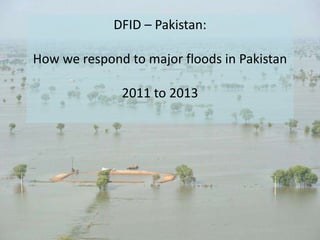
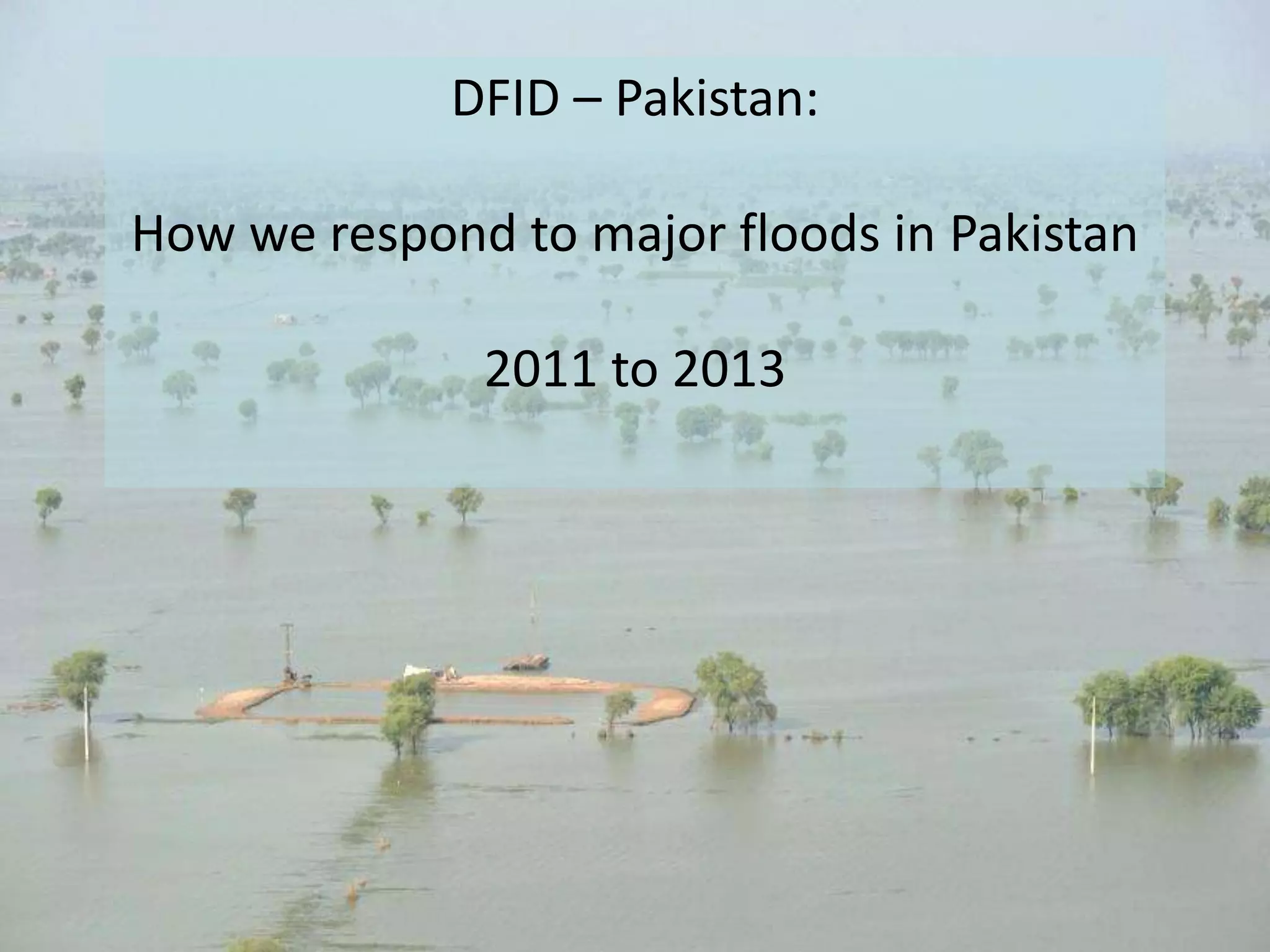
DFID – Pakistan:
How we respond to major floods in Pakistan

2011 to 2013
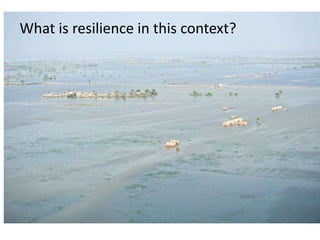
What is resilience in this context?
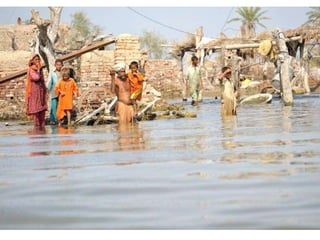
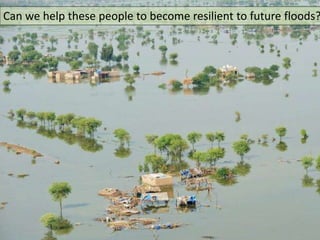
Can we help these people to become resilient to future floods?
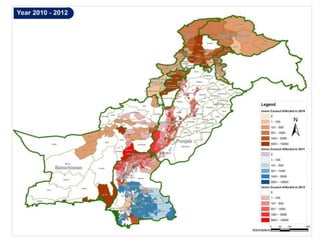
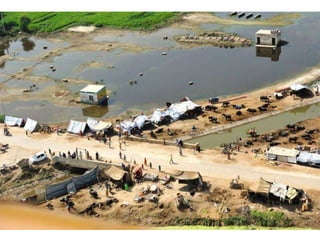
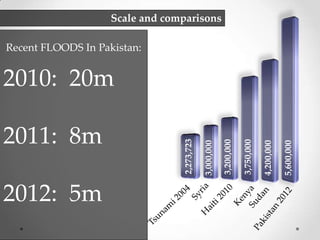
Scale and comparisons
Recent FLOODS In Pakistan:

2012: 5m

5,600,000

4,200,000

3,750,000

3,200,000

3,000,000

2011: 8m

2,273,723

2010: 20m
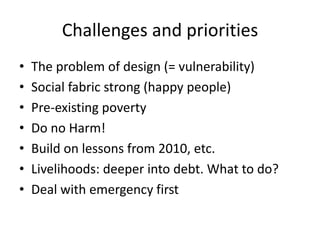
Challenges and priorities
•
•
•
•
•
•
•

The problem of design (= vulnerability)
Social fabric strong (happy people)
Pre-existing poverty
Do no Harm!
Build on lessons from 2010, etc.
Livelihoods: deeper into debt. What to do?
Deal with emergency first
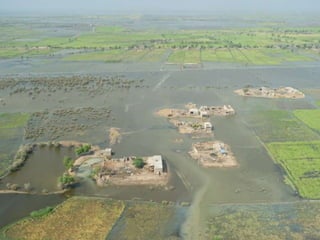
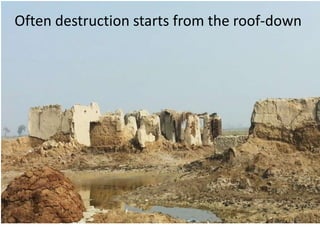
Often destruction starts from the roof-down
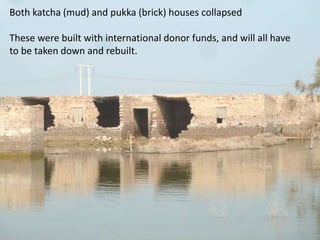
Both katcha (mud) and pukka (brick) houses collapsed
These were built with international donor funds, and will all have
to be taken down and rebuilt.
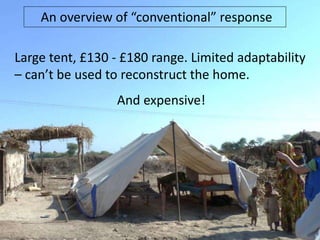
An overview of “conventional” response
Large tent, £130 - £180 range. Limited adaptability
– can’t be used to reconstruct the home.

And expensive!
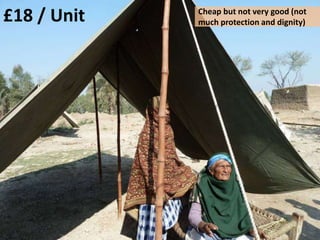
£18 / Unit

Cheap but not very good (not
much protection and dignity)
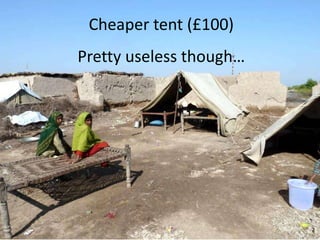
Cheaper tent (£100)

Pretty useless though…
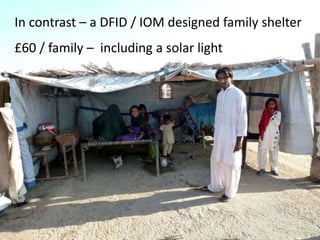
In contrast – a DFID / IOM designed family shelter

£60 / family – including a solar light
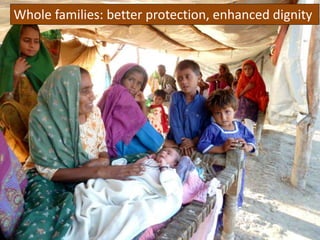
Whole families: better protection, enhanced dignity
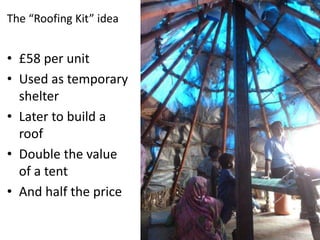
The “Roofing Kit” idea

• £58 per unit
• Used as temporary
shelter
• Later to build a
roof
• Double the value
of a tent
• And half the price
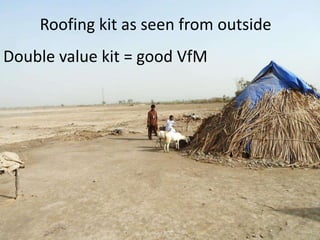
Roofing kit as seen from outside

Double value kit = good VfM
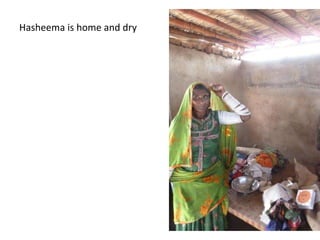
Hasheema is home and dry
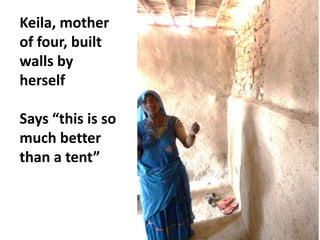
Keila, mother
of four, built
walls by
herself
Says “this is so
much better
than a tent”
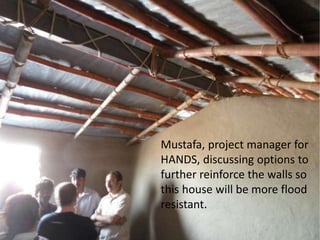
Mustafa, project manager for
HANDS, discussing options to
further reinforce the walls so
this house will be more flood
resistant.
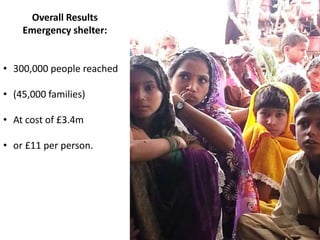
Overall Results
Emergency shelter:
• 300,000 people reached
• (45,000 families)

• At cost of £3.4m
• or £11 per person.
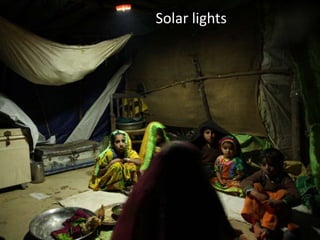
Solar lights
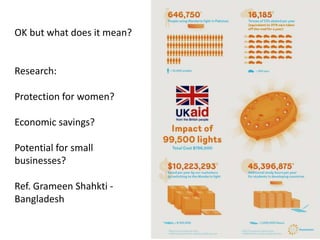
OK but what does it mean?

Research:

Protection for women?
Economic savings?

Potential for small
businesses?
Ref. Grameen Shahkti Bangladesh
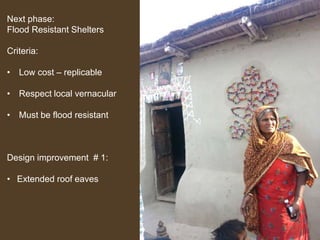
Next phase:
Flood Resistant Shelters
Criteria:
• Low cost – replicable
• Respect local vernacular
• Must be flood resistant

Design improvement # 1:
• Extended roof eaves
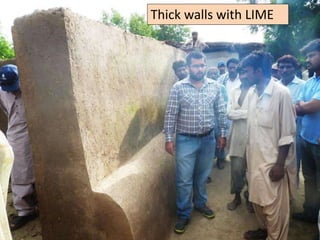
Thick walls with LIME
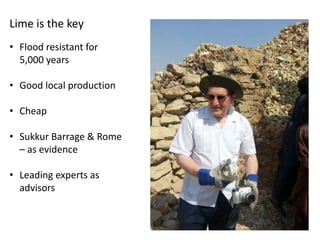
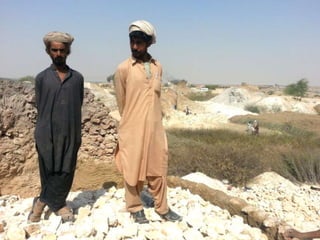
Lime is the key
• Flood resistant for
5,000 years
• Good local production
• Cheap
• Sukkur Barrage & Rome
– as evidence
• Leading experts as
advisors
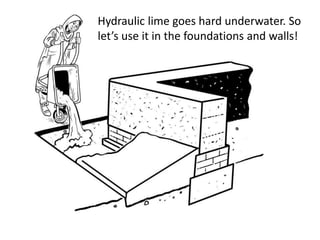
Hydraulic lime goes hard underwater. So
let’s use it in the foundations and walls!
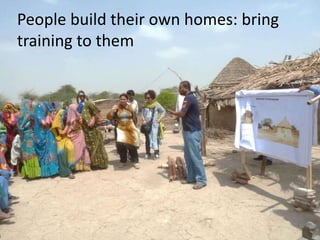
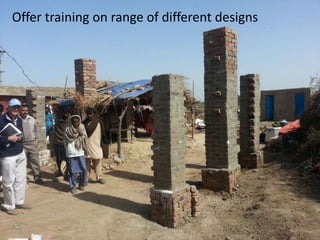
People build their own homes: bring
training to them
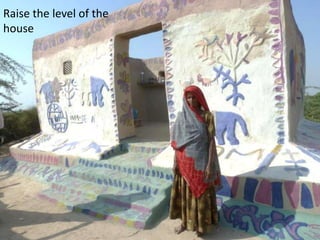
Raise the level of the
house
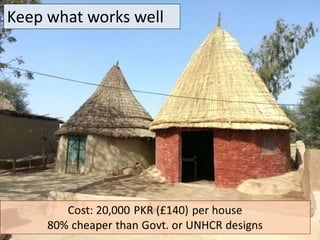
Keep what works well
Offer training on range of different designs
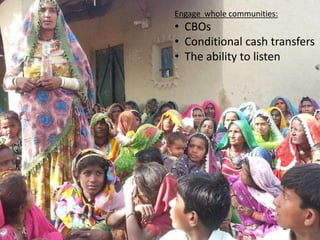
Engage whole communities:

• CBOs
• Conditional cash transfers
• The ability to listen
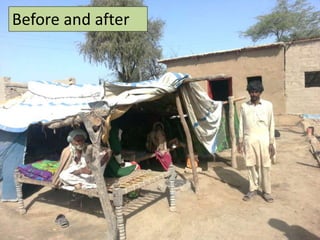
Before and after
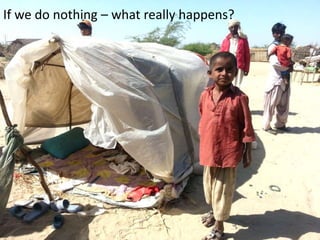
If we do nothing – what really happens?
Key results – durable shelters
• 45,000 families (c.300,000 people) in durable
homes
• £11m invested
• Equals £260 per family (all costs)
• Compares with £3,500 per family in Aceh
• Or £1,800 per family Punjab / Sindh Govt.
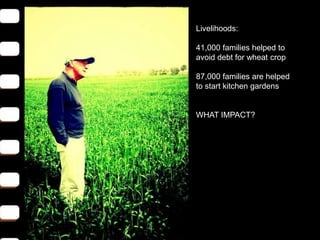
Livelihoods:
41,000 families helped to
avoid debt for wheat crop
87,000 families are helped
to start kitchen gardens

WHAT IMPACT?
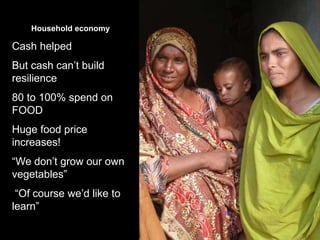
Household economy

Cash helped

But cash can’t build
resilience
80 to 100% spend on
FOOD
Huge food price
increases!

“We don’t grow our own
vegetables”
“Of course we’d like to
learn”
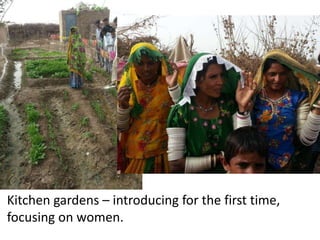
Kitchen gardens – introducing for the first time,
focusing on women.
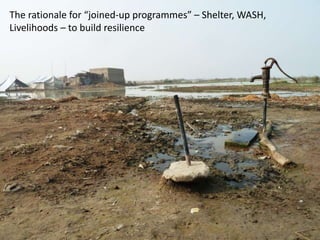
The rationale for “joined-up programmes” – Shelter, WASH,
Livelihoods – to build resilience
What next?
•
•
•
•
•
•

Bring the Government on board
Research and building evidence – 2010 to now
Engage academia
Validate the best strategy (VfM, technical)
Link into the broader resilience strategy
Innovate, test, research, validate
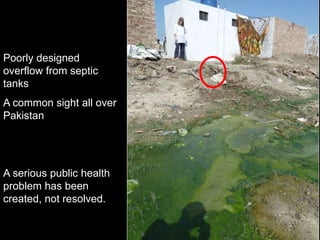
Poorly designed
overflow from septic
tanks
A common sight all over
Pakistan

A serious public health
problem has been
created, not resolved.
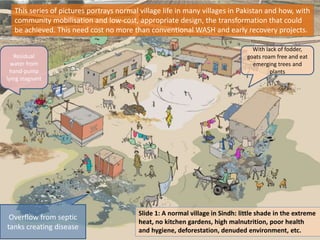
This series of pictures portrays normal village life in many villages in Pakistan and how, with
community mobilisation and low-cost, appropriate design, the transformation that could
be achieved. This need cost no more than conventional WASH and early recovery projects.
Residual
water from
hand-pump
lying stagnant

Overflow from septic
tanks creating disease

With lack of fodder,
goats roam free and eat
emerging trees and
plants

Slide 1: A normal village in Sindh: little shade in the extreme
heat, no kitchen gardens, high malnutrition, poor health
and hygiene, deforestation, denuded environment, etc.
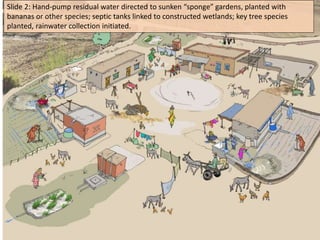
Slide 2: Hand-pump residual water directed to sunken “sponge” gardens, planted with
bananas or other species; septic tanks linked to constructed wetlands; key tree species
planted, rainwater collection initiated.
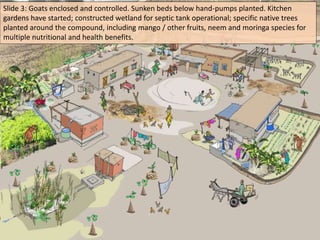
Slide 3: Goats enclosed and controlled. Sunken beds below hand-pumps planted. Kitchen
gardens have started; constructed wetland for septic tank operational; specific native trees
planted around the compound, including mango / other fruits, neem and moringa species for
multiple nutritional and health benefits.
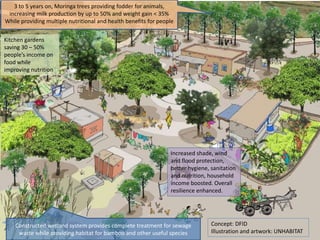
3 to 5 years on, Moringa trees providing fodder for animals,
increasing milk production by up to 50% and weight gain < 35%
While providing multiple nutritional and health benefits for people
Kitchen gardens
saving 30 – 50%
people’s income on
food while
improving nutrition

Increased shade, wind
and flood protection,
better hygiene, sanitation
and nutrition, household
income boosted. Overall
resilience enhanced.

Constructed wetland system provides complete treatment for sewage
waste while providing habitat for bamboo and other useful species

Concept: DFID
Illustration and artwork: UNHABITAT

Responding to floods in Pakistan 2011 - 2012

  • 1.
    DFID – Pakistan: Howwe respond to major floods in Pakistan 2011 to 2013
  • 7.
    What is resiliencein this context?
  • 8.
    Can we helpthese people to become resilient to future floods?
  • 9.
    Scale and comparisons RecentFLOODS In Pakistan: 2012: 5m 5,600,000 4,200,000 3,750,000 3,200,000 3,000,000 2011: 8m 2,273,723 2010: 20m
  • 10.
    Challenges and priorities • • • • • • • Theproblem of design (= vulnerability) Social fabric strong (happy people) Pre-existing poverty Do no Harm! Build on lessons from 2010, etc. Livelihoods: deeper into debt. What to do? Deal with emergency first
  • 12.
    Often destruction startsfrom the roof-down
  • 13.
    Both katcha (mud)and pukka (brick) houses collapsed These were built with international donor funds, and will all have to be taken down and rebuilt.
  • 15.
    An overview of“conventional” response Large tent, £130 - £180 range. Limited adaptability – can’t be used to reconstruct the home. And expensive!
  • 16.
    £18 / Unit Cheapbut not very good (not much protection and dignity)
  • 17.
    Cheaper tent (£100) Prettyuseless though…
  • 18.
    In contrast –a DFID / IOM designed family shelter £60 / family – including a solar light
  • 19.
    Whole families: betterprotection, enhanced dignity
  • 20.
    The “Roofing Kit”idea • £58 per unit • Used as temporary shelter • Later to build a roof • Double the value of a tent • And half the price
  • 21.
    Roofing kit asseen from outside Double value kit = good VfM
  • 22.
  • 23.
    Keila, mother of four,built walls by herself Says “this is so much better than a tent”
  • 24.
    Mustafa, project managerfor HANDS, discussing options to further reinforce the walls so this house will be more flood resistant.
  • 25.
    Overall Results Emergency shelter: •300,000 people reached • (45,000 families) • At cost of £3.4m • or £11 per person.
  • 26.
  • 27.
    OK but whatdoes it mean? Research: Protection for women? Economic savings? Potential for small businesses? Ref. Grameen Shahkti Bangladesh
  • 28.
    Next phase: Flood ResistantShelters Criteria: • Low cost – replicable • Respect local vernacular • Must be flood resistant Design improvement # 1: • Extended roof eaves
  • 29.
  • 30.
    Lime is thekey • Flood resistant for 5,000 years • Good local production • Cheap • Sukkur Barrage & Rome – as evidence • Leading experts as advisors
  • 32.
    Hydraulic lime goeshard underwater. So let’s use it in the foundations and walls!
  • 33.
    People build theirown homes: bring training to them
  • 34.
    Raise the levelof the house
  • 36.
  • 37.
    Offer training onrange of different designs
  • 38.
    Engage whole communities: •CBOs • Conditional cash transfers • The ability to listen
  • 39.
  • 40.
    If we donothing – what really happens?
  • 41.
    Key results –durable shelters • 45,000 families (c.300,000 people) in durable homes • £11m invested • Equals £260 per family (all costs) • Compares with £3,500 per family in Aceh • Or £1,800 per family Punjab / Sindh Govt.
  • 42.
    Livelihoods: 41,000 families helpedto avoid debt for wheat crop 87,000 families are helped to start kitchen gardens WHAT IMPACT?
  • 44.
    Household economy Cash helped Butcash can’t build resilience 80 to 100% spend on FOOD Huge food price increases! “We don’t grow our own vegetables” “Of course we’d like to learn”
  • 45.
    Kitchen gardens –introducing for the first time, focusing on women.
  • 46.
    The rationale for“joined-up programmes” – Shelter, WASH, Livelihoods – to build resilience
  • 47.
    What next? • • • • • • Bring theGovernment on board Research and building evidence – 2010 to now Engage academia Validate the best strategy (VfM, technical) Link into the broader resilience strategy Innovate, test, research, validate
  • 48.
    Poorly designed overflow fromseptic tanks A common sight all over Pakistan A serious public health problem has been created, not resolved.
  • 49.
    This series ofpictures portrays normal village life in many villages in Pakistan and how, with community mobilisation and low-cost, appropriate design, the transformation that could be achieved. This need cost no more than conventional WASH and early recovery projects. Residual water from hand-pump lying stagnant Overflow from septic tanks creating disease With lack of fodder, goats roam free and eat emerging trees and plants Slide 1: A normal village in Sindh: little shade in the extreme heat, no kitchen gardens, high malnutrition, poor health and hygiene, deforestation, denuded environment, etc.
  • 50.
    Slide 2: Hand-pumpresidual water directed to sunken “sponge” gardens, planted with bananas or other species; septic tanks linked to constructed wetlands; key tree species planted, rainwater collection initiated.
  • 51.
    Slide 3: Goatsenclosed and controlled. Sunken beds below hand-pumps planted. Kitchen gardens have started; constructed wetland for septic tank operational; specific native trees planted around the compound, including mango / other fruits, neem and moringa species for multiple nutritional and health benefits.
  • 52.
    3 to 5years on, Moringa trees providing fodder for animals, increasing milk production by up to 50% and weight gain < 35% While providing multiple nutritional and health benefits for people Kitchen gardens saving 30 – 50% people’s income on food while improving nutrition Increased shade, wind and flood protection, better hygiene, sanitation and nutrition, household income boosted. Overall resilience enhanced. Constructed wetland system provides complete treatment for sewage waste while providing habitat for bamboo and other useful species Concept: DFID Illustration and artwork: UNHABITAT