Blended Learning and
Personalised Learning
Sridhar Rajagopalan
October 2012
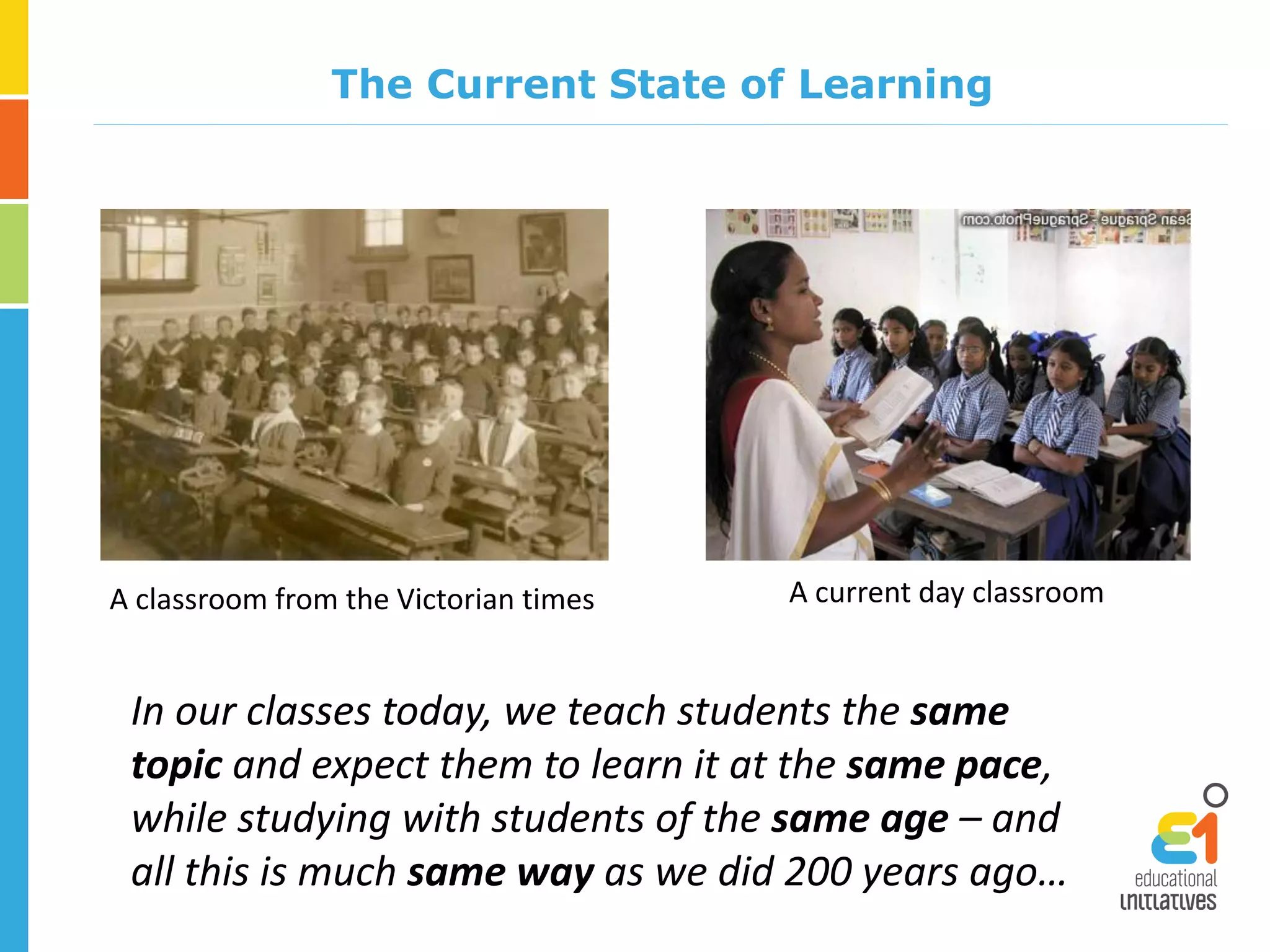
A classroom from the Victorian times
In our classes today, we teach students the same
topic and expect them to learn it at the same pace,
while studying with students of the same age – and
all this is much same way as we did 200 years ago…
A current day classroom
The Current State of Learning
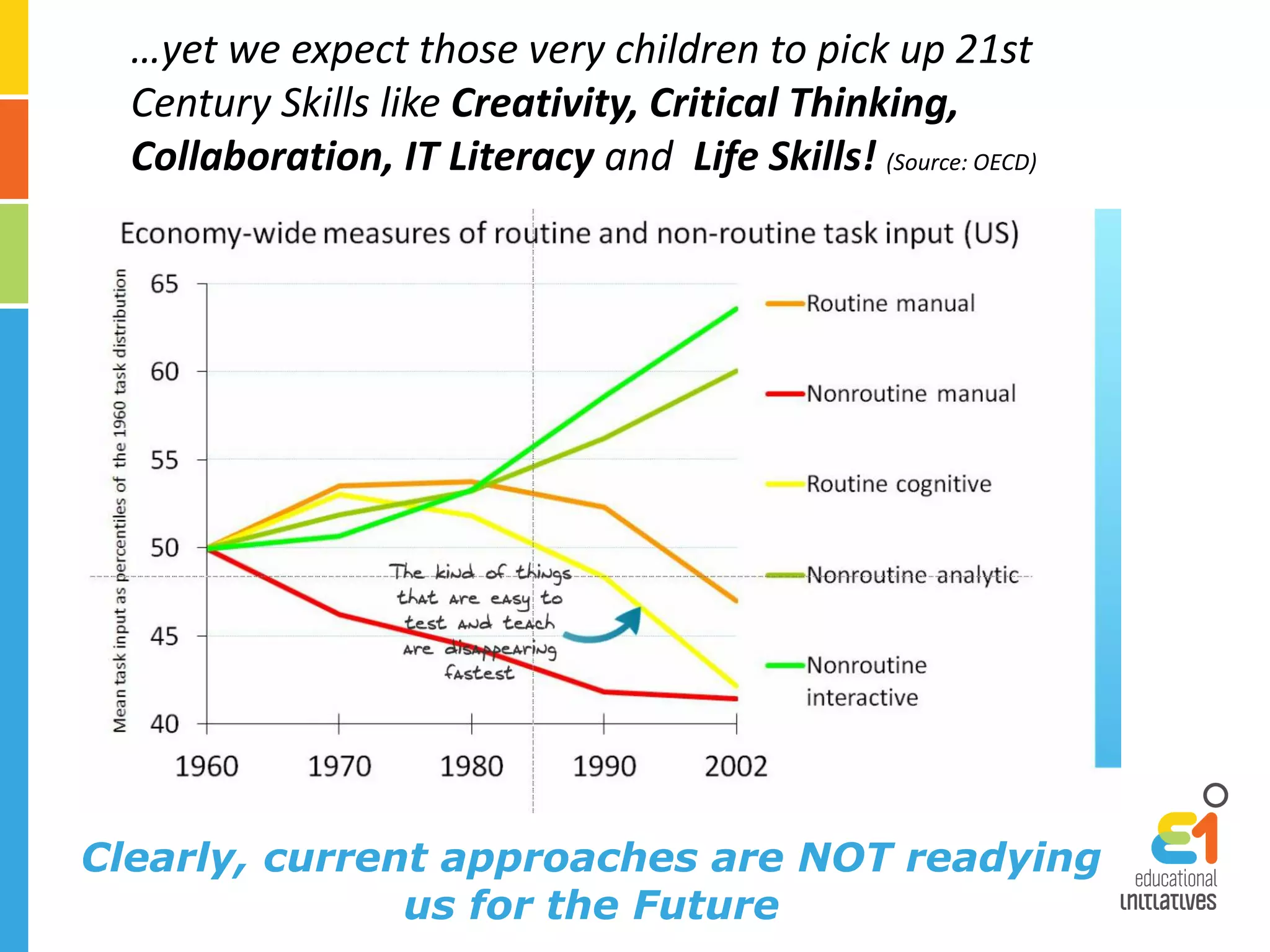
…yet we expect those very children to pick up 21st
Century Skills like Creativity, Critical Thinking,
Collaboration, IT Literacy and Life Skills! (Source: OECD)
Clearly, current approaches are NOT readying
us for the Future
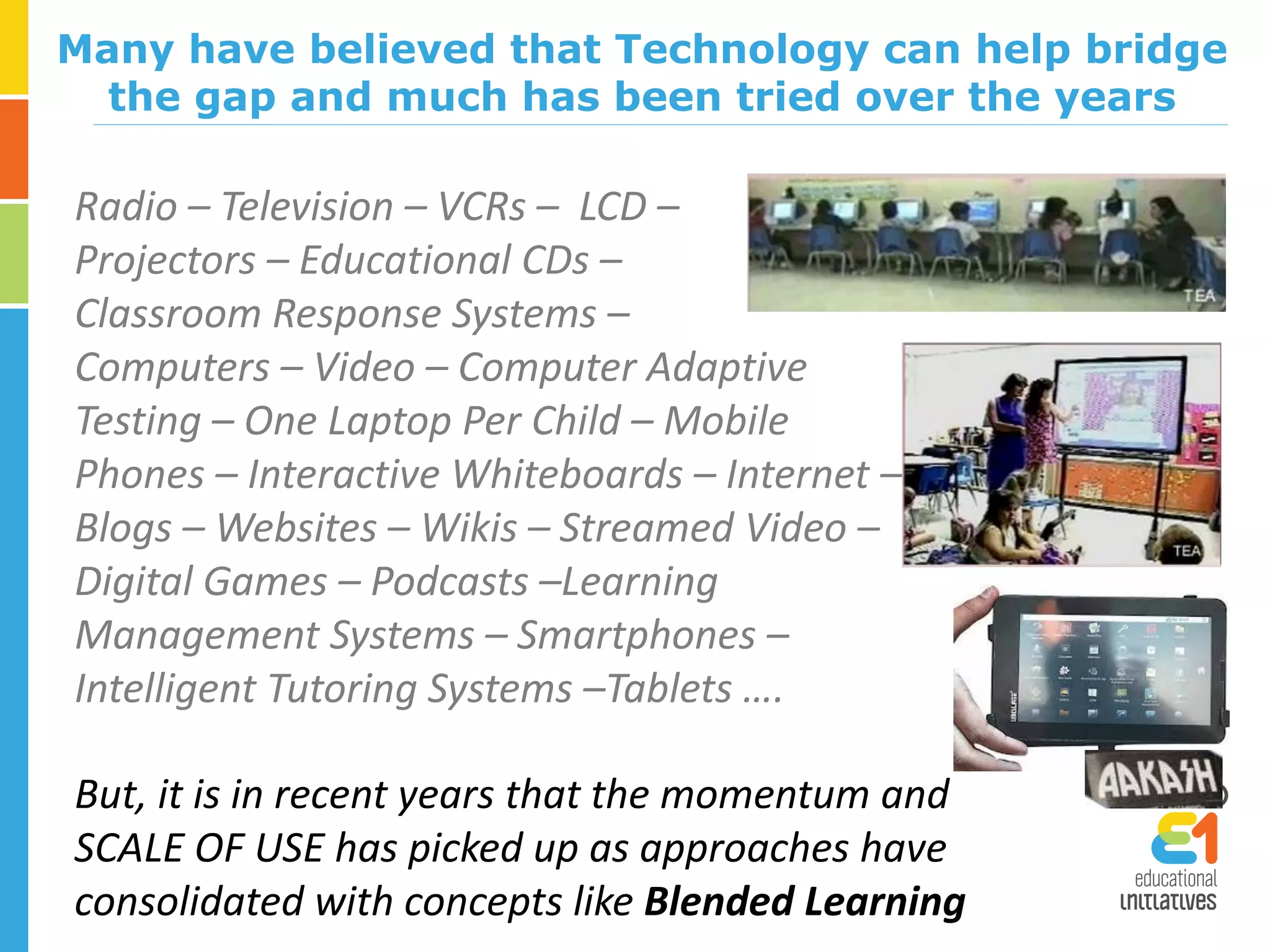
Radio – Television – VCRs – LCD –
Projectors – Educational CDs –
Classroom Response Systems –
Computers – Video – Computer Adaptive
Testing – One Laptop Per Child – Mobile
Phones – Interactive Whiteboards – Internet –
Blogs – Websites – Wikis – Streamed Video –
Digital Games – Podcasts –Learning
Management Systems – Smartphones –
Intelligent Tutoring Systems –Tablets ….
Many have believed that Technology can help bridge
the gap and much has been tried over the years
But, it is in recent years that the momentum and
SCALE OF USE has picked up as approaches have
consolidated with concepts like Blended Learning
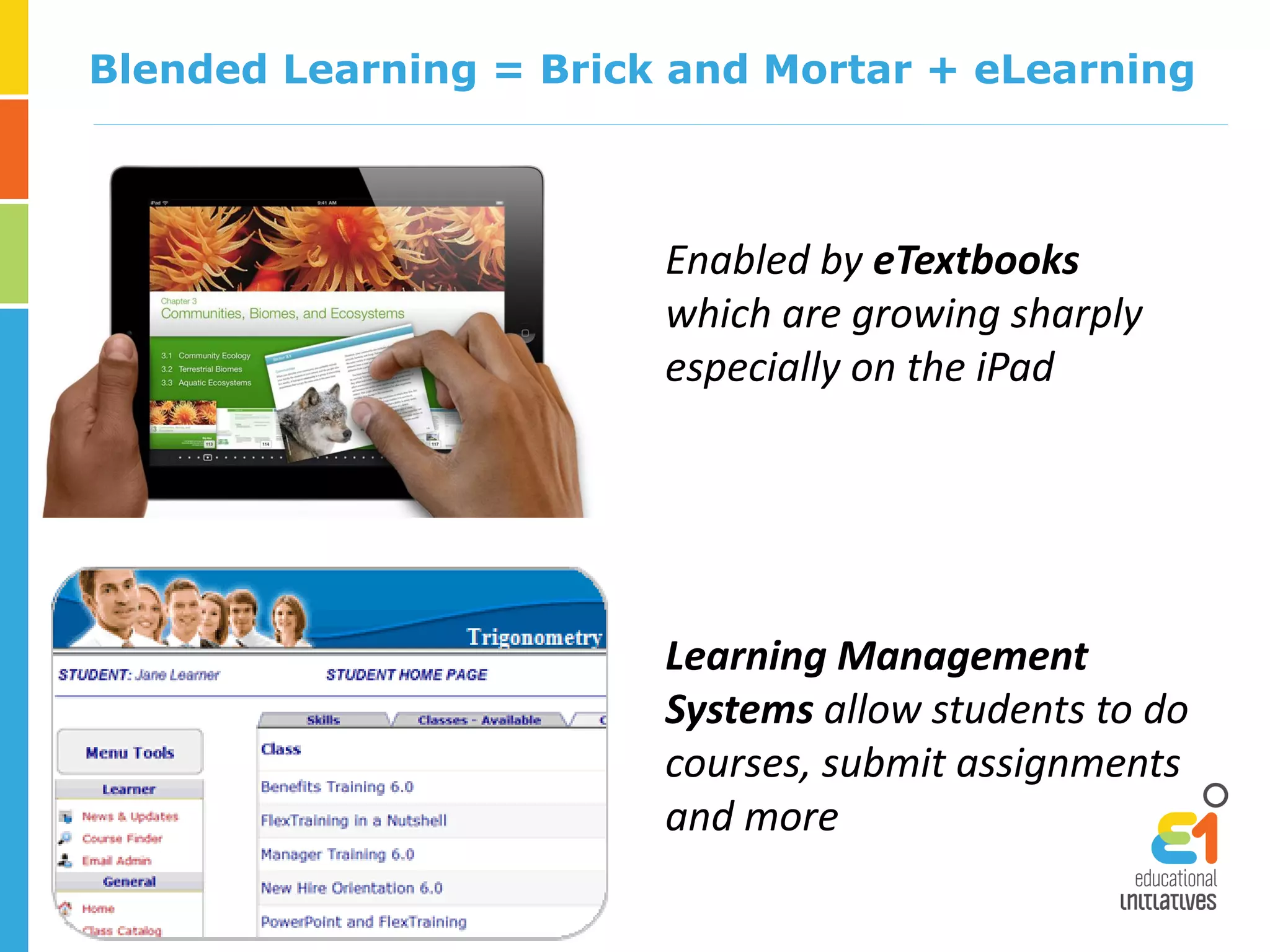
Blended Learning = Brick and Mortar + eLearning
Enabled by eTextbooks
which are growing sharply
especially on the iPad
Learning Management
Systems allow students to do
courses, submit assignments
and more
Some key Blended Learning Concepts
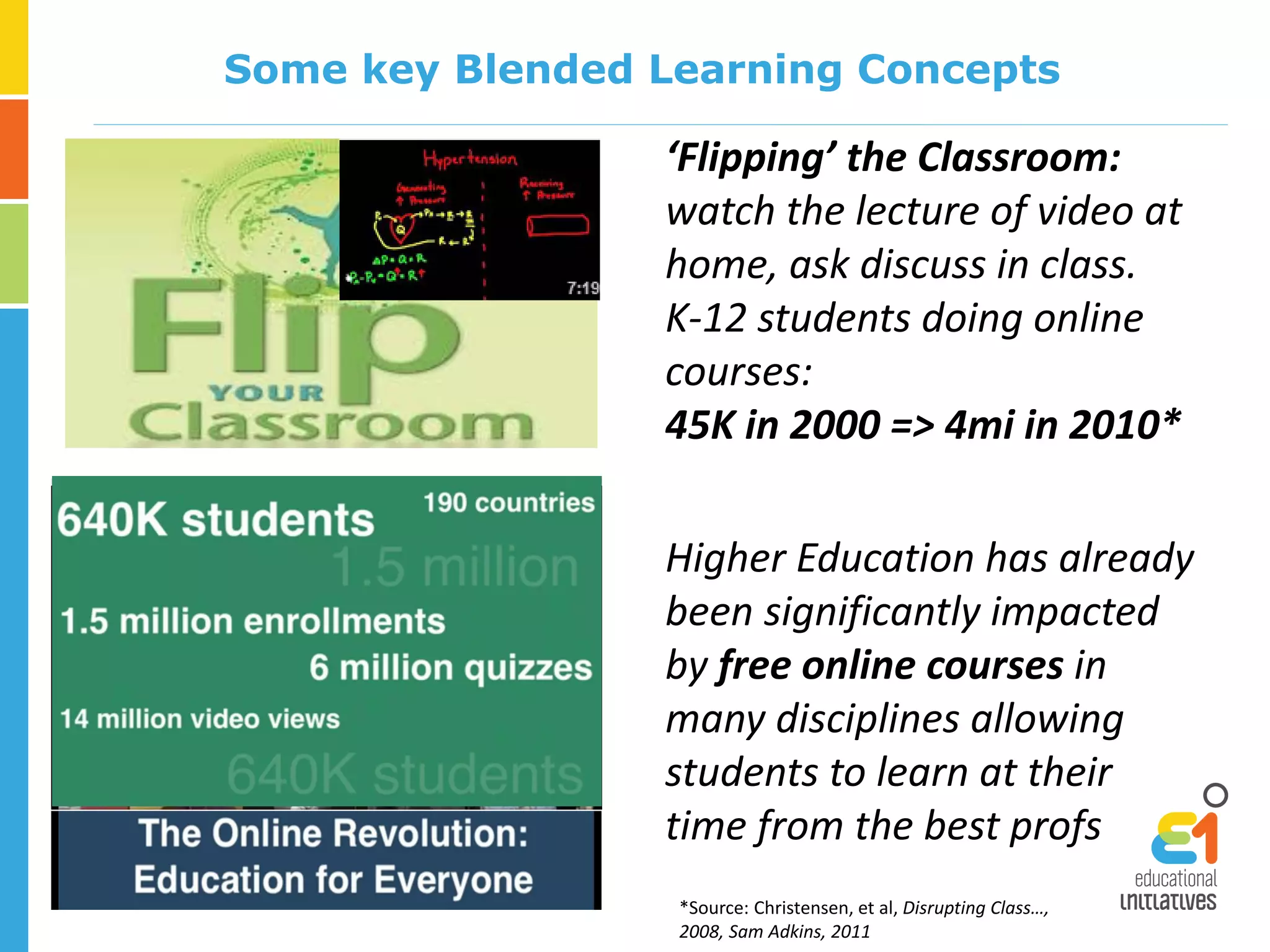
‘Flipping’ the Classroom:
watch the lecture of video at
home, ask discuss in class.
K-12 students doing online
courses:
45K in 2000 => 4mi in 2010*
Higher Education has already
been significantly impacted
by free online courses in
many disciplines allowing
students to learn at their
time from the best profs
*Source: Christensen, et al, Disrupting Class…,
2008, Sam Adkins, 2011
New Learning Technologies and Marketplaces
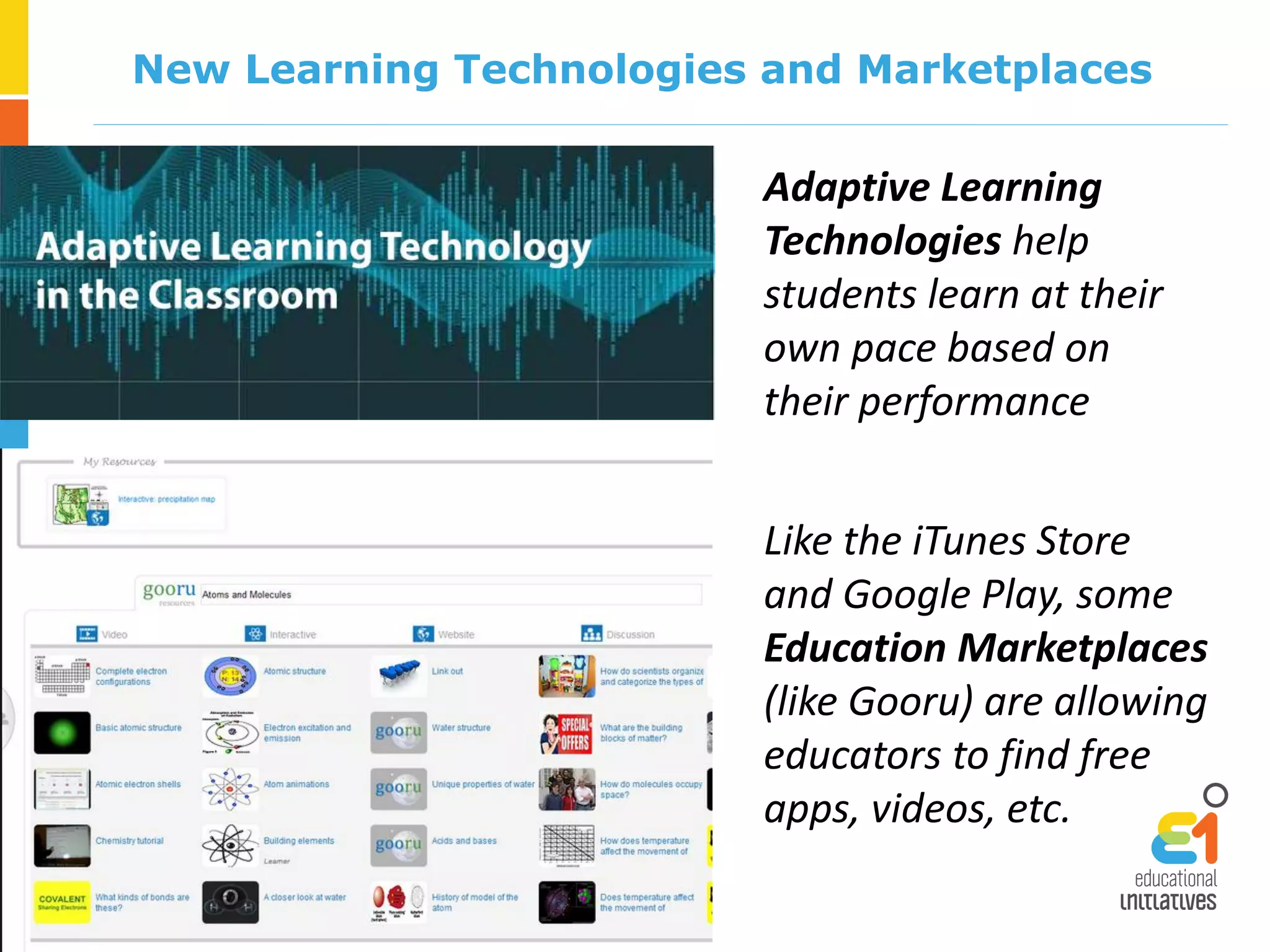
Adaptive Learning
Technologies help
students learn at their
own pace based on
their performance
Like the iTunes Store
and Google Play, some
Education Marketplaces
(like Gooru) are allowing
educators to find free
apps, videos, etc.
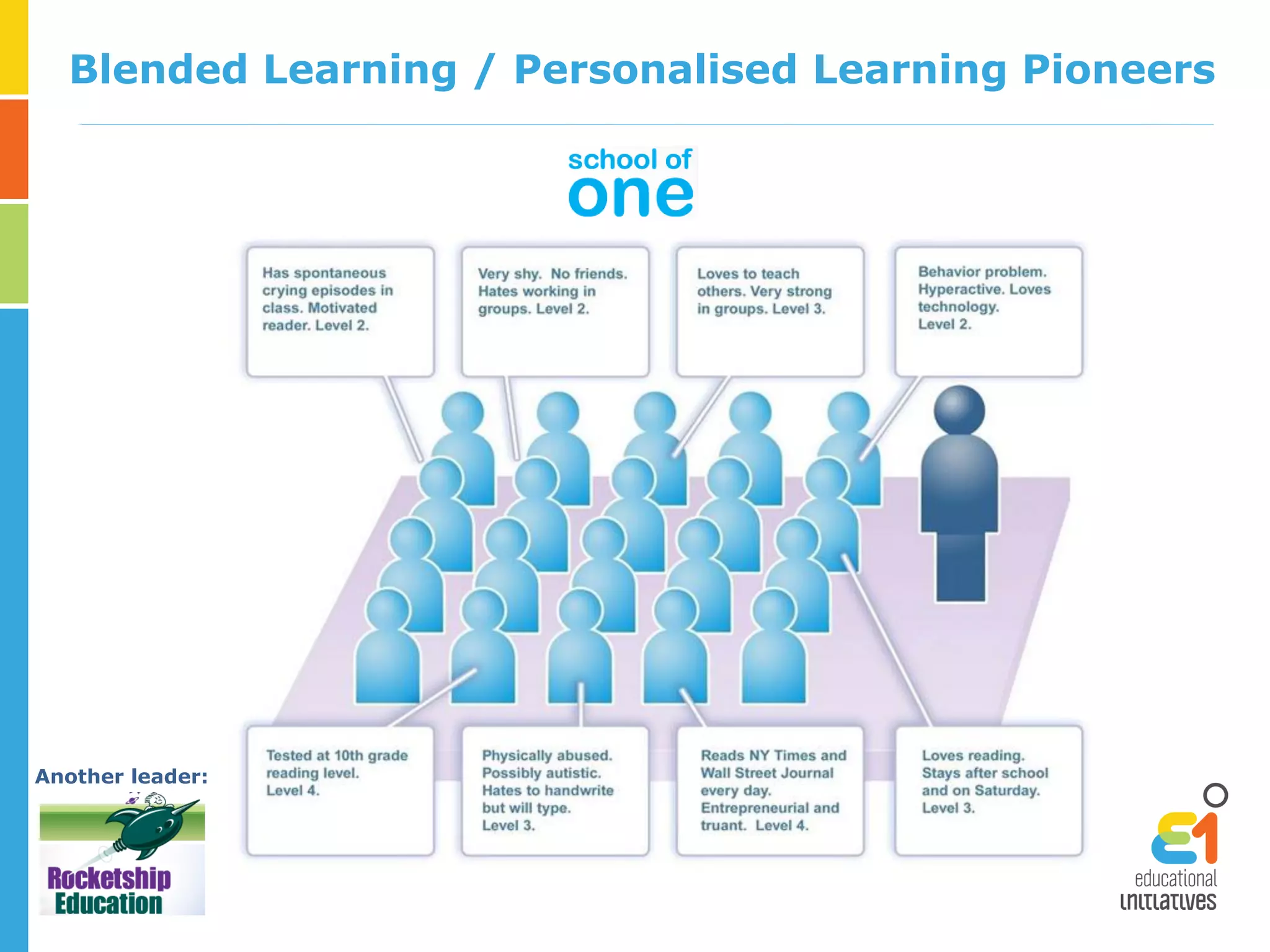
Blended Learning / Personalised Learning Pioneers
Another leader:
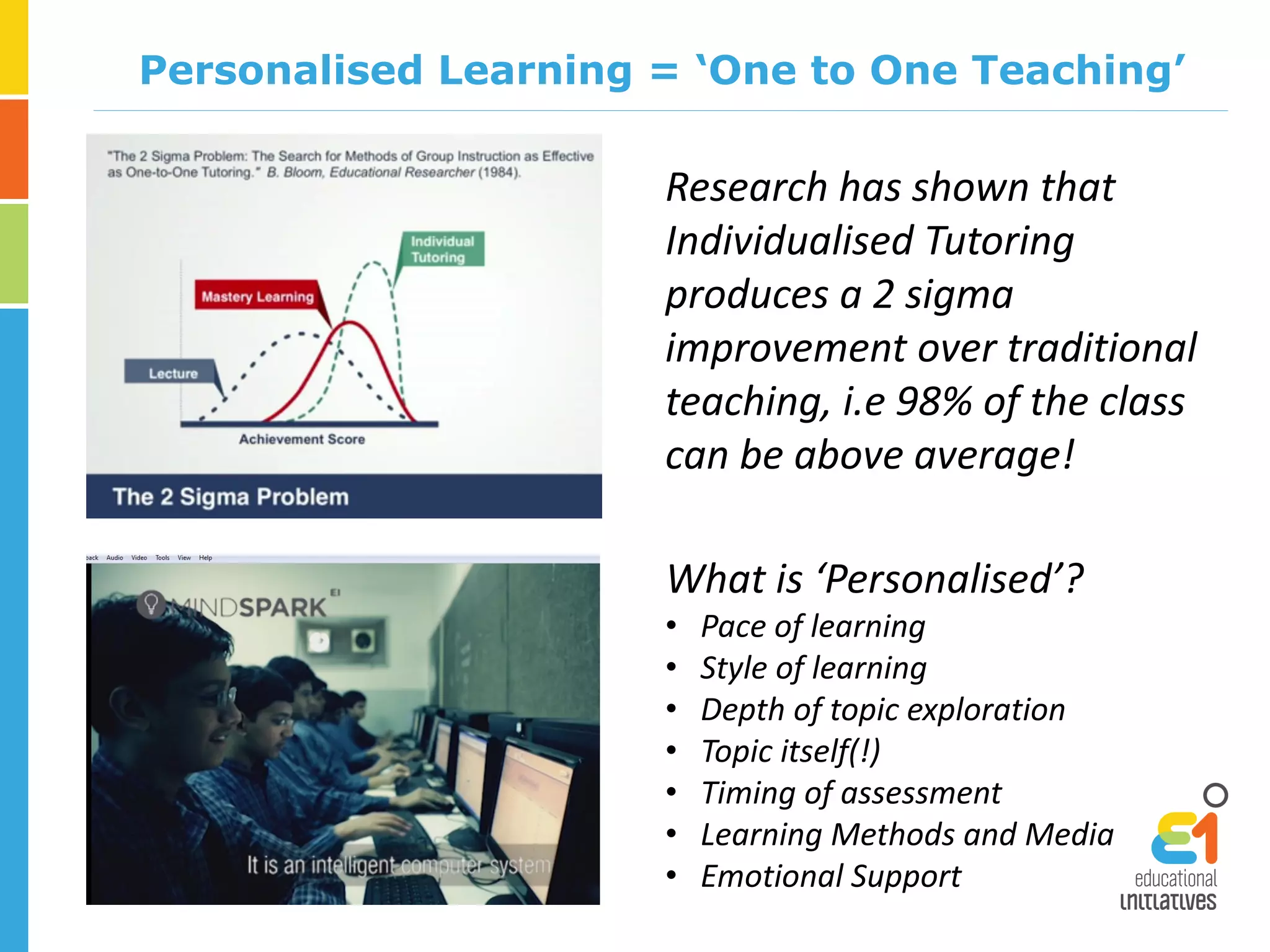
Personalised Learning = ‘One to One Teaching’
Research has shown that
Individualised Tutoring
produces a 2 sigma
improvement over traditional
teaching, i.e 98% of the class
can be above average!
What is ‘Personalised’?
• Pace of learning
• Style of learning
• Depth of topic exploration
• Topic itself(!)
• Timing of assessment
• Learning Methods and Media
• Emotional Support
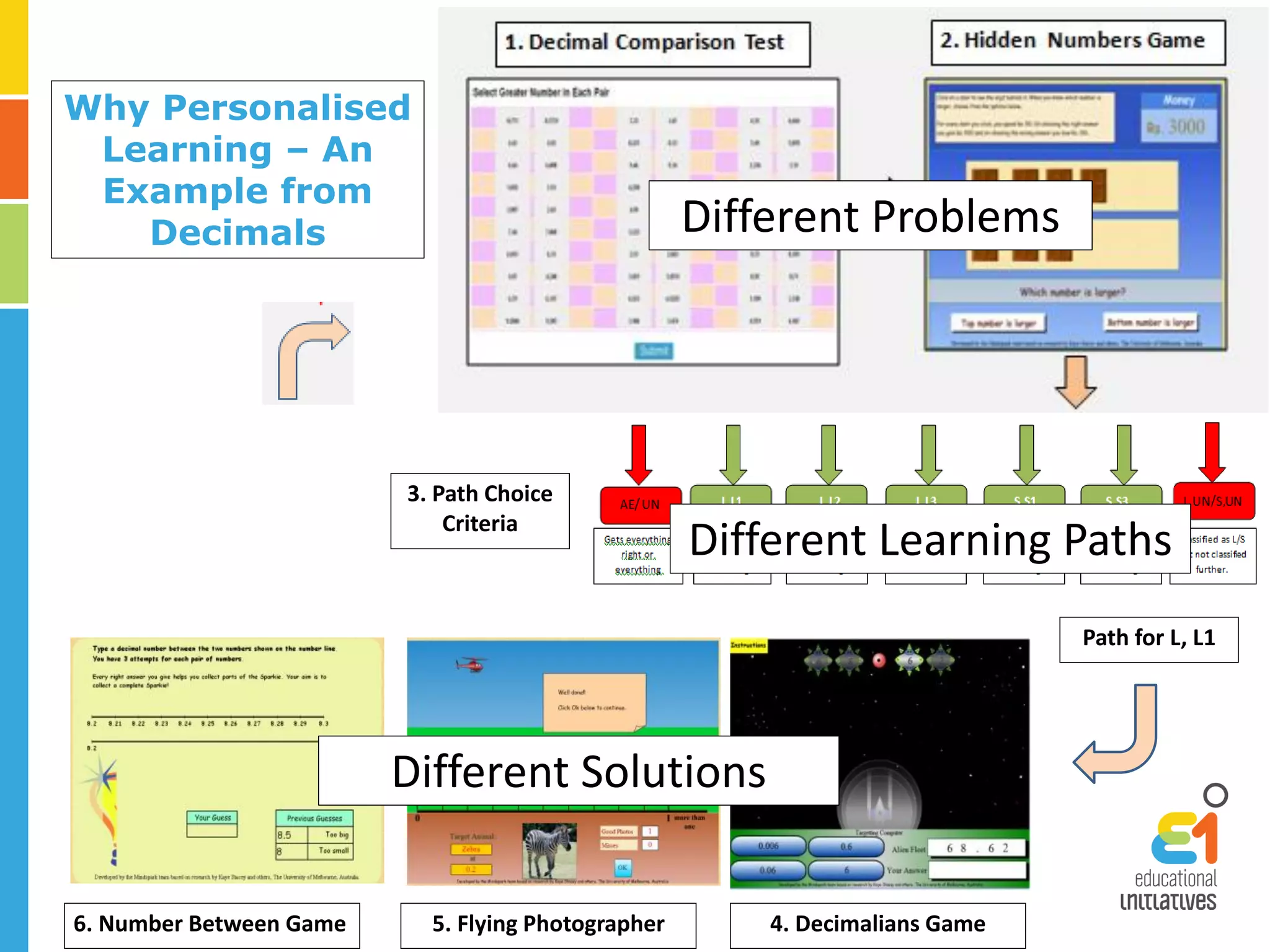
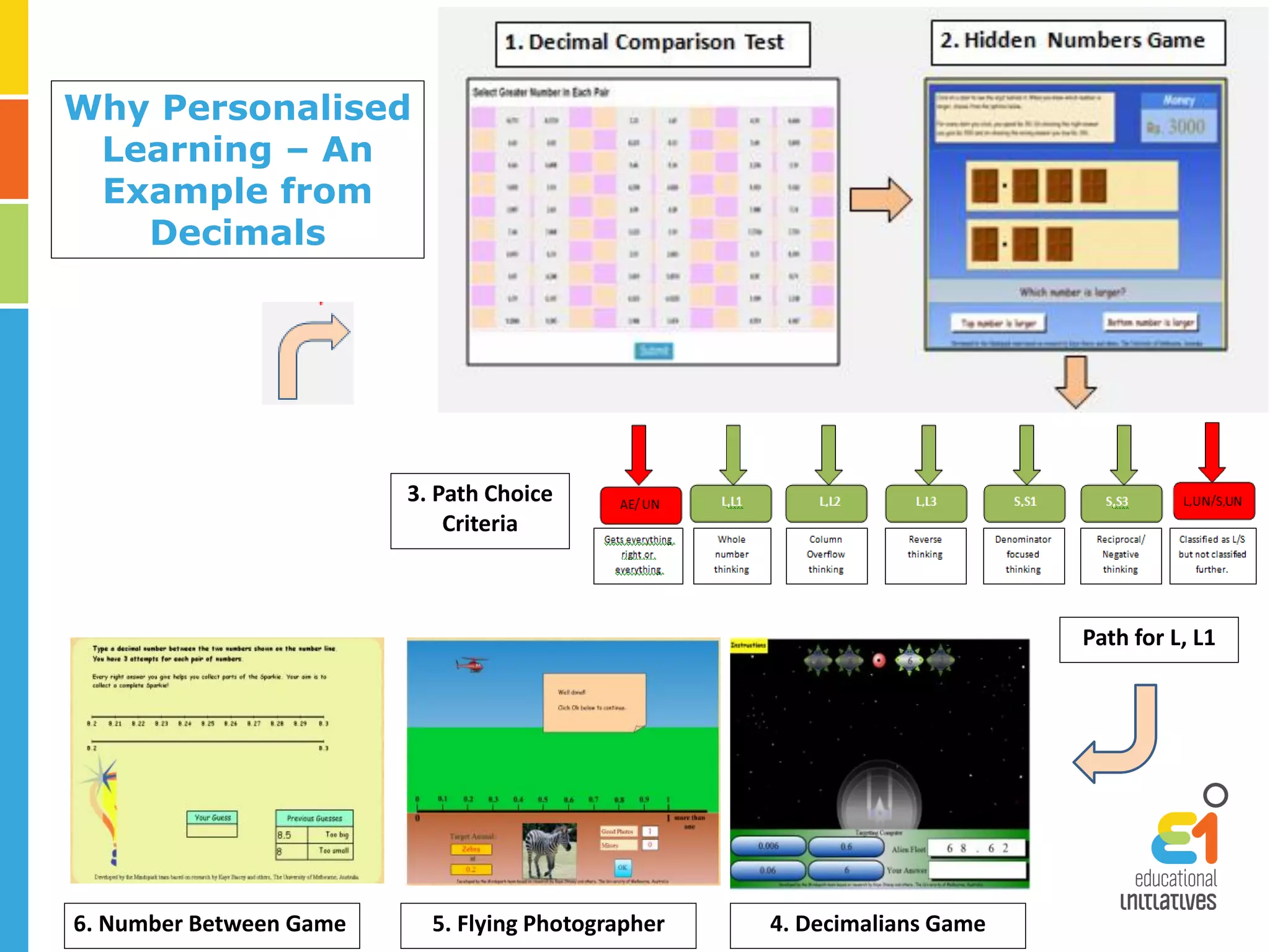
3. Path Choice
Criteria
4. Decimalians Game5. Flying Photographer6. Number Between Game
Path for L, L1
Why Personalised
Learning – An
Example from
Decimals Different Problems
Different Learning Paths
Different Solutions
3. Path Choice
Criteria
4. Decimalians Game5. Flying Photographer6. Number Between Game
Path for L, L1
Why Personalised
Learning – An
Example from
Decimals
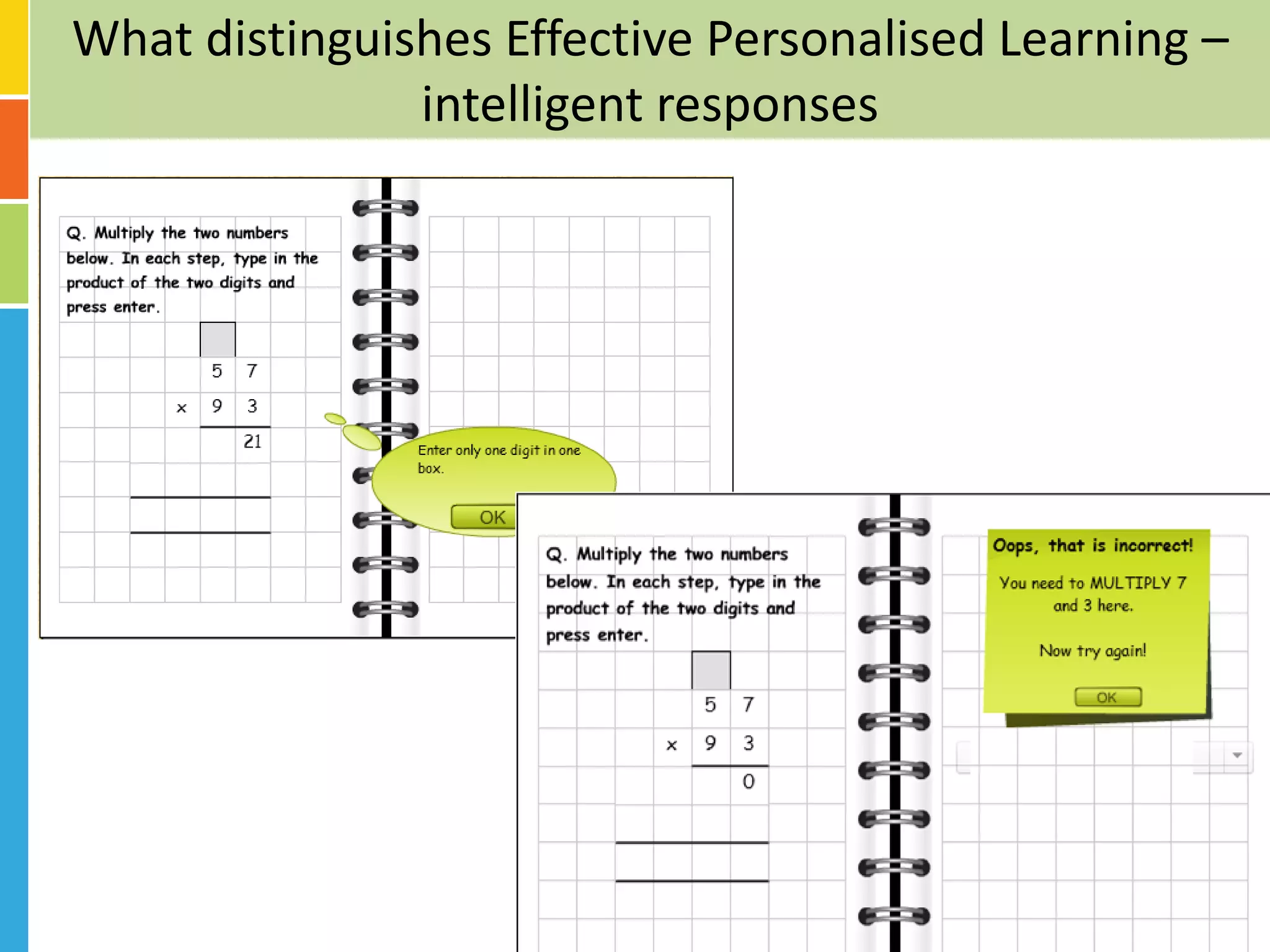
What distinguishes Effective Personalised Learning –
intelligent responses
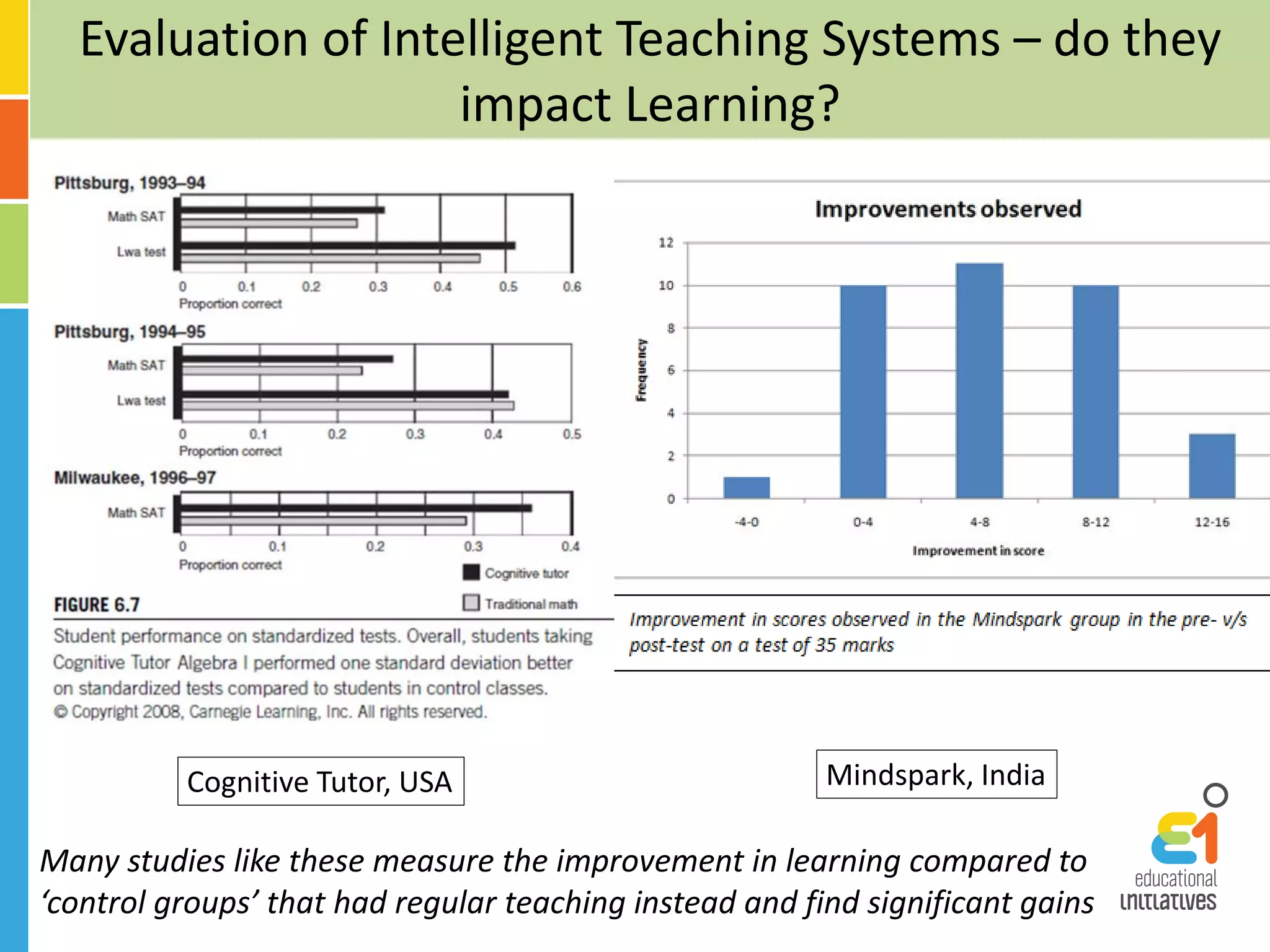
Evaluation of Intelligent Teaching Systems – do they
impact Learning?
Cognitive Tutor, USA Mindspark, India
Many studies like these measure the improvement in learning compared to
‘control groups’ that had regular teaching instead and find significant gains
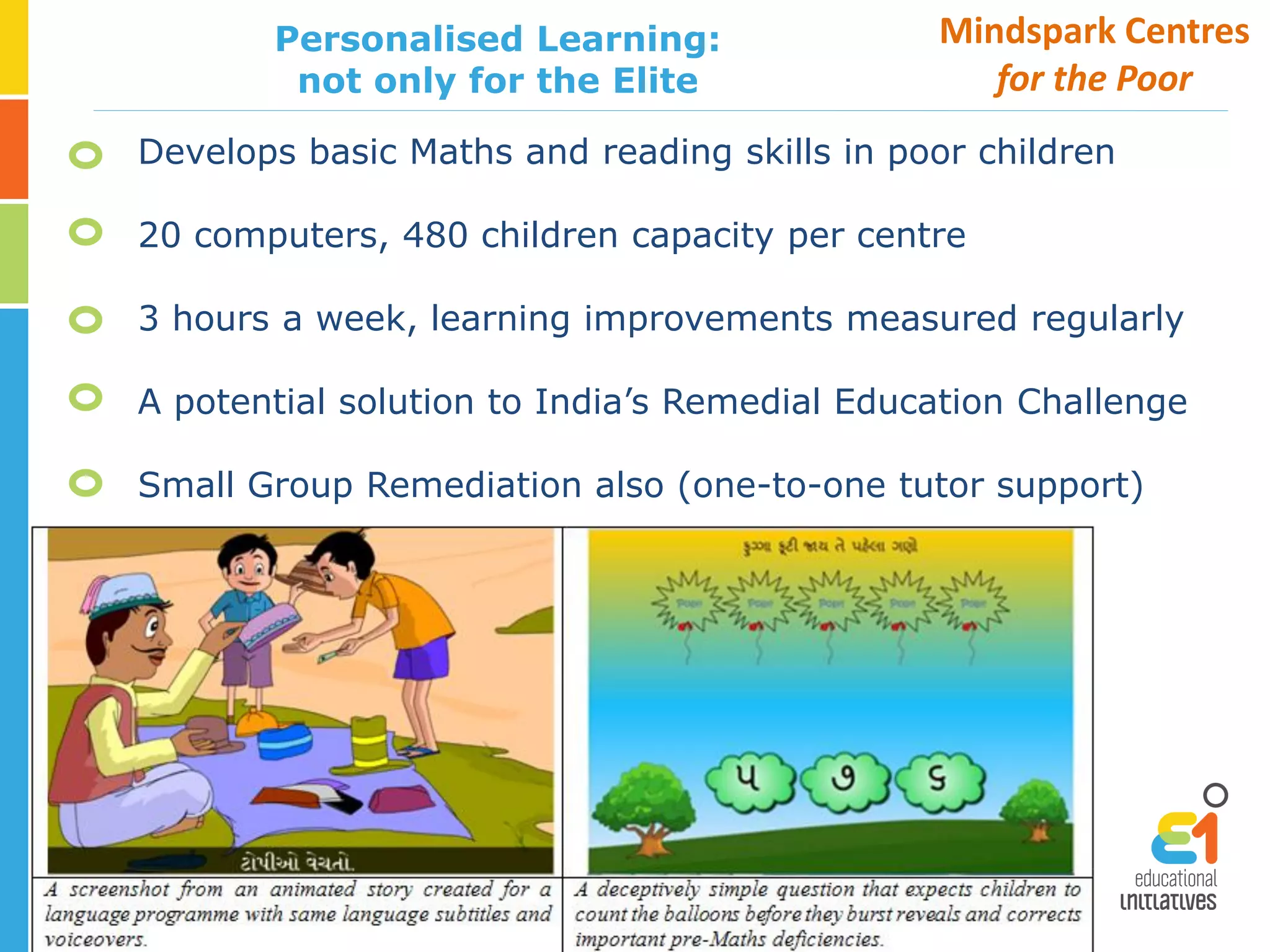
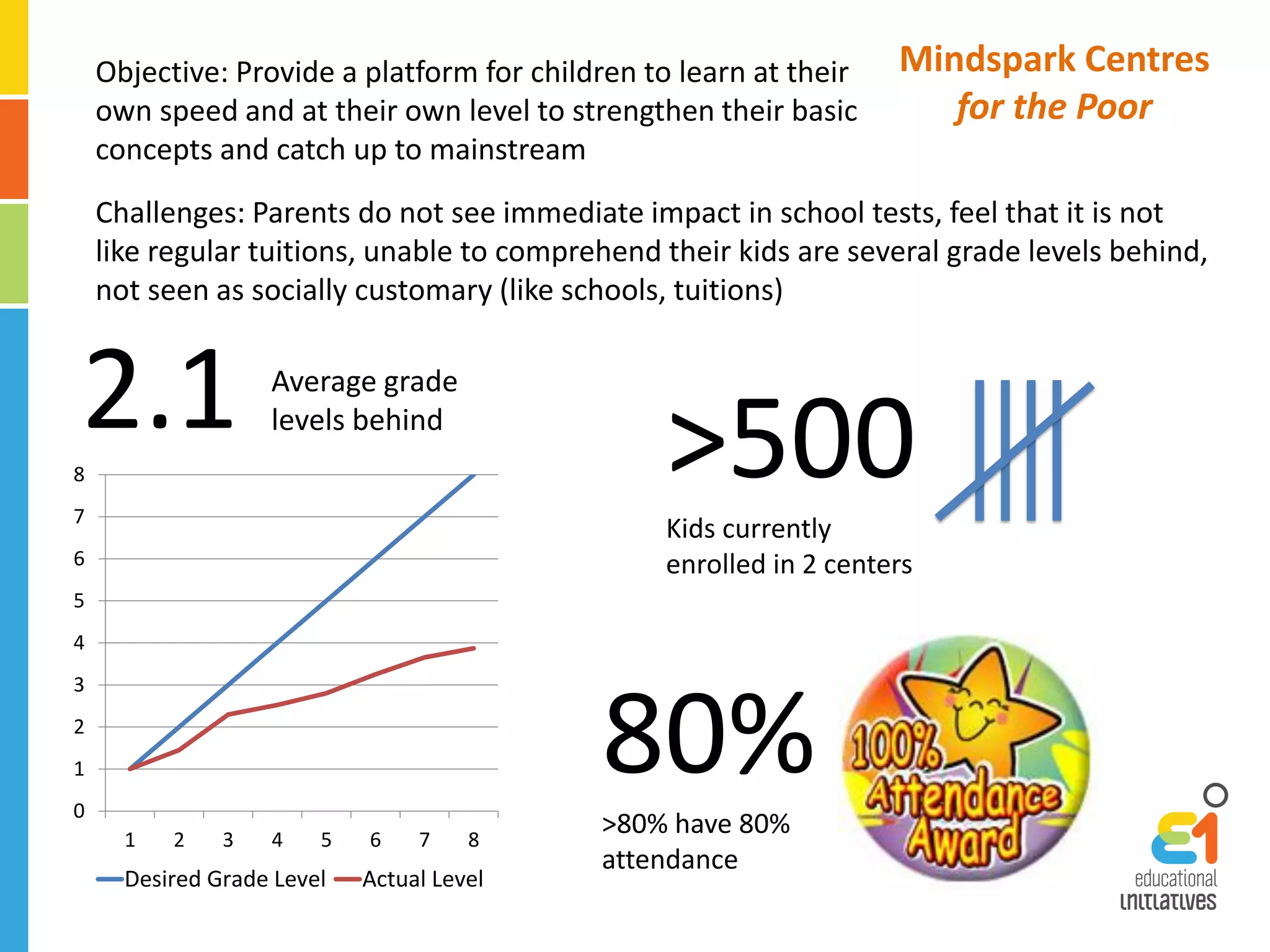
Develops basic Maths and reading skills in poor children
20 computers, 480 children capacity per centre
3 hours a week, learning improvements measured regularly
A potential solution to India’s Remedial Education Challenge
Small Group Remediation also (one-to-one tutor support)
Personalised Learning:
not only for the Elite
Mindspark Centres
for the Poor
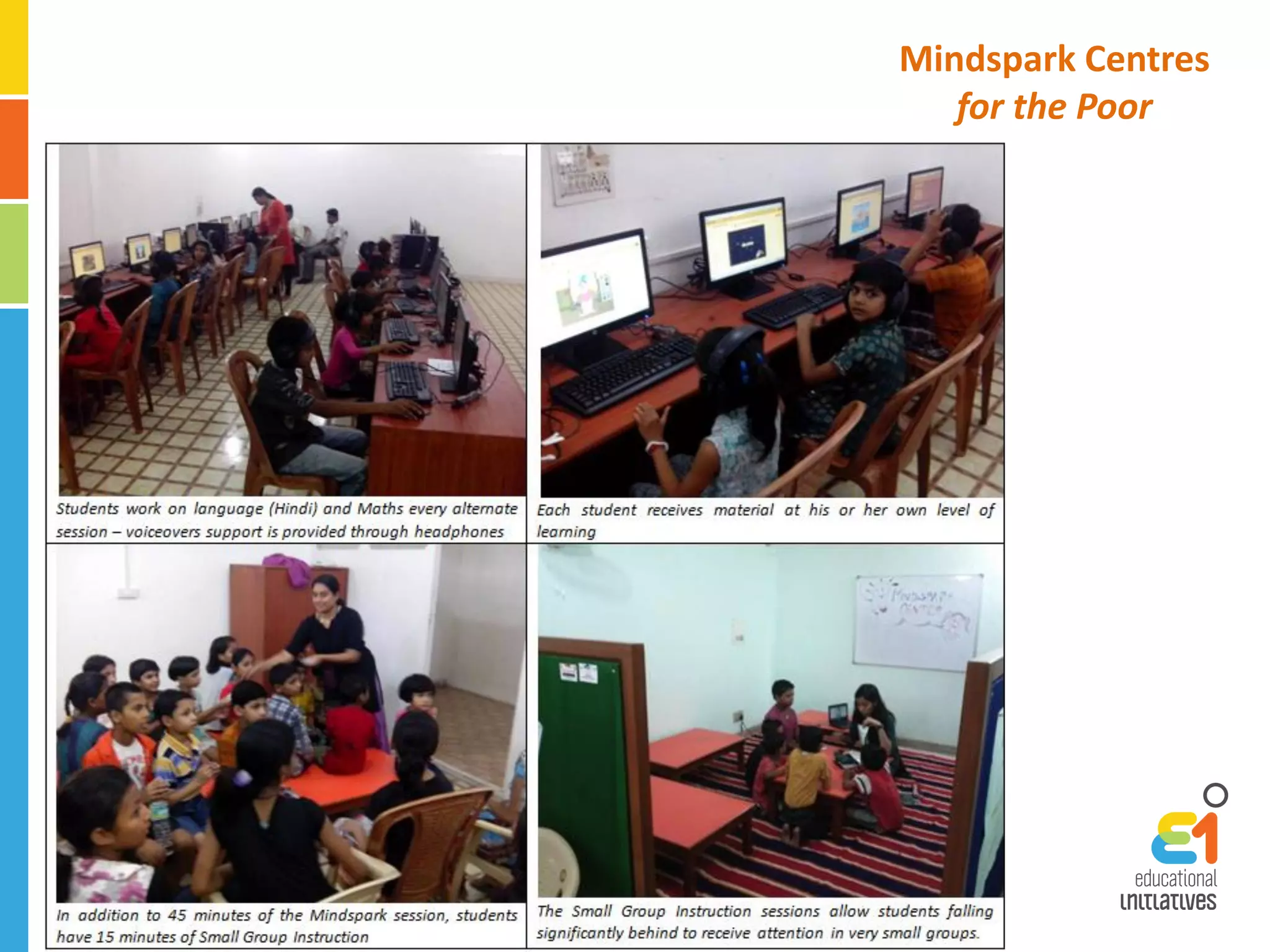
Mindspark Centres
for the Poor
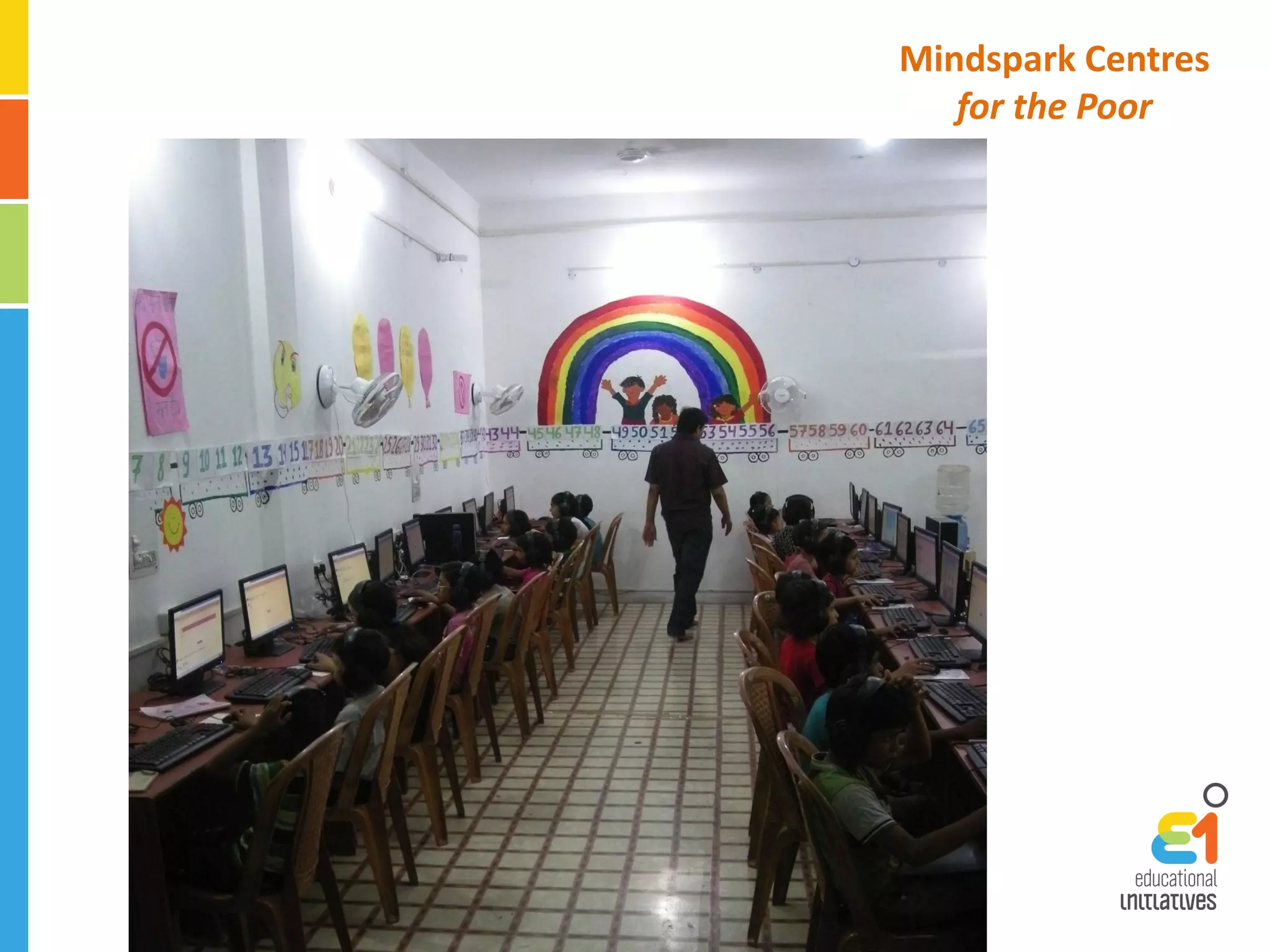
Mindspark Centres
for the Poor
0
1
2
3
4
5
6
7
8
1 2 3 4 5 6 7 8
Desired Grade Level Actual Level
2.1 Average grade
levels behind
80%>80% have 80%
attendance
>500Kids currently
enrolled in 2 centers
Objective: Provide a platform for children to learn at their
own speed and at their own level to strengthen their basic
concepts and catch up to mainstream
Mindspark Centres
for the Poor
Challenges: Parents do not see immediate impact in school tests, feel that it is not
like regular tuitions, unable to comprehend their kids are several grade levels behind,
not seen as socially customary (like schools, tuitions)
“Of what use is a New Born Baby?”
Extremely encouraging in terms of enthusiasm and
adoption, mixed in terms of actual results so far
Not a silver bullet, but can transform education if invested
in systematically
Educational Research (eg. Science of Learning) must go
hand in hand with technological advances
Student usage should be scheduled – merely providing
learning opportunities may not be enough
Important to separate the hype from the reality
Good educational policies can encourage quality online
learning, bad policies, fly-by-night operators!
Thank You
Educational Initiatives
613–615, J.B. Towers,
Opp.Doordarshan, Drive–In Road,
Ahmedabad 380054. Gujarat.
INDIA.
Phone: +91–79–40269696.
Fax: +91–79–26841400
www.ei–india.com

Emergence of Technology for Personalised Learning - Sridhar Rajagopalan

  • 1.
    Blended Learning and PersonalisedLearning Sridhar Rajagopalan October 2012
  • 2.
    A classroom fromthe Victorian times In our classes today, we teach students the same topic and expect them to learn it at the same pace, while studying with students of the same age – and all this is much same way as we did 200 years ago… A current day classroom The Current State of Learning
  • 3.
    …yet we expectthose very children to pick up 21st Century Skills like Creativity, Critical Thinking, Collaboration, IT Literacy and Life Skills! (Source: OECD) Clearly, current approaches are NOT readying us for the Future
  • 4.
    Radio – Television– VCRs – LCD – Projectors – Educational CDs – Classroom Response Systems – Computers – Video – Computer Adaptive Testing – One Laptop Per Child – Mobile Phones – Interactive Whiteboards – Internet – Blogs – Websites – Wikis – Streamed Video – Digital Games – Podcasts –Learning Management Systems – Smartphones – Intelligent Tutoring Systems –Tablets …. Many have believed that Technology can help bridge the gap and much has been tried over the years But, it is in recent years that the momentum and SCALE OF USE has picked up as approaches have consolidated with concepts like Blended Learning
  • 5.
    Blended Learning =Brick and Mortar + eLearning Enabled by eTextbooks which are growing sharply especially on the iPad Learning Management Systems allow students to do courses, submit assignments and more
  • 6.
    Some key BlendedLearning Concepts ‘Flipping’ the Classroom: watch the lecture of video at home, ask discuss in class. K-12 students doing online courses: 45K in 2000 => 4mi in 2010* Higher Education has already been significantly impacted by free online courses in many disciplines allowing students to learn at their time from the best profs *Source: Christensen, et al, Disrupting Class…, 2008, Sam Adkins, 2011
  • 7.
    New Learning Technologiesand Marketplaces Adaptive Learning Technologies help students learn at their own pace based on their performance Like the iTunes Store and Google Play, some Education Marketplaces (like Gooru) are allowing educators to find free apps, videos, etc.
  • 8.
    Blended Learning /Personalised Learning Pioneers Another leader:
  • 9.
    Personalised Learning =‘One to One Teaching’ Research has shown that Individualised Tutoring produces a 2 sigma improvement over traditional teaching, i.e 98% of the class can be above average! What is ‘Personalised’? • Pace of learning • Style of learning • Depth of topic exploration • Topic itself(!) • Timing of assessment • Learning Methods and Media • Emotional Support
  • 10.
    3. Path Choice Criteria 4.Decimalians Game5. Flying Photographer6. Number Between Game Path for L, L1 Why Personalised Learning – An Example from Decimals Different Problems Different Learning Paths Different Solutions
  • 11.
    3. Path Choice Criteria 4.Decimalians Game5. Flying Photographer6. Number Between Game Path for L, L1 Why Personalised Learning – An Example from Decimals
  • 12.
    What distinguishes EffectivePersonalised Learning – intelligent responses
  • 13.
    Evaluation of IntelligentTeaching Systems – do they impact Learning? Cognitive Tutor, USA Mindspark, India Many studies like these measure the improvement in learning compared to ‘control groups’ that had regular teaching instead and find significant gains
  • 14.
    Develops basic Mathsand reading skills in poor children 20 computers, 480 children capacity per centre 3 hours a week, learning improvements measured regularly A potential solution to India’s Remedial Education Challenge Small Group Remediation also (one-to-one tutor support) Personalised Learning: not only for the Elite Mindspark Centres for the Poor
  • 15.
  • 16.
  • 17.
    0 1 2 3 4 5 6 7 8 1 2 34 5 6 7 8 Desired Grade Level Actual Level 2.1 Average grade levels behind 80%>80% have 80% attendance >500Kids currently enrolled in 2 centers Objective: Provide a platform for children to learn at their own speed and at their own level to strengthen their basic concepts and catch up to mainstream Mindspark Centres for the Poor Challenges: Parents do not see immediate impact in school tests, feel that it is not like regular tuitions, unable to comprehend their kids are several grade levels behind, not seen as socially customary (like schools, tuitions)
  • 18.
    “Of what useis a New Born Baby?” Extremely encouraging in terms of enthusiasm and adoption, mixed in terms of actual results so far Not a silver bullet, but can transform education if invested in systematically Educational Research (eg. Science of Learning) must go hand in hand with technological advances Student usage should be scheduled – merely providing learning opportunities may not be enough Important to separate the hype from the reality Good educational policies can encourage quality online learning, bad policies, fly-by-night operators!
  • 19.
    Thank You Educational Initiatives 613–615,J.B. Towers, Opp.Doordarshan, Drive–In Road, Ahmedabad 380054. Gujarat. INDIA. Phone: +91–79–40269696. Fax: +91–79–26841400 www.ei–india.com