124/2012
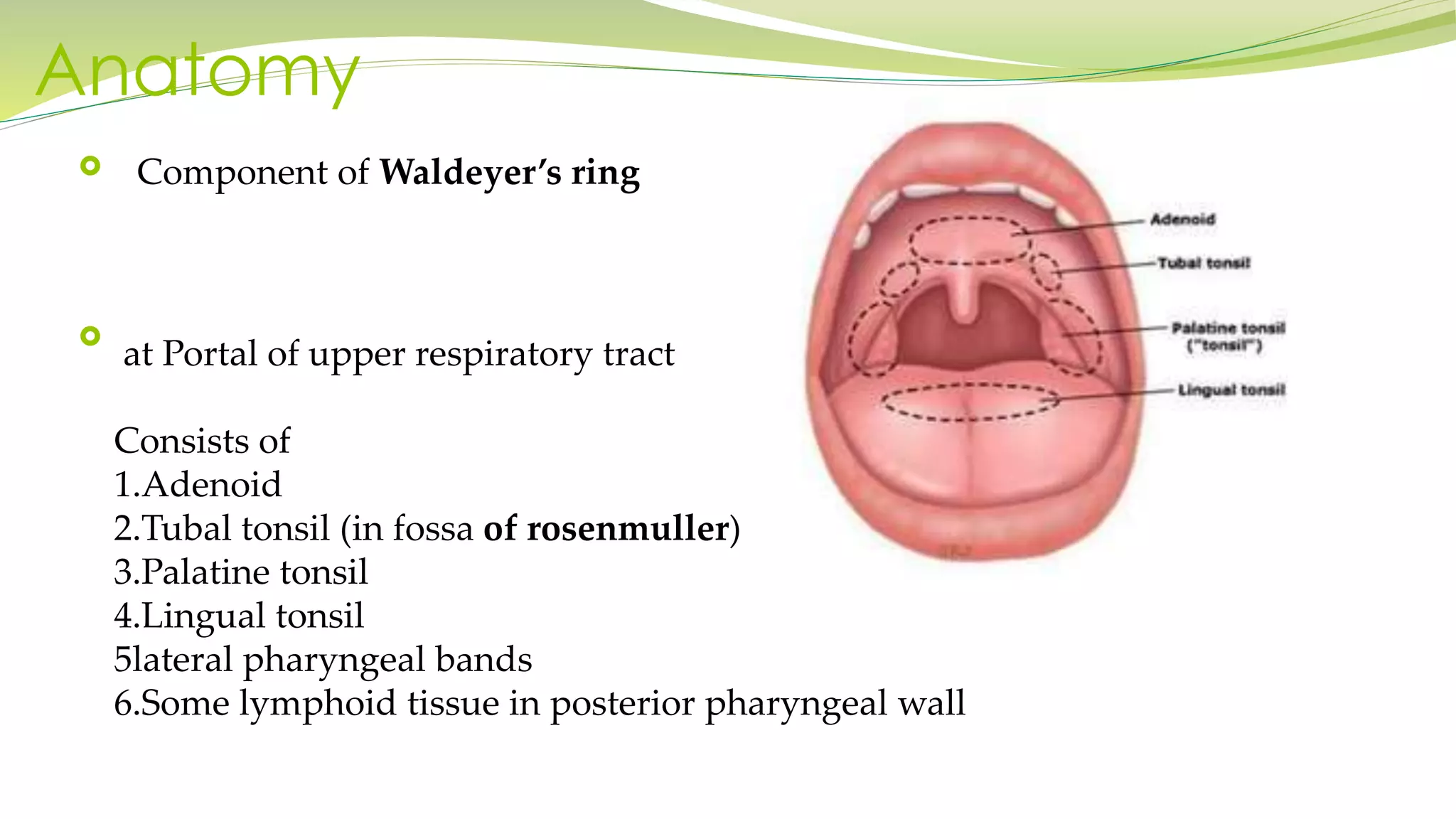
Anatomy
 Component of Waldeyer’s ring

at Portal of upper respiratory tract
Consists of
1.Adenoid
2.Tubal tonsil (in fossa of rosenmuller)
3.Palatine tonsil
4.Lingual tonsil
5lateral pharyngeal bands
6.Some lymphoid tissue in posterior pharyngeal wall
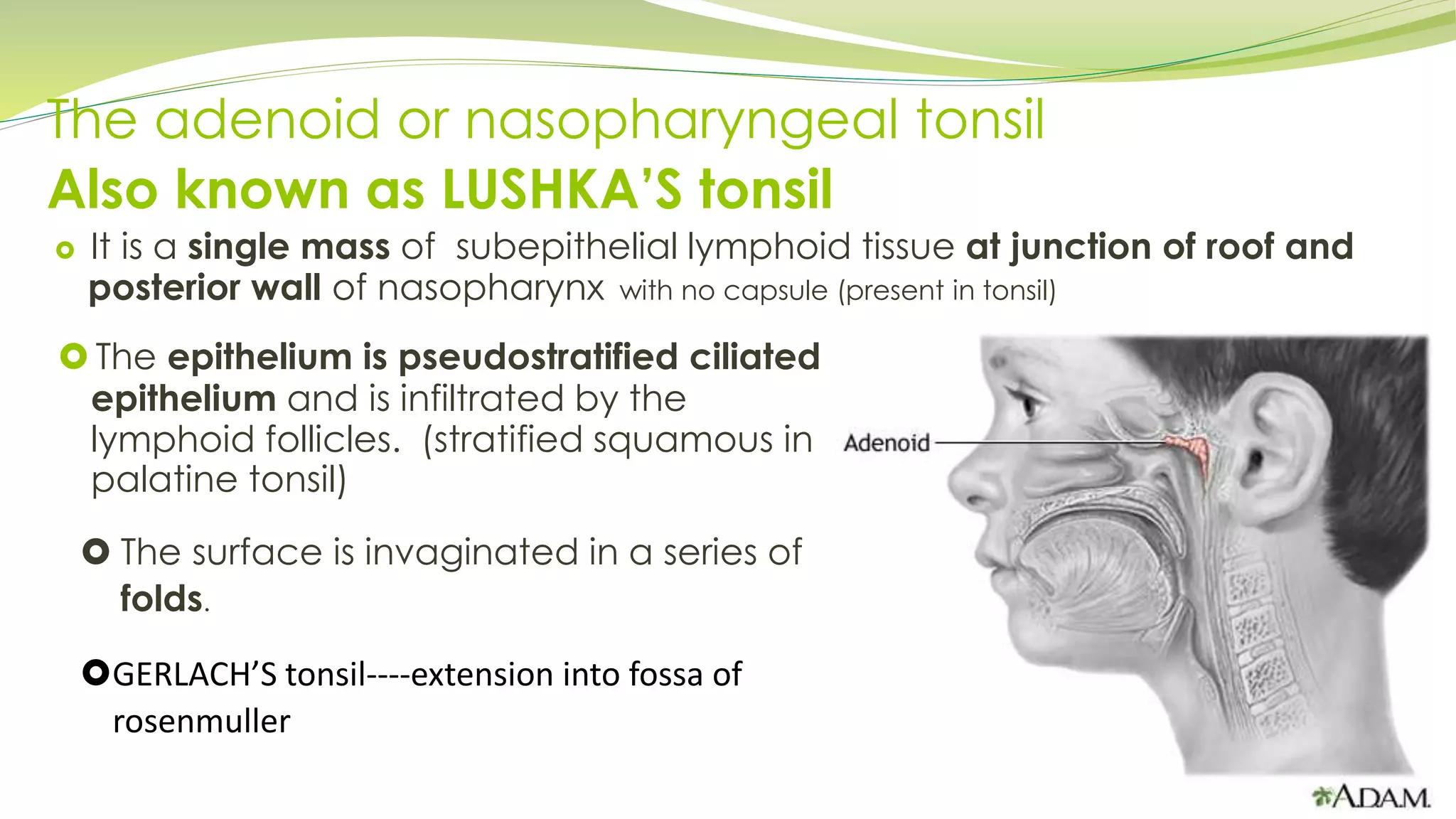
The adenoid or nasopharyngeal tonsil
Also known as LUSHKA’S tonsil
It is a single mass of subepithelial lymphoid tissue at junction of roof and
posterior wall of nasopharynx with no capsule (present in tonsil)
 The surface is invaginated in a series of
folds.
GERLACH’S tonsil----extension into fossa of
rosenmuller
 The epithelium is pseudostratified ciliated
epithelium and is infiltrated by the
lymphoid follicles. (stratified squamous in
palatine tonsil)
Embryology
The formation of the adenoids begins
in the 3rd month of fetal development.
This starts with glandular primordia in the
posterior nasopharynx becoming
associated with infiltrating lymphocytes.
In the 5th month sagittal folds are
formed which are the beginnings of
pharyngeal crypts. The surface is
covered with pseudostratified
ciliated epithelium.
By the 7th month of development
the adenoids are fully formed.
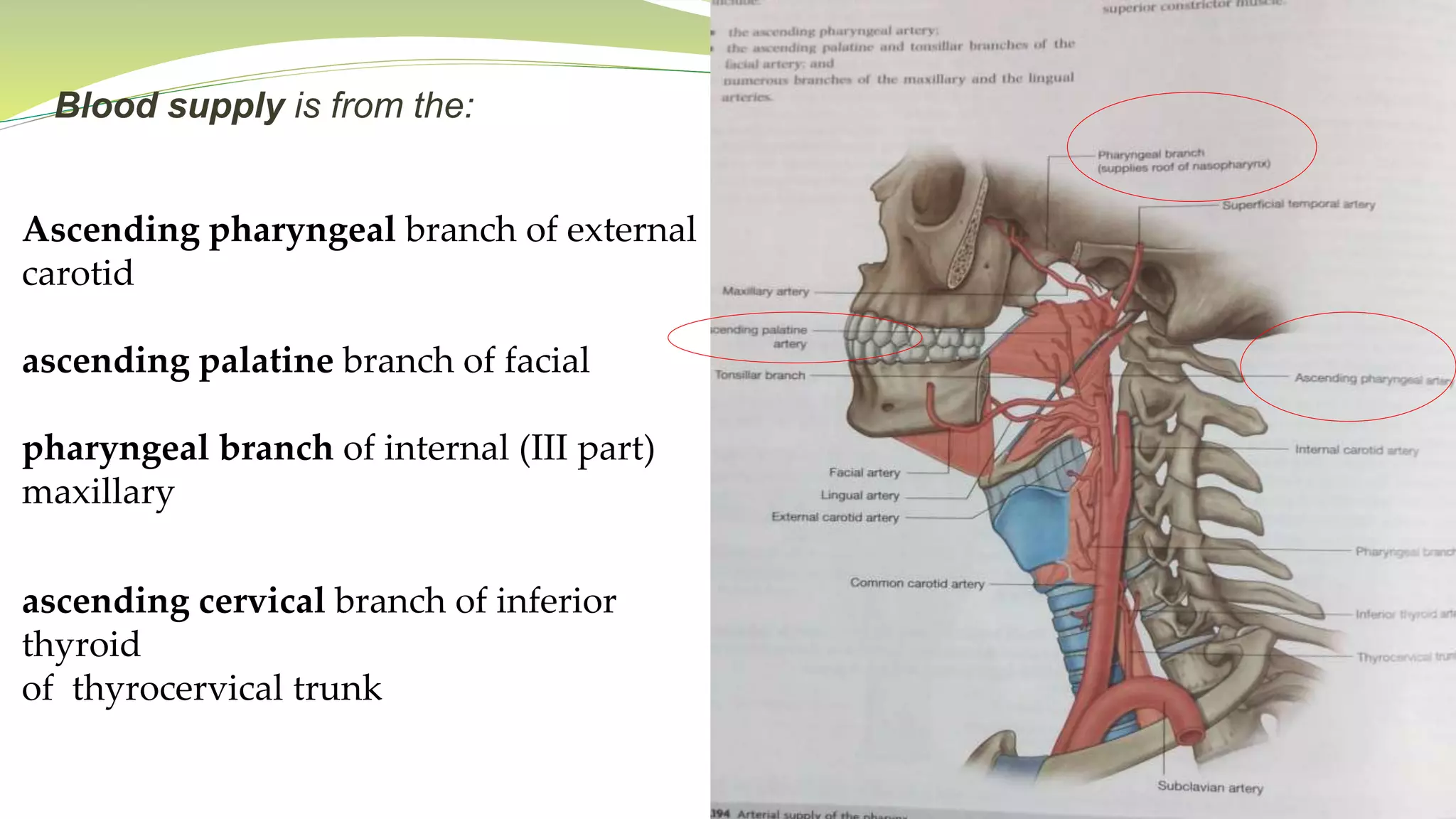
Blood supply is from the:
Ascending pharyngeal branch of external
carotid
ascending palatine branch of facial
pharyngeal branch of internal (III part)
maxillary
ascending cervical branch of inferior
thyroid
of thyrocervical trunk
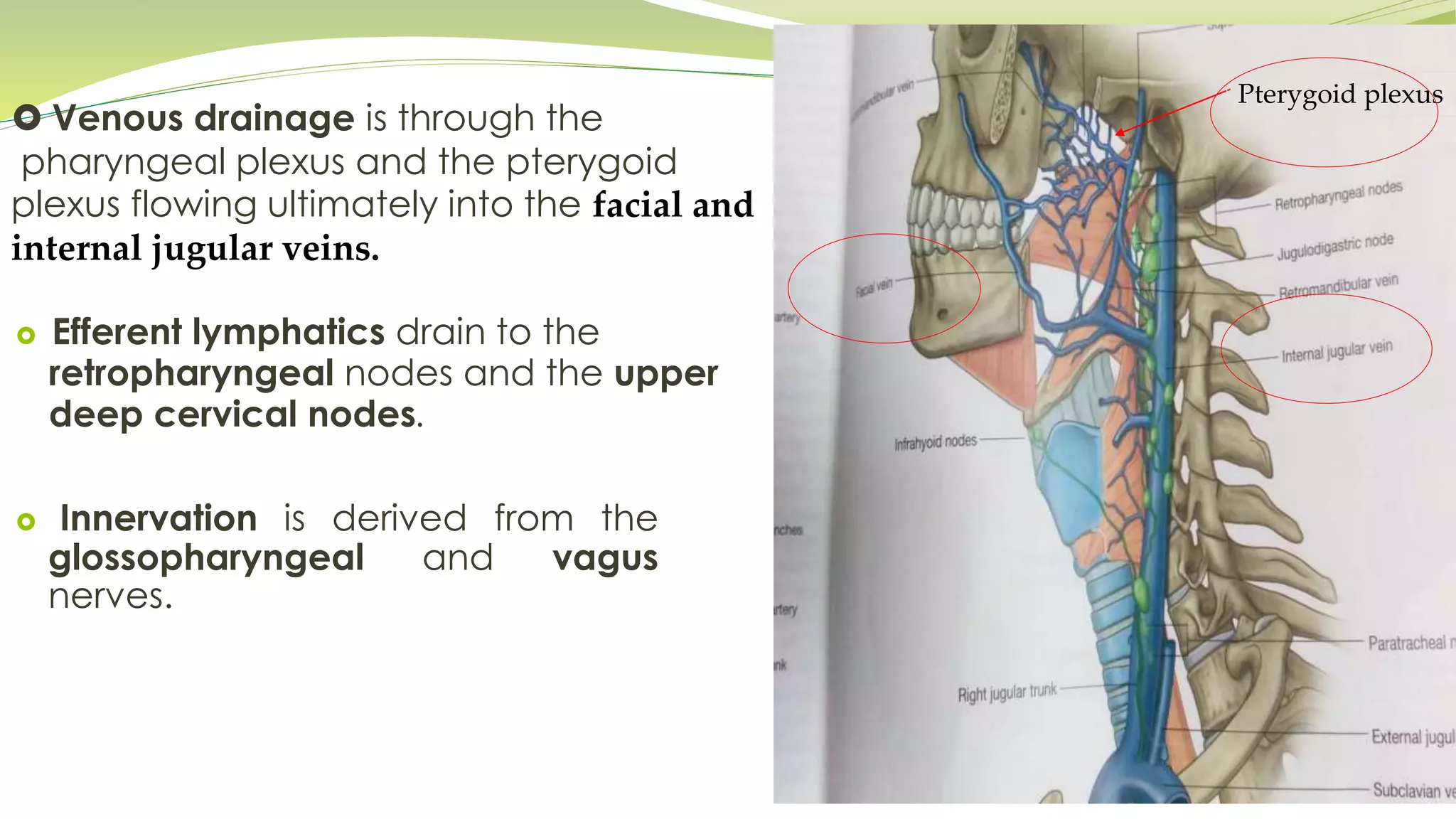
 Venous drainage is through the
pharyngeal plexus and the pterygoid
plexus flowing ultimately into the facial and
internal jugular veins.
 Innervation is derived from the
glossopharyngeal and vagus
nerves.
Efferent lymphatics drain to the
retropharyngeal nodes and the upper
deep cervical nodes.
Pterygoid plexus
Function
The tonsils and adenoids are part of the immune
system.
Without afferent lymphatics the lymphoid nodules in these structures are
exposed to antigen only in the crypts of the palatine tonsils and the folds of the
adenoids where it is transported through the epithelial layer.
These are involved in the production of mostly secretory IgA, which is
transported to the surface providing local immune protection.
Enlarged adenoid
 Most common cause is physiological hypertrophy
causes
Upto age of 6 years hypertrophy and
hyperplasia of the adenoids occur caused by antigen-stimulated increased
lymphocyte
B activity due to a higher number of surface pathogens
After 6 years of age, adenoid size remains constant and
atrophies at puberty while the
nasopharynx increases in size
The human nasopharynx is a natural reservoir for bacterial species such as
Streptococcus pneumonia, Haemophilus influenzae and Moraxella
catarrhalis, which all adhere to epithelial cells. The microflora of the
nasopharynx is established early in childhood.
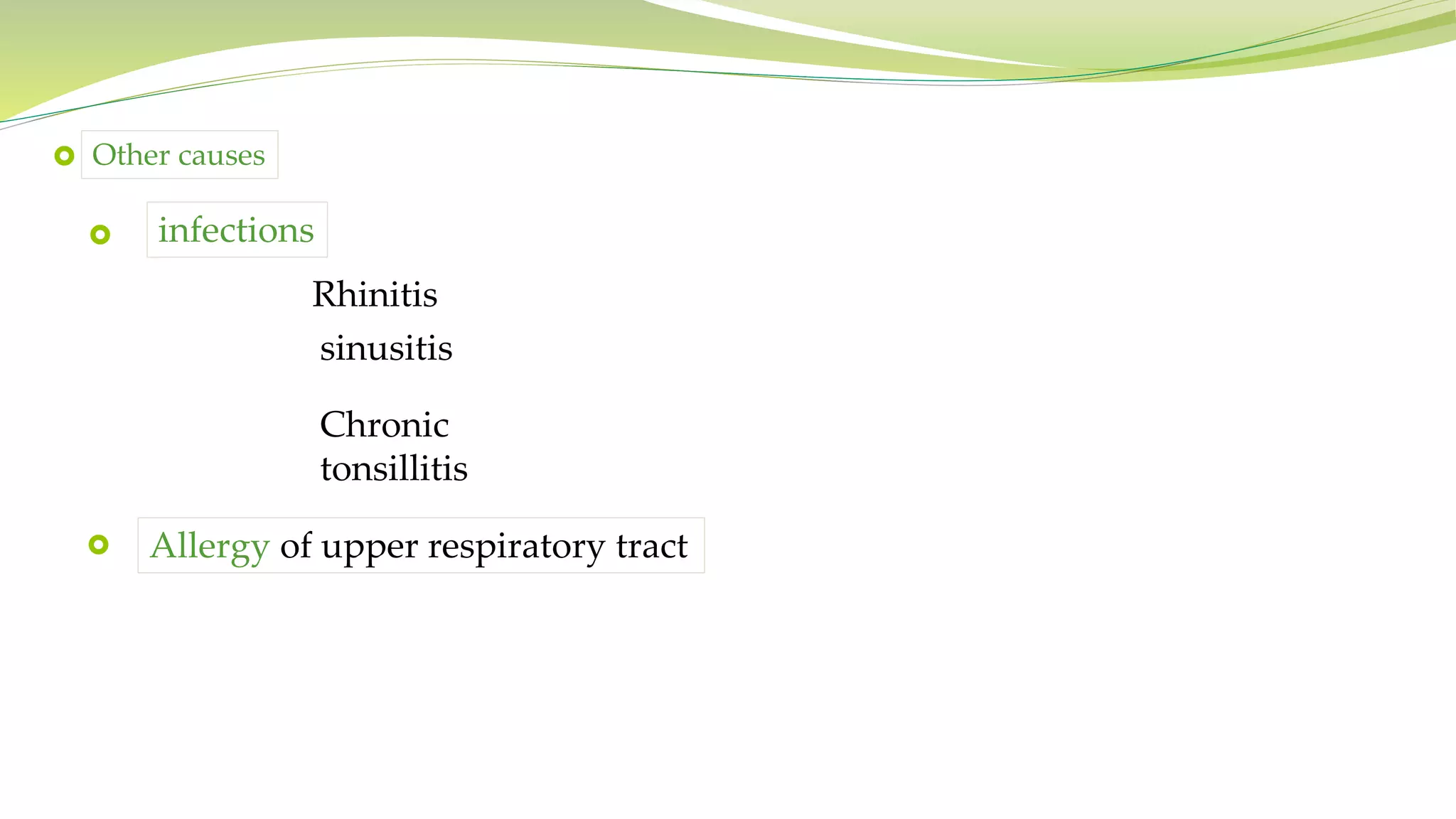
Other causes
Rhinitis
sinusitis
Chronic
tonsillitis
infections
Allergy of upper respiratory tract



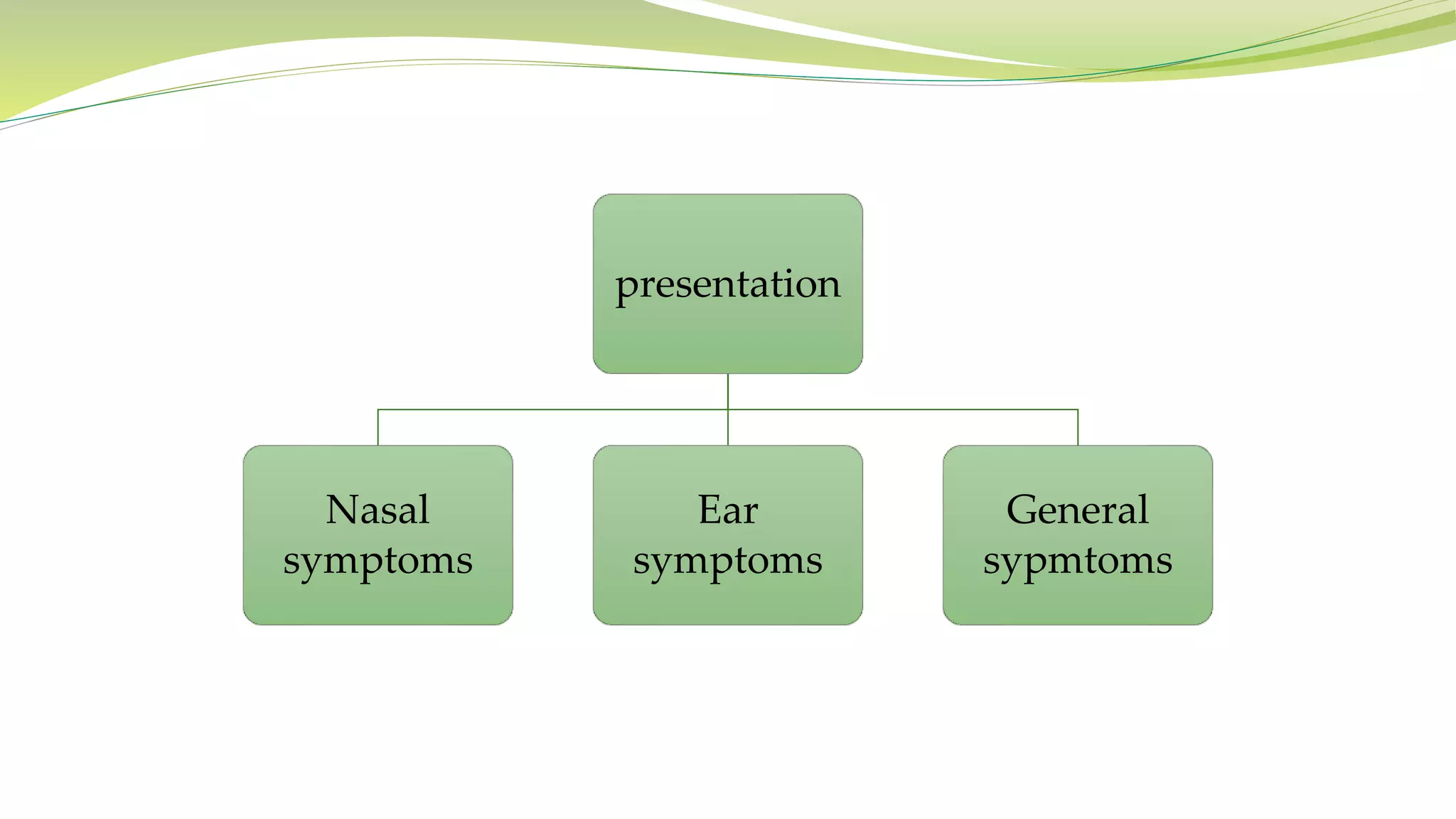
presentation
Nasal
symptoms
Ear
symptoms
General
sypmtoms
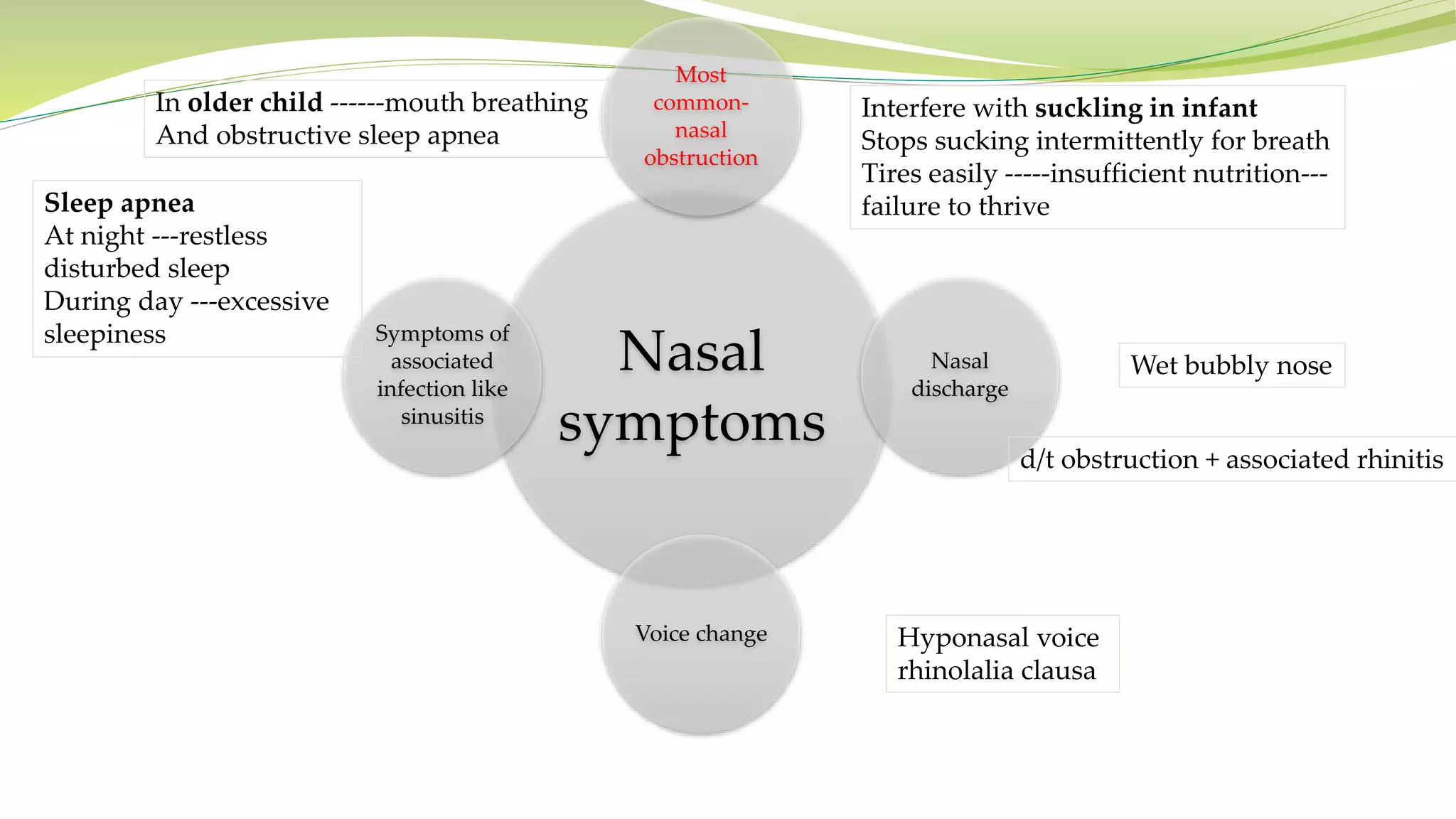
Nasal
symptoms
Most
common-
nasal
obstruction
Nasal
discharge
Voice change
Symptoms of
associated
infection like
sinusitis
Interfere with suckling in infant
Stops sucking intermittently for breath
Tires easily -----insufficient nutrition---
failure to thrive
Wet bubbly nose
Hyponasal voice
rhinolalia clausa
In older child ------mouth breathing
And obstructive sleep apnea
Sleep apnea
At night ---restless
disturbed sleep
During day ---excessive
sleepiness
d/t obstruction + associated rhinitis
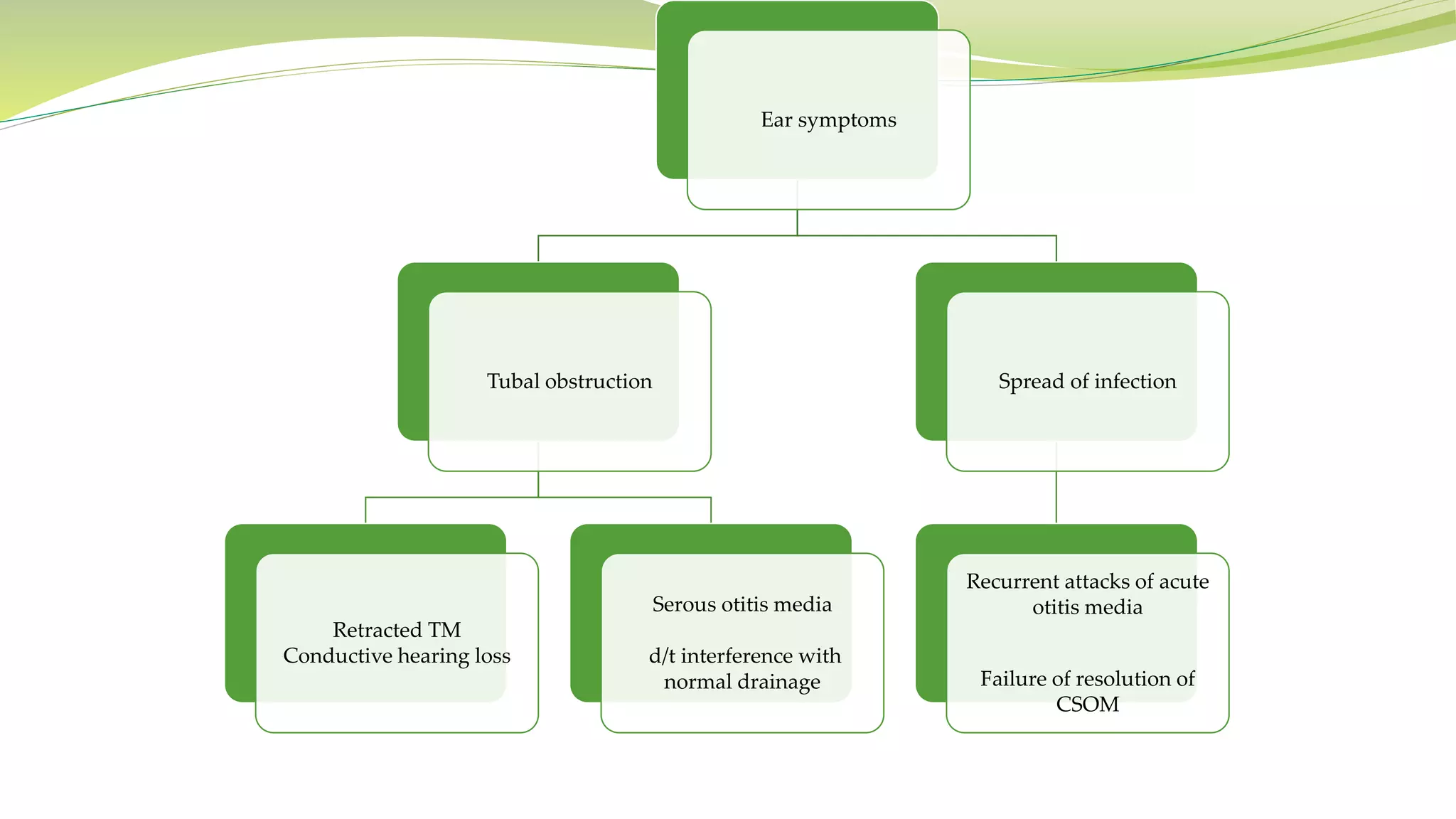
Ear symptoms
Tubal obstruction
Retracted TM
Conductive hearing loss
Serous otitis media
d/t interference with
normal drainage
Spread of infection
Recurrent attacks of acute
otitis media
Failure of resolution of
CSOM
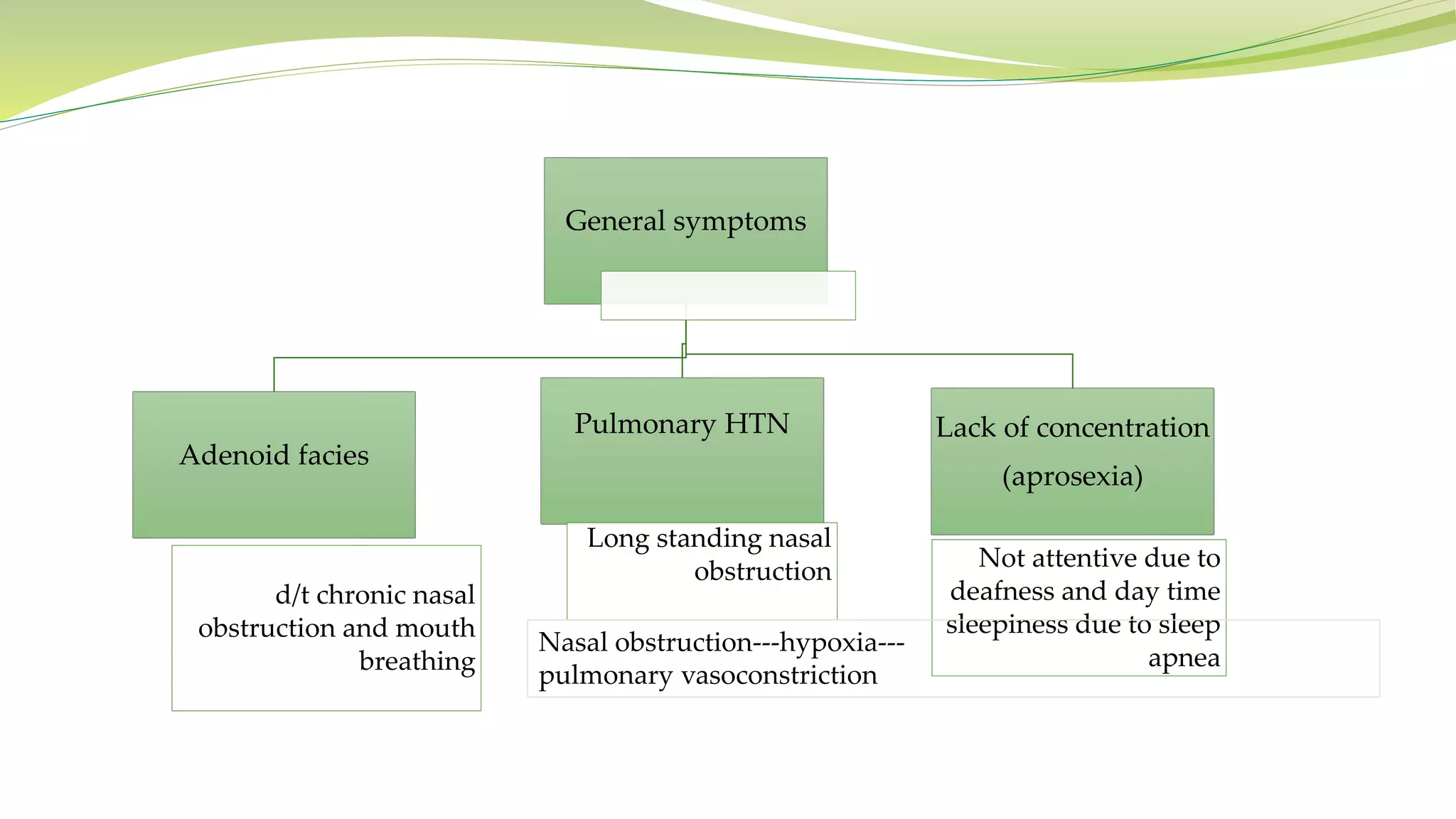
General symptoms
Adenoid facies
d/t chronic nasal
obstruction and mouth
breathing
Pulmonary HTN
Long standing nasal
obstruction
Lack of concentration
(aprosexia)
Not attentive due to
deafness and day time
sleepiness due to sleep
apnea
Nasal obstruction---hypoxia---
pulmonary vasoconstriction
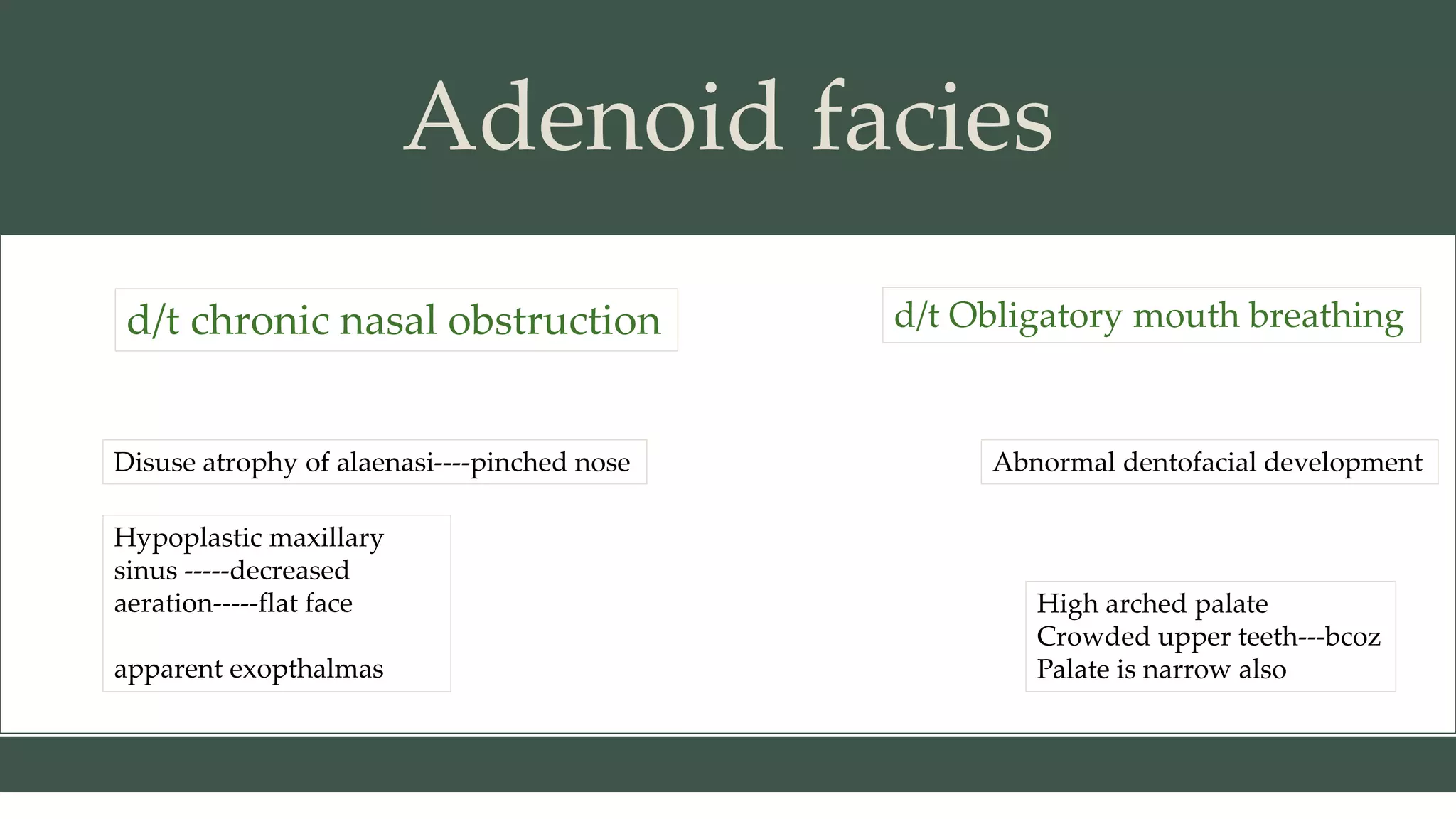
Adenoid facies
d/t chronic nasal obstruction
Disuse atrophy of alaenasi----pinched nose
Hypoplastic maxillary
sinus -----decreased
aeration-----flat face
apparent exopthalmas
d/t Obligatory mouth breathing
Abnormal dentofacial development
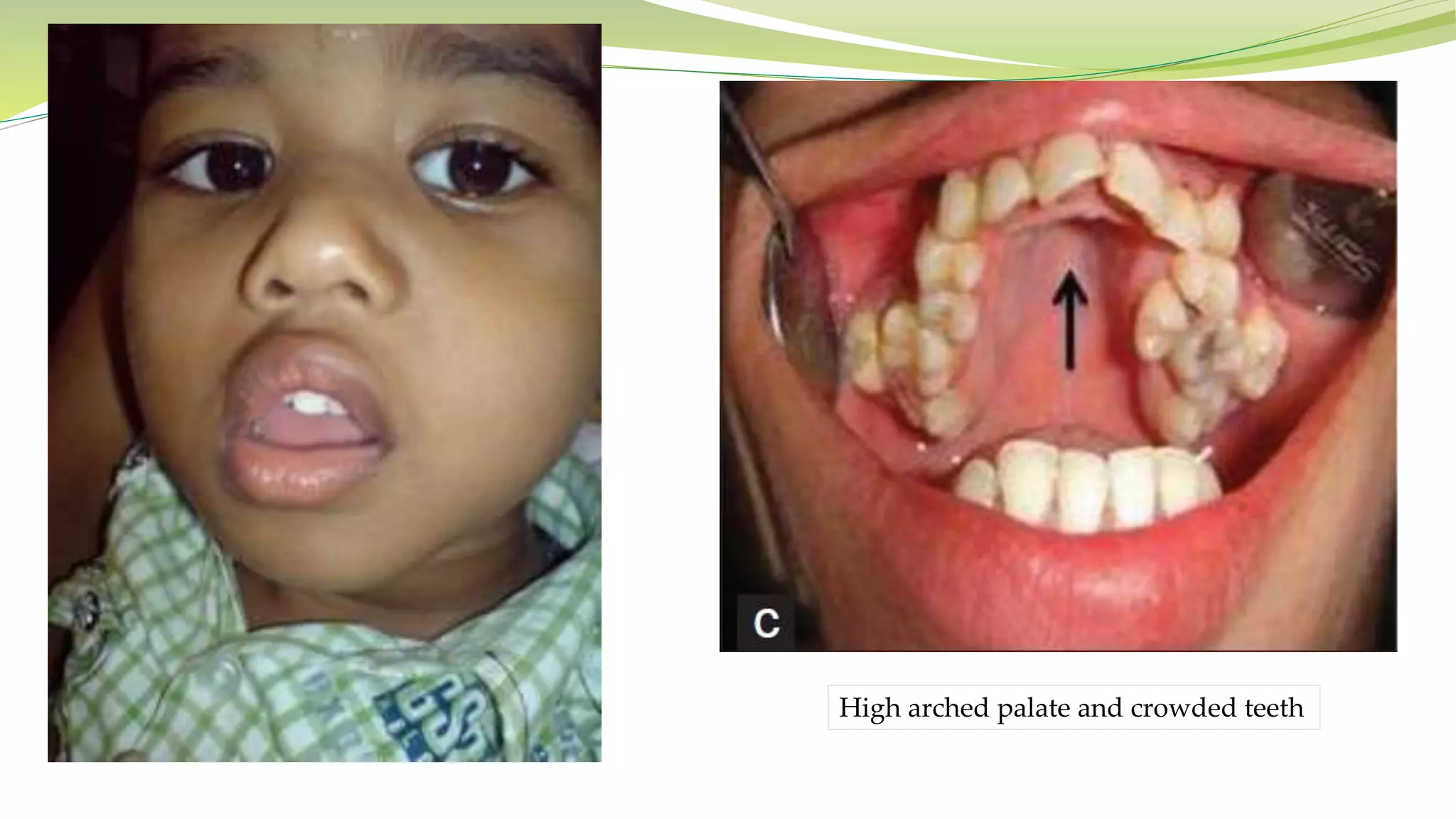
High arched palate
Crowded upper teeth---bcoz
Palate is narrow also
High arched palate and crowded teeth
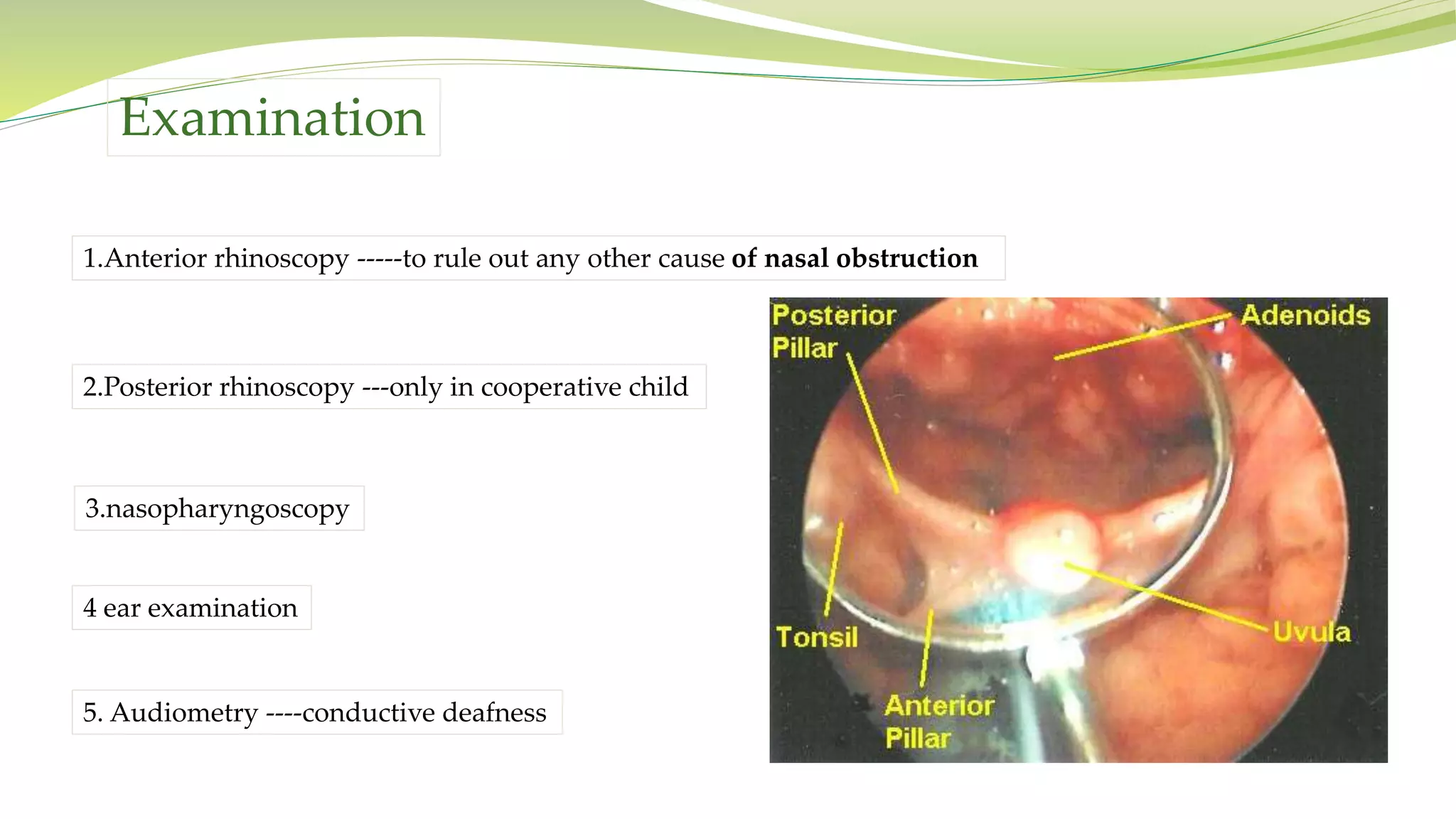
Examination
1.Anterior rhinoscopy -----to rule out any other cause of nasal obstruction
2.Posterior rhinoscopy ---only in cooperative child
3.nasopharyngoscopy
4 ear examination
5. Audiometry ----conductive deafness
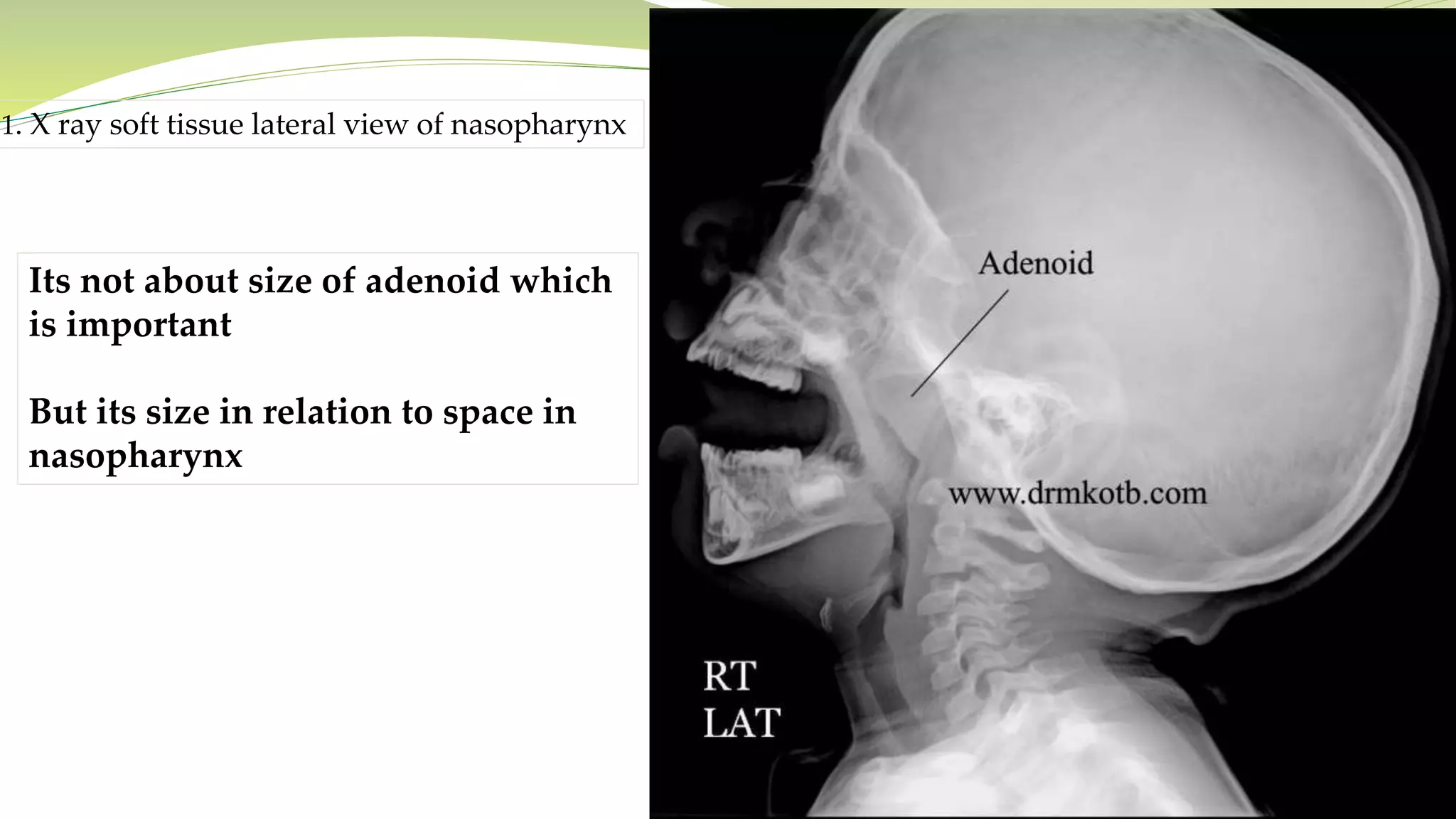
1. X ray soft tissue lateral view of nasopharynx
Its not about size of adenoid which
is important
But its size in relation to space in
nasopharynx
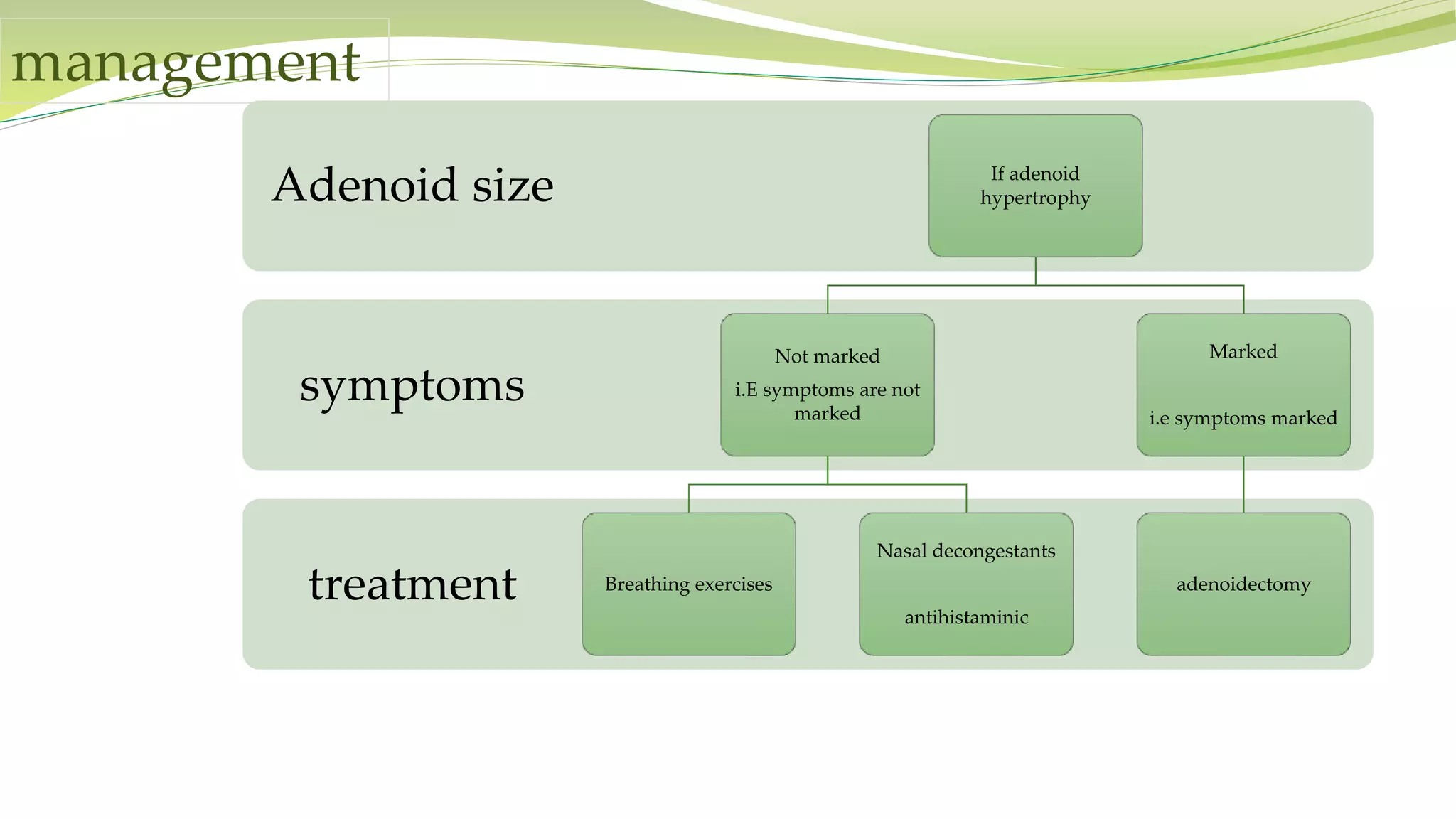
management
treatment
symptoms
Adenoid size If adenoid
hypertrophy
Not marked
i.E symptoms are not
marked
Breathing exercises
Nasal decongestants
antihistaminic
Marked
i.e symptoms marked
adenoidectomy
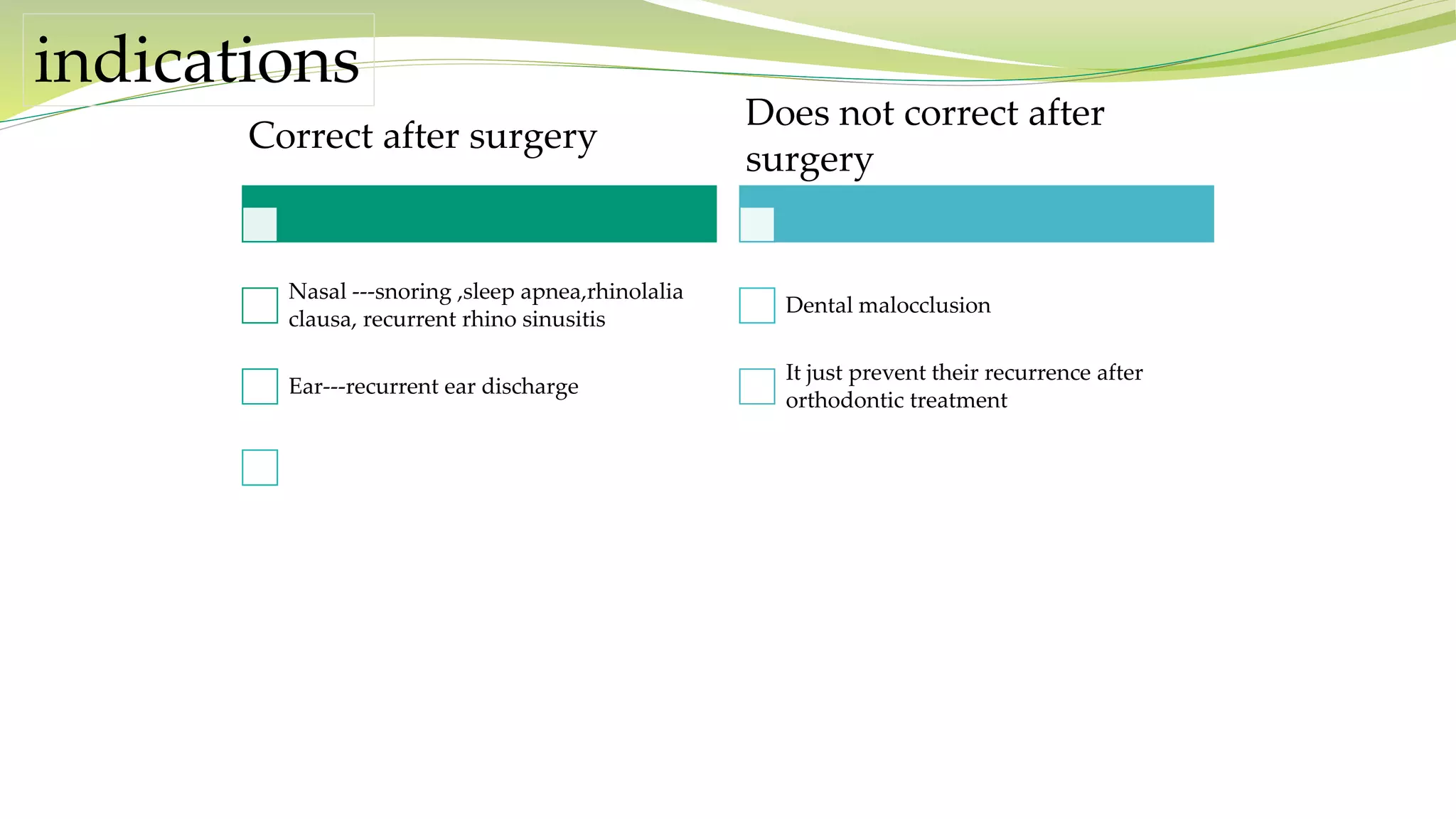
Correct after surgery
Nasal ---snoring ,sleep apnea,rhinolalia
clausa, recurrent rhino sinusitis
Ear---recurrent ear discharge
Does not correct after
surgery
Dental malocclusion
It just prevent their recurrence after
orthodontic treatment
indications
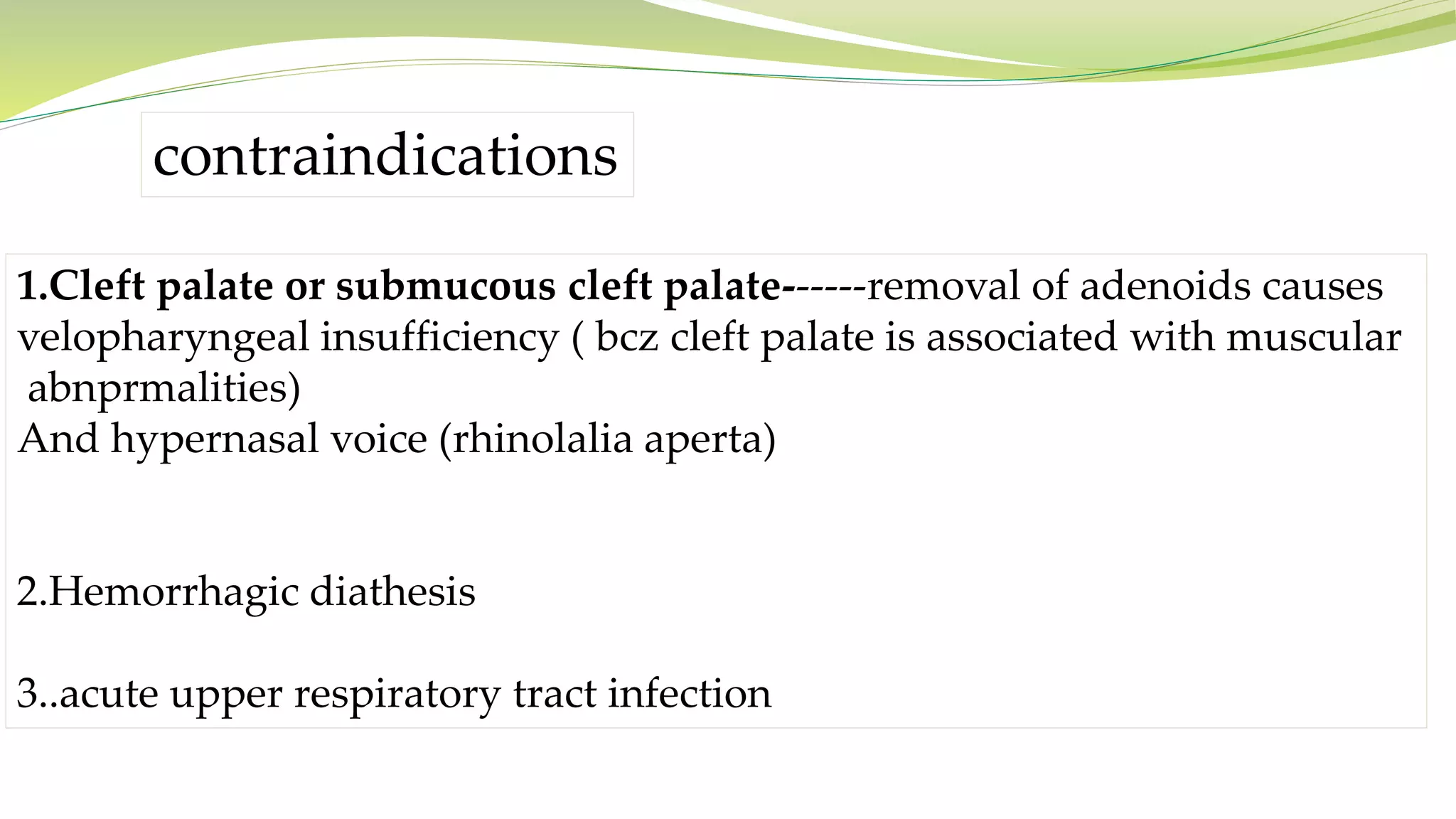
contraindications
1.Cleft palate or submucous cleft palate------removal of adenoids causes
velopharyngeal insufficiency ( bcz cleft palate is associated with muscular
abnprmalities)
And hypernasal voice (rhinolalia aperta)
2.Hemorrhagic diathesis
3..acute upper respiratory tract infection
adenoidectomy
Pre op investigations
1.Bleeding time
2.Clottting time
3.Complete blood count
4haemoglobin ----should be above 10 g/dl
5.Differential count---rule out acute infections
Steps of operation
1..done under general anaesthesia with oral endotracheal intubation
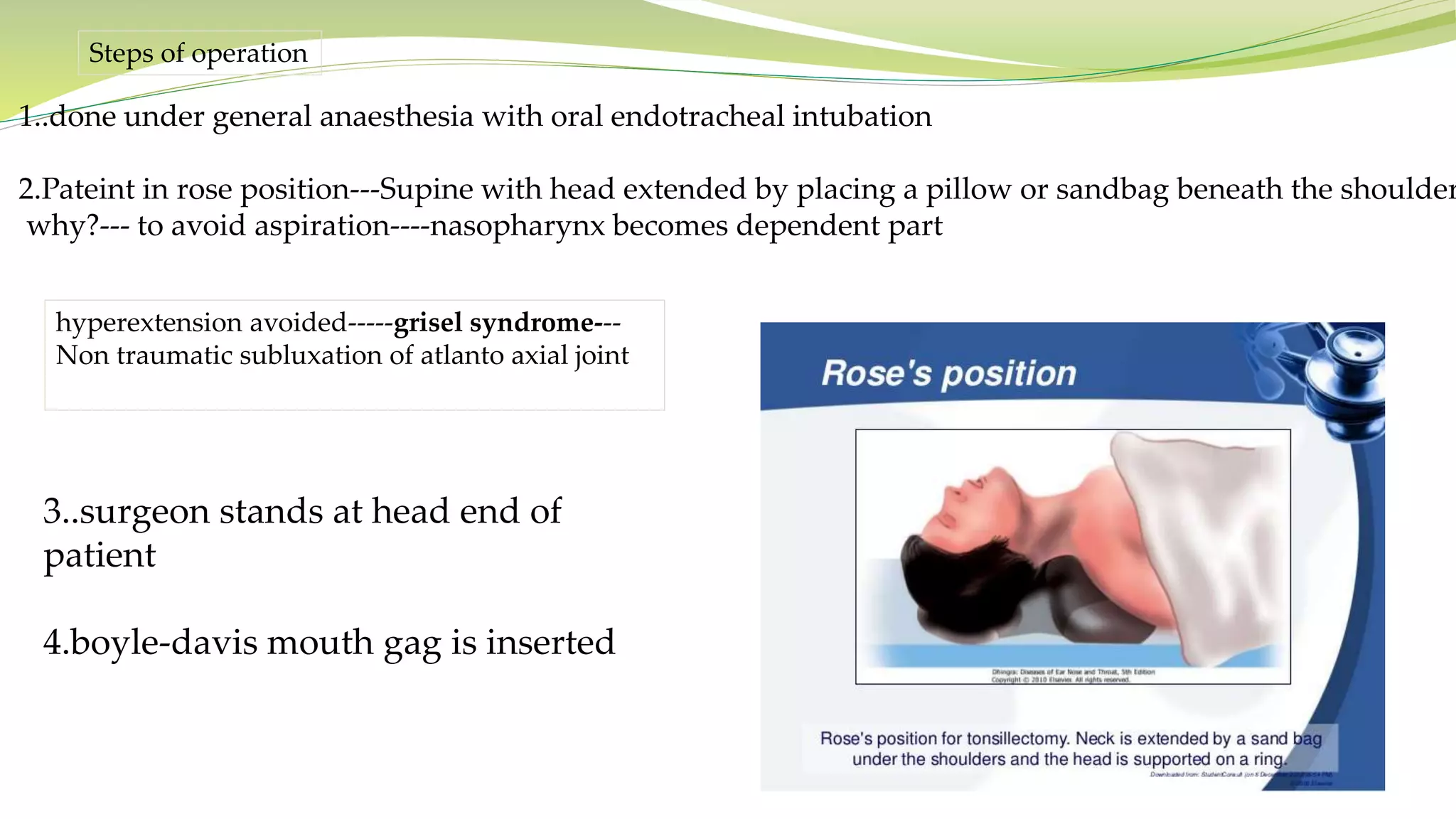
2.Pateint in rose position---Supine with head extended by placing a pillow or sandbag beneath the shoulder
why?--- to avoid aspiration----nasopharynx becomes dependent part
hyperextension avoided-----grisel syndrome---
Non traumatic subluxation of atlanto axial joint
3..surgeon stands at head end of
patient
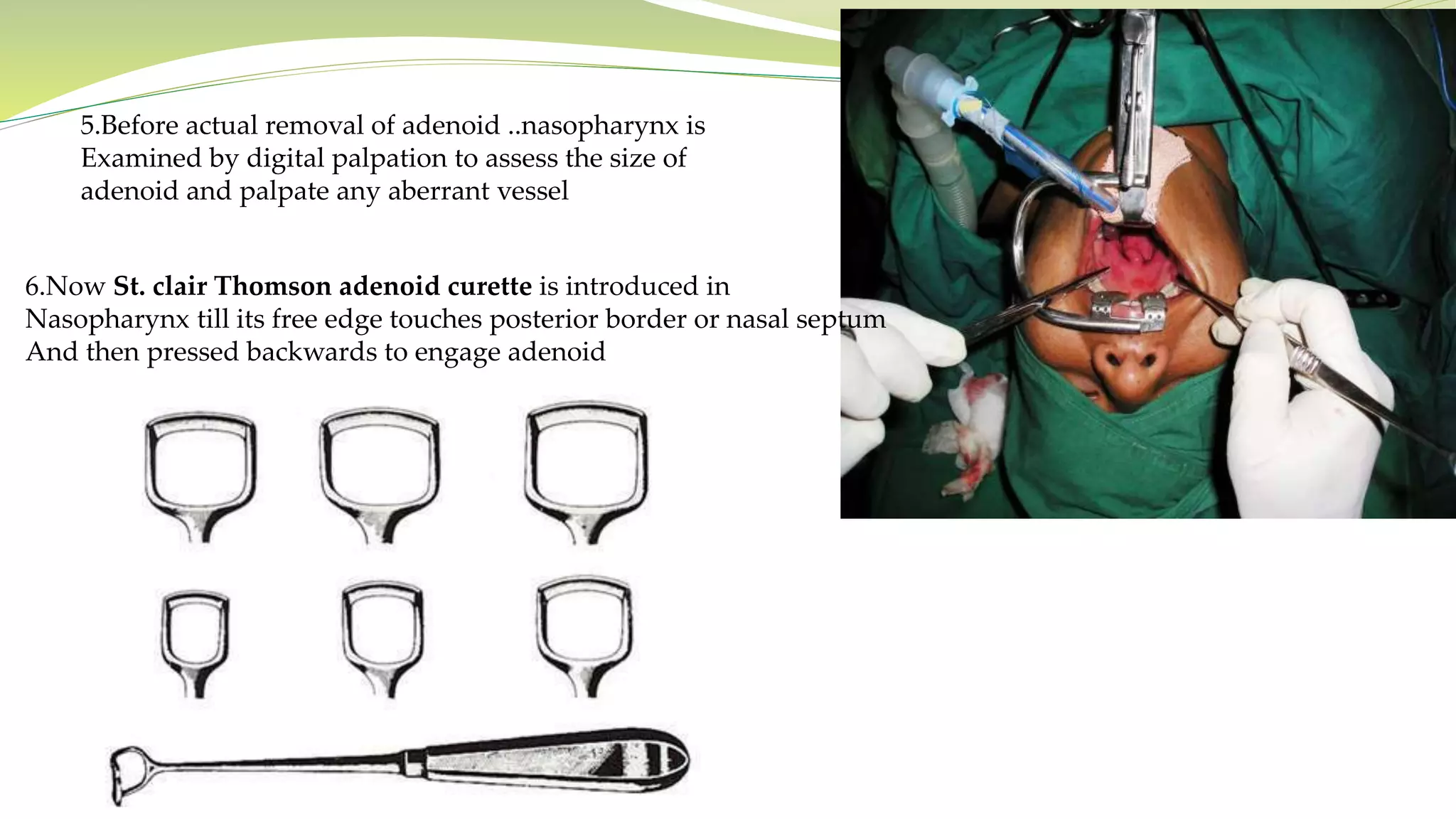
4.boyle-davis mouth gag is inserted
5.Before actual removal of adenoid ..nasopharynx is
Examined by digital palpation to assess the size of
adenoid and palpate any aberrant vessel
6.Now St. clair Thomson adenoid curette is introduced in
Nasopharynx till its free edge touches posterior border or nasal septum
And then pressed backwards to engage adenoid
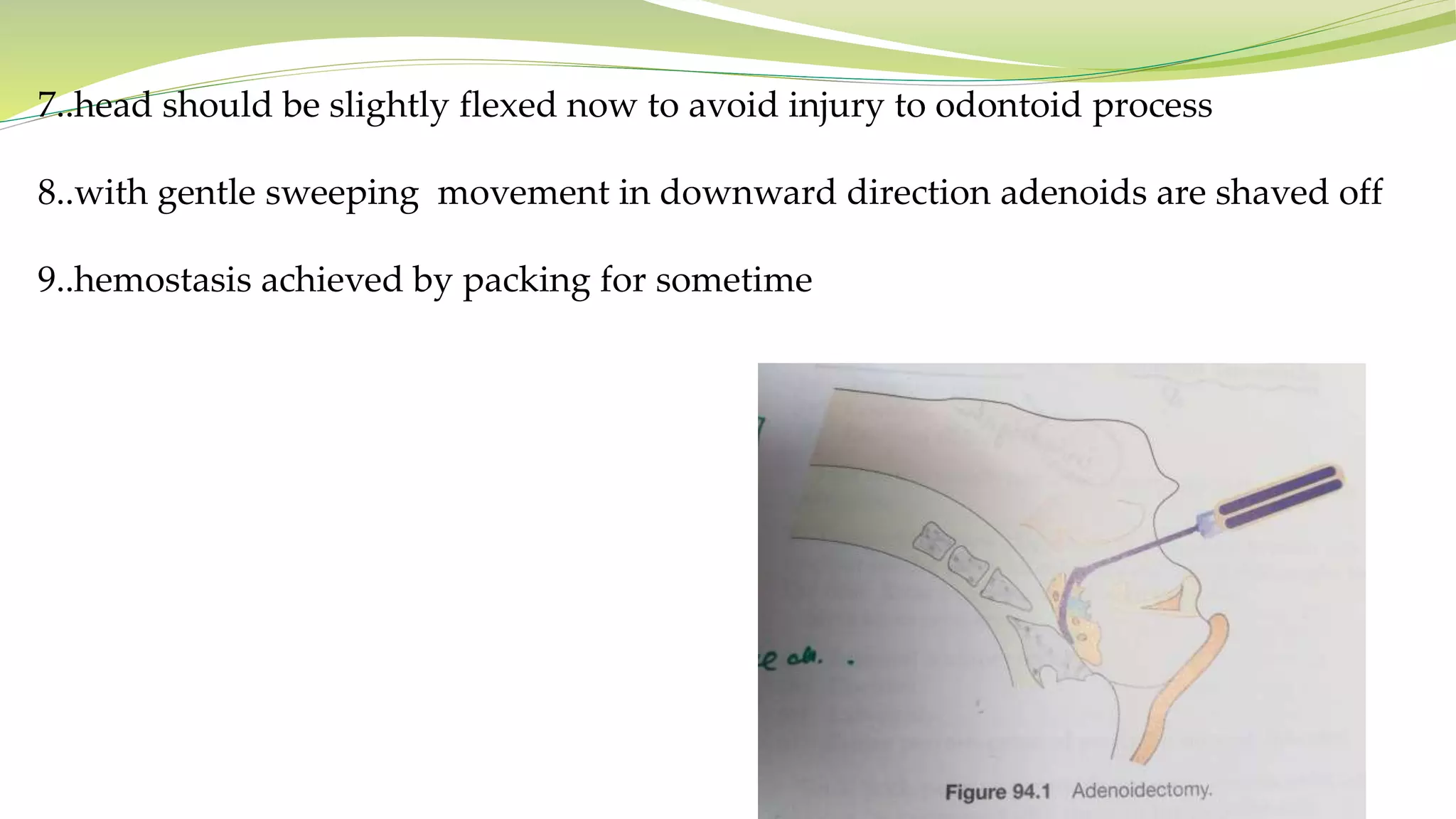
7..head should be slightly flexed now to avoid injury to odontoid process
8..with gentle sweeping movement in downward direction adenoids are shaved off
9..hemostasis achieved by packing for sometime
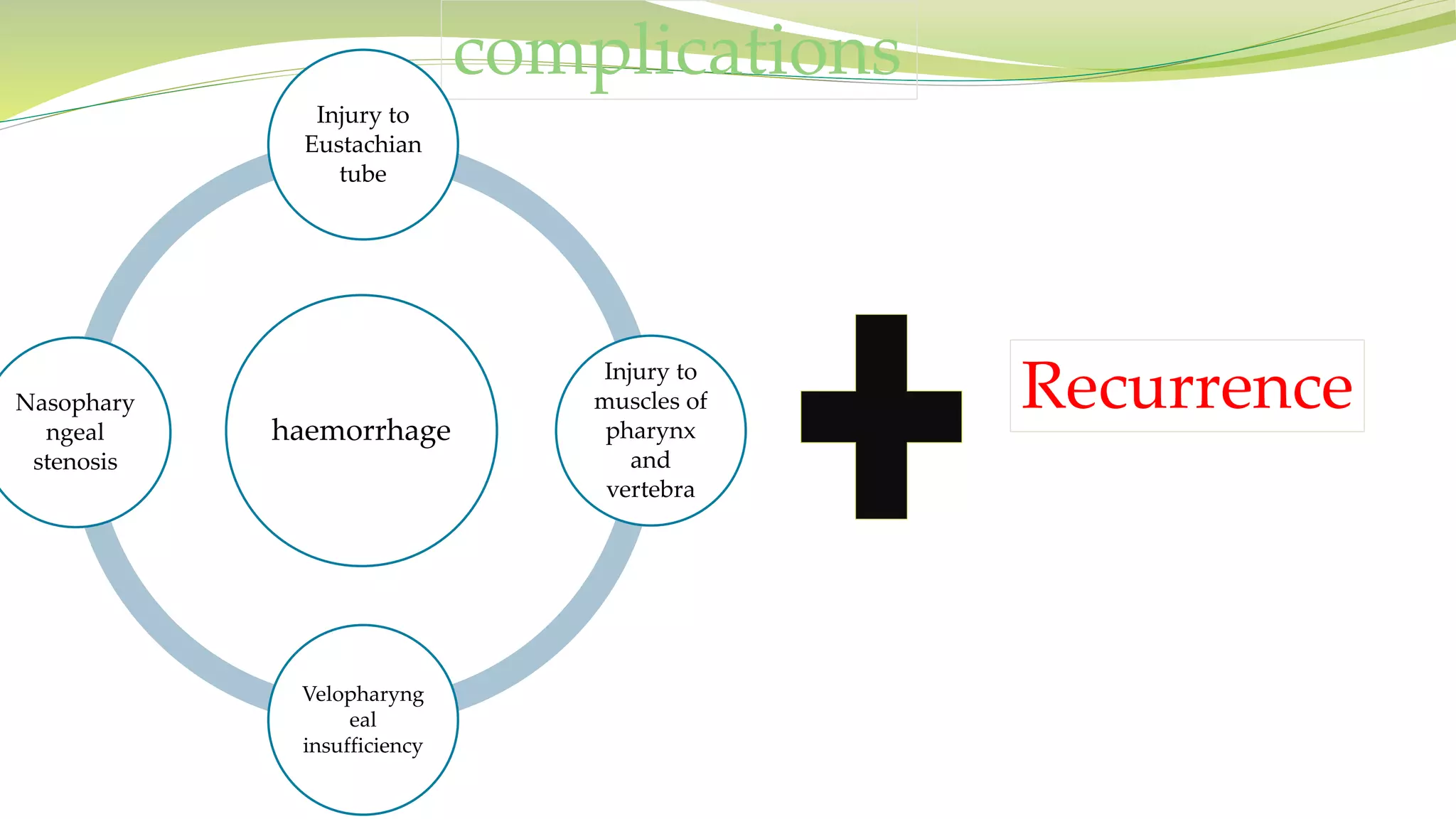
complications
haemorrhage
Injury to
Eustachian
tube
Injury to
muscles of
pharynx
and
vertebra
Velopharyng
eal
insufficiency
Nasophary
ngeal
stenosis
Recurrence
Post op care
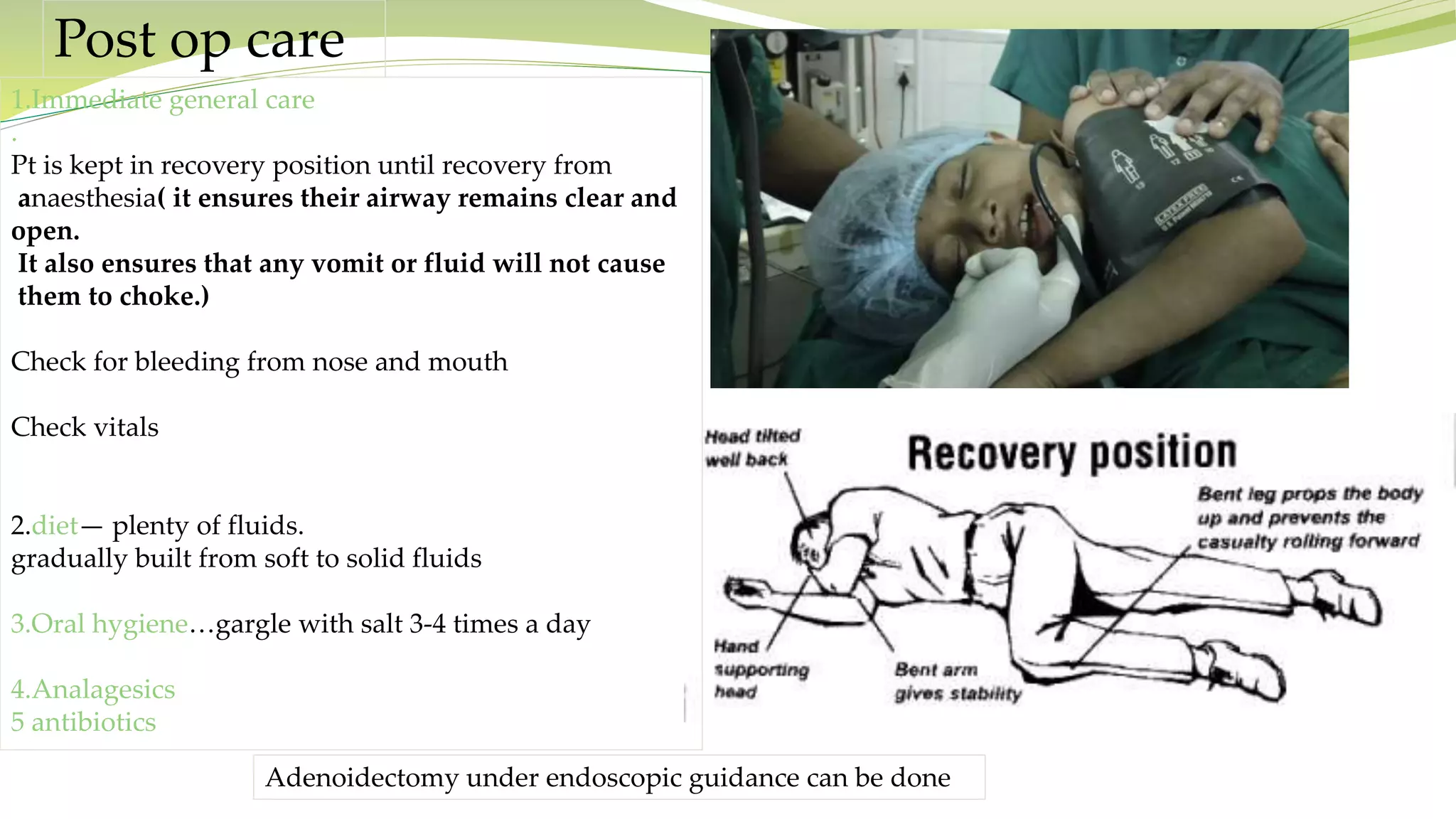
1.Immediate general care
.
Pt is kept in recovery position until recovery from
anaesthesia( it ensures their airway remains clear and
open.
It also ensures that any vomit or fluid will not cause
them to choke.)
Check for bleeding from nose and mouth
Check vitals
2.diet— plenty of fluids.
gradually built from soft to solid fluids
3.Oral hygiene…gargle with salt 3-4 times a day
4.Analagesics
5 antibiotics
Adenoidectomy under endoscopic guidance can be done
Presentation adenoidectomy

Presentation adenoidectomy

  • 1.
  • 2.
    Anatomy  Component ofWaldeyer’s ring  at Portal of upper respiratory tract Consists of 1.Adenoid 2.Tubal tonsil (in fossa of rosenmuller) 3.Palatine tonsil 4.Lingual tonsil 5lateral pharyngeal bands 6.Some lymphoid tissue in posterior pharyngeal wall
  • 3.
    The adenoid ornasopharyngeal tonsil Also known as LUSHKA’S tonsil It is a single mass of subepithelial lymphoid tissue at junction of roof and posterior wall of nasopharynx with no capsule (present in tonsil)  The surface is invaginated in a series of folds. GERLACH’S tonsil----extension into fossa of rosenmuller  The epithelium is pseudostratified ciliated epithelium and is infiltrated by the lymphoid follicles. (stratified squamous in palatine tonsil)
  • 4.
    Embryology The formation ofthe adenoids begins in the 3rd month of fetal development. This starts with glandular primordia in the posterior nasopharynx becoming associated with infiltrating lymphocytes. In the 5th month sagittal folds are formed which are the beginnings of pharyngeal crypts. The surface is covered with pseudostratified ciliated epithelium. By the 7th month of development the adenoids are fully formed.
  • 5.
    Blood supply isfrom the: Ascending pharyngeal branch of external carotid ascending palatine branch of facial pharyngeal branch of internal (III part) maxillary ascending cervical branch of inferior thyroid of thyrocervical trunk
  • 6.
     Venous drainageis through the pharyngeal plexus and the pterygoid plexus flowing ultimately into the facial and internal jugular veins.  Innervation is derived from the glossopharyngeal and vagus nerves. Efferent lymphatics drain to the retropharyngeal nodes and the upper deep cervical nodes. Pterygoid plexus
  • 7.
    Function The tonsils andadenoids are part of the immune system. Without afferent lymphatics the lymphoid nodules in these structures are exposed to antigen only in the crypts of the palatine tonsils and the folds of the adenoids where it is transported through the epithelial layer. These are involved in the production of mostly secretory IgA, which is transported to the surface providing local immune protection.
  • 8.
    Enlarged adenoid  Mostcommon cause is physiological hypertrophy causes Upto age of 6 years hypertrophy and hyperplasia of the adenoids occur caused by antigen-stimulated increased lymphocyte B activity due to a higher number of surface pathogens After 6 years of age, adenoid size remains constant and atrophies at puberty while the nasopharynx increases in size The human nasopharynx is a natural reservoir for bacterial species such as Streptococcus pneumonia, Haemophilus influenzae and Moraxella catarrhalis, which all adhere to epithelial cells. The microflora of the nasopharynx is established early in childhood.
  • 9.
  • 10.
  • 11.
    Nasal symptoms Most common- nasal obstruction Nasal discharge Voice change Symptoms of associated infectionlike sinusitis Interfere with suckling in infant Stops sucking intermittently for breath Tires easily -----insufficient nutrition--- failure to thrive Wet bubbly nose Hyponasal voice rhinolalia clausa In older child ------mouth breathing And obstructive sleep apnea Sleep apnea At night ---restless disturbed sleep During day ---excessive sleepiness d/t obstruction + associated rhinitis
  • 12.
    Ear symptoms Tubal obstruction RetractedTM Conductive hearing loss Serous otitis media d/t interference with normal drainage Spread of infection Recurrent attacks of acute otitis media Failure of resolution of CSOM
  • 13.
    General symptoms Adenoid facies d/tchronic nasal obstruction and mouth breathing Pulmonary HTN Long standing nasal obstruction Lack of concentration (aprosexia) Not attentive due to deafness and day time sleepiness due to sleep apnea Nasal obstruction---hypoxia--- pulmonary vasoconstriction
  • 14.
    Adenoid facies d/t chronicnasal obstruction Disuse atrophy of alaenasi----pinched nose Hypoplastic maxillary sinus -----decreased aeration-----flat face apparent exopthalmas d/t Obligatory mouth breathing Abnormal dentofacial development High arched palate Crowded upper teeth---bcoz Palate is narrow also
  • 15.
    High arched palateand crowded teeth
  • 16.
    Examination 1.Anterior rhinoscopy -----torule out any other cause of nasal obstruction 2.Posterior rhinoscopy ---only in cooperative child 3.nasopharyngoscopy 4 ear examination 5. Audiometry ----conductive deafness
  • 17.
    1. X raysoft tissue lateral view of nasopharynx Its not about size of adenoid which is important But its size in relation to space in nasopharynx
  • 18.
    management treatment symptoms Adenoid size Ifadenoid hypertrophy Not marked i.E symptoms are not marked Breathing exercises Nasal decongestants antihistaminic Marked i.e symptoms marked adenoidectomy
  • 19.
    Correct after surgery Nasal---snoring ,sleep apnea,rhinolalia clausa, recurrent rhino sinusitis Ear---recurrent ear discharge Does not correct after surgery Dental malocclusion It just prevent their recurrence after orthodontic treatment indications
  • 20.
    contraindications 1.Cleft palate orsubmucous cleft palate------removal of adenoids causes velopharyngeal insufficiency ( bcz cleft palate is associated with muscular abnprmalities) And hypernasal voice (rhinolalia aperta) 2.Hemorrhagic diathesis 3..acute upper respiratory tract infection
  • 21.
    adenoidectomy Pre op investigations 1.Bleedingtime 2.Clottting time 3.Complete blood count 4haemoglobin ----should be above 10 g/dl 5.Differential count---rule out acute infections
  • 22.
    Steps of operation 1..doneunder general anaesthesia with oral endotracheal intubation 2.Pateint in rose position---Supine with head extended by placing a pillow or sandbag beneath the shoulder why?--- to avoid aspiration----nasopharynx becomes dependent part hyperextension avoided-----grisel syndrome--- Non traumatic subluxation of atlanto axial joint 3..surgeon stands at head end of patient 4.boyle-davis mouth gag is inserted
  • 23.
    5.Before actual removalof adenoid ..nasopharynx is Examined by digital palpation to assess the size of adenoid and palpate any aberrant vessel 6.Now St. clair Thomson adenoid curette is introduced in Nasopharynx till its free edge touches posterior border or nasal septum And then pressed backwards to engage adenoid
  • 24.
    7..head should beslightly flexed now to avoid injury to odontoid process 8..with gentle sweeping movement in downward direction adenoids are shaved off 9..hemostasis achieved by packing for sometime
  • 25.
    complications haemorrhage Injury to Eustachian tube Injury to musclesof pharynx and vertebra Velopharyng eal insufficiency Nasophary ngeal stenosis Recurrence
  • 26.
    Post op care 1.Immediategeneral care . Pt is kept in recovery position until recovery from anaesthesia( it ensures their airway remains clear and open. It also ensures that any vomit or fluid will not cause them to choke.) Check for bleeding from nose and mouth Check vitals 2.diet— plenty of fluids. gradually built from soft to solid fluids 3.Oral hygiene…gargle with salt 3-4 times a day 4.Analagesics 5 antibiotics Adenoidectomy under endoscopic guidance can be done