ABNORMAL GAIT
DUETO PAIN
GROUP MEMBERS
 Alishba khadim
 Ihsan UL haq
 Jannat Sohail
Assigned by:
Dr.Tahir Hafeez
GAIT CYCLE
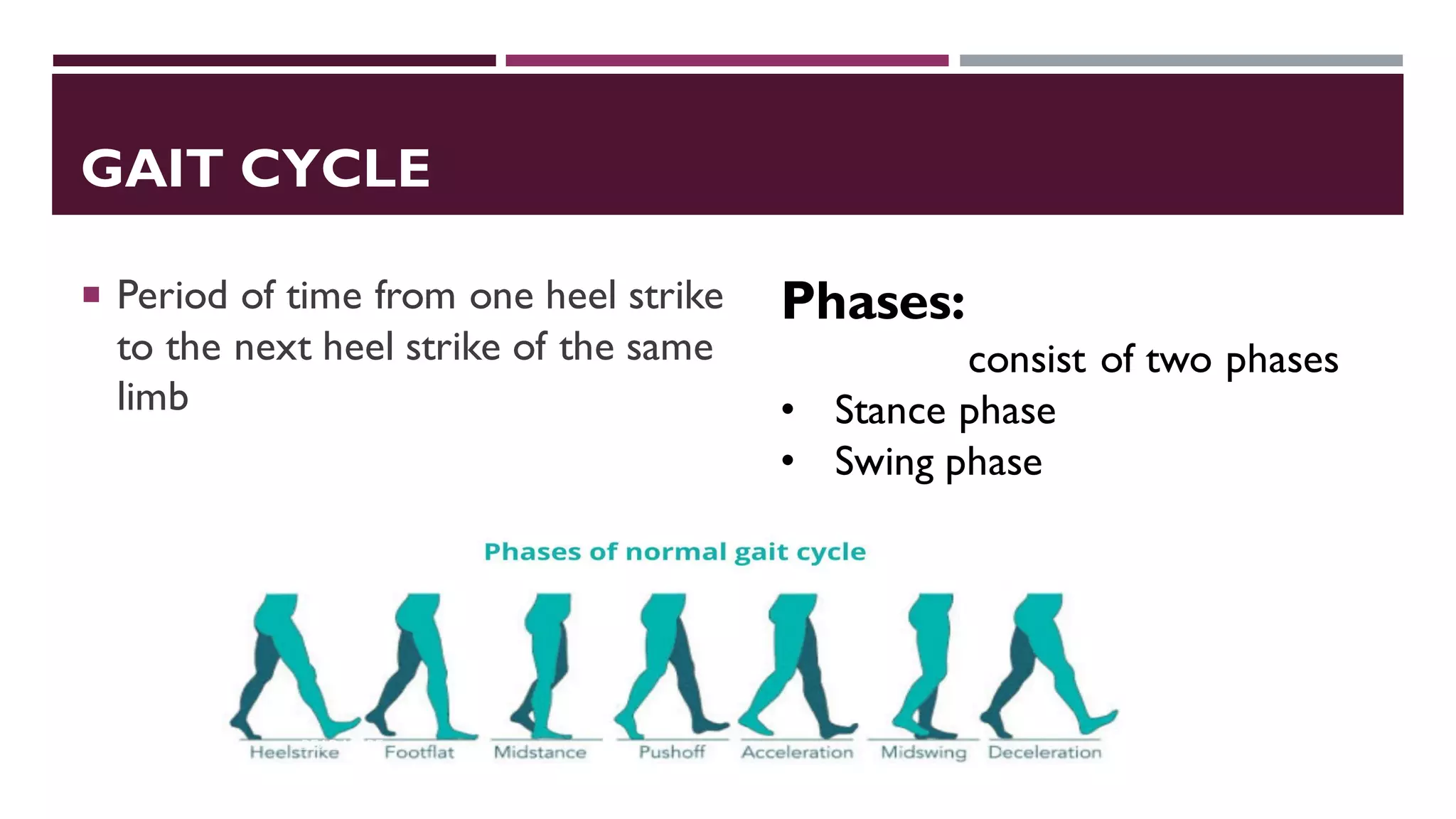
 Period of time from one heel strike
to the next heel strike of the same
limb
Phases:
consist of two phases
• Stance phase
• Swing phase
NORMAL GAIT
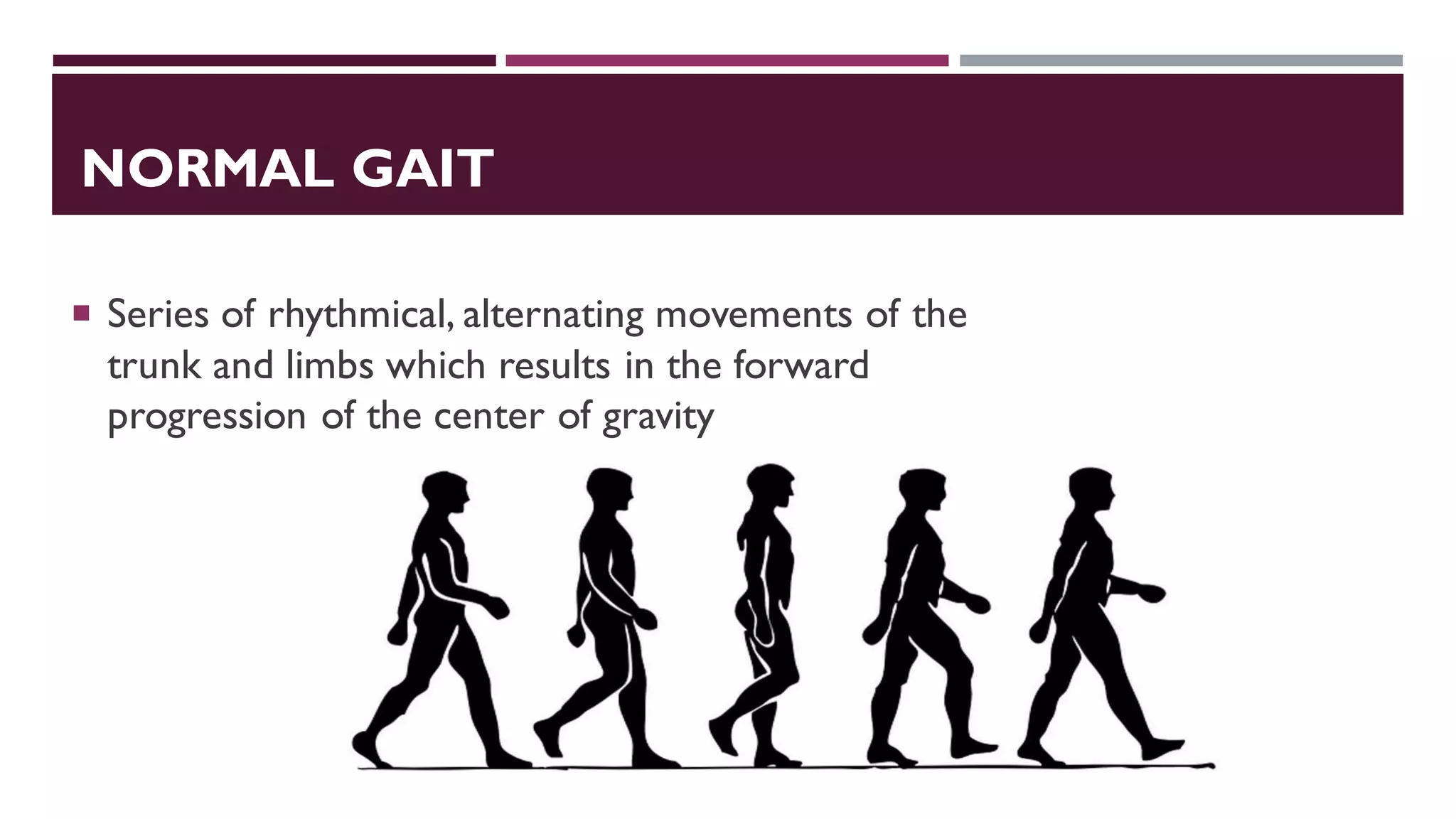
 Series of rhythmical, alternating movements of the
trunk and limbs which results in the forward
progression of the center of gravity
ABNORMAL GAIT
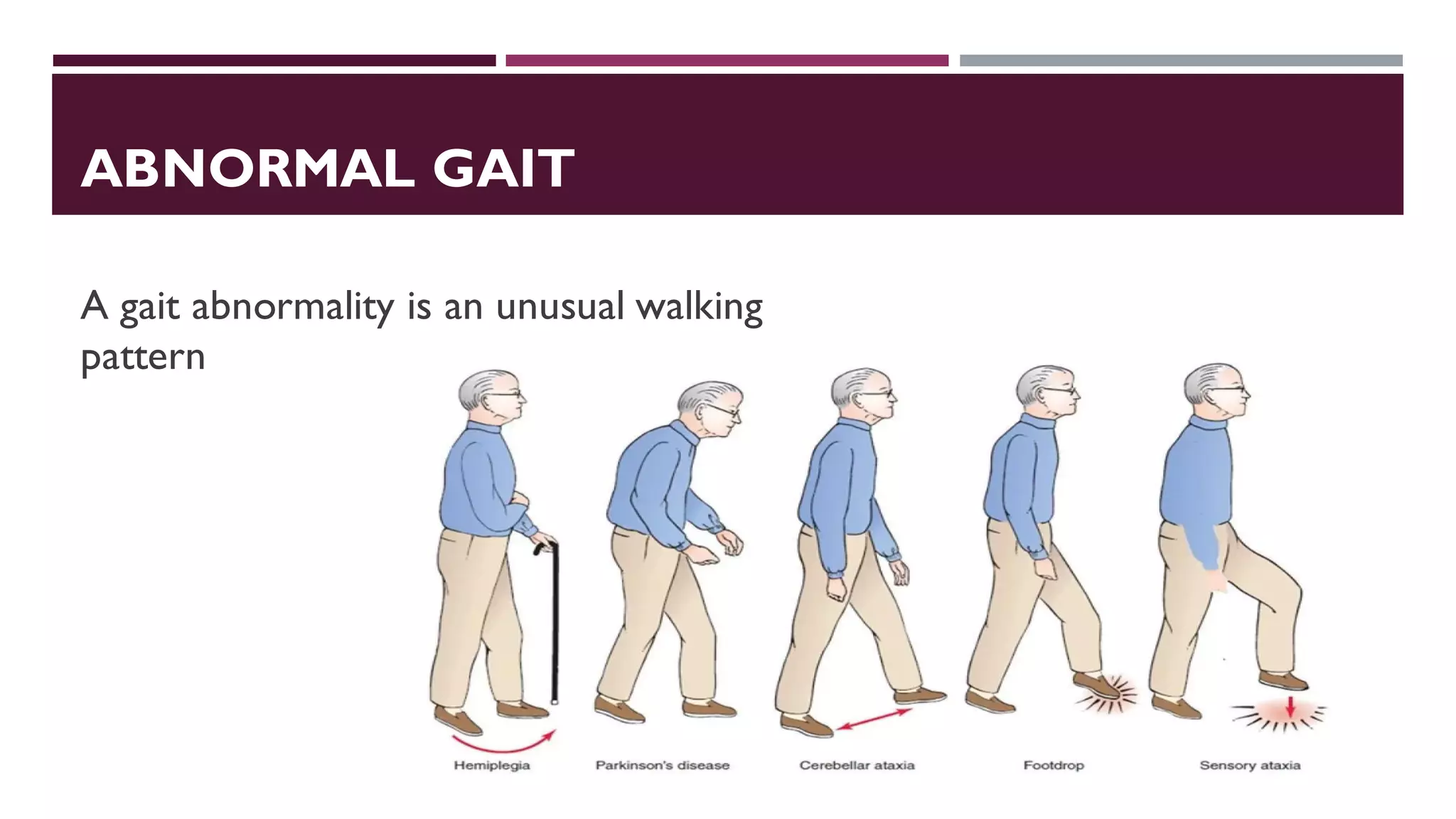
A gait abnormality is an unusual walking
pattern
CAUSES OF ABNORMAL GAIT
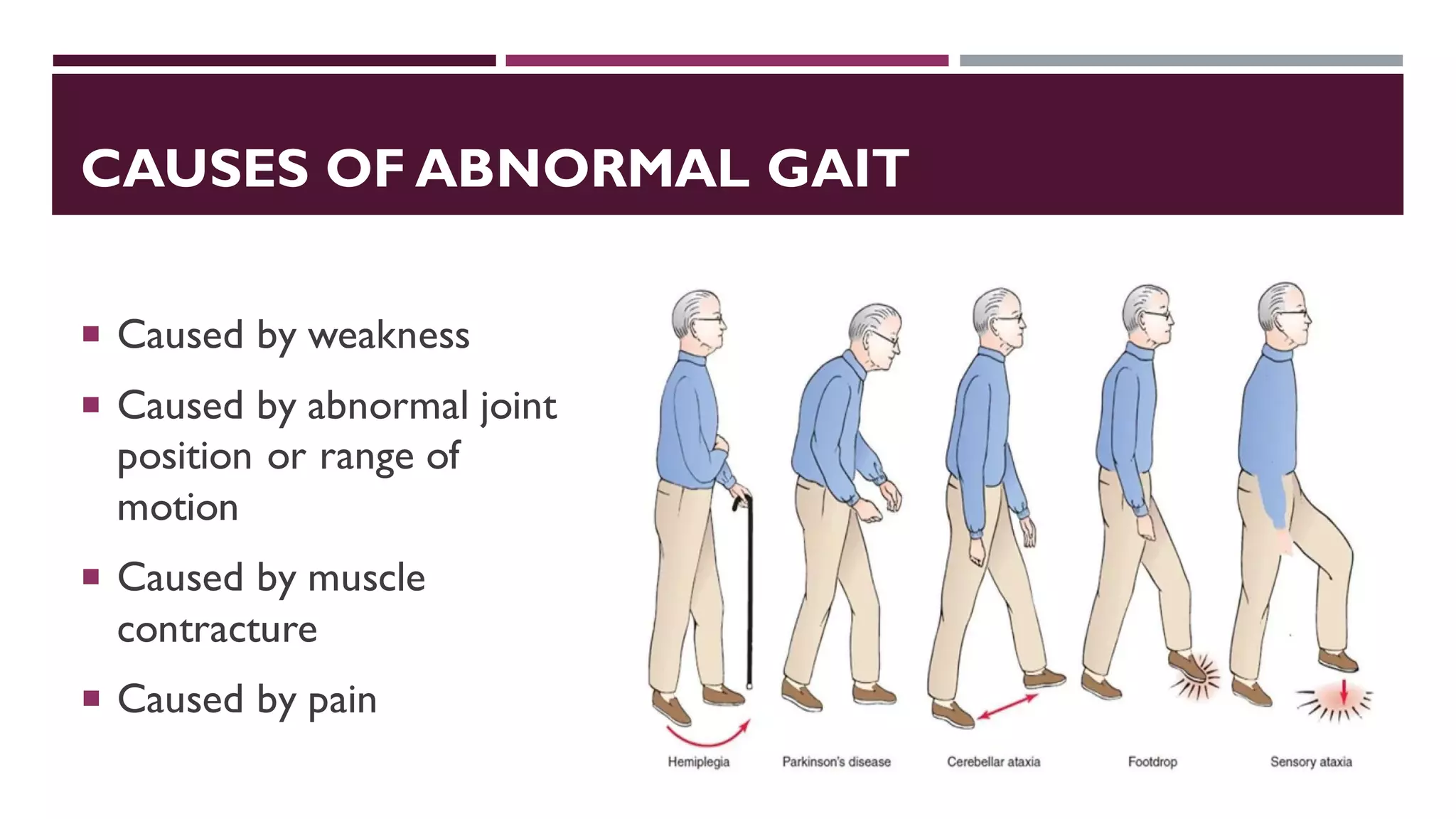
 Caused by weakness
 Caused by abnormal joint
position or range of
motion
 Caused by muscle
contracture
 Caused by pain
ABNORMAL GAIT
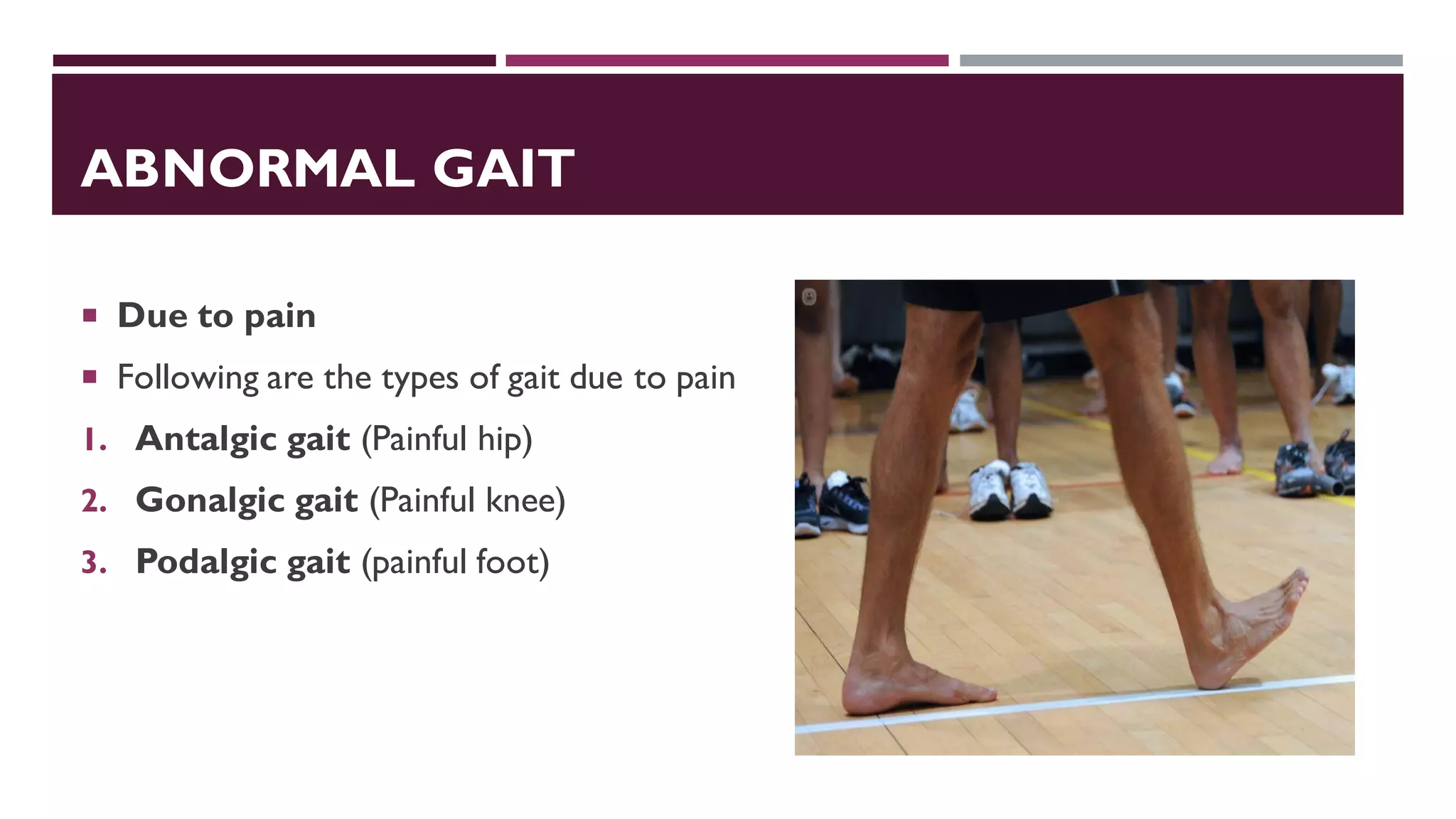
 Due to pain
 Following are the types of gait due to pain
1. Antalgic gait (Painful hip)
2. Gonalgic gait (Painful knee)
3. Podalgic gait (painful foot)
ANTALGIC GAIT
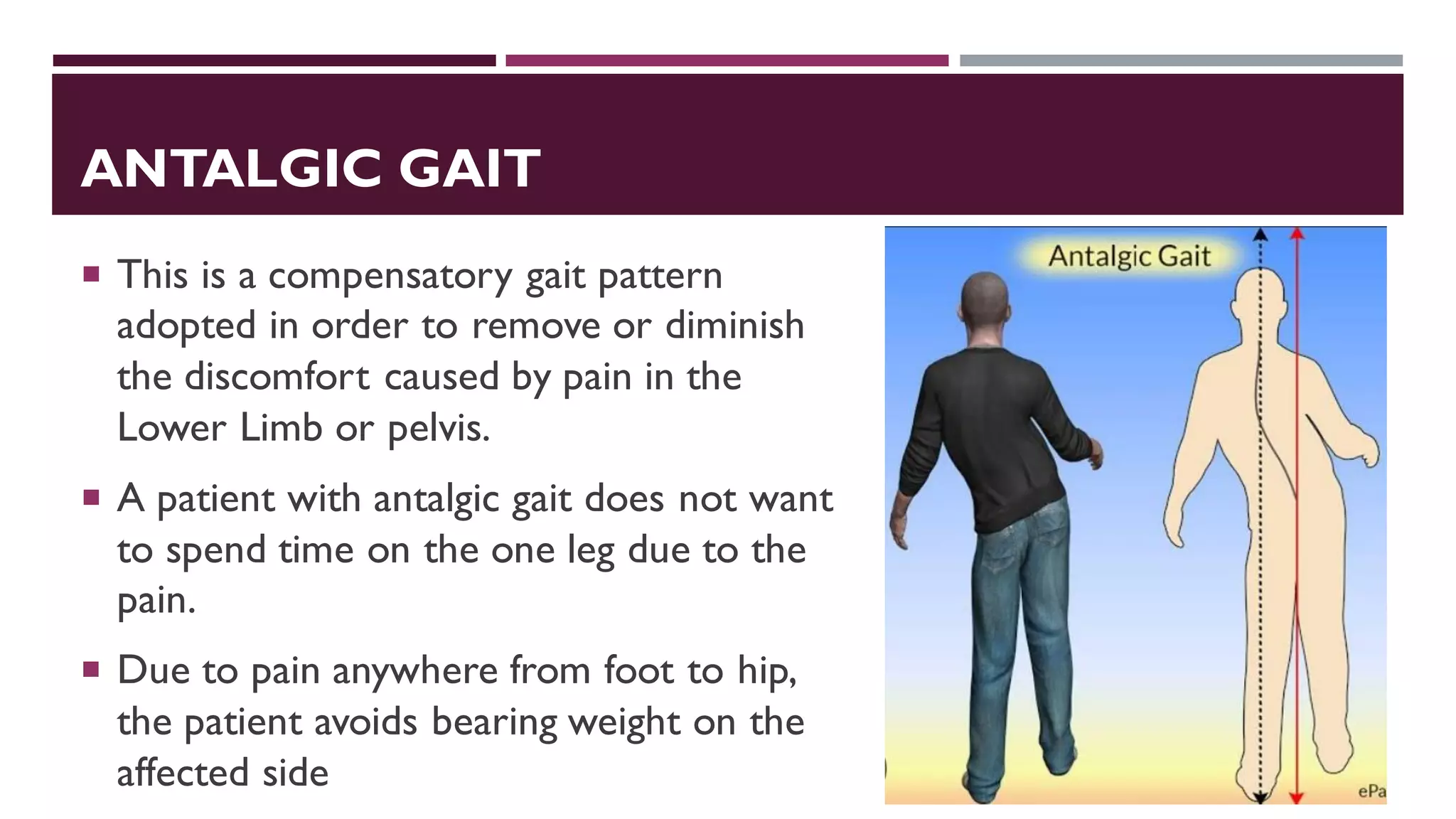
 This is a compensatory gait pattern
adopted in order to remove or diminish
the discomfort caused by pain in the
Lower Limb or pelvis.
 A patient with antalgic gait does not want
to spend time on the one leg due to the
pain.
 Due to pain anywhere from foot to hip,
the patient avoids bearing weight on the
affected side
BIOMECHANICAL EFFECTS
 With antalgic gait, there is an abnormal shortened stance phase on one
steps.
 A patient wants to get their weight off of the affected extremity
 The patient spends most of their stance of their time with their weight
being placed onto the normal leg.
 The swing phase is enhanced on the affected side and may be shortened
on the normal leg in order to get the normal leg back to the ground.
 This is done in order to lift the painful extremity off of the ground.
 When pain is increased by walking, it leads to an antalgic gait.
CAUSES OF ANTALGIC GAIT
 The etiology of antalgic gait can be divided into traumatic and non-
traumatic categories.
 Traumatic etiologies are typically contusions, strains, and overuse
injuries
 while non-traumatic etiologies include infectious, oncologic, and
bone processes.
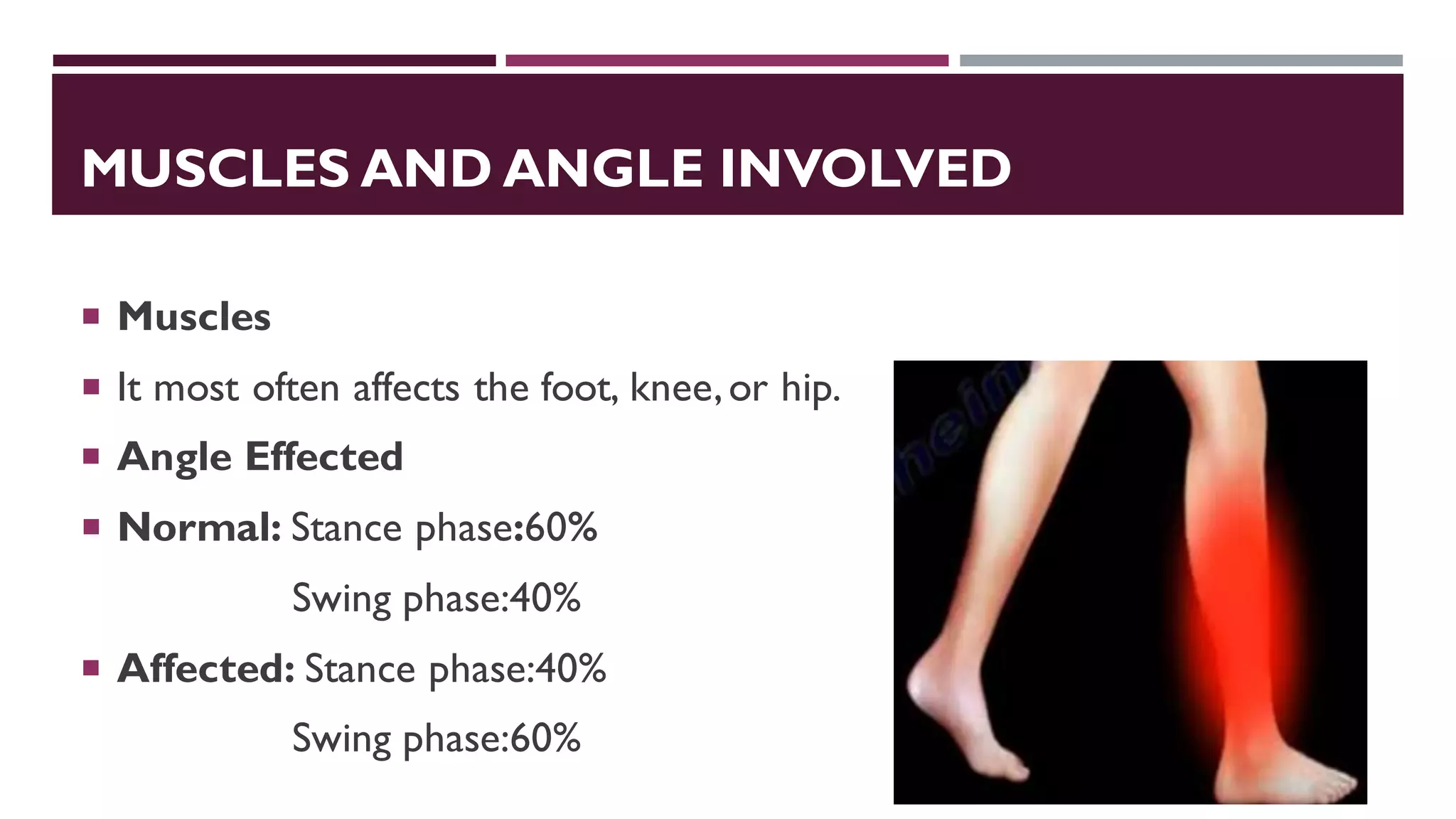
MUSCLES AND ANGLE INVOLVED
 Muscles
 It most often affects the foot, knee,or hip.
 Angle Effected
 Normal: Stance phase:60%
Swing phase:40%
 Affected: Stance phase:40%
Swing phase:60%
TREATMENT
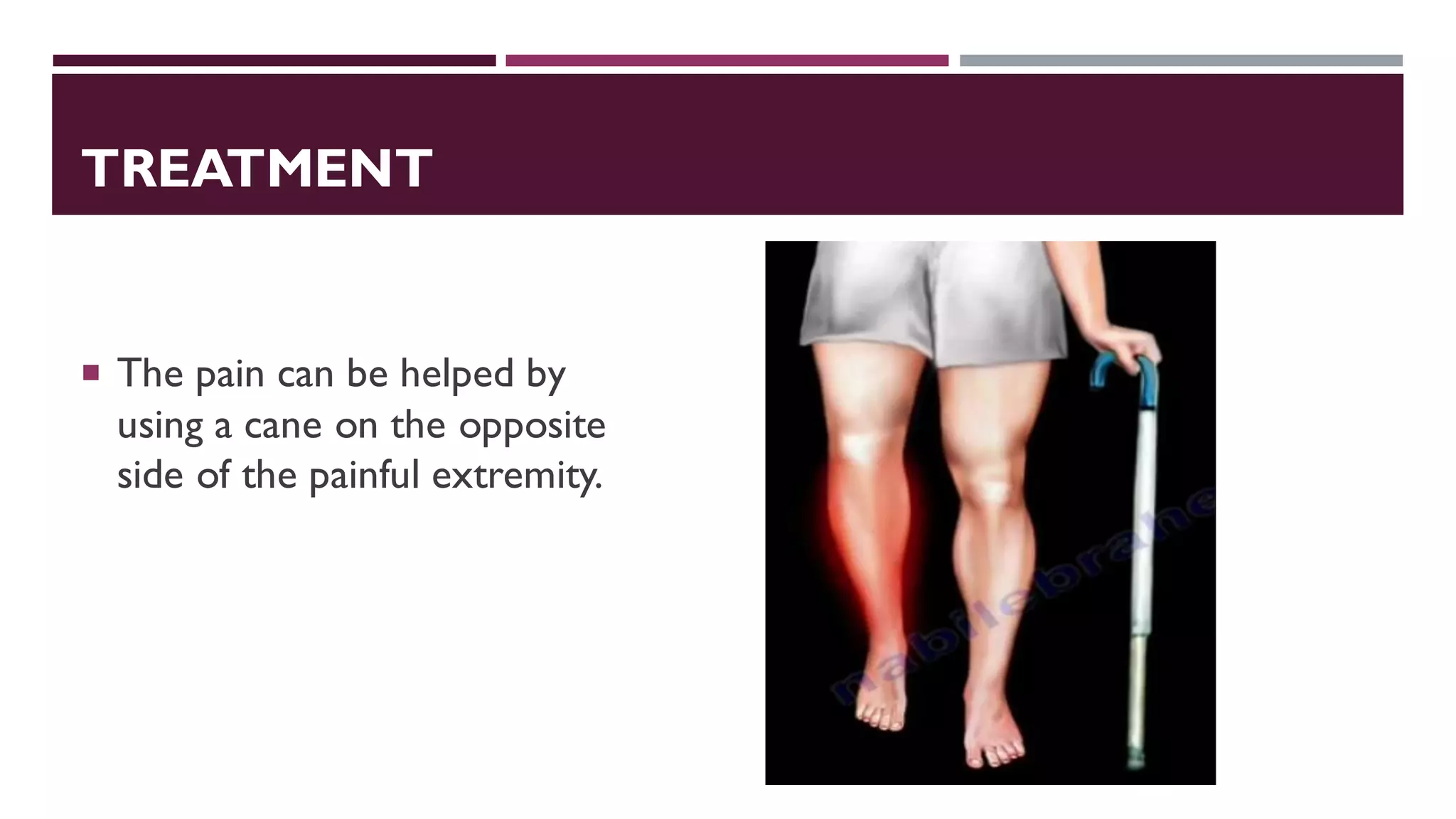
 The pain can be helped by
using a cane on the opposite
side of the painful extremity.
PSOATIC GAIT
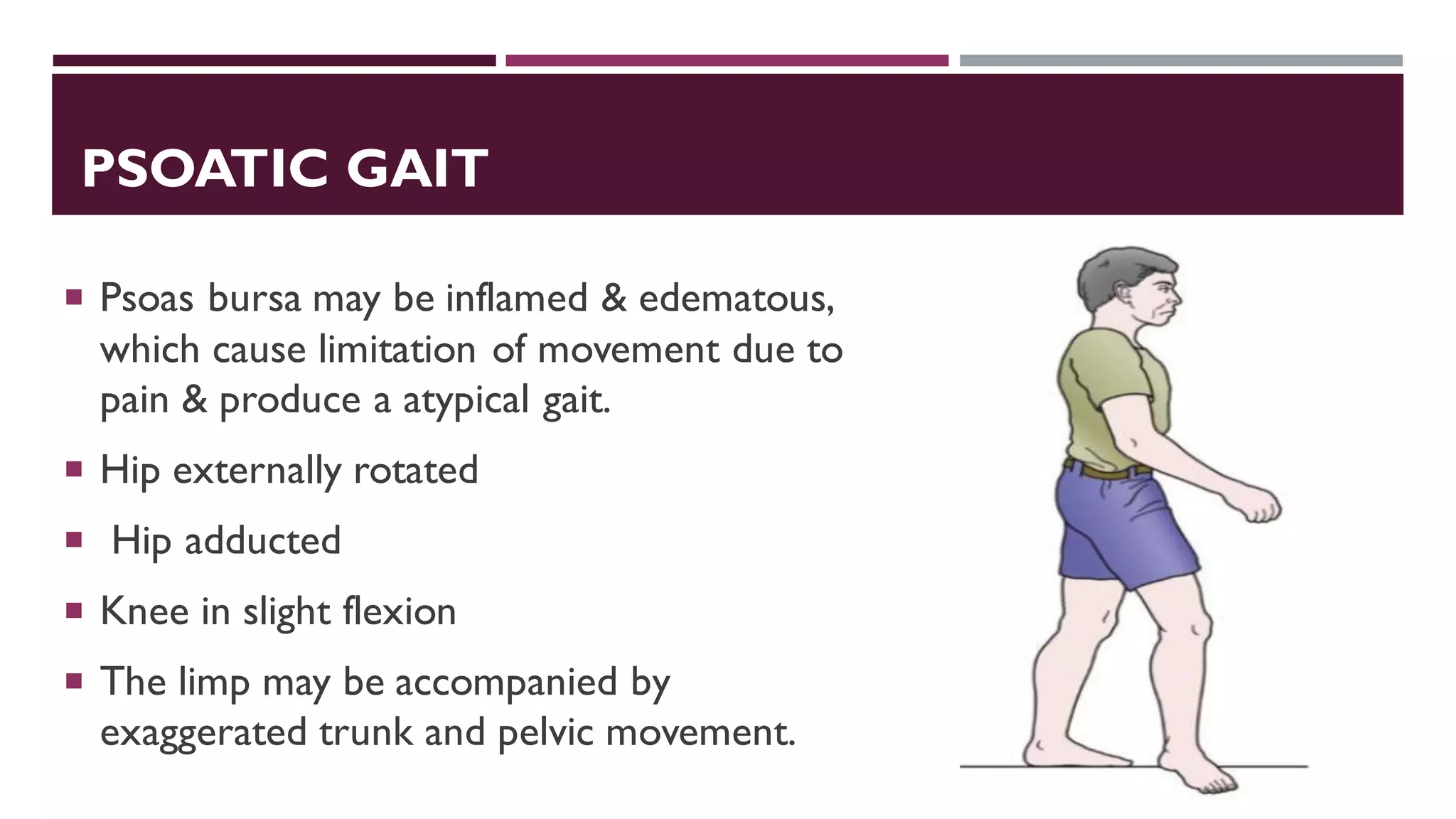
 Psoas bursa may be inflamed & edematous,
which cause limitation of movement due to
pain & produce a atypical gait.
 Hip externally rotated
 Hip adducted
 Knee in slight flexion
 The limp may be accompanied by
exaggerated trunk and pelvic movement.
MUSCLE INVOLVED
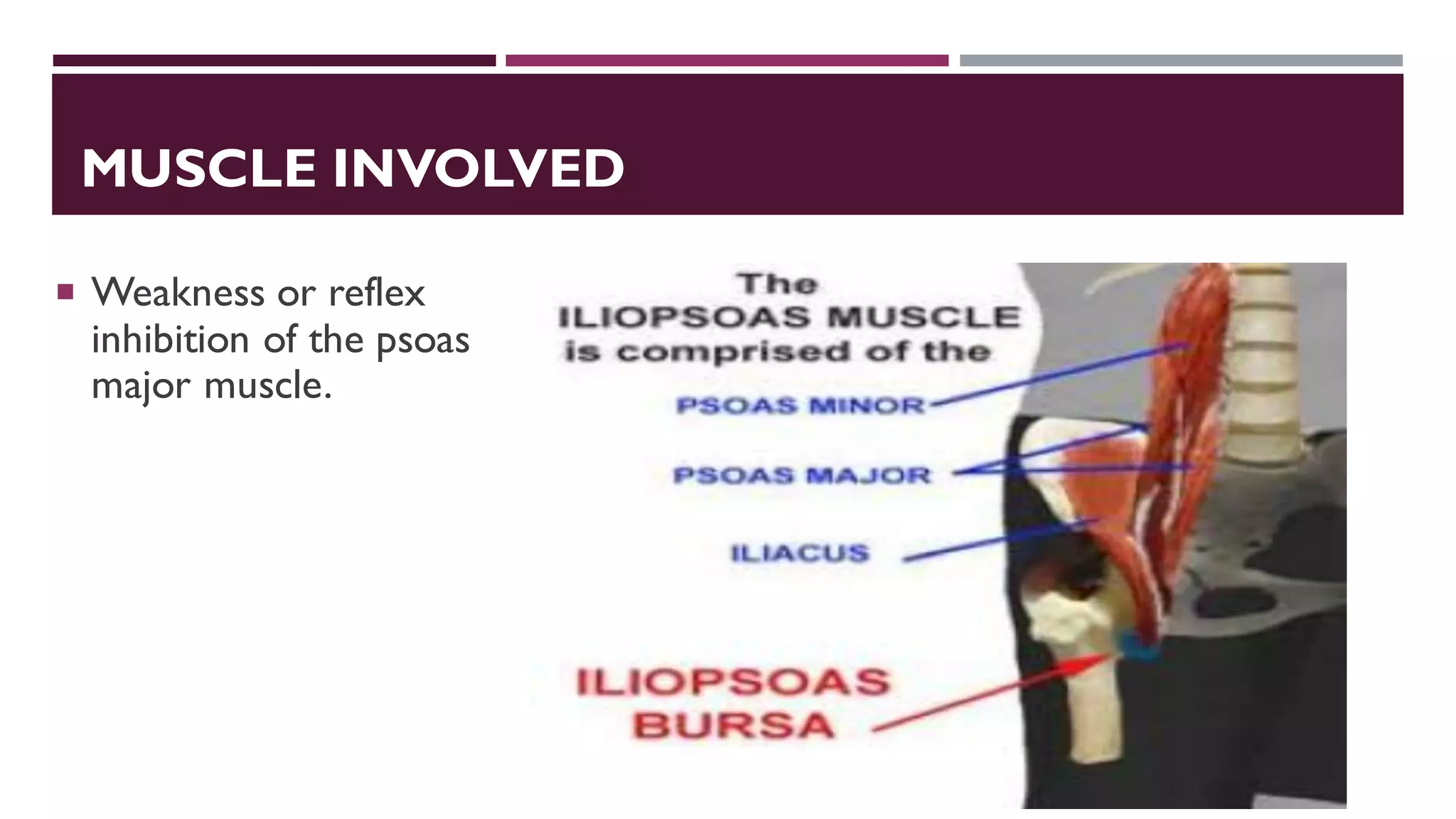
 Weakness or reflex
inhibition of the psoas
major muscle.
DIPLEGIC GAIT
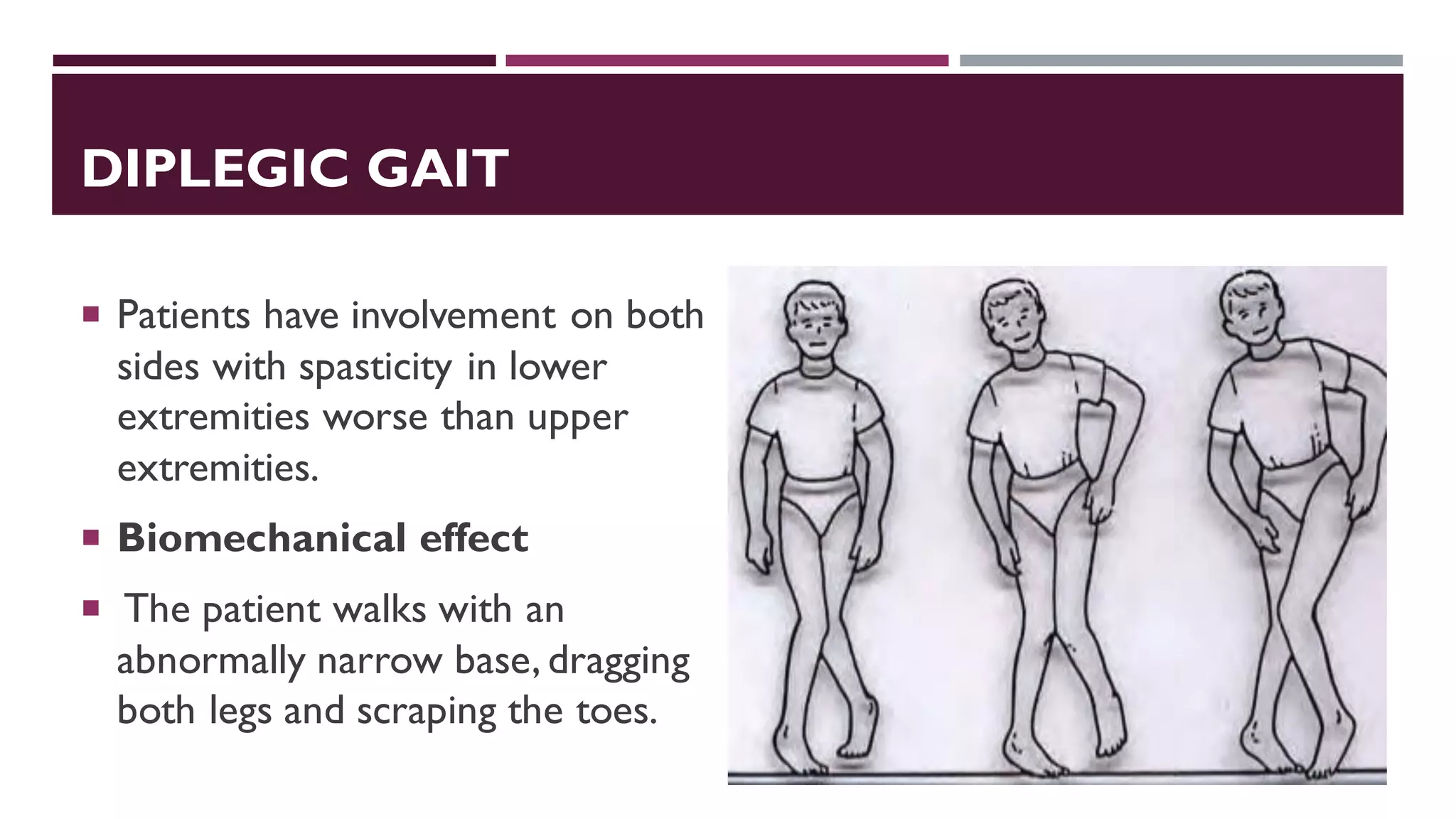
 Patients have involvement on both
sides with spasticity in lower
extremities worse than upper
extremities.
 Biomechanical effect
 The patient walks with an
abnormally narrow base, dragging
both legs and scraping the toes.
MUSCLES INVOLVED
 This gait is seen in bilateral
periventricular lesions, such as
those seen in cerebral palsy.
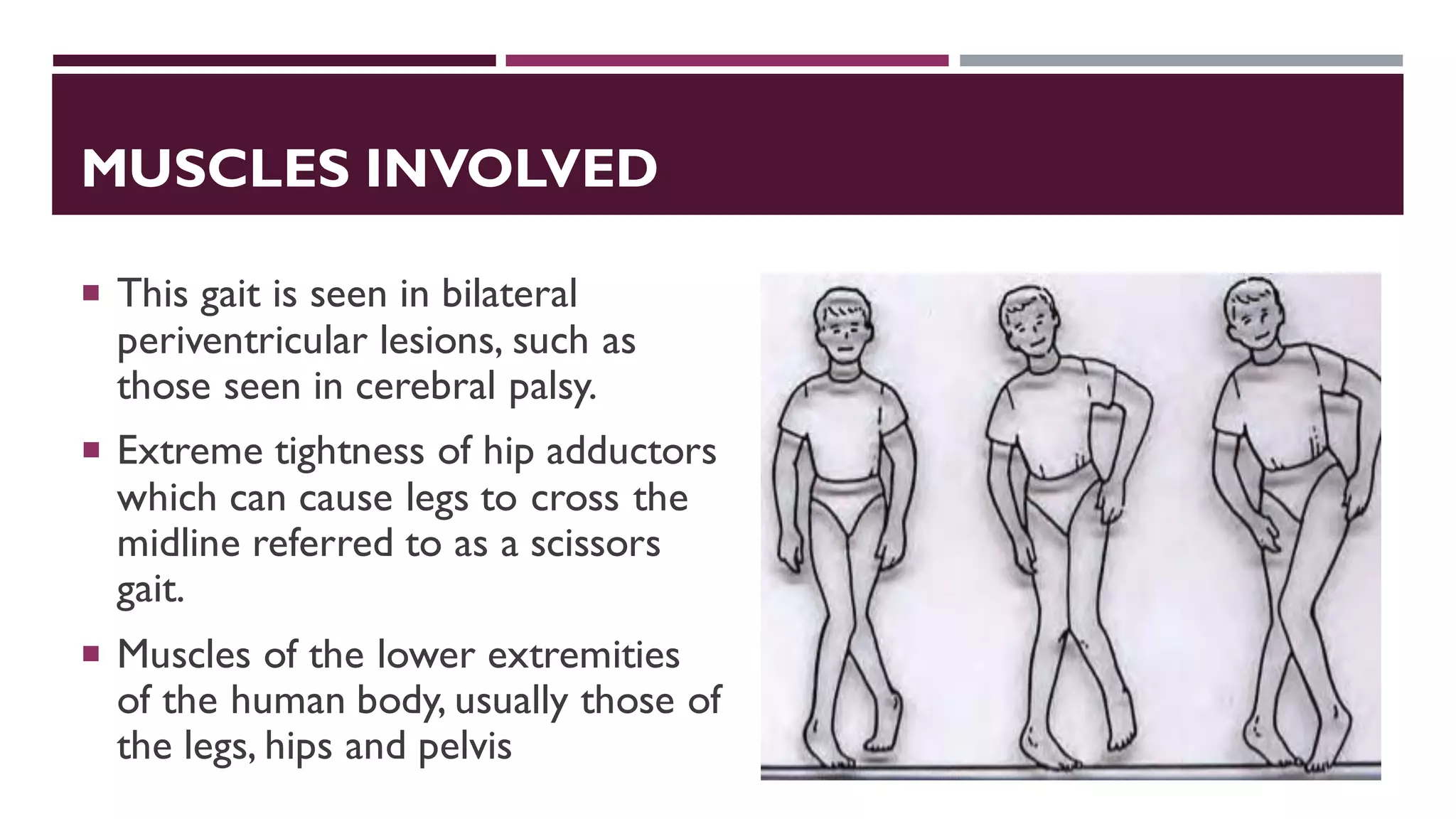
 Extreme tightness of hip adductors
which can cause legs to cross the
midline referred to as a scissors
gait.
 Muscles of the lower extremities
of the human body, usually those of
the legs, hips and pelvis
CAUSES OF DIPLEGIC GAIT
The exact cause is often unknown.
 However, Spastic diplegia cerebral palsy has been associated with
genetic abnormalities;
 congenital brain malformations;
 maternal infections or fevers; and/or injury before,during or
shortly after birth.”
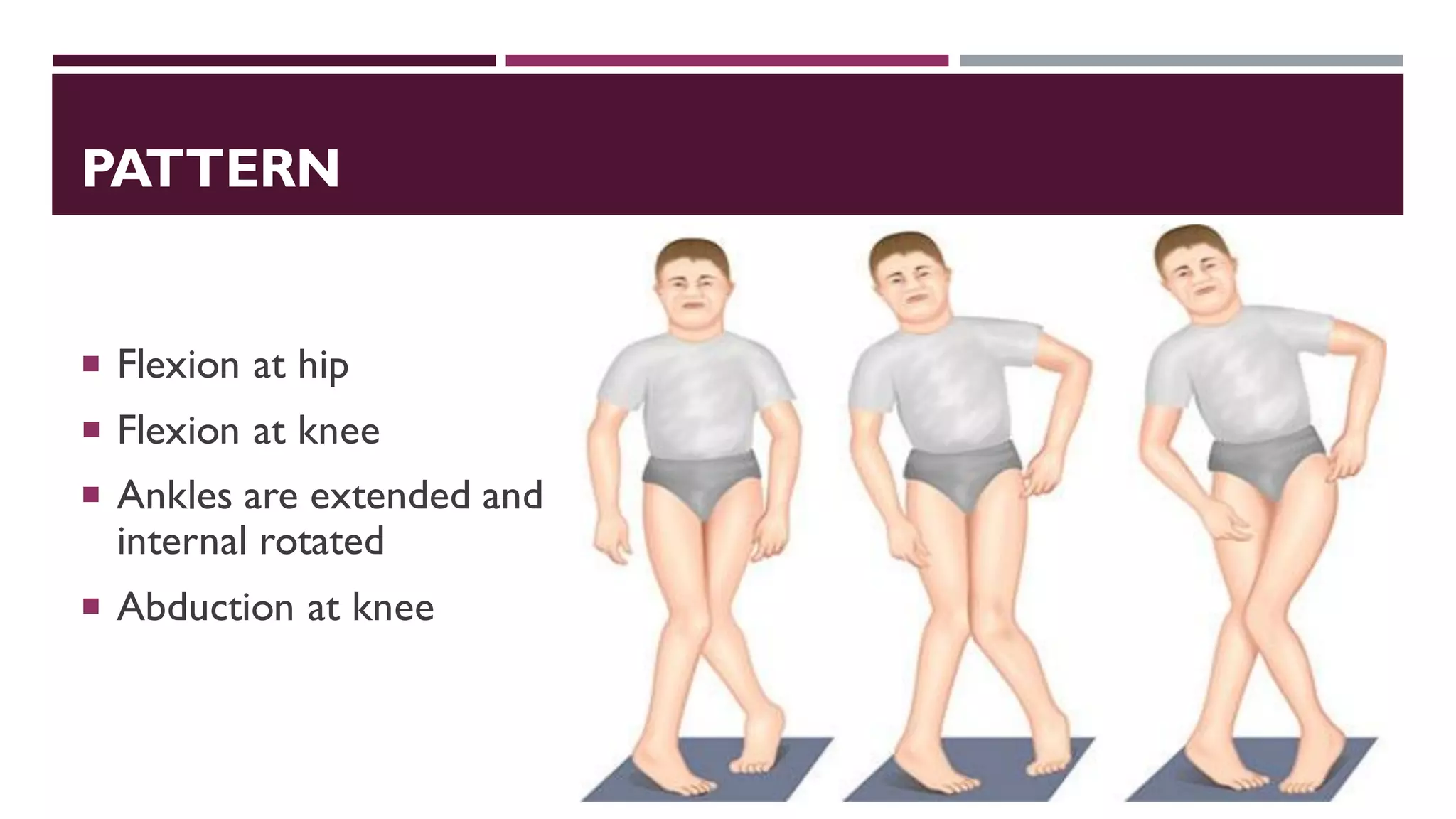
PATTERN
 Flexion at hip
 Flexion at knee
 Ankles are extended and
internal rotated
 Abduction at knee
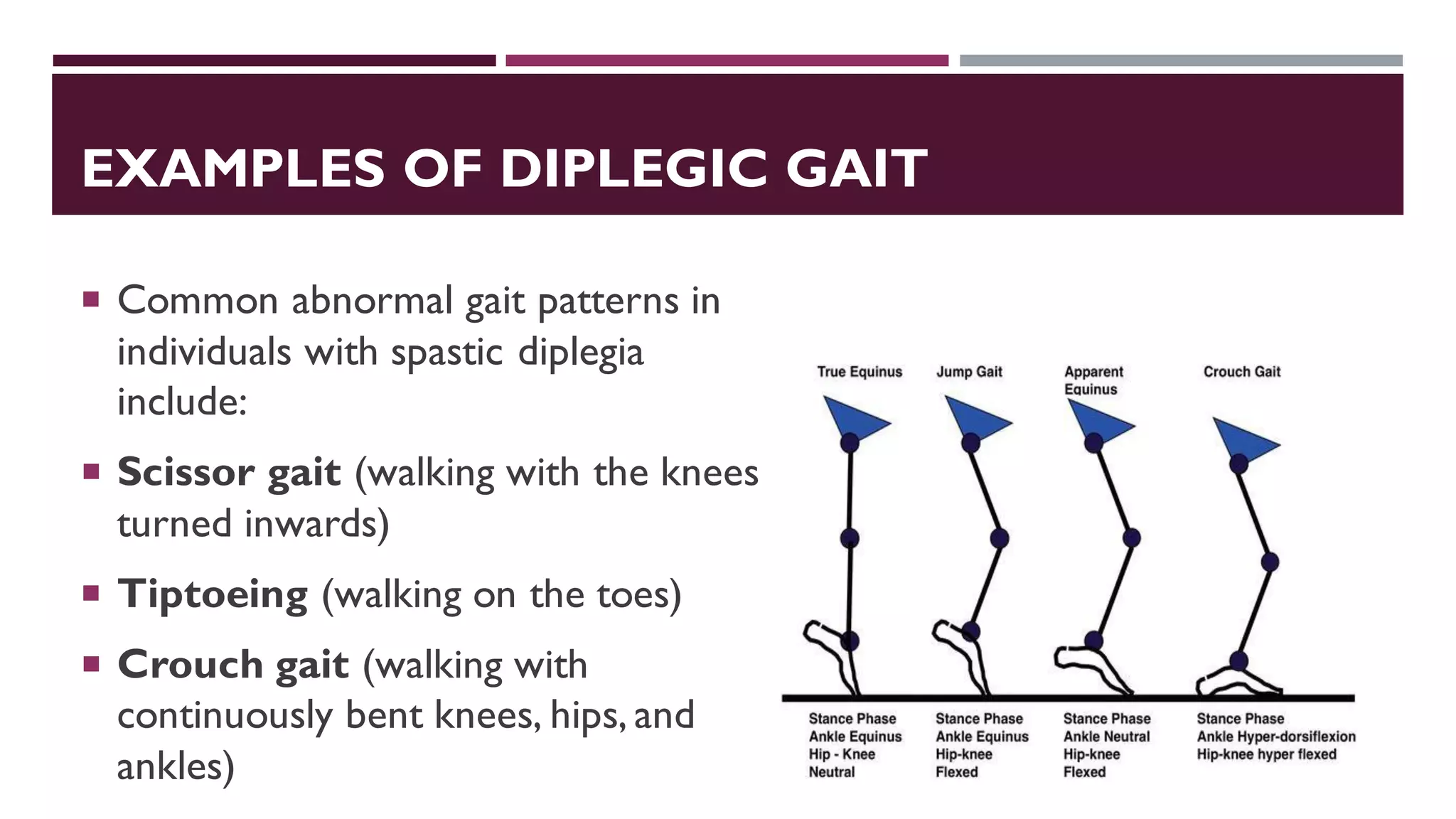
EXAMPLES OF DIPLEGIC GAIT
 Common abnormal gait patterns in
individuals with spastic diplegia
include:
 Scissor gait (walking with the knees
turned inwards)
 Tiptoeing (walking on the toes)
 Crouch gait (walking with
continuously bent knees, hips, and
ankles)
Presentation (2)-1.pdf

Presentation (2)-1.pdf

  • 2.
  • 3.
    GROUP MEMBERS  Alishbakhadim  Ihsan UL haq  Jannat Sohail Assigned by: Dr.Tahir Hafeez
  • 4.
    GAIT CYCLE  Periodof time from one heel strike to the next heel strike of the same limb Phases: consist of two phases • Stance phase • Swing phase
  • 5.
    NORMAL GAIT  Seriesof rhythmical, alternating movements of the trunk and limbs which results in the forward progression of the center of gravity
  • 6.
    ABNORMAL GAIT A gaitabnormality is an unusual walking pattern
  • 7.
    CAUSES OF ABNORMALGAIT  Caused by weakness  Caused by abnormal joint position or range of motion  Caused by muscle contracture  Caused by pain
  • 8.
    ABNORMAL GAIT  Dueto pain  Following are the types of gait due to pain 1. Antalgic gait (Painful hip) 2. Gonalgic gait (Painful knee) 3. Podalgic gait (painful foot)
  • 9.
    ANTALGIC GAIT  Thisis a compensatory gait pattern adopted in order to remove or diminish the discomfort caused by pain in the Lower Limb or pelvis.  A patient with antalgic gait does not want to spend time on the one leg due to the pain.  Due to pain anywhere from foot to hip, the patient avoids bearing weight on the affected side
  • 10.
    BIOMECHANICAL EFFECTS  Withantalgic gait, there is an abnormal shortened stance phase on one steps.  A patient wants to get their weight off of the affected extremity  The patient spends most of their stance of their time with their weight being placed onto the normal leg.  The swing phase is enhanced on the affected side and may be shortened on the normal leg in order to get the normal leg back to the ground.  This is done in order to lift the painful extremity off of the ground.  When pain is increased by walking, it leads to an antalgic gait.
  • 11.
    CAUSES OF ANTALGICGAIT  The etiology of antalgic gait can be divided into traumatic and non- traumatic categories.  Traumatic etiologies are typically contusions, strains, and overuse injuries  while non-traumatic etiologies include infectious, oncologic, and bone processes.
  • 12.
    MUSCLES AND ANGLEINVOLVED  Muscles  It most often affects the foot, knee,or hip.  Angle Effected  Normal: Stance phase:60% Swing phase:40%  Affected: Stance phase:40% Swing phase:60%
  • 13.
    TREATMENT  The paincan be helped by using a cane on the opposite side of the painful extremity.
  • 14.
    PSOATIC GAIT  Psoasbursa may be inflamed & edematous, which cause limitation of movement due to pain & produce a atypical gait.  Hip externally rotated  Hip adducted  Knee in slight flexion  The limp may be accompanied by exaggerated trunk and pelvic movement.
  • 15.
    MUSCLE INVOLVED  Weaknessor reflex inhibition of the psoas major muscle.
  • 16.
    DIPLEGIC GAIT  Patientshave involvement on both sides with spasticity in lower extremities worse than upper extremities.  Biomechanical effect  The patient walks with an abnormally narrow base, dragging both legs and scraping the toes.
  • 17.
    MUSCLES INVOLVED  Thisgait is seen in bilateral periventricular lesions, such as those seen in cerebral palsy.  Extreme tightness of hip adductors which can cause legs to cross the midline referred to as a scissors gait.  Muscles of the lower extremities of the human body, usually those of the legs, hips and pelvis
  • 18.
    CAUSES OF DIPLEGICGAIT The exact cause is often unknown.  However, Spastic diplegia cerebral palsy has been associated with genetic abnormalities;  congenital brain malformations;  maternal infections or fevers; and/or injury before,during or shortly after birth.”
  • 19.
    PATTERN  Flexion athip  Flexion at knee  Ankles are extended and internal rotated  Abduction at knee
  • 20.
    EXAMPLES OF DIPLEGICGAIT  Common abnormal gait patterns in individuals with spastic diplegia include:  Scissor gait (walking with the knees turned inwards)  Tiptoeing (walking on the toes)  Crouch gait (walking with continuously bent knees, hips, and ankles)