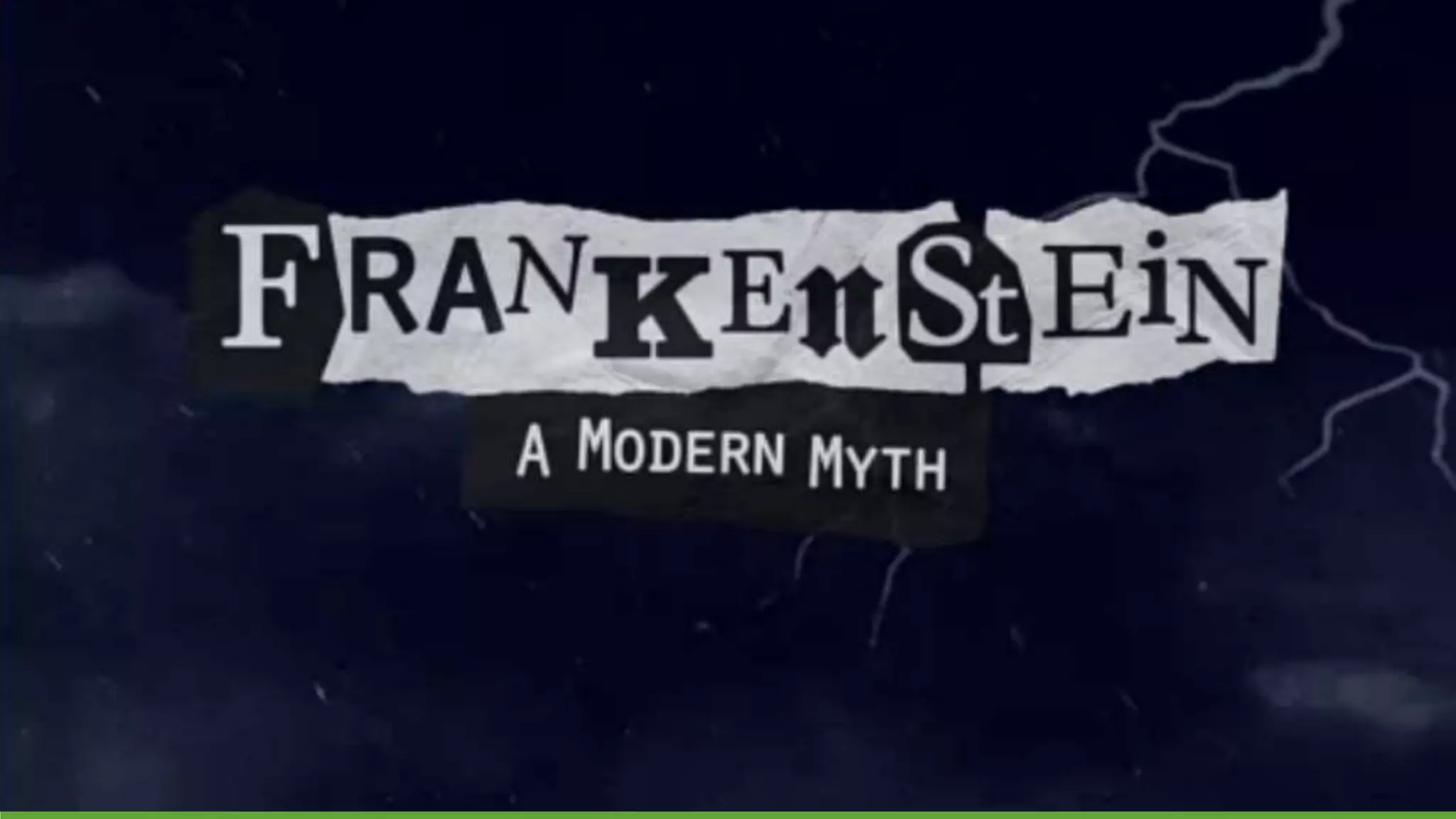
Frankenstein: A Modern 
Myth
Type of Documentary 
Mixed as it involves the three key feature to make a mixed documentary, a variety of interviews 
with relevance people, archive material and also narration which is used to pull it all together so 
that the narration anchors whatever is being shown, and also archive material used. 
Narrative Structure 
Non linear - as it doesn't follow in chronological order. 
Single stranded - as there is only the one narrative throughout the documentary, Frankenstein. 
Themes 
The main themes throughout the documentary are how the horror genre is becoming more 
popular, the different versions of Frankenstein from different peoples aspects, contreversy on 
how he has been adapted over time and Mary Shelley.
Camera Work 
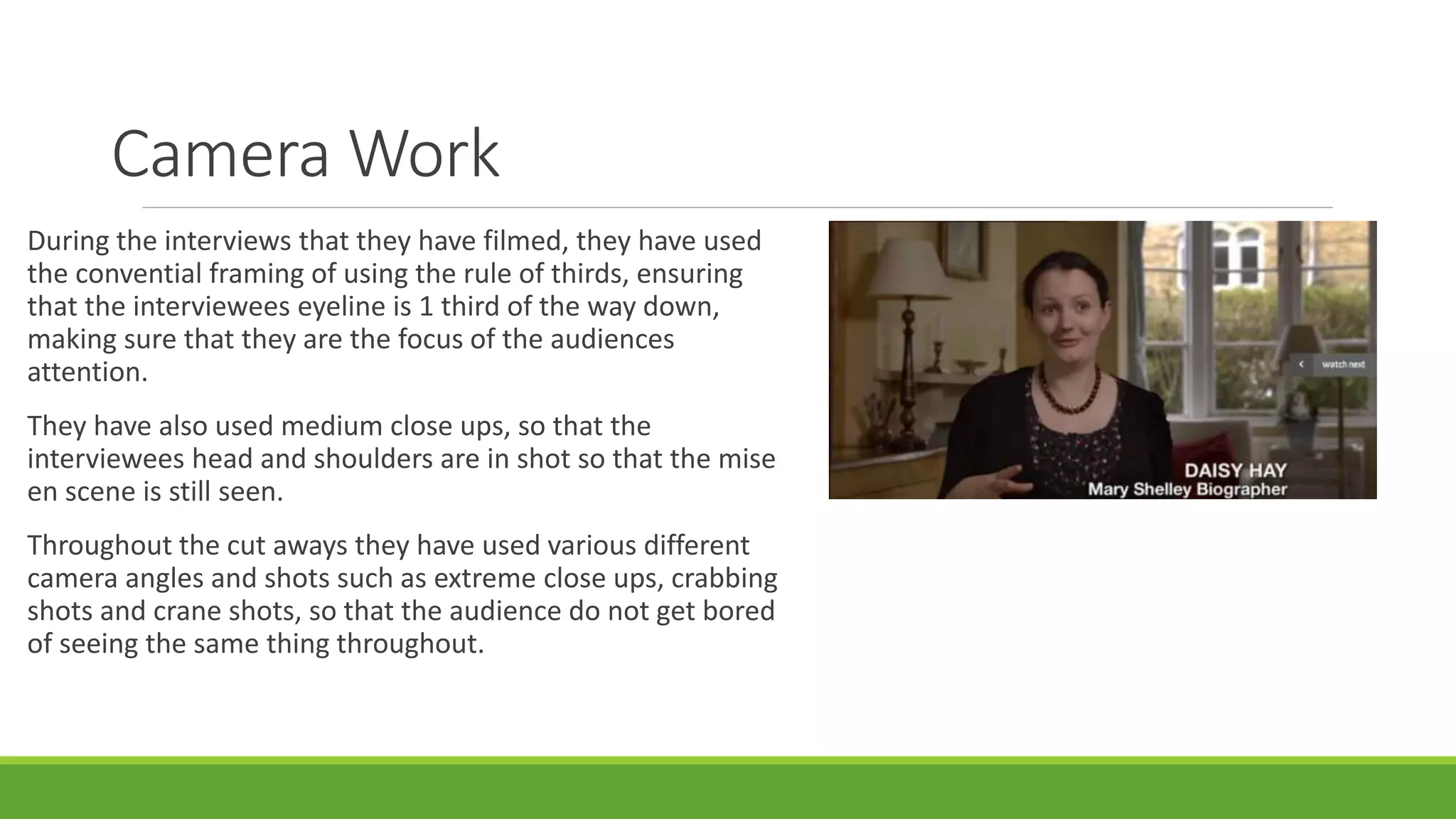
During the interviews that they have filmed, they have used 
the convential framing of using the rule of thirds, ensuring 
that the interviewees eyeline is 1 third of the way down, 
making sure that they are the focus of the audiences 
attention. 
They have also used medium close ups, so that the 
interviewees head and shoulders are in shot so that the mise 
en scene is still seen. 
Throughout the cut aways they have used various different 
camera angles and shots such as extreme close ups, crabbing 
shots and crane shots, so that the audience do not get bored 
of seeing the same thing throughout.
Mise-En-Scene 
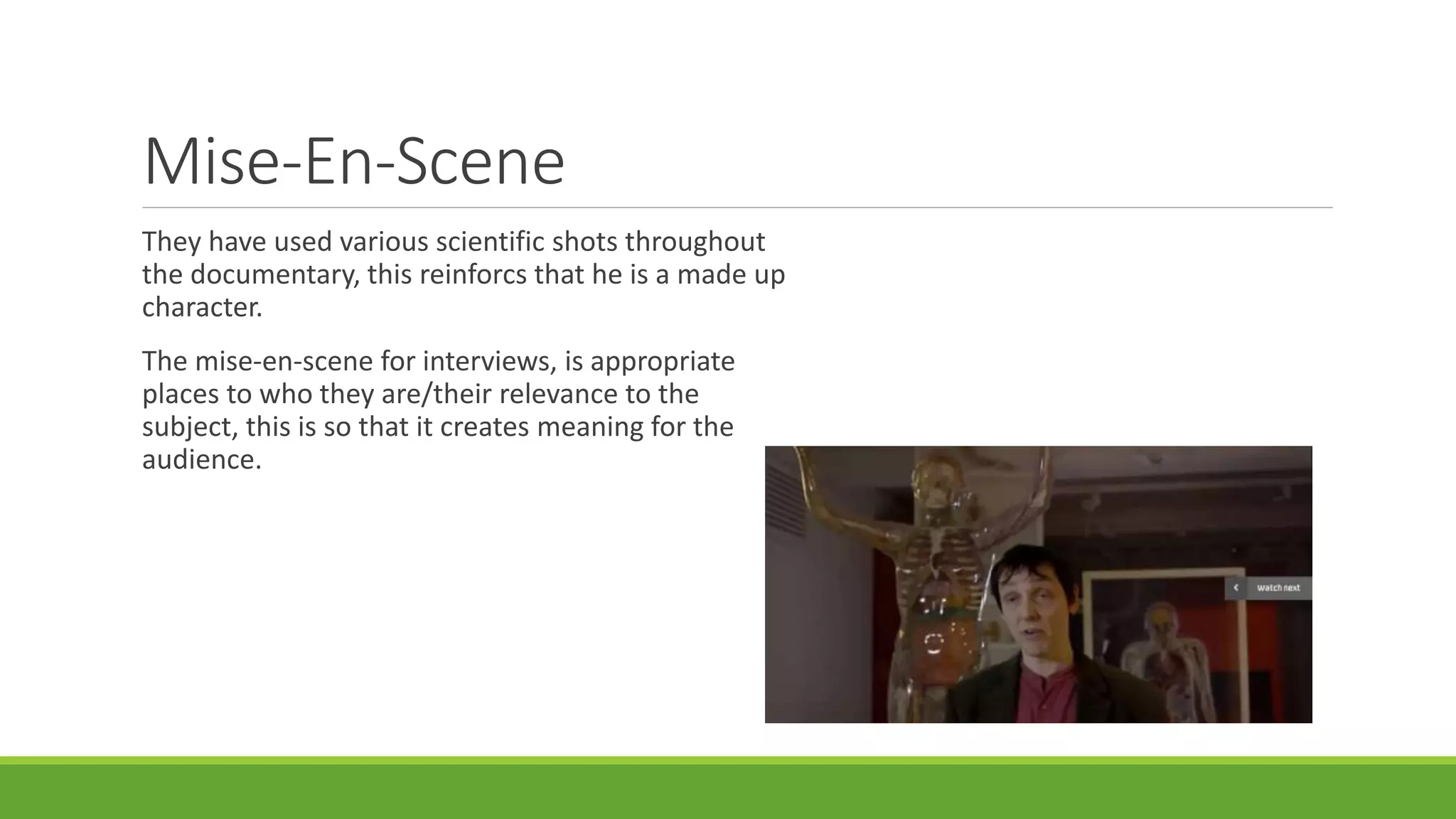
They have used various scientific shots throughout 
the documentary, this reinforcs that he is a made up 
character. 
The mise-en-scene for interviews, is appropriate 
places to who they are/their relevance to the 
subject, this is so that it creates meaning for the 
audience.
Sound 
There is has been non diagetic sound added to the documentary, along with the general diagetic 
sound. They have added music underplaying the documentary quietly so that there is always 
something playing, they have also added sound effets such as a heartbeat in an intense scene, 
this makes it more effective for the audience. 
When in the interviews, there is the natural background.
Editing 
The documentary is edited at a face pace using cuts, this was done so that the audience is 
always interested and it doesn't get boring as it is constantly changing. 
They have edited together montages of archive material, this was used so that the audience 
could see the story from all different versions of the story quickly
Archive Material 
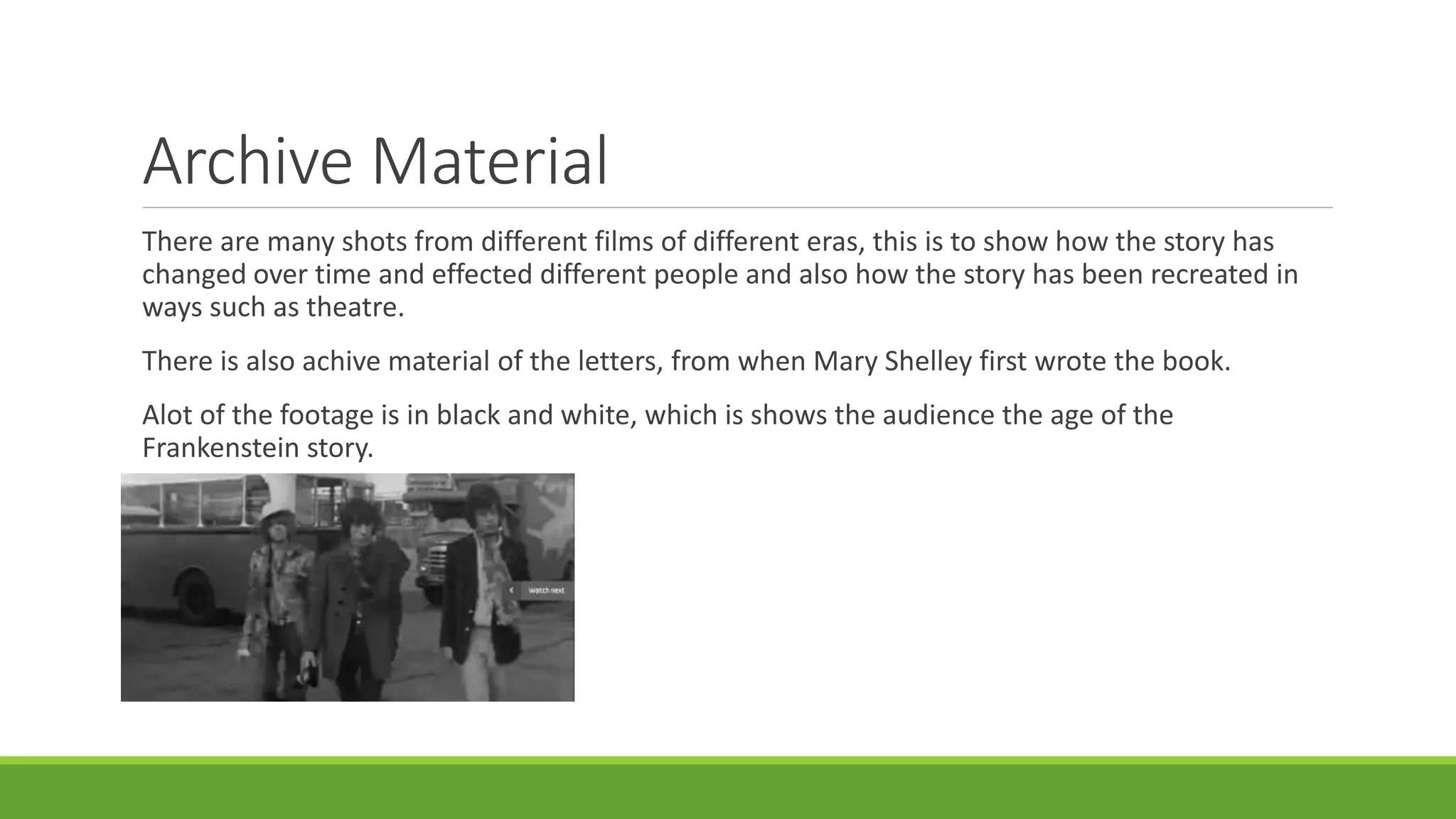
There are many shots from different films of different eras, this is to show how the story has 
changed over time and effected different people and also how the story has been recreated in 
ways such as theatre. 
There is also achive material of the letters, from when Mary Shelley first wrote the book. 
Alot of the footage is in black and white, which is shows the audience the age of the 
Frankenstein story.
Graphics 
During the interviews, small text comes up at the bottoms of the screen in a plain white, arial 
font with the name of the interviewee in capitals, and then on the line below in lower case and 
slightly smaller font size, has the relevance of the interviewee to the topic.

Frankenstein: A Modern Myth Analysis

  • 1.
  • 2.
    Type of Documentary Mixed as it involves the three key feature to make a mixed documentary, a variety of interviews with relevance people, archive material and also narration which is used to pull it all together so that the narration anchors whatever is being shown, and also archive material used. Narrative Structure Non linear - as it doesn't follow in chronological order. Single stranded - as there is only the one narrative throughout the documentary, Frankenstein. Themes The main themes throughout the documentary are how the horror genre is becoming more popular, the different versions of Frankenstein from different peoples aspects, contreversy on how he has been adapted over time and Mary Shelley.
  • 3.
    Camera Work Duringthe interviews that they have filmed, they have used the convential framing of using the rule of thirds, ensuring that the interviewees eyeline is 1 third of the way down, making sure that they are the focus of the audiences attention. They have also used medium close ups, so that the interviewees head and shoulders are in shot so that the mise en scene is still seen. Throughout the cut aways they have used various different camera angles and shots such as extreme close ups, crabbing shots and crane shots, so that the audience do not get bored of seeing the same thing throughout.
  • 4.
    Mise-En-Scene They haveused various scientific shots throughout the documentary, this reinforcs that he is a made up character. The mise-en-scene for interviews, is appropriate places to who they are/their relevance to the subject, this is so that it creates meaning for the audience.
  • 5.
    Sound There ishas been non diagetic sound added to the documentary, along with the general diagetic sound. They have added music underplaying the documentary quietly so that there is always something playing, they have also added sound effets such as a heartbeat in an intense scene, this makes it more effective for the audience. When in the interviews, there is the natural background.
  • 6.
    Editing The documentaryis edited at a face pace using cuts, this was done so that the audience is always interested and it doesn't get boring as it is constantly changing. They have edited together montages of archive material, this was used so that the audience could see the story from all different versions of the story quickly
  • 7.
    Archive Material Thereare many shots from different films of different eras, this is to show how the story has changed over time and effected different people and also how the story has been recreated in ways such as theatre. There is also achive material of the letters, from when Mary Shelley first wrote the book. Alot of the footage is in black and white, which is shows the audience the age of the Frankenstein story.
  • 8.
    Graphics During theinterviews, small text comes up at the bottoms of the screen in a plain white, arial font with the name of the interviewee in capitals, and then on the line below in lower case and slightly smaller font size, has the relevance of the interviewee to the topic.