Presentation
◦ Business Development:
What is Business development?
Some people say Business development is sales, some say it is partnerships, and some say it is hustling. But business development is the creation of long
term value for the company from customers, markets and relationships.
What is long term value? It is
 Cash
 Opportunities
 Sustainability
 Competitive Advantage
 Customers discovery
 Pay debts
 Solve your problem
 Market—finding quality products
 Relationships—build and manage strategic alliances with customers and partners—building long term relations with customers and suppliers
Thus business development is not SALES! BUT is a strategic activity for growth and development. E.g. Football champion and Apple---every field needs
business development.
Good strategy, Bad strategy:
Good strategy identifies the key challenge to overcome. Bad strategy fails to identify the
nature of the challenge. If you don’t know what the problem is, you can’t evaluate
alternative guiding policies or actions to take, and you can’t adjust your strategy as you
learn more over time.
Proper and Strategic Communications:
In five seconds you are judging us in your own terms
First impression---customer behaves the way you deal with the first time—
professionalism. If not excel it.
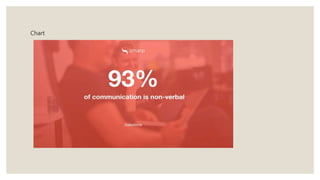
Chart
Communication
“It is not what you say but how you say” how you say matters most—that is strategic communication in both
personal and professional. It’s not manipulation, its strategic communication—you heard of many people
saying Ali accepts only Omar.
Have any one of you felt hostage in conversation?
How to connect with people in a digital world?—that is where psychology comes in.
Misunderstanding brings loss of relationship—so you need effective communication. Translate those
information into day to day activities and tasks.
Effective communication needs sense of humility—always be wrong, trustful and it’s not about you but about
the company.
Take this to home: you actions either promote or nullify your words.
Effective communications saves time and saves emotions—if they want paracetamol don’t send aspirin—
meeting customer expectations, do what you said I will do.
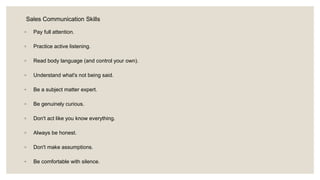
Sales Communication Skills
◦ Pay full attention.
◦ Practice active listening.
◦ Read body language (and control your own).
◦ Understand what's not being said.
◦ Be a subject matter expert.
◦ Be genuinely curious.
◦ Don't act like you know everything.
◦ Always be honest.
◦ Don't make assumptions.
◦ Be comfortable with silence.
Communication = Sales Success
Sales communication skills are by far the most important weapon in a salesperson's arsenal.
Make sure to keep yours sharp and ready to use—also interpersonal relationship skills.
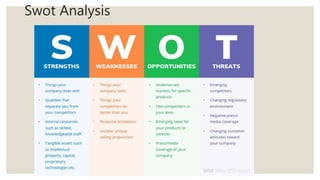
SWOT Analysis of the Company:
SWOT analysis using SWOT diagrams or matrices is a key part of any business planning or
analysis.
SWOT stands for strengths, weaknesses, opportunities, and threats. Strengths and weaknesses
are internal factors and opportunities and threats are external factors. A SWOT diagram analyzes
a project or business venture by focusing on each of these factors. It typically consists of four
boxes, one for each area, but the exact shape may vary depending on the design.
Swot Analysis
Knowledge Sharing:
As Kim Wall, Atlassian team lead for technical account management, puts it, “You might
find old data or old knowledge that's not useful anymore,” she explained. “You might not
find the answers that you're looking for at all. Even though they live there, you may not
find them.”
Knowledge sharing is the exchange of information or understanding between people,
teams, communities, or organizations. It’s a proactive and intentional act that expands
the number of entities in the know while also creating or building upon an accessible
archive of knowledge for others.
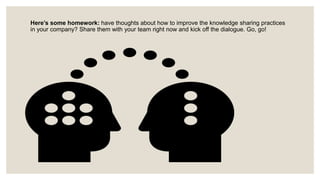
Here’s some homework: have thoughts about how to improve the knowledge sharing practices
in your company? Share them with your team right now and kick off the dialogue. Go, go!
Employee and customer satisfaction:
Employee Satisfaction Produces Customer Loyalty
Satisfied employees help produce satisfied customers. Satisfied employees are likely to assist
customers with a more pleasant demeanor and a higher level of customer service. This creates
a more satisfying customer experience, increases customer loyalty, and ultimately drives
increased profitability. Conversely, low employee satisfaction and overall low employee morale
can negatively affect company operations greatly, causing dissatisfied customers and hurt
profitability.
Increasing Employee Productivity
Calculating Productivity in Employees
Many external factors can affect your organization’s productivity -- the national economy, a
recession, inflation, competition, etc. Although you can’t control everything, you can control and
measure employee performance. Employee productivity has a huge impact on profits, and with a
simple equation, you can track productivity per individual, team, or even department.
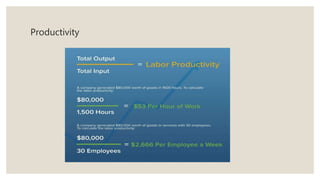
You can measure employee productivity with the labor productivity equation: total output / total
input.
You could also look at labor productivity in terms of individual employee contribution. In this case,
instead of using hours as the input, you would use number of employees.
Productivity
Measuring Efficiency
While productivity measures quantity, efficiency measures quality.
The 4 Elements That Make Great Company Culture
“Maintaining an effective culture is so important that it, in fact, trumps even strategy.”
Howard Stevenson
“Culture tells us how to respond to an unprecedented service request. It tells us whether to risk
telling our bosses about our new ideas, and whether to surface or hide problems. Employees
make hundreds of decisions on their own every day, and culture is our guide. Culture tells us what
to do when the CEO isn’t in the room, which is of course most of the time.”
Cont….
1. Hiring People Who Fit Your Culture
◦ One bad hire can affect an entire department and possibly dozens of customers. And it
can happen quickly, acting like a virus that spreads.
1. Having Employees Know the Values and the Mission of the Company—there’s a
question that often gets asked in job interviews: Why do you want to work here?
2. Knowing That Good Decisions Can Come from Anywhere
◦
1. Realizing You’re a Team and Not a Bunch of Individuals
Marketing
Marketers now must match competitors’ tactics, to some extent, in order to retain relevancy to their
customers. Any marketing strategy must always put the customer first. A thousand good experiences
will keep customers returning. But only one bad one will turn them away. So, don’t bombard them, and
don’t pester them. Invite them in.
Customer knowledge:
Constant connection to your customer and his opinions, wants, and needs, is a blessing for anyone
trying to construct a successful marketing campaign. Why? Because it exposes you to a wealth of
customer knowledge.
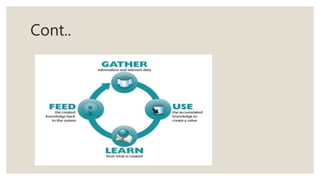
Cont..
What is Customer Knowledge?
Customer knowledge is essentially the science of knowing your customers: who they are, what
motivates them, what they want, need, love, or hate. Customer knowledge takes a marketer and
makes him into a psychologist.
Digital advertising
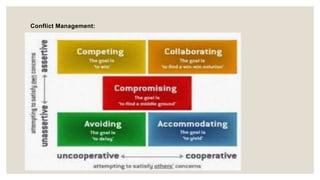
Conflict Management:
Writing skills
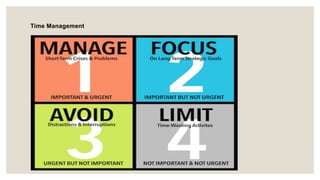
Time Management
Business Growth
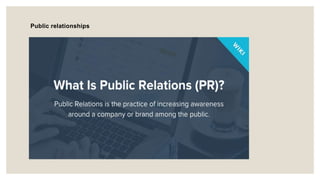
Public relationships
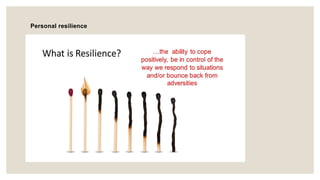
Personal resilience

Business Development

  • 1.
    Presentation ◦ Business Development: Whatis Business development? Some people say Business development is sales, some say it is partnerships, and some say it is hustling. But business development is the creation of long term value for the company from customers, markets and relationships. What is long term value? It is  Cash  Opportunities  Sustainability  Competitive Advantage  Customers discovery  Pay debts  Solve your problem  Market—finding quality products  Relationships—build and manage strategic alliances with customers and partners—building long term relations with customers and suppliers Thus business development is not SALES! BUT is a strategic activity for growth and development. E.g. Football champion and Apple---every field needs business development.
  • 2.
    Good strategy, Badstrategy: Good strategy identifies the key challenge to overcome. Bad strategy fails to identify the nature of the challenge. If you don’t know what the problem is, you can’t evaluate alternative guiding policies or actions to take, and you can’t adjust your strategy as you learn more over time. Proper and Strategic Communications: In five seconds you are judging us in your own terms First impression---customer behaves the way you deal with the first time— professionalism. If not excel it.
  • 3.
  • 4.
    Communication “It is notwhat you say but how you say” how you say matters most—that is strategic communication in both personal and professional. It’s not manipulation, its strategic communication—you heard of many people saying Ali accepts only Omar. Have any one of you felt hostage in conversation? How to connect with people in a digital world?—that is where psychology comes in. Misunderstanding brings loss of relationship—so you need effective communication. Translate those information into day to day activities and tasks. Effective communication needs sense of humility—always be wrong, trustful and it’s not about you but about the company. Take this to home: you actions either promote or nullify your words. Effective communications saves time and saves emotions—if they want paracetamol don’t send aspirin— meeting customer expectations, do what you said I will do.
  • 5.
    Sales Communication Skills ◦Pay full attention. ◦ Practice active listening. ◦ Read body language (and control your own). ◦ Understand what's not being said. ◦ Be a subject matter expert. ◦ Be genuinely curious. ◦ Don't act like you know everything. ◦ Always be honest. ◦ Don't make assumptions. ◦ Be comfortable with silence.
  • 6.
    Communication = SalesSuccess Sales communication skills are by far the most important weapon in a salesperson's arsenal. Make sure to keep yours sharp and ready to use—also interpersonal relationship skills. SWOT Analysis of the Company: SWOT analysis using SWOT diagrams or matrices is a key part of any business planning or analysis. SWOT stands for strengths, weaknesses, opportunities, and threats. Strengths and weaknesses are internal factors and opportunities and threats are external factors. A SWOT diagram analyzes a project or business venture by focusing on each of these factors. It typically consists of four boxes, one for each area, but the exact shape may vary depending on the design.
  • 7.
  • 8.
    Knowledge Sharing: As KimWall, Atlassian team lead for technical account management, puts it, “You might find old data or old knowledge that's not useful anymore,” she explained. “You might not find the answers that you're looking for at all. Even though they live there, you may not find them.” Knowledge sharing is the exchange of information or understanding between people, teams, communities, or organizations. It’s a proactive and intentional act that expands the number of entities in the know while also creating or building upon an accessible archive of knowledge for others.
  • 9.
    Here’s some homework:have thoughts about how to improve the knowledge sharing practices in your company? Share them with your team right now and kick off the dialogue. Go, go!
  • 10.
    Employee and customersatisfaction: Employee Satisfaction Produces Customer Loyalty Satisfied employees help produce satisfied customers. Satisfied employees are likely to assist customers with a more pleasant demeanor and a higher level of customer service. This creates a more satisfying customer experience, increases customer loyalty, and ultimately drives increased profitability. Conversely, low employee satisfaction and overall low employee morale can negatively affect company operations greatly, causing dissatisfied customers and hurt profitability.
  • 11.
    Increasing Employee Productivity CalculatingProductivity in Employees Many external factors can affect your organization’s productivity -- the national economy, a recession, inflation, competition, etc. Although you can’t control everything, you can control and measure employee performance. Employee productivity has a huge impact on profits, and with a simple equation, you can track productivity per individual, team, or even department. You can measure employee productivity with the labor productivity equation: total output / total input. You could also look at labor productivity in terms of individual employee contribution. In this case, instead of using hours as the input, you would use number of employees.
  • 12.
  • 13.
    Measuring Efficiency While productivitymeasures quantity, efficiency measures quality. The 4 Elements That Make Great Company Culture “Maintaining an effective culture is so important that it, in fact, trumps even strategy.” Howard Stevenson “Culture tells us how to respond to an unprecedented service request. It tells us whether to risk telling our bosses about our new ideas, and whether to surface or hide problems. Employees make hundreds of decisions on their own every day, and culture is our guide. Culture tells us what to do when the CEO isn’t in the room, which is of course most of the time.”
  • 14.
    Cont…. 1. Hiring PeopleWho Fit Your Culture ◦ One bad hire can affect an entire department and possibly dozens of customers. And it can happen quickly, acting like a virus that spreads. 1. Having Employees Know the Values and the Mission of the Company—there’s a question that often gets asked in job interviews: Why do you want to work here? 2. Knowing That Good Decisions Can Come from Anywhere ◦ 1. Realizing You’re a Team and Not a Bunch of Individuals
  • 15.
    Marketing Marketers now mustmatch competitors’ tactics, to some extent, in order to retain relevancy to their customers. Any marketing strategy must always put the customer first. A thousand good experiences will keep customers returning. But only one bad one will turn them away. So, don’t bombard them, and don’t pester them. Invite them in. Customer knowledge: Constant connection to your customer and his opinions, wants, and needs, is a blessing for anyone trying to construct a successful marketing campaign. Why? Because it exposes you to a wealth of customer knowledge.
  • 16.
  • 17.
    What is CustomerKnowledge? Customer knowledge is essentially the science of knowing your customers: who they are, what motivates them, what they want, need, love, or hate. Customer knowledge takes a marketer and makes him into a psychologist.
  • 18.
  • 19.
  • 20.
  • 21.
  • 22.
  • 23.
  • 24.