

Exact Cell Decomposition of
Arrangements used for Path
Planning in Robotics

Nora H. Sleumer / Nadine Tschichold-Gurman
Institute of Theoretical Computer Science
Institute of Robotics
Swiss Federal Institute of Technology
Zurich, Switzerland
Abstract
We present a practical algorithm for the automatic generation of a
map that describes the operation environment of an indoor mobile
service robot. The input is a CAD description of a building
consisting of line segments that represent the walls. The algorithm
is based on the exact cell decomposition obtained when these
segments are extended to infinite lines, resulting in a line
arrangement. The cells are represented by nodes in a connectivity
graph. The map consists of the connectivity graph and additional
environmental information that is calculated for each cell. The
method takes into account both the path planning and position
verification requirements of the robot and has been implemented.
Problem Statement

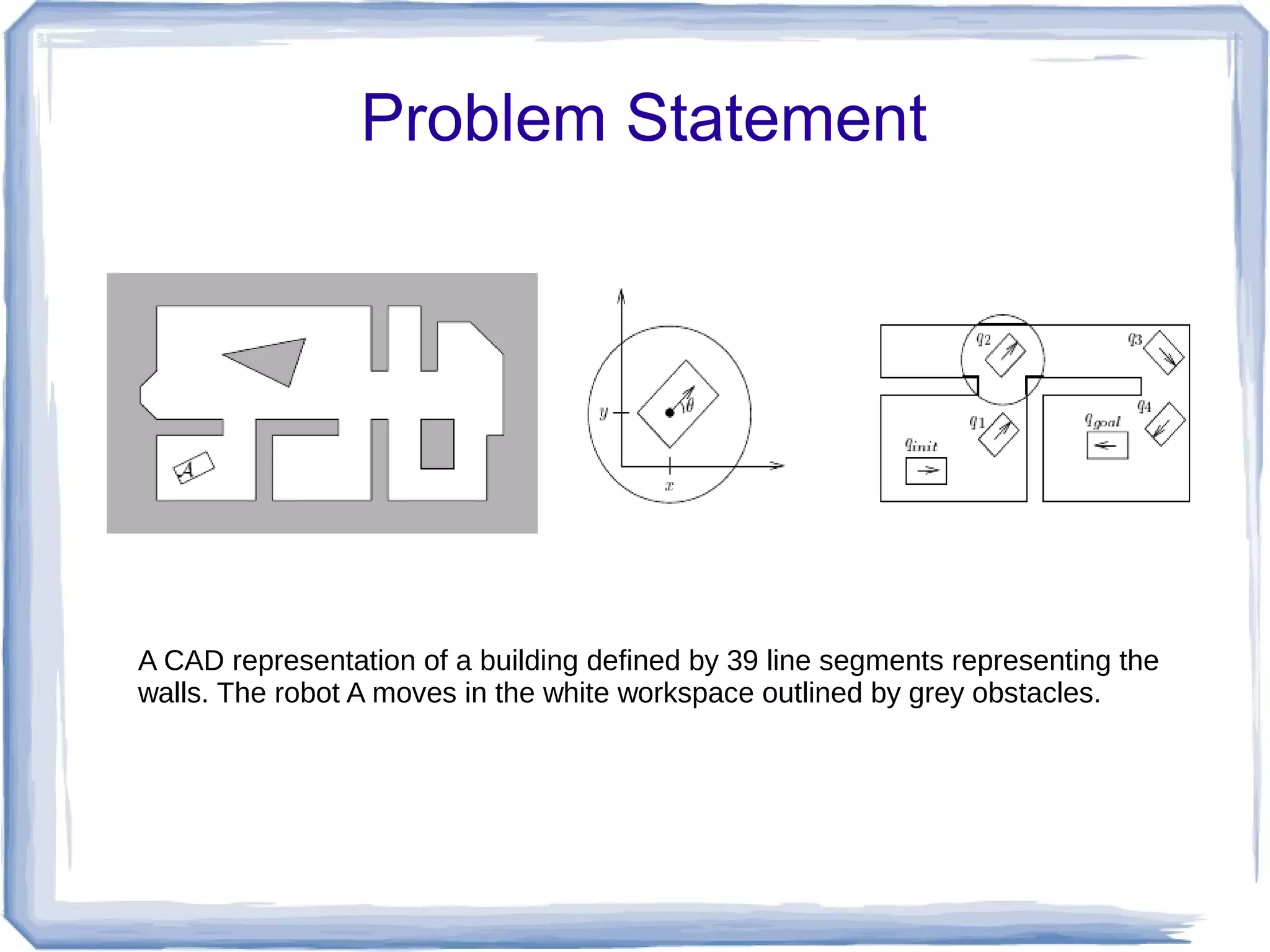
A CAD representation of a building defined by 39 line segments representing the
walls. The robot A moves in the white workspace outlined by grey obstacles.
Existing Solutions

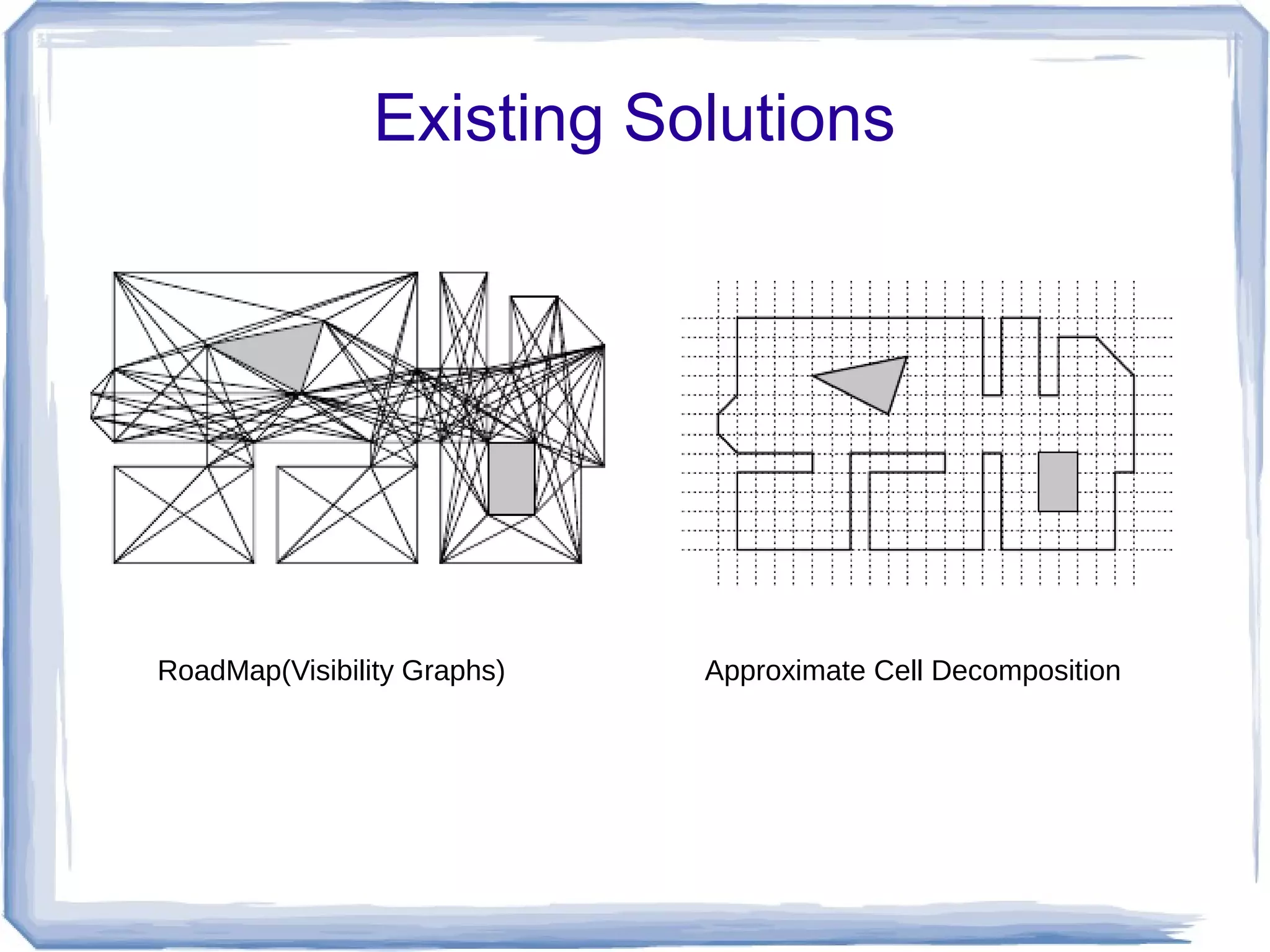
RoadMap(Visibility Graphs)

Approximate Cell Decomposition
Existing Solution

●

●

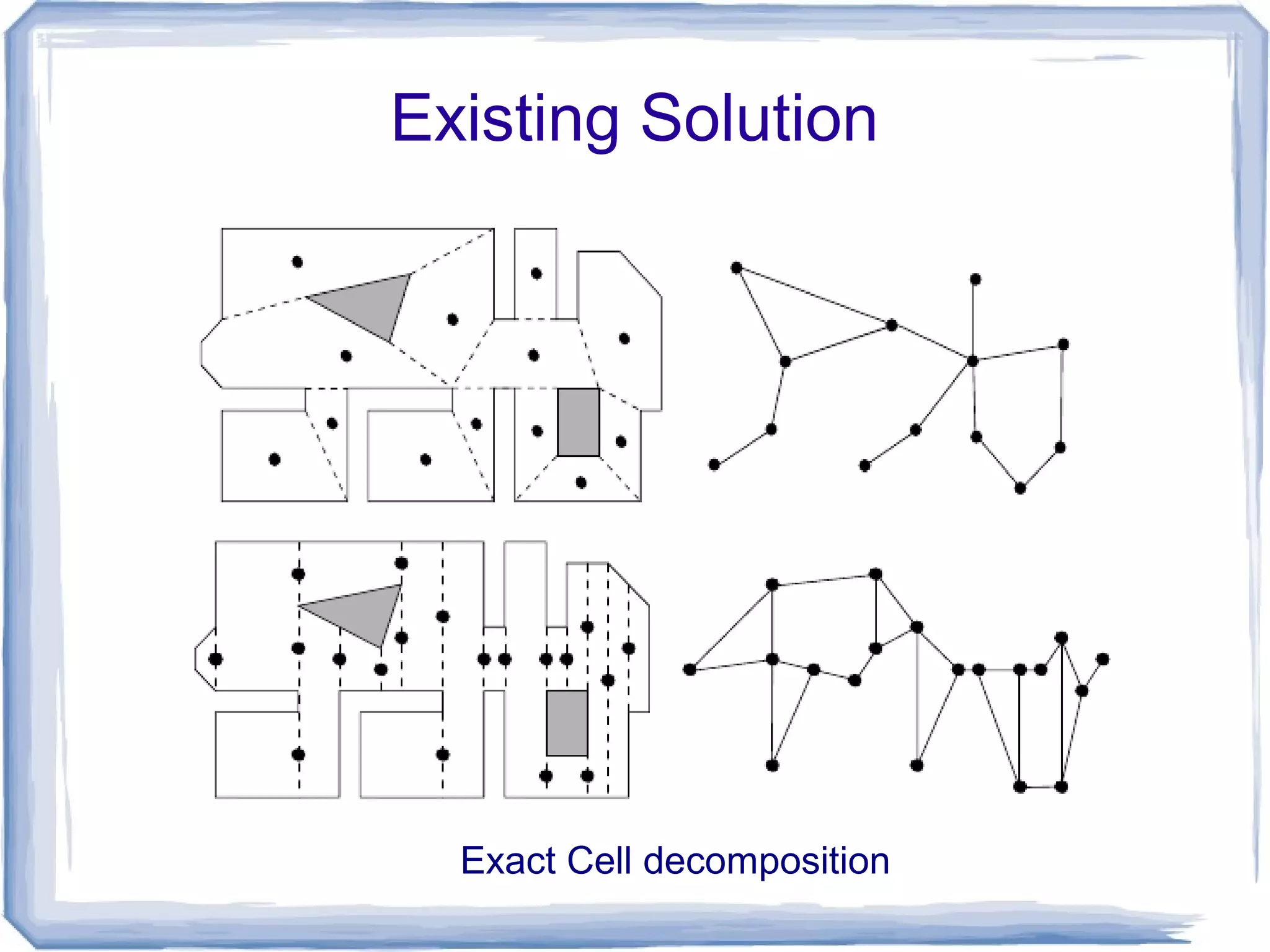
Exact Cell decomposition
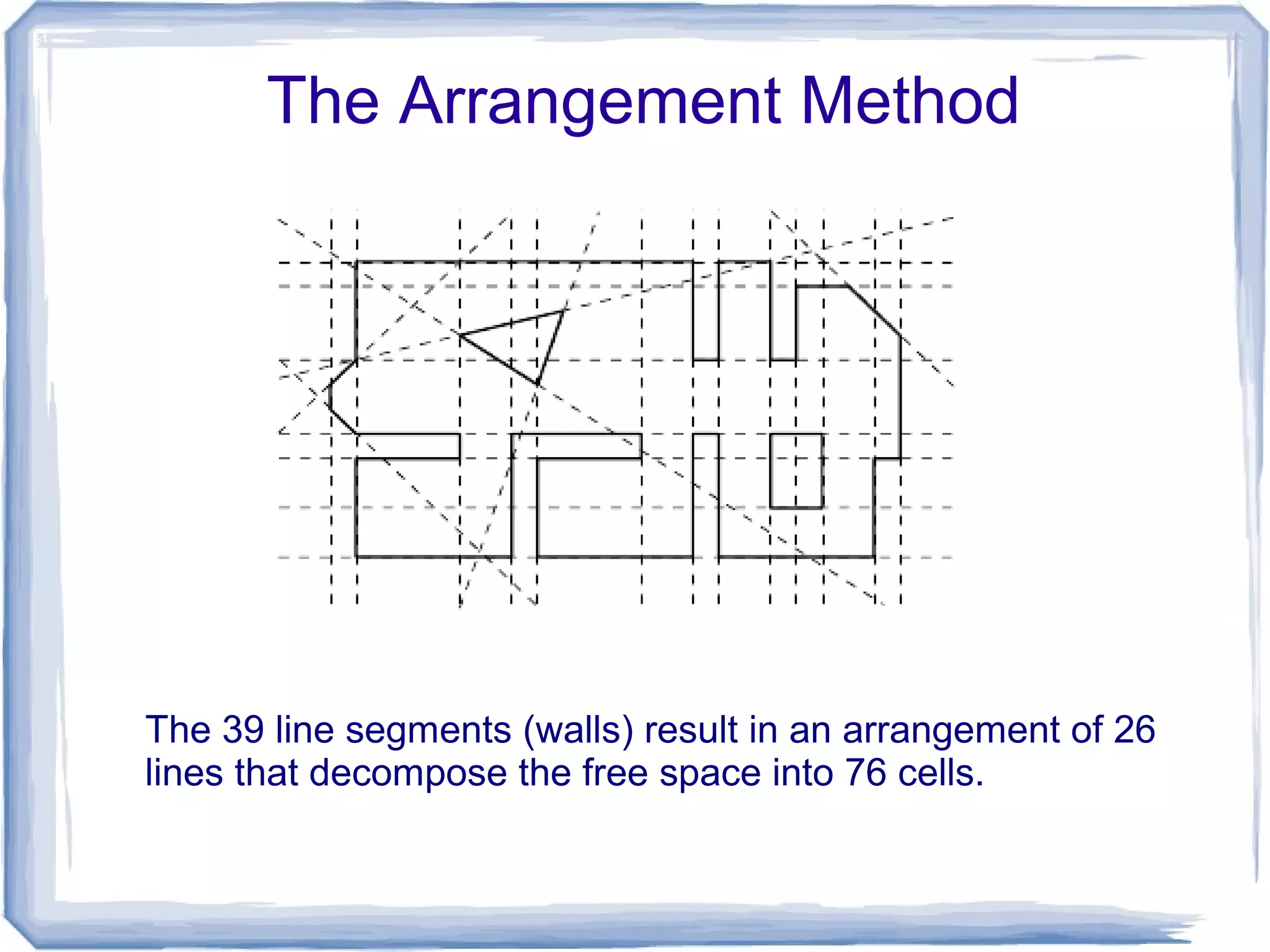
The Arrangement Method

The 39 line segments (walls) result in an arrangement of 26
lines that decompose the free space into 76 cells.
Algorithm Steps
●

●

●
●

Extend the line segments representing the
walls to lines.
Compute the arrangement and store in an
appropriate data structure
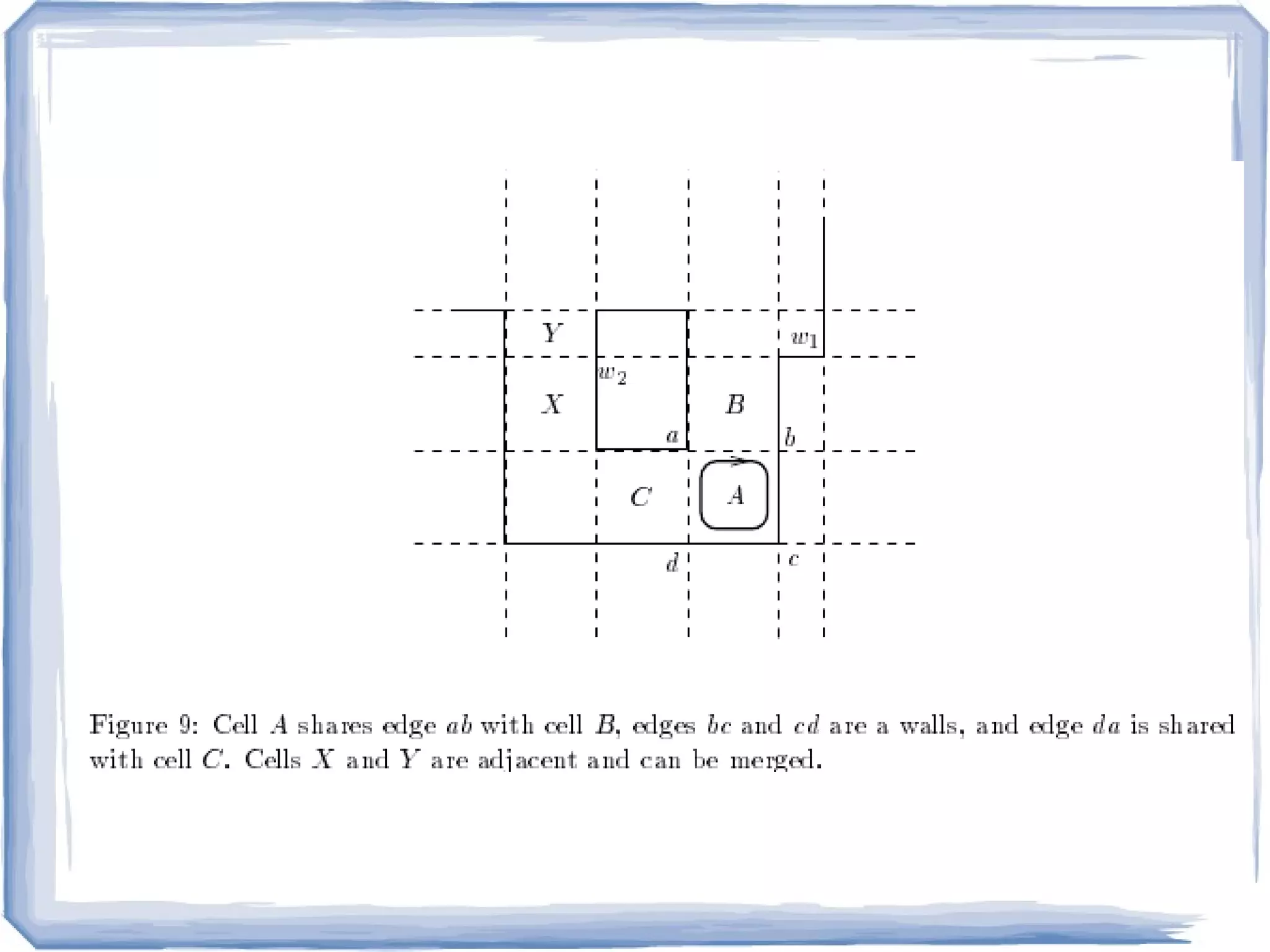
Merge the cells that are split unnecessarily
Calculate the environmental information for
each cell
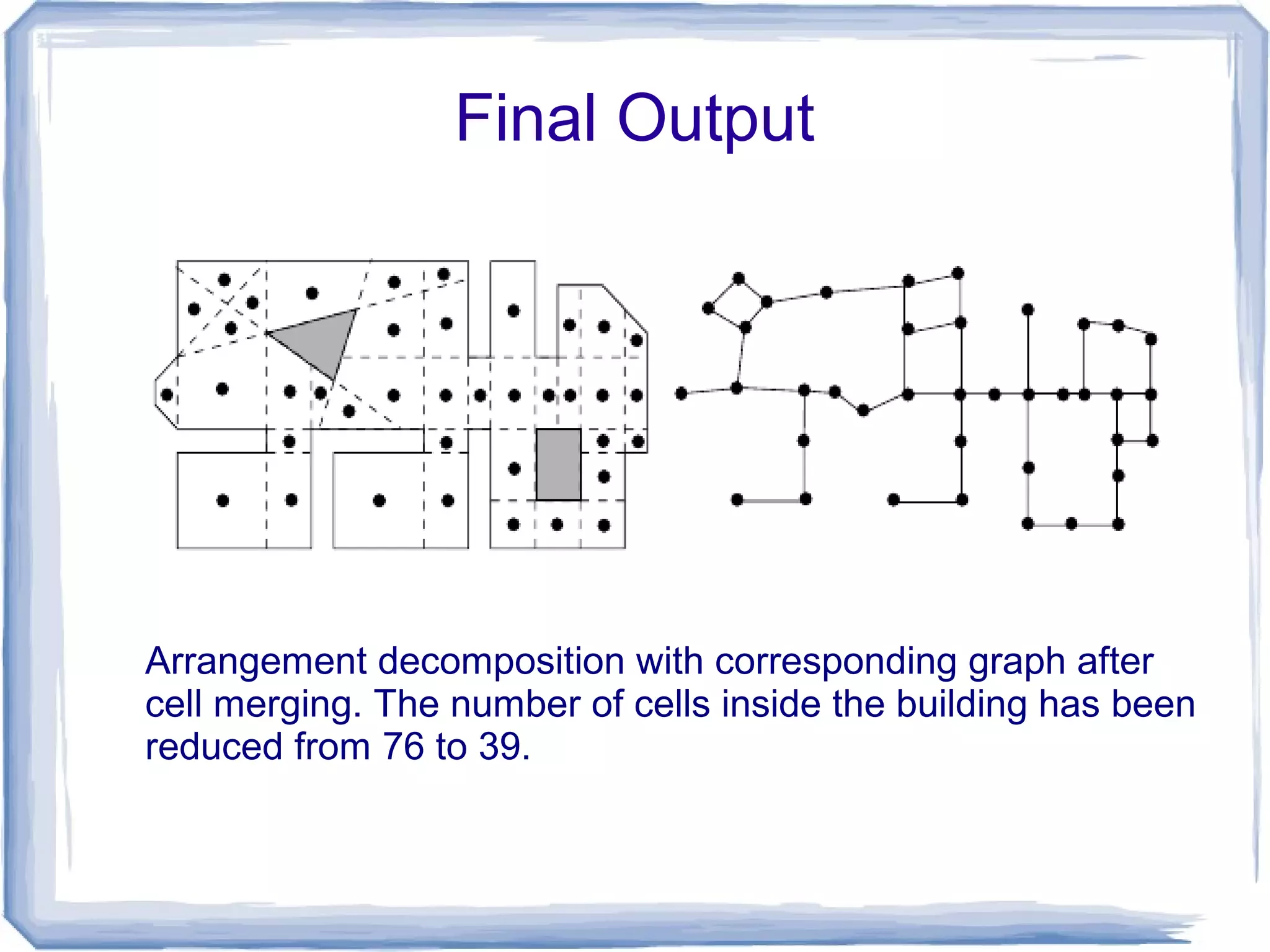
Final Output

Arrangement decomposition with corresponding graph after
cell merging. The number of cells inside the building has been
reduced from 76 to 39.
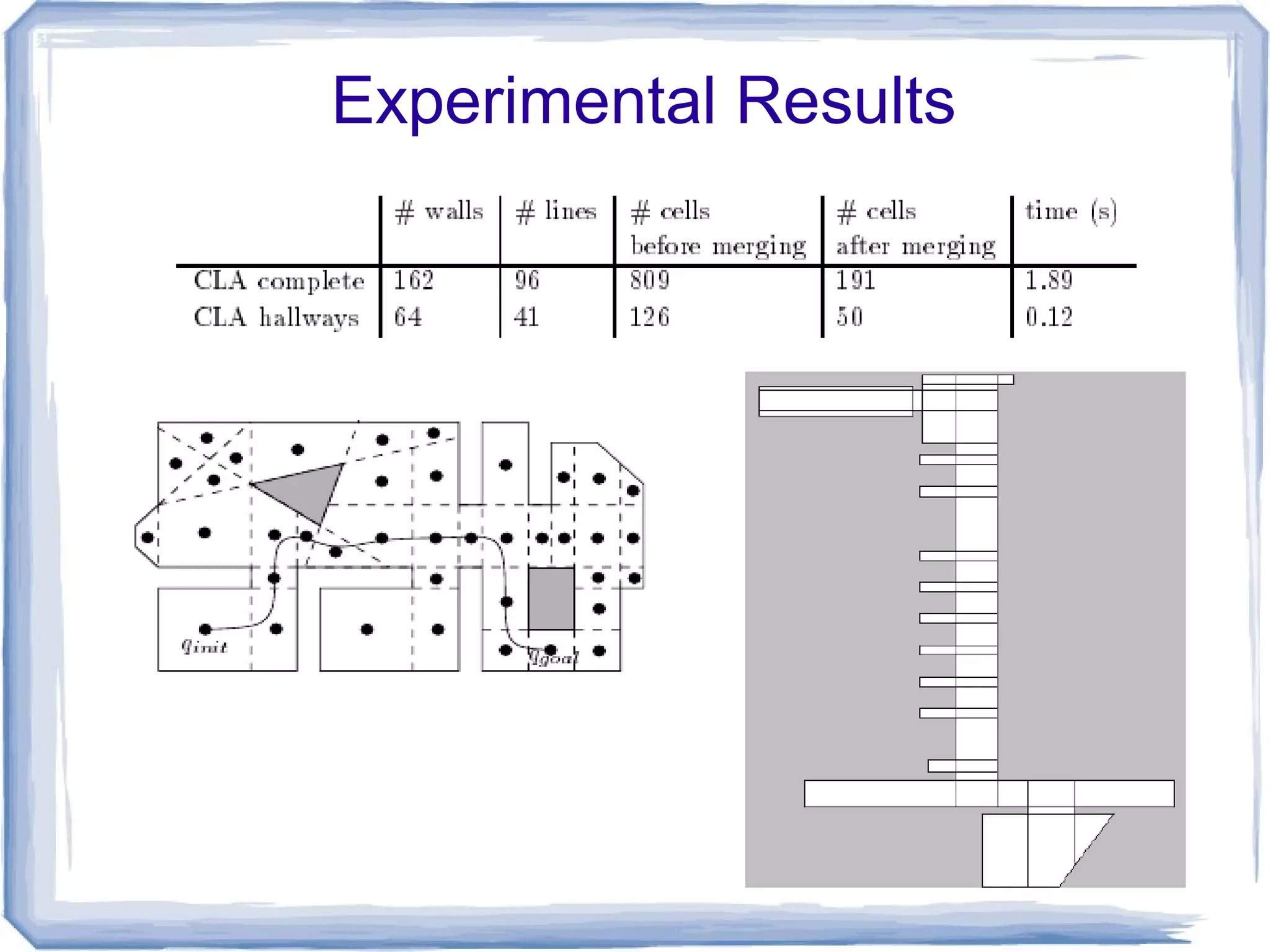
Experimental Results
Questions ???

Exact Cell Decomposition of Arrangements used for Path Planning in Robotics

  • 1.
    Exact Cell Decompositionof Arrangements used for Path Planning in Robotics Nora H. Sleumer / Nadine Tschichold-Gurman Institute of Theoretical Computer Science Institute of Robotics Swiss Federal Institute of Technology Zurich, Switzerland
  • 2.
    Abstract We present apractical algorithm for the automatic generation of a map that describes the operation environment of an indoor mobile service robot. The input is a CAD description of a building consisting of line segments that represent the walls. The algorithm is based on the exact cell decomposition obtained when these segments are extended to infinite lines, resulting in a line arrangement. The cells are represented by nodes in a connectivity graph. The map consists of the connectivity graph and additional environmental information that is calculated for each cell. The method takes into account both the path planning and position verification requirements of the robot and has been implemented.
  • 3.
    Problem Statement A CADrepresentation of a building defined by 39 line segments representing the walls. The robot A moves in the white workspace outlined by grey obstacles.
  • 4.
  • 5.
  • 6.
    The Arrangement Method The39 line segments (walls) result in an arrangement of 26 lines that decompose the free space into 76 cells.
  • 7.
    Algorithm Steps ● ● ● ● Extend theline segments representing the walls to lines. Compute the arrangement and store in an appropriate data structure Merge the cells that are split unnecessarily Calculate the environmental information for each cell
  • 9.
    Final Output Arrangement decompositionwith corresponding graph after cell merging. The number of cells inside the building has been reduced from 76 to 39.
  • 10.
  • 11.