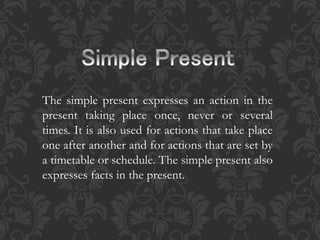
The simple present expresses an action in the 
present taking place once, never or several 
times. It is also used for actions that take place 
one after another and for actions that are set by 
a timetable or schedule. The simple present also 
expresses facts in the present.
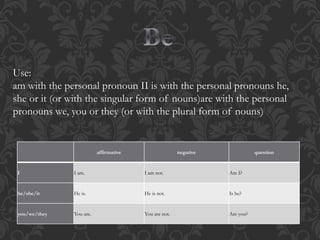
Use: 
am with the personal pronoun II is with the personal pronouns he, 
she or it (or with the singular form of nouns)are with the personal 
pronouns we, you or they (or with the plural form of nouns) 
affirmative negative question 
I I am. I am not. Am I? 
he/she/it He is. He is not. Is he? 
you/we/they You are. You are not. Are you?
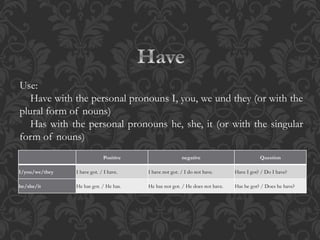
Use: 
Have with the personal pronouns I, you, we und they (or with the 
plural form of nouns) 
Has with the personal pronouns he, she, it (or with the singular 
form of nouns) 
Positive negative Question 
I/you/we/they I have got. / I have. I have not got. / I do not have. Have I got? / Do I have? 
he/she/it He has got. / He has. He has not got. / He does not have. Has he got? / Does he have?
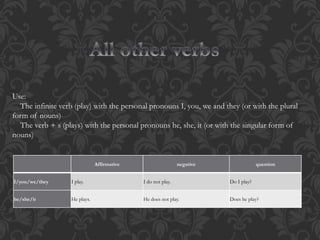
Use: 
The infinite verb (play) with the personal pronouns I, you, we and they (or with the plural 
form of nouns) 
The verb + s (plays) with the personal pronouns he, she, it (or with the singular form of 
nouns) 
Affirmative negative question 
I/you/we/they I play. I do not play. Do I play? 
he/she/it He plays. He does not play. Does he play?

Present simple

  • 1.
    The simple presentexpresses an action in the present taking place once, never or several times. It is also used for actions that take place one after another and for actions that are set by a timetable or schedule. The simple present also expresses facts in the present.
  • 2.
    Use: am withthe personal pronoun II is with the personal pronouns he, she or it (or with the singular form of nouns)are with the personal pronouns we, you or they (or with the plural form of nouns) affirmative negative question I I am. I am not. Am I? he/she/it He is. He is not. Is he? you/we/they You are. You are not. Are you?
  • 3.
    Use: Have withthe personal pronouns I, you, we und they (or with the plural form of nouns) Has with the personal pronouns he, she, it (or with the singular form of nouns) Positive negative Question I/you/we/they I have got. / I have. I have not got. / I do not have. Have I got? / Do I have? he/she/it He has got. / He has. He has not got. / He does not have. Has he got? / Does he have?
  • 4.
    Use: The infiniteverb (play) with the personal pronouns I, you, we and they (or with the plural form of nouns) The verb + s (plays) with the personal pronouns he, she, it (or with the singular form of nouns) Affirmative negative question I/you/we/they I play. I do not play. Do I play? he/she/it He plays. He does not play. Does he play?