La phrase anglaise : le
                            noyau = 1 + 2 + 3
 (1)             (2)                   (3)                      (contexte)
SUJET   VERBE conjugué         COMPLEMENT            AUTRE COMPLEMENT/
                               D'OBJET                phrase subordonnée


  I     am doing               my homework   at the moment.


  I     do                     my homework   every day.


  I     did                    my homework   yesterday.


  I     have done              my homework   so I'm free now!


  I     was doing              my homework   when he arrived, so he waited for me to
                                             finish.


  I     had done               my homework   when he arrived, so we went out.


  I     will do                my homework   tomorrow.
Les Pronoms Personnels Sujets :

                                       Singulier         Pluriel

1ère personne      (je /nous)
                                        I               we
2ème personne (tu = vous)
                                        -               you
           3ème personne :
1) il/elle (humain)             1)   he / she
2) il/elle (non-humain) - c'    2)    it
3) ils/elles
   (humains et non humains)
                                                   3)   they
3 Auxiliaires de conjugaisons:
                    BE - HA  VE - DO:
                          Attention!
les auxiliaires sont 3 verbes avec un sens :
                     être - avoir - faire
  Quand ils sont utilisés comme auxiliaires de conjugaison
  ils perdent leur sens et ne servent qu'à faire partie de la
                   conjugaison des verbes
Forme affirmative :
                              SUJET   VERBE avec ou sans aux. suivant
                                                          aux
                                             la conjugaison

Forme négative :
                             SUJET               AUX/not
                                                 AUX                    VERBE


Forme interrogative :
                        AUXILIAIRE                SUJET                 VERBE
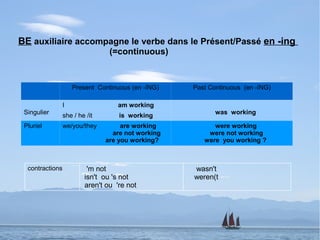
BE auxiliaire accompagne le verbe dans le Présent/Passé en -ing
                                 (=continuous)


                     Present Continuous (en -ING)   Past Continuous (en -ING)

                 I                 am working
 Singulier                                                 was working
                 she / he /it       is working
 Pluriel         we/you/they         are working          were working
                                  are not working       were not working
                                are you working?       were you working ?


  contractions            'm not                    wasn't
                         isn't ou 's not            weren(t
                         aren't ou 're not
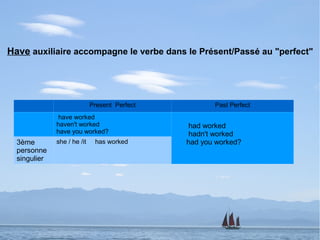
Have auxiliaire accompagne le verbe dans le Présent/Passé au "perfect"


                             Present Perfect          Past Perfect
               have worked
              haven't worked                    had worked
              have you worked?                  hadn't worked
  3ème        she / he /it    has worked       had you worked?
  personne
  singulier
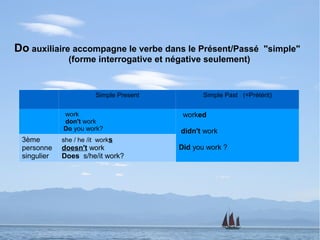
Do auxiliaire accompagne le verbe dans le Présent/Passé             "simple"
               (forme interrogative et négative seulement)


                        Simple Present          Simple Past (=Prétérit)

             work                         worked
             don't work
             Do you work?                didn't work
 3ème        she / he /it works
 personne    doesn't work                Did you work ?
 singulier   Does s/he/it work?
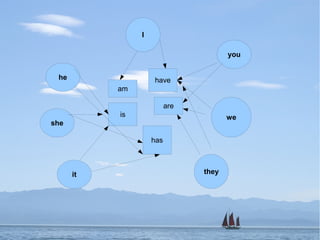
I

                                       you


 he                 have
           am

                          are
           is                          we
she

                    has


      it                        they
work
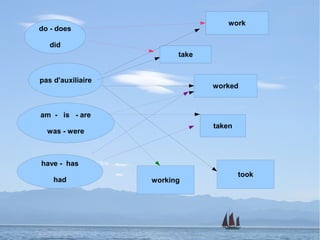
do - does

   did
                         take


pas d'auxiliaire
                                worked


am - is - are
                                taken
  was - were


have - has
                                        took
    had            working

Bases révisions conjug.

  • 1.
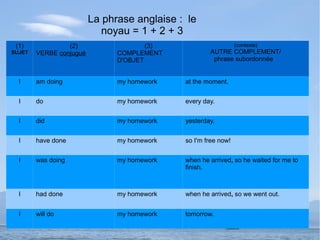
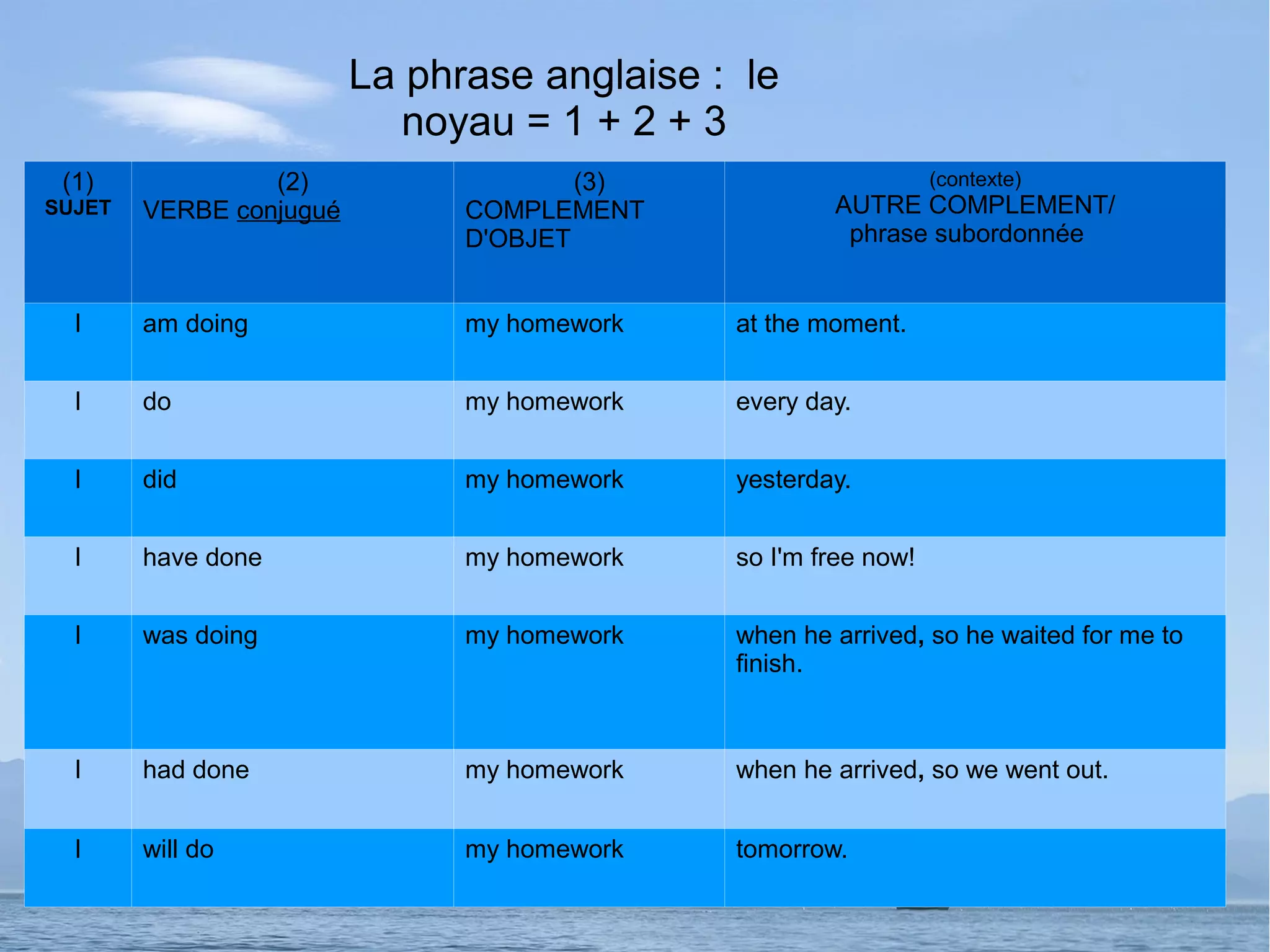
    La phrase anglaise: le noyau = 1 + 2 + 3 (1) (2) (3) (contexte) SUJET VERBE conjugué COMPLEMENT AUTRE COMPLEMENT/ D'OBJET phrase subordonnée I am doing my homework at the moment. I do my homework every day. I did my homework yesterday. I have done my homework so I'm free now! I was doing my homework when he arrived, so he waited for me to finish. I had done my homework when he arrived, so we went out. I will do my homework tomorrow.
  • 2.
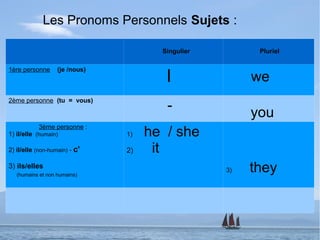
    Les Pronoms PersonnelsSujets : Singulier Pluriel 1ère personne (je /nous) I we 2ème personne (tu = vous) - you 3ème personne : 1) il/elle (humain) 1) he / she 2) il/elle (non-humain) - c' 2) it 3) ils/elles (humains et non humains) 3) they
  • 3.
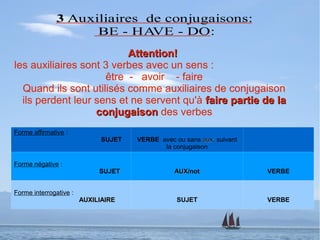
    3 Auxiliaires deconjugaisons: BE - HA VE - DO: Attention! les auxiliaires sont 3 verbes avec un sens : être - avoir - faire Quand ils sont utilisés comme auxiliaires de conjugaison ils perdent leur sens et ne servent qu'à faire partie de la conjugaison des verbes Forme affirmative : SUJET VERBE avec ou sans aux. suivant aux la conjugaison Forme négative : SUJET AUX/not AUX VERBE Forme interrogative : AUXILIAIRE SUJET VERBE
  • 4.
    BE auxiliaire accompagnele verbe dans le Présent/Passé en -ing (=continuous) Present Continuous (en -ING) Past Continuous (en -ING) I am working Singulier was working she / he /it is working Pluriel we/you/they are working were working are not working were not working are you working? were you working ? contractions 'm not wasn't isn't ou 's not weren(t aren't ou 're not
  • 5.
    Have auxiliaire accompagnele verbe dans le Présent/Passé au "perfect" Present Perfect Past Perfect have worked haven't worked had worked have you worked? hadn't worked 3ème she / he /it has worked had you worked? personne singulier
  • 6.
    Do auxiliaire accompagnele verbe dans le Présent/Passé "simple" (forme interrogative et négative seulement) Simple Present Simple Past (=Prétérit) work worked don't work Do you work? didn't work 3ème she / he /it works personne doesn't work Did you work ? singulier Does s/he/it work?
  • 7.
    I you he have am are is we she has it they
  • 8.
    work do - does did take pas d'auxiliaire worked am - is - are taken was - were have - has took had working