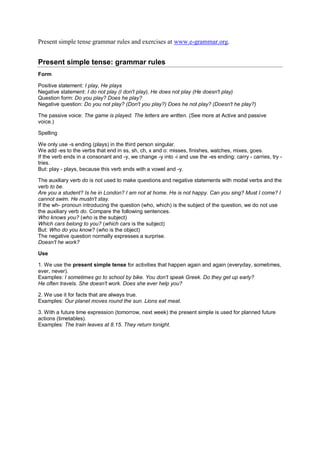
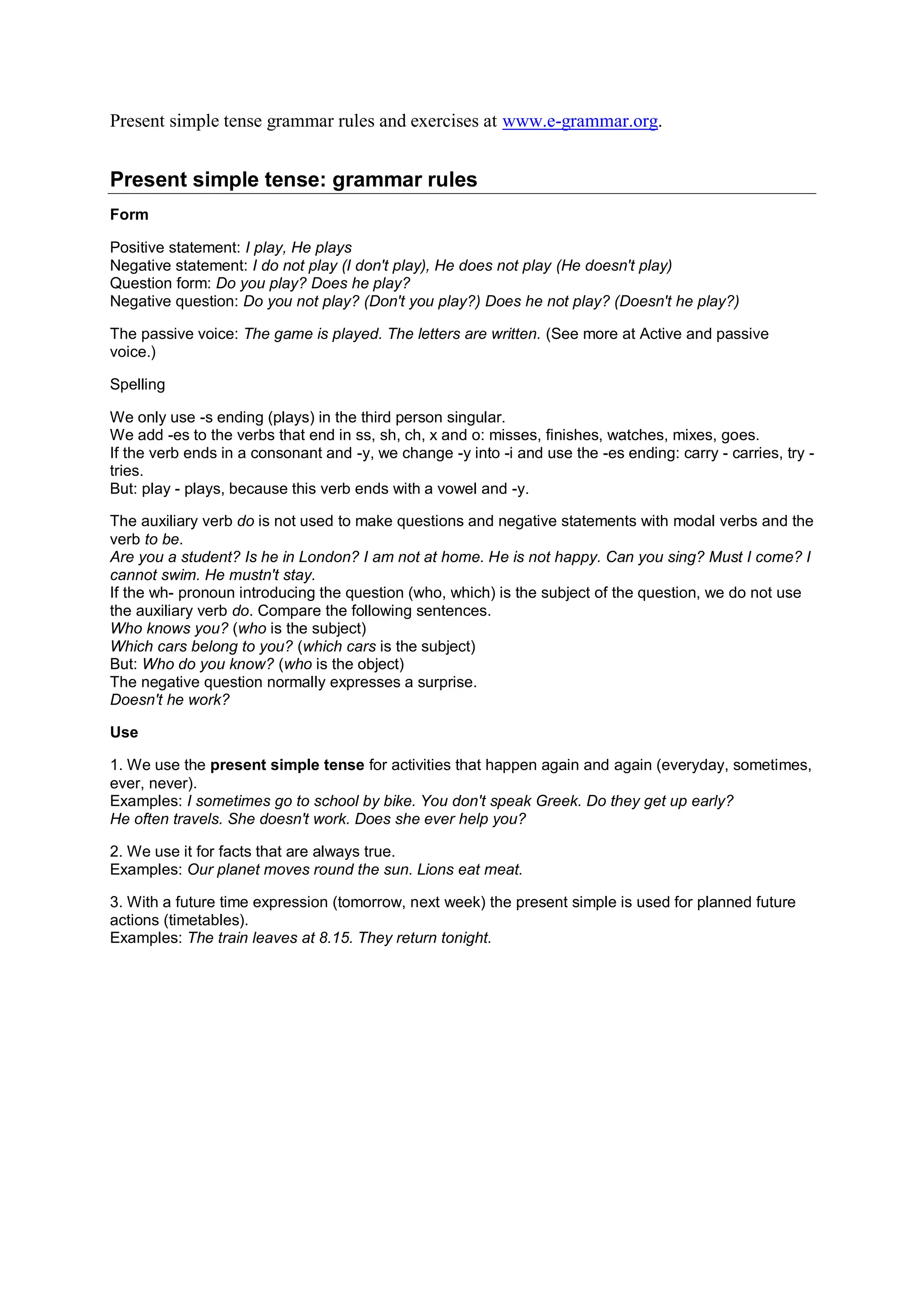
The document provides grammar rules and usage examples for the present simple tense in English. It discusses: (1) the basic form used for positive and negative statements and questions, (2) spelling rules like adding -s for third person singular verbs and -es for verbs ending in ss, sh, ch, x, o, (3) not using auxiliary "do" with verbs like "be" and modal verbs, and (4) common uses like habitual actions, facts, and planned future events denoted by time expressions like "tomorrow".