The Present
Continuous Tense


   Use and form
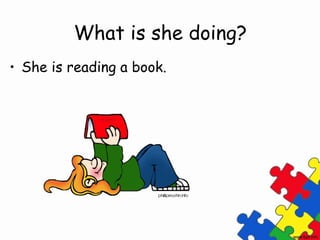
What is she doing?
• She is reading a book.
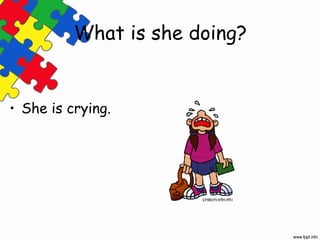
What is she doing?


• She is crying.
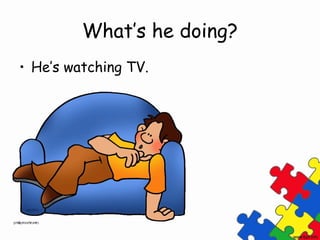
What’s he doing?
• He’s watching TV.
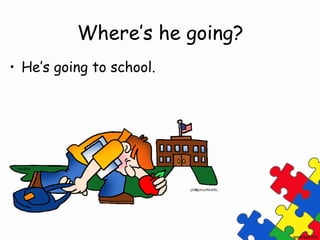
Where’s he going?
• He’s going to school.
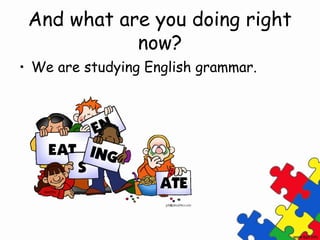
And what are you doing right
            now?
• We are studying English grammar.
Use 1
• The previous examples show that we use
  this tense to denote an action happening
  at the time of speaking (adverbs: now,
  right now, at the moment)
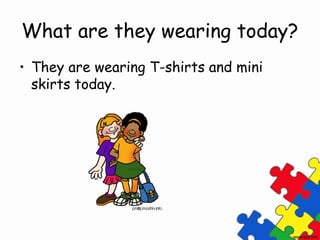
What are they wearing today?
• They are wearing T-shirts and mini
  skirts today.
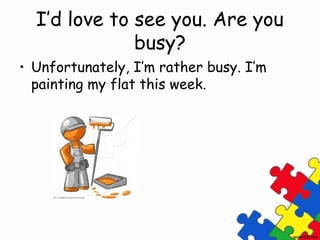
I’d love to see you. Are you
              busy?
• Unfortunately, I’m rather busy. I’m
  painting my flat this week.
Are you having fun this
           summer?
• Not really. I’m working as a waiter. I
  need some money for college.
Use 2
• These examples show that the Present
  Continuous Tense is also used to denote
  a temporary action happening today or
  these days.
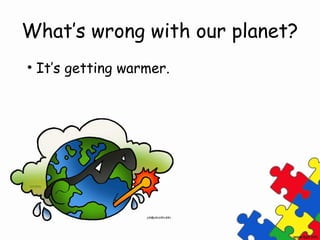
What’s wrong with our planet?
• It’s getting warmer.
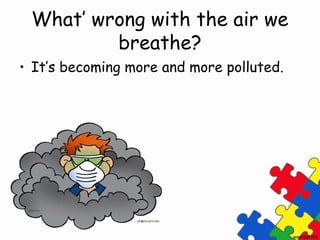
What’ wrong with the air we
         breathe?
• It’s becoming more and more polluted.
Use 3
• It is also used to express the ongoing
  changes, especially with verbs such as
  become, get, grow, change, and with
  expressions like more and more.
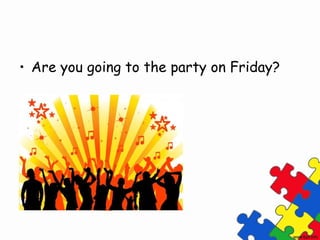
• Are you going to the party on Friday?
• We’re leaving tomorrow.
Use 4
• We use it for future arrangements with
  a time reference.
Form – am, are, is + ing form
         am, is, are + ing form

• Affirmative
I am sleeping.
He/she/it is sleeping.
You/we/they are sleeping.
• Negative
I am not (I’m not) singing.
He/she/it is not (isn’t) singing.
You/we/they are not (aren’t) singing.
Form - continued
• Interrogative
Am I dreaming?
Is he/she/it dreaming?
Are you/we/they dreaming?
• Short answers
Yes, I am/he is/we are…
No, I’m not/he isn’t/we aren’t…
ing form – spelling rules
• Most verbs just take –ing with no
  changes in spelling: watch-watching,
  clean-cleaning, listen-listening
• Verbs ending in –e drop it before –ing:
  live-living, write-writing
• Verbs with short vowels and one
  consonant double the consonant:
  run-running, swim-swimming
ing form – spelling rules
• Verbs ending in –l, double it: travel-
  travelling, cancel-cancelling
• Verbs ending in –ie change it to –y: lie-
  lying, die-dying

Pres cont2.pptx

  • 1.
  • 2.
    What is shedoing? • She is reading a book.
  • 3.
    What is shedoing? • She is crying.
  • 4.
    What’s he doing? •He’s watching TV.
  • 5.
    Where’s he going? •He’s going to school.
  • 6.
    And what areyou doing right now? • We are studying English grammar.
  • 7.
    Use 1 • Theprevious examples show that we use this tense to denote an action happening at the time of speaking (adverbs: now, right now, at the moment)
  • 8.
    What are theywearing today? • They are wearing T-shirts and mini skirts today.
  • 9.
    I’d love tosee you. Are you busy? • Unfortunately, I’m rather busy. I’m painting my flat this week.
  • 10.
    Are you havingfun this summer? • Not really. I’m working as a waiter. I need some money for college.
  • 11.
    Use 2 • Theseexamples show that the Present Continuous Tense is also used to denote a temporary action happening today or these days.
  • 12.
    What’s wrong withour planet? • It’s getting warmer.
  • 13.
    What’ wrong withthe air we breathe? • It’s becoming more and more polluted.
  • 14.
    Use 3 • Itis also used to express the ongoing changes, especially with verbs such as become, get, grow, change, and with expressions like more and more.
  • 15.
    • Are yougoing to the party on Friday?
  • 16.
  • 17.
    Use 4 • Weuse it for future arrangements with a time reference.
  • 18.
    Form – am,are, is + ing form am, is, are + ing form • Affirmative I am sleeping. He/she/it is sleeping. You/we/they are sleeping. • Negative I am not (I’m not) singing. He/she/it is not (isn’t) singing. You/we/they are not (aren’t) singing.
  • 19.
    Form - continued •Interrogative Am I dreaming? Is he/she/it dreaming? Are you/we/they dreaming? • Short answers Yes, I am/he is/we are… No, I’m not/he isn’t/we aren’t…
  • 20.
    ing form –spelling rules • Most verbs just take –ing with no changes in spelling: watch-watching, clean-cleaning, listen-listening • Verbs ending in –e drop it before –ing: live-living, write-writing • Verbs with short vowels and one consonant double the consonant: run-running, swim-swimming
  • 21.
    ing form –spelling rules • Verbs ending in –l, double it: travel- travelling, cancel-cancelling • Verbs ending in –ie change it to –y: lie- lying, die-dying