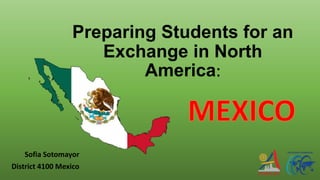
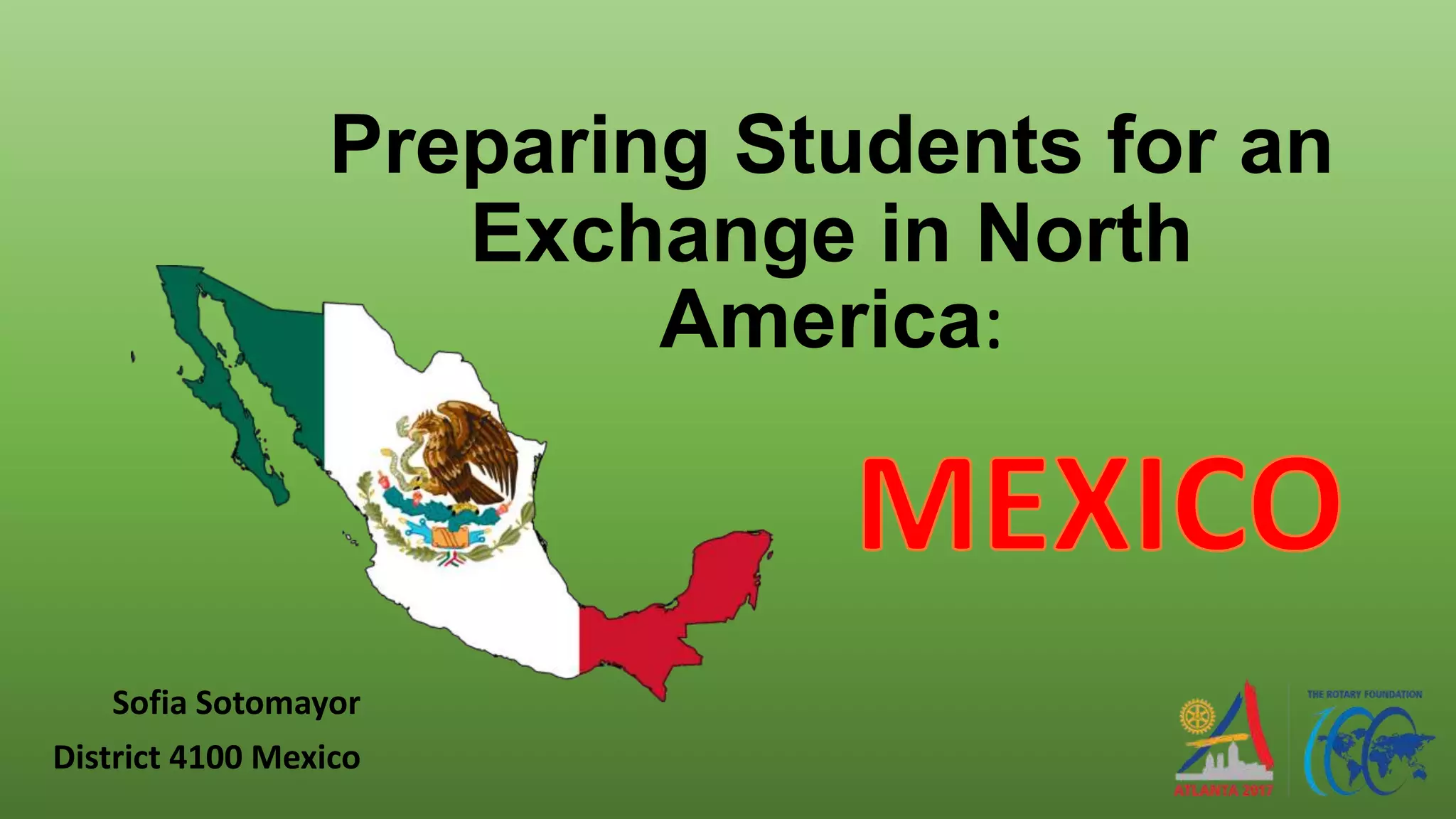
Preparing Students for an
Exchange in North
America:
Sofia Sotomayor
District 4100 Mexico
Objectives:
Provide general knowledge of Mexico
Values of the Mexican Culture
Expectations from Inbound Students
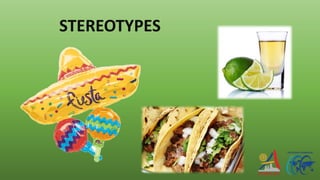
STEREOTYPES
HISTORY
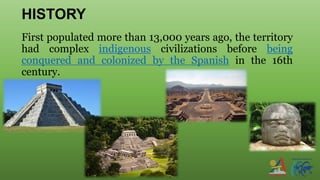
First populated more than 13,000 years ago, the territory
had complex indigenous civilizations before being
conquered and colonized by the Spanish in the 16th
century.
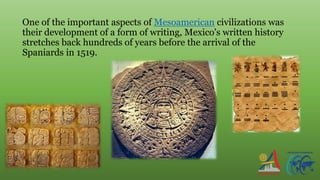
One of the important aspects of Mesoamerican civilizations was
their development of a form of writing, Mexico's written history
stretches back hundreds of years before the arrival of the
Spaniards in 1519.
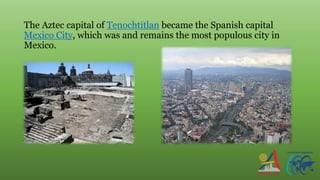
The Aztec capital of Tenochtitlan became the Spanish capital
Mexico City, which was and remains the most populous city in
Mexico.
Chewing gum, Aztecs used chile to make a gum-like substance
to stick objects together. Women used it as a mouth refresher
Balloons invented by the Olmec
Sauna, Temazcal was the first ever sweat lodge used by many
cultures.
Universal Education, the Aztecs were the first civilization
known to introduce compulsory school for boys and girls.
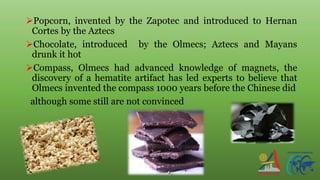
Popcorn, invented by the Zapotec and introduced to Hernan
Cortes by the Aztecs
Chocolate, introduced by the Olmecs; Aztecs and Mayans
drunk it hot
Compass, Olmecs had advanced knowledge of magnets, the
discovery of a hematite artifact has led experts to believe that
Olmecs invented the compass 1000 years before the Chinese did
although some still are not convinced
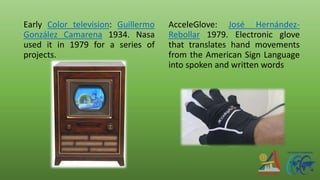
Early Color television: Guillermo
GonzĂĄlez Camarena 1934. Nasa
used it in 1979 for a series of
projects.
AcceleGlove: JosĂŠ HernĂĄndez-
Rebollar 1979. Electronic glove
that translates hand movements
from the American Sign Language
into spoken and written words
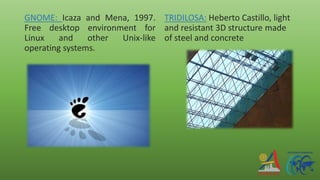
GNOME: Icaza and Mena, 1997.
Free desktop environment for
Linux and other Unix-like
operating systems.
TRIDILOSA: Heberto Castillo, light
and resistant 3D structure made
of steel and concrete
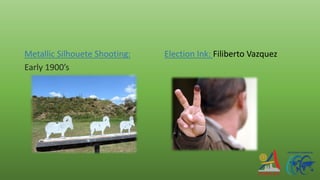
Metallic Silhouete Shooting:
Early 1900’s
Election Ink: Filiberto Vazquez
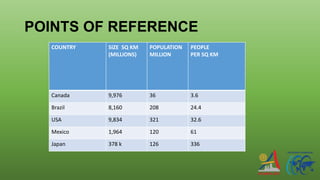
POINTS OF REFERENCE
COUNTRY SIZE SQ KM
(MILLIONS)
POPULATION
MILLION
PEOPLE
PER SQ KM
Canada 9,976 36 3.6
Brazil 8,160 208 24.4
USA 9,834 321 32.6
Mexico 1,964 120 61
Japan 378 k 126 336
Culture
One of the richest and more diverse cultures in the world.
Mexico is both the most populous Spanish speaking country in
the world and home to the largest number of Native American
Language speakers in North America. (68 original and 354
variances)
Due to its large diversity of ethnic groups and the influence of
other cultures, the influence of interbreding produces a very
unique melting pot.
It is a legacy transmitted from generation to generation.
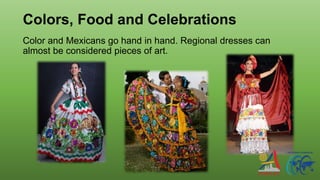
Colors, Food and Celebrations
Color and Mexicans go hand in hand. Regional dresses can
almost be considered pieces of art.
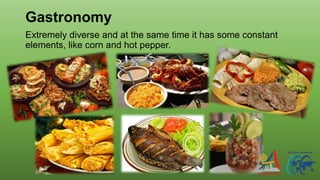
Gastronomy
Extremely diverse and at the same time it has some constant
elements, like corn and hot pepper.
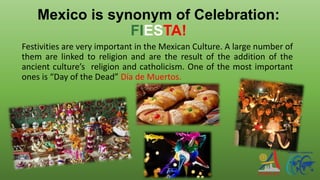
Mexico is synonym of Celebration:
FIESTA!
Festivities are very important in the Mexican Culture. A large number of
them are linked to religion and are the result of the addition of the
ancient culture’s religion and catholicism. One of the most important
ones is “Day of the Dead” Día de Muertos.
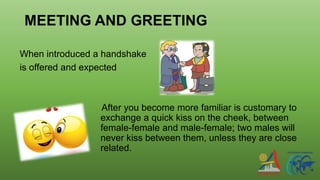
MEETING AND GREETING
When introduced a handshake
is offered and expected
After you become more familiar is customary to
exchange a quick kiss on the cheek, between
female-female and male-female; two males will
never kiss between them, unless they are close
related.
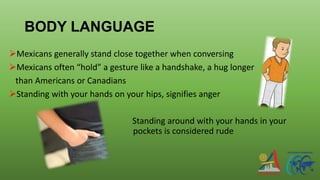
BODY LANGUAGE
Mexicans generally stand close together when conversing
Mexicans often “hold” a gesture like a handshake, a hug longer
than Americans or Canadians
Standing with your hands on your hips, signifies anger
Standing around with your hands in your
pockets is considered rude
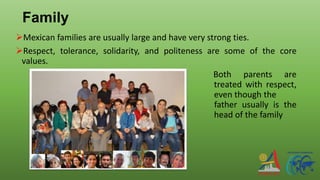
Family
Mexican families are usually large and have very strong ties.
Respect, tolerance, solidarity, and politeness are some of the core
values.
Both parents are
treated with respect,
even though the
father usually is the
head of the family
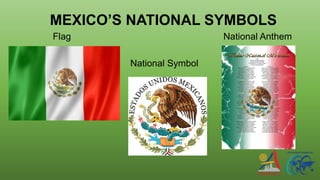
MEXICO’S NATIONAL SYMBOLS
Flag National Anthem
National Symbol
DRUGS
Possession of drugs is illegal in Mexico under the following
circumstances:
 When an individual has in his possession more than the amount
allowed for personal use
 When provided to a minor (Under 18 years old) or a mentally
disabled person
Penalty will increase after the first offense and/or a transaction or
consumption takes place in a school, government or military site
Penalty includes incarceration and cash fines
What to expect when going to Mexico?
90% of Mexican families live in cities with a population of over
200,000.
Most host families usually have children who were, are or will be
exchange students.
Most host families will be middle class or upper.
Students are expected to keep their room tidy and help with
around the house, especially when both parents work outside
the home and there is no maid.
Family gatherings are very important, student is expected to
attend, even if they are for members of the extended family.
Large percentage of Inbounds will attend Private Schools, will
be wearing a uniform and will be transported by the host family
or carpool.
Students are expected to make an effort to learn Spanish as
soon as possible and avoid speaking in English.
Students MUST attend school, comply with the school policies,
including doing homework and/or participate in school activities.
Participate in extra-curricular activities, these can be at school
or after.
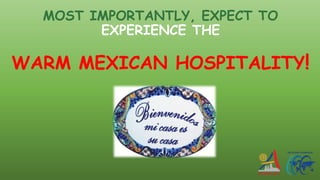
MOST IMPORTANTLY, EXPECT TO
EXPERIENCE THE
WARM MEXICAN HOSPITALITY!
Objectives:
Provide general knowledge of Mexico
Values of the Mexican Culture
Expectations from Inbound Students
MUCHAS
GRACIAS!

Preparing Students for Exchanges in North America - Mexico

  • 1.
    Preparing Students foran Exchange in North America: Sofia Sotomayor District 4100 Mexico
  • 2.
    Objectives: Provide general knowledgeof Mexico Values of the Mexican Culture Expectations from Inbound Students
  • 3.
  • 4.
    HISTORY First populated morethan 13,000 years ago, the territory had complex indigenous civilizations before being conquered and colonized by the Spanish in the 16th century.
  • 5.
    One of theimportant aspects of Mesoamerican civilizations was their development of a form of writing, Mexico's written history stretches back hundreds of years before the arrival of the Spaniards in 1519.
  • 6.
    The Aztec capitalof Tenochtitlan became the Spanish capital Mexico City, which was and remains the most populous city in Mexico.
  • 7.
    Chewing gum, Aztecsused chile to make a gum-like substance to stick objects together. Women used it as a mouth refresher Balloons invented by the Olmec Sauna, Temazcal was the first ever sweat lodge used by many cultures. Universal Education, the Aztecs were the first civilization known to introduce compulsory school for boys and girls.
  • 8.
    Popcorn, invented bythe Zapotec and introduced to Hernan Cortes by the Aztecs Chocolate, introduced by the Olmecs; Aztecs and Mayans drunk it hot Compass, Olmecs had advanced knowledge of magnets, the discovery of a hematite artifact has led experts to believe that Olmecs invented the compass 1000 years before the Chinese did although some still are not convinced
  • 9.
    Early Color television:Guillermo GonzĂĄlez Camarena 1934. Nasa used it in 1979 for a series of projects. AcceleGlove: JosĂŠ HernĂĄndez- Rebollar 1979. Electronic glove that translates hand movements from the American Sign Language into spoken and written words
  • 10.
    GNOME: Icaza andMena, 1997. Free desktop environment for Linux and other Unix-like operating systems. TRIDILOSA: Heberto Castillo, light and resistant 3D structure made of steel and concrete
  • 11.
    Metallic Silhouete Shooting: Early1900’s Election Ink: Filiberto Vazquez
  • 12.
    POINTS OF REFERENCE COUNTRYSIZE SQ KM (MILLIONS) POPULATION MILLION PEOPLE PER SQ KM Canada 9,976 36 3.6 Brazil 8,160 208 24.4 USA 9,834 321 32.6 Mexico 1,964 120 61 Japan 378 k 126 336
  • 13.
    Culture One of therichest and more diverse cultures in the world. Mexico is both the most populous Spanish speaking country in the world and home to the largest number of Native American Language speakers in North America. (68 original and 354 variances) Due to its large diversity of ethnic groups and the influence of other cultures, the influence of interbreding produces a very unique melting pot. It is a legacy transmitted from generation to generation.
  • 14.
    Colors, Food andCelebrations Color and Mexicans go hand in hand. Regional dresses can almost be considered pieces of art.
  • 15.
    Gastronomy Extremely diverse andat the same time it has some constant elements, like corn and hot pepper.
  • 16.
    Mexico is synonymof Celebration: FIESTA! Festivities are very important in the Mexican Culture. A large number of them are linked to religion and are the result of the addition of the ancient culture’s religion and catholicism. One of the most important ones is “Day of the Dead” Día de Muertos.
  • 17.
    MEETING AND GREETING Whenintroduced a handshake is offered and expected After you become more familiar is customary to exchange a quick kiss on the cheek, between female-female and male-female; two males will never kiss between them, unless they are close related.
  • 18.
    BODY LANGUAGE Mexicans generallystand close together when conversing Mexicans often “hold” a gesture like a handshake, a hug longer than Americans or Canadians Standing with your hands on your hips, signifies anger Standing around with your hands in your pockets is considered rude
  • 19.
    Family Mexican families areusually large and have very strong ties. Respect, tolerance, solidarity, and politeness are some of the core values. Both parents are treated with respect, even though the father usually is the head of the family
  • 20.
    MEXICO’S NATIONAL SYMBOLS FlagNational Anthem National Symbol
  • 21.
    DRUGS Possession of drugsis illegal in Mexico under the following circumstances:  When an individual has in his possession more than the amount allowed for personal use  When provided to a minor (Under 18 years old) or a mentally disabled person Penalty will increase after the first offense and/or a transaction or consumption takes place in a school, government or military site Penalty includes incarceration and cash fines
  • 22.
    What to expectwhen going to Mexico? 90% of Mexican families live in cities with a population of over 200,000. Most host families usually have children who were, are or will be exchange students. Most host families will be middle class or upper. Students are expected to keep their room tidy and help with around the house, especially when both parents work outside the home and there is no maid.
  • 23.
    Family gatherings arevery important, student is expected to attend, even if they are for members of the extended family. Large percentage of Inbounds will attend Private Schools, will be wearing a uniform and will be transported by the host family or carpool. Students are expected to make an effort to learn Spanish as soon as possible and avoid speaking in English. Students MUST attend school, comply with the school policies, including doing homework and/or participate in school activities. Participate in extra-curricular activities, these can be at school or after.
  • 24.
    MOST IMPORTANTLY, EXPECTTO EXPERIENCE THE WARM MEXICAN HOSPITALITY!
  • 25.
    Objectives: Provide general knowledgeof Mexico Values of the Mexican Culture Expectations from Inbound Students
  • 26.