Roberto Poucel Vázquez
M21
Mexico
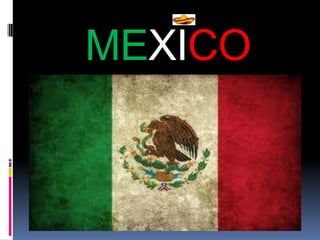
MEXICO
Mexico
 Mexico officially called the United Mexican
States, is a country located in the southern
part of North America. Mexico is the main
tourist destination in Latin America and one
of the most visited in the world.
 Mexico is also one of the countries with the
greatest diversity of climate in the world,
considered one of the 12 mega diverse
countries of the world
TRADITIONS
 The culture of Mexico has undergone a
tremendous transformation over the past
few decades and it varies widely
throughout the country. Nearly half of the
population lives in cities, but smaller rural
communities still play a strong role in
defining the country’s collective vibrant
community.
LANGUAGES OF MEXICO
 Almost all of Mexicans today speak Spanish making
it the largest Spanish-speaking population in the
world there is no single official national language of
Mexico. The colonizers of Mexico forced the Spanish
language on the natives, but in the 1990s the
government recognized 62 indigenous Amerindian
languages.
About 6 percent of the population is non-Spanish
speaking, and some indigenous Mexican words have
even become common in other languages, including
English.
RELIGIONS IN MEXICO
RELIGIONS IN MEXICO
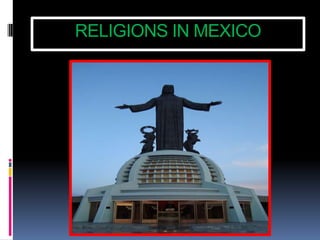
 Close to 90 percent of Mexicans identify
themselves as Catholic, although many have
incorporated pre-Hispanic Mayan elements
as part of their faith.
 Christian denominations represented include
Presbyterians, Jehovah's Witnesses,
Seventh-Day Adventists, Mormons,
Lutherans, Methodists, Baptists and
Anglicans.
VALUES OF MEXICAN PEOPLE
 Mexicans put a high value on hierarchy and
structure in business and family matters.
Especially outside of cities, families are
typically large and Mexicans are very
conscious of their responsibilities to
immediate family members and extended
family such as cousins and even close
friends.
MEXICAN CLOTHING
MEXICAN CLOTHING
 In the cities, fashion in Mexico is influenced
by international trends, so the typical urban
Mexican dresses similar to people in Europe
and the United States. In more rural areas, a
typical woman’s wardrobe includes skirts,
sleeveless tunics called huipils, capes known
as quechquémitls and shawls called
rebozos.
 One distinguishing article of traditional men’s
clothing is a large blanket cape called a
sarape. Boots are also a wardrobe staple.
MEXICAN FOOD
MEXICAN FOOD
 Mexican culinary norms vary widely based on
income level and social class. The diet of working
class Mexicans includes staples such as corn or
wheat tortillas, along with beans, rice, tomatoes, chili
peppers and chorizo, a type of pork sausage.
 Mexico is known for its tequila, which is made from
agave cactus that is well suited to the climate of
central Mexico. Soda is a very popular drink in
Mexico, as the country has a well-developed
beverage industry.
HOLIDAYS AND CELEBRATIONS
 The Feast of Our Lady of Guadalupe, which is
celebrated on Dec. 12, is a major Mexican holiday
celebrating of the appearance of the Virgin Mary to
an Indian man in the first years of Spanish rule.
 The Day of the Dead, which is actually celebrated
over two days combines Catholic and indigenous
rituals to honor the deceased and is a national
holiday.
 Independence Day, marking the country’s separation
from Spain in 1810, is celebrated on September 16.
THANKS FOR
YOUR
ATTENTION

Mexico Roberto PET

  • 1.
  • 2.
  • 3.
    Mexico  Mexico officiallycalled the United Mexican States, is a country located in the southern part of North America. Mexico is the main tourist destination in Latin America and one of the most visited in the world.  Mexico is also one of the countries with the greatest diversity of climate in the world, considered one of the 12 mega diverse countries of the world
  • 4.
    TRADITIONS  The cultureof Mexico has undergone a tremendous transformation over the past few decades and it varies widely throughout the country. Nearly half of the population lives in cities, but smaller rural communities still play a strong role in defining the country’s collective vibrant community.
  • 5.
    LANGUAGES OF MEXICO Almost all of Mexicans today speak Spanish making it the largest Spanish-speaking population in the world there is no single official national language of Mexico. The colonizers of Mexico forced the Spanish language on the natives, but in the 1990s the government recognized 62 indigenous Amerindian languages. About 6 percent of the population is non-Spanish speaking, and some indigenous Mexican words have even become common in other languages, including English.
  • 6.
  • 7.
    RELIGIONS IN MEXICO Close to 90 percent of Mexicans identify themselves as Catholic, although many have incorporated pre-Hispanic Mayan elements as part of their faith.  Christian denominations represented include Presbyterians, Jehovah's Witnesses, Seventh-Day Adventists, Mormons, Lutherans, Methodists, Baptists and Anglicans.
  • 8.
  • 9.
    VALUES OF MEXICANPEOPLE  Mexicans put a high value on hierarchy and structure in business and family matters. Especially outside of cities, families are typically large and Mexicans are very conscious of their responsibilities to immediate family members and extended family such as cousins and even close friends.
  • 10.
  • 11.
    MEXICAN CLOTHING  Inthe cities, fashion in Mexico is influenced by international trends, so the typical urban Mexican dresses similar to people in Europe and the United States. In more rural areas, a typical woman’s wardrobe includes skirts, sleeveless tunics called huipils, capes known as quechquémitls and shawls called rebozos.  One distinguishing article of traditional men’s clothing is a large blanket cape called a sarape. Boots are also a wardrobe staple.
  • 12.
  • 13.
    MEXICAN FOOD  Mexicanculinary norms vary widely based on income level and social class. The diet of working class Mexicans includes staples such as corn or wheat tortillas, along with beans, rice, tomatoes, chili peppers and chorizo, a type of pork sausage.  Mexico is known for its tequila, which is made from agave cactus that is well suited to the climate of central Mexico. Soda is a very popular drink in Mexico, as the country has a well-developed beverage industry.
  • 14.
  • 15.
    HOLIDAYS AND CELEBRATIONS The Feast of Our Lady of Guadalupe, which is celebrated on Dec. 12, is a major Mexican holiday celebrating of the appearance of the Virgin Mary to an Indian man in the first years of Spanish rule.  The Day of the Dead, which is actually celebrated over two days combines Catholic and indigenous rituals to honor the deceased and is a national holiday.  Independence Day, marking the country’s separation from Spain in 1810, is celebrated on September 16.
  • 16.