Prehistoric Animals:
Rise Of The Reptiles


By:
Michael Jay
Presentation by: J M
Spikes And Tusks
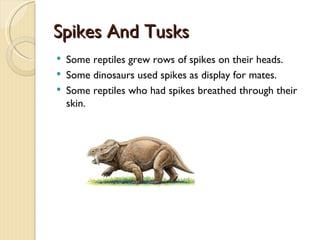
   Some reptiles grew rows of spikes on their heads.
   Some dinosaurs used spikes as display for mates.
   Some reptiles who had spikes breathed through their
    skin.
Sail-back reptiles
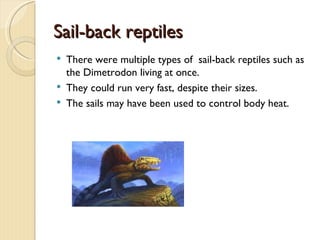
   There were multiple types of sail-back reptiles such as
    the Dimetrodon living at once.
   They could run very fast, despite their sizes.
   The sails may have been used to control body heat.
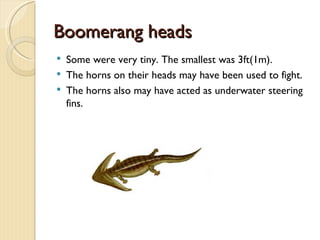
Boomerang heads
   Some were very tiny. The smallest was 3ft(1m).
   The horns on their heads may have been used to fight.
   The horns also may have acted as underwater steering
    fins.
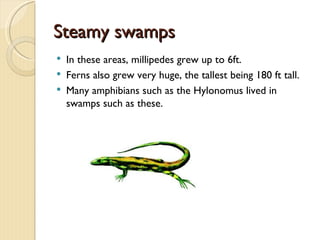
Steamy swamps
   In these areas, millipedes grew up to 6ft.
   Ferns also grew very huge, the tallest being 180 ft tall.
   Many amphibians such as the Hylonomus lived in
    swamps such as these.

Prehistoric animals powerpoint[1]

  • 1.
    Prehistoric Animals: Rise OfThe Reptiles By: Michael Jay Presentation by: J M
  • 2.
    Spikes And Tusks  Some reptiles grew rows of spikes on their heads.  Some dinosaurs used spikes as display for mates.  Some reptiles who had spikes breathed through their skin.
  • 3.
    Sail-back reptiles  There were multiple types of sail-back reptiles such as the Dimetrodon living at once.  They could run very fast, despite their sizes.  The sails may have been used to control body heat.
  • 4.
    Boomerang heads  Some were very tiny. The smallest was 3ft(1m).  The horns on their heads may have been used to fight.  The horns also may have acted as underwater steering fins.
  • 5.
    Steamy swamps  In these areas, millipedes grew up to 6ft.  Ferns also grew very huge, the tallest being 180 ft tall.  Many amphibians such as the Hylonomus lived in swamps such as these.