.
.
.
.
.
.
.
.
.
.
.
.
.
.
.
.
.
.
.
.
.
.
.
.
.
.
.
.
.
.
.
.
.
.
.
.
.
.
.
.
Pregel In Graphs
Models & Instances
Chase Zhang
Strikingly
March 16, 2018
.
.
.
.
.
.
.
.
.
.
.
.
.
.
.
.
.
.
.
.
.
.
.
.
.
.
.
.
.
.
.
.
.
.
.
.
.
.
.
.
Table of Contents
Computing Model
Examples
System Design
Instance: User Tracking System
.
.
.
.
.
.
.
.
.
.
.
.
.
.
.
.
.
.
.
.
.
.
.
.
.
.
.
.
.
.
.
.
.
.
.
.
.
.
.
.
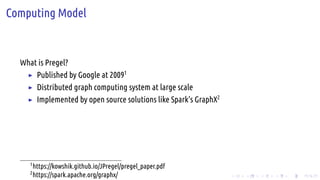
Computing Model
What is Pregel?
▶ Published by Google at 20091
▶ Distributed graph computing system at large scale
▶ Implemented by open source solutions like Spark’s GraphX2
1
https://kowshik.github.io/JPregel/pregel_paper.pdf
2
https://spark.apache.org/graphx/
.
.
.
.
.
.
.
.
.
.
.
.
.
.
.
.
.
.
.
.
.
.
.
.
.
.
.
.
.
.
.
.
.
.
.
.
.
.
.
.
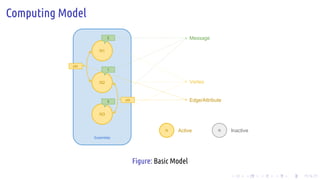
Computing Model
Superstep
N1
N2
N3
2
1
3
Message
Vertex
Edge/Attribute
attr
attr
N Active N Inactive
Figure: Basic Model
.
.
.
.
.
.
.
.
.
.
.
.
.
.
.
.
.
.
.
.
.
.
.
.
.
.
.
.
.
.
.
.
.
.
.
.
.
.
.
.
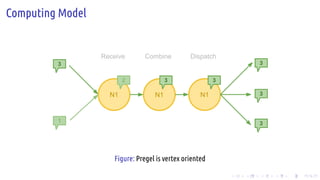
Computing Model
N1N1
1
3
2
N1
3
3
3
3
Receive Combine Dispatch
3
Figure: Pregel is vertex oriented
.
.
.
.
.
.
.
.
.
.
.
.
.
.
.
.
.
.
.
.
.
.
.
.
.
.
.
.
.
.
.
.
.
.
.
.
.
.
.
.
Computing Model
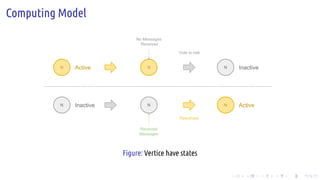
N Active
N Inactive
N N Inactive
N N Active
No Messages
Received
Vote to halt
Received
Messages
Reactivate
Figure: Vertice have states
.
.
.
.
.
.
.
.
.
.
.
.
.
.
.
.
.
.
.
.
.
.
.
.
.
.
.
.
.
.
.
.
.
.
.
.
.
.
.
.
Computing Model
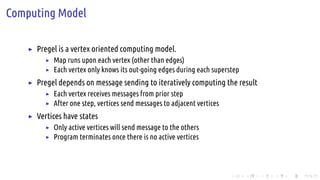
▶ Pregel is a vertex oriented computing model.
▶ Map runs upon each vertex (other than edges)
▶ Each vertex only knows its out-going edges during each superstep
▶ Pregel depends on message sending to iteratively computing the result
▶ Each vertex receives messages from prior step
▶ After one step, vertices send messages to adjacent vertices
▶ Vertices have states
▶ Only active vertices will send message to the others
▶ Program terminates once there is no active vertices
.
.
.
.
.
.
.
.
.
.
.
.
.
.
.
.
.
.
.
.
.
.
.
.
.
.
.
.
.
.
.
.
.
.
.
.
.
.
.
.
Computing Model
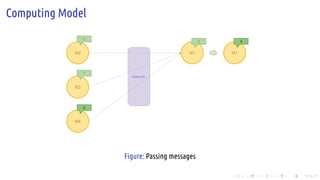
Problem
Sending message through network is costly.
.
.
.
.
.
.
.
.
.
.
.
.
.
.
.
.
.
.
.
.
.
.
.
.
.
.
.
.
.
.
.
.
.
.
.
.
.
.
.
.
Computing Model
network
N2
N3
N4
2
1
4
N1
3
N1
4
Figure: Passing messages
.
.
.
.
.
.
.
.
.
.
.
.
.
.
.
.
.
.
.
.
.
.
.
.
.
.
.
.
.
.
.
.
.
.
.
.
.
.
.
.
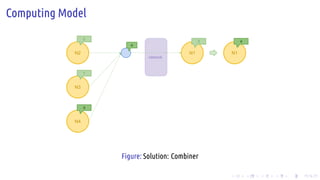
Computing Model
network
N2
N3
N4
2
1
4
N1
3
N1
4
4
Figure: Solution: Combiner
.
.
.
.
.
.
.
.
.
.
.
.
.
.
.
.
.
.
.
.
.
.
.
.
.
.
.
.
.
.
.
.
.
.
.
.
.
.
.
.
Computing Model
Problem
Some iterative graph algrithms require graph-wide results and metrics.
.
.
.
.
.
.
.
.
.
.
.
.
.
.
.
.
.
.
.
.
.
.
.
.
.
.
.
.
.
.
.
.
.
.
.
.
.
.
.
.
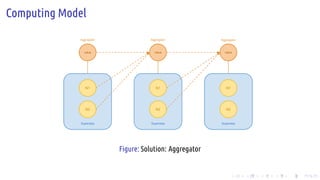
Computing Model
Superstep
N1
Superstep
N1
Superstep
N1
value value value
Aggregator Aggregator Aggregator
N2 N2 N2
Figure: Solution: Aggregator
.
.
.
.
.
.
.
.
.
.
.
.
.
.
.
.
.
.
.
.
.
.
.
.
.
.
.
.
.
.
.
.
.
.
.
.
.
.
.
.
Computing Model
Problem
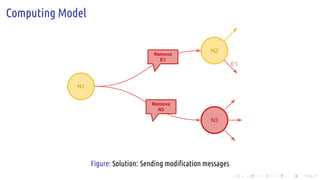
Some graph algorithms require modifying topology during iteration.
.
.
.
.
.
.
.
.
.
.
.
.
.
.
.
.
.
.
.
.
.
.
.
.
.
.
.
.
.
.
.
.
.
.
.
.
.
.
.
.
Computing Model
N1
N2
N3
Remove
E1
Remove
N3
E1
Figure: Solution: Sending modification messages
.
.
.
.
.
.
.
.
.
.
.
.
.
.
.
.
.
.
.
.
.
.
.
.
.
.
.
.
.
.
.
.
.
.
.
.
.
.
.
.
Computing Model
▶ Pregel provides combiner for reducing network traffic
▶ Pregel provides aggregator for recording graph-wide values and metrics
▶ Vertices in Pregel can send topology modification requests as messages to target
vertices
.
.
.
.
.
.
.
.
.
.
.
.
.
.
.
.
.
.
.
.
.
.
.
.
.
.
.
.
.
.
.
.
.
.
.
.
.
.
.
.
Examples
Problem
Find connected components of a directed graph.
.
.
.
.
.
.
.
.
.
.
.
.
.
.
.
.
.
.
.
.
.
.
.
.
.
.
.
.
.
.
.
.
.
.
.
.
.
.
.
.
Examples
Solution
(Single machine) Union-Find3
.
3
https://en.wikipedia.org/wiki/Disjoint-set_data_structure
.
.
.
.
.
.
.
.
.
.
.
.
.
.
.
.
.
.
.
.
.
.
.
.
.
.
.
.
.
.
.
.
.
.
.
.
.
.
.
.
Examples
Solution
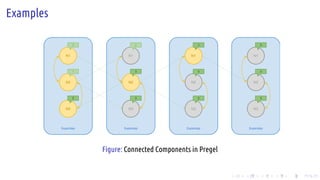
(Pregel) Emit max(min) message received until no active vertex.
.
.
.
.
.
.
.
.
.
.
.
.
.
.
.
.
.
.
.
.
.
.
.
.
.
.
.
.
.
.
.
.
.
.
.
.
.
.
.
.
Examples
Superstep
N1
N2
N3
2
1
3
Superstep
N1
N2
N3
2
3
3
Superstep
N1
N2
N3
3
3
3
Superstep
N1
N2
N3
3
3
3
Figure: Connected Components in Pregel
.
.
.
.
.
.
.
.
.
.
.
.
.
.
.
.
.
.
.
.
.
.
.
.
.
.
.
.
.
.
.
.
.
.
.
.
.
.
.
.
Examples
Problem
Find shortest path from a single source to the other vertices.
.
.
.
.
.
.
.
.
.
.
.
.
.
.
.
.
.
.
.
.
.
.
.
.
.
.
.
.
.
.
.
.
.
.
.
.
.
.
.
.
Examples
Solution
(Single machine) Dijkstra4
, Bellman-Ford5
, A*6
.
4
https://en.wikipedia.org/wiki/Dijkstra%27s_algorithm
5
https://en.wikipedia.org/wiki/Bellman%E2%80%93Ford_algorithm
6
https://en.wikipedia.org/wiki/A*_search_algorithm
.
.
.
.
.
.
.
.
.
.
.
.
.
.
.
.
.
.
.
.
.
.
.
.
.
.
.
.
.
.
.
.
.
.
.
.
.
.
.
.
Examples
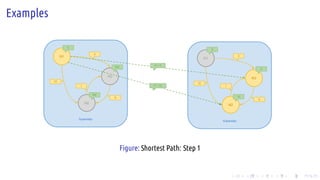
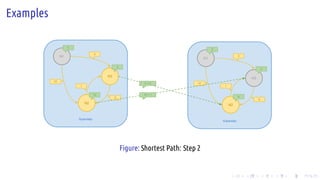
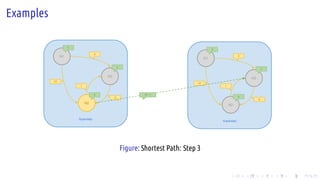
Solution
(Pregel) BFS, emitting current shortest cost from source vertex to current vertex plus edge
cost.
.
.
.
.
.
.
.
.
.
.
.
.
.
.
.
.
.
.
.
.
.
.
.
.
.
.
.
.
.
.
.
.
.
.
.
.
.
.
.
.
Examples
Superstep
N1
N2
N3
0
INF
INF
10
3
6
Superstep
N1
N2
N3
0
3
10
10
3
6
0 + 3
0 + 101 1
Figure: Shortest Path: Step 1
.
.
.
.
.
.
.
.
.
.
.
.
.
.
.
.
.
.
.
.
.
.
.
.
.
.
.
.
.
.
.
.
.
.
.
.
.
.
.
.
Examples
Superstep
N1
N2
N3
0
3
10
10
3
6
Superstep
N1
N2
N3
0
3
9
10
3
6
3 + 6
10 + 1
1 1
Figure: Shortest Path: Step 2
.
.
.
.
.
.
.
.
.
.
.
.
.
.
.
.
.
.
.
.
.
.
.
.
.
.
.
.
.
.
.
.
.
.
.
.
.
.
.
.
Examples
Superstep
N1
N2
N3
0
3
9
10
3
6
Superstep
N1
N2
N3
0
3
9
10
3
6
9+ 1
1 1
Figure: Shortest Path: Step 3
.
.
.
.
.
.
.
.
.
.
.
.
.
.
.
.
.
.
.
.
.
.
.
.
.
.
.
.
.
.
.
.
.
.
.
.
.
.
.
.
Examples
Problem
PageRank7
7
https://en.wikipedia.org/wiki/PageRank
.
.
.
.
.
.
.
.
.
.
.
.
.
.
.
.
.
.
.
.
.
.
.
.
.
.
.
.
.
.
.
.
.
.
.
.
.
.
.
.
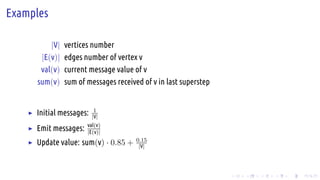
Examples
|V| vertices number
|E(v)| edges number of vertex v
val(v) current message value of v
sum(v) sum of messages received of v in last superstep
▶ Initial messages: 1
|V|
▶ Emit messages: val(v)
|E(v)|
▶ Update value: sum(v) · 0.85 + 0.15
|V|
.
.
.
.
.
.
.
.
.
.
.
.
.
.
.
.
.
.
.
.
.
.
.
.
.
.
.
.
.
.
.
.
.
.
.
.
.
.
.
.
Examples
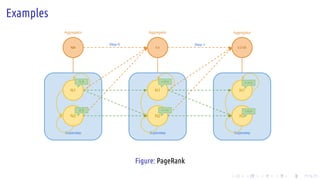
Superstep
N1
Superstep
N1
Superstep
N1
NA 0.5 0.2125
Aggregator Aggregator Aggregator
N2 N2 N2
0.5
0.5
0.2875
0.7125
0.1972
0.8028
Step-0 Step-1
Figure: PageRank
.
.
.
.
.
.
.
.
.
.
.
.
.
.
.
.
.
.
.
.
.
.
.
.
.
.
.
.
.
.
.
.
.
.
.
.
.
.
.
.
Examples
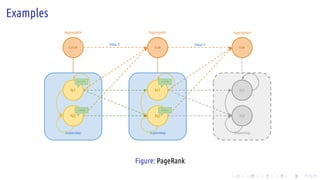
Superstep
N1
Superstep
N1
Superstep
N1
0.2125 0.09 0.04
Aggregator Aggregator Aggregator
N2 N2 N2
0.1972
0.8028
0.1588
0.8412
Step-3Step-2
Figure: PageRank
.
.
.
.
.
.
.
.
.
.
.
.
.
.
.
.
.
.
.
.
.
.
.
.
.
.
.
.
.
.
.
.
.
.
.
.
.
.
.
.
System Design
▶ Graph partitioning
▶ Master-worker system model
▶ Message buffer for better performance
▶ Checkpoint and confined recovery
.
.
.
.
.
.
.
.
.
.
.
.
.
.
.
.
.
.
.
.
.
.
.
.
.
.
.
.
.
.
.
.
.
.
.
.
.
.
.
.
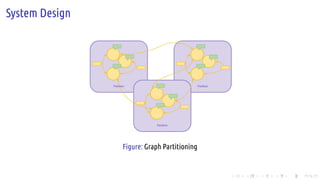
System Design
Partition Partition
Partition
Figure: Graph Partitioning
.
.
.
.
.
.
.
.
.
.
.
.
.
.
.
.
.
.
.
.
.
.
.
.
.
.
.
.
.
.
.
.
.
.
.
.
.
.
.
.
System Design
▶ Graph is partitioned by hash(vertexId) by default
▶ User partitioning function can be provided for locality
.
.
.
.
.
.
.
.
.
.
.
.
.
.
.
.
.
.
.
.
.
.
.
.
.
.
.
.
.
.
.
.
.
.
.
.
.
.
.
.
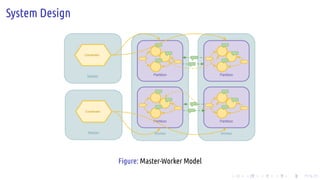
System Design
Worker
Partition
Partition
Worker
Partition
Partition
Master
Coordinator
Master
Coordinator
Figure: Master-Worker Model
.
.
.
.
.
.
.
.
.
.
.
.
.
.
.
.
.
.
.
.
.
.
.
.
.
.
.
.
.
.
.
.
.
.
.
.
.
.
.
.
System Design
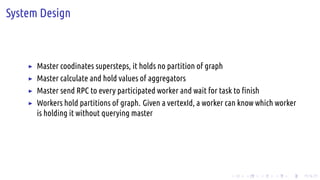
▶ Master coodinates supersteps, it holds no partition of graph
▶ Master calculate and hold values of aggregators
▶ Master send RPC to every participated worker and wait for task to finish
▶ Workers hold partitions of graph. Given a vertexId, a worker can know which worker
is holding it without querying master
.
.
.
.
.
.
.
.
.
.
.
.
.
.
.
.
.
.
.
.
.
.
.
.
.
.
.
.
.
.
.
.
.
.
.
.
.
.
.
.
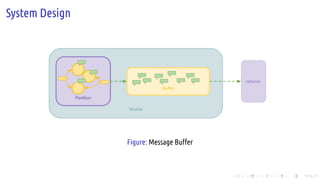
System Design
Worker
Partition
Buffer
network
Figure: Message Buffer
.
.
.
.
.
.
.
.
.
.
.
.
.
.
.
.
.
.
.
.
.
.
.
.
.
.
.
.
.
.
.
.
.
.
.
.
.
.
.
.
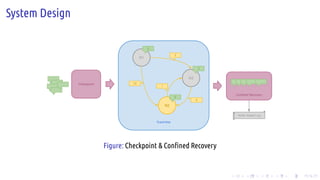
System Design
Confined Recovery
Superstep
N1
N2
N3
0
3
9
10
3
6
1
Checkpoint
Write Ahead Log
Figure: Checkpoint & Confined Recovery
.
.
.
.
.
.
.
.
.
.
.
.
.
.
.
.
.
.
.
.
.
.
.
.
.
.
.
.
.
.
.
.
.
.
.
.
.
.
.
.
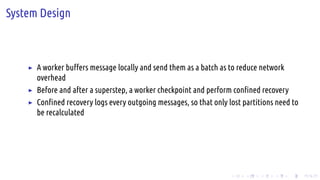
System Design
▶ A worker buffers message locally and send them as a batch as to reduce network
overhead
▶ Before and after a superstep, a worker checkpoint and perform confined recovery
▶ Confined recovery logs every outgoing messages, so that only lost partitions need to
be recalculated
.
.
.
.
.
.
.
.
.
.
.
.
.
.
.
.
.
.
.
.
.
.
.
.
.
.
.
.
.
.
.
.
.
.
.
.
.
.
.
.
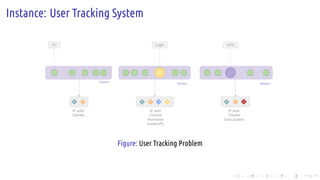
Instance: User Tracking System
PV Login GPS
IP addr
ClientId
IP addr
ClientId
Nickname
AvatarURL
IP addr
ClientId
GeoLocation
Session
Session Session
Figure: User Tracking Problem
.
.
.
.
.
.
.
.
.
.
.
.
.
.
.
.
.
.
.
.
.
.
.
.
.
.
.
.
.
.
.
.
.
.
.
.
.
.
.
.
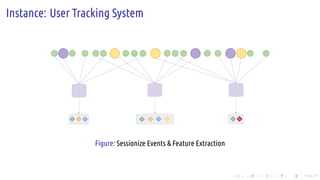
Instance: User Tracking System
Figure: Sessionize Events & Feature Extraction
.
.
.
.
.
.
.
.
.
.
.
.
.
.
.
.
.
.
.
.
.
.
.
.
.
.
.
.
.
.
.
.
.
.
.
.
.
.
.
.
Instance: User Tracking System
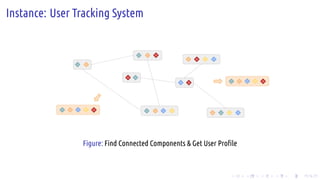
Figure: Find Connected Components & Get User Profile
.
.
.
.
.
.
.
.
.
.
.
.
.
.
.
.
.
.
.
.
.
.
.
.
.
.
.
.
.
.
.
.
.
.
.
.
.
.
.
.
Instance: User Tracking System
Problem
Calculating edges betwen sessions cost O(N2
) time if we compare each pair. It will be too
enormous even for just a million(106
) sessions.
.
.
.
.
.
.
.
.
.
.
.
.
.
.
.
.
.
.
.
.
.
.
.
.
.
.
.
.
.
.
.
.
.
.
.
.
.
.
.
.
Instance: User Tracking System
Solution
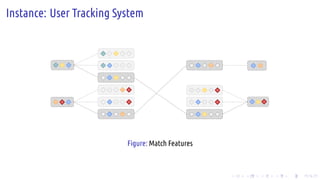
Five significant features are selected for matching, and we define two sessions are
matched if more than two features matched. So we can:
▶ Enumerate combinations of the five significant features, it will be C2
5 = 10
▶ Applying sort or hash method to distribute sessions into matching buckets
▶ Connect sessions in a same bucket
.
.
.
.
.
.
.
.
.
.
.
.
.
.
.
.
.
.
.
.
.
.
.
.
.
.
.
.
.
.
.
.
.
.
.
.
.
.
.
.
Instance: User Tracking System
Figure: Match Features
.
.
.
.
.
.
.
.
.
.
.
.
.
.
.
.
.
.
.
.
.
.
.
.
.
.
.
.
.
.
.
.
.
.
.
.
.
.
.
.
Instance: User Tracking System
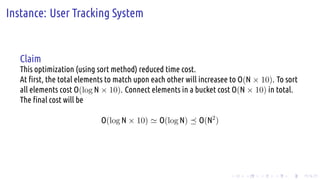
Claim
This optimization (using sort method) reduced time cost.
At first, the total elements to match upon each other will increasee to O(N × 10). To sort
all elements cost O(log N × 10). Connect elements in a bucket cost O(N × 10) in total.
The final cost will be
O(log N × 10) ≃ O(log N) ⪯ O(N2
)
.
.
.
.
.
.
.
.
.
.
.
.
.
.
.
.
.
.
.
.
.
.
.
.
.
.
.
.
.
.
.
.
.
.
.
.
.
.
.
.
Thank you!

Pregel In Graphs - Models and Instances