
PRE REQUISITES FOR CADAVER
KIDNEY RETRIEVAL &
TECHNIQUE
DR. SWAPNILTOPLE
DNB UROLOGY,
YASHODA HOSPITAL,
MALAKPET, HYDERABAD
 The most immediate and practical solution to
the current organ donor crisis is the maximal use
and optimal management of the existing
potential organ donor pool
 This approach provides the greatest opportunity
to enhance the conversion of potential donors to
actual donors and similarly maximize the yield
and quality of the organs procured from each
donor
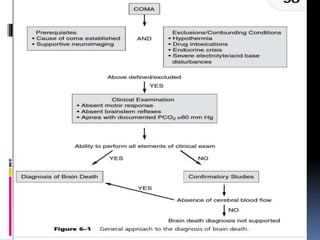
 Organ donor management is fundamentally a
standardized process that occurs in the following
sequence:
(1) surveillance to identify patients with severe
neurological injury likely to progress to brain death or
eventuate in withdrawal of support, establishing
candidacy for donation after cardiac death;
(2) Declaration of brain death using standardized
methodology and a standard protocol for withdrawal
and declaration in the cases of donation after cardiac
death;
(3) a uniform request for consent; and
(4) optimal medical management of the potential donor
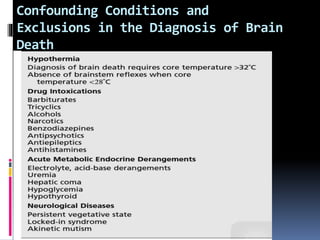
Confounding Conditions and
Exclusions in the Diagnosis of Brain
Death
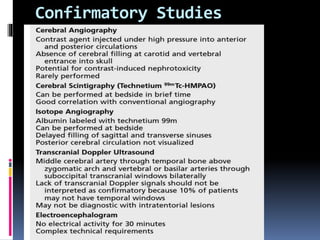
Confirmatory Studies
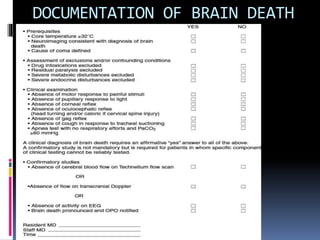
DOCUMENTATION OF BRAIN DEATH
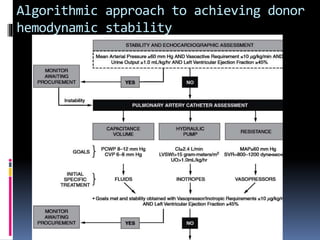
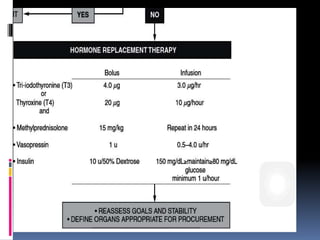
Algorithmic approach to achieving donor
hemodynamic stability
TECHNIQUE-Cadaver donor
nephrectomy without other
organ retrieval
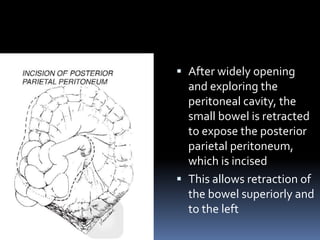
 After widely opening
and exploring the
peritoneal cavity, the
small bowel is retracted
to expose the posterior
parietal peritoneum,
which is incised
 This allows retraction of
the bowel superiorly and
to the left
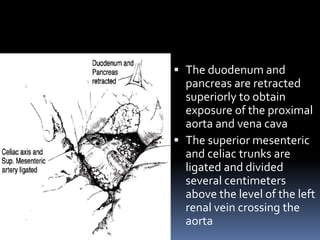
 The duodenum and
pancreas are retracted
superiorly to obtain
exposure of the proximal
aorta and vena cava
 The superior mesenteric
and celiac trunks are
ligated and divided
several centimeters
above the level of the left
renal vein crossing the
aorta
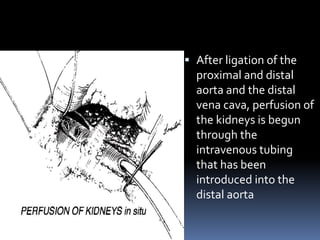
 After ligation of the
proximal and distal
aorta and the distal
vena cava, perfusion of
the kidneys is begun
through the
intravenous tubing
that has been
introduced into the
distal aorta
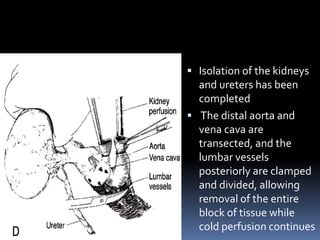
 Isolation of the kidneys
and ureters has been
completed
 The distal aorta and
vena cava are
transected, and the
lumbar vessels
posteriorly are clamped
and divided, allowing
removal of the entire
block of tissue while
cold perfusion continues
Cadaver donor multiple organ
retrieval
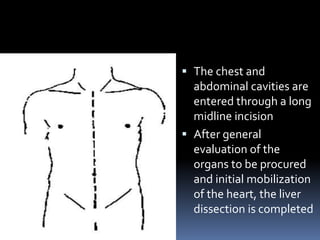
 The chest and
abdominal cavities are
entered through a long
midline incision
 After general
evaluation of the
organs to be procured
and initial mobilization
of the heart, the liver
dissection is completed
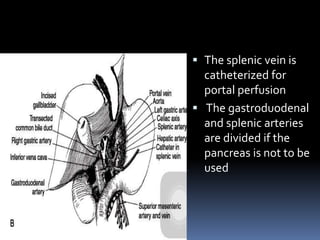
 The splenic vein is
catheterized for
portal perfusion
 The gastroduodenal
and splenic arteries
are divided if the
pancreas is not to be
used
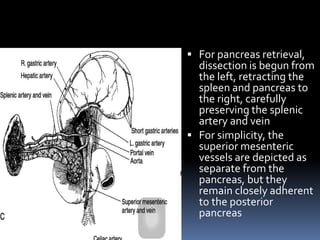
 For pancreas retrieval,
dissection is begun from
the left, retracting the
spleen and pancreas to
the right, carefully
preserving the splenic
artery and vein
 For simplicity, the
superior mesenteric
vessels are depicted as
separate from the
pancreas, but they
remain closely adherent
to the posterior
pancreas
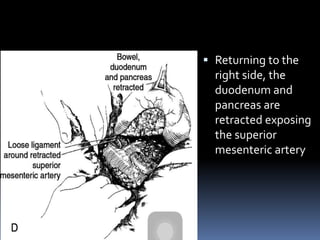
 Returning to the
right side, the
duodenum and
pancreas are
retracted exposing
the superior
mesenteric artery
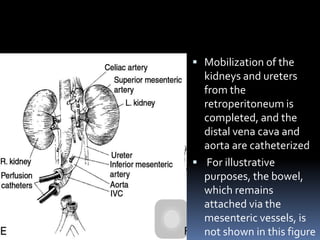
 Mobilization of the
kidneys and ureters
from the
retroperitoneum is
completed, and the
distal vena cava and
aorta are catheterized
 For illustrative
purposes, the bowel,
which remains
attached via the
mesenteric vessels, is
not shown in this figure
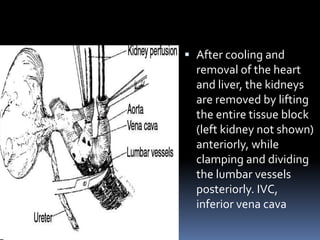
 After cooling and
removal of the heart
and liver, the kidneys
are removed by lifting
the entire tissue block
(left kidney not shown)
anteriorly, while
clamping and dividing
the lumbar vessels
posteriorly. IVC,
inferior vena cava
THANK YOU

Pre requisites for cadaver kidney retrieval & technique

  • 1.
    PRE REQUISITES FORCADAVER KIDNEY RETRIEVAL & TECHNIQUE DR. SWAPNILTOPLE DNB UROLOGY, YASHODA HOSPITAL, MALAKPET, HYDERABAD
  • 2.
     The mostimmediate and practical solution to the current organ donor crisis is the maximal use and optimal management of the existing potential organ donor pool  This approach provides the greatest opportunity to enhance the conversion of potential donors to actual donors and similarly maximize the yield and quality of the organs procured from each donor
  • 3.
     Organ donormanagement is fundamentally a standardized process that occurs in the following sequence: (1) surveillance to identify patients with severe neurological injury likely to progress to brain death or eventuate in withdrawal of support, establishing candidacy for donation after cardiac death; (2) Declaration of brain death using standardized methodology and a standard protocol for withdrawal and declaration in the cases of donation after cardiac death; (3) a uniform request for consent; and (4) optimal medical management of the potential donor
  • 5.
    Confounding Conditions and Exclusionsin the Diagnosis of Brain Death
  • 6.
  • 7.
  • 8.
    Algorithmic approach toachieving donor hemodynamic stability
  • 10.
  • 11.
     After widelyopening and exploring the peritoneal cavity, the small bowel is retracted to expose the posterior parietal peritoneum, which is incised  This allows retraction of the bowel superiorly and to the left
  • 12.
     The duodenumand pancreas are retracted superiorly to obtain exposure of the proximal aorta and vena cava  The superior mesenteric and celiac trunks are ligated and divided several centimeters above the level of the left renal vein crossing the aorta
  • 13.
     After ligationof the proximal and distal aorta and the distal vena cava, perfusion of the kidneys is begun through the intravenous tubing that has been introduced into the distal aorta
  • 14.
     Isolation ofthe kidneys and ureters has been completed  The distal aorta and vena cava are transected, and the lumbar vessels posteriorly are clamped and divided, allowing removal of the entire block of tissue while cold perfusion continues
  • 15.
    Cadaver donor multipleorgan retrieval
  • 16.
     The chestand abdominal cavities are entered through a long midline incision  After general evaluation of the organs to be procured and initial mobilization of the heart, the liver dissection is completed
  • 17.
     The splenicvein is catheterized for portal perfusion  The gastroduodenal and splenic arteries are divided if the pancreas is not to be used
  • 18.
     For pancreasretrieval, dissection is begun from the left, retracting the spleen and pancreas to the right, carefully preserving the splenic artery and vein  For simplicity, the superior mesenteric vessels are depicted as separate from the pancreas, but they remain closely adherent to the posterior pancreas
  • 19.
     Returning tothe right side, the duodenum and pancreas are retracted exposing the superior mesenteric artery
  • 20.
     Mobilization ofthe kidneys and ureters from the retroperitoneum is completed, and the distal vena cava and aorta are catheterized  For illustrative purposes, the bowel, which remains attached via the mesenteric vessels, is not shown in this figure
  • 21.
     After coolingand removal of the heart and liver, the kidneys are removed by lifting the entire tissue block (left kidney not shown) anteriorly, while clamping and dividing the lumbar vessels posteriorly. IVC, inferior vena cava
  • 22.