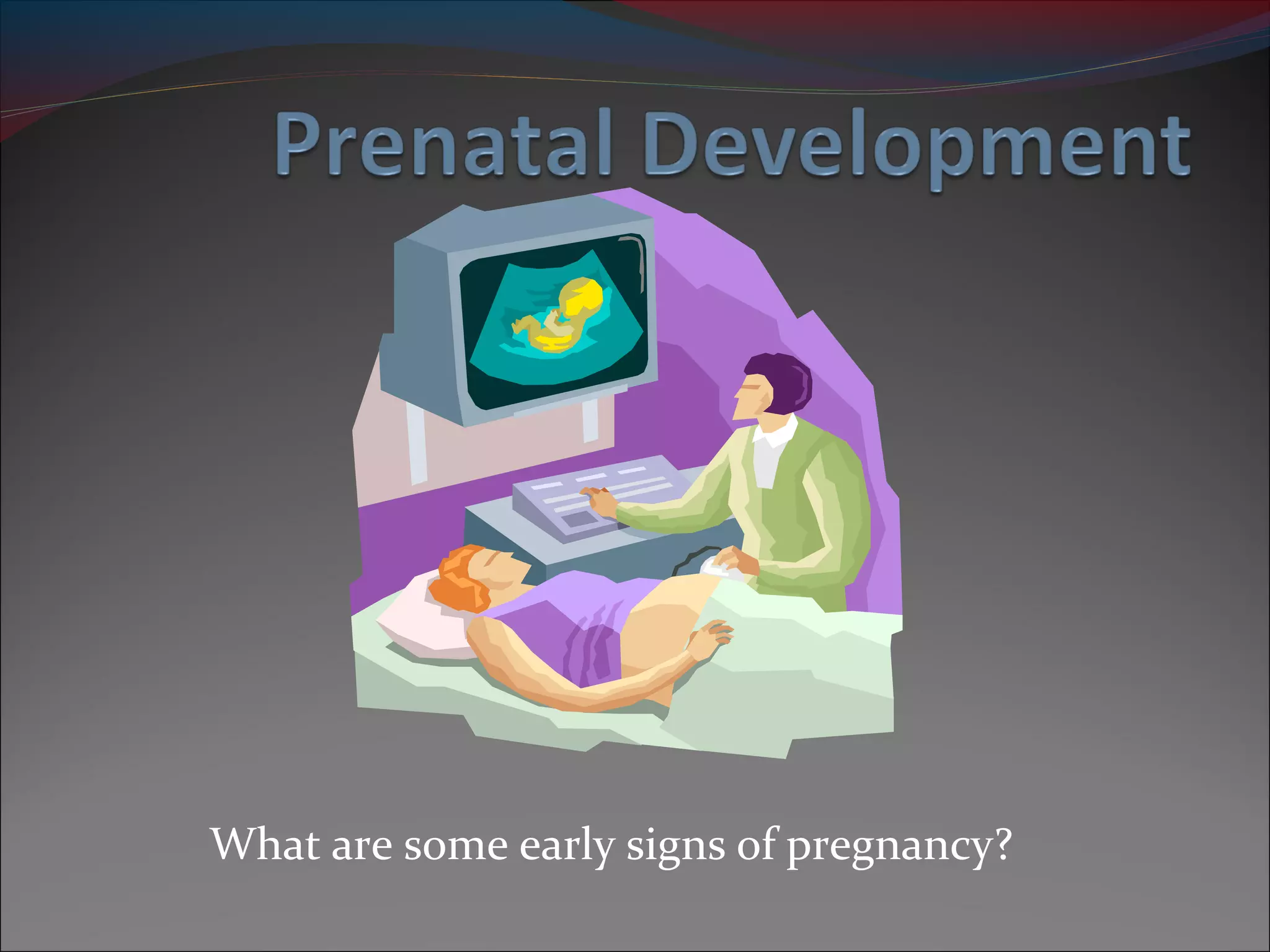
What are some early signs of pregnancy?
2 of 30
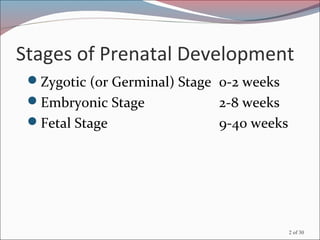
Stages of Prenatal Development
Zygotic (or Germinal) Stage 0-2 weeks
Embryonic Stage 2-8 weeks
Fetal Stage 9-40 weeks
Conception
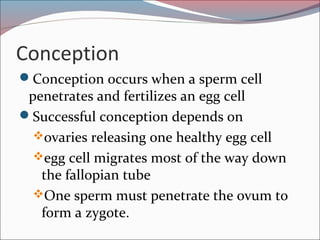
Conception occurs when a sperm cell
penetrates and fertilizes an egg cell
Successful conception depends on
ovaries releasing one healthy egg cell
egg cell migrates most of the way down
the fallopian tube
One sperm must penetrate the ovum to
form a zygote.
Germinal Period
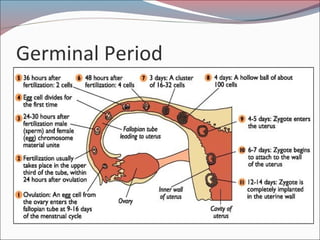
Begins when egg is fertilized in the
fallopian tube.
Period of rapid cell division
Ends 2 weeks later when the zygote is
implanted in the wall of the uterus
Germinal Period
Embryonic Period
From 2 to 8 weeks after conception
Cell differentiation intensifies
Life support systems for the
embryo develop
Organs Appear
Prenatal Structures
8 of 30
At 2 weeks, the embryonic disk as 3 layers:
Entoderm: from which develops pharynx,
tonsils, thyroid, trachea, lungs, digestive
system, bladder, urethra
Mesoderm: from which develops muscles,
bones, circulatory system, lymph system,
kidneys, gonads
Ectoderm: from which develops skin, hair,
nails, sense organs, nervous tissue
Fetal Period
From 9 weeks after conception
to birth
Increase in size and systems
begin to function
Age of viability: 22 to 28 weeks
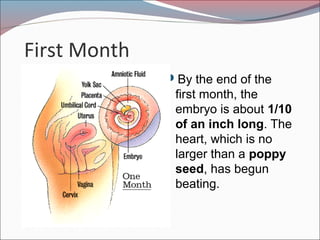
First Month
By the end of the
first month, the
embryo is about 1/10
of an inch long. The
heart, which is no
larger than a poppy
seed, has begun
beating.
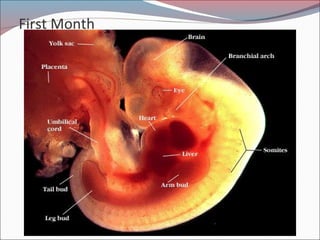
First Month
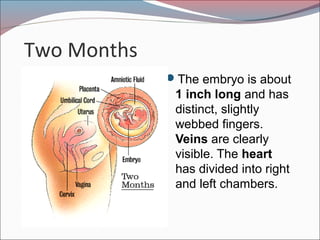
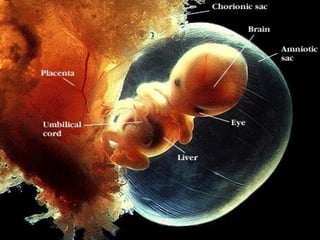
Two Months
The embryo is about
1 inch long and has
distinct, slightly
webbed fingers.
Veins are clearly
visible. The heart
has divided into right
and left chambers.
Two Months
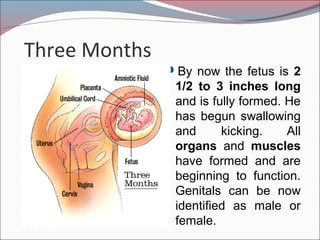
Three Months
By now the fetus is 2
1/2 to 3 inches long
and is fully formed. He
has begun swallowing
and kicking. All
organs and muscles
have formed and are
beginning to function.
Genitals can be now
identified as male or
female.
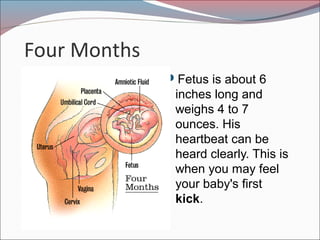
Four Months
Fetus is about 6
inches long and
weighs 4 to 7
ounces. His
heartbeat can be
heard clearly. This is
when you may feel
your baby's first
kick.
4 months
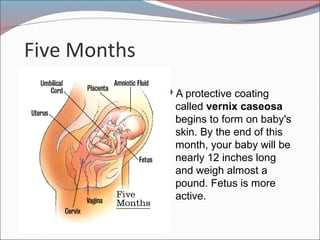
Five Months
A protective coating
called vernix caseosa
begins to form on baby's
skin. By the end of this
month, your baby will be
nearly 12 inches long
and weigh almost a
pound. Fetus is more
active.
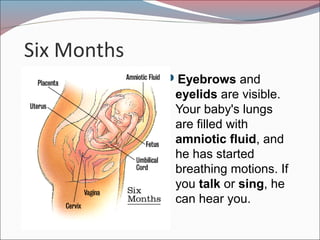
Six Months
Eyebrows and
eyelids are visible.
Your baby's lungs
are filled with
amniotic fluid, and
he has started
breathing motions. If
you talk or sing, he
can hear you.
6 Months
Seven Months
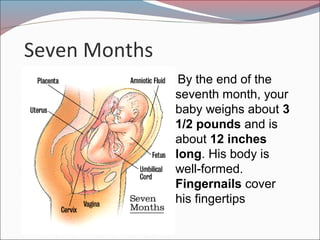
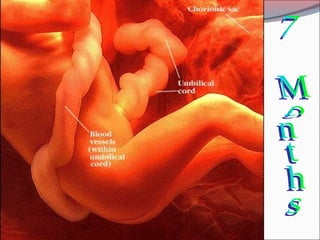
By the end of the
seventh month, your
baby weighs about 3
1/2 pounds and is
about 12 inches
long. His body is
well-formed.
Fingernails cover
his fingertips
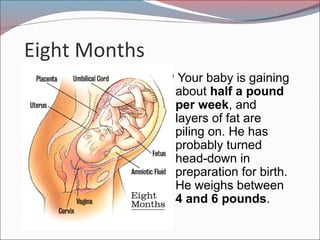
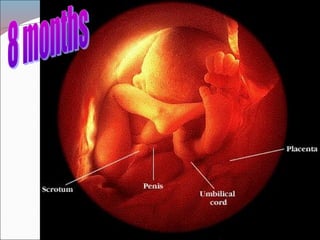
Eight Months
Your baby is gaining
about half a pound
per week, and
layers of fat are
piling on. He has
probably turned
head-down in
preparation for birth.
He weighs between
4 and 6 pounds.
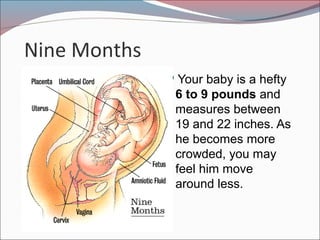
Nine Months
Your baby is a hefty
6 to 9 pounds and
measures between
19 and 22 inches. As
he becomes more
crowded, you may
feel him move
around less.
Happy Birthday!!!
Factors Affecting to
Prenatal Development
General Risk Factors
Teratogens: Diseases, Drugs, and
Environmental Hazards
How Teratogens Influence Prenatal
Development
Prenatal Diagnosis and Treatment
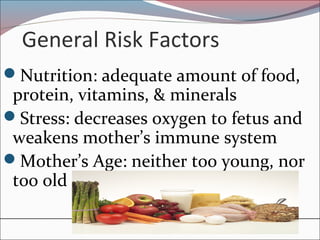
General Risk Factors
Nutrition: adequate amount of food,
protein, vitamins, & minerals
Stress: decreases oxygen to fetus and
weakens mother’s immune system
Mother’s Age: neither too young, nor
too old
Prescription and Nonprescription Drugs –
Several drugs used by the mother that have
negative effects on the embryos and fetuses.
Psychoactive drugs are used to alter states of
consciousness, modify perceptions, and change
moods. The effects of alcohol, nicotine, and
illegal drugs on the fetus are well-documented.
Incompatibility of blood types where the
fetus’s blood is RH positive ad the mother’s is
RH negative cause antibodies to attack the
fetus, resulting in serious, often life-threatening
damage.
Environmental hazards of the modern world
can cause chromosomal abnormalities.
Exposure to toxins, radiation, pollutants, and
excess heat can all contribute to a negative
impact on the fetus.
Other maternal factors such as infectious
diseases (Rubella, Syphilis, AIDS), all have
varying degrees of impact on the fetus. Also
considered are emotional stress, age, and
nutrition of the mother.
Paternal factors can impact fetal growth
such as pesticides at the workplace, smoking
and diet.
Teratogens: Diseases, Drugs, and
Environmental Hazards
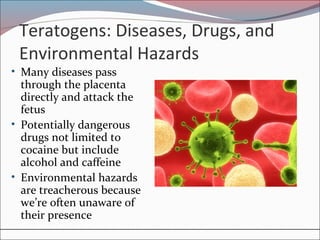
• Many diseases pass
through the placenta
directly and attack the
fetus
• Potentially dangerous
drugs not limited to
cocaine but include
alcohol and caffeine
• Environmental hazards
are treacherous because
we’re often unaware of
their presence
How Teratogens Influence Prenatal
Development
Not universally harmful
Harm particular structures at a
particular point in development in
particular animals
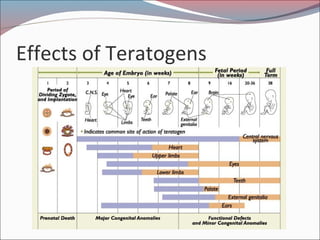
Effects of Teratogens
Prenatal Diagnosis and
Treatment
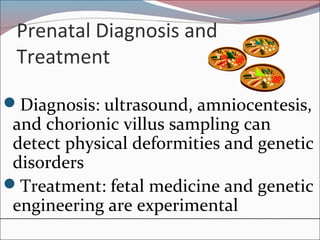
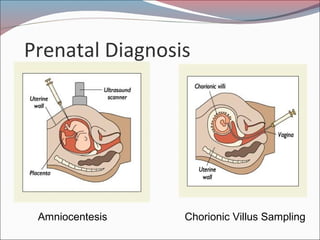
Diagnosis: ultrasound, amniocentesis,
and chorionic villus sampling can
detect physical deformities and genetic
disorders
Treatment: fetal medicine and genetic
engineering are experimental
Prenatal Diagnosis
Amniocentesis Chorionic Villus Sampling
Labor and Delivery
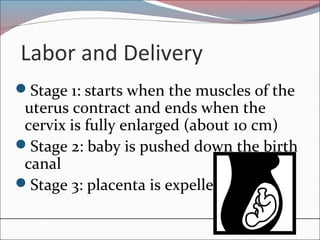
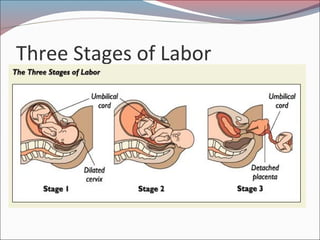
Stage 1: starts when the muscles of the
uterus contract and ends when the
cervix is fully enlarged (about 10 cm)
Stage 2: baby is pushed down the birth
canal
Stage 3: placenta is expelled
Three Stages of Labor

Pre natal development

  • 1.
    What are someearly signs of pregnancy?
  • 2.
    2 of 30 Stagesof Prenatal Development Zygotic (or Germinal) Stage 0-2 weeks Embryonic Stage 2-8 weeks Fetal Stage 9-40 weeks
  • 3.
    Conception Conception occurs whena sperm cell penetrates and fertilizes an egg cell Successful conception depends on ovaries releasing one healthy egg cell egg cell migrates most of the way down the fallopian tube One sperm must penetrate the ovum to form a zygote.
  • 4.
    Germinal Period Begins whenegg is fertilized in the fallopian tube. Period of rapid cell division Ends 2 weeks later when the zygote is implanted in the wall of the uterus
  • 5.
  • 6.
    Embryonic Period From 2to 8 weeks after conception Cell differentiation intensifies Life support systems for the embryo develop Organs Appear
  • 7.
  • 8.
    8 of 30 At2 weeks, the embryonic disk as 3 layers: Entoderm: from which develops pharynx, tonsils, thyroid, trachea, lungs, digestive system, bladder, urethra Mesoderm: from which develops muscles, bones, circulatory system, lymph system, kidneys, gonads Ectoderm: from which develops skin, hair, nails, sense organs, nervous tissue
  • 9.
    Fetal Period From 9weeks after conception to birth Increase in size and systems begin to function Age of viability: 22 to 28 weeks
  • 10.
    First Month By theend of the first month, the embryo is about 1/10 of an inch long. The heart, which is no larger than a poppy seed, has begun beating.
  • 11.
  • 12.
    Two Months The embryois about 1 inch long and has distinct, slightly webbed fingers. Veins are clearly visible. The heart has divided into right and left chambers.
  • 13.
  • 14.
    Three Months By nowthe fetus is 2 1/2 to 3 inches long and is fully formed. He has begun swallowing and kicking. All organs and muscles have formed and are beginning to function. Genitals can be now identified as male or female.
  • 15.
    Four Months Fetus isabout 6 inches long and weighs 4 to 7 ounces. His heartbeat can be heard clearly. This is when you may feel your baby's first kick.
  • 16.
  • 17.
    Five Months A protectivecoating called vernix caseosa begins to form on baby's skin. By the end of this month, your baby will be nearly 12 inches long and weigh almost a pound. Fetus is more active.
  • 18.
    Six Months Eyebrows and eyelidsare visible. Your baby's lungs are filled with amniotic fluid, and he has started breathing motions. If you talk or sing, he can hear you.
  • 19.
  • 20.
    Seven Months By theend of the seventh month, your baby weighs about 3 1/2 pounds and is about 12 inches long. His body is well-formed. Fingernails cover his fingertips
  • 22.
    Eight Months Your babyis gaining about half a pound per week, and layers of fat are piling on. He has probably turned head-down in preparation for birth. He weighs between 4 and 6 pounds.
  • 24.
    Nine Months Your babyis a hefty 6 to 9 pounds and measures between 19 and 22 inches. As he becomes more crowded, you may feel him move around less.
  • 25.
  • 26.
    Factors Affecting to PrenatalDevelopment General Risk Factors Teratogens: Diseases, Drugs, and Environmental Hazards How Teratogens Influence Prenatal Development Prenatal Diagnosis and Treatment
  • 27.
    General Risk Factors Nutrition:adequate amount of food, protein, vitamins, & minerals Stress: decreases oxygen to fetus and weakens mother’s immune system Mother’s Age: neither too young, nor too old
  • 28.
    Prescription and NonprescriptionDrugs – Several drugs used by the mother that have negative effects on the embryos and fetuses. Psychoactive drugs are used to alter states of consciousness, modify perceptions, and change moods. The effects of alcohol, nicotine, and illegal drugs on the fetus are well-documented. Incompatibility of blood types where the fetus’s blood is RH positive ad the mother’s is RH negative cause antibodies to attack the fetus, resulting in serious, often life-threatening damage.
  • 29.
    Environmental hazards ofthe modern world can cause chromosomal abnormalities. Exposure to toxins, radiation, pollutants, and excess heat can all contribute to a negative impact on the fetus. Other maternal factors such as infectious diseases (Rubella, Syphilis, AIDS), all have varying degrees of impact on the fetus. Also considered are emotional stress, age, and nutrition of the mother. Paternal factors can impact fetal growth such as pesticides at the workplace, smoking and diet.
  • 30.
    Teratogens: Diseases, Drugs,and Environmental Hazards • Many diseases pass through the placenta directly and attack the fetus • Potentially dangerous drugs not limited to cocaine but include alcohol and caffeine • Environmental hazards are treacherous because we’re often unaware of their presence
  • 31.
    How Teratogens InfluencePrenatal Development Not universally harmful Harm particular structures at a particular point in development in particular animals
  • 32.
  • 33.
    Prenatal Diagnosis and Treatment Diagnosis:ultrasound, amniocentesis, and chorionic villus sampling can detect physical deformities and genetic disorders Treatment: fetal medicine and genetic engineering are experimental
  • 34.
  • 35.
    Labor and Delivery Stage1: starts when the muscles of the uterus contract and ends when the cervix is fully enlarged (about 10 cm) Stage 2: baby is pushed down the birth canal Stage 3: placenta is expelled
  • 36.