 Scientists believe the earth was formed
  4.5 – 4.6 billion years ago
 Oxygen levels rose 2.5 billion years ago
 Animals begin to move from sea to land
    › Spiders & Scorpions
    › Amphibians
   Pangaea
    › Single Continent
   Reptiles begin to appear and take over
    › Temperature extremes in interior of Pangaea
    › Reptiles adapted to dry conditions and grow
      large
   Largest Extinction
    › 95% of marine species and 70% of land
      animals were wiped out
    › Climate change caused by global warming
      and cooling
       volcanic activity altered ocean currents
   Dinosaurs
    › 240 million years ago
       Triassic Period
 Pangaea Breaks up
 Small Furry animals come from therapsid
  mammal-like reptiles
    › Stayed small until dinosaurs died out
   Dinosaurs dominate
    › Jurassic Period
   Birds
    › 150 million years ago
    › Reptile-like with feathers
   Dinosaurs go extinct
    › 65 million years ago
    › Global cooling
    › Massive meteorite
   Mammals grow and rapidly change
    › Now that dinosaurs are gone
    › Cats, dogs, skunks, horses, elephants,
     primates, rodents
   Ice Age
    › Distinctive animals
       Wooly mammoth, wooly rhinos, extinct arctic
        fox, polar bears
   “Lucy”
    › 3 million years ago
    › Basic human traits
       Stand up
       Small
   Homo Habilis
    › 2 million years ago
    › “handy man”
    › Stone tools
    › Africa
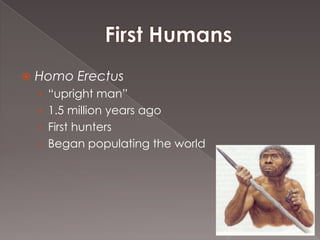
   Homo Erectus
    › “upright man”
    › 1.5 million years ago
    › First hunters
    › Began populating the world
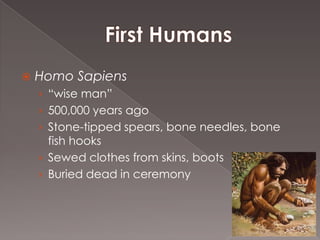
   Homo Sapiens
    › “wise man”
    › 500,000 years ago
    › Stone-tipped spears, bone needles, bone
      fish hooks
    › Sewed clothes from skins, boots
    › Buried dead in ceremony
   “Moderns” and Cro-Magnon
    › “homo sapien sapiens”
    › Bows and arrows
    › Huts with hearth for fire
    › Jewelry
    › Cave art
    › Statues
    › Tools
Turn  to Page 2 in your
 Ancient World book and
 read the “We Love Lucy”
 article. Write out 3
 questions you might ask
 about this article.
   Footprints
    › Discovered in 1976
      by scientists in
      Tanzania
       Preserved in Stone
    › Showed evidence
      of upright walking
      humans as early as
      3.5 million years ago
   First Family
    › Fossils found together
    › 13 individuals
    › Lived in a group
    › 3.2 million years old
   Cave Paintings
    › Discovered in France
    › Depictions date back to 15000 years ago
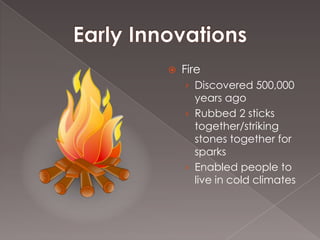
   Fire
    › Discovered 500,000
      years ago
    › Rubbed 2 sticks
      together/striking
      stones together for
      sparks
    › Enabled people to
      live in cold climates
   Wheel & Axle
    › Earliest known
      wheel dates back
      to 3500 BCE
    › Found in
      Mesopotamia
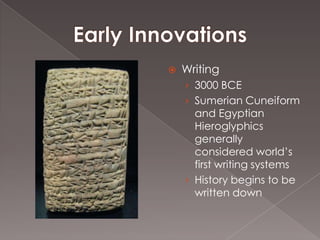
   Writing
    › 3000 BCE
    › Sumerian Cuneiform
      and Egyptian
      Hieroglyphics
      generally
      considered world’s
      first writing systems
    › History begins to be
      written down
Would  you rather read a
 book with pictures or a
 book without pictures?
 Explain your answer. (3
 sentence minimum)
What  meanings can we
draw from cave
paintings? Why did Pre-
Historic people use
drawings to present these
meanings?
Name   a historical event
that happened during your
life that you can remember
exactly where you were at
and what you were doing
when it happened.

Pre history

  • 2.
     Scientists believethe earth was formed 4.5 – 4.6 billion years ago  Oxygen levels rose 2.5 billion years ago  Animals begin to move from sea to land › Spiders & Scorpions › Amphibians
  • 3.
    Pangaea › Single Continent
  • 5.
    Reptiles begin to appear and take over › Temperature extremes in interior of Pangaea › Reptiles adapted to dry conditions and grow large  Largest Extinction › 95% of marine species and 70% of land animals were wiped out › Climate change caused by global warming and cooling  volcanic activity altered ocean currents
  • 6.
    Dinosaurs › 240 million years ago  Triassic Period  Pangaea Breaks up  Small Furry animals come from therapsid mammal-like reptiles › Stayed small until dinosaurs died out
  • 7.
    Dinosaurs dominate › Jurassic Period  Birds › 150 million years ago › Reptile-like with feathers  Dinosaurs go extinct › 65 million years ago › Global cooling › Massive meteorite
  • 8.
    Mammals grow and rapidly change › Now that dinosaurs are gone › Cats, dogs, skunks, horses, elephants, primates, rodents  Ice Age › Distinctive animals  Wooly mammoth, wooly rhinos, extinct arctic fox, polar bears
  • 9.
    “Lucy” › 3 million years ago › Basic human traits  Stand up  Small
  • 10.
    Homo Habilis › 2 million years ago › “handy man” › Stone tools › Africa
  • 11.
    Homo Erectus › “upright man” › 1.5 million years ago › First hunters › Began populating the world
  • 12.
    Homo Sapiens › “wise man” › 500,000 years ago › Stone-tipped spears, bone needles, bone fish hooks › Sewed clothes from skins, boots › Buried dead in ceremony
  • 13.
    “Moderns” and Cro-Magnon › “homo sapien sapiens” › Bows and arrows › Huts with hearth for fire › Jewelry › Cave art › Statues › Tools
  • 14.
    Turn toPage 2 in your Ancient World book and read the “We Love Lucy” article. Write out 3 questions you might ask about this article.
  • 15.
    Footprints › Discovered in 1976 by scientists in Tanzania  Preserved in Stone › Showed evidence of upright walking humans as early as 3.5 million years ago
  • 16.
    First Family › Fossils found together › 13 individuals › Lived in a group › 3.2 million years old
  • 17.
    Cave Paintings › Discovered in France › Depictions date back to 15000 years ago
  • 18.
    Fire › Discovered 500,000 years ago › Rubbed 2 sticks together/striking stones together for sparks › Enabled people to live in cold climates
  • 19.
    Wheel & Axle › Earliest known wheel dates back to 3500 BCE › Found in Mesopotamia
  • 20.
    Writing › 3000 BCE › Sumerian Cuneiform and Egyptian Hieroglyphics generally considered world’s first writing systems › History begins to be written down
  • 21.
    Would yourather read a book with pictures or a book without pictures? Explain your answer. (3 sentence minimum)
  • 22.
    What meaningscan we draw from cave paintings? Why did Pre- Historic people use drawings to present these meanings?
  • 23.
    Name a historical event that happened during your life that you can remember exactly where you were at and what you were doing when it happened.