Lecture
on
Bioaccumulation, Bioconcentration and
Biomagnification
By
Ravi Gedela M.Tech IITG, (PhD IITG)
Assistant professor
Department of Bio-Sciences
RGUKT SKLM
Rajiv Gandhi University of Knowledge
Technologies
1. Bioconcentration
• Uptake of chemicals by an organism can take place
by breathing, absorbing through skin or swallowing.
• When the concentration of a chemical is higher
within the organism compared to its surroundings
(air or water), it is referred to as bioconcentration.
• It is the accumulation of a chemical in or on an
organism when the source of chemical is solely
water.
• It is a term that was created for use in the field
of aquatic toxicology.
• It can also be defined as the process by which a chemical
concentration in an aquatic organism exceeds that in
water as a result of exposure to a aquatic toxicity.
• It is the intake and retention of a substance in an
organism entirely by respiration from water in aquatic
ecosystems or from air in terrestrial ones.
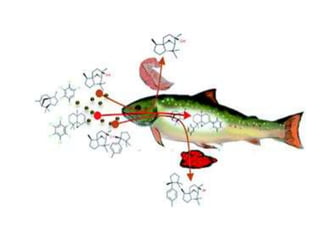
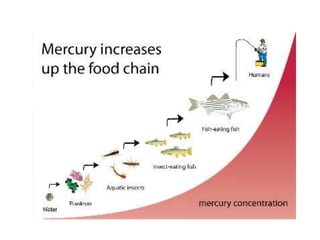
• Pesticides, Fertilizers and heavy metals like mercury,
arsenic, and lead tend to be consumed in small quantities
by the primary consumers, eating higher up the food
chain has its risks.
• These toxins get stored in the fats of the animal.
• When this animal is eaten by a secondary
consumer, these toxins become more
concentrated because secondary consumers eat
lots of primary consumers, and often live longer
too.
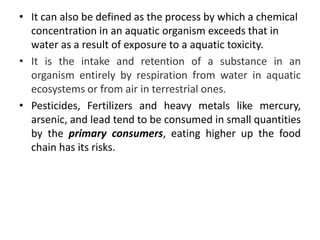
• Bioconcentration can be described by a
bioconcentration factor (BCF), which is the ratio
of the chemical concentration in an organism or
biota to the concentration in water:
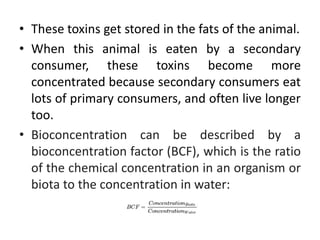
Bioconcentration at Trophic
Levels Each step in a food
chain or food web
2. Bioaccumulation
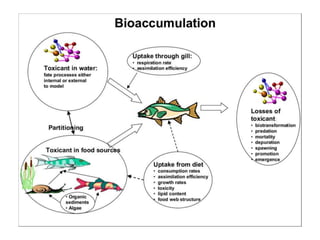
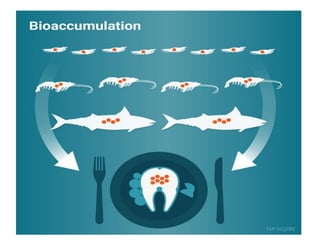
• Bioaccumulation is the intake of a chemical and its
concentration in the organism by all possible means,
including contact, respiration and ingestion.
• It is the gradual accumulation of substances, such
as pesticides or other chemicals, in an organism.
• It occurs when an organism absorbs a substance at a rate
faster than that at which the substance is lost or
eliminated by catabolism and excretion.
• Thus, the longer the biological half-life of a toxic
substance, the greater the risk of chronic poisoning, even
if environmental levels of the toxin are not very high.
3. Biomagnification
• Toxicity induced by metals is associated with bioaccumulation
and biomagnification.
• Storage or uptake of metals faster than the rate at which an
organism metabolizes and excretes lead to the accumulation
of that metal.
• The presence of various chemicals and harmful substances in
the environment can be analyzed and assessed with a proper
knowledge on bioaccumulation helping with chemical control
and usage
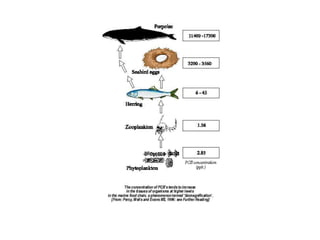
• It occurs when the chemical is passed up the food chain to
higher trophic levels, such that in predators it exceeds the
concentration to be expected where equilibrium prevails
between an organism and its environment (Neely, 1980).
• Thus the fatty tissues of animals may
accumulate residues of heavy metals or organic
compounds.
• These are passed up the food chain (e.g.,
through fish, shellfish, or birds) and reach
greater, possibly harmful, concentrations at
high trophic levels among top predators such as
eagles, polar bears, and, indeed, and human
beings.
Thank
you

PPT2.4 Biomagnification.ppt

  • 1.
    Lecture on Bioaccumulation, Bioconcentration and Biomagnification By RaviGedela M.Tech IITG, (PhD IITG) Assistant professor Department of Bio-Sciences RGUKT SKLM Rajiv Gandhi University of Knowledge Technologies
  • 2.
    1. Bioconcentration • Uptakeof chemicals by an organism can take place by breathing, absorbing through skin or swallowing. • When the concentration of a chemical is higher within the organism compared to its surroundings (air or water), it is referred to as bioconcentration. • It is the accumulation of a chemical in or on an organism when the source of chemical is solely water. • It is a term that was created for use in the field of aquatic toxicology.
  • 4.
    • It canalso be defined as the process by which a chemical concentration in an aquatic organism exceeds that in water as a result of exposure to a aquatic toxicity. • It is the intake and retention of a substance in an organism entirely by respiration from water in aquatic ecosystems or from air in terrestrial ones. • Pesticides, Fertilizers and heavy metals like mercury, arsenic, and lead tend to be consumed in small quantities by the primary consumers, eating higher up the food chain has its risks.
  • 5.
    • These toxinsget stored in the fats of the animal. • When this animal is eaten by a secondary consumer, these toxins become more concentrated because secondary consumers eat lots of primary consumers, and often live longer too. • Bioconcentration can be described by a bioconcentration factor (BCF), which is the ratio of the chemical concentration in an organism or biota to the concentration in water:
  • 6.
    Bioconcentration at Trophic LevelsEach step in a food chain or food web
  • 7.
    2. Bioaccumulation • Bioaccumulationis the intake of a chemical and its concentration in the organism by all possible means, including contact, respiration and ingestion. • It is the gradual accumulation of substances, such as pesticides or other chemicals, in an organism. • It occurs when an organism absorbs a substance at a rate faster than that at which the substance is lost or eliminated by catabolism and excretion. • Thus, the longer the biological half-life of a toxic substance, the greater the risk of chronic poisoning, even if environmental levels of the toxin are not very high.
  • 10.
    3. Biomagnification • Toxicityinduced by metals is associated with bioaccumulation and biomagnification. • Storage or uptake of metals faster than the rate at which an organism metabolizes and excretes lead to the accumulation of that metal. • The presence of various chemicals and harmful substances in the environment can be analyzed and assessed with a proper knowledge on bioaccumulation helping with chemical control and usage • It occurs when the chemical is passed up the food chain to higher trophic levels, such that in predators it exceeds the concentration to be expected where equilibrium prevails between an organism and its environment (Neely, 1980).
  • 13.
    • Thus thefatty tissues of animals may accumulate residues of heavy metals or organic compounds. • These are passed up the food chain (e.g., through fish, shellfish, or birds) and reach greater, possibly harmful, concentrations at high trophic levels among top predators such as eagles, polar bears, and, indeed, and human beings.
  • 14.