Check Condition of Tools
and equipment
PERSONAL PROTECTIVE
EQUIPMENT
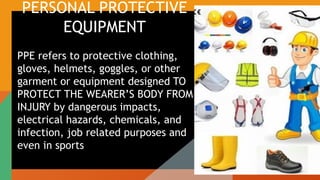
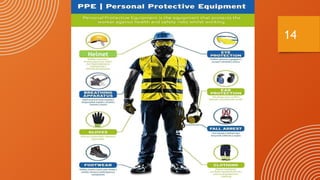
PPE refers to protective clothing,
gloves, helmets, goggles, or other
garment or equipment designed TO
PROTECT THE WEARER’S BODY FROM
INJURY by dangerous impacts,
electrical hazards, chemicals, and
infection, job related purposes and
even in sports
3
“Protective clothing”
•Is applied to traditional categories of
clothing, and “gear” is a more general
term and which means protective
categories, su
ch as pads, guards, glove, shield,
masks, etc.
•The use of PPE is to reduce worker
exposure to hazards and risks.
4
“Protective clothing”
•Is applied to traditional categories of
clothing, and “gear” is a more general
term and which means protective
categories, su
ch as pads, guards, glove, shield,
masks, etc.
•The use of PPE is to reduce worker
exposure to hazards and risks.
USES OF PERSONAL PROTECTIVE
EQUIPMENT
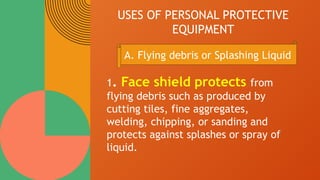
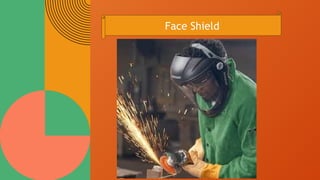
1. Face shield protects from
flying debris such as produced by
cutting tiles, fine aggregates,
welding, chipping, or sanding and
protects against splashes or spray of
liquid.
A. Flying debris or Splashing Liquid
Face Shield
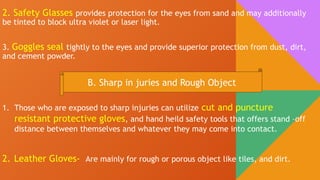
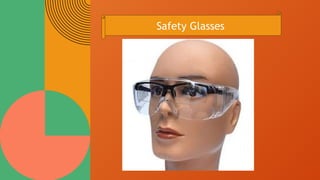
2. Safety Glasses provides protection for the eyes from sand and may additionally
be tinted to block ultra violet or laser light.
3. Goggles seal tightly to the eyes and provide superior protection from dust, dirt,
and cement powder.
B. Sharp in juries and Rough Object
1. Those who are exposed to sharp injuries can utilize cut and puncture
resistant protective gloves, and hand heild safety tools that offers stand –off
distance between themselves and whatever they may come into contact.
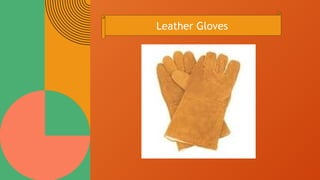
2. Leather Gloves- Are mainly for rough or porous object like tiles, and dirt.
Safety Glasses
Leather Gloves
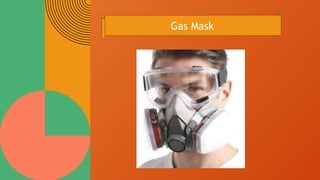
1. Respirators such as ‘gas masks” and “particulate
respirators“ filter chemicals and gases or airborne
particles. A second type of resperator protects usrers
by providing clean, inhalable air from another sources.
In some work place, respirators are used when adequate
ventilation is not available or other engineering control
systems are not feasible.
C. Air- purifying respirator
Gas Mask
Cover All- a clothing designed to protect the body from excessive dirt
grease, oil and others.
Knee pads- are used to protect the knees in tile setting
Helmets- are used to protect head from falling Object and forceful
bump
First aid kit- contain supplies intended for first aid measures
https://www.youtube.com/watch?v=BpG5HaCK4yQ
D. Other Equipment
13
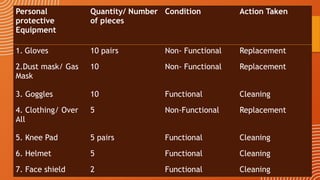
Personal
protective
Equipment
Quantity/ Number
of pieces
Condition Action Taken
1. Gloves 10 pairs Non- Functional Replacement
2.Dust mask/ Gas
Mask
10 Non- Functional Replacement
3. Goggles 10 Functional Cleaning
4. Clothing/ Over
All
5 Non-Functional Replacement
5. Knee Pad 5 pairs Functional Cleaning
6. Helmet 5 Functional Cleaning
7. Face shield 2 Functional Cleaning
14
Helmet

week 6 Maintain tools and equipment.pptx

  • 1.
    Check Condition ofTools and equipment
  • 2.
    PERSONAL PROTECTIVE EQUIPMENT PPE refersto protective clothing, gloves, helmets, goggles, or other garment or equipment designed TO PROTECT THE WEARER’S BODY FROM INJURY by dangerous impacts, electrical hazards, chemicals, and infection, job related purposes and even in sports
  • 3.
    3 “Protective clothing” •Is appliedto traditional categories of clothing, and “gear” is a more general term and which means protective categories, su ch as pads, guards, glove, shield, masks, etc. •The use of PPE is to reduce worker exposure to hazards and risks.
  • 4.
    4 “Protective clothing” •Is appliedto traditional categories of clothing, and “gear” is a more general term and which means protective categories, su ch as pads, guards, glove, shield, masks, etc. •The use of PPE is to reduce worker exposure to hazards and risks.
  • 5.
    USES OF PERSONALPROTECTIVE EQUIPMENT 1. Face shield protects from flying debris such as produced by cutting tiles, fine aggregates, welding, chipping, or sanding and protects against splashes or spray of liquid. A. Flying debris or Splashing Liquid
  • 6.
  • 7.
    2. Safety Glassesprovides protection for the eyes from sand and may additionally be tinted to block ultra violet or laser light. 3. Goggles seal tightly to the eyes and provide superior protection from dust, dirt, and cement powder. B. Sharp in juries and Rough Object 1. Those who are exposed to sharp injuries can utilize cut and puncture resistant protective gloves, and hand heild safety tools that offers stand –off distance between themselves and whatever they may come into contact. 2. Leather Gloves- Are mainly for rough or porous object like tiles, and dirt.
  • 8.
  • 9.
  • 10.
    1. Respirators suchas ‘gas masks” and “particulate respirators“ filter chemicals and gases or airborne particles. A second type of resperator protects usrers by providing clean, inhalable air from another sources. In some work place, respirators are used when adequate ventilation is not available or other engineering control systems are not feasible. C. Air- purifying respirator
  • 11.
  • 12.
    Cover All- aclothing designed to protect the body from excessive dirt grease, oil and others. Knee pads- are used to protect the knees in tile setting Helmets- are used to protect head from falling Object and forceful bump First aid kit- contain supplies intended for first aid measures https://www.youtube.com/watch?v=BpG5HaCK4yQ D. Other Equipment
  • 13.
    13 Personal protective Equipment Quantity/ Number of pieces ConditionAction Taken 1. Gloves 10 pairs Non- Functional Replacement 2.Dust mask/ Gas Mask 10 Non- Functional Replacement 3. Goggles 10 Functional Cleaning 4. Clothing/ Over All 5 Non-Functional Replacement 5. Knee Pad 5 pairs Functional Cleaning 6. Helmet 5 Functional Cleaning 7. Face shield 2 Functional Cleaning
  • 14.