Fantasy Theme
Literature Circle
      Plan
     Heather Duffield
Literature Group
            Details
• Appropriate grade-level - Fifth
• Theme connection - Fantasy novels
• Subject - Language Arts/Reading
• Book Levels - Based on Fountas and
  Pinnell reading levels
• Timeline - no more than four weeks
    – Students divide pages and assign per reading block
    – Time is given in class, but students can sign books out to
      catch up on reading
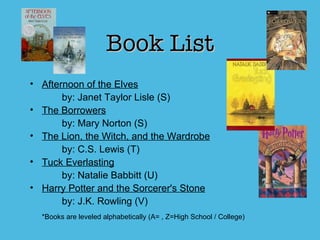
Book List
• Afternoon of the Elves
       by: Janet Taylor Lisle (S)
• The Borrowers
       by: Mary Norton (S)
• The Lion, the Witch, and the Wardrobe
       by: C.S. Lewis (T)
• Tuck Everlasting
       by: Natalie Babbitt (U)
• Harry Potter and the Sorcerer's Stone
       by: J.K. Rowling (V)
  *Books are leveled alphabetically (A= , Z=High School / College)
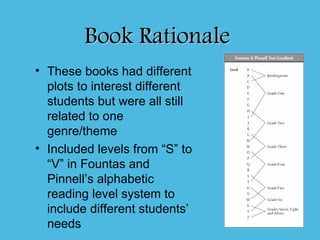
Book Rationale
• These books had different
  plots to interest different
  students but were all still
  related to one
  genre/theme
• Included levels from “S” to
  “V” in Fountas and
  Pinnell’s alphabetic
  reading level system to
  include different students’
  needs
Group Roles
• Vocab Visionary: records important or unknown words
  and researches the meaning to relate it to the story
  context
• Discussion Director: leads the discussion of each
  meeting by asking the questions or starting activity
• Summarizing Secretary: summarizes the meetings to
  make sure all are on the same page and records any
  important topics/questions that were discussed
• Elaborating Evaluator: makes sure everyone
  completes their duty within the group, connects the
  theme and events in the reading to real life, and fills-in
  for missing group members.
Group Role Tasks
• Student Role Responsibilities:
  – After reading, group discussion will focus on:
     •    important or unknown words found
     •    reading progress
     •    summarizing main events and important details
     •    connecting the events in fantasy genre to real life
         events
Role Task Logs
– Each role will keep a daily reading log based on their
  role:
   • Vocab Visionary: Word Log of important and unknown words
     found in passage and their meaning
   • Discussion Director: Progress log to keep track of group’s
     reading and page assignments
   • Summarizing Secretary: Summary log to recap the group’s
     main thoughts of each block’s reading assignment
   • Elaborating Evaluator: Connection Log to record the
     connections the group makes between the story’s plot and
     themes to their lives
Skill Building Tasks
• After discussing elements from each role
  task, students will practice literary skill
  building
• Skill Worksheets/Graphic Organizers:
  - Each day, there will be a language arts skill
    reviewed to apply to the reading
  - Examples of literary skills practiced:
     - Identifying characters, plot, setting, themes, and their
       meaning
     - Cause and effect / sequence of events
     - Identifying elements from the particular genre (fantasy)
     - Identifying author’s purpose, views and beliefs
Assessment Plan
• Each day:
  – Gather information by observing and interacting
    with groups and individuals
  – Collect and assess skill building assignments for
    class work grade
• Each week:
  – Collect “Role Logs” and review to assess group
    and individual progress (also a class work grade)
Final Assessment Project
• Book Report
  – Students divide sections evenly but work together
    to revise final project that will include:
     •   Title and Author
     •   Plot, Setting, and Characters
     •   Connections or messages of story to the real life events
     •   Themes
     •   Final opinion evaluation from each member of their
         likes / dislikes and reasoning
  – Students will create a way to present report to the
    class by using projects like:
     • Poster or cereal box
     • Power point presentation
     • Video-taped (or acted out) commercial for book, etc
Benefits of Literature
        Circles
• Students read stories they are
  interested for comprehension
• Students practice many reading skills
  including: fluency, reading for meaning,
  applying already known literary skills to
  everyday reading and group work skills
• Discussing themes, ideas and opinions
  with peers to gain new perspectives

Pp for literature circle plan summer 2011

  • 1.
    Fantasy Theme Literature Circle Plan Heather Duffield
  • 2.
    Literature Group Details • Appropriate grade-level - Fifth • Theme connection - Fantasy novels • Subject - Language Arts/Reading • Book Levels - Based on Fountas and Pinnell reading levels • Timeline - no more than four weeks – Students divide pages and assign per reading block – Time is given in class, but students can sign books out to catch up on reading
  • 3.
    Book List • Afternoonof the Elves by: Janet Taylor Lisle (S) • The Borrowers by: Mary Norton (S) • The Lion, the Witch, and the Wardrobe by: C.S. Lewis (T) • Tuck Everlasting by: Natalie Babbitt (U) • Harry Potter and the Sorcerer's Stone by: J.K. Rowling (V) *Books are leveled alphabetically (A= , Z=High School / College)
  • 4.
    Book Rationale • Thesebooks had different plots to interest different students but were all still related to one genre/theme • Included levels from “S” to “V” in Fountas and Pinnell’s alphabetic reading level system to include different students’ needs
  • 5.
    Group Roles • VocabVisionary: records important or unknown words and researches the meaning to relate it to the story context • Discussion Director: leads the discussion of each meeting by asking the questions or starting activity • Summarizing Secretary: summarizes the meetings to make sure all are on the same page and records any important topics/questions that were discussed • Elaborating Evaluator: makes sure everyone completes their duty within the group, connects the theme and events in the reading to real life, and fills-in for missing group members.
  • 6.
    Group Role Tasks •Student Role Responsibilities: – After reading, group discussion will focus on: • important or unknown words found • reading progress • summarizing main events and important details • connecting the events in fantasy genre to real life events
  • 7.
    Role Task Logs –Each role will keep a daily reading log based on their role: • Vocab Visionary: Word Log of important and unknown words found in passage and their meaning • Discussion Director: Progress log to keep track of group’s reading and page assignments • Summarizing Secretary: Summary log to recap the group’s main thoughts of each block’s reading assignment • Elaborating Evaluator: Connection Log to record the connections the group makes between the story’s plot and themes to their lives
  • 8.
    Skill Building Tasks •After discussing elements from each role task, students will practice literary skill building • Skill Worksheets/Graphic Organizers: - Each day, there will be a language arts skill reviewed to apply to the reading - Examples of literary skills practiced: - Identifying characters, plot, setting, themes, and their meaning - Cause and effect / sequence of events - Identifying elements from the particular genre (fantasy) - Identifying author’s purpose, views and beliefs
  • 9.
    Assessment Plan • Eachday: – Gather information by observing and interacting with groups and individuals – Collect and assess skill building assignments for class work grade • Each week: – Collect “Role Logs” and review to assess group and individual progress (also a class work grade)
  • 10.
    Final Assessment Project •Book Report – Students divide sections evenly but work together to revise final project that will include: • Title and Author • Plot, Setting, and Characters • Connections or messages of story to the real life events • Themes • Final opinion evaluation from each member of their likes / dislikes and reasoning – Students will create a way to present report to the class by using projects like: • Poster or cereal box • Power point presentation • Video-taped (or acted out) commercial for book, etc
  • 11.
    Benefits of Literature Circles • Students read stories they are interested for comprehension • Students practice many reading skills including: fluency, reading for meaning, applying already known literary skills to everyday reading and group work skills • Discussing themes, ideas and opinions with peers to gain new perspectives