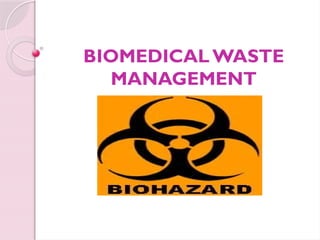
BIOMEDICAL WASTE
MANAGEMENT
Definition
Biomedical waste is also known as infectious waste
or medical waste.
Any solid or liquid waste incluiding its
container which is generated during the
diagnosis ,treatment or immunization of human
beings or animals is called biomedical waste.
And
the process of collection, transport, processing,
recycling of waste material is called biomedical
waste management
Biomedical waste (management
& handling ) rule,1998
 Came into force on 28th
july , 1998.
 Prescribed by Ministry of Environment & Forest under
the environment protection act of India.
 Proper disposal of biomedical waste is a statutory
requirement.
 This rule applies to those who generate, collect,
receive, store, dispose, treat or handle biomedical waste
in any manner.
Why is it essential to have safe
and reliable treatment of
‘biomedical waste’?
Biomedical waste may have serious & public
health consequences and a significant impact on
the environment.
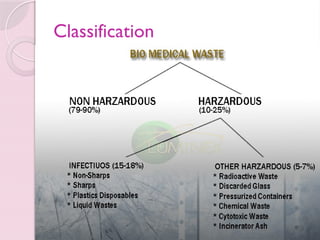
Classification
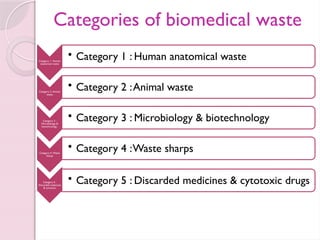
Categories of biomedical waste
Category 1 : Human
anatomical waste
• Category 1 : Human anatomical waste
Category 2 :Animal
waste
• Category 2 :Animal waste
Category 3 :
Microbiology &
biotechnology
• Category 3 : Microbiology & biotechnology
Category 4 :Waste
sharps
• Category 4 :Waste sharps
Category 5 :
Discarded medicines
& cytotoxic
• Category 5 : Discarded medicines & cytotoxic drugs
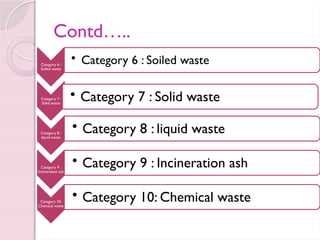
Contd…..
Category 6 :
Soiled waste
• Category 6 : Soiled waste
Category 7 :
Solid waste
• Category 7 : Solid waste
Category 8 :
liquid waste
• Category 8 : liquid waste
Category 9 :
Incineration ash
• Category 9 : Incineration ash
Category 10:
Chemical waste
• Category 10: Chemical waste
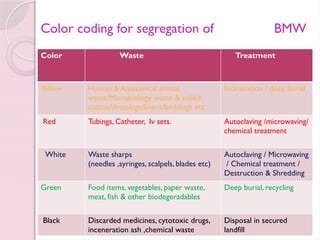
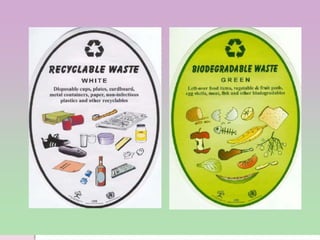
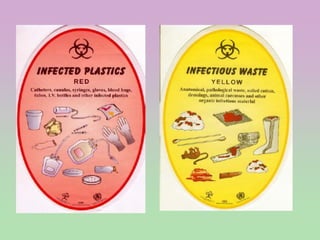
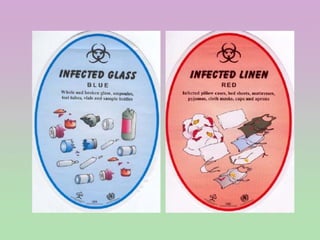
Color coding for segregation of BMW
Color Waste Treatment
Yellow Human & Anatomical animal
waste/Microbiology waste & soiled
cotton/dressings/linens/beddings etc
Incineration / deep burial
Red Tubings, Catheter, Iv sets. Autoclaving /microwaving/
chemical treatment
White Waste sharps
(needles ,syringes, scalpels, blades etc)
Autoclaving / Microwaving
/ Chemical treatment /
Destruction & Shredding
Green Food items, vegetables, paper waste,
meat, fish & other biodegeradables
Deep burial, recycling
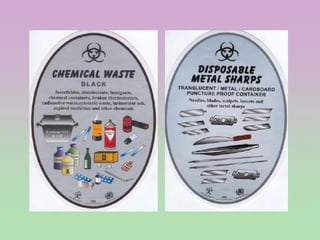
Black Discarded medicines, cytotoxic drugs,
inceneration ash ,chemical waste
Disposal in secured
landfill
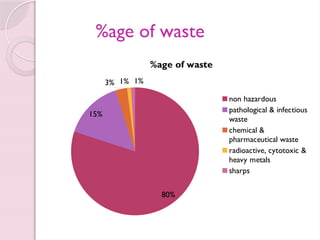
%age of waste
80%
15%
3% 1% 1%
%age of waste
non hazardous
pathological & infectious
waste
chemical &
pharmaceutical waste
radioactive, cytotoxic &
heavy metals
sharps
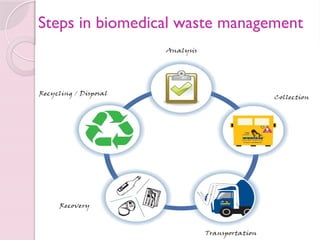
Steps in biomedical waste management
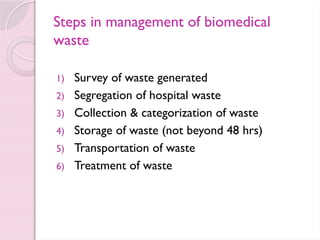
Steps in management of biomedical
waste
1) Survey of waste generated
2) Segregation of hospital waste
3) Collection & categorization of waste
4) Storage of waste (not beyond 48 hrs)
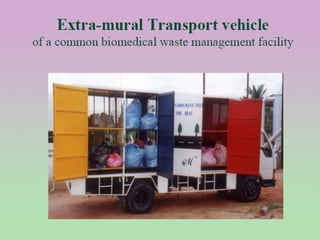
5) Transportation of waste
6) Treatment of waste
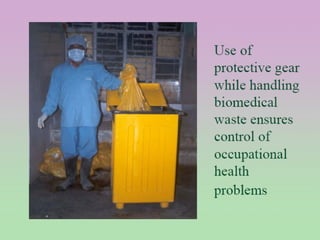
Principles of control of hazards of biomedical
waste in health care establishments
 Each institution should develop its own BMW policy
& ensure that the health care workers are adequately
trained to handle biological waste
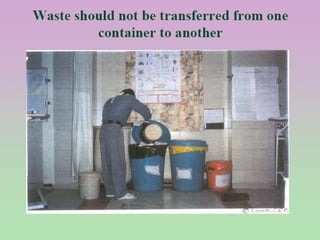
 Measures such as universal safety precautions, hand
washing & proper segregation of waste material
should be encouraged.
 Proper house keeping is essential & the hospital
premises should be kept clean & well ventilation
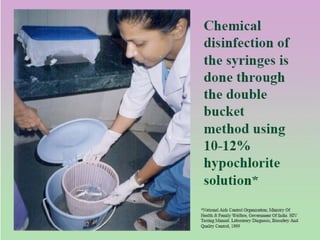
 Use of disinfectants should be rationalized .
Summarization
 Definition of biomedical waste
 Categories of biomedical waste
 Color coding for biomedical waste
 Steps in management of biomedical waste
 Principles used in controlling hazards of
biomedical waste
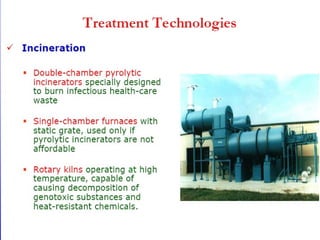
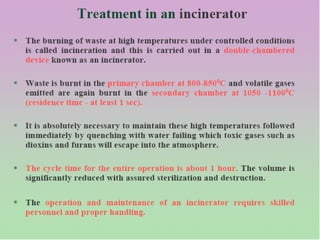
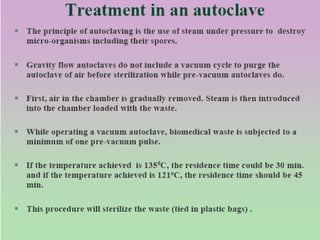
 Treatment technologies
Recaptualization
1) What is biomedical waste management?
2) In which year biomedical rule came into force?
3) Which colored bag is used to discard the waste
of positive patients?
4) What are the different methods used for
treatment of waste?
Bibliography
D.R.Arora.textbook of microbiology.
1st
edition.New Delhi:CBS publishers;2001.P.33-38
 C.P.Baveja.textbook of microbiology.2nd
edition.Delhi:Arya publishers;2007.P.19-23
Powerpoint presentation on BIOMEDICAL WASTE.pptx

Powerpoint presentation on BIOMEDICAL WASTE.pptx

  • 1.
  • 2.
    Definition Biomedical waste isalso known as infectious waste or medical waste. Any solid or liquid waste incluiding its container which is generated during the diagnosis ,treatment or immunization of human beings or animals is called biomedical waste. And the process of collection, transport, processing, recycling of waste material is called biomedical waste management
  • 3.
    Biomedical waste (management &handling ) rule,1998  Came into force on 28th july , 1998.  Prescribed by Ministry of Environment & Forest under the environment protection act of India.  Proper disposal of biomedical waste is a statutory requirement.  This rule applies to those who generate, collect, receive, store, dispose, treat or handle biomedical waste in any manner.
  • 4.
    Why is itessential to have safe and reliable treatment of ‘biomedical waste’? Biomedical waste may have serious & public health consequences and a significant impact on the environment.
  • 5.
  • 7.
    Categories of biomedicalwaste Category 1 : Human anatomical waste • Category 1 : Human anatomical waste Category 2 :Animal waste • Category 2 :Animal waste Category 3 : Microbiology & biotechnology • Category 3 : Microbiology & biotechnology Category 4 :Waste sharps • Category 4 :Waste sharps Category 5 : Discarded medicines & cytotoxic • Category 5 : Discarded medicines & cytotoxic drugs
  • 8.
    Contd….. Category 6 : Soiledwaste • Category 6 : Soiled waste Category 7 : Solid waste • Category 7 : Solid waste Category 8 : liquid waste • Category 8 : liquid waste Category 9 : Incineration ash • Category 9 : Incineration ash Category 10: Chemical waste • Category 10: Chemical waste
  • 9.
    Color coding forsegregation of BMW Color Waste Treatment Yellow Human & Anatomical animal waste/Microbiology waste & soiled cotton/dressings/linens/beddings etc Incineration / deep burial Red Tubings, Catheter, Iv sets. Autoclaving /microwaving/ chemical treatment White Waste sharps (needles ,syringes, scalpels, blades etc) Autoclaving / Microwaving / Chemical treatment / Destruction & Shredding Green Food items, vegetables, paper waste, meat, fish & other biodegeradables Deep burial, recycling Black Discarded medicines, cytotoxic drugs, inceneration ash ,chemical waste Disposal in secured landfill
  • 14.
    %age of waste 80% 15% 3%1% 1% %age of waste non hazardous pathological & infectious waste chemical & pharmaceutical waste radioactive, cytotoxic & heavy metals sharps
  • 15.
    Steps in biomedicalwaste management
  • 16.
    Steps in managementof biomedical waste 1) Survey of waste generated 2) Segregation of hospital waste 3) Collection & categorization of waste 4) Storage of waste (not beyond 48 hrs) 5) Transportation of waste 6) Treatment of waste
  • 17.
    Principles of controlof hazards of biomedical waste in health care establishments  Each institution should develop its own BMW policy & ensure that the health care workers are adequately trained to handle biological waste  Measures such as universal safety precautions, hand washing & proper segregation of waste material should be encouraged.  Proper house keeping is essential & the hospital premises should be kept clean & well ventilation  Use of disinfectants should be rationalized .
  • 30.
    Summarization  Definition ofbiomedical waste  Categories of biomedical waste  Color coding for biomedical waste  Steps in management of biomedical waste  Principles used in controlling hazards of biomedical waste  Treatment technologies
  • 31.
    Recaptualization 1) What isbiomedical waste management? 2) In which year biomedical rule came into force? 3) Which colored bag is used to discard the waste of positive patients? 4) What are the different methods used for treatment of waste?
  • 32.
    Bibliography D.R.Arora.textbook of microbiology. 1st edition.NewDelhi:CBS publishers;2001.P.33-38  C.P.Baveja.textbook of microbiology.2nd edition.Delhi:Arya publishers;2007.P.19-23