
BY,
MR. BASAVARAJ
NURSINGTUTOR,
NAVODAYACON RAICHUR.
Learning Objectives
• Introduction.
• Definition.
• Objectives of Biomedical waste Management.
• Classification of biomedical waste.
• Categories of biomedical waste.
• Hazards associated with Biomedical waste manegement.
• Steps of biomedical waste management.
Introduction
• The need of proper hospital
Waste management system is of
prime importance and is an
essential component to prevent
spread and transmission of
infections in Hospital.
Definition of Biomedical waste Management
“Biomedical waste is any waste which is generated during the
Diagnosis, treatment or immunization, of human beings or animals in
hospitals, clinics or in research activities pertaining to production or
testing of biomedicals”.
Objectives of Biomedical waste Management
• To prevent the harm resulting from waste.
• To Minimize its volume.
• To Retrieve reusable materials.
• To Ensure safe economical disposal.
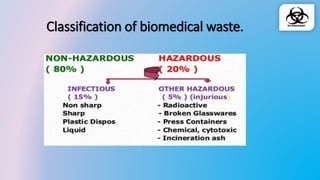
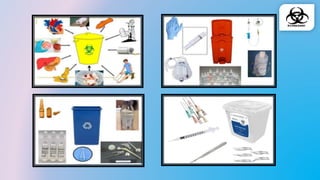
Classification of biomedical waste.
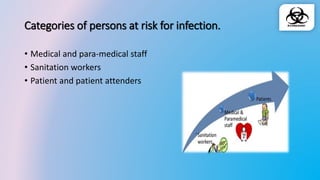
Categories of persons at risk for infection.
• Medical and para-medical staff
• Sanitation workers
• Patient and patient attenders
Categories of biomedical waste.
• Category No.-1: Human anatomical waste.
• Category No.-2: Animal waste.
• Category No.-3: Microbiology/laboratory waste.
• Category No.-4: Waste sharps.
• Category No.-5: Discarded medicines and cytotoxic drugs.
• Category No.-6: Soiled waste.
• Category No.-7: Solid waste.
• Category No.-8: Liquid waste.
• Category No.-9: Incineration ash.
• Category No.-10: Chemical waste.
Hazards associated with Biomedical waste
Management
• Infection
• Genotoxicity and cytotoxicity
• Chemical toxicity
• Radioactivity hazards
• Physical injuries
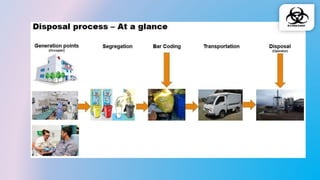
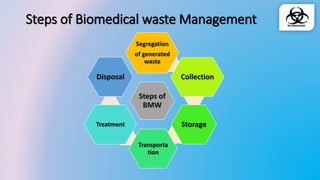
Steps of Biomedical waste Management
Steps of
BMW
Segregation
of generated
waste
Collection
Storage
Transporta
tion
Treatment
Disposal
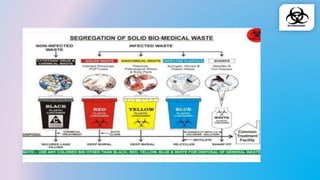
Segregation of generated waste
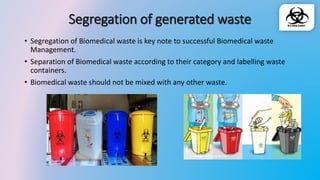
• Segregation of Biomedical waste is key note to successful Biomedical waste
Management.
• Separation of Biomedical waste according to their category and labelling waste
containers.
• Biomedical waste should not be mixed with any other waste.
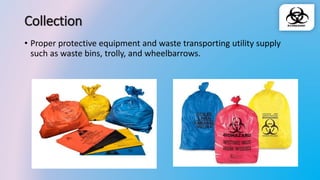
Collection
• Proper protective equipment and waste transporting utility supply
such as waste bins, trolly, and wheelbarrows.
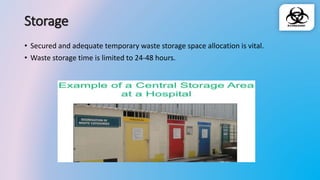
Storage
• Secured and adequate temporary waste storage space allocation is vital.
• Waste storage time is limited to 24-48 hours.
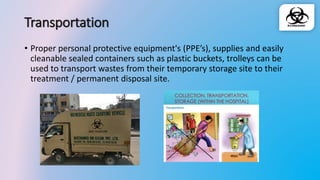
Transportation
• Proper personal protective equipment's (PPE’s), supplies and easily
cleanable sealed containers such as plastic buckets, trolleys can be
used to transport wastes from their temporary storage site to their
treatment / permanent disposal site.
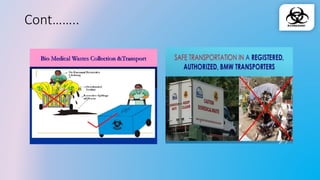
Cont……..
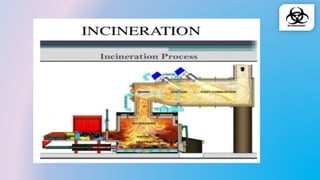
Treatment and Disposal
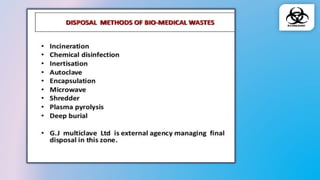
• It is a process where we are going to treat waste (free of micro-
organism) before its disposal.
• Use of suitable treatment technique and proper protective devices
allocation is vital.
• Finally biomedical waste is disposed in accordance with requirements
applicable.
THANK YOU

Biomedical waste management

  • 1.
  • 2.
    Learning Objectives • Introduction. •Definition. • Objectives of Biomedical waste Management. • Classification of biomedical waste. • Categories of biomedical waste. • Hazards associated with Biomedical waste manegement. • Steps of biomedical waste management.
  • 3.
    Introduction • The needof proper hospital Waste management system is of prime importance and is an essential component to prevent spread and transmission of infections in Hospital.
  • 4.
    Definition of Biomedicalwaste Management “Biomedical waste is any waste which is generated during the Diagnosis, treatment or immunization, of human beings or animals in hospitals, clinics or in research activities pertaining to production or testing of biomedicals”.
  • 5.
    Objectives of Biomedicalwaste Management • To prevent the harm resulting from waste. • To Minimize its volume. • To Retrieve reusable materials. • To Ensure safe economical disposal.
  • 7.
  • 8.
    Categories of personsat risk for infection. • Medical and para-medical staff • Sanitation workers • Patient and patient attenders
  • 9.
    Categories of biomedicalwaste. • Category No.-1: Human anatomical waste. • Category No.-2: Animal waste. • Category No.-3: Microbiology/laboratory waste. • Category No.-4: Waste sharps. • Category No.-5: Discarded medicines and cytotoxic drugs. • Category No.-6: Soiled waste. • Category No.-7: Solid waste. • Category No.-8: Liquid waste. • Category No.-9: Incineration ash. • Category No.-10: Chemical waste.
  • 10.
    Hazards associated withBiomedical waste Management • Infection • Genotoxicity and cytotoxicity • Chemical toxicity • Radioactivity hazards • Physical injuries
  • 11.
    Steps of Biomedicalwaste Management Steps of BMW Segregation of generated waste Collection Storage Transporta tion Treatment Disposal
  • 12.
    Segregation of generatedwaste • Segregation of Biomedical waste is key note to successful Biomedical waste Management. • Separation of Biomedical waste according to their category and labelling waste containers. • Biomedical waste should not be mixed with any other waste.
  • 15.
    Collection • Proper protectiveequipment and waste transporting utility supply such as waste bins, trolly, and wheelbarrows.
  • 16.
    Storage • Secured andadequate temporary waste storage space allocation is vital. • Waste storage time is limited to 24-48 hours.
  • 17.
    Transportation • Proper personalprotective equipment's (PPE’s), supplies and easily cleanable sealed containers such as plastic buckets, trolleys can be used to transport wastes from their temporary storage site to their treatment / permanent disposal site.
  • 18.
  • 19.
    Treatment and Disposal •It is a process where we are going to treat waste (free of micro- organism) before its disposal. • Use of suitable treatment technique and proper protective devices allocation is vital. • Finally biomedical waste is disposed in accordance with requirements applicable.
  • 22.