FIRE
HAZARDS
What is a fire hazard?
Conditions that favor fire development or growth
Oxygen, fuel, and heat
Fire hazards usually involve the mishandling of fuel
or heat
Fire or combustion is a chemical reaction between
oxygen and a combustible fuel
Source of ignition= Spark, flame and high
temperature are needed
Fire Triangle
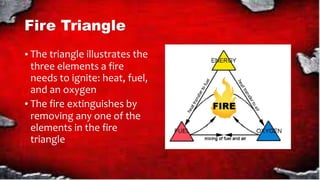
The triangle illustrates the
three elements a fire
needs to ignite: heat, fuel,
and an oxygen
The fire extinguishes by
removing any one of the
elements in the fire
triangle
Source of
Fire Hazards
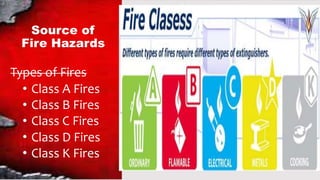
Types of Fires
Class A Fires
Class B Fires
Class C Fires
Class D Fires
Class K Fires
Source of Fire Hazards
Types of Fires
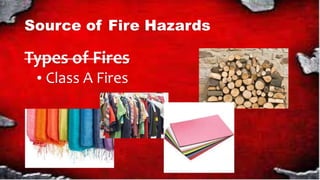
Class A Fires
Source of Fire Hazards
Types of Fires
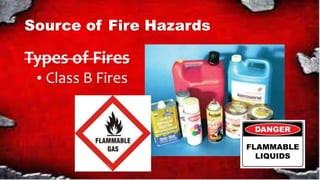
Class B Fires
Source of Fire Hazards
Types of Fires
Class C Fires
Source of Fire Hazards
Types of Fires
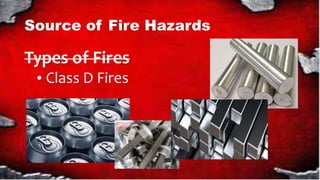
Class D Fires
Source of Fire Hazards
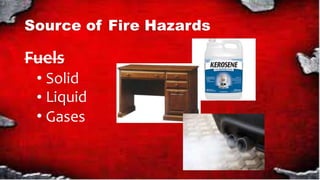
Fuels
Solid
Liquid
Gases
Source of Fire Hazards
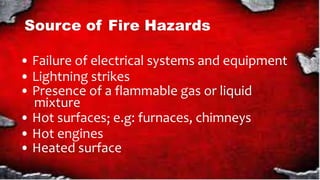
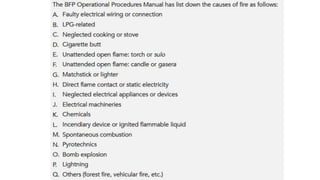
• Failure of electrical systems and equipment
• Lightning strikes
• Presence of a flammable gas or liquid
mixture
• Hot surfaces e. : furnaces, chimneys
• Hot engines
• Heated surface
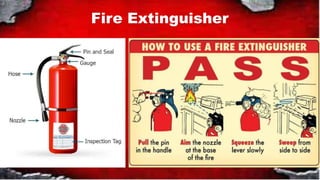
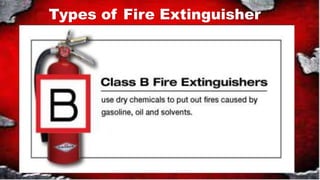
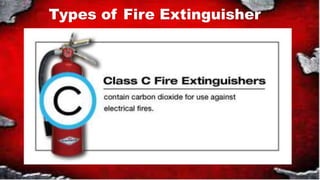
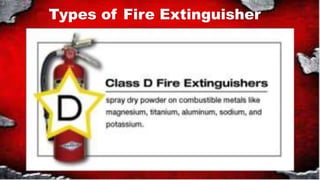
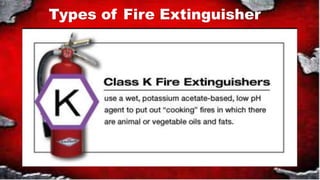
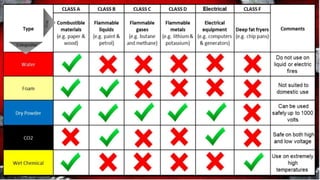
Fire Extinguisher
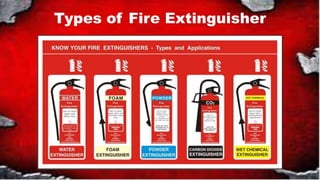
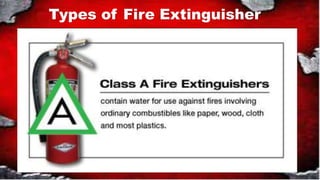
Types of Fire Extinguisher
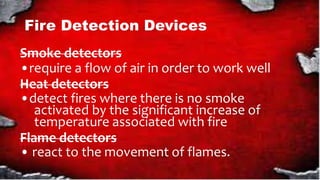
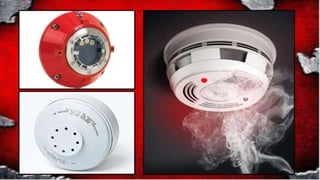
Fire Detection Devices
Smoke detectors
•require a flow of air in order to work well
Heat detectors
•detect fires where there is no smoke
activated by the significant increase of
temperature associated with fire
Flame detectors
• react to the movement of flames.
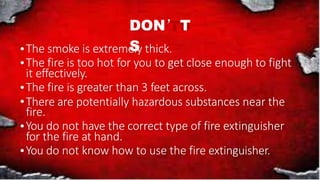
DON’T
S
The smoke is extremely thick.
The fire is too hot for you to get close enough to fight
it effectively.
The fire is greater than 3 feet across.
There are potentially hazardous substances near the
fire.
You do not have the correct type of fire extinguisher
for the fire at hand.
You do not know how to use the fire extinguisher.
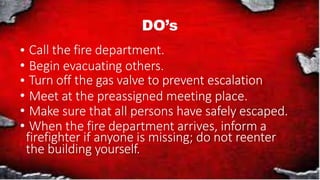
DO’s
Call the fire department.
Begin evacuating others.
Turn off the gas valve to prevent escalation
Meet at the preassigned meeting place.
Make sure that all persons have safely escaped.
When the fire department arrives, inform a
firefighter if anyone is missing; do not reenter
the building yourself.
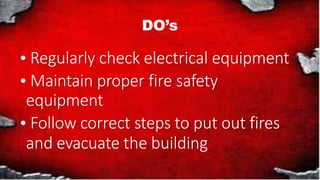
DO’s
Regularly check electrical equipment
Maintain proper fire safety
equipment
Follow correct steps to put out fires
and evacuate the building

POWERPOINT PRESENTATION OF FIRE HAZARDS.

  • 1.
  • 2.
    What is afire hazard? Conditions that favor fire development or growth Oxygen, fuel, and heat Fire hazards usually involve the mishandling of fuel or heat Fire or combustion is a chemical reaction between oxygen and a combustible fuel Source of ignition= Spark, flame and high temperature are needed
  • 3.
    Fire Triangle The triangleillustrates the three elements a fire needs to ignite: heat, fuel, and an oxygen The fire extinguishes by removing any one of the elements in the fire triangle
  • 4.
    Source of Fire Hazards Typesof Fires Class A Fires Class B Fires Class C Fires Class D Fires Class K Fires
  • 5.
    Source of FireHazards Types of Fires Class A Fires
  • 6.
    Source of FireHazards Types of Fires Class B Fires
  • 7.
    Source of FireHazards Types of Fires Class C Fires
  • 8.
    Source of FireHazards Types of Fires Class D Fires
  • 9.
    Source of FireHazards Fuels Solid Liquid Gases
  • 10.
    Source of FireHazards • Failure of electrical systems and equipment • Lightning strikes • Presence of a flammable gas or liquid mixture • Hot surfaces e. : furnaces, chimneys • Hot engines • Heated surface
  • 11.
  • 12.
    Types of FireExtinguisher
  • 13.
    Types of FireExtinguisher
  • 14.
    Types of FireExtinguisher
  • 15.
    Types of FireExtinguisher
  • 16.
    Types of FireExtinguisher
  • 17.
    Types of FireExtinguisher
  • 19.
    Fire Detection Devices Smokedetectors •require a flow of air in order to work well Heat detectors •detect fires where there is no smoke activated by the significant increase of temperature associated with fire Flame detectors • react to the movement of flames.
  • 22.
    DON’T S The smoke isextremely thick. The fire is too hot for you to get close enough to fight it effectively. The fire is greater than 3 feet across. There are potentially hazardous substances near the fire. You do not have the correct type of fire extinguisher for the fire at hand. You do not know how to use the fire extinguisher.
  • 23.
    DO’s Call the firedepartment. Begin evacuating others. Turn off the gas valve to prevent escalation Meet at the preassigned meeting place. Make sure that all persons have safely escaped. When the fire department arrives, inform a firefighter if anyone is missing; do not reenter the building yourself.
  • 24.
    DO’s Regularly check electricalequipment Maintain proper fire safety equipment Follow correct steps to put out fires and evacuate the building