Jennifer Hixson
What is anorexia nervosa? It is an intense and overwhelming fear of gaining weight or becoming fat. Resistance to maintaining body weight at or above a minimally normal weight for age and height. Disturbance in the way in which one's body weight or shape is experienced, undue influence of body weight or shape on self-evaluation, or denial of the seriousness of the current low body weight. People with anorexia may repeatedly check their body weight, and many engage in other techniques to control their weight, such as intense and compulsive exercise, or purging by means of vomiting and abuse of laxatives, enemas, and diuretics.
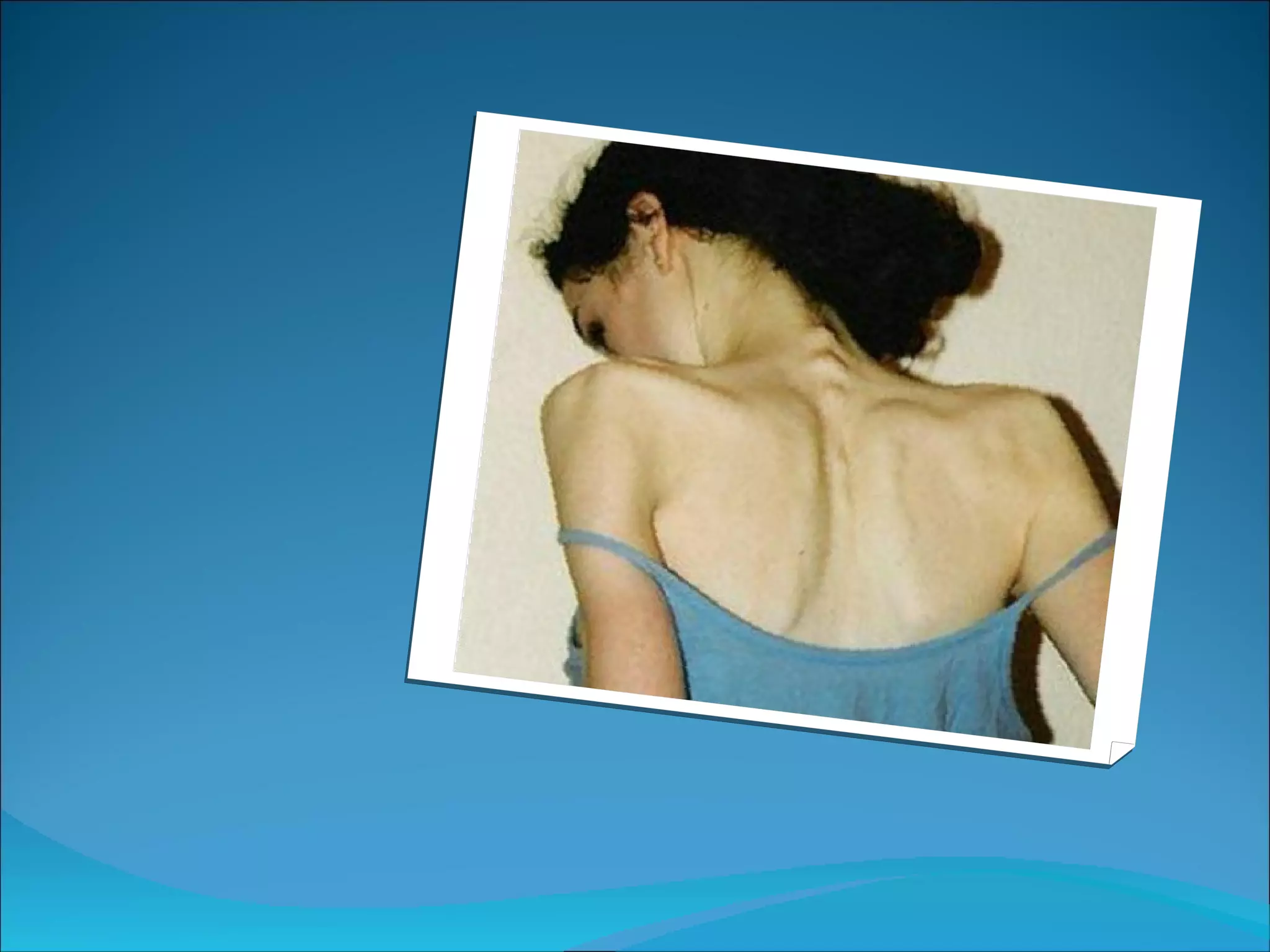
What are the symptoms? Deliberate self-starvation with weight loss  Fear of gaining weight  Refusal to eat  Denial of hunger  Constant exercising  Greater amounts of hair on the body or the face  Sensitivity to cold temperatures  Absent or irregular periods  Loss of scalp hair  A self-perception of being fat when the person is really too thin
What causes this disease? Exact diagnosis is unclear in everyone. Doctors believe it is a combination of certain personality traits, emotions and thinking patterns, as well as biological and environmental factors might be responsible. People with anorexia nervosa often use food and eating as a way to gain a sense of control when other areas of their lives are very stressful or when they feel overwhelmed Feelings of inadequacy, low self-esteem, anxiety, anger, or loneliness also might contribute to the development of the disorder
Statistics  1-5% of female adolescents are anorexic. (It is very hard to get statistics because many are in denial) 10% of anorexics are male. Average age is 17. 20% of people without treatment will die from complications (highest mortality rate of any psychological disease.) Between 40-60% of high school girls diet  30-40% of junior high girls are concerned about their weight  40% of 9-year-old girls have dieted
Anorexic Models Is thin really beautiful?
 
Treatment for anorexia Emergency care may be necessary in case of dehydration, malnutrition, kidney failure, or irregular heartbeat may pose imminent risk to life. Psychotherapy: This is a type of individual counseling that focuses on changing the thinking and behavior of a person with an eating disorder.  Medication: Certain antidepressant medications called selective serotonin reuptake inhibitors (SSRIs) might be used to help control anxiety and depression associated with an eating disorder. Some antidepressants may also help with sleep and stimulate appetite.
Treatment (cont.) Nutrition counseling: This strategy is designed to teach a healthy approach to food and weight, to help restore normal eating patterns, and to teach the importance of nutrition and following a balanced diet. Group and/or family therapy: Family support is very important to treatment success. It is important that family members understand the eating disorder and recognize its signs and symptoms. Hospitalization: Intravenous fluids, nasogastric tube feedings, or total parenteral nutrition (TPN) might be needed in cases of severe malnutrition. TPN is used for patients who cannot or should not get their nutrition through eating.
Advice for Educators TELL THEM—Dieting to lose weight is not healthy—and no fun—for kids or adults. TELL THEM—You think they look great just the way they are. TELL THEM—Don’t diet; eat a variety of foods and get some exercise. TELL THEM—Remember, being "thinner" is not the same as being healthier and happier.
Appreciate yourself for all you are – everyone should respect and like themselves, enjoy playing and being active, and eat a variety of healthy foods.
www.nationaleatingdisorders.org   www.snopes.com   www.anorexicweb.com   www.webmd.com   www.medicinenet.com www.answers.com   www.encyclopedia.com

Anorexia

  • 1.
  • 2.
    What is anorexianervosa? It is an intense and overwhelming fear of gaining weight or becoming fat. Resistance to maintaining body weight at or above a minimally normal weight for age and height. Disturbance in the way in which one's body weight or shape is experienced, undue influence of body weight or shape on self-evaluation, or denial of the seriousness of the current low body weight. People with anorexia may repeatedly check their body weight, and many engage in other techniques to control their weight, such as intense and compulsive exercise, or purging by means of vomiting and abuse of laxatives, enemas, and diuretics.
  • 3.
    What are thesymptoms? Deliberate self-starvation with weight loss Fear of gaining weight Refusal to eat Denial of hunger Constant exercising Greater amounts of hair on the body or the face Sensitivity to cold temperatures Absent or irregular periods Loss of scalp hair A self-perception of being fat when the person is really too thin
  • 4.
    What causes thisdisease? Exact diagnosis is unclear in everyone. Doctors believe it is a combination of certain personality traits, emotions and thinking patterns, as well as biological and environmental factors might be responsible. People with anorexia nervosa often use food and eating as a way to gain a sense of control when other areas of their lives are very stressful or when they feel overwhelmed Feelings of inadequacy, low self-esteem, anxiety, anger, or loneliness also might contribute to the development of the disorder
  • 5.
    Statistics 1-5%of female adolescents are anorexic. (It is very hard to get statistics because many are in denial) 10% of anorexics are male. Average age is 17. 20% of people without treatment will die from complications (highest mortality rate of any psychological disease.) Between 40-60% of high school girls diet 30-40% of junior high girls are concerned about their weight 40% of 9-year-old girls have dieted
  • 6.
    Anorexic Models Isthin really beautiful?
  • 7.
  • 8.
    Treatment for anorexiaEmergency care may be necessary in case of dehydration, malnutrition, kidney failure, or irregular heartbeat may pose imminent risk to life. Psychotherapy: This is a type of individual counseling that focuses on changing the thinking and behavior of a person with an eating disorder. Medication: Certain antidepressant medications called selective serotonin reuptake inhibitors (SSRIs) might be used to help control anxiety and depression associated with an eating disorder. Some antidepressants may also help with sleep and stimulate appetite.
  • 9.
    Treatment (cont.) Nutritioncounseling: This strategy is designed to teach a healthy approach to food and weight, to help restore normal eating patterns, and to teach the importance of nutrition and following a balanced diet. Group and/or family therapy: Family support is very important to treatment success. It is important that family members understand the eating disorder and recognize its signs and symptoms. Hospitalization: Intravenous fluids, nasogastric tube feedings, or total parenteral nutrition (TPN) might be needed in cases of severe malnutrition. TPN is used for patients who cannot or should not get their nutrition through eating.
  • 10.
    Advice for EducatorsTELL THEM—Dieting to lose weight is not healthy—and no fun—for kids or adults. TELL THEM—You think they look great just the way they are. TELL THEM—Don’t diet; eat a variety of foods and get some exercise. TELL THEM—Remember, being "thinner" is not the same as being healthier and happier.
  • 11.
    Appreciate yourself forall you are – everyone should respect and like themselves, enjoy playing and being active, and eat a variety of healthy foods.
  • 12.
    www.nationaleatingdisorders.org www.snopes.com www.anorexicweb.com www.webmd.com www.medicinenet.com www.answers.com www.encyclopedia.com