CMLIT 153
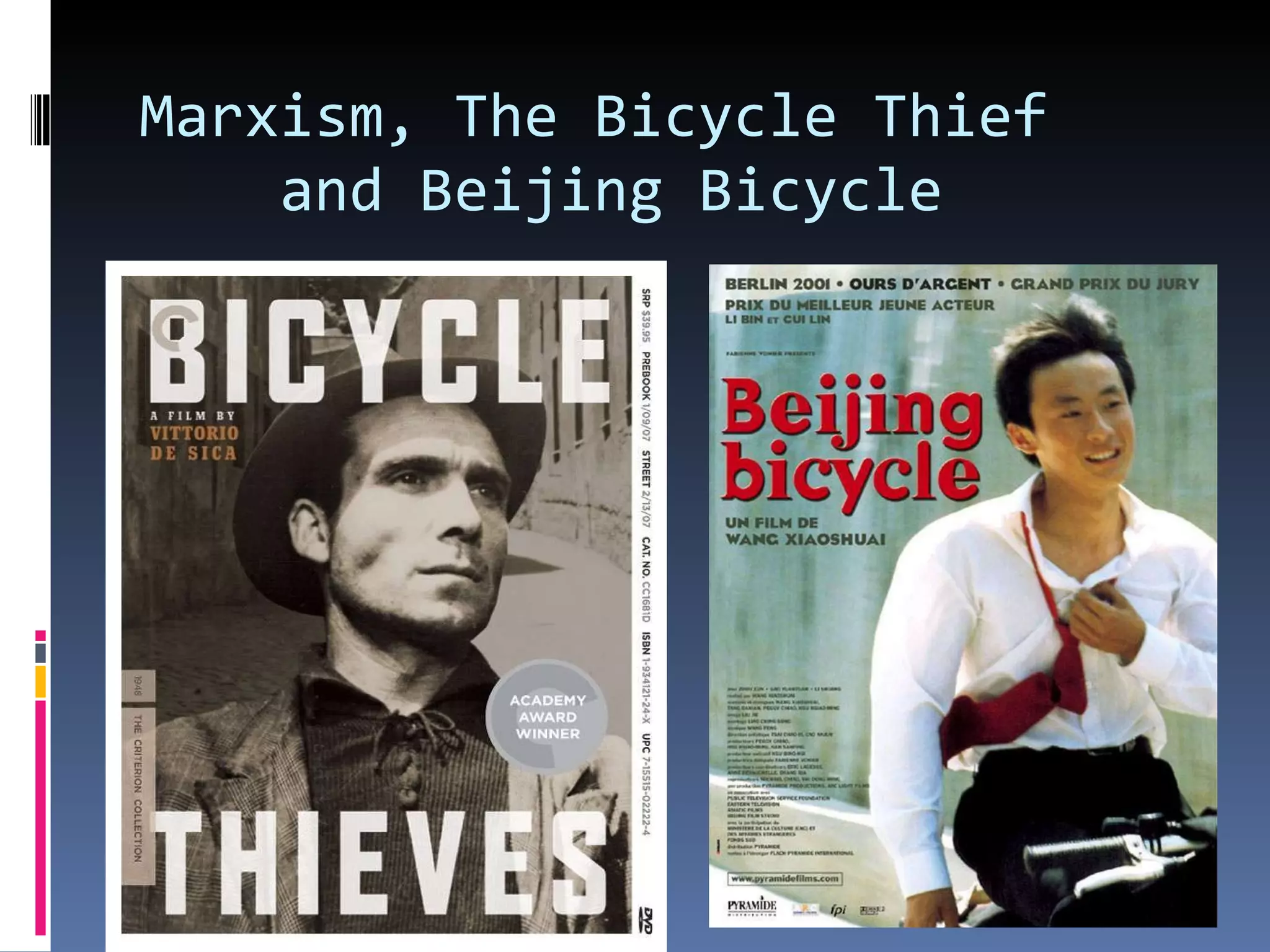
Marxism, The Bicycle Thief    and Beijing Bicycle
Some Marxist Concepts The Proletariat
Some Marxist Concepts The Bourgeoisie
Some Marxist Concepts Means of Production  & Means of Mental Production
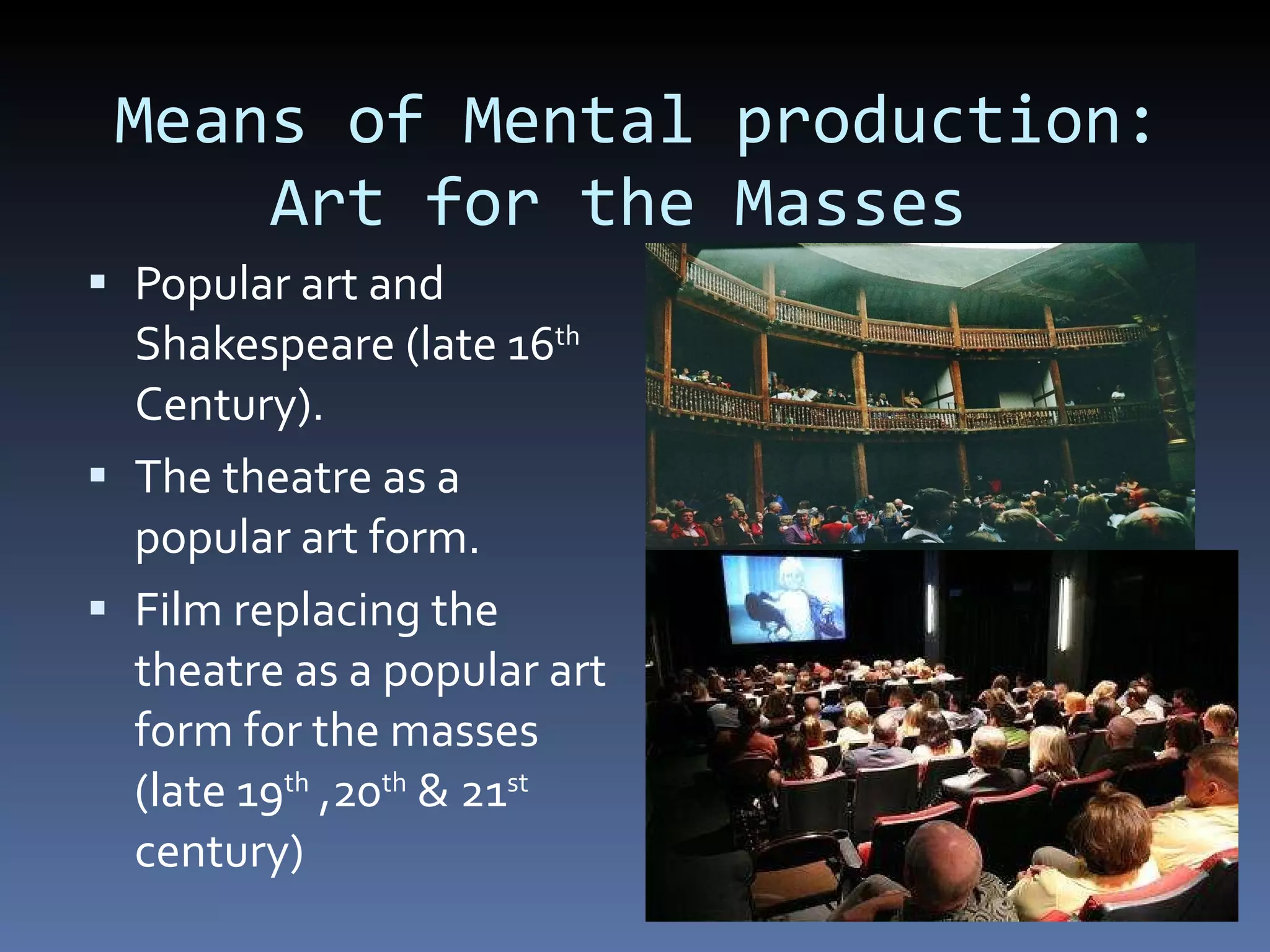
Means of Mental production:   Art for the Masses Popular art and Shakespeare (late 16 th  Century). The theatre as a popular art form. Film replacing the theatre as a popular art form for the masses (late 19 th  ,20 th  & 21 st  century)
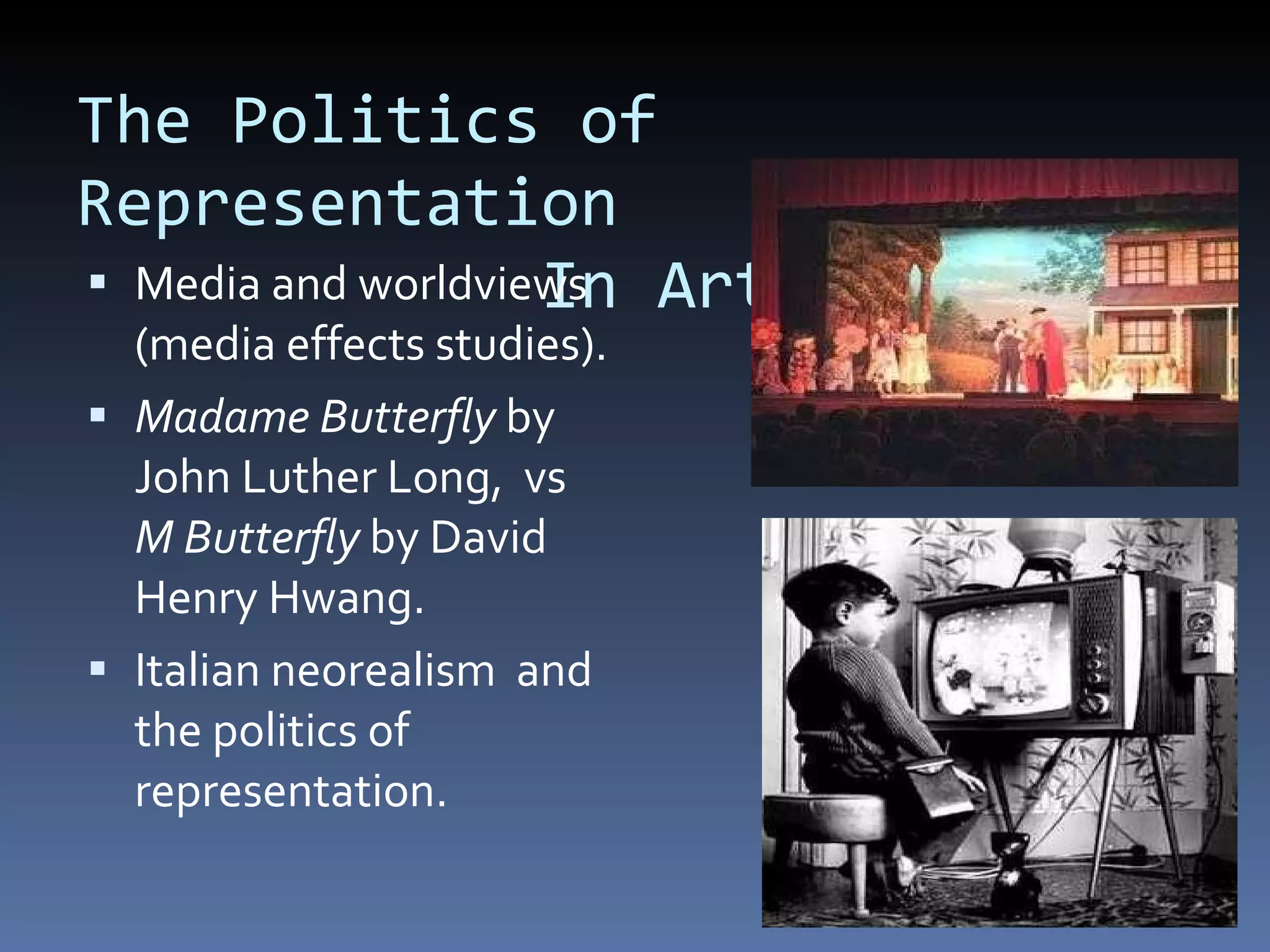
The Politics of Representation    In Art Media and worldviews (media effects studies). Madame Butterfly  by John Luther Long,  vs  M Butterfly  by David Henry Hwang.  Italian neorealism  and the politics of representation.
Birth of Italian    Neorealism Given birth in the aftermath of Word War II Films at the time were filled with decadent interiors and backgrounds The protagonist always finds a resolution (unrealistic happy endings) Imported American films that did not reflect the realities of ordinary Italians Anti-Fascist journalist Leo Longanesi urged directors to "go into the streets, into the barracks, into the train stations; only in this way can an Italian cinema be born.“ (1935)
Birth of Italian Neorealism Transition from agriculture to manufacturing. People struggled to make ends meet (25% unemployment) There was an outcry for films that reflected these realities. Neorealist cinema was considered the cinema of “facts”. Showing films in real time, resisting the urge to edit.  Showing reality without embellishment or artifice.
The Bicycle Thief and    Neorealist Ideologies 1. a new democratic spirit, with emphasis on the value of ordinary people 2. a compassionate point of view and a refusal to make facile (easy) moral judgments 3. a preoccupation with Italy's Fascist past and its aftermath of wartime devastation   4. a blending of Christian and Marxist humanism 5. an emphasis on emotions rather than abstract ideas
The Stylistics of Italian    Neorealism 1. a documentary visual style 2. the use of actual locations--rather than studio sites 3. the use of nonprofessional actors, even for principal roles 4. use of conversational speech, not literary dialogue 6. avoidance of artifice in editing, camerawork, and lighting in favor of a simple "styless" style
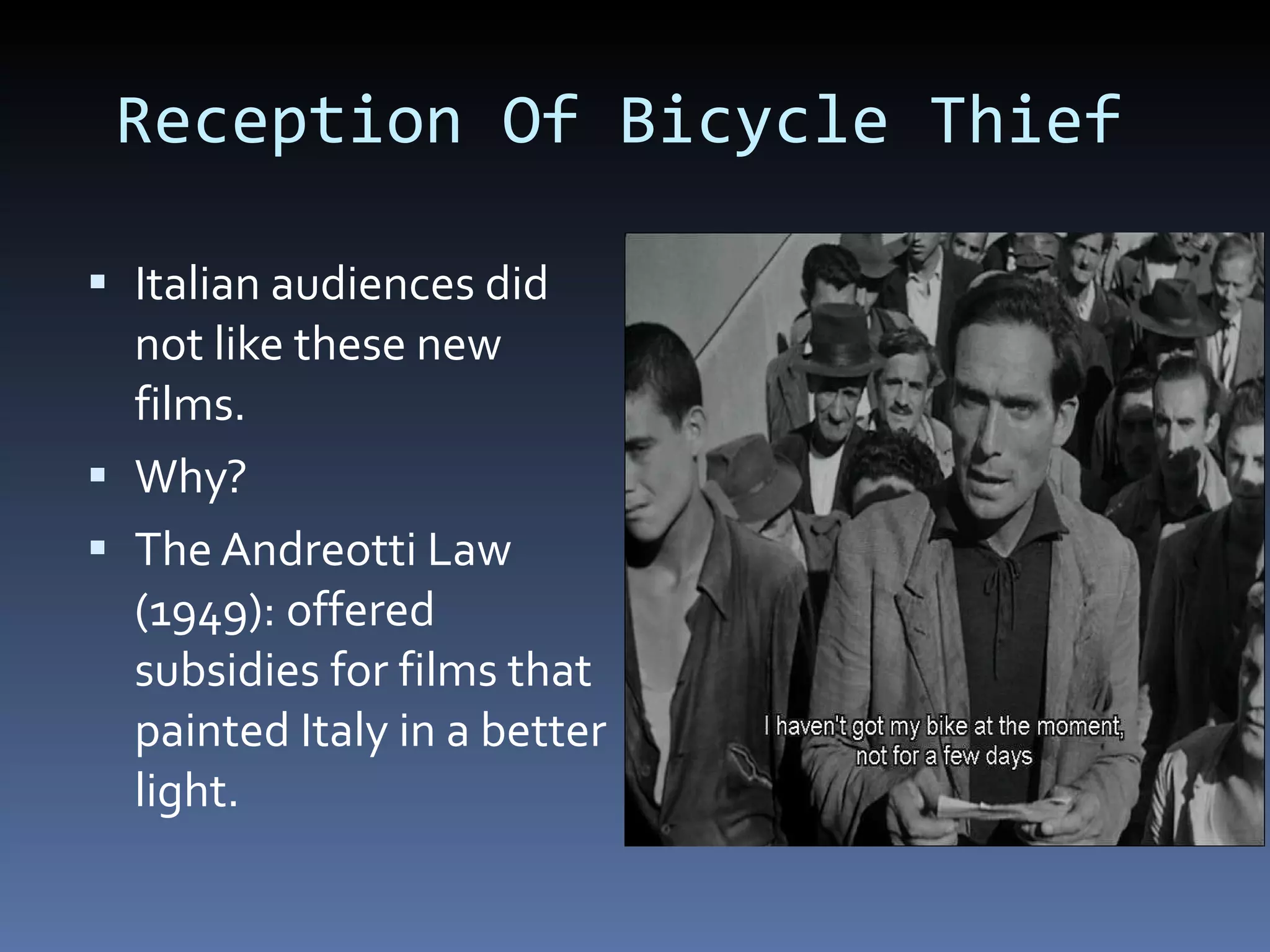
Reception Of Bicycle Thief  Italian audiences did not like these new films. Why? The Andreotti Law (1949): offered subsidies for films that painted Italy in a better light.

Power point lecture on the bicycle thief

  • 1.
  • 2.
    Marxism, The BicycleThief and Beijing Bicycle
  • 3.
    Some Marxist ConceptsThe Proletariat
  • 4.
    Some Marxist ConceptsThe Bourgeoisie
  • 5.
    Some Marxist ConceptsMeans of Production & Means of Mental Production
  • 6.
    Means of Mentalproduction: Art for the Masses Popular art and Shakespeare (late 16 th Century). The theatre as a popular art form. Film replacing the theatre as a popular art form for the masses (late 19 th ,20 th & 21 st century)
  • 7.
    The Politics ofRepresentation In Art Media and worldviews (media effects studies). Madame Butterfly by John Luther Long, vs M Butterfly by David Henry Hwang. Italian neorealism and the politics of representation.
  • 8.
    Birth of Italian Neorealism Given birth in the aftermath of Word War II Films at the time were filled with decadent interiors and backgrounds The protagonist always finds a resolution (unrealistic happy endings) Imported American films that did not reflect the realities of ordinary Italians Anti-Fascist journalist Leo Longanesi urged directors to "go into the streets, into the barracks, into the train stations; only in this way can an Italian cinema be born.“ (1935)
  • 9.
    Birth of ItalianNeorealism Transition from agriculture to manufacturing. People struggled to make ends meet (25% unemployment) There was an outcry for films that reflected these realities. Neorealist cinema was considered the cinema of “facts”. Showing films in real time, resisting the urge to edit. Showing reality without embellishment or artifice.
  • 10.
    The Bicycle Thiefand Neorealist Ideologies 1. a new democratic spirit, with emphasis on the value of ordinary people 2. a compassionate point of view and a refusal to make facile (easy) moral judgments 3. a preoccupation with Italy's Fascist past and its aftermath of wartime devastation 4. a blending of Christian and Marxist humanism 5. an emphasis on emotions rather than abstract ideas
  • 11.
    The Stylistics ofItalian Neorealism 1. a documentary visual style 2. the use of actual locations--rather than studio sites 3. the use of nonprofessional actors, even for principal roles 4. use of conversational speech, not literary dialogue 6. avoidance of artifice in editing, camerawork, and lighting in favor of a simple "styless" style
  • 12.
    Reception Of BicycleThief Italian audiences did not like these new films. Why? The Andreotti Law (1949): offered subsidies for films that painted Italy in a better light.