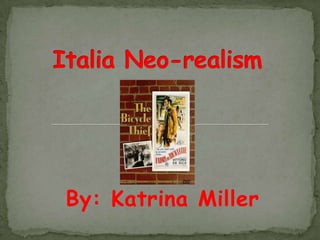
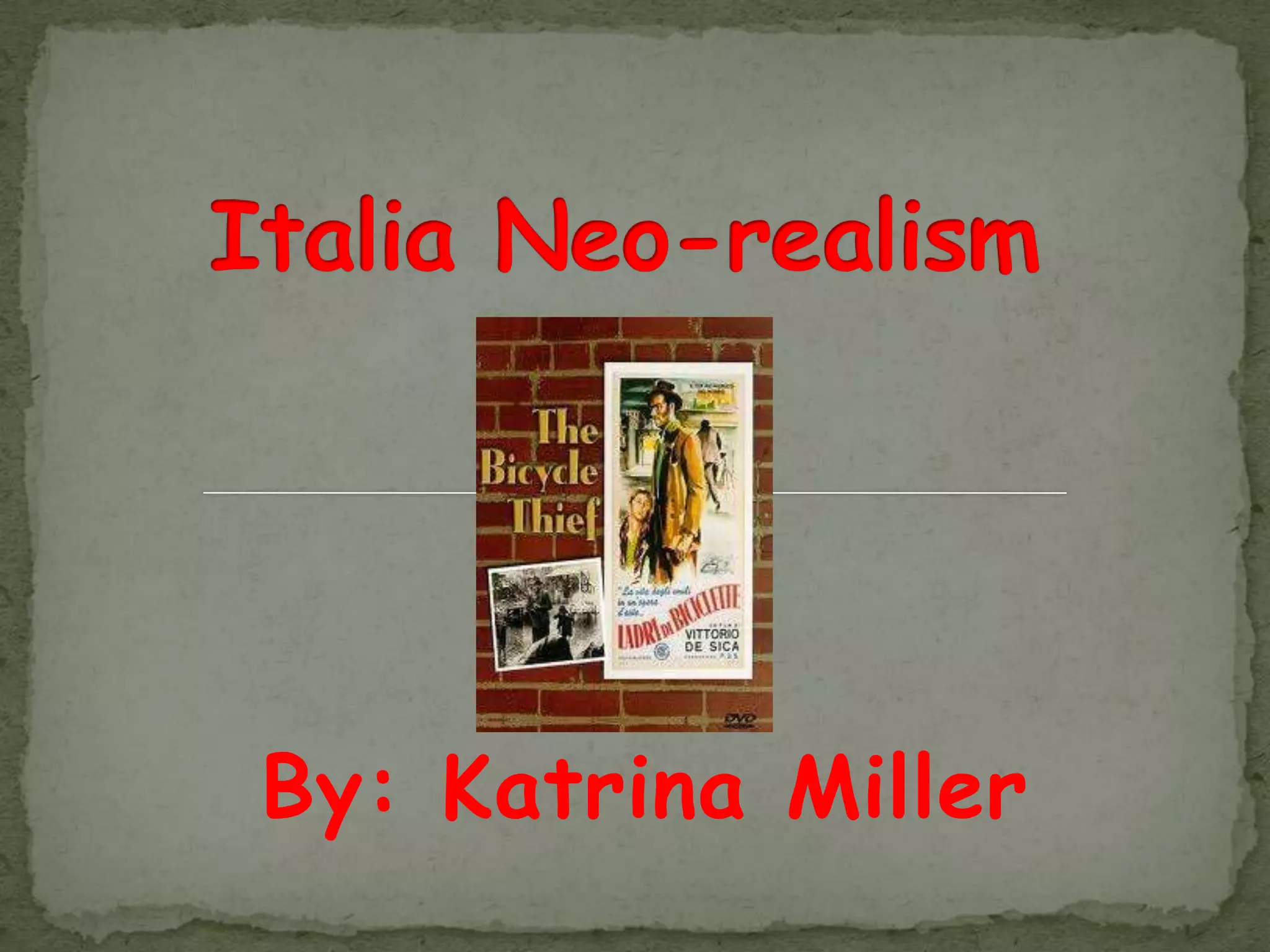
Italia Neo-realismBy: Katrina Miller
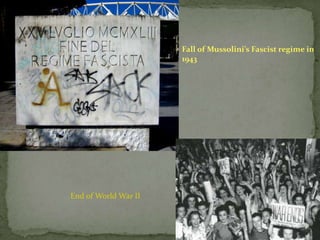
Fall of Mussolini’s Fascist regime in 1943End of World War II
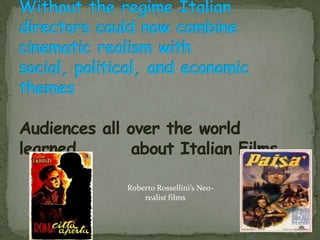
Without the regime Italian directors could now combine cinematic realism with social, political, and economic themesAudiences all over the world learned        about Italian Films     Roberto Rossellini’s Neo-realist films
“Neo-realist films took a highly critical view of Italian society and focused attention upon glaring social problems, such as the effect of the resistance and war, postwar poverty and chronic unemployment.” www.filmreference.comVittorio De Sica’sneo-realist films
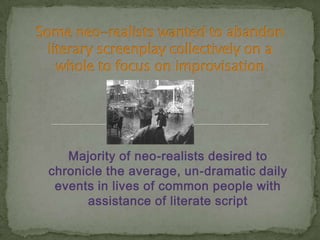
Some neo-realists wanted to abandon literary screenplay collectively on a whole to focus on improvisationMajority of neo-realists desired to chronicle the average, un-dramatic daily events in lives of common people with assistance of literate script
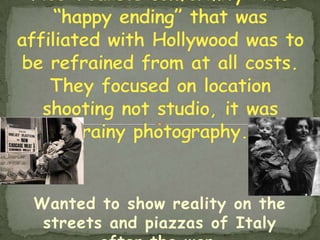
Neo-realists conformity  the “happy ending” that was affiliated with Hollywood was to be refrained from at all costs.  They focused on location shooting not studio, it was grainy photography.Wanted to show reality on the streets and piazzas of Italy after the war.
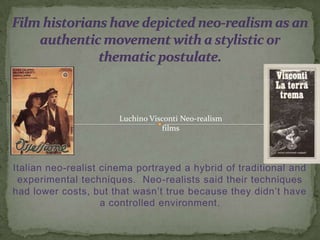
Film historians have depicted neo-realism as an authentic movement with a stylistic or thematic postulate.LuchinoVisconti Neo-realism filmsItalian neo-realist cinema portrayed a hybrid of traditional and experimental techniques.  Neo-realists said their techniques had lower costs, but that wasn’t true because they didn’t have a controlled environment.
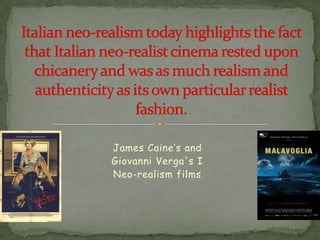
Italian neo-realism today highlights the fact that Italian neo-realist cinema rested upon chicanery and was as much realism and authenticity as its own particular realist fashion. James Caine’s and Giovanni Verga's INeo-realism films
Works Citedwww.filmreference.comwww.googleimages.com

Italia neo realism

  • 1.
  • 2.
    Fall of Mussolini’sFascist regime in 1943End of World War II
  • 3.
    Without the regimeItalian directors could now combine cinematic realism with social, political, and economic themesAudiences all over the world learned about Italian Films Roberto Rossellini’s Neo-realist films
  • 4.
    “Neo-realist films tooka highly critical view of Italian society and focused attention upon glaring social problems, such as the effect of the resistance and war, postwar poverty and chronic unemployment.” www.filmreference.comVittorio De Sica’sneo-realist films
  • 5.
    Some neo-realists wantedto abandon literary screenplay collectively on a whole to focus on improvisationMajority of neo-realists desired to chronicle the average, un-dramatic daily events in lives of common people with assistance of literate script
  • 6.
    Neo-realists conformity the “happy ending” that was affiliated with Hollywood was to be refrained from at all costs. They focused on location shooting not studio, it was grainy photography.Wanted to show reality on the streets and piazzas of Italy after the war.
  • 7.
    Film historians havedepicted neo-realism as an authentic movement with a stylistic or thematic postulate.LuchinoVisconti Neo-realism filmsItalian neo-realist cinema portrayed a hybrid of traditional and experimental techniques. Neo-realists said their techniques had lower costs, but that wasn’t true because they didn’t have a controlled environment.
  • 8.
    Italian neo-realism todayhighlights the fact that Italian neo-realist cinema rested upon chicanery and was as much realism and authenticity as its own particular realist fashion. James Caine’s and Giovanni Verga's INeo-realism films
  • 9.