Power Corporation In India
 Thermal
 Nuclear
 Hydraulic
 Gas Turbine
 Geothermal
Thermal
 National Thermal Power Corporation Limeted (NTPC).
 Thermal Powertech Corporation India Limeted (TPCIL).
 Jindal IndiaThermal Power Limeted.
Ther are three thermal power corporation. -
Thermal power is the largest source of power in India.There are different
types of Thermal power plants based on the fuel used to generate the steam such
as coal, gas, Diesel etc. About 75% of electricity consumed in india are generated
by Thermal power plants.
Coal and Lignite Based:-
More than 50% of India's commercial energy demand is met
through the country's vast coal reserves. Public sector undertaking National
Thermal Power Corporation and several other state level power generating
companies are engaged in operating coal based Thermal Power Plants.Apart
from NTPC and other state level operators, some private companies are also
operating the power plants. Here is some list of currently operating Coal
based Thermal power plants in India.
NTPC Limited is the largest utility in the country with an
installed capacity of 39,174 MW through its 16 coal based, 7
gas/liquid fuel and 7 joint venture power stations. The company has
been conferred with coveted Maharatna status by Govt of India for
its outstanding achievements over the years. NTPC added a record
capacity of 2820 MW during the year 2011-12.
Thermal Powertech Corporation India Ltd.,(TPCIL),a company
incorporated under Company’s Act 1957 on 8th January 2008,is a joint
venture between Hyderabad-based Gayatri Energy Venture Pvt Ltd, a
whole-owned subsidiary of sembcorp Industries Industries Ltd,to
build,own and operate a 1,320-megawatt(2x660MW units) Coal-fired
coastal power plant in India.
Coal Source :-
One of the success factors in the thermal power generation business is
securing low cost dedicated long-term coal supplies. We are strongly placed in
this regard. We have tied up for the coal supply from a captive coal block
Mandakini-A allocated along with two other partners and have set-up a JV
company for mining operations. The captive mine has a total coal reserves of
322.80 MMT with a net reserves of 290.52 MMT and our share is 96.84 MMT.
About The Company
Jindal India Thermal Power Limited Is a part of B.C. Jindal Group of
Companies. It is one of the leading business conglomerate in India with
interest in diverse industries including steel product,flexible packaging fims
and photographic products.
JINDAL INDIA THERMAL POWER LTD.
Nuclear
Nuclear Power Corporation of India
Nuclear power is the fourth-largest source of electricity in India after
therml, hydro and wind power. As of 2010, India had 16 nuclear power
reactors in operation generating 4,560 MW while 4 other are under
construction and are expected to generate an additional 2,720 MW.
Nineteen nuclear power reactors operated at six sites by the Nuclear
Power Corporation of India produce 4,560.00 MW, 2.9% of total installed
base.
The Nuclear Power Corporation of India Limited (NPCIL) is a
government-owned corporation of India based in Mumbai. One of the public
sector undertakings, it is wholly owned by the Union Government and is
responsible for the generation of nuclear power for electricity. NPCIL is
administered by the Department of Atomic Energy (DAE). NPCIL is the only
power utility company in India which uses nuclear fuel sources.
Hydraulic
In this system of power generation, the potential of the water falling
under gravitational force is utilized to rotate a turbine which again is coupled to
a Generator, leading to generation of electricity. India is one of the pioneering
countries in establishing hydro-electric power plants. The power plants at
Darjeeling and Shimsha (Shivanasamudra) were established in 1898 and 1902
respectively and are among the first in Asia.
India is endowed with economically exploitable and viable hydro
potential assessed to be about 84,000 MW at 60% load factor. In addition, 6780
MW in terms of installed capacity from Small, Mini, and Micro Hydel schemes
have been assessed. Also, 56 sites for pumped storage schemes with an
aggregate installed capacity of 94,000 MW have been identified. It is the most
widely used form of renewable energy.
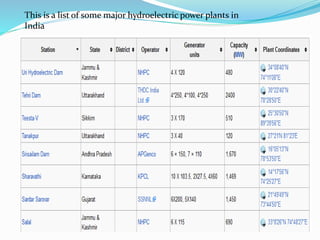
This is a list of some major hydroelectric power plants in
India
Gas Turbine
GE Wins Largest Gas Turbine Combined-Cycle Order in India. Under contracts
totaling over $750 million, GE will supply six Frame 9FA gas turbines, three D-
11 steam turbines, training and long-term services for the project. GE’s 9FA
combined-cycle technology is proven in applications worldwide. In a
combined-cycle configuration, exhaust gas from a gas turbine-generator is
converted to steam, which is used to drive a steam turbine-generator, enabling
the plant to produce additional power without an increase in fuel consumption.
The new plant is expected to enter simple-cycle (gas turbines only) service in
the first half of 2012 and combined-cycle (gas and steam turbines) in the
second half of that year.
Geothermal
There are three geothermal power plant technologies being used to
convert hydrothermal fluids to electricity. The conversion technologies are dry
steam, flash, and binary. The type of conversion used depends on the state of the
fluid (whether steam or water) and its temperature. Dry steam power plants
systems were the first type of geothermal power generation plants built. They
use the steam from the geothermal reservoir as it comes from wells, and route it
directly through turbine/generator units to produce electricity. Flash steam plants
are the most common type of geothermal power generation plants in operation
today. They use water at temperatures greater than 360°F (182°C) that is
pumped under high pressure to the generation equipment at the surface. Binary
cycle geothermal power generation plants differ from Dry Steam and Flash
Steam systems in that the water or steam from the geothermal reservoir never
comes in contact with the turbine/generator units.
Power corporation in india

Power corporation in india

  • 1.
    Power Corporation InIndia  Thermal  Nuclear  Hydraulic  Gas Turbine  Geothermal
  • 2.
    Thermal  National ThermalPower Corporation Limeted (NTPC).  Thermal Powertech Corporation India Limeted (TPCIL).  Jindal IndiaThermal Power Limeted. Ther are three thermal power corporation. - Thermal power is the largest source of power in India.There are different types of Thermal power plants based on the fuel used to generate the steam such as coal, gas, Diesel etc. About 75% of electricity consumed in india are generated by Thermal power plants. Coal and Lignite Based:- More than 50% of India's commercial energy demand is met through the country's vast coal reserves. Public sector undertaking National Thermal Power Corporation and several other state level power generating companies are engaged in operating coal based Thermal Power Plants.Apart from NTPC and other state level operators, some private companies are also operating the power plants. Here is some list of currently operating Coal based Thermal power plants in India.
  • 3.
    NTPC Limited isthe largest utility in the country with an installed capacity of 39,174 MW through its 16 coal based, 7 gas/liquid fuel and 7 joint venture power stations. The company has been conferred with coveted Maharatna status by Govt of India for its outstanding achievements over the years. NTPC added a record capacity of 2820 MW during the year 2011-12.
  • 4.
    Thermal Powertech CorporationIndia Ltd.,(TPCIL),a company incorporated under Company’s Act 1957 on 8th January 2008,is a joint venture between Hyderabad-based Gayatri Energy Venture Pvt Ltd, a whole-owned subsidiary of sembcorp Industries Industries Ltd,to build,own and operate a 1,320-megawatt(2x660MW units) Coal-fired coastal power plant in India.
  • 5.
    Coal Source :- Oneof the success factors in the thermal power generation business is securing low cost dedicated long-term coal supplies. We are strongly placed in this regard. We have tied up for the coal supply from a captive coal block Mandakini-A allocated along with two other partners and have set-up a JV company for mining operations. The captive mine has a total coal reserves of 322.80 MMT with a net reserves of 290.52 MMT and our share is 96.84 MMT. About The Company Jindal India Thermal Power Limited Is a part of B.C. Jindal Group of Companies. It is one of the leading business conglomerate in India with interest in diverse industries including steel product,flexible packaging fims and photographic products. JINDAL INDIA THERMAL POWER LTD.
  • 6.
    Nuclear Nuclear Power Corporationof India Nuclear power is the fourth-largest source of electricity in India after therml, hydro and wind power. As of 2010, India had 16 nuclear power reactors in operation generating 4,560 MW while 4 other are under construction and are expected to generate an additional 2,720 MW. Nineteen nuclear power reactors operated at six sites by the Nuclear Power Corporation of India produce 4,560.00 MW, 2.9% of total installed base. The Nuclear Power Corporation of India Limited (NPCIL) is a government-owned corporation of India based in Mumbai. One of the public sector undertakings, it is wholly owned by the Union Government and is responsible for the generation of nuclear power for electricity. NPCIL is administered by the Department of Atomic Energy (DAE). NPCIL is the only power utility company in India which uses nuclear fuel sources.
  • 7.
    Hydraulic In this systemof power generation, the potential of the water falling under gravitational force is utilized to rotate a turbine which again is coupled to a Generator, leading to generation of electricity. India is one of the pioneering countries in establishing hydro-electric power plants. The power plants at Darjeeling and Shimsha (Shivanasamudra) were established in 1898 and 1902 respectively and are among the first in Asia. India is endowed with economically exploitable and viable hydro potential assessed to be about 84,000 MW at 60% load factor. In addition, 6780 MW in terms of installed capacity from Small, Mini, and Micro Hydel schemes have been assessed. Also, 56 sites for pumped storage schemes with an aggregate installed capacity of 94,000 MW have been identified. It is the most widely used form of renewable energy.
  • 8.
    This is alist of some major hydroelectric power plants in India
  • 9.
    Gas Turbine GE WinsLargest Gas Turbine Combined-Cycle Order in India. Under contracts totaling over $750 million, GE will supply six Frame 9FA gas turbines, three D- 11 steam turbines, training and long-term services for the project. GE’s 9FA combined-cycle technology is proven in applications worldwide. In a combined-cycle configuration, exhaust gas from a gas turbine-generator is converted to steam, which is used to drive a steam turbine-generator, enabling the plant to produce additional power without an increase in fuel consumption. The new plant is expected to enter simple-cycle (gas turbines only) service in the first half of 2012 and combined-cycle (gas and steam turbines) in the second half of that year.
  • 10.
    Geothermal There are threegeothermal power plant technologies being used to convert hydrothermal fluids to electricity. The conversion technologies are dry steam, flash, and binary. The type of conversion used depends on the state of the fluid (whether steam or water) and its temperature. Dry steam power plants systems were the first type of geothermal power generation plants built. They use the steam from the geothermal reservoir as it comes from wells, and route it directly through turbine/generator units to produce electricity. Flash steam plants are the most common type of geothermal power generation plants in operation today. They use water at temperatures greater than 360°F (182°C) that is pumped under high pressure to the generation equipment at the surface. Binary cycle geothermal power generation plants differ from Dry Steam and Flash Steam systems in that the water or steam from the geothermal reservoir never comes in contact with the turbine/generator units.