Diversity Inclusion Community and Equity
POWER AND
OPPRESSION
D E F I N I N G T O B E T T E R
U N D E R S T A N D :
North East Block
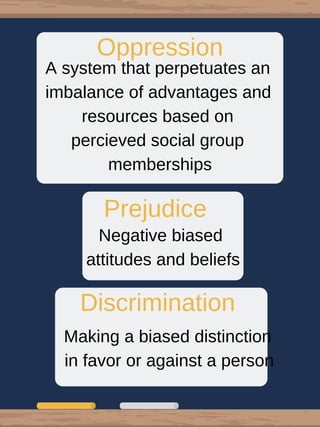
Discrimination
Oppression
Prejudice
Negative biased
attitudes and beliefs
Making a biased distinction
in favor or against a person
A system that perpetuates an
imbalance of advantages and
resources based on
percieved social group
memberships
Levels of Oppression
and Discrimintation
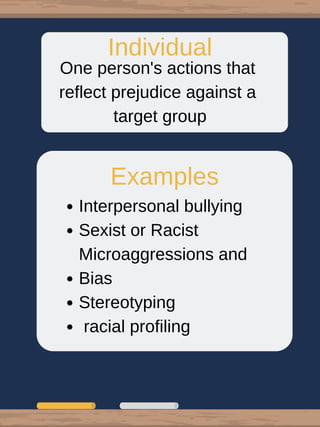
Individual
Examples
Interpersonal bullying
Sexist or Racist
Microaggressions and
Bias
Stereotyping
racial profiling
One person's actions that
reflect prejudice against a
target group
Societal
Examples
Inequality of pay and professional
representation for women.
Representation in police forces,
government agencies
Social norms and customs that
have a differential and/or
harmful impact on more
marginalized groups, whether or
not they are so intended. These
norms almost always have a
historical
significance.
Institutional
Examples
Higher health insurance premiums
in poor communities.
Voting exclusion or discrimination
against poor and immigrant
communities.
Policies, laws, or rules enacted
by organizations and institutions
that disadvantage marginalized
groups and advantage
privileged groups. These
institutions include religions,
government, education, law, the
media, and health care system.

Power and Oppression

  • 1.
    Diversity Inclusion Communityand Equity POWER AND OPPRESSION D E F I N I N G T O B E T T E R U N D E R S T A N D : North East Block
  • 2.
    Discrimination Oppression Prejudice Negative biased attitudes andbeliefs Making a biased distinction in favor or against a person A system that perpetuates an imbalance of advantages and resources based on percieved social group memberships
  • 3.
    Levels of Oppression andDiscrimintation
  • 4.
    Individual Examples Interpersonal bullying Sexist orRacist Microaggressions and Bias Stereotyping racial profiling One person's actions that reflect prejudice against a target group
  • 5.
    Societal Examples Inequality of payand professional representation for women. Representation in police forces, government agencies Social norms and customs that have a differential and/or harmful impact on more marginalized groups, whether or not they are so intended. These norms almost always have a historical significance.
  • 6.
    Institutional Examples Higher health insurancepremiums in poor communities. Voting exclusion or discrimination against poor and immigrant communities. Policies, laws, or rules enacted by organizations and institutions that disadvantage marginalized groups and advantage privileged groups. These institutions include religions, government, education, law, the media, and health care system.