


3 Simple Steps to Create
a Thriving Team
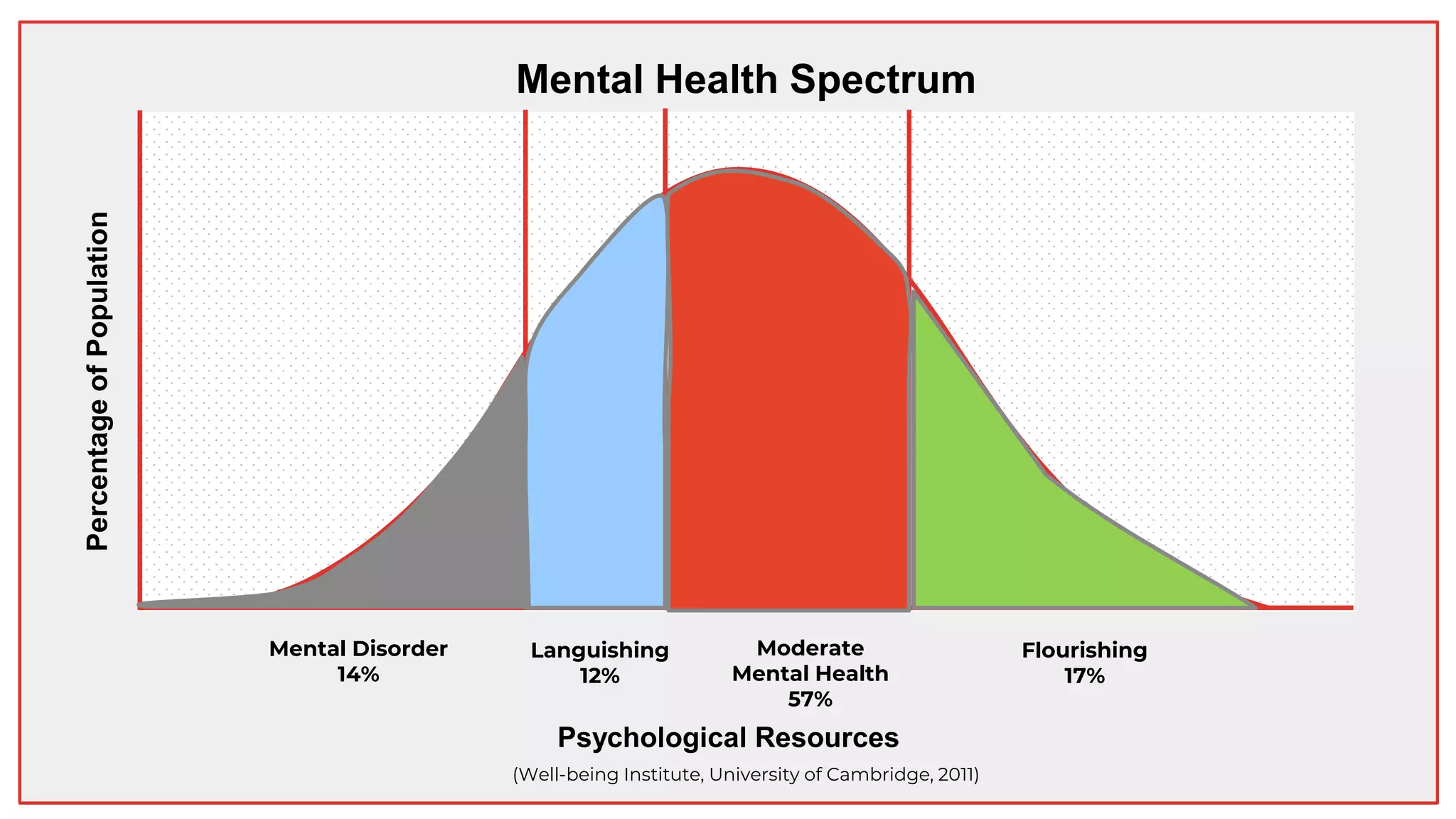
Mental Disorder
14%
Languishing
12%
Moderate
Mental Health
57%
Flourishing
17%
Mental Health SpectrumPercentageofPopulation
Psychological Resources
(Well-being Institute, University of Cambridge, 2011)
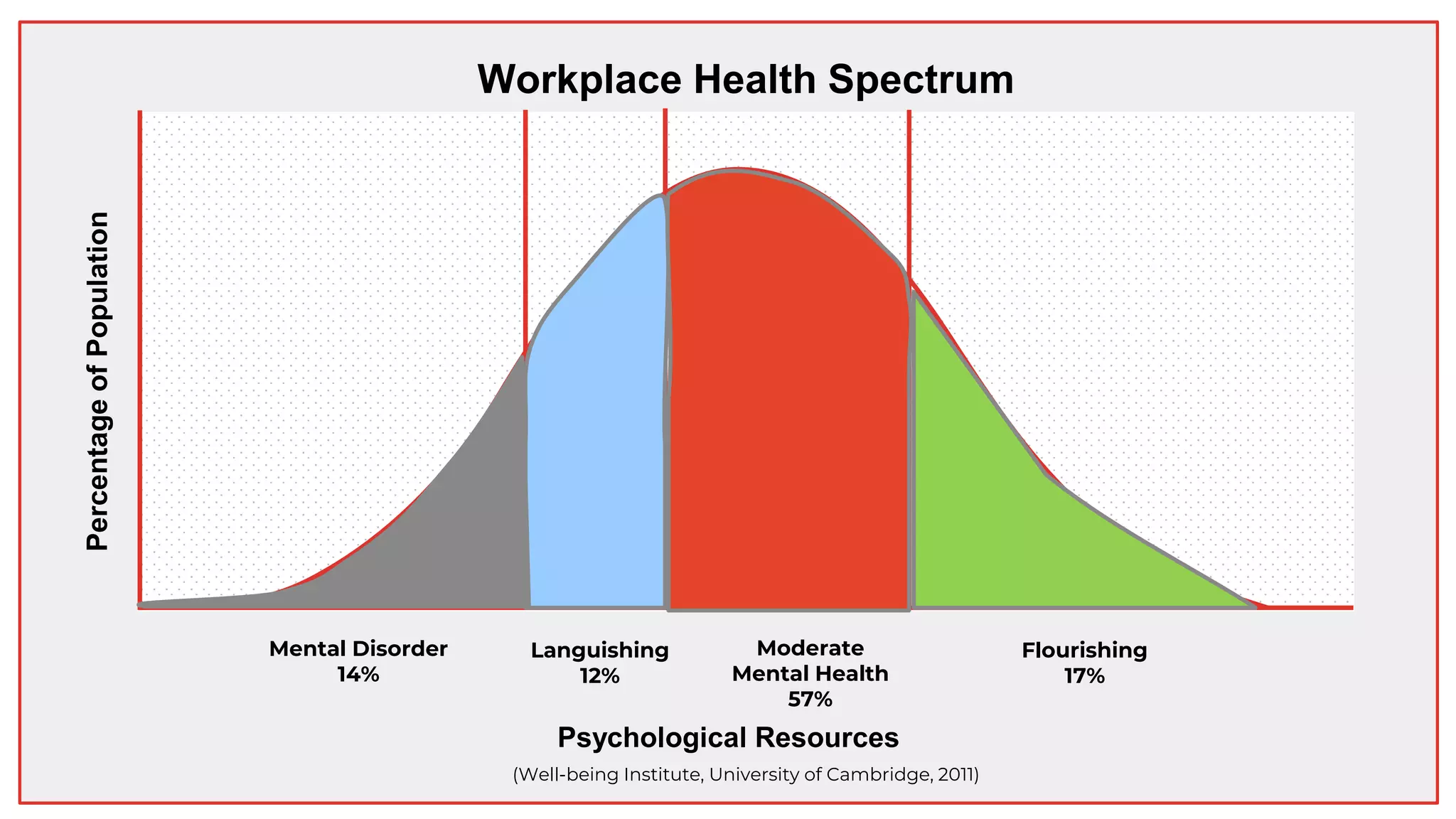
Mental Disorder
14%
Languishing
12%
Moderate
Mental Health
57%
Flourishing
17%
Workplace Health SpectrumPercentageofPopulation
Psychological Resources
(Well-being Institute, University of Cambridge, 2011)
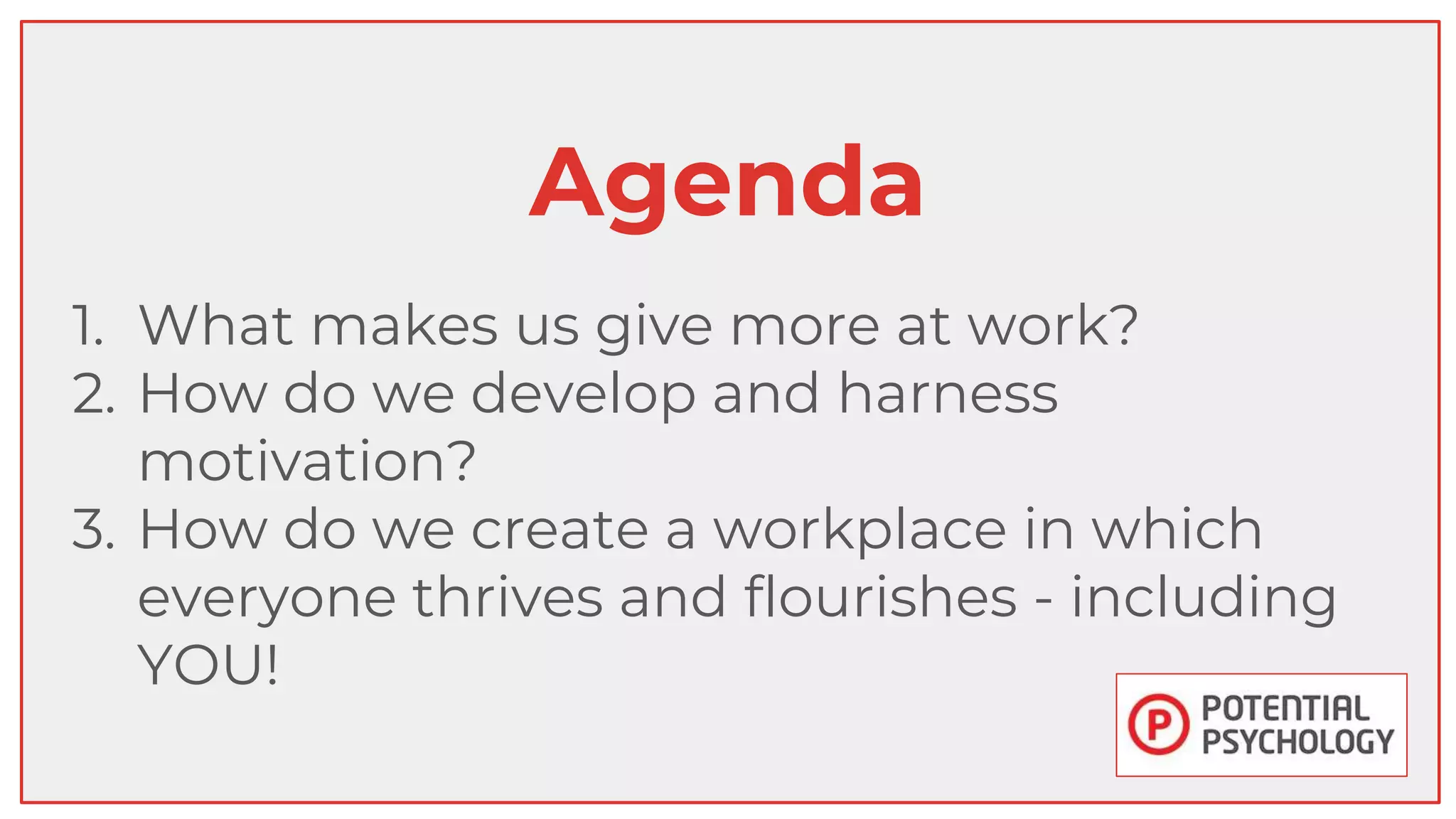
Agenda
1. What makes us give more at work?
2. How do we develop and harness
motivation?
3. How do we create a workplace in which
everyone thrives and flourishes - including
YOU!
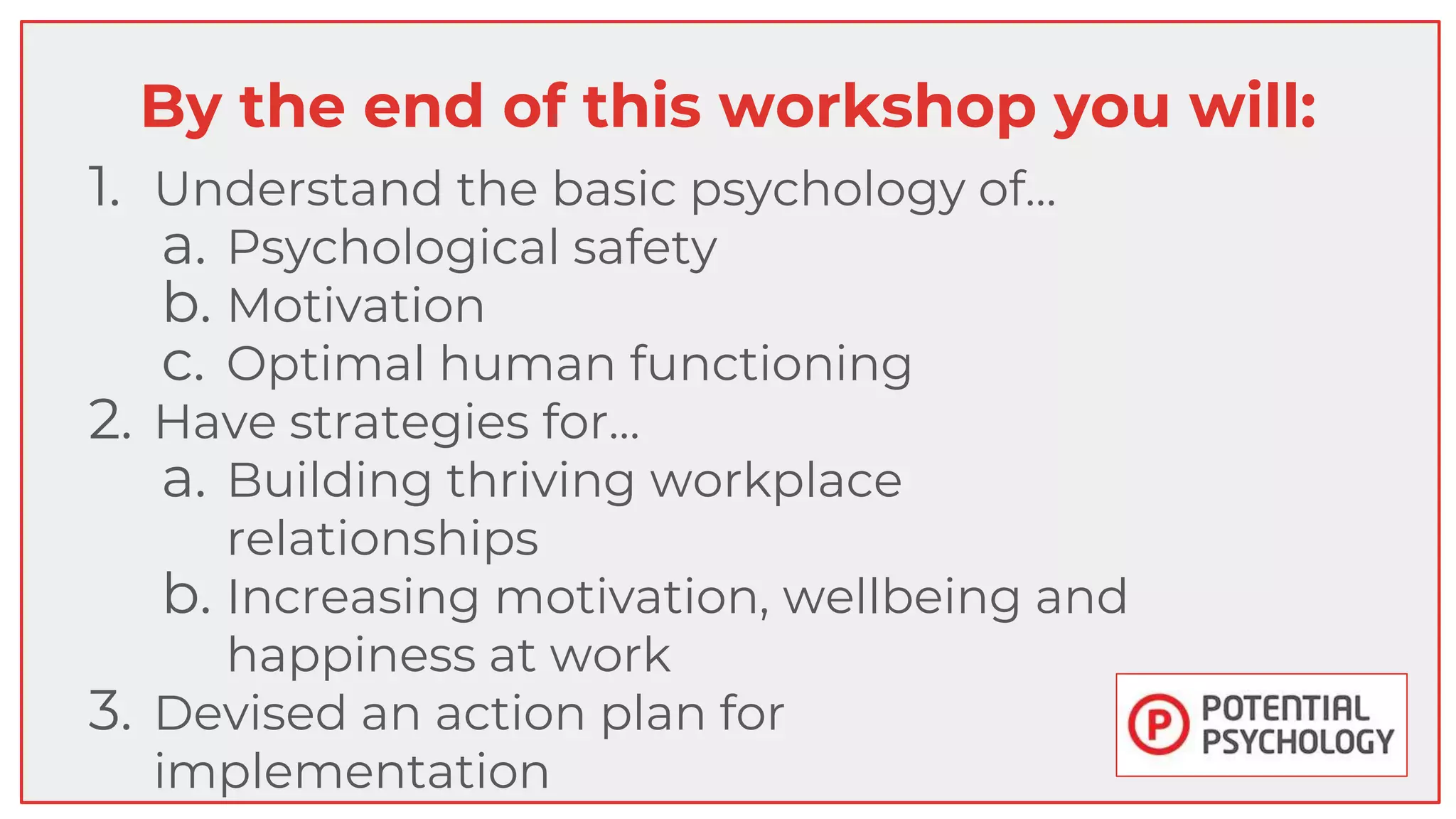
By the end of this workshop you will:
1. Understand the basic psychology of…
a. Psychological safety
b. Motivation
c. Optimal human functioning
2. Have strategies for…
a. Building thriving workplace
relationships
b. Increasing motivation, wellbeing and
happiness at work
3. Devised an action plan for
implementation
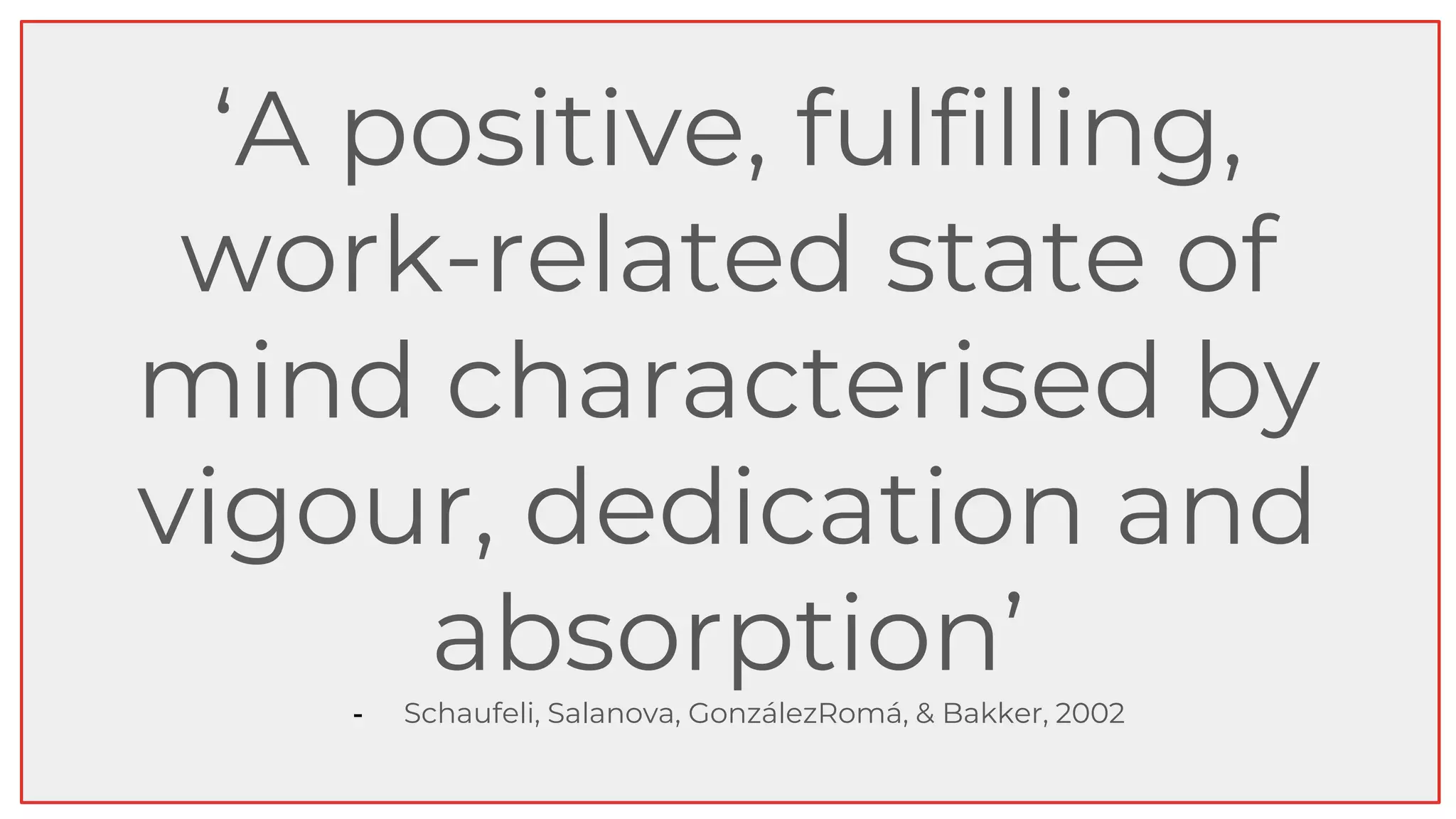
‘A positive, fulfilling,
work-related state of
mind characterised by
vigour, dedication and
absorption’
- Schaufeli, Salanova, GonzálezRomá, & Bakker, 2002
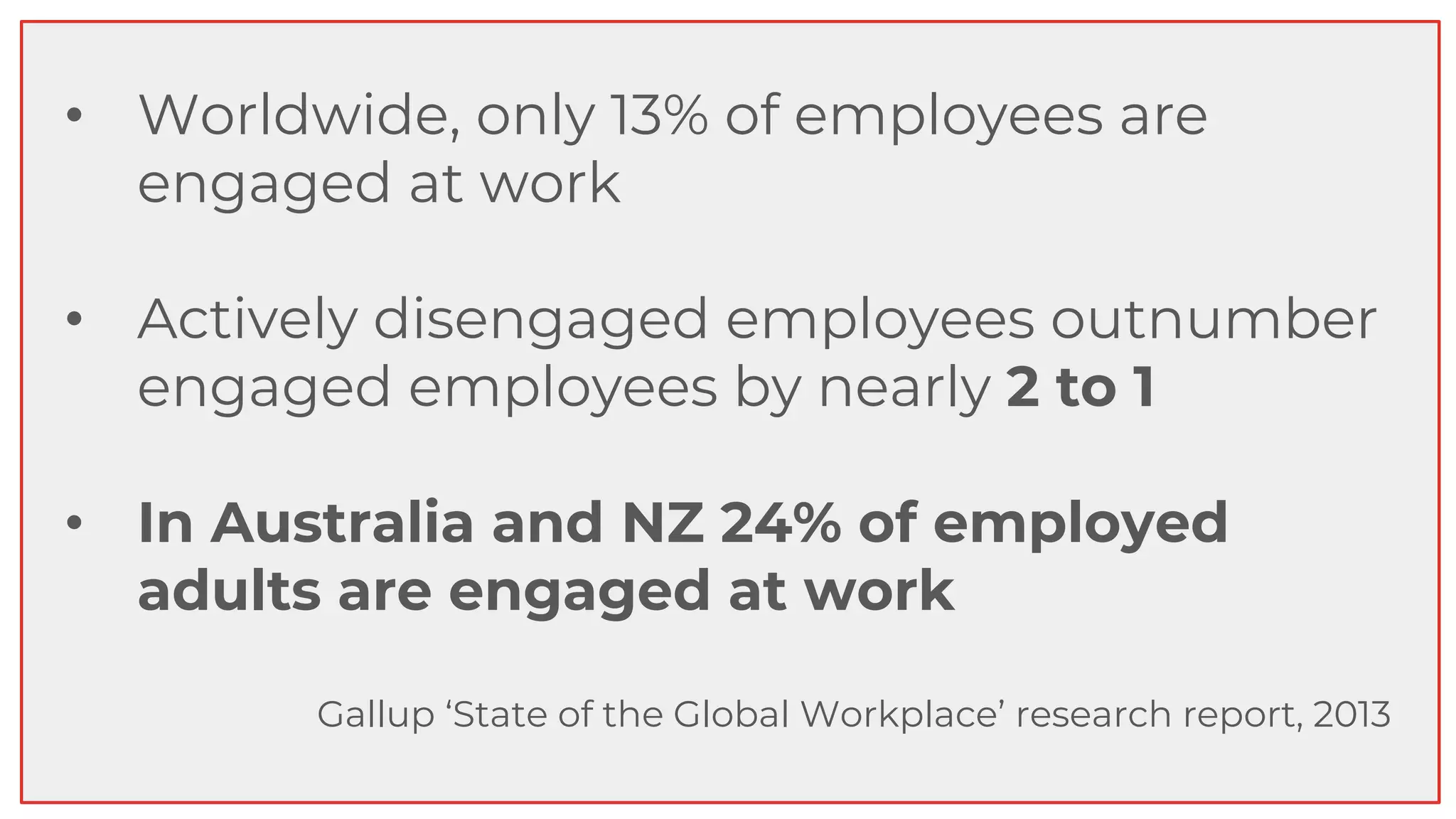
• Worldwide, only 13% of employees are
engaged at work
• Actively disengaged employees outnumber
engaged employees by nearly 2 to 1
• In Australia and NZ 24% of employed
adults are engaged at work
Gallup ‘State of the Global Workplace’ research report, 2013
1. An environment in
which people feel safe
Project Aristotle: The quest to create
the perfect team
● 2012
● 25 years of academic research
● 180 internal teams
● No answers until...
Psychological safety is a shared belief
that the team is safe for interpersonal
risk taking. It can be defined as "being
able to show and employ one's self
without fear of negative
consequences of self-image, status or
career" (Kahn 1990)
When we feel psychologically unsafe
we:
● Shut down
● Don’t ask questions
● Don’t offer new ideas
● Withdraw
● Become defensive when given feedback
● Are reluctant to admit to mistakes
We might also:
● Bicker with others
● Refuse to collaborate
● Suffer emotionally and psychologically
When we feel psychologically safe
we:
● Share information
● Own up to and discuss mistakes
● Volunteer ideas
● Ask for feedback and receive it openly
● Experiment and learn
● Satisfied
● Engaged
● More productive
● Happier / mentally well
We feel:
2. Connection
Why good leaders make you feel safe
‘Get the environment
right and remarkable
things happen’
‘It’s the Leader who sets
the tone’
People join good organisations and
leave bad managers.
People see the organisation only
through their immediate boss. However
good the organisation is, people will
quit (or become distressed) if the
reporting relationship is not good and
healthy.
-Gallup
As a leader….
● Be vulnerable.
● Make mistakes.
● Ask for feedback.
● Be available.
● Be real.
● Master your emotions
● Replace blame with curiosity
● Have fun - but not at others’ expense.
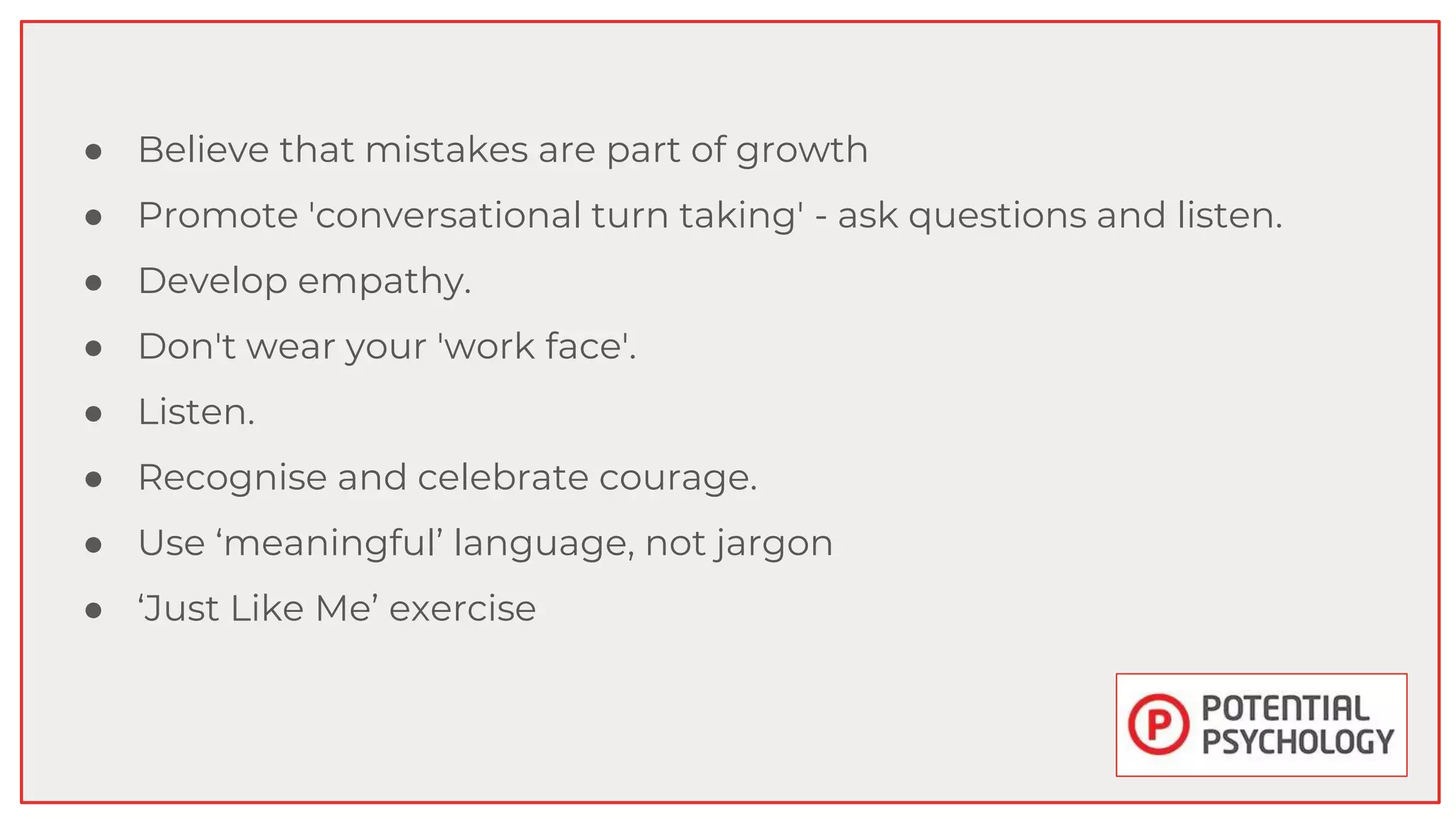
● Believe that mistakes are part of growth
● Promote 'conversational turn taking' - ask questions and listen.
● Develop empathy.
● Don't wear your 'work face'.
● Listen.
● Recognise and celebrate courage.
● Use ‘meaningful’ language, not jargon
● ‘Just Like Me’ exercise
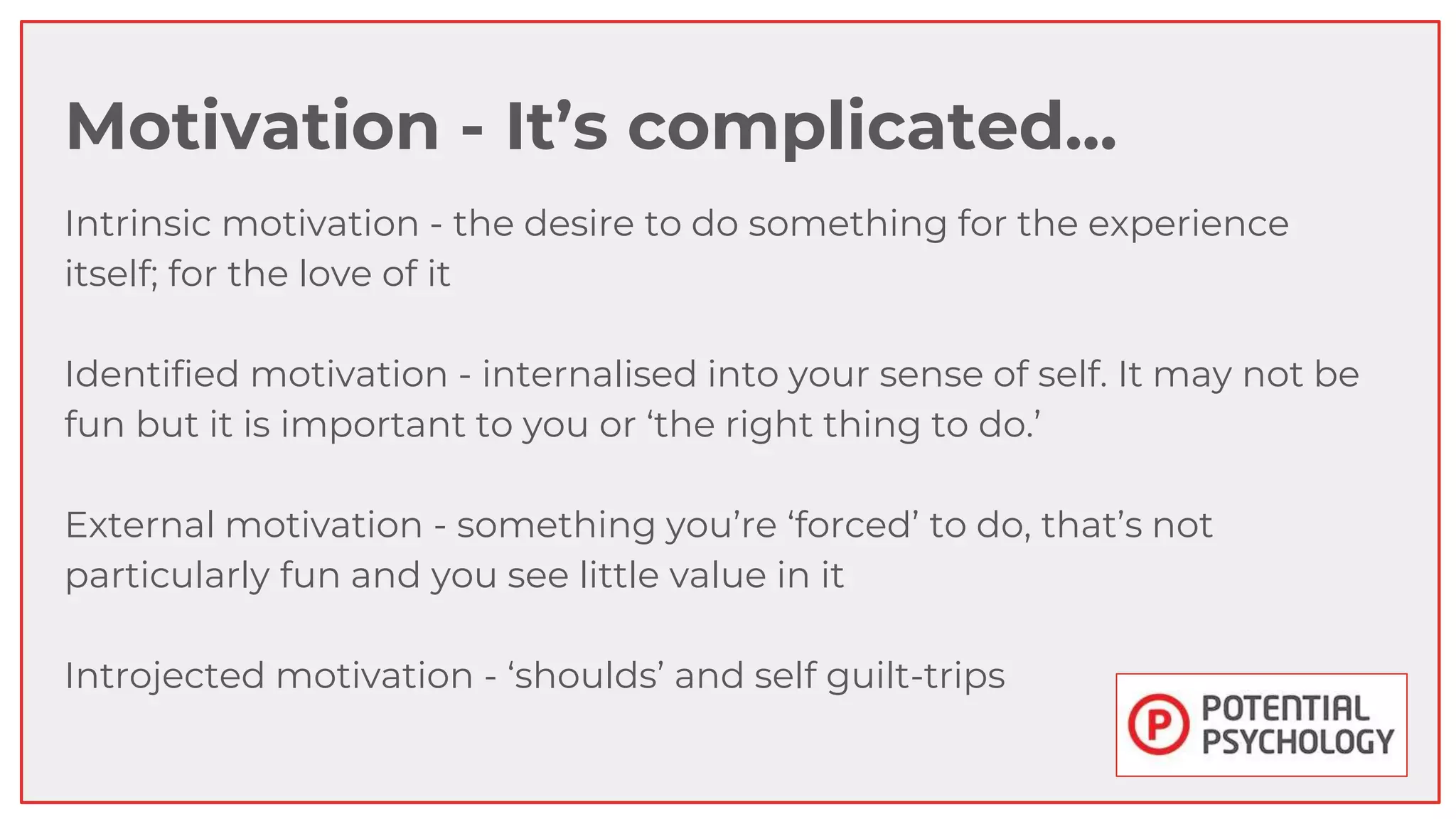
Motivation - It’s complicated...
Intrinsic motivation - the desire to do something for the experience
itself; for the love of it
Identified motivation - internalised into your sense of self. It may not be
fun but it is important to you or ‘the right thing to do.’
External motivation - something you’re ‘forced’ to do, that’s not
particularly fun and you see little value in it
Introjected motivation - ‘shoulds’ and self guilt-trips
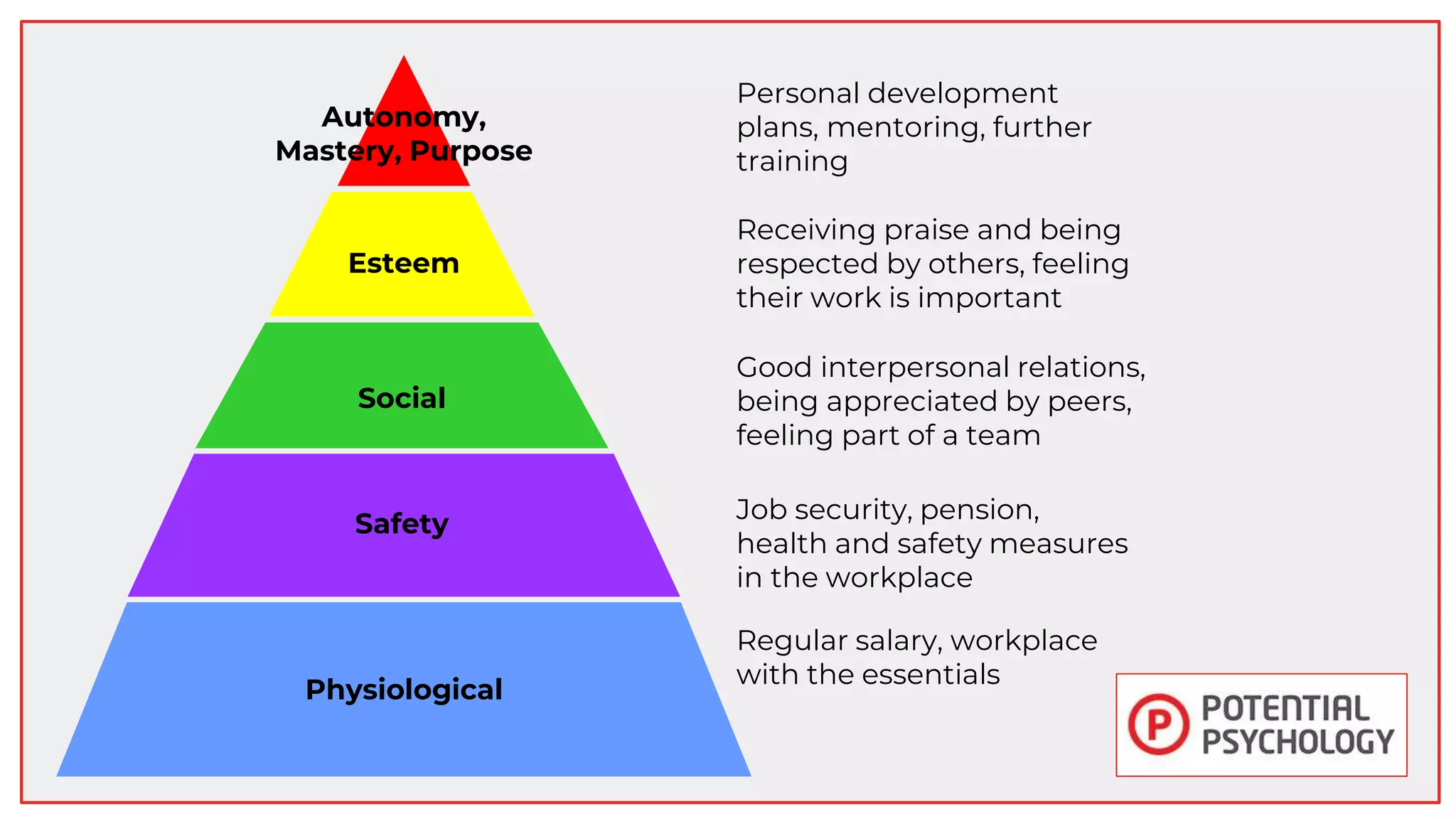
Autonomy,
Mastery, Purpose
Esteem
Social
Safety
Physiological
Personal development
plans, mentoring, further
training
Receiving praise and being
respected by others, feeling
their work is important
Good interpersonal relations,
being appreciated by peers,
feeling part of a team
Job security, pension,
health and safety measures
in the workplace
Regular salary, workplace
with the essentials
The surprising truth about what motivates us
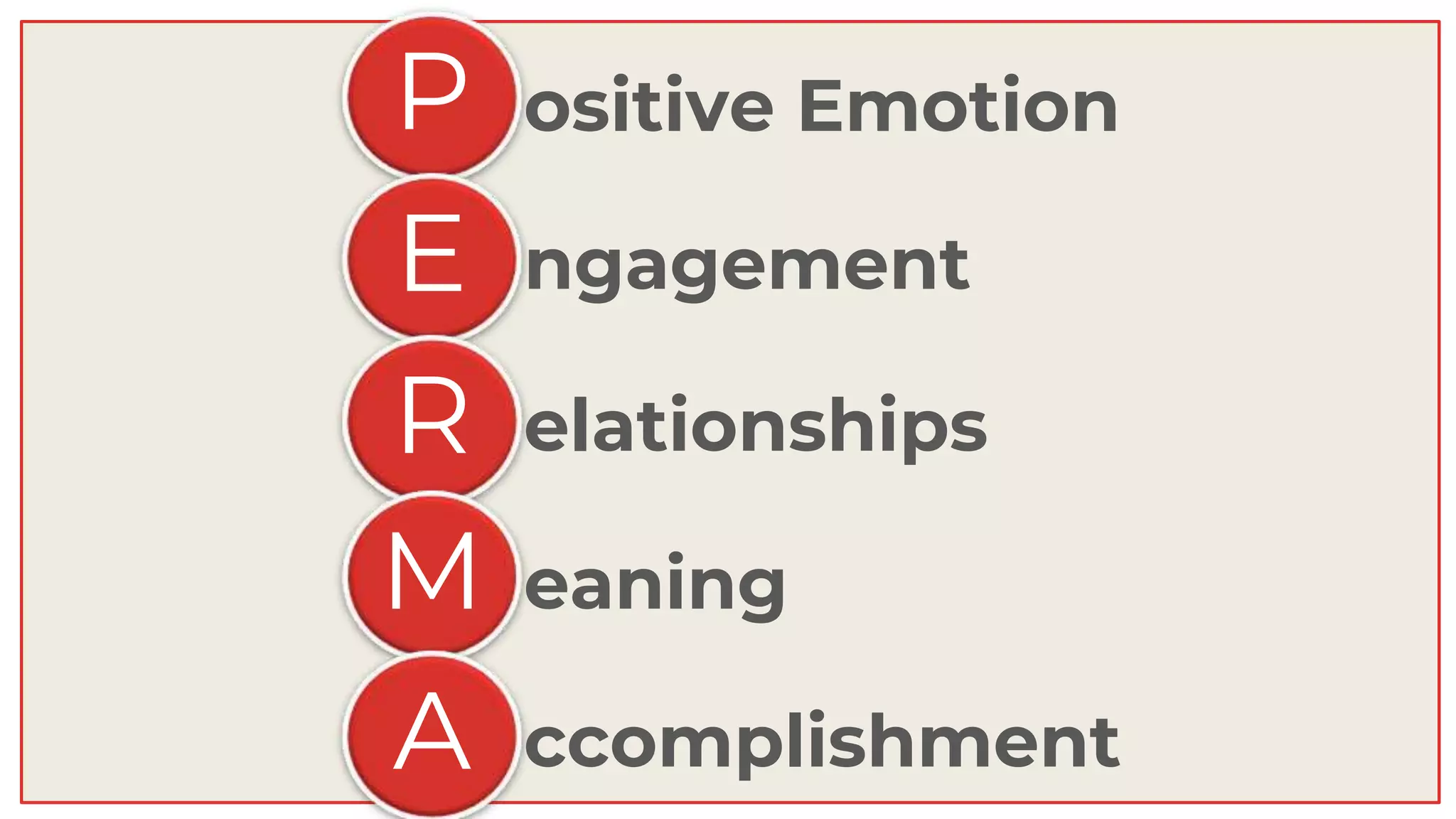
ngagement
P
E
R
M
A
ositive Emotion
elationships
eaning
ccomplishment
Positive
Emotion
Pay attention to positive
emotion
[ step ONE ]
Engagement
Focus on the tasks in
which you find ‘flow’
[ step TWO ]
Relationships
Hang out with your best
people
[ step THREE ]
Meaning
Write your 6 word story
and find your ‘why’
[ step FOUR ]
Help others live, learn
and flourish
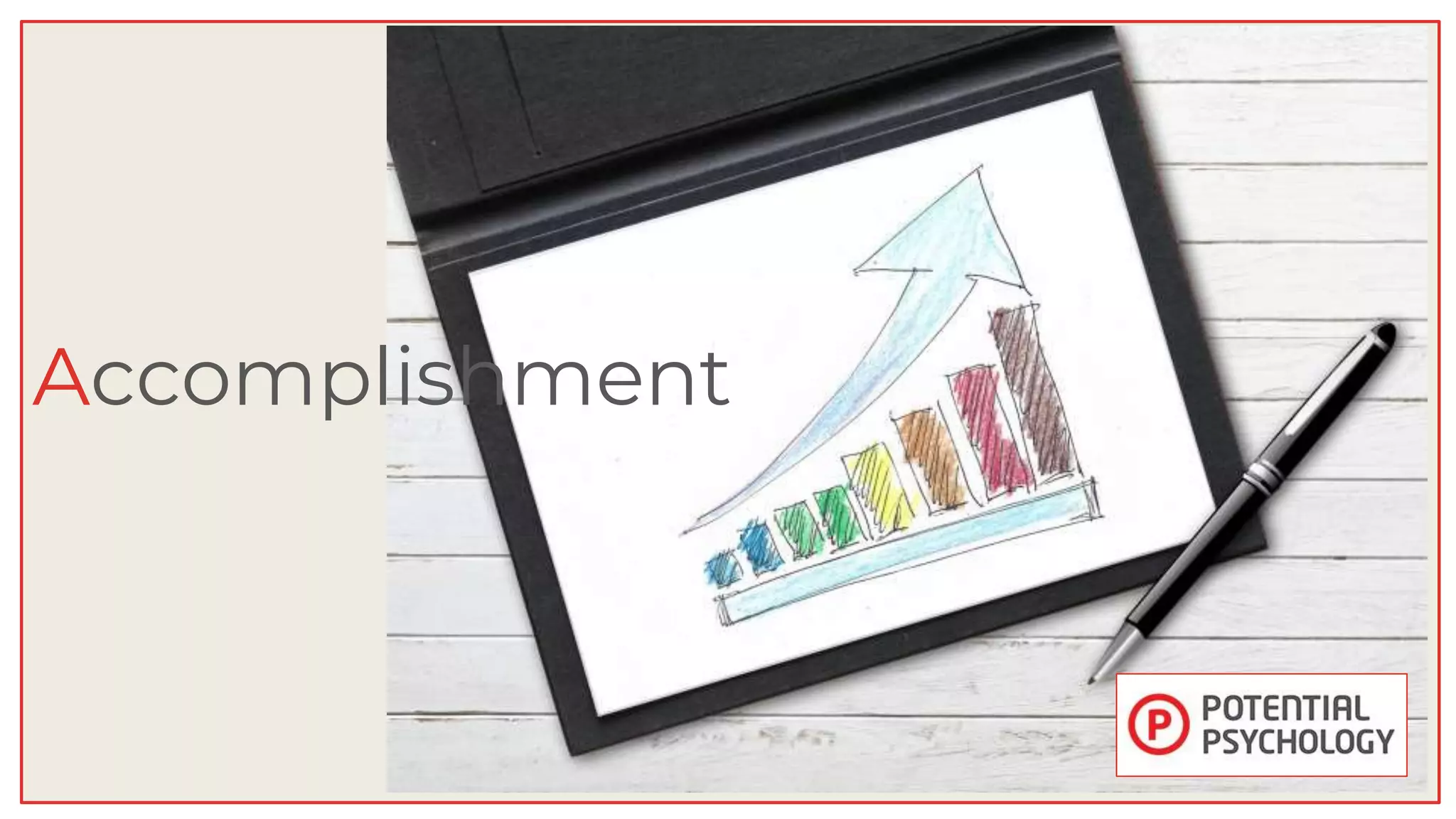
Accomplishment
Set goals for growth and
connection, strive toward
them & celebrate success
[ step FIVE ]
‘Before you are a leader success is
about growing yourself. When you
become a leader, success is about
growing others’
Jack Welch
Thank you!
You can find me at:
www.potential.com.au
ellenjackson@potential.com.au
The Potential Psychology Podcast
www.potential.com.au/podcast

Potential Psychology: 3 Simple Steps to Create a Thriving Team

  • 1.
    3 Simple Stepsto Create a Thriving Team
  • 2.
    Mental Disorder 14% Languishing 12% Moderate Mental Health 57% Flourishing 17% MentalHealth SpectrumPercentageofPopulation Psychological Resources (Well-being Institute, University of Cambridge, 2011)
  • 3.
    Mental Disorder 14% Languishing 12% Moderate Mental Health 57% Flourishing 17% WorkplaceHealth SpectrumPercentageofPopulation Psychological Resources (Well-being Institute, University of Cambridge, 2011)
  • 4.
    Agenda 1. What makesus give more at work? 2. How do we develop and harness motivation? 3. How do we create a workplace in which everyone thrives and flourishes - including YOU!
  • 5.
    By the endof this workshop you will: 1. Understand the basic psychology of… a. Psychological safety b. Motivation c. Optimal human functioning 2. Have strategies for… a. Building thriving workplace relationships b. Increasing motivation, wellbeing and happiness at work 3. Devised an action plan for implementation
  • 6.
    ‘A positive, fulfilling, work-relatedstate of mind characterised by vigour, dedication and absorption’ - Schaufeli, Salanova, GonzálezRomá, & Bakker, 2002
  • 7.
    • Worldwide, only13% of employees are engaged at work • Actively disengaged employees outnumber engaged employees by nearly 2 to 1 • In Australia and NZ 24% of employed adults are engaged at work Gallup ‘State of the Global Workplace’ research report, 2013
  • 9.
    1. An environmentin which people feel safe
  • 10.
    Project Aristotle: Thequest to create the perfect team ● 2012 ● 25 years of academic research ● 180 internal teams ● No answers until...
  • 12.
    Psychological safety isa shared belief that the team is safe for interpersonal risk taking. It can be defined as "being able to show and employ one's self without fear of negative consequences of self-image, status or career" (Kahn 1990)
  • 13.
    When we feelpsychologically unsafe we: ● Shut down ● Don’t ask questions ● Don’t offer new ideas ● Withdraw ● Become defensive when given feedback ● Are reluctant to admit to mistakes
  • 14.
    We might also: ●Bicker with others ● Refuse to collaborate ● Suffer emotionally and psychologically
  • 15.
    When we feelpsychologically safe we: ● Share information ● Own up to and discuss mistakes ● Volunteer ideas ● Ask for feedback and receive it openly ● Experiment and learn
  • 16.
    ● Satisfied ● Engaged ●More productive ● Happier / mentally well We feel:
  • 17.
  • 18.
    Why good leadersmake you feel safe
  • 19.
    ‘Get the environment rightand remarkable things happen’
  • 20.
    ‘It’s the Leaderwho sets the tone’
  • 21.
    People join goodorganisations and leave bad managers. People see the organisation only through their immediate boss. However good the organisation is, people will quit (or become distressed) if the reporting relationship is not good and healthy. -Gallup
  • 22.
    As a leader…. ●Be vulnerable. ● Make mistakes. ● Ask for feedback. ● Be available. ● Be real. ● Master your emotions ● Replace blame with curiosity ● Have fun - but not at others’ expense.
  • 23.
    ● Believe thatmistakes are part of growth ● Promote 'conversational turn taking' - ask questions and listen. ● Develop empathy. ● Don't wear your 'work face'. ● Listen. ● Recognise and celebrate courage. ● Use ‘meaningful’ language, not jargon ● ‘Just Like Me’ exercise
  • 24.
    Motivation - It’scomplicated... Intrinsic motivation - the desire to do something for the experience itself; for the love of it Identified motivation - internalised into your sense of self. It may not be fun but it is important to you or ‘the right thing to do.’ External motivation - something you’re ‘forced’ to do, that’s not particularly fun and you see little value in it Introjected motivation - ‘shoulds’ and self guilt-trips
  • 25.
    Autonomy, Mastery, Purpose Esteem Social Safety Physiological Personal development plans,mentoring, further training Receiving praise and being respected by others, feeling their work is important Good interpersonal relations, being appreciated by peers, feeling part of a team Job security, pension, health and safety measures in the workplace Regular salary, workplace with the essentials
  • 26.
    The surprising truthabout what motivates us
  • 27.
  • 28.
  • 29.
    Pay attention topositive emotion [ step ONE ]
  • 30.
  • 31.
    Focus on thetasks in which you find ‘flow’ [ step TWO ]
  • 32.
  • 33.
    Hang out withyour best people [ step THREE ]
  • 34.
  • 35.
    Write your 6word story and find your ‘why’ [ step FOUR ]
  • 36.
    Help others live,learn and flourish
  • 37.
  • 38.
    Set goals forgrowth and connection, strive toward them & celebrate success [ step FIVE ]
  • 39.
    ‘Before you area leader success is about growing yourself. When you become a leader, success is about growing others’ Jack Welch
  • 40.
    Thank you! You canfind me at: www.potential.com.au ellenjackson@potential.com.au The Potential Psychology Podcast www.potential.com.au/podcast